SocraticGadfly: Santens (Scott)
Showing posts with label Santens (Scott). Show all posts

September 15, 2021

An argument against Basic Income — and for other ideas

And, it's not just by anybody, it's by Douglas Rushkoff, known as a left-liberal, if I put a label on him, analyst of class and socioeconomic issues. Rushkoff's argument (the piece is three years old, but Medium, like Pocket, in its "roundup" emails, will pull up some old stuff) is that if Silicon Valley if for it, the rest of us probably should be agin it.

More specifically, he says they're pushing it within a current structure of late era hypercapitalism, as a block to larger economic reforms. 

I think this is particularly true of Scott Santens versions of BI, ones that want to cut or even get rid of current social net programs to feed the maw of Silicon Valley. Rushkoff, at least as much as Jaron Lanier, has long been distrustful of Silicon Valley, unlike Santens.

And, "we" who know enough know this about Santens, even if some Greens like Laura Palmer don't. (Here's one of my more recent pieces about the many ways Santens is wrong.)

What we REALLY should do, Rushkoff says, is promote universal basic ASSETS, first. The idea is described in more detail here.

Second, promote employee ownership. (That said, I'm not as sold on this as he is, knowing that Walmart did this way back when, but Rushikoff is really saying we need to look at multiple angles on income inequality.)

This Atlantic piece, talking about local elites, especially in smaller metro areas lording it over a "region," and how their elitism is based on ownership of assets even more than ownership of wealth, underscores exactly what Rushkoff is talking about.

February 05, 2021

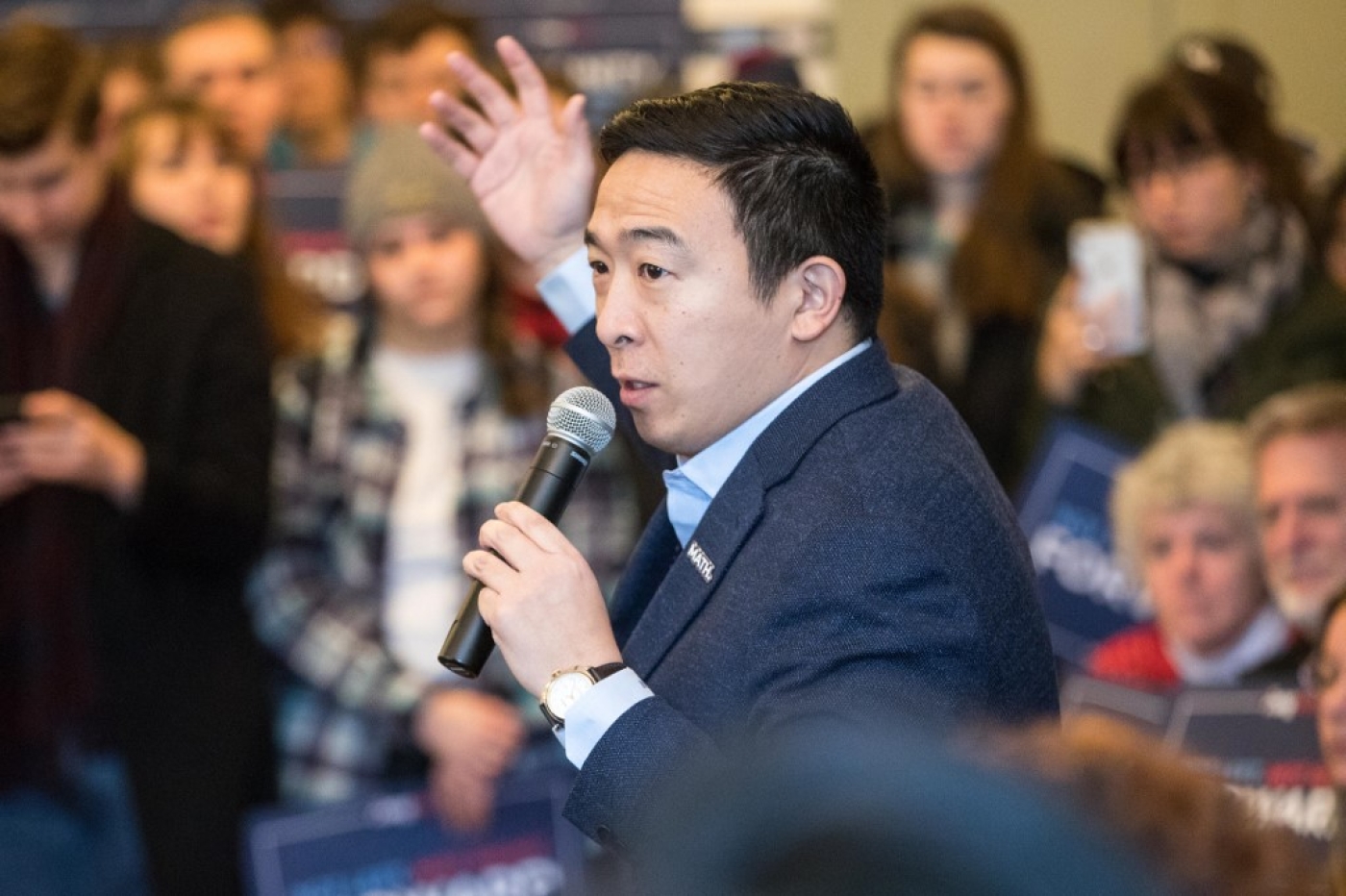
Will the Yang Gang crack up over Andrew Yang's anti-BDS BS?

Andrew Yang is officially out of the bad (and officially in Pander Bear territory), with part of his campaign for NYC mayor being officially anti-BDS, and with this, is officially in Just.Another.Politician.™ territory.

Beyond the general issues, it's also clear that he's full of shit in particular ways, and that he is clueless about the First Amendment's freedom of assembly clause, which, as much or more than the free speech clause, protects the rights of people like you and me to conduct organized boycotts.

He first compared the boycotts to "fascist boycotts of Jewish business." Totally false. There's no police state behind BDS boycotts, first. Second, the motive is totally different.

But, when called out, he not only refused to back down, he doubled down.

He accused BDS of supporting violent resistance, which it officially does not.

This sets aside the issue of Palestinians' violence being a response to Israeli violence. 

And, of Israel continuing to criminalize nonviolent protest by Palestinians.

Third? The Pander Bear territory.

Yang is running for NYC mayor. And it's clear he's targeting the majority of Jewish voters that are still full Zionists. After all, as the piece above notes, this started with him running an op-ed in Forward.

I'm "shocked."

Yang struck me as a Pander Bear on Basic Income in his prez run. Although he didn't often go into details, it seemed to me he supported more libertarian types of BI, like Scott Santens does. (Santens, AFAIK, is still lying and claiming that there is no division between different types of BI, when I and many others have covered this in detail.)

In short, Yang was appealing to tech-neoliberals, or to narrow the working space more, tech-left-neoliberals, within the younger end of Gen Xers and older Millennials. (Note that I divide generations differently than pop sociologists and marketers; my Boomers end in 1960, with a mini-generation of "Tweeners" born 1961-69, Xers running 1969-1986 or so, a Gen Y from there to 1998 or so, and Millennials after that.)

Some friendly related reminders:

Santens was once dumb enough or grifter enough to call Trump a "basic income Moses." Also, per the "covered" link, yes, "following" on Twitter doesn't mean everything, but following both Charlie Kirk and Turning Point?

Santens also supports cryptocurrency, which is HUGELY climate-change unfriendly, another reason certain Greens should stop fluffing him.

Tulsi Gabbard was another political grifter who latched on to BI, and who is anti-BDS, and yet has too many left-libs who drink her Kool-Aid.

August 29, 2020

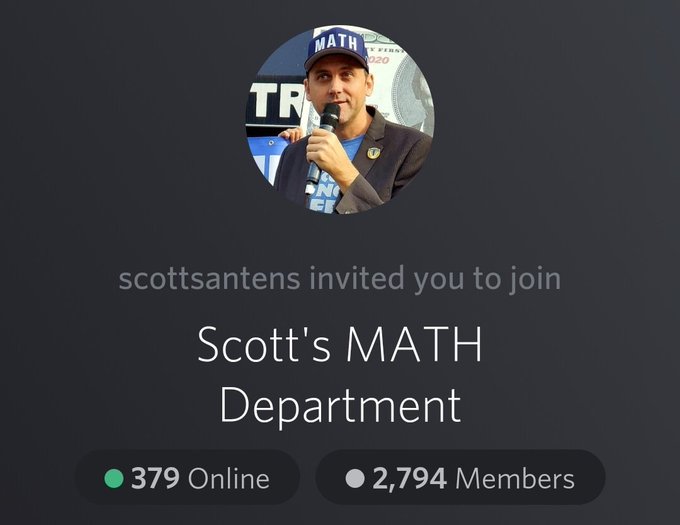
PASS on Texas Greens' invite to hear Scott Santens virtually

Texas Green Party's email hit me earlier this week, inviting me to a virtual town hall type event with basic income "guru" Scott Santens and Green Congresscritter candidate Tom Wakely.

I passed. And tweeted that I was passing.

I mentioned that Thursday night when I heard Texas Greens had invited him to speak with Congresscritter candidate Tom Wakely on a virtual town hall event.

Here's why:
OK, the MPP convo is Sunday, not Saturday, but still. Here's why I say fuck it.

AND a second:
Again, pass.

Contra state co-chair Laura Palmer, who I have no doubt personally set this up, while basic income is a good idea, Scott Santens' version of it is nowhere near the best version, it's just that he's the guru who's the best known speaker for the idea.

I've discussed before how the TX GP's stsate co-chair, during Dem primaries, was a one-issue tweeter for Dem presidential candidates, despite Yang et al not clearly favoring national health care and despite, overall, if a Green is going to an imitation of Jill Stein, Sanders being the closest to Green ideas, though still distant. I mean, stanning for Tulsi Gabbard when she started grifting harder on the BI angle after Yang withdrew? Sadly laughable.

Other than that, Mrs. Lincoln, how was the play?

August 28, 2020

Fuck the Movement for a People's Party and its grift

Editor-blogger's note-update, March 6, 2021: Pretty funny how I pegged the grift angle, as well as, apparently, the "they're not really a left party, but a liberal one" angle, at the time I wrote this last summer. A post last month, a roundup of "third parties of the left" news, included plenty of details about the grift and the not-so-left angles both.

Back to the original.

Seen via IPR, here's a presser about the latest news in their plans for an Aug. 30 convention, which plans to discuss the possibility of a new third party running in races in 2022 and beyond.

My thought?

Fuck em. If Movement for a People's Party wants to truly be a party of the left, we've already got  semi-left Greens and other parties further left than that. Per Mimi Soltysik, we don't need yet more factionalism, and we also CERTAINLY don't need vanity projects. Nor do we need grifting off connections within foundations, etc., connected to one former Democratic presidential candidate. (Ahem.)

And, on their about page? No case is made for why a new third party rather than reforming, etc., the Green Party and going from there. NOR is a case presented that the GP is beyond fixing.

COULD such argument be made? Hell, yes. I've mentioned things here in these pages that have me close to moving beyond.

Fuck em for some specific reasons, too, starting with the main speakers and organizers, and moving on, as in these, as much as the worst within the Green Party, are people I don't want to associate with.

Mike Gravel? Conspiracy theorist and Tulsi-stanner.

Marianne Williamson? Present New Age Kumbayaer, antivaxxer of long standing, past history of anti-unionism at her own company. (And, Dec. 6, now that MPP has filed the paperwork in their first state, Maine, to become an official political party, with perfect timing, Encyclopedia of American Loons profiles her.)

Nina Turner? Butt-hurt Berner.

Ryan Knight? DSA Rosey. And, Tulsi Gabbard Kool-Aid swallower. You're surely less of a socialist than I am.
As of Aug. 27? As I said in response?

Still the case today. 

That said? If the MPP is a separate party, doesn't it need an icon that's not the DSA rose?

Cornel West? Knows there's a third party called the Greens, per Black Agenda Report.

Chris Hedges (new addition). Even more than Cornel West, knows the Greens exist, as he was going to run as one earlier this year until seeing that meant he'd have to quit RT.

Jimmy Dore? Multiple conspiracy theorist, including Seth Rich conspiracy theorist. (And, I've now learned, a Jungian-type New Ager as well.)

Scott Santens? Also surely knows third parties exist. May be butthurt at Greens for not giving basic income in general, and his libertarian version in particular (it is, Scott, and you get butthurt when people correctly call it that) enough airtime. I told Texas Greens (and Laura Palmer in particular, indirectly) exactly that.

The full list of people on the "movement" webpage?

This:

That's the reality.

That includes founder Nick Brana. Let's note that pre-Berner, he worked for Clintonite Terry McAuliffe. More to the point, let's note that he started MPP in 2017, presumably based on the idea that Bernie would NOT run again in 2020. Going back older? Two internships for John Kerry. Enough money and/or connections to attend London School of Economics. In other words, "connected." If not part of the 1 percent, then part of the 10 percent.

Fernando at IPR has a liveblog of the meeting if you're interested. I'm just doing further sharpshooting based on it. He notes somebody from Move to Amend was from the Green Party. "Thanks." Another speaker? Mike Gamms-connected Ron Placone. "Thanks."

David Bruce Collins has an extensive eight-part liveblog. As I commented on his part 5, he seems to be ... kind of a sucker almost? Lauded Santens, for example, and I told him the truth about what I thought about Santens' libertarian ideas of BI, just updated later this week. Sucker for Cornel West, who was a sucker for Obama and so DIDN'T know the score.

He also confirms that half-Libertarian, full grifter, Trump supporter and antivaxxer Jesse Ventura spoke. Fuck you even more. (That said, the first link reminds me of why I have a lesser fuck you for the Green Party right now and haven't given Howie any money this year. So fucking sue me.)

Look, if you all want to be a paragroup to/within the GP, or the SPUSA, like the DSA Roseys are to Democrats, fine. But, unless the Green Party finishes falling apart and needs to be abandoned, AND you offer a better option for a third party of the left than the SPUSA? Not fine. I'll fight you. After all, I first wrote in depth about the Roseys, and the vacuousness of many of them on foreign policy, and related matters, almost two years ago, at the 2018 midterms.

Update, Sept. 9: Fake Greens, like Democrat in lurking William Boartfield in Louisiana, are now trying to make state GPs, at least into this one case, into a state MPP branch.

To put it another way? I see the MPP as being like the Sunrise Movement, the kiddie pool wing of the Sierra Club, which lurked on Twitter for four years, saw AOC, swooped in, used her as a willing tool, plagiarized the Green Party's original Green New Deal, then passed off its lite version as the real deal.

I'll also fight you if, like Never Trumpers of the Lincoln Project, part of this is political grifting. And, yes, I suspect it is. Lots of "Our Revolution" people on that list, who may have learned the fine art of pergressuve political grifting from Mrs. Bernie, Jane O'Meara Sanders. Both Our Revolution, on grifting (and dark money) and the Sanders Institute, on nepotism, show that there's nothing new politically under the Bernie son.

Update, Dec. 5: So, they've filed the official paperwork to be a state party in Maine. I've Tweeted to the MPP account and Ryan Knight's, asking what it offers, either organizationally (anything might be better than the GP) or politics that the GP doesn't.

As I've said before, if I get an answer, and it's a good one, hey, sign me up as a backer. If not? I remain an independent leftist, and will remain critical of it, even as my criticism of the Green Party increases as a critical independent leftist.

June 06, 2020

My top blogging during May

A similar post is mistitled because it's about April blogging, actually.

No. 1 and 10 are old blogging.

No. 1, perhaps trending because of what I've written about the First Amendment, churches, and quarantine laws (thanks, sincerely, John Roberts) is an old piece about whether or not a college can discriminate against a religious group. It may also be popular because of the old comment, before I had moderation turned on, has links generating hits. I still like the piece, so I won't delete it. Blogger won't let me delete the comment, sadly.

No. 10 has been popular here before. Timothy Treedwell is still dead, and fertilizing Alaskan soil as decayed grizzly shit and still fricking nuts.

No. 2? Joe Biden's Veep nomination is more important than ever since killer cop lover Klobberin Kobuchar refuses to remove herself from consideration, showing what an embarrassment the modern Democratic Party is.

No. 3 is about why Jesse Ventura was chickenshit on seeking (by the back door) the GP presidential nomination. With the Green Party still refusing to supply a PDF of his letter of interest, it shows what an embarrassment the modern Green Party is also becoming.

No. 4, about Libertarian nominee Jo Jorgensen, has taken off since being reposted on Independent Political Report. It's been extensively updated and expanded and has generated two spinoff posts that will go up later this month.

No. 5? Week 9 of the weekly coronavirus roundup. No. 8? Week 10.

No. 6? That similar post.

No. 7: Another favorite of mine, about how the coronavirus, and the conspiracy theories it's generating, show that the horseshoe theory (at least in the US, with limited political thinking outside the duopoly) might be more true than false. Suck on that, Noah Berlatsky.

No. 9? My latest deconstruction of self-appointed basic income guru Scott Santens. Learn some actual math, dude. And, if you are peddling BI with bad math, stop peddling quasi-libertarian versions, or more accurately, tech-neoliberal versions. This leftist of sorts is tired of it.

May 06, 2020

Once more, Scott Santens is deconstructed


Unfortunately, as Politico noted with Andrew Yang, more than two years ago I noted in the past with Scott Santens, pictured above — he doesn't have the math.

And, he doesn't necessarily have the dope otherwise. (And, both he, and then UBI grifter Tulsi Gabbard, endorsed Biden rather than Sanders.)

As for Santens' "the robots will steal all our jobs"? As with Yang, that fear is probably overstated to a degree. Going beyond Politico, though, it's also misfocused to a degree. If computer software can write up sports briefs and county real estate sales into stories, and now, on the video side, Reuters has a VR bot newsreader for teevee, why can't I program a bot to scrape BI postings by others and create Schotte Ohnezehn?

Doug Henwood weighs in more on this at Jacobin.

That said, although Santens hasn't maybe written directly about that? I suspect he knows that. I suspect reason he's writing these BI articles, and as a libertarianish type in Class Three of different economic classes, touting the cures of cryptocurrency as well. Follow the money, even if cybermoney.

Finally, the fact that Santens has a Business Insider piece from 2016 saying that Trump might be the Basic Income Moses leads me even more firmly to the conviction that Santens is politically agnostic on many issues. As does the idea that he is a listed writer for the World Economic Forum. As in Davos, where all the neoliberal rich people play.

He's never, as far as I know — thus directly undercutting his claim that BI would fight climate change — addressed the stone cold reality that the energy consumption of cryptocurrency is a huge threat to our climate. (You say go green and renewable even more? Right now, we're just doing little more than running in place on that.)

Related? His past citing of Alaska's Permanent Fund of a good example of basic income is also problematic, or should be, especially to Green types. It's based on a non-renewable natural resource, Alaska's oil production, and one that is a direct contributor to climate change. Beyond that, as North Slope oil declines, Alaska governors have tried to cut the Permanent Fund but have failed to make major changes stick, with the result that Alaska has cut other services instead.

MATH.

As for Santens saying many people eligible for TANF or housing vouchers don't get them? That's indeed true. As it is to a lesser extent (more the need to re-apply than never getting it) with SSDI. The easier solution, rather than creating a new bureaucracy, seems to me to be to fix those programs. The second half of the easier solution seems to me to be expanding the Earned Income Tax Credit as Howie Hawkins wants to do. As for other problems with SSDI, like the sharp cutoff in benefits? Again, fixing that program is the easier answer.

Contra Santens' false dilemma, I would prefer proper fixes to the various parts of the current system, which would definitely be cheaper, would not partially rob Social Security (Santens' BI plans propose this), would not totally rob disability (per that link above), and would not totally rob unemployment benefits (which he has said elsewhere he wants to do).

Santens may indeed really care about the racial issues behind food stamps today, and other things. But it's disingenuous to claim that slashing Social Security, junking SSDI and trashing unemployment benefits for an idea that's never been tried long-term and large scale anywhere in the world is "progressive." It's doubly disingenuous when, IMO, Santens ideas are designed in part to help skilled white-collar contract workers (and at the margins small business owners) who have consciously decided to accept the freedom of the contract world because they have in-demand job skills, but want protection against fallow periods.

He's wronger yet on other things.

Anybody who actually knowns anything about driverless tech knows that the idea that driverless cars on city streets will replace anybody in the next decade is sniffing Elon Musk's Tesla-tinted butt crack. It is true that small numbers of autonomous semis are "out there," but as of right now, and surely for years to come, they're "out there" only on desolate stretches of rural interstate.

As I indicated elsewhere, it's more likely that Santens as BI writer will be replaced by a web-crawler bot than that a driverless taxi will replace an Uber gig worker.

And, I haven't even talked about Santens' bad math. Oops, I did above. And I will again. A BI of $1,000 per month for a adult plus $300 per month for child will NOT "eradicate childhood poverty." It might not in two-parent households; it certainly won't in one-parent ones, especially if, per Santens, it's replacing rather than supplementing the current "safety net." From that same link, talking about BI for kids as vaccinating them against childhood poverty, with an explicit analogy to the polio vaccine? I now think we're in official intellectual dishonesty range. Ditto when he compares basic income to seniors on Social Security, which is means-tested and is at least somewhat linked to workforce employee and employer contribution amounts.

As for Santens' other mantra, that "Unconditional basic income is not left or right. It's forward."? First, that sounds like it could come out of the mouth of McKinsey Pete Buttigieg or some other tech-neoliberal type. Second, it's simply not true. A version of BI like Santens proposes is definitely not left. Since I consider it punitive in some ways, it's right. And thus, the phrase is again intellectually dishonest.

And yes, I'm at that point, more than I was two and a half years ago, the last time I dived deep on this issue. Beyond just bad math, I think Santens is ultimately guilty of intellectual dishonesty.

Oh, back to what I say is much more important than BI — single payer. Santens does support that, but even there, it's ultimately with BI wrapped in it. No. If we go beyond "just" single payer, it's gotta be to a British National Health System. (Overall, a Google of "Scott Santens" plus "single payer" got less than 100 hits. Substituting "Medicare for All" got less than 80.) And, as for Santens' claim that BI is neither capitalism or socialism? Well, I'm socialist enough to support a British-style National Health System in America. And that isn't even on Santens' radar screen. At all.

Overall politically? Santens may be on the left edge of tech-neoliberalism, rather than being more libertarian. But, it's no more than that. Beyond what I've said elsewhere, laughing about his claim that BI will help climate change? To the degree he has other ideas there, they're all tech-neoliberal salvific technologism.

==

If you can give me BI with honest math that doesn't penalize seniors, the unemployed or the disabled, and only AFTER the big apple bite of national health care, I'm with you.

Besides, in the coronavirus collapse, the self-employed are being made eligible for unemployment benefits. I'm OK with this in the future, with a national disaster declaration, one that's either nationwide, or for a specific area, say the Texas Gulf Coast after Hurricane Harvey.

Beyond that? There's a better option. It's Howie Hawkins' idea of expanding the Earned Income Tax Credit into a full negative income tax. And, under "neither capitalism nor socialism"? Hayek supported it too, as Reason notes in a rebuttal to Santens.

Santens would probably counterargue that a negative income tax is a form of means testing. He's right. But, if he rejects even that (and, like the current EITC, racist strings aren't attached to it, like they may be with food stamps), well, then the game is clearly up as to why Santens wants basic income.

And, if a negative income tax were also used as the basis to reduce withholding for lower-income wage earners, and also raise the income threshold for withholding, then that would put more week-to-week money in people's pockets, without the additional bureaucracy of BI.

February 21, 2020

Basic income and the gig economy, part 2
vs national health care and other angles

Several years ago, in one of several blog responses (or per Twitter, more subresponse than response) to basic income guru and evangelist Scott Santens, I  said BI should not be used as the primary fix for gig economy problems. Do that, and you open the door to gutting Social Security next because the self-employed pay both employer and employee portions of FICA tax. Beyond that, many issues with the gig economy have arisen because neoliberal Dems, tacitly, and big-biz and libertarian conservative Republicans, openly, have supported the NLRB cutting rules on who's a contractor and who's not.

It's time to expand talk about the "gig economy" more, especially as more and more Democrats, and even a few non-duopoly semi-lefties, mouth the business conservative "e-word" — "entrepreneurship," and also as third-party backers, and even a former leftish third party state leader, think BI is the fix for their issues, even to the point of ignoring the anti-third party stances on other issues many BI pushers hold.

There are three definite classes, and possibly a fourth thrown in by some people, within what is loosely called the "gig economy."

The first is what is often referred to as the "precariat." This is people working a mix of one or more regular part-time and/or less regular freelance jobs because they can't get full-time work, which they prefer.

The second are those who work one job, generally full-time, but it at times may be less than that. They have been defined as "independent contractor" not "employee" by their company. They generally don't want this, and may have fought or tried to fight it. It's these people I refer to in the "beyond that" in the last sentence of the first paragraph. Think somebody like a truck driver.

The third are white collar people, usually with specific skill sets, who have usually made the choice to work as contract labor. From what I can tell, this includes Scott Santens, as well as many others in the IT world. It also includes a number of writers and editors.

The techies have generally made the choice on the idea of selling their services to the highest bidder. They're often young to youngish, at least under 40. That said, I can't find Santens' age with a quick Google but, from what I can tell from his bio, he's definitely over 40 himself. Big companies might hire them, but they may want the money from not paying health insurance — and the money from the employer's contribution as well, which they wouldn't get by being a staff employee and opting out. They often work full-time when on contracts, but can hit dry spells between contracts.

The fourth possible category are people who, even if the business is not full time year round (like Laura Palmer as a wedding-focused videographer) have started their own businesses.

I have the most sympathy for the first class. I have close to that for the second.

I have little for the third, probably less than for the forth in some ways, depending on the size and income flow of the business for people in category four.

Now, let's dive in.

The first class? They're just not making enough money and not getting the opportunity to do so. For them, more money comes before not having health insurance or other benefits. BI could certainly help them. Other things would help as much or more, though. That would include a higher minimum wage, moving to a 35-hour work week to free up working hours, and other things, like Howie Hawkins' proposal to expand the current Earned Income Tax Credit into a full-blown negative income tax.

The second class? Experienced semi drivers can make decent, if not fantastic wages. But, if they're "independent contractors," they're not eligible for unemployment benefits, they're also not covered by workplace safety inspections and many other things. And they're not eligible for company insurance. So, BI might help them somewhat. National health care would help them more, including letting them go full Johnny Paycheck on their bosses. They're often old enough that they don't want to go without insurance if they can avoid it. Fighting harder on NLRB rules plus national health care is the best way to help these people.

The third? Let's go back to that made the choice phrase. If you want the benefits of being your own boss, including with the business wingnuts' e-word, then IMO, per the old "moral hazard" issue of economics, you should accept taking your own risk as well. If you're looking for BI to "tide you over" between six-month or one-year contracts on occasion? I have two options, one current and one that would require a change of law.

The current? Save more money while you're working. And you can do that, in many cases.

The change of law? Rather than, like Santens, ATTACKING (sorry, Scott, but you're trying to steal my pie) my unemployment benefits, I'll let you "opt in." To riff on national health care, it's the "public option" for unemployment bennies. Ditto on workman's comp, if you want to use BI to attack that.

And, I'd offer the same opt-in to the fourth class as well. That, along with national health care, would make it easier for you to be entrepreneurial.

Back to the third class. If Santens, and his disciples, also think Social Security will go broke and that's why he wants to replace part of it with BI? You're ATTACKING again and I will fight you.

Now, back to my piece about former Green Party Texas co-chair Laura Palmer and her YangGanging.

I don't know if she's thought this through or not. But, she may not really be in the same bucket as Santens by employment class. I was going to say their ages might be different, but see above. Maybe at, if not yet over, 45. And, if she really is a Green, she's not in the same bucket as him on things like cryptocurrency, I hope. (That's not to mention Santens being a Davos writer. No, really!)

As for Santens' "the robots will steal all our jobs"? As with Yang, that fear is probably overstated to a degree. Going beyond Politico, though, it's also misfocused to a degree. If computer software can write up sports briefs and county real estate sales into stories, and now, on the video side, Reuters has a VR bot newsreader for teevee, why can't I program a bot to scrape BI postings by others and create Schotte Ohnezehn?

That said, although Santens hasn't maybe written directly about that? I suspect he knows that. Another reason he's writing these BI articles, and as a libertarianish type in Class Three, touting the cures of cryptocurrency as well. Follow the money, even if cybermoney.

Finally, the fact that Santens has a Business Insider piece from 2016 saying that Trump might be the Basic Income Moses leads me even more firmly to the conviction that Santens is politically agnostic on many issues.

He's never, IMO, directly undercutting his idea that BI would fight climate change, addressed the stone cold reality that the energy consumption of cryptocurrency is a huge threat to our climate. (You say go green and renewable even more? Right now, we're just doing little more than running in place on that.)

Oh, back to what I say is much more important than BI — single payer. Santens does support that, but even there, it's ultimately with BI wrapped in it. No. If we go beyond "just" single payer, it's gotta be to a British-style National Health System.

So, to summarize? The "gig economy," without further descriptive qualifiers, is a vague phrase that covers a huge class of people. Subclasses within this have different needs, most of which can be met better by one or more other actions than by basic income.

February 14, 2020

YangGanging from the third-party world

I have been following Laura Palmer on Twitter for some time.

And, on two counts, I simply don't get her YangGang enthusiasm.

First, she as a former state co-chair of the Texas Greens, thinking that Yang is, overall, closer to Green Party positions than Bernie Sanders is itself a head-scratcher. She's not former, because she was re-elected to that position in mid-April, so she couldn't have been former.

Second, although she's never run for elective office, and therefore this isn't QUITE as bad as Jill Stein endorsing Bernie Sanders in the 2016 California Democratic primary, she IS a former state party official. This is a lot closer to Stein's action than to Green/Democrat stool straddler Brains, who's never held a GP position, calling himself A Bernie or Green Buster or something.

I think she's doing it primarily for Basic Income issues.

To me, that's way down the list, WAY down the list, of political priorities after national health care (which Yang wasn't even close to supporting), followed by real action on climate change, then other things. And that link on Yang's national health care head-fakery is why I said above that Palmer's enthusiasm for Yang over Sanders is a head-scratcher.

Yang strikes me as being at the left edge of tech-neoliberalism and nothing more.

Beyond that, he proved himself to be Just.Another.Politician.™ on Israel-Palestine issues.

That said, he dropped out as of New Hampshire primary night. Will he endorse any other Dem already? So far, none of the dropout Dems have endorsed anybody else. And, I'm curious to see what Palmer will do.

And, I didn't have to wait.

Tulsi Gabbard, despite, as far as I remember, never before talking up Basic Income (a Googling claims she has supported it), has all of a sudden made it a key talking point, along with an explicit pitch to the Yang Gang. And Palmer is retweeting away.


That's despite the many issues, like voted for more nukes, to opposing BDS, to her general Kool-Aid, and to her not clearly and explicitly supporting single-payer (on her campaign website, she tried to have her cake of Medicare for All while eating the public option), that should make her anathema to a good Green. (I know not all Greens are ecosocialist lefties, but I think the party's moving that way.

There's also the issue of what version of BI Gabbard supports — the lefty or the libertarian conservative version. PplsWar, who is "interesting" a absolute dickhead on Twitter, says it's the latter. I'm on record as strongly against that version, and against BI "guru" Scott Santens' version of it. Santens does a call-out of him. That said, per Politico, and contra what a Yang staffer told me on Twitter, it seems Yang himself supports at least a semi-libertarian version. I have a separate post looking at Yang and Gabbard's BI issues here.

Palmer seems to actually have some animosity toward Sanders, and I'm guessing that it's in part due to his non-embrace of BI. Among her retweets, when Yang dropped out, was one claiming that Bloomberg made a better appeal to the YangGang than Sanders.

Back to the first longer paragraph, though. There's another complication with her having been an ardent YangGanger. She's a plaintiff to the suit against HB 2504 and related third-party ballot access issues; she's listed individually on plaintiffs but the details of the complaint make clear it's on behalf of the party. The Texas Secretary of State's lawyers could theoretically submit her Twitter feed as evidence to try to claim lack of standing, or at a minimum, that she doesn't actually have that serious of interest. The first argument would almost surely be rejected; the second, if accepted, wouldn't hurt other plaintiffs. But it still wouldn't be good optics. Arguably, it's not good optics for the party, either.

As for me? Yes, in the past month or two, I've tweeted or mainly retweeted more pro-Bernie stuff. But, I've also retweeted anti-Bernie stuff, like old blog posts about him and F-35s, or him and BDS. In other words, I don't support Sanders uncritically. Also, in November, I plan to vote Howie Hawkins or Dario Hunter, assuming one or the other is the Green nominee. Had Yang somehow gotten the Democratic nod, I honestly don't know what Palmer would have done, off the top of my head.

In any case, Hawkins has his own proposal for income security, which is based on expanding the current Earned Income Tax Credit into a negative income tax.

==

On the big ticket behind this all, I haven't done in-depth blogging about either BI or issues behind it — or the person behind much of the push for it on US social media, Scott Santens — for some time. I have new posts on both coming up.

February 13, 2020

Tulsi, Yang, the Yang Gang, and versions of BI

Tulsi Gabbard, despite, as far as I remember, never before talking up Basic Income (a Googling claims she has supported it), has all of a sudden made it a key talking point, along with an explicit pitch to the Yang Gang.

There's also the issue of what version of BI Gabbard supports — the lefty or the libertarian conservative version. PplsWar, who is "interesting" a absolute dickhead on Twitter, says it's the latter. I'm on record as strongly against that version, and against BI "guru" Scott Santens' version of it. Santens does a call-out of him. That said, per Politico, and contra what a Yang staffer told me on Twitter, it seems Yang himself supports at least a semi-libertarian version. It's clear, with a quote from his website, that he wants BI to replace at least not only "welfare," but things like disability income.

NO. NO. NO.

So, despite Santens' callout, I'm venturing Gabbard does support at least a semi-libertarian version. It seems she and Yang both probably are trying to have their cake and eat it too on BI — a "new idea" but one that doesn't fit into pre-neoliberal New Deal, or more, Great Society, boxes.

If that's problematic enough for Sandernista type Democrats, it should be anathema to non-duopoly leftists — like I think a fair amount of Greens are — ecosocialist lefists. (Unfortunately, many are anarchist Black Bloc types and a few are quasi-libertarian even.)

Politico also called out Yang for bad math. I've called out Santens for far worse math as well as full-on libertarian versions of BI. (Santens wants to junk not just disability payments, but unemployment bennies and even part of Social Security. No, really.)

Going beyond PplsWar, I have also said BI should not be used as the primary fix for gig economy problems. Do that, and you open the door to gutting Social Security next because the self-employed pay both employer and employee portions of FICA tax. Beyond that, many issues with the gig economy have arisen because neoliberal Dems, tacitly, and big-biz and libertarian conservative Republicans, openly, have supported the NLRB cutting rules on who's a contractor and who's not. (I have a new post addressing this in detail that's pending.)

I don't know if Yang, or Gabbard, have been making absurd marketing pitches like Santens that BI will fight climate change, but that too has to be watched.

November 08, 2019

Scott Santens, cryptocurrency lover

While I am interested in the general idea of basic income, I have long and strenuously disagreed with basic income guru-evangelist Scott Santens' specifics.

That starts with Santens' bad math. If you can't get the math right (and Scott didn't even come close), you've lost credibility. Especially when you also add some loss-leader angles into your pitch.

Above all, I ABSOLUTELY reject his idea of replacing part of Social Security with basic income.  Beyond that, I reject replacing unemployment benefits, disability income, or other safety net items with basic income. Behind that, I reject his "solutionism" idea of simply throwing out the door any social program that doesn't work as well as he claims (puffery and all) BI would.

Second, I reject his ancillary claims, like the one that BI will magically reduce stress.

Third, I called on Santens, and call on others, to consider guaranteed employment as an alternative to BI.

Fourth, especially given One and Two, and per a long review of a long Boston Review seminar written roundtable, I encourage people to know what is realistic and what is not.

In general, I've already thought his BI ideas too libertarian, and too susceptible to being further manipulated by harder-core libertarians.

And now, and also based in part on an old Tweet of his claiming BI is "neither liberal nor conservative," I'm wondering just how libertarian Scott is himself.

That wonderment is increased by seeing he is a cryptocurrency enthusiast. No, he's more than that.

As with BI, he's a cryptocurrency guru-evangelist. I'd forgotten that I'd seen hints of this before, but this is full blown.

NO. Cryptocurrencies, IMO, are part of libertarian wet dreams for undermining nation-states. Santens idea of a Fed-based crypto would be soundly rejected by real crypto backers, as would his other ideas that seem to try to weld a national cryptocurrency with something like Modern Monetary Theory. I think I just threw up in Scott's mouth. (I've written before about the Maoist cult of MMT.)

Beyond that?

He repeats his BI stress reduction claims about crypto.

Beyond THAT?

What should be the bottom line for any Green.

AND, if we're going to be serious about climate change, we MUST address how much electricity cryptocurrency bitmining expends. (I wouldn't even ask Santens to comment on that; I'm sure he'd give a puff answer that's not true.)

So, Greens like Laura Palmer? Feel free to out BI, but as I told her on Twitter, do NOT tout Santens' version of it when I'm around. It's climate-change unfriendly, at least as it stands now.

==

Side note: If I am understanding him correctly, Douglas Rushkoff thinks cryptocurrency is, well, is, a semi-Ponzi scheme. And I wouldn't argue.

October 19, 2018

Why I am likely not voting for Beto — it's personal

Beto O'Rourke is a nice enough guy. Per Shrub Bush, maybe you could have a beer with him more easily than with Al Gore or John Kerry. That said, Barack Obama offered beers to both Henry Louis Gates and a Cambridge, Mass., cop. Solved nothing, and Obama remained a bankster-friendly neoliberal anyway.

Beto ORourke

I've interviewed, as well as photographed, Beto. (Link is dead, but it was after the primary and in the general election campaign.) Yeah, kind of photogenic. A Texas Kennedy.

And? Today's Congressional Kennedy is a neoliberal who hates national health care.

With that as the entree, let's dive in.

Personal? You bet.

"Access for all" as a "shit in the one hand" option to "Medicare for all" is getting personal for me.

I'm over a certain age. An age at which job discrimination happens. Age discrimination is harder to prove than racial or sexual discrmination, but it happens, and I believe I've been the victim of it before.

I'm also in less than the most stellar career field, even as I try to get out.

Should 2 + 2 = the end of decent jobs at some point in the future, it would be a LOT easier to face that before age 65 with national health care than without. Indeed, this is part of why I say single-payer national health care is more important for the working people of America than the basic income Scott Santens touts. (That's doubly true with his favored versions of basic income, which he wants to replace unemployment insurance, replace SSI and SSDI, and partially replace Social Security itself. Pass, Scott; I want no part of libertarian, or even neoliberal, versions of basic income. Hit the tag for it below to get the details.)

Back to our topic, though.

Beto-Bob (since friend Brains never tires of pointing out his given name as Robert) has touted that he is for "access for all" on medical care.

WTF is "access for all"?

Bob, Republicans will tell you we've got "access for all" right now, and they've said that since Reagan's time.

If you're making a bit too much for Medicaid, or have a crappy pewter-level Obamacare program with a deductible so high you can't use it unless you're dying, you've got that same access for all the GOP has been selling for more than 30 years —

Your local hospital's emergency room.

C'mon, Bob, stop peeing on our legs and telling us it's trickle-down health care.

I mean, for fuck's sake, a writer at The American Conservative recently wrote out a conservative case for single payer, either an insurance-driven or a straight government version. (Chase Madar is personally not that conservative, it should be noted, but, BUT ... American Conservative ran it!) Hayek favored it, too. (Yes, libertarians, he did.)

In addition, per The Hill as of Oct. 20, A MAJORITY OF REPUBLICANS want Medicare for All.

Speaking of, Beto either does know or should know that big biz prefers the current system of health insurance "benefits" because it lets them keep their employees as serfs.

Any real liberal, progressive, left-liberal or leftist (I'm one or another of those last two) knows that capitalism is an octopus which has killed equitable, sensible, low-cost health care in this country.

And, it's going to take a single-payer system, at minimum, to fix that.

Actually, I've argued it's going to take an American version of the British NHS to really fix it.

"Access for all"? Please.

As noted in my original post about him this year, he's a squish on health care issues. He has called single-payer "one way to get there" on health care access, stresses "access for all," and never signed on as a co-sponsor of HB 676, the House's "Medicare for All" bill. (See more here on my post about nuancing details of "universal" health care.)

For people who are Big Beto Backers, per that post, I agree that HB 676 had the flaw of not including for-profit hospitals. That said, per the Texas Observer, he said he couldn't support Bernie's bill in the Senate, either. Why? He wants everyone to have both a copay and a premium payment. I might "accept" that as part of a compromise to get something passed, but making that my starting point? No way. And, even then, my finish line would prefer to have only one or the other. (Most countries with national health care operate with no premium, but still having copays.)

This all said, per my "nuancing" post, MediCAID actually covers more than MediCARE.

We haven't even talked about how you're a bankster-loving warmonger.

Now, I know some Democrats will say "but the SCOTUS." Really? When two of the librul justices, Breyer and Kagan, both said cops can continue shooting people with impunity, what Supreme Court justices will a ConservaDem support? And even Ginsberg isn't all she's cracked up by some to be all the time.

Besides, let's look at recent history. Within 90 days of joining the Senate, and three years left until a primary, let alone the general election, Doug Jones had already moved to the right of Joe Manchin.

So blame him. Or Manchin. Or Heidi Heitkamp. Or blame Dear Leader for not campaigning for vulnerable Dems in 2010 after they passed Obamacare.

If "you" want a ConservaDem to tie the Senate at 50-50, assuming all else stays equal, throw former Tennessee gov Phil Bredesen money or other love. He's more likely to win than Beto, though his own chances seem to be fading. Or send some love to Kyrsten Sinema, just to piss off Arizona wingnuts.

Brains offered up one updated round of thoughts a couple of months or so ago. Basically, his thought is similar to what I wrote a month ago — Beto has one foot in the ConservaDem world. And, not only do I not expect him to withdraw that foot, I expect him to continue to plant it more firmly.

He's got something newer now, as of late July, which tees off more, and like me, is skeptical about his actual chances of winning.

Ditto on his staff, or at least his volunteers who keep texting me. They all seem clueless about Beto refusing to ever officially co-sponsor John Conyers' HR 676 "Medicare for All" bill.

Beyond single-payer, probably the biggest thing that cheeses me off is that Beto, by his documented Congressional inaction, doesn't walk the talk on marijuana decriminalization or legalization. Per that link, co-sponsoring a bill to force the DEA to downschedule pot from Schedule 1 to Schedule 3 would seem to be a no-brainer if someone actually cared about the issue.

==

And, while I don't agree with every one of Brains' reasons for voting no, read him too. (He's recently noted that, for this election cycle at least, he's like in being close to a single-issue voter on this.

I've invited, on Twitter, Sema Hernandez, Beto's main primary opponent of two, who was also debate-dodged by him, to also undervote. That would require her changing her mind, as in July she said she'd pull the trigger for him. But, maybe she will change her mind. I think it unlikely, though. I think Sema has buttered her under-40 version of Just.Another.Politician bread already.

Sorry, Sema. I refuse to believe that Beto Claus, after three terms in the House refusing to support HR 676 then going out of his way to attack S 1804, will change his tune next year. If you want to start entering the Just.Another.Politician world by endorsing him, that's your choice. I'll of course look at you with more scrutiny in the 2020 Dem primary, if I'm still in Texas and not taking a pass on that primary to sign a Green ballot access petition.

Speaking of, Michael Lighty, a fellow with the Sanders Institute and a California DSAer, has brought a Medicare for All speaking tour to Texas and Florida. Dates here, though other details are TBD. This is right before early voting starts, which leads to other questions.

1. Was Beto invited to any of these events to speak publicly?
2. If so, did he accept?
3. Dito on 1 and 2 on Sema?

January 04, 2018

#BasicIncome vs guaranteed employment

I have blogged several times in the past year about basic income, guaranteed income, universal basic income, or whatever terminology you use. As you can see, I even created a theme logo for relevant blog posts.

But it's always been skeptical, in the very best use of the term.

From the beginning, I've said I oppose any libertarian or tech-neoliberal versions of BI that would use it to eliminate current safety net items. I've been skeptical of a basic income guru or priest like Scott Santens for not being more skeptical of such versions, for not being upfront about its costs on a regular basis, and for being not just optimistic, but in the neighborhood of crack-smoking for how easy it will be to get this done.

I have also challenged Santens' version of BI for being specifically geared to the tech-neolib "gig economy," which has problems of its own that BI won't fix but that OTHER governmental, regulatory changes could fix. Also, such fixation ignores that driving more workers toward a "gig economy" only empowers corporations more — corporations who would then be more empowered to either yank back BI gains or else make the taxes to pay for BI more regressive.

Related to that, I have stressed in detail that BI is only one tool, no more, in what working Americans need in terms of real government support — and that single-payer national health care is more important. That link, in turn, has extensive extracts from a long Boston Review piece that offers the skeptical critiques of libertarian or tech-neoliberal versions of BI in even more depth than I have.

Related to THAT, in noting BI is NOT a magic wand, my skepticism of him has increased based on some of his Twitter followers.

As far as specific versions of not just neoliberal or tech-neolib income in the abstract, but very specifically, what Santens himself supports, I reject using BI to get rid of unemployment benefits, to replace any part of Social Security, to replace disability benefits or other such things. Instead, keep the first, strengthen the second and fix the third.

(I still follow Santens on Twitter, but use various filters, as I do with some others.)

So, if BI is that problematic, at least in America — it may be less so elsewhere, but color me at least somewhat skeptical there — but the idea behind it is of such yearning hope, is there anything better?

Jacobin offers an emphatic yes with its backing for guaranteed employment.

One point it makes is one I partially, at least, agree with — the semi-hysteria over "here come the robots" of Santens and other BI advocates. I think that Jacobin may be overplaying the hype angle, myself, but at worst, the degree of the problem is at the midpoint between it and the BI crowd, and it's probably not even there.

Now, the pluses?

First, Jacobin notes that it — let's call it GE for short — has an even older pedigree than BI, going back to Huey Long's "Share the Wealth." Related to that, I would add that there don't seem to be any libertarians or tech-neoliberals in either past or present supporting GE. That means one doesn't have to put a "selected versions" filter on it. That, in turn, pushes it ahead of BI right there.

Second, the authors note that GE would likely fight poverty more quickly than BI. They tie this into another issue with Santens — that his basic BI of $300 a month or whatever isn't much, and that if he wants to talk "real" BI, as I've already noted, it's massively expensive.

Third, the above points, plus others, mean that GE should be easier to implement. And, if you increase the minimum wage and also index it to inflation, you address other problems.

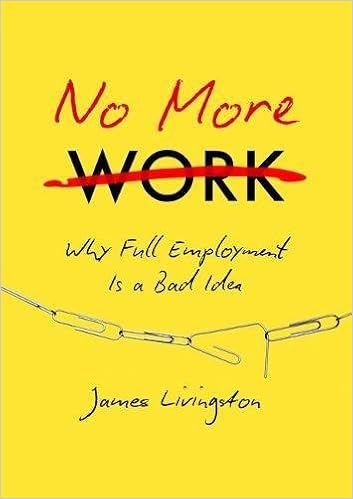
The idea of focusing on a guaranteed job does run somewhat counter to James Livingston's "No More Work," so arguably, Jacobin is being more capitalist than the best versions of BI. (Santens says BI is "neither capitalism nor socialism," which I find somewhat facile.)

That said, this is where two forks of pragmatism trump one of idealism.

I believe GE will be easier to implement than any basic version of BI.

I believe GE would return more benefit than any basic version of BI.

November 24, 2017

#BasicIncome and the 'gig economy'

Approximately a seven minute read; part of an ongoing occasional series on basic income issues.

I appreciate the work Basic Income evangelist Scott Santens does. I would like for us to have some sort of basic income — with certain caveats about what type of basic income, what it will include or not, and how effective it will be.

One big concern of mine, related to many touters of basic income and their actual or perceived political leanings, relates to where our economy has been headed more and more in the last 10-20 years, especially with the rise of Net 2.0.

I'm talking about the "gig economy."

Even if it's not outrightly libertarian, but more, say, tech-neoliberal, the gig economy raises issues for basic income. And, the libertarian basic income and the socialist one are NOT THE SAME. That piece is a must-read, as it talks about how UBI in Silicon Valley is based on the gig economy.

The first is how much your version of basic income is actually going to pay out.

If basic income isn't set at $1,500 a month or more, people will still need to work. That's especially true as long as American doesn't have national health care, which to me would benefit workers even more than a piddly $200-a-month or similar basic income. (See below.) They may have more options if they have income assistance, but they're still going to need to work. It's going to take some massive shifting to have half of Americans or more working primarily as freelancers. That's going to have to start with getting them in the right mindset. It's also going to have to include a higher minimum wage, and other protections for freelancers.

And, none of that's any good without single-payer national health care. Remember, the gig economy doesn't offer health insurance bennies.

And, that, in turn, gets me back to what I see as the single most important tool and aid for working America today. It is single-payer national health care.

For that matter, the gig economy doesn't offer bennies in general. There's no paid vacation time. In fact, there may not even be unpaid vacation time, as in "You say you're unavailable for a week, we say we don't want you any more."

Of course, even the non-gig economy doesn't offer guaranteed-by-law paid vacation rights. Yet another way we're behind every other "developed" nation in the world.

There's also the issue of regulating businesses in an ever-more-freelance economy. Federal laws for timely payment of freelancer checks (already needed now) come to mind. Enforcing federal fraud on bogus employment ads.

And, as the Equifax scamming has shown, laws for control of information in a Net 3.0 information services economy are vital.

In short, we're looking at a lot more moving parts in a lot more places than a first-level impression of basic income might make you think.

The likes of Santens probably says that BI will, of itself, empower employees that much.

Nope. Not as long as you're still that focused on work and not that focused on employer regulation.

I said in that earlier post that Santens seemed caught between two stools. One is an Alaska Permanent Fund type "supplement," whether its $200 a month or slightly more. The other is between true income replacement, which, even in more rural areas, probably needs to be more like $1,500 a month, with Santens' $1,000 a month an attempt to straddle those two stools. (He'd be eyeing true replacement income at closer to $2,000 a month in metro areas perhaps, and $1,000 just about splits the difference between $200 and $2,000.)

But, behind that is two different stools of philosophy.

Does Santens merely want to give employees more leverage within the current system, even while knowing that this means more people will have to get better at hustling up gigs, since that's where the current system is headed in the US? Or does he, per the original "Fuck Work" title of James Livingston's "The End of Work," really want to attack, ultimately, the full sociological infrastructure of labor and markets in the US?

He's said before that BI is "neither capitalism nor socialism." Well, that may or may not be true. But, he, even with some social justice emphases, seems to tilt more capitalism.

Livingston is adamant, per this Baffler interview, that we need to break the current sociology. The subhead to the story specifically attacks the Protestant work ethic, after all. If you want to read more, the book is here in PDF.

From my own current employment path, I can tell you that we need something more radical than I think Santens theorizes.

Matt Bruenig offers up supporting evidence. Getting outside of the big picture of income inequality, similar differentiations exist within different age groups, and different educational levels. The most logical conclusion in my world is that this is structural.

And, the failure to think outside the box inhabits the corporate world, too, to be sure.

The media industry, at the corporate level, remains glued to capitalism, even as its capitalism, plus its own mistakes within a radically shifted, yet still quite capitalistic, playing field, that literally decimates it. (Per the actual Roman meaning, the media world is expected to lose another 10 percent of employment in the next decade or so.)

A gig economy, like that to which more of the media is moving, plus $1,000 a month of basic income, even as the gig economy swamp gets larger and employers bid would-be employees off against each other more and more, is no answer.

And, true empathy of Santens aside, and noting that his website notes he's been self-employed for several years, he's an IT-type person. He's been in the gig economy by nature of his profession. At the same time, the IT world, and related Internet-driven career paths, are more and more transnational. That may make it easier to look outside current nation-state boundaries, but it also makes it easier to overlook that, for all of its faults, the nation-state still has relevance in today's world.

Let's look at, say ... the low-seniority person on a two-man trash truck, out of a job when the city goes to new one-man trucks. He's not an IT person, and a month's worth of training at the unemployment office isn't going to change that. Besides that, other people, even if they're work-at-home telecommuters, still want the stability of a regular full-time job with a single employer.

And that's not all.

I mean, businesses that aren't losing jobs, at least not yet, have already been shoving people into "gigs." In the US, if you drive a truck, you're now a "contractor" and not an employee.

Is that the fault of nation-states in general? No, it's the fault of the US, where conservative Republicans have pushed this mentality and tech-neoliberal Democrats have stood by and accepted it, or in some cases, helped push.

Transnational labor protections? Let me know when the International Labor Organization, for the good it actually does do on occasion, writes world-wide labor safety laws and other protections and has the teeth to enforce them.

Until the United Nations becomes something like a world government, I'll take the 500-year-old nation-state over libertarian or tech-neoliberal alternatives.

Otherwise, along with Branko Milanovic, yes, I know the nation-state as welfare state is going to struggle further with more globalization. I also, and again along with him, know that answers aren't going to be easy. And, he, along with Rutger Bregman, agrees with me that we need to rethink work, and do it before going too far down the BI path.

And, cryptocurrencies (separate post in the future) won't help either. Indeed, to the degree they undermine nation-states, they'll be part of the problem. And, Santens has repeatedly on Twitter supported not just Bitcoin, but cryptocurrencies in general.

And, Santens also follows on Twitter both Turning Point USA and founder Charlie Kirk. Now, follows, and even retweets, don't mean endorsements, with most of us. But, one can quote-tweet, or now, with the new 280-character limit, easily add commentary. The fact that TPUSA considers Black Lives Matter a terrorist group should tell one enough about it.

Meanwhile, Santens, who says in his bio that he's been self-employed since 1997, even before the start of today's gig economy, has reasons to support a libertarian version of BI that kills workman's comp and makes at least part of Social Security replaced by BI. The self-employed pay the "double share" of FICA taxes, so that's the Social Security angle. They're also not eligible for worker's comp, which explains that angle.

And?

Fix that, along with fixing other things, like how ever more US states are becoming "right to work get fired" states, making worker's comp worth ever less. Fix that, and allow the self-employed to be eligible for worker's comp with whomever they're contracted to at the time.

Update: WeWork, as profiled by the Guardian, seems like a hypercapitalist gig economy partial overlap with a gig economy version of BI, or at least swimming in the same circles.

Meanwhile, while we are indeed NOT "all in sales," the gig economy, as driven by neoliberalism, is trying to get us to believe we all should be in marketing — self-marketing.

October 11, 2017

Bad math + bad branding and marketing = bad ideas on #BasicIncome, for me

Approximately 10 minute read; part of an ongoing occasional series on basic income issues.

I appreciate the work Basic Income evangelist Scott Santens does. I would like for us to have some sort of basic income — with certain caveats about what type of basic income, what it will include or not, and how effective it will be.

But with Santens, as with many evangelists, you don't get the full sell right away.

That's very true in a new piece by him, claiming that getting everyone in the US $1,000 a month in basic income would only cost $900 billion net.

First, I don't think he has it there, and it's a 25-minute read which I didn't go through, but teh Google at the office told me that the "everyone" is only adults. Niños get just $325 a month.

Reality is that, on gross costs, it's $4 trillion a year, if we look at all the US of 325 million as adults and citizens (assuming that's also a restriction). But, let's round down a bit, to play with Santens.

Since $3.85 trillion is the entire US budget this year, that's his ask. I Tweeted about that Thursday night.

After that, the next morning, he accused me of "not doing the math," then Tweeted the image at left.

No, I had just gone to bed, and figured his math would eventually involve a chunk o taxes, which it does.

And with that, here in just a minute, we're going to start getting to the real nut cutting of what's wrong with his taxes.

This piece, which also tells us the $12K isn't for kids, has the details of how Santens wants to scramble for nearly $3 billion with a B in new tax revenue, cut Social Security in half, presumably cut SSI and SSDI entirely, and more.

The EITC?

I agree with half his tax reform, but eliminating the earned income tax credit? No. That does a fair amount of undercutting basic income for the poor. Eliminating food stamps, or TANF? Refederalize it rather than a state program of block grants. (Indirectly more than directly, as he’s never commented on a previous blog post of mine, though we have talked a bit on Twitter, Santens and I have definitely disagreed here. He thinks any federal program that isn’t currently working well should simply be thrown on the scrap heap and replaced with BI. Says the same for disability income.)

I've blogged before about how I adamantly oppose gutting disability programs on ethical and philosophical grounds, too. I totally stand by that, unless, per the bottom, Scott wants to give people TWO THOUSAND a month.

Beyond THAT, the EITC has long been recognized as “negative” basic income, and a good version of it. Why tinker with, or screw up, what works? And, if you eliminate it, even if you also cut FICA taxes for Social Security by partially rolling it into basic income, I'm not sure that you're actually helping the poor that much.

BI vs Social Security?

Reduce Social Security. and replace the part reduced with 2x basic income? No, that's going to increase some red tape. Plus, unless you're going to make half of BI for seniors tax-free, or other issues, you're still going to have to tweak BI for seniors more.

Ditto on Social Security as "it works."

That then said, this is my first opportunity, of several, to tell Santens to go "whole hog." If one is going to propose $1,000 a month basic income, rather than the $200 a month the Alaska permanent fund offers there, or the $500 or so a month of trial basic income in places like Canada and Finland, go whole hog, Scott?

If you're going to "touch" Social Security, why not kill it? Then, give seniors a "basic income multiplier" similar to the over-65 tax deduction. Don't present your hybrid mule instead of either that or the current system, though.

As for the idea that Social Security is "really" basic income? Uh, no. It's based on employment year earnings and is not given equally to all. Retweeting an untrue claim like that in the name of "branding" is bad branding, once again, like the Alaska claim.

Also, this gets to the practicality issue. Social Security will remain a third rail of US politics for years to come. Your unreality squared on what you can actually pass will only increase if you try to touch it.

As for complaints about SSDI and how hard it is to get approved? Well, fix that!

A targeted safety net?

To pick up on things above, the EITC isn't targeted. It's a "negative tax," so it's not actual cash Andrew Jacksons. But, it's not targeted in that it's not restricted.

Neither are unemployment bennies. SSDI has caps, but it's not targeted either.

Only food stamps (TANF) and HUD Section 8 vouchers (strangely not mentioned by name in most BI discussions) are "targeted," as far as larger social welfare programs.

Oh, and if targeted programs ARE a problem, you'd better add yet more money to BI if you're going to kill Section 8.

Keep non-environmental hands off carbon taxes

Carbon tax? Well, no carbon tax unless a carbon tariff is attached. First, that makes it more palatable. Second, in terms of climate change, a carbon tariff forces the whole world on the same page.

And, no, I wouldn't want all carbon tax revenues to go to BI, either. At least some of that needs to go to climate change mitigation. Others needs to go to climate change prevention, like more, and all-electric, mass transit, high speed rail, etc. To put it bluntly, I'm opposed to ANYTHING other than climate change issues being at the top of the list on spending carbon tax money. Period.

After all, to the degree people can move away from climate change, the rich can do that more than the poor, and even than the middle class.

So, in my version of BI, at least half of Santens' $190 billion from carbon taxes isn't available.

Other revenue streams?

A Tobin tax? (The technically correct name for his Robin Hood tax?) Totally agree on it.

Taxing land valuation? Politically totally unrealistic, especially if you try to do it on top of a VAT, which winger Americans will sneer at as Euro-socialism.

Beyond that, a federal-level land tax has never caught fire in the US since Henry George first proposed it. And he knows that, too. Appraisal problems nationwide would be tough. Yes, Russia uses it, but Russia's not a fully democratic country.

And, how much would be needed? Santens just plugs it in as contributing a full $1 trillion.

And, on all of this, changes to the tax code don’t happen in a vacuum.

That includes searches for new tax loopholes or even outright tax avoidance. Don't doubt for a minute that won't increase with a BI program this big.

This all leads to a more fundamental issue, or problem.

With national health care, for example, I have no problem pushing for something “unrealistic,” even elements of a British national health system with government-hired medical employees and government-owned facilities. I think even that, let alone “plain” national health care, is still a whole order of magnitude more realistic than Santens’ ideas.

But, I've only scratched the surface.

Get real about Alaska

After that, Santens claims, again, and wrongly, again, that Alaska points the way to accomplishing his idea for basic income.

This is only true under this being another bait and switch.

Alaska's $200 a month basic income is nowhere near $1,000 a month. And, with cost-of-living adjustments, it's only $100 in Lower 48 money. Plus, it's funded from a resource tax that is perhaps partially analogous to a reverse carbon tax and nothing else on Santens' checklist.

And, I'm halfway sure Santens knows all of this. I'm highly sure that he should know all that.

That, in turn, goes back to the "evangelist." Not for nothing did Og Mandino call Paul of Tarsus the world's greatest salesman.

Political philosophy and basic income

Finally, there's a philosophical difference or two or six between him and I.

The most immediate difference? If you believe that basic income should replace disability income, and even more, unemployment bennies, then $1,000 is too LOW. You should be wanting at least $1,500 a month, if not $2,000 a month. And, if you're proposing something this unrealistic, what's the difference between $1,000 and $2,000? Well, it's the difference between the entire current federal budget and TWICE the entire current fellow budget. I think Santens is recognizing that political unreality on steroids is just doable with magic pony dust, but that pony dust can't cover up political reality in aleph-two infinity.

(In the real world, while Canada is looking at giving people nearly $1,500 a month in its upcoming test program, both Finland and Italy are looking at $500 a month.)

Next, what do you mean by "basic income"? Riffing on this piece, if you mean enough to let a person live in something more than shithole housing, pay all utilities including either smartphone or landline internet, to either have money for maintaining and insuring a used car or else for mass transit in an urban area, to buy food for the month that includes stuff healthier than white rice, white bread, white-flour pasta, etc. and to pay utilities, and to live in a big enough place where, as far as actually working, jobs are available? Actual income "basic" enough for all basic needs? Even if you agree with Santens that we don't need to be paying New York City levels or close to it, $1,000 a month might well not be enough.

There's also another philosophical issue — the one of "fairness." Should the disabled, the unemployed, and others in similar situations get an extra bump? I agree emotionally to some degree with John Rawls, though philosophically, per Walter Kaufmann, he's pretty close to all wet. This gets back to the amount issue. If you don't think these people deserve a "bump," then, IMO, you have to set the BI level higher than $1,000 a month. I do think so myself, emotionally.

In addition, the attacks by another BIer, applauded by Santens, on keeping unemployment benefits with BI are ... well, they're ignorant. Beyond my "too low," they ignore that most BI pilot programs are being started by neoliberal centrist parties in whatever nation they're in, first.  They then ignore that that, in turn, is deliberate. They also ignore that parties of the left in Europe have, rightly, or wrongly, over the past 15-20 years, already modified much of their unemployment structure.

(Also, the experts cited there are all IT-focused economists. Tech neoliberals. What Evgeny Morozov would call "solutionists." Take their claims and arguments carefully.)

Basically, I get the feeling Santens is falling between two stools. One is an Alaska-level "chippie" program, and the other is what I'm saying he should be saying. But even he knows that the $1K magic pony he's proposing has less than less than zero chance of being a $2K magic stallion.

Tools to help Americans

An Alaska-type basic income wouldn't solve a lot of problems. It would solve a lot less than single-payer, even without my NHS, in my opinion.

Simple — your health care right now is worth at least $400 a month (if you have employer health care) between your co-pay and employer co-pay. And, single-payer would boost job mobility just as much as basic income.

Basic income wouldn't even be my second tool for addressing US employment problems, and I've blogged about that before too. A 35-hour work week for overtime, combined with a $10/$12/$15 minimum wage for rural/suburban/urban areas, like Oregon's, WITH a COLA? That, as a package, would be my second tool. German-type long-term unemployment bennies would probably be my third.

In other words, as I've blogged before, BI is simply not a magic wand. (Other dubious evangelism is at that piece, like Santens' claim that BI would fight climate change. You have no way of being even close to knowing that, Scott, and in fact, it might make it worse.)

And on a related note? Santens talks very little about single-payer national health care unless it's within talking about BI first. Googling by his full name plus either "single-payer" OR "Medicare for all" gets about 700 hits total.

Googling his name plus Bitcoin? 14,000 hits. (He even accepts Bitcoin donations on his blog.)

Bitcoin is not such a tool

And THAT is the final issue.

Bitcoin is a wet dream par excellence for many libertarians. Santens' apparent semi-bromance with it, plus other libertarian-leaning tweets and Twitter accounts he follows ... leaves me still uncertain of just how much he'd "cave" to libertarian-leaning versions of BI. (I mentioned a bit of that in my "no magic wand" piece already.) I've "warned" him and similar that they need to separate themselves from libertarian-leaning versions, or they lose the likes of me, and even possibly get my active resistance.

Besides the bottom line that cryptocurrencies are ultimately a wet dream for libertarians, they are of little value, if any, for promoting basic income in particular, or the betterment of working-class people in general. If anything, as part of that "wet dream," they're detrimental.

After all, they're related the libertarian wet dream of dismantling nation-states so allegedly pure capitalism can run amok as the invisible hand does its perfectionist thing.

Well, libertarians are in denial that pure capitalism not only doesn't exist, but never will. They're in denial that Adam Smith derived his "invisible hand" from the wind-up- the-universe deity of deism.

His claim that basic income is "neither capitalism nor socialism" is also ... interesting, and also sounds like a libertarian-based branding point. That said, Santens isn't a pure libertarian; if he were, the phrase "more taxes" would never escape his lips. Maybe an "anarcho-futurist," if I feel I have to strive for labeling, myself? He does have an "@futurism" note on his Twitter profile. See my note above about Morozov-type solutionists. Many are cryptolibertarians — usually hiding it from others, but sometimes from themselves.

Santens really seems to be about issues of social and other justice. That said, many true libertarians claim their ideas are about that, too.

And, seeing how much I wrote at the end? I'll probably develop this into a separate blog post at some point down the road.

The traditional nation-state needs to be upgraded, at a minimum, replaced, at worse. A "Wild West" of Bitcoin or other cybercurrency is definitely not part of the answer in my book, though.

Even if Santens isn't that sympathetic to libertarians, let me add another note to this issue. Per Wiki, many libertarians — and some paleoconservatives of the Charles Murray stripe — promote basic income in terms of "government inefficiency." It's another version of the old "waste, fraud and abuse" slogan. But, the government is supposed to be running any BI program, right? Well, this might itself be a bait and switch. Wait for a call for the likes of Ross Perot's old Electronic Data Systems to get called on for a BI administration contract.

And, beyond Bitcoin, Santens has said elsewhere that he also supports the idea of private citizens creating money in general AND that it would be a good thing for the economy. Applying the US Constitution's "full faith and credit" to dollars, and other nation states' similar backings of its fiat money, uh, NO. What if a private individual's "full faith and credit" is bankrupt? Is it time for libertarian lawsuit land?

And, speaking of the traditional nation-state? North Korea is conducting cyberwar against Bitcoin as well as the the nation-state of the US and others. And he's at least as successful against Bitcoin.

BI and the gig economy

And, even if it's not outrightly libertarian, but more, say, tech-neoliberal, there's this whole issue of the "gig economy." If basic income isn't set at $1,500 a month or more, people will still need to work. They may have more options if they have income assistance, but they're still going to need to work. It's going to take some massive shifting to have half of Americans or more working primarily as freelancers. That's going to have to start with getting them in the right mindset. It's also going to have to include a higher minimum wage, and other protections for freelancers. And, none of that's any good without single payer.

And, that, in turn, gets me back to what I see as the single most important tool and aid for working America today.

There's also the issue of regulating businesses in an ever-more-freelance economy. Federal laws for timely payment of freelancer checks (already needed now) come to mind. Enforcing federal fraud on bogus employment ads.

And, as the Equifax scamming has shown, laws for control of information in a Net 3.0 information services economy are vital.

Transnational labor protections? Let me know when the International Labor Organization, for the good it actually does do on occasion, writes world-wide labor safety laws and other protections and has the teeth to enforce them.

Until the United Nations becomes something like a world government, I'll take the 500-year-old nation-state over libertarian or tech-neoliberal alternatives.

In short, we're looking at a lot more moving parts in a lot more places than a first-level impression of basic income might make you think.

And, other than that possible follow-up on cryptocurrencies — and maybe one about the "gig economy" — I'm probably done talking about BI for some time. My left-liberal and beyond political push, per the best tools I said above, will remain with pushing for national health care.

Meanwhile, while we are indeed NOT "all in sales," the gig economy, as driven by neoliberalism, is trying to get us to believe we all should be in marketing — self-marketing.

Actually, with this as a start point, I'm already working on a "gig economy" blog post, which will also get into the regulatory nation-state and related issues. It will be a few weeks out, so I have time to cogitate.