SocraticGadfly: voting
Showing posts with label voting. Show all posts

January 19, 2026

How worried should you be about Texas sending your voter info to the feds?

"Moderately" would probably be the right answer, per last week's story. We'll know more about our worry level if and when stool-straddler (between Bushies and MAGAts) and general hypocrite Jane Nelson, the Texas Secretary of State, answers the questions she's been asked.

Tex-ass is already a state that sells your driver's license info to private business capitalists, which is why I don't have the worry level higher. 

More than moderately would be the answer not about the data itself, but Nelson's craven surrender, given that one federal court — over California — shortly thereafter ruled the request is indeed unconstitutional

September 13, 2024

Third-party update, Sept. 13

The Fifth Circuit has officially screwed third parties in Texas, upholding a district court ruling on Tex-ass's 2019 ballot access law. (BAN link has the court opinion, or click here.)

It not only upheld the district court's opinion, it overturned the one ray of sunshine in that opinion. The district court had ruled that the state had to accept electronic signatures and electronic ballot access petitions. That, too got tossed.

Thanks, Drew Springer.

Interestingly, as of the time I posted this Friday afternoon, neither the Green Party nor the Libertarian Party of Texas has it on Twitter. And, after I tagged both parties, as of Friday night, neither had it on their websites. Texas Greens also didn't have it on their Facebook.

You know, if you are going to complain about vote suppression, at least publicize something like this in a timely fashion.

==

Strange that part of why Brainworm Bobby dropped out (he did, the "suspended" is just to remain eligible for any dribblings of federal matching funds) was because his campaign was reportedly getting tight on cash and I presume his Veep Nicole Shanahan wouldn't loan it any more. (Or "loan" it. I presume she's not dumb enough to have considered that a literal loan.)

But? He has money to sue Michigan (and lose), Wisconsin, North Carolina (and lose), and counting to get back off the ballot. He also wound up losing New York to get ON the ballot, which he was still pursuing.

Those lawyers aren't cheap.

Well, Wasted Space is a lawyer himself, so, like Tricky Dick, these are lawyer's lawyers.

 And, as of Sept. 6, Wasted Space officially and truly withdrew, other than sucking on the FEC teat for the rest of the third quarter, by asking all his voters in all states to vote for Trump. Nuña the Nutter will still refuse to eat any crow, but, he gets more and more ridicule at BAN all the time from others besides me.

==

As of last week, while it appears the PSL will still fall short of being eligible to have 270 electors elected, it's still above 200, a first, per Wiki. That's far and away the best of parties to the left of the Greens.

As I've hammered on, off and on, for months, the Socialist Party USA has been basically invisible this election cycle. Per the link above, as of early September, it was only on the ballot by name in one state and write-in for Bill Stodden in eight others. That puts them behind the Trots of the Socialist Equality Party and the cultists of the Socialist Workers party, who somehow are ahead of the SEP.

==

Independent Political Report has a roundup of nonduopoly candidates' responses to the duopoly parties' presidential debate.

Related? Free and Equal Elections Foundation has reportedly invited seven candidates, including the two duopoly ones, to its fourth debate. (Nuña the Nutter raised all three Cerberus heads in a comment there — racism, sexism and Islamophobia.) Let's see if that holds. Claudia de la Cruz didn't make the invite cut for the third one, meaning there was nobody to the left of Jill Stein, which she loved.

==

Robert Kraus is the interim head of the Liberal Party, the Libertarian break-off for the non-Mises Mice.

==

If you ever wondered how much state legal systems can be biased against third-party and independent candidates, Georgia is the new poster child, per Ballot Access News.

==

Not all third parties, or even all third parties of the alleged left, oppose Israel's genocide in Gaza. Learn the cultist story behind the pseudo-Trots of the Socialist Workers Party.

==

The Texas Trib had a semi-failure (shock me) in discussing independent voters.

November 09, 2023

Texas Progressives talk wallbuilder hypocrisy and more

Reminder: Texas Progressives stand with Gaza despite Genocide Joe and despite an Israeli cabinet member's talk of nukes

BlueAnon may have thought I was talking about Wallbuilders' David Barton's hypocrisy, or that of followers. Nope.

Dade, Strangeabbott and Danny Goeb can't agree on exactly what to do on more border controls. That said, anybody with a legal brain CAN agree that House Bill 4, written by my Legiscritter, actual lawyer and House impeachment manager David Spiller, is unconstitutional and anything stiffer certainly will be.

Meanwhile, folks in the area of Sunland Park, New Mexico, are laughing at Strangeabbott's "state-line wall." 

And, speaking of walls, Wallbuilder Joe's new effort has the Department of Homeland Services stooping to even using the same company as Wallbuilder Greg and Wallbuilder Don. It also has Wallbuilder Joe's DHS doing the same environmental waivers as Wallbuilder Don's. One thing different? Wallbuilder Joe trying to bury the news that an actual contract had been issued. Biden and DHS jefe Alejandro Mayorkas have blamed a 2019 Congress (Dem controlled, BlueAnon!) for passing the funding and it not later being revoked. Environmentalists note that it still doesn't require the DHS environmental waivers. Neither responded to Observer questions, thus indicating their true colors.

In national politics, SocraticGadfly looks at how RFK Jr. is bringing new campaign bucks, big donors who previously were neither R nor D, to his 2024 presidential campaign, as well as the GOP lean of previously affiliated donors.

Collin County owes two prosecutors of weaselshit Warren Kenneth Paxton a bunch of money, and it sets a precedent as his case finally nears trial. Speaking of, it's funny as hell to hear hypocritical Kenny Boy object to this as some sort of planned stall tactic. Collin County indicates it will still refuse to pay; the Trib's story doesn't say what leverage the judge has in that case. 

Was Williamson County Judge Bill Gravell Jr. right before he retracted his original statement that election denialist Laura Pressley caused a poll worker's heart attack?

GenocideGreg joins GenocideTed in support of GenocideJoe by traveling to Israel.

ERCOT gets a budget bailout, but probably still isn't fixed. Joining the two national grids would help, but ...

Tex-ass hates Inflationmonger Joe's Inflation Reduction Act, until Wayne (Not A) Christian can leech off it, and all the better if it's leeching off antienvironmental carbon capture bullshit.

Off the Kuff presents the October campaign finance reports for Texas Democratic Congressional candidates.

Neil at the Houston Democracy Project said Republican plans to attack civil liberties if returned to White House in 2024 are very much an issue in Houston and Harris County electoral politics.

CultureMap reports on a new Rice University NSF-funded study on flooding. 

The Texas Living Waters Project lauds Houston's new building codes as a win for the environment. In the Pink Texas meets the new Speaker.  

El Paso Matters decries the harsh new anti-immigrant laws introduced during the special session.  

Texas Election Source announces its re-launch.

Another reason to "soak the rich" on taxes? Their effect on climate change

Dear Leader's call to modernize nuclear weapons pits is a disaster and boondoggle at Los Alamos.

October 05, 2022

Texas Progressives talk about judges and voting rights

SocraticGadfly talks about Judge Pitman screwing over third-party candidates in Texas.

The Fifth Circuit (shock me) said that MALDEF et al don't have standing to sue the Texas SoS over its list of allegedly "caged" potential nonvoters.

Off the Kuff follows up his mockery of Ken Paxton with a note about what Paxton was really running from and why it mattered.

Several things to note about the pair of brothers accused of killing one illegal immigrant and wounding another. The immigrant detention center where Michael Sheppard was warden until being fired had faced previous human rights violations allegations in 2018. Related to that, which the Trib notes but doesn't stress enough is that it was a private prison. Second, Michael and Mark then calmly went to a water board meeting, which would say that they're also guilty of failure to render aid. 

Stace reminds us that Greg Abbott's border sideshow continues to cause death and waste.

If Beto didn't like debating before an empty hall (and during Friday night lights, no less) why did he? The actual "debate" (as such things are known) sounded like a slight edge for him over Abbott, but no knockout, no TKO, not close. Justin Miller weighs in at the Observer, noting both that Strangeabbott "dodged any landmine" and that the format for the "debate," even worse than many others with just 30 secs for comment and 15 for response, made it worse. And, of course, Libertarian and Green candidates weren't there. Forrest Wilder has thoughts at the Monthly, including Abbott's claim that Beto-Bob agreed to the empty hall.

Ken Paxton: The guilty flee when nobody pursues, Proverbs says. They flee even quicker, after hiding, when they knew you're looking.

Uvalde's Robb Elementary has three survivors suing multiple respondents. The City of Uvalde and Uvalde CISD will likely get off on sovereign immunity. The cops still on duty may or may not Fired CISD chief Pete Arredondo probably will not, and his firing will be involved. The gun manufacturer and accessory manufacturer? Let's see. Hey Berners? Remember when Bernie fought to keep gun makers immune?

The Metromess, home to medical debt and capitalist pig hospitals. We need a British NHS, not "just" national health care.

Houstonia reports on Houston's Afro-Latino Garifuna community and how it's keeping its culture alive.

Melissa Fletcher Stoeltje remembers the impact of legal abortion with no regrets.

The Dallas Observer finds your new favorite subreddit.

In The Pink Texas goes back to her roots by recasting a political saga as a rom-com.

Michael Li explains the Alabama redistricting case now before SCOTUS and its possible implications for the Voting Rights Act.

September 29, 2022

Judge Pitman just fucked over third-party candidates in Texas

Per the federal lawsuit filed by Texas Libertarians, Texas Greens, and other third parties and independent candidates in 2019, blogged about by me at the time, in depth, here ...

U.S. District Judge Robert Pitman officially fucked over the plaintiffs. Summary judgment for Texas Secretary of State (then Ruth Hughs) on all but one item, per the ruling. Via Ballot Access News, and contra the first commenter, allowing petition e-signatures is NOT significant, whether this is the first such ruling or not.

The meat of the ruling starts on page 18 of the 28 page ruling. Pitman says the signature amounts required are not unduly burdensome, first. He then notes Greens have only had to do that once in the past 16 years and not at all since 2002 for Libertarians, therefore claiming, in essence, that this is nugatory. He then says that lesser third parties who were plaintiffs aren't "active," so, in essence, they don't count. 

Starting on page 24, he rejects that the new filing fees are unduly burdensome. He doesn't even wrestle with the issue of minor parties not being convention-nominating parties. Related to that, on 25ff Pitman rejects the idea that the differential ballot access violates the Equal Protection Clause. He says that's because candidates can do the petition route instead. He did allow the e-signatures, yes, but did not strike down the amount required after saying it's not burdensome and insinuating it's nugatory.

As for details of his ruling on e-signatures? The SoS will likely adopt the most restrictive version possible, meaning, we'll be back in court. And, next year's Lege may, with e-sigs being allowed, decide to up the number of signatures required to, say, 1.5 percent or even a full 2 percent. It's got Pitman's blessing, pretty much. Let's also remember that Pitman did nothing about the restrictive time frame for signing such petitions.

And this is why, contra commenter Mark, I don't consider the e-signatures that big of a deal. In my response, I think I said "due process." I meant the Equal Protection Clause. There's no way, unless he was a total hack like Judge Cannon, that Pitman could have ruled any other way on that issue. Everything else, he told the state of Texas to "carry on." So, if it wants to raise signature requirements or something? It will.

December 14, 2021

Texas progressives roundup: Reproductive choice, election stupidities, more

As many have heard, SCOTUS said SB8 would stand for now, while letting legal challenges proceed; it also narrowed the range of lawsuits available to abortion providers, including letting most politicos in Texas, like Kenny Boy Paxton, off the hook. That was after a state district judge said it was unconstitutional the day before. The district judge, like the Supremes, said the law would stand while legal challenges played through state courts; in other words, no injunctions.

The biggest takeaway at the federal level is that the Umpire, John Roberts, has officially "lost" the court on abortion issues. Dahlia Lithwick vividly concurs, complete with umpiring analogies. The second-biggest takeaway is that the "five" tipped their hand. Gorsuch said they weren't ruling on the constitutionality of the law or not, but by leaving the "citizens lawsuit" enforcement in place, that providers couldn't sue Paxton, district judges or district clerks, but only the head of DSHS and medical licensing boards, means they really WERE ruling on its constitutionality. Per Lithwick, yep, that's gaslighting by Gorsuch.

Off the Kuff reviewed the state and federal Supreme Court rulings on SB8. (Editor's note: Kuff's BlueAnon take on SCOTUS is somewhat more "spun" than what I have listed above as part of this week's Roundup, re who can be sued, though he admits at the end that damage has been done.)

===

GOP wingnuts in Amarillo are going to run their own primary, outside of the county clerk or election board apparatus. Complete with paper ballots. Contra county Rethuglican chair Dan Rogers, we know turnout increased nationwide in 2020 and surely there, too. That's just the start of this. County officials will still manage mail ballots, for both Rethuglicans and Democraps. But, Rogers says that, contra normal practice, on early voting in person, it will have to be like election day — vote your home precinct only. Yep, this, per election pros, WILL piss people off. Like his own Rethuglicans. As for the possibility that hand-counting paper ballots will INCREASE errors, supported by research? "I don't need studies," he says, sounding like a true modern anti-science Rethug. Even more fun? If he violates the ADA in any of this, he can be fined. Possibly sued. And, he's personally liable.

==

SocraticGadfly talked about the latest lawsuit against Texas election law.

Meet Texas' "Dead Sea."

"Stand your ground" meets "Blue lives matter." Which one wins in the wingnut world? In Midland, it's stand your ground (and not shocking to me). That said, the Monthly needs to edit more carefully. I never "knew" that Snyder was south of Midland.

Once again, DPS and the Secretary of State are being a joint clusterfuck on voting eligibility challenges.

Did you know there's an EPA Superfund site in metropolitan Dallas, in Grand Prairie? Details here. Naturally, it's in a low-income, high-minority neighborhood.

How much more will a boom in LNG exports, and an increase in oil exports, wreck the Gulf Coast?

Dallas County Judge Clay Jenkins supposably has a Dem primary opponent. Billy Clark can't be much of an opponent if, as of Dec. 11, last Saturday, his campaign website doesn't work. (In addition, attorneys who put "Esq." after their names are usually laughably pretentious, even with the overall pretentiousness in the legal profession.)

John Coby notes the "critical race theory" flareup in Clear Creek ISD.

Mean Green Cougar Red comments on the problems transit agencies are having hiring and retaining bus drivers.

The Austin Chronicle has a South by Southwest update.

The Current is on top of one San Antonio ISD's willingness to pull library books off the shelf.

April 15, 2021

Texas progressives roundup: more on voting and Abbott Blackout

Per the header, those issues continue to lead the Texas Legislature's plate. (That said, there's plenty of other stupidity in the Lege, and plenty of lost opportunities on bills not considered.)

With that, let's dig in.

R.G. Ratcliffe says SB7 is a continuation of the Abbott-Whitley attempted voter purge of 2019.

Off the Kuff analyzes the big Senate and House voter suppression bills.

The Texas Civil Rights Project reminds us that there are other, smaller but still malicious voter suppression bills to watch out for. 

Progress Texas highlights the efforts to put pressure on the Legislature to reject voter suppression.

The Lege still refuses to require the RRC to require weatherization. My legiscritter, Drew Springer, protested at first on the Senate side, but then willingly accepted signing off on Charles Schwertner's head fake. I guess Drew really fell for the oil and gas bidness PR head fake. Meanwhile, ERCOT claims it has sovereign immunity from lawsuits, even though it's a private entity. Given some past history with the Texas Supremes, that may not play out legally. At the same link, ERCOT's insurer is claiming that this is legally NOT an act of god and that it should therefore be off the hook.

SocraticGadfly says that with new legislation on the table in Oklahoma and passed in New Mexico, Texas faces new pressure to liberalize its marijuana laws.

Stace is riding for Alzheimer's Research. Read about it, and, if you can, make a donation!

Emily Eby personally points out all of the bad things in voter suppression bill SB7.

Charles Luke opines against the proposed ban on local governments hiring lobbyists at the Legislature.

Judd Legum and Tesnim Zekeria get Honorary Texan status for the week for their deconstruction of Dan Patrick.

National

RIP to America's best attorney general at least since World War II, Ramsey Clark.

The NYT editorial board doesn't quite say the US should remove ALL Trumpian sanctions as part of restoring the Iran deal, but it comes close.

Yes, it's time to replace the 1953 Panmunjom cease-fire with an actual Korean peace treaty.

David Sirota's team thinks the DSA Roseys are actual socialists.

October 29, 2019

Mark Cuban supports third party vote rights in Texas

From an email press release by the Center for Competitive Democracy, the outfit backing the lawsuit by Greens, Libertarians, third parties and independents against Texas' restrictive ballot access laws plus the new filing fees of HB 2504, as reported by me earlier.

This intro and any body notes in italics, press release text in normal type.

Dallas-based entrepreneur Mark Cuban is speaking up in support of Texas voters in advance of a federal court hearing on October 31, 2019 that will determine whether a constitutional challenge to the state’s restrictive ballot access laws may proceed. The court will also decide whether Texas may enforce newly-enacted ballot access requirements that threaten to limit voter choice in the 2020 election cycle. HB 2504, the legislation imposing the new requirements, took effect on September 1, 2019. As construed by Secretary of State Ruth R. Hughs, HB 2504 requires that all candidates seeking the nomination of a ballot-qualified minor political party either pay a filing fee or submit a nomination petition by December 9, 2019 to appear on Texas’s 2020 general election ballot. A group of voters, candidates and political parties are challenging the new requirements as part of a lawsuit alleging that several provisions of the Texas Election Code violate their First and Fourteenth Amendment rights.

Per my update of that original blog post, Hughs' response to the plaintiffs request for an injunction on filing fees was so non-responsive it looked to be written by Ken Paxton.

Prior to the enactment of HB 2504, ballot-qualified minor parties were entitled to place their nominees on the general election ballot after nominating them at their self-funded conventions in the spring of the election year. Under HB 2504, all candidates who seek a minor party’s nomination must now comply with the same filing fee or nomination petition requirements as candidates seeking to appear on the primary election ballot. The plaintiffs allege that because they do not participate in the taxpayer-funded primary election, Texas has no legitimate interest in imposing the new requirements.

The United States District Court in Austin will hear oral argument on the plaintiffs’ motion seeking to prevent Secretary Hughs from enforcing HB 2504 against them in the 2020 election cycle, as well as the defendants’ motion to dismiss the case. The plaintiffs allege that the burdens imposed by the new requirements are so severe, and the time permitted for complying with them so short – barely more than three months after HB 2504 took effect – that they will be excluded from Texas’s 2020 general election unless the court grants them relief.

Cuban, who co-stars on ABC’s “Shark Tank” and owns the Dallas Mavericks among many other ventures, issued the following statement in support of the legal challenge:

I believe in Texas Exceptionalism and the value we place on independent thinking. We want the best of Texas on our ballots, not just those that fall within the party system. For these reasons I am supporting the challenge to HB 2504.

Oliver Hall, founder of the non-profit Center for Competitive Democracy, which represents the plaintiffs in the lawsuit, said he was “pleased that Cuban is speaking up on behalf of Texas voters who want more meaningful choices on the ballot.”

Personally, I'm no more a fan of the myth of Texas Exceptionalism than I am that of American Exceptionalism. But, this issue falls partly under "the enemy of my enemy is my friend."

In addition to the new requirements that HB 2504 imposes on minor parties’ candidates, the lawsuit challenges the requirements that minor parties and independent candidates must meet to become ballot qualified, including the large number of handwritten voter signatures they must submit on paper nomination petitions in a limited period of time, as well as the restrictions on when nomination petitions may be circulated, which voters are eligible to sign them, and the deadlines for filing nomination petitions. 

In 2020, the challenged provisions require minor parties to obtain 83,717 valid signatures on paper nomination petitions in only 75 days. Independent candidates for statewide office must obtain the same number in as few as 30 days, if there is a run-off primary for the office they seek. Independent candidates for president need to collect 89,692 valid signatures in just 69 days. 

The plaintiffs – Mark Miller, Michele Gangnes, Scott Copeland, Laura Palmer, Tom Kleven, Andy Prior, America’s Party of Texas, Constitution Party of Texas, Green Party of Texas and Libertarian Party of Texas – allege that the cost of obtaining the required signatures will exceed $600,000 in 2020, largely because Texas’s nomination petition procedure is obsolete. Texas first adopted that procedure in 1905, and it has not been significantly updated or improved in the 114 years since.

Under HB 2504, candidates seeking a minor party’s nomination for statewide office also must pay a filing fee of $5,000 or submit a nomination petition with 5,000 valid signatures by December 9, 2019. The law imposes similar, but lesser, filing fees and signature requirements for district and local offices.

This is what Hughs gets most wrong. HB 2504 only requires the actual nominees to pay the fees. And I think CCD's press release is misphrasing this, as that is part of the injunction request. (I've asked for this to be clarified. Stand by.)

By contrast, Texas guarantees ballot access to the two major parties by means of taxpayer-funded primary elections. Texas has also adopted electronic procedures, at taxpayer expense, which minimize the burden of administering the major parties’ primary elections.

The plaintiffs assert claims for the violation of their rights to cast their votes effectively, to speak and associate for political purposes, and to the equal protection of law. The lawsuit, captioned Miller v. Hughs, No. 1:19-cv-00700, names Secretary of State Hughs and Deputy Secretary of State Jose A. Esparza as defendants in their official capacities, and seeks to enjoin the state from enforcing the challenged provisions.

The hearing on plaintiffs’ motion is at 9:00 AM on October 31, 2019 in the United States Courthouse, Courtroom #4, Fifth Floor, 501 West 5th Street, Austin, Texas.

October 25, 2019

Pew Research tells Texas Dems to still be wary
about "counting on" Hispanic votes

I first blogged about this in detail six years ago, and did a follow-up four years ago. I provided some updates within that six-year piece about new demographic information.

I am NOT primarily talking about Texas Hispanic voters' abysmal turnout rates. That's a whole nother story and well known to many.

No, I'm talking about how many Texas Hispanics ain't Catholic (and maybe aren't social justice, let along libertarian theology, oriented within their Catholicism).

And, THAT is where the new Pew Research

Here, let's just let the image do the talking.


I think that's pretty obvious and self-explanatory. And I'll gander, that with allowances for rural Valley Texas, Texas overall matches Hispanic trends in greater NYC, Florida and the West Coast.

Protestants, especially of evangelical stripe, are more likely to vote Republican.

BUT! Protestants didn't replace those lost Catholics; Nones did, followed by non-Christian religious. Among Hispanic Christians, I'm guessing Santeria, etc. might be as much of the non-Christian rise as are Hispanic Buddhists, Hindus, etc. The biggie, though is the Nones.

And, especially among minorities, I don't think we have a strong grasp on how Nones vote. They may be less likely to vote Republican than Democrat, tis true. But they may also be more likely to look for third party or independent candidates, OR more likely to look to stay home if they don't find a close match.

July 16, 2019

RIP John Paul Stevens, a librul only by SCOTUS standards

John Paul Stevens, named to the Supreme Court by Gerald Ford and serving until Obama replaced him with Elena Kagan, has died at 99. He was the third-longest serving justice ever.

He eventually — near the end of his career — became known as a liberal of some sort. That's only because in the Rehnquist Court, especially from Shrub Bush's time on, and then the Roberts Court, the Overton Window of the Supreme Court shifted right a whole house from even the Burger Court and a whole neighborhood from the Warren Court.

At the time many Republicans bitched about the "apostasy" of David Souter, Stevens did not face complaints like that, though he did have a few murmurings. Indeed, as Jeffrey Rosen wrote, he still considered himself a "judicial conservative" as late as 2007.
I don’t think of myself as a liberal at all.
Emphasis is in the original.

Indeed, a year AFTER that, he voted with a largely conservative majority to uphold a photo ID requirement on voting, in Crawford vs Marion County, basically opening the doors for the Kris Kobachs of the world, and buying the reasoning behind such claims. That said, at Ballot-Access, Richard Winger says he often voted in favor of third-party voting issues.

Per that shifting Overton Window, Rosen records Stevens as saying:
"It is my firm conviction,” Justice John Paul Stevens wrote in the case striking down race-based enrollment policies in public schools, “that no Member of the Court that I joined in 1975 would have agreed with today’s decision.” 
No doubt there.

Indeed, Stevens himself noted the Overton Window:
Including myself, every judge who’s been appointed to the court since Lewis Powell has been more conservative than his or her predecessor. Except maybe Justice Ginsburg. That’s bound to have an effect on the court.
I see him as some version of a Bob Dole Main Street type conservative. But not a liberal.

I otherwise encourage readers to read through the full Rosen piece. It goes beyond just the Overton Window to look how liberalism had changed since the Warren Court. Rosen doesn't use the word "neoliberal," but he does use words like "technocratic."
Even the most liberal justices today have little appetite for the old approach.
 Judicial liberalism, in other words, has largely become a conservative project: an effort to preserve the legal status quo in the face of efforts by a younger generation of conservatives to uproot the precedents of the past 40 years.
Well put.

Stevens also, Rosen notes, was fairly generous on criminal rights. OTOH, he hated flag burning and supported it being declared unconstitutional non-speech.

Beyond his political stances, Stevens was idiosyncratic. For example, he tried to ground abortion rights in a freedom from religion interpretation of the First Amendment. I agree with such an interpretation, but without even having to reference prominent secularist AND prominent pro-lifer Nat Hentoff, could have told Stevens that was a no go.

But, he also was a hard worker. As Wiki notes, he wrote first drafts of opinions himself. Also, he took the first look at cert positions himself. Most justices liberal and conservative alike have their clerks do this.

And, this all said, thank doorknob he was not an originalist, as it's a crock of shit. And, per Rosen, at least he's not one of the modern technocrat libruls, among whom Breyer is the worst, and arguably to the right of where Stevens was on First Amendment issues. Ditto Kagan.

That said, he had some other, also serious problems.

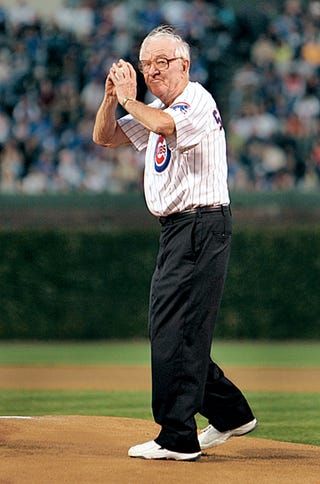
Like being a Cubs fan!

And, I say that not just as a Cardinals fan.

Since Stevens was born on Chicago's South Side, he was some sort of front-runner, and traitor to the White Sox. That too probably ties with him being not at all a liberal.

After all, as he defended himself because the White Sox kind of sucked when he was a kid, liberals are supposed to like the downtrodden.

Well, the Cubs pretty much sucked after 1945, too. So there.

July 11, 2019

Third parties, independents sue Texas over HB 2504
and other ballot access restrictions (updated)

Note: The following, in Roman, is verbatim from a press release by Oliver Hall, legal counsel for Center for Competitive Democracy, and Jane Nam, media and communications manager with Shearman and Sterling. (It's not complete, but everything here is verbatim.)

And now that I have it up, I have posted a few interspersed thoughts in red italics.Updates from the original are in blue-green italics.

A group of Texas voters, candidates and minor political parties filed suit today (July 11) in federal court in Austin, alleging that the Texas Election Code violates their First and Fourteenth Amendment rights by imposing discriminatory and severely burdensome requirements on independent candidates and minor political parties that seek access to Texas’ general election ballot. The filing challenges the combined impact of several statutory provisions, including the large number of handwritten voter signatures that must be submitted on paper nomination petitions in a limited period of time, as well as the restrictions on when nomination petitions may be circulated, which voters are eligible to sign them, and the deadlines for filing nomination petitions.

Update, early August: The plaintiffs have already filed their first amended complaint. Among other things, it notes Texas has changed signature requirements in the past. The biggie is that it notes that "primary parties" have ballot access taxpayer-funded. (That said, the amended complaint follows Paxton's language in referencing just the gov's race, too.)

Then, to the heart of the matter. The complaint notes that "primary parties" can do many things electronically with the state, including most submissions related to the primary process.

Next, it attacks the issue that independents and non-2 percent third parties can only start signature drives after the duopoly primaries AND cannot get signatures from people who voted in primaries. Personally, I think this is a First Amendment violation. The complaint later notes that.

Next, it goes on to note the cost of paid petition drive workers, often necessary in such cases, and that this is not only an additional burden, it's one the duopoly parties again don't face.

-  -  -  -  -  -  -

Update, Aug. 9: Fresh off losing a case at the Fifth Circuit over Indian adoptions, the state's one-eyed spavined mule, AG Kenny Paxton, has filed to dismiss, citing the paucity of independent candidates. This not only ignores the third parties, of course, but, per Ballot Access News, ignores that the Eighth and Ninth Circuits have ruled individual voters, not just indy candidates, have standing in such types of cases. He also gets previous and current state law wrong; the access threshold is 2 percent of any statewide race, not the gov's race. He then claims the petition laws are sound. "Assuming facts not in evidence" would be the immediate counterargument, especially given that the plaintiffs have made the argument that they're not constitutional. 

Given the complexity of issues, I highly doubt the Fifth Circuit will dismiss in toto. I'm not sure if it will buy a counterargument from other circuits on independent candidates, or individual voters, and standing.

Should I see a second amended complaint, in response to Paxton, I'll post it.

-  -  -  -  -  -

Update, Aug. 22: The Secretary of State's office has now officially stated the fees of HB 2504 must be paid. With this, and per another comment at Ballot-Access News, I presume an injunction request by the plaintiffs is next.

-  -  -  -  -  -

And, update Oct. 10, yes, that injunction request has been filed. Reasons listed are threefold:
1. That the language of the law itself says it only applies to actual convention nominees, not anybody indicating a desire to be nominated. And so it does say, right up at the top.
2. It's a violation of due process due to relative lack of time to prepare for it.
3. The key to the whole case: that filing fees for convention parties are unconstitutional.

I'm not a constitutional law scholar, but, I think our plaintiffs have a very good chance of succeeding, since this is in federal court, on Article 1 alone. Were it in Tex-ass state court? Nuther story.

That said, I don't know if it was just time issues, or waiting for Abbott to name an official Secretary of State (Ruth Hughs) or some strategery that I don't know about that it was held for seven weeks.

Update, Oct. 18: Hughs has responded. And it's horrifically weak. She claims that 
1. The plaintiff's 1 is not true.
2. That nobody besides Greens and Libertarians have standing, arguably, to fight this (despite rulings to the contrary in other federal courts).
3. On plaintiffs' 3 et al, using language like "flout" is inflammatory and designed to be so.

-  -  -  -  -  -

Update, Dec. 3: Late last month, the federal judge in the case had a perplexer. Contra Hughs' request,  he refused to dismiss. Contra the plaintiffs, he also refused to enjoin. (Yes, judge Roger Pitman a preliminary injunction may be extraordinary, but there's this thing called a calendar and a time frame and plaintiffs' request is based on Dec. 9.)

But, Libertarians just won an enjoinment in Harris County. (Why Greens, in what has long been considered their bastion in Texas, weren't part of this, I don't know.)

Updates, Jan. 12, 2020: The SoS's fight against that enjoinment is getting hearty discussion over at Ballot Access News. For the SoS advisory on HB 2504 mentioned by Jim Riley, it's here.

=======

In 2020, the challenged provisions require minor parties to obtain 83,717 valid signatures on paper nomination petitions in only 75 days.  Independent candidates for statewide office must obtain the same number in as few as 30 days, if there is a run-off primary for the office they seek. Independent candidates for president need to collect 89,692 valid signatures in just 69 days. 

The plaintiffs – Mark Miller, Michele Gangnes, Scott Copeland, Laura Palmer, Tom Kleven, Andy Prior, America’s Party of Texas, Constitution Party of Texas, Green Party of Texas and Libertarian Party of Texas – allege that the cost of obtaining the required signatures will exceed $600,000 in 2020, largely because Texas’s nomination petition procedure is obsolete.  Texas first adopted that procedure in 1905, and it has not been significantly updated or improved in the 114 years since. 

“Collecting signatures by hand is inherently time-consuming, labor-intensive and expensive,” Miller said, “and collecting 80,000-plus valid signatures in the limited time allowed under Texas law is all but impossible without spending hundreds of thousands of dollars to hire paid petition circulators.” 

By contrast, Texas guarantees ballot access to the two major parties by means of taxpayer-funded primary elections.  Texas has also adopted electronic procedures, at taxpayer expense, which minimize the burden of administering the major parties’ primary elections.

This connects indirectly to the part of the suit that is about this year's HB 2504. See below. Per David Bruce Collins, this suit had been in the works well before 2504 was passed, but that legislation both was the more than the last straw and the foisting of primary-related costs on convention-based "minor" parties also provided the final legal wedge that could help boost the chances of success.

The plaintiffs allege that Texas could reduce the burden and expense its statutory scheme imposes on independent candidates and minor parties by adopting electronic procedures for obtaining voters’ signatures.  In Arizona, for example, the Secretary of State has implemented an online platform that enables voters to sign nomination petitions from the comfort of their own homes (available at https://apps.azsos.gov/equal/).  Other jurisdictions enable voters to sign nomination petitions on portable electronic devices.  Such procedures automatically validate a signature, and thereby eliminate the need to collect more signatures than the requirement. 

“We filed this lawsuit to restore and protect the right of all Texas voters to cast their votes effectively for the candidates of their choice,” Miller said.  “As plaintiffs, we represent a wide range of political views, but one point on which we all agree is that every citizen has an equal right to participate in Texas’s elections.”

The plaintiffs are represented pro bono by the non-profit Center for Competitive Democracy (“CCD”) and Shearman and Sterling, LLP, a global law firm with 23 offices, including in Austin and Houston. 

“Texas’ burdensome ballot access requirements and obsolete procedures combine to create a financial barrier to entry that is insurmountable for non-wealthy candidates and parties,” said CCD attorney Oliver Hall.  “We think the federal courts will recognize that Supreme Court precedent prohibits Texas from limiting participation in its electoral process to those with financial means.”

“It is essential that voter choice not be limited only to those candidates able to overcome severely burdensome Texas election procedures,” said David Whittlesey, a partner in the Litigation practice based in Shearman & Sterling’s Austin office who is representing the plaintiffs. “This lawsuit seeks to secure a more open, competitive election process to give Texas voters more options at the ballot box.”

A ballot access bill introduced in the Texas House in 2017 (HB 3068) and 2019 (HB 4439) would have established constitutional requirements and procedures for independent candidates and minor parties, but it was not enacted.  Instead, in 2019 Texas enacted HB 2504, which imposes an additional filing fee or nomination petition requirement on individual nominees of minor parties, in addition to the nomination petition the parties must file.  The plaintiffs also challenge these new requirements.

Texas does, as the suit notes, allow nominating petitions as an alternative to filing fees. But, as noted above, this still has its own burdens, even if the petition signature process for a third-party nominee is lower than for a third party to get party-wide ballot access, or for an independent to qualify.

The Texas Libertarian Party had indicated it would sue over this, even before Abbott signed the bill into law. It's good that Greens, and other third parties, as well as individuals, are all on the same page on this. It's bogus, and I personally think bill sponsor Drew Springer (R-Muenster) knew it was bogus. Without the portion of the bill that went from one election to a five-election cycle for the 2 percent threshold for getting party-line ballot access, he had peddled this same bill in the previous two legislative cycles. I think he figured adding that, knowing it would help Greens, with the idea it might hurt Democrats, convinced some Republicans to sign on.


The plaintiffs assert claims for the violation of their rights to cast their votes effectively, to speak and associate for political purposes, and to the equal protection of law.  The lawsuit, captioned Miller v. Doe, No. 1:19-cv-00700, names the Secretary of State of Texas (presently a vacant office) and Deputy Secretary of State Jose A. Esparza as defendants in their official capacities, and seeks to enjoin the state from enforcing the challenged provisions.

Commenting further, specific to 2504? Drew first drew this up as an anti-Libertarian bill, in my opinion. Don't forget, that without the amendment of the five-election period for determining qualification for statewide ballot access, he had peddled the original bill in the previous two legislative sessions. And, it will be fun to see emails and other communications from the previous two Lege cycles related to this bill's predecessors get brought up in discovery.

I'm not sure why it passed, and what sausage-making led Springer to amend it this time. Maybe some Republicans who have faced general election challenges from Libertarians were worried about getting them too angry, in the previous two Legislatures. Maybe they figured the apparent anti-Democrat angle of lowering ballot access to make it easier for the Greens to get on and stay on made it more worth it. (I'd love to see if any of this comes out in the discovery process, of course.)

Once more unto the gerrymandering breach

The Supreme Court last month was down with gerrymandering, and we know how that plays out in the Pointy Abandoned Object State™. Ever since Bug Man Tom DeLay's mid-decade redistricting almost 15 years ago.

First, the ruling itself? I think it was in a gray zone between right and wrong constitutionally. Roberts is right that the founders probably expected some degree of politicization, while ignoring that those same founders believed America had, or would, transcend petty political parties. At the same time, he also ignores that many state legislatures have vested redistricting power in nonpartisan redistricting commissions, undermining his argument to some degree. At the third time (shades of Idries Shah!) he is right that, unlike, say, race, the courts have nothing close to an objective standard for determining what is too partisan.

So, overall, while not hugely right, it is right constitutionally as I see it.

That said, this blogger has long said the real answer is proportional representation off a national list (or state list for state elections), just like most of continental Europe. But, both halves of the duopoly would rather gerrymander than empower third parties like that.

Eric Foner, at The Nation, has a take on the ruling that's about ... oh, 3/5 correct, and yes that's a pun. Foner is right in that the Founders didn't envisage, or desire, political parties. But, modern critical histories of the American Revolution note that Loyalists and Patriots arose, at least in part, from King's Party vs Country Party divisions back in Britain, so, it was one of the more major idiocies of the Philadelphia 1787 era for them not to do so. Beyond that, there's plenty of other things they didn't envision, whether they should have or not.

And, given that the Elbridge Gerry of gerrymandering namesaking fame WAS a Founding Father, this claim isn't totally true anyway.

Foner is right that the Court has pulled this stuff before. He cites one of Holmes' worst rulings (without noting that Holmes had many others, and that this might not have been the worst) on a related issue. That said, he ignores that the Court has, in the past, repeatedly intervened in racial gerrymandering cases, making his neat condemnation actually not so neat. Now, the court may also retreat further in the future on those such cases, but, we'll see that happen when it happens if it happens. Foner does get bonus points for using Bush v Gore as a petard/sledgehammer combo.

But the overall tone of the piece comes close to, if not veering into, "liberal originalist" takes on the Constitution, and given what I think of Larry Tribe and Akhil Reed Amar, I ain't a fan.

But, at lest Foner is better than the political craptacularness written by John Nichols.

Nichols, among the most open of The Nation's senior staff in hating third parties in general and Greens in particular, has the hypocritical gall to accuse the Roberts Court of supporting political privilege.

==

Beyond that, there were other rulings that were worse. The Bladensburg Cross ruling was horrendous and I don't see The Nation saying boo about it. Maybe because two librulz, Breyer and Kagan, were among teh stupidz.

September 16, 2016

No, our elections are not being hacked

The Dallas Morning News does some good reporting on this one.

Takeaways:
1. Regarding being hacked by Putin or whatever, electronic voting machines aren't connected to the Net.
2. Regarding being hacked by Diebold, generally, observers from both duopoly parties are at polling places. (Let's hope that third parties get enough membership in more places to do that.)
3. Votes in Texas are then manually audited.

That said, while half of Texas counties use machines that produce paper vote printouts, that means half don't. Beyond the issue of hacking, machine error happens and without that paper trail, it can't easily be investigated.

This is the type of thing that something like a Brad Friedman of Bradblog should be reading, then honestly trying to refute — if he can. But he won't.

Don't know about all people claiming vote hacking conspiracies, but I do know that he's a JFK assassination conspiracy theorist and probably has one or two other conspiracy theories in his woodshed.

As for "vote hacking" in general? Good old fashioned vote fraud may still happen somewhere. Contra GOP wingnuts, I'm not talking about individual citizens voting illegally. I'm talking about local officials corrupting the process.

June 18, 2016

Bernie Sanders wants to tarpaper over the Democratic shithouse

TruthDig/Common Dreams can turd-polish all they want on Bernie Sanders' endgame.

They can't hide that he is really just calling for greater numbers of slightly more liberal "good Democrats" like him to run for office or otherwise get involved within Democratic Party politics, while kicking third parties to the curb by ignoring them. And 'liberals' like Naomi Klein play along.

Bernie wants more 'open' primaries. Will that draw more in the way of caucus-based Greens, free to vote Dem, in will it draw more in the way of right-of-center independents (the Democratic Party is centrist, so indys between it and the GOP are by definition center-right), with some further Overton Window shifts, or in the case of Bernie's win in West Virginia and near-win in Kentucky, will it attract registered Republican spoilers?

At a minimum, real voting reform that benefitted voters, not the DemocraticParty, would include:
1. Easier creation of fusion slates (and constitutionally overturning bans on them in some states, on freedom of assembly grounds;
2. Easier third-party ballot access (Texas is notorious);
3. Public financing of Congressional and state office campaigns.

I'm not a Democrat, I'm an American. I want a fundamental transformation of elections.

As for the idea of more 'open' primaries, let alone the 'jungle' primary in non-presidential contests? Meh.

As a supporter of parliamentary democracy, I'd rather see parties forced to defend issues and coalesce. As for transforming the Democratic Party, I'd rather do it with the cudgel of outside pressure otherwise?

Bernie, to at least a few of us non-Sandernista non-kiddos, now that your value as a cudgel inside that party is fading away, you;re becoming more and more like a 3-day-old fish.

July 20, 2015

TX progressive bloggers talk #NewHorizons, #BlackLivesMatter, #LeonardPeltier, elections

The Texas Progressive Alliance asks What Happened to Sandra Bland, and what might happen to Blue Bell Ice Cream, as it brings you this week's roundup.

Off the Kuff looks at the lawsuit filed against the state for refusing to issue birth certificates to children of undocumented immigrant mothers.

Lightseeker at Texas Kaos makes a compelling argument as to why the Democratic Party needs to sharpen its message in a way in which it resonates with and motivates the majority of D voters. Why we need a better Democratic story and how Sanders' candidacy underscores this point.

Socratic Gadfly says that if Obama is going to visit a federal prison and talk about commuting sentences, he ought to throw the long bomb by going to Florida and freeing Leonard Peltier.

CouldBeTrue of South Texas Chisme wants you to know Greg Abbott screwed up child support payment upgrade.  Republicans don't really care about kids.  You can tell by action after action.

From WCNews at Eye on Williamson. The rotting fruit of one-party rule in Williamson County, County GOP Elected Officials Using Courts For Petty Political Battles.

The disruption at Netroots Nation's presidential town hall forum by activists associated with Black Lives Matter was a clash between the politics of the old-school Social Democrats and that of the New Democrats' identity politics.  PDiddie at Brains and Eggs thinks there will a coming-together of the two movements or a cleaving of the Democratic Party as the dynamic unfolds.

Neil at All People Have Value discussed Obama's role in taking away our freedoms through the New Horizons mission to Pluto. APHV is part of NeilAquino.com.


===============

And here are some posts of interest from other Texas blogs.

The Texas Election Law Blog celebrates its second anniversary, and reviews the case that led to its beginning.

Ken Janda asks how can Texas continue to ask for billions of dollars in uncompensated care payments to hospitals for uninsured patients coming to emergency rooms, when more than one million of those people could be put into Medicaid Managed Care?

The TSTA Blog warns of "dangerous anti-educator" Scott Walker.

Texas Vox cheers the forthcoming end of coal.

Grits for Breakfast is pleased to see that funding has been allotted for research into the underlying scientific bases for the forensic tools and methods currently used in the criminal justice system.

David Ortez gives a graphical representation of the Houston Mayoral fundraising race.

Rachel Pearson explains why that video hit job on Planned Parenthood is "pure applesauce".

Texas Clean Air Matters documents the trend towards clean, affordable power.

June 09, 2015

TX Progressives tackle ethics, racism, Perry, Clinton, voting

The Texas Progressive Alliance is happy there's no hint of any special sessions to come as it brings you this week's roundup.

Off the Kuff notes that while Travis County is ready for the Supreme Court to legalize same-sex marriage, there's likely to be no small amount of chaos in the state once they do.

Letters from Texas explains how a recent ruling in a North Carolina redistricting case may bode well for Texas' plaintiffs.

LightSeeker at Texas Kaos calls "ethics reform" in Texas for what it is.  Government is for, by and of the highest bidder.  Texas leads the pack. Texas Ethical Reform - DOA.

SocraticGadfly, reading about a new study that claims classical psychological conditioning during sleep can reduce racist tendencies, has two thoughts: it's either too good to be true, or, if it has real and lasting change, it's probably got an element of Clockwork Orange.

CouldBeTrue of South Texas Chisme is glad McAllen ISD and others are taking care to feed children during the summer.

Do you think Greg Abbott's first legislative session as governor was a success or a failure? PDiddie at Brains and Eggs wants to know.

From WCNews at Eye on Williamson, the threat was enough for the clandestine video scheme that may have changed the game on the budget and taxes in 84th Texas Legislature, Timing Is Everything.

Neil at All People Have Value offered a framework about how to live our lives. APHV is part of NeilAquino.com.

Nonsequiteuse missed the Houston Mayoral Candidates Arts and Culture Forum, but it got her thinking about getting arts organizations out of their silos and engaged as advocates for progressive change.

On her long road seeking the Presidency, one of Hillary Clinton's greatest challenges will be to re-create the infamous Coalition of 2008.  This week at Houston's Texas Southern University, she worked hard to mend some fences, and shared some important views on Voting Rights.


================

And here are some posts of interest from other Texas blogs.

Texas Watch celebrated its victories from the legislative session.

Grits can't wait to see if the state's new junk science writ will be interpreted broadly or not.

The Texas Election Law Blog asks if our government is supposed to represent everyone, or just everyone who is allowed to vote.

The Texas Living Waters Project warns of a new environmental danger to the Brazos River.

Molly Cox bemoans low voter turnout in San Antonio.

Keep Austin Wonky explains how percentage-based homestead exemptions help fuel inequality.

Paradise in Hell is not impressed by Rick Perry 2016.

Texans for Public Justice and Public Citizen call Greg Abbott "just plain wrong" on the matter of dark money and disclosure.

Texas Vox managed to find a few small rays of hope from the legislative session.

Equality Texas produced its report card for the 84th Legislature.

April 28, 2014

Additional reasons to support the popular election of US presidents

Nearly 14 years ago, bush v. Gore reminded us that the popular vote in presidential elections doesn't always square up with electoral votes. Even without the loser in the popular vote winning the electoral vote, in a very tight election with third-party candidates, the winner may have only a plurality, not a majority.

But that's not the only reason to support direct popular vote of presidential elections.

Here are some related reasons.

First, we technically have no official national vote for president. That's because of the electoral college system, compounded with the fact that each state's voters, in what is now essentially a formality, vote separately. The electoral college is the only official vote there is. Usually, as it has been for years of presidential elections, the Associated Press's tally of state-by-state popular voting is summed up and made into a quasi-official figure. But that's not the same.

But that's just a minor point, albeit the introduction to the main one.

If we have direct popular voting for the presidency, that would be a national vote, across state lines. And, it would therefore require federal government oversight of presidential elections. I don't know if, in addition to fear of "the masses," this was another reason the Founding Fathers rejected direct election. I've never seen it mentioned in serious constitutional histories. Anyway, it doesn't matter.

Obviously, even more than the tatters of the Voting Rights Act that still remain, this would arguably allow for direct federal polling observation, etc., in places of concern. As far as disenfranchising voter ID bills, it would arguably prevent states from applying such a standard to presidential elections unless red-staters could force through a federal voter ID bill of similar stringency, or unless they decided they wanted to go to all of the expense of officially conducting all other elections separately from a presidential vote.

Obviously, this would mean that we would need a Federal Election Commission with actual legal teeth.

And, in the case of those pluralities, if we rightly insisted on an absolute majority to win? The FEC, rather than going through an expensive runoff process, could institute instant runoff voting or something.

October 25, 2013

Russell Brand and not voting


Russell Brand's BBC interview is drawing a lot of fire, from his statement that we're creating a more permanent, more worldwide, more entrenched underclass, through his statement we need some sort of revolution, and finally at his thoughts on not voting in a democracy. I take the written quote from the Guardian's summation of the interview:
"Apathy is a rational reaction to a system that no longer represents, hears or addresses the vast majority of people. A system that is apathetic, in fact, to the needs of the people it was designed to serve."
It seems that progressives (one friendly Texas blogger, I know of) as well as conservatives are jumping on this one.

Sorry, but I'm with Brand, and I'm not alone.

About a decade ago, the Dallas Morning News had interviews with a lot of ’60s era civil rights activists from the Dallas area. You know what? A number of them felt like Brand, and said they hadn't voted in years, if not decades.

I agree with Brand, overall. The Guardian's columnist nuances the issue:
Should Brand be taken to task for rejecting the vote in this context? Yes and no. No, because his rejection clearly resonates with, and is reflective of, a growing sentiment in wider society where, in fact, actual majorities in our liberal democracies do not vote - not because they are apathetic, but because of the abject apathy of a broken political system in the face of the crisis of civilisation. Yes, because simply disengaging from the prevailing political system is another extreme reaction that is, in fact, part and parcel of the very system it purports to reject. Because the more the majority disengages, the more a decreasing minority is able to dominate the political class.
Sadly, big bucks from both the Republican and Democrat (sic on purpose) parties hope more people agree with him, and get apathetic not just about the act of voting, but about politics in general.

However, it appears Brand is NOT apathetic about politics in general. Or let's hope not. Back to the Guardian:
That does not mean the solution lies within the prevailing political paradigm. Brand's call for revolution, for a fundamental political, economic, cultural and cognitive shift, is on point. But rather than entailing disengagement resulting in anarchy, this requires the opposite: Engagement at all levels in order to elicit structural transformation on multiple scales through the overwhelming presence of people taking power back, here and now. 
Agreed. At the same time, at some point, it requires having specific goals, specific "toolkits" for working on those goals, prioritizing goals, and making other strategic decisions.

In short, we need people taking back power, but we don't need the Occupy mythical nonsense of "leaderlessness," nor the Adbusters/Anonymous mentality behind it.

Anyway, back on point, speaking of focus.

I support the act of not voting. I've done it before, myself, where both "mainstream" parties' candidates in a certain election were that unappealing and I had no third-party option.

Heck, Brand is British, and he's got a wider variety of options that might be electorally meaningful, being in a parliamentary system, even if the House of Commons is like the US House with first-past-the-post single-member districts.

January 30, 2013

Two simple ideas to address attempted voter blocking

Both, of course, would require a President and an Attorney General with cojones, therefore they won't happen while the Compromiser-in-Chief is still in office.

The first is one I've touted before.

Nationalize the 1965 Voting Rights Act. Including the "preclearance" part. In my legal layperson's mind, especially when combined with the 1964 "one man, one vote" ruling by the Supreme Court, it could also be used to attack gerrymandering more generally.
The Act established extensive federal oversight of elections administration, providing that states with a history of discriminatory voting practices (so-called "covered jurisdictions") could not implement any change affecting voting without first obtaining the approval of the Department of Justice, a process known as preclearance.
And there's legal grounds for this. State laws clearly designed to impede the right to vote of the urban poor, especially those of color, are to be found in several Rust Belt states where the GOP has recently gained state control. Also, American Indians arguably face voting discriminations in far more counties and states in the western United States than is often reported.

Tool No. 2?

Employ the 14th Amendment. Specifically, the second sentence of Section 2:
But when the right to vote at any election for the choice of electors for President and Vice President of the United States, Representatives in Congress, the Executive and Judicial officers of a State, or the members of the Legislature thereof, is denied to any of the male inhabitants of such State, being twenty-one years of age, and citizens of the United States, or in any way abridged, except for participation in rebellion, or other crime, the basis of representation therein shall be reduced in the proportion which the number of such male citizens shall bear to the whole number of male citizens twenty-one years of age in such State.
That's right. Arguably, it's Congress' power to enforce this, but, a strong President could take the bit in his mouth, and if necessary, sue Congress to take three House districts from Texas, two from Florida, or whatever else is deemed necessary. (Or one or two from Michigan, for that matter, per the discussion above.)

Of course, per the start of discussion, this administration would never do it.

October 23, 2012

How to address voting machine company ownership and presidential elections

With skepticism about the accuracy and security of voting machines going beyond knowing how they can misperform, going beyond even big campaign donations to GOP candidates by voting machine companies  like Diebold, we now read liberal conspiracy theory about Mitt Romney’s son, Tagg, investing in such companies. As Think Progress points out, this is about 95 percent untrue/overblown.

However, the first parts are true … and an investment issue like this could pop up among a future GOP — or Democratic — candidate.

So, what can be done?

Legislation can be done, if Democrats will step to the plate — both federal and state legislation.

Here’s a suggestion:

No candidate for federal (state) office shall own stock in any publicly traded company that manufactures, sells, markets or services voting machines, nor shall said candidate have an ownership share in any privately held company that manufactures, sells, markets or services voting machines, nor shall said candidate own stock in any publicly traded company or have an ownership share in any privately held company that owns, invests in, or has any stock or ownership share itself in any publicly traded or privately owned company that manufactures, sells, markets or services voting machines.

Said restrictions shall also apply to all relatives within the third degree of consanguinity of said candidate, as well as spouses or other persons who have a legally recognized personal relationship with said candidate or candidate’s relatives within the third degree of consanguinity.

And, after Democrats got the cojones to pass this at the federal level, use the stick of threatened withdrawal of federal voting assistance funds to muscle states to pass similar laws.

And, speaking of that ….

While we’re at it, let’s get a law passed, at the federal level, which stipulates something like this:

Given that the election for President of the United States is an interstate election and therefore a form of interstate commerce, voting standards for elections for President of the United States shall solely be determined by the government of the United States.

For presidential elections at least, it kicks everything from fake vote fraud campaigns to butterfly ballots and Bush v. Gore in the seat of the pants.