SocraticGadfly: endangered species
Showing posts with label endangered species. Show all posts

September 15, 2015

Corps of Engineers to be sued over Gulf turtles, other endangered species

From a press release:
The Friends of Lydia Ann Channel (“FLAC”) has formally notified the U.S. Army Corps of Engineers (USACE) of its intent to file a Federal Lawsuit for violations of the Endangered Species Act and other federal statutes resulting from serious substantive and procedural defects in their authorization of the construction and operation of a commercial industrial barge fleeting, storage, and service facility owned and operated by Lydia Ann Channel Moorings.  
This 60-day Notice of Intent is required prior to filing a citizen lawsuit under the Endangered Species Act, which is just one of the federal statutes violated by the USACE.  
The USACE’s authorization of this commercial industrial barge fleeting, storage, and service facility violates Section 7 and Section 9 of the ESA, and will result in adverse impacts to and the unlawful “take” of listed endangered species, including specifically whooping cranes, piping plover, rufa red knot, Atlantic hawksbill sea turtle, green sea turtle, Kemp’s ridley sea turtle, leatherback sea turtle, and loggerhead sea turtle.  
The USACE arbitrarily determined that no effects to listed endangered species would occur without ever requiring, conducting or reviewing any scientific surveys, studies, or evaluations regarding the impacts that would result from the construction and operation of this commercial industrial barge fleeting, storage, and service facility.  
In addition, the USACE dismissed or ignored issues raised by other resource agencies, including the Texas Parks and Wildlife Department, related to potential impacts to marine mammals and sea turtles, impacts to seagrass, and the risk of oil or pollutant spills to local habitats. 

None of this surprises me about the Corps, and it hasn't for well over a decade.

I laughed internally, long ago, when I was the editor of a suburban Dallas weekly, and a Lancaster City Council member with some interest in matters environmental thought how great it would be to have the Corps work on southern Dallas/Dallas County's Ten Mile Creek.

No, Carol, it would have been horrible.

December 16, 2014

Fifth Circuit still says "nyet" to whooping cranes

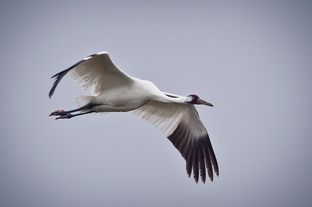
Whooping crane in Texas in flight. John Noll/USDA
Refusing to give serious reconsideration to an earlier decision that that overthrew a federal district court ruling finding the Texas Commission on Environmental Quality liable in whooping crane deaths for not sending enough water down the Guadalupe and San Antonio rivers during drought, the Fifth Circuit Court of Appeals declined to rehear the three-judge panel's ruling en banc.

That said, per the story, it looks like we're headed to the Supreme Court with this; Houston environmental attorney Jim Blackburn has already pledged an appeal.

As he well should. TCEQ doesn't even want to live up to the E in its name.

And, the Fifth Circuit in general is not known for being very enlightened, as dissenting judge Edward Prado pointed out:
The way the three-judge panel handled the case “sends a clear message to litigants: if you don’t like the factual findings of a district court, the doors of our Court are wide open to endless retrials on appeal,” Prado wrote. “This is the wrong message to send, and it evinces an alarming lack of trust in the work of our colleagues in the district courts.”
He continued: Given the eight-day bench trial in the original district court case, one involving ten expert witnesses, “The reweighing of facts in this case is particularly egregious.”

Indeed. Not surprising, though, is it?

The case was originally heard at the district level early last year.

Federal District Judge Janis Jack said the TCEQ failed to adequately manage Guadalupe River water flows, so that enough frewshwater reached the sea ot nourish crabs for the cranes' food.
“Inactions and refusal to act by the TCEQ defendants proximately caused an unlawful ‘take’ of at least twenty-three whooping cranes” in violation of the endangered species act, Jack held.
The biggie that she said drought was and is no excuse. 

And, the drought is likely, in at least some degree, to stick around for a while. And, unlike TCEQ, the Lower Colorado River Authority has, at least in the past, been cognizant of this.

July 01, 2014

Whooping cranes lose today, may win for future

Whooping crane in Texas in flight. John Noll/USDA
I agree with Jim Blackburn of the Aransas Project, on a three-judge ruling within the Fifth Circuit Court of Appeals that overthrew a federal district court ruling finding the Texas Commission on Environmental Quality liable in whooping crane deaths for not sending enough water down the Guadalupe and San Antonio rivers during drought.

The appellate panel ruled narrowly, mainly saying that TCEQ couldn't have had foreknowledge its actions would indirectly kill whoopers.

But, in looking for a silver lining, Blackburn notes that, with the whooper deaths of the suit now on record, the state now knows.

As rivers like the Brazos and Colorado, despite June's abundance of rain, face growing long-term problems, this is more incentive than ever for the state to seriously address long-term problems. The state's long-tern loan fund to build more shallow, high-evaporation reservoir lakes doesn't do that.

Conservation, linking groundwater with streamwater and other work must all be increased.

That said, I noted this is more incentive. Will the state listen? 

As long as TCEQ is run by anti-environmentalists who are also anti-open government, you know the answer.

February 16, 2014

#Photoshopping fakery from the Department of the Interior


The Washington Post recently (as part of its move, like all newspapers, to click-bait us with pictures and video) put up a set of the "the best" of the Department of Interior's Instagram account pictures.

I like the photos as far as artistry. I do NOT like them as being officially presented by the  when not all are "Natural" and not all are photos, but rather, photo illustrations. Slide 4, at Delicate Arch in Arches National Park, illustrates both problems. The backlighting of the arch is done by artificial light, and the Milky Way and sunset are clearly two, separate,   together night scenes, and, neither one is the night sky from the actual arch scene because the artificial backlighting would blow out the sky around the arch. It's false, and promotes a fake view of the outdoors.

Update, April 29, 2014: Via the International Dark Sky Association, which has a version of this on its website, which I learned by seeing it on a High Country News blog, I learned that both photo versions come from a Jacob W. Frank. It's on the slider on his website homepage. I've emailed him re the apparent photoshopping. I also left a comment, with a link to this post, on the HCN blog post. Stay tuned on both counts.

And, I have a partial answer from Frank so far, but not as to my main question. He says he shot a version with a headlamp (above) and one without (Dark Sky Association/HCN). That was the lesser of my issues. The bigger is about what appears to be two different sky backdrops, the "stars" in left and center and the "sunset" at right.

That said, he has followed up and said that the "sunset" is clouds reflecting light pollution from Moab. I've hiked up to Delicate once at night myself. It was pretty much a cloudless night, so I wouldn't have seen the same cloud bounce. Fair enough on the source; it's not a sunset. Nonetheless, I still lean toward the thought that it's a photoshopped image out of two different originals.

Why?

Clouds are about 1 trillion times closer than the Milky Way, to put it mildly and literally. Clouds of any thickness in general, let alone clouds thick enough to bounce light pollution from Moab street lights, would hide stars behind them, I would think. Even high ice-content but thin cirrus clouds wouldn't come off like this, I don't think.

So, great creativity, Mr. Frank. But, I still doubt it's a single image. On the other hand, if it were two different skies as a panorama, why wouldn't he have cloned out the stars on the right? To be fair, I'll try to remember to eyeball some night skies in this area when we get a few clouds. 

That said, I'm not going to ask any more questions. I explained my background as both an amateur nature photographer and as a newspaper editor, regarding my own photo experience.

Anyway, back to the original blog post.

Arguably, other photos also present a fake view of the outdoors, staying with my contention about the Arches photo, but in different ways. the photos tell a selective story. The Yellowstone bison picture has nothing about bison being hazed back into the park, for example.

The Photoshopping fakery, and the untold storylines, as in the Yellowstone picture, are problematic for other reasons, too.

First, the Delicate Arch picture also "blows out" the night sky. It's a LOT darker there than the planetarium-type picture shows, and I know that because I've taken a night hike to Delicate Arch. Unfortunately, my timing was off by a night or two for the perfect picture of shooting a moon, with lingering sunset, either in the arch's keyhole or just above it, and I don't Photoshop stuff like that. And, by not having any of Delicate Arch's background scenery in place, people don't realize that this is a hike of more than a mile, one-way, with a steady climb, almost entirely over slickrock sandstone. The Photoshopping has eliminated that backstory.

As noted, the Yellowstone story doesn't show the reality of bison who try to leave the park boundaries in winter for food being hazed back inside. It doesn't show bison being shot over the myth that they give brucellosis to cattle, when it's actually the elk being given hay at Grand Teton and elsewhere that do this. That, in turn, shows how larger environmental issues are omitted from the picture, like the unnaturalness of elk being fed hay, the unpictured naturalness of wolves hunting both them and bison, the extreme anti-wolf bias just outside the park's boundaries and more. (I've seen a couple of wolves casually wandering at the heels of a small herd of bison.)

Nor does Instagram from Interior show the reality of fracking for natural gas within view of that same Arches National Park that holds Delicate Arch, let alone oil sands extraction not too much further away in Utah.

In a day and age where Richard Louv can write about "nature deficit disorder," providing such false and sterile pictures of nature does no good.

August 22, 2012

More Texans in the #fracking PR tank, but no salamanders!

Norm Augustine thinks deep
fracking thoughts/Wikipedia
It turns out that not just University of Texas professor Charles Groat is "in the PR tank" on a study that claims fracking is no environmental big deal. So is his overseer.

In case you don't remember, the Energy Commission at UT that used Groat as its principle investigator said that fracking didn't contaminate groundwater. Then, it came out that he had been paid, last year alone, more than $400,000 by Plains Exploration, and that Plains was doing fracking in a site he had touted, too. There were other problems with the study, including claims of peer review that didn't stand up.

The chairman of the board of that commission is in that same tank, too. If you're a well-read progressive, you know that Norm Augustine has "issues," including being a big, big businessman in the defense industry. And ... was on the board of directors at oil biggie ConocoPhillips.

Here's the key points:
ConocoPhillips, whose work includes natural gas and hydraulic fracturing, donated $1.5 million to the Energy Institute in 2010. The company’s own fracking website cites the 2012 University of Texas study to stave off claims of environmental problems, as reported by Texas State Impact. 

While Augustine no longer serves on the board of ConocoPhillips, he continues to be paid by the company. According to a 2009 proxy statement, he elected to defer compensation of roughly $3.1 million in 10 annual installments beginning in July 2009. (More information on page 62 of that proxy statement.)
So, he's got a personal financial stake in a misleading report, too.  And, as "connected" as he is, he wasn't operating in a non-Big Oil vacuum.

Meanwhile, speaking of environmental problems, Texas' highest-ranking political numbnut, Sen. John Cornyn, is leading the opposition to more environmental protection for four salamander species north of Austin.
"Instead of hastily proposing these listings based on limited data, the administration should allow conservation efforts underway to continue without hindering Central Texas from creating jobs," Cornyn said Tuesday in a statement. "We'll press forward with our efforts to block this foolish plan." 
"Limited data" means "any amount of data that doesn't agree with modern Republican anti-environmentalism." (Trust me, or else go to Google Translator and try for yourself!)

January 06, 2012

Texas tightwad money attacks sound science

I guess Tricky Ricky Perry is too busy running for president in Reconsiderationville, S.C., to attack those evil environmentalists himself, while David Dewhurst is too busy doing ... doorknob knows what to attack, so Comptroller Susan Combs gets to do the heavy lifting in attacking efforts to preserve endangered species. Here's the nut graf quote:
Combs said that Texas was “trying to have our priority of research match the feds,” but that this was often difficult to achieve and frustrating. 

“I think this listing process is very burdensome, and I don’t think it’s based on sound science,” she said.
First, it's not "burdensome" unless you think that getting science right, and acting rightly on that, is "burdensome." But, given the history of Perry-era Tejas' relation to any federal, or even state-level effort to do anything to protect the environment or climate, that's exactly Combs' mindset.

Therefore, it's not so much that she wouldn't know sound science, but that she would refuse to admit it when she saw it, even if it bit her in the tuchis.

Here's the better pull quote, from Michael Forstner, a Texas State biology professor who is overseeing research on the Houston toad.
“Losing the toad is losing a native Texan,” Dr. Forstner said. 
Just as much as you are a native Texan, Susan Combs, the toad is, but with a pedigree just a few thousand years longer.

And, some apparently non-Big oil money is helping pay for some of the scientific research as to what species to list. Sure, even smaller oil companies may not like this, but, they recognize that they're on the front lines of wildcatting and that it benefits them to get a situation stabilized, vs. the eXXXons of the world that just want to be anti-environmental monkey-wrenchers.

December 01, 2011

Stop the dunes sagebrush lizard hysteria

Center for Biological Diversity says that, even on oil-drilling lands, the lizard, a candidate for Endangered Species Act protection, has habitat on only about 5 percent of the land.

In other words, this is just more ardent red-state pushback against regulations in general.

That's even as U.S. Fish and Wildlife is pushing back an ESA decision by six months.

April 01, 2011

Enviros wolf sellout may be for naught

But, we're seeing teh stupid exposed.

Western Congressmen are already trying to gut a deal brokered between the Obama Administration and environmental groups on how much protection, and at what administrative level, wolfs in Greater Yellowstone would get.

I blogged about what was wrong with that settlement here. At the time, I said I could understand the fear that Gang Green, and even a group like Center for Biological Diversity, more willing to legally confront the government and less suck-up to the Democratic Party, had that Congress would go further.

Well, that fear was real. And, this could be yet something else to which a budget settlement is made hostage, too.

That said, a group that did NOT sign off on the agreement gets it right, and always had it right:
"From the outset, it was clear that nobody from those Congressional offices had made any promises," said Summer Nelson with the Western Watersheds Project. "This settlement is not going to appease them."
Normally, someone like Kieran Suckling of Center for Biological Diversity is this smart, too. Why he and his group signed off on the agreement in the first place, I don't know. Ditto for other non-Gang Green groups.

Seriously, though. Signing "on the premise" of a Congressional deal is NOT the same as signing "on the agreement" of a deal.

Especially when it's not just Congress we have to worry about:
It is unclear whether the Obama administration will take a stand against the bills to give the settlement time to work. Interior Secretary Ken Salazar told Tester he supported the Montana senator's legislation during a March 9 appearance before the Senate Appropriations Committee.
It's clear that the Obama Administration, while more environmentalist that W's, is less so, overall, than Clinton's. Yes, the EPA is doing some good things, but on species protection? Yeesh. Kenny Boy Salazar was going to disappoint from the day he was appointed.

June 11, 2010

Scat, ESA-style

Sorry, all you eagerly anticipatory types, that I've not had a Friday scatblogging for a few weeks.

But, in honor of the Gulf oil spill, the highlighting of President Obama's thin and somewhat spotty presidential and pre-presidential environmental record and other things, I've got a good one:

Tracker dogs sniffing out endangered species by scat.

And, the work is needed, even in places you might not think. The story notes Alabama has 117 endangered species, for example. (Not counting any species on the Alabama Gulf Coast newly endangered by BP oil.)

Anyway, click the link above to read more about the dogs.

November 08, 2008

The enviro agenda Obama should consider

All seven of the item’s on Salon’s punch list are no-brainers – but still worth a look as to how much President Obama will actually do about them?

Five of the seven (see the list) I expect no trouble in Obama meeting them.

But – clean energy? I don’t expect him to back away from clean coal and ethanol, so that will be one failure. Serious, really serious, work on global warming will probably get kicked down the road.

October 18, 2008

Alaskan belugas get federal protection

Despite Sarah Palin’s continuing attempts to run out the string on protection, Alaskan beluga whales will FINALLY get endangered species protection.

October 06, 2008

Mammals in danger

Between global warming and other threats, one-quarter of the world’s mammalian species are at risk of extinction. Large, iconic animals — think bears, whales, primates — are at especially high risk.

July 18, 2008

Rocky Mountain wolves get reprieve from killers

For now, at least, Greater Yellowstone area wolves are out of the crosshairs of snipers’ scopes.

U.S. District Judge Donald Molloy has put the gray wolves back on the Endangered Species list.

It’s believed that more than 100 wolves, out of a population of 2,000, in Wyoming, Idaho and Montana, have been killed since being delisted less than four months ago.

Read here for more on hunting “plugging” wolves in Wyoming.

June 05, 2008