SocraticGadfly: Reagan (Ronald)
Showing posts with label Reagan (Ronald). Show all posts

August 09, 2020

New York Times "discovers" today's Religious Right,
wants news "consumers" to know its genius

"Christianity will have power"? Yes, it's a nice phrase, but ... was one line in one speech in Iowa enough to elevate the speech into Donald Trump's version of a Cornerstone Speech vis-a-vis his relationship to the Religious Right?

The New York Times would have you think so, and with throwing in some breathless marketing Tweets, further confirms why I wouldn't pay to subscribe.

First, two of those marketing Tweets and my responses:
Uhh, no. I don't "need" anyone.
There you are, Mr. NYT National Editor Marc Lacey.

Then this:
Sorry, but no translator needed, Ms. Deputy National Editor Yang.

Here you are:
And, since I posted a link to my original Tweet thread in that Tweet, I'll use it as the basic for finishing up this post.

First, per the header, yes, this is typical NYT bullshit, thinking it's discovered something new, when in reality it has not. Related to that is the quasi-bigfooting idea that if anybody else wrote about this in other media before, it didn't count because they weren't the NYT.

Second is the marketing of this geenyus to today's "consumers" (god I hate that word) of news. Trotting out two of your top editors to Tweet away shows that. It's also pretty heavy-handed. Laughably so.

First, before the Twitter thread, one more example of the NYT's alleged brilliance at being Captain Obvious? This:
The Trump era has revealed the complete fusion of evangelical Christianity and conservative politics, even as white evangelical Christianity continues to decline as a share of the national population.
In reality, with data research sites like Pew having written about this for three or four years straight now, the "Rise of the Nones" (which is a broader issue than just the decline of conservative evangelical Xianity, and blogged about me three years ago, as well as last year) is yesterday's news. As for the "complete fusion" issue? Forty years ago, the Religious Right backed for president a man who had expanded abortion access while governor of California, who never went to church and who consulted astrologers. (Ronnie turned Nancy on to that, not the other way around.)

Now, onto my original Twitter thread, with this blogpost being added to the end of it after being finished.

First:
See, that "bully" part is important. Per "The Rise of the Nones" issues, the Religious Right has been losing power for some time. Rather than sidle up to Hillary Clinton and her conservative DC prayer circle warrior background with The Fellowship, though, because she was pro-choice, and ignoring that Trump long had been so, they backed Trump.

The bullying? Bullying and shaming people into expression of religious belief in small town America, even in blue states (Galloway vs Town of Greece) was and still is a real thing. Remember, most members of the Religious Right hate atheists even more than gays, and may hate non-Christians, especially Mooslims, almost as much.

OK, next:
The hypocrisy? Detailed above with Ronnie and Nancy Reagan. The faux-martyrdom goes hand in hand, and parallels, to link back to the "Cornerstone Speech" 1861, the South's faux-martyrdom after Lincoln's election. Fortunately, the Religious Right isn't getting to totally write or rewrite the history of the last 50-60 years of American life as a new Lost Cause, though people like Dias may be helping.

Trump has played the faux-martyr role to a T since HUD sued him and his dad 50 years ago for racism in apartment renting. He knows how to play an audience like a cheap fiddle.

Next:
This is true in conservative Catholic circles as well, something ELSE Dias left on the table. (Per the old phrase "cafeteria Catholics," there are conservative cafeteria Catholics, on the death penalty and gun control, just like there are liberal cafeteria Catholics on reproductive choice.)

And last, one other thing Dias left on the table (well, there's yet more, but this covers the basics):
Remember, Trump's speech was in Iowa, January 2016, before the Iowa caucuses. On paper, Dominionist Ted Cruz and his Seven Mountains daddy were the ideal candidates for the Religious Right to back. So, why didn't they? (Pew notes that, in polling, the most devout among the evangelicals DID tilt Cruz, even though, overall, the Religious Right tilted Trump. Obvious deduction? Lots of these people may be sincere in their belief claims but don't go to church that often!)

And why didn't Dias ask any of the people she interviewed those questions, whether about who they backed in 2016's primary/caucus, or about how regular they were in their churchgoing?

And, National Editor and Deputy National Editor, why didn't her editor catch that?

Also missing? Some local and regional demographics.

Did you know that Sioux Center isn't THAT small? More than 7,000 people and growing quite nicely since 2000, per City-Data. Did you know that, including the college students who claim residency there, it's still better-off than the Iowa average? Did you know it's less than an hour from Sioux City, Iowa, population 80,000 and metro area 180,000, and a flat hour from Sioux Falls, South Dakota, population 185,000 and metro 265K?

And, looking back locally, the college has 1,400 students. So, what, 40 faculty? Even at a small religious college, they're not being paid total peanuts. The typical associate professor there probably makes 10K a year more than a teacher at the public school district with similar experience.

In other words, Sioux Center isn't the Idaho Panhandle or something.

Were I doing this as an Amazon book review? This would be like seeing a new book with five-star touts turning out to be three stars at best.

May 17, 2019

No, Trump is not a fascist; he's a disjunctive president

Rather, per Corey Robin, as most recently articulated here, and originally expressed here, he is a "disjunctive" president, usually the last type of president in each round of what has come to be known as the First through Sixth Party Systems.

The First Party System was our original 1789 start.

The Second Party System began with Andrew Jackson, and Martin Van Buren teaming with him to form the antecedents of the modern Democratic party after original parties disintegrated under Monroe's Era of Good Feelings.

The Third Party System started with Lincoln as first Republican president. Free-soil movements outside the Democratic and Whig parties, as well as some within the party, helped lead to the end of the Whigs and the formation of the new movement.

The Fourth Party System began with McKinley. Republicans worked, as did Democrats, to accommodate at least some ideas of the Populist, then the Progressive, movements.

The Fifth Party System started with FDR. FDR's Democrats had to accommodate surging union rights, then Socialist turned Democrat Upton Sinclair's EPIC and Huey Long's Share the Wealth, which lead FDR to the Second New Deal. Per Robin, myself and many historians and political scientists and contra Wiki's expressed uncertainty, it ended with Jimmy Carter.

We're now in the Sixth Party System. Is it ending, is the question.

And, we need to look at Robin now to consider that.

Robin, and others, postulate four types of presidents, explained at his second link. The first, who will kick off a new system, he calls "reconstructive." The second, he calls an "articulation" president. Think of LBJ working to broaden, deepen and expand the New Deal. The third is a "preemptive" president. These presidents usually come from the minority party in a system, and attempt to pick off elements of the majority party's program while rebaptizing them. Think of Nixon, as Robin says, agreeing to the creation of the EPA, among other things, recognizing that environmentalism was bipartisan, but pandering to whites on things like crime and integration.

The fourth is the "disjunctive" president mentioned up top. Robin notes that previous examples include Carter, Herbert Hoover and Frank Pierce. (I'd add Buchanan here, with the Second Party System ending with back-to-back disjunctive presidents.) They are, or have been in the past, of the presidential majority party, and essentially go down with the ship of a dying program, at least to some degree.

Now, we get to a key point.

Robin notes, as I have outlined above, that other than the fading-away disintegration of the First System, the others up to this point have had their demise hastened by outside pressures. At the same time, he notes that these disjunctive presidents often see the problems and try to reach outside their current structures, to the degree they feel they can.

Now, this didn't happen at all with Pierce-Buchanan. And, arguably, it didn't with Benjamin Harrison. However, Grover Cleveland, second presidency, weirdly acts almost like a Republican in this. It certainly did happen with Hoover, who did try some stimulus, and some parts of which, like the Reconstruction Finance Corporation, carried on under FDR. And Carter, arguably the first fully, or nearly fully, neoliberal Democratic president, deregulated airlines, trucking and other industries.

And, he says that that doesn't really seem to be the case, as he explains in detail at his first link.

Anti-free trade, Trump's one bellwether, has no more support among the ruling class of Democrats than among Republicans. It's the only real way he's reached outside his traditional party.

Is that alone anything like the free-soil movement, Populism or Progressivism? I think not and neither does Robin. Meanwhile, single-payer national health care has yet to reach that critical mass to prod leadership Democrats.

So, are we stuck with a Sixth Party System that won't die, but just becomes more broken? Maybe.

I certainly agree with Robin otherwise. Trump is not a fascist, no more than he's a colluder with Putin. But he does have some other parallels with Carter. Neither won a majority of popular votes in their respective primary drives; related, both had fractured primaries with multiple seemingly viable candidates.

To explain more, and adapted from a response comment by me below.


Robin's idea is that Trump is not a fascist precisely because he fits in an established arc of types of presidencies. A disjunctive-type presidency isn't really compatible with stereotypical fascist actions. I suppose in some sort of theoretical outlier, you could have a fascist president lurking behind seemingly disjunctive activities, or you could have an inept fascist who winds up as a disjunctive president but I see those as really hypothetical.

I don't see Trump as a non-inept fascist, and to some degree, I think inept fascist is a contradiction in terms. (Mussolini made the mistake of taking an unprepared Italy to war; in domestic policy from 1922-1938, he was actually pretty ept, so he doesn't fit the definition of inept fascist.)

So, with all that explainer? Robin is showing how pretty much one can't be a fascist and be a disjunctive president, and then showing how Trump IS a disjunctive president.

Personally, I've rejected the idea Trump was a fascist from the time he took office, and for two reasons.

One is that, like Robin, I don’t think Trump’s a fascist.

The second is that #TheResistance was near the forefront of calling him a fascist, as an epithet if nothing else. It was sometimes tied to the Putin collusion claims, and we’ve seen how wrong it was on that. Even if it/Donut Twitter HAD been partially right, I wasn’t going to play along.

BUT … Corey notes previous great alignments have had outside pressures too and none currently exist.
What we seem to be mooting now is a purely political reconstruction, shorn of the social movements that helped make previous left reconstructions what they were. 
Robin notes that this means the increased polarization of the two mainstream parties is less open to outside movements.

If he’s right, then maybe we’re still in the Sixth Party System, and assuming Trump loses and it’s not to Bernie Sanders, the transition goes on for a while — if we’re even going to be in a transition.

And, if he's right, it's all the more reason to not be tempted by the duopoly.

January 22, 2019

Alternative history: Ronnie is nominated in 76, loses general to Carter

This is the third in a series of counterfactual history articles about Ronald Reagan's presidential quest having an alternative timeline from what happened in reality. All are based in part on thoughts stimulated by Bob Spitz's new Reagan bio, reviewed by me here. Here's the first and here's the second posts.

This one presumes that Reagan beats Gerald Ford for the 1976 Republican nomination — and then loses the general election to Jimmy Carter just like Ford did.

Both portions of that occurrence are quite possible.

Reagan lost New Hampshire, as Spitz notes, for entirely avoidable reasons. Lyn Nofziger bragged to Gov. Meldrin Thompson about how big a lead they were piling up and he then went public with it.

That right there is the alternative history change point.

Imagine that Nofziger keeps his mouth shut. Or that John Sears or whomever never gives Nofziger such info in the first place.

Sears, instead, when any rumored leaks comes out of the campaign, does negative spin.

Reagan wins by 10 points. Turns the heat on in the South more than he actually did. Sears tells him, to like Carter, play up the outsider stuff and make a reference to cleaning up Washington. Keep it subtle while hinting about Ford's pardon for Nixon and distancing himself from his past blank-check support for Nixon. Sears' moderate-conservative GOP centrism is sold in a way to appeal to Reagan.

Reagan narrowly wins, by slightly more than Ford did. He, as Ford actually did, names Dole his Veep.

And, all of this is not enough. Sears, as in the start of 1980, has trouble keeping reins on a fractious campaign, both in terms of general organization and also political message organization. Despite his attempts to moderate Reagan, Carter makes him look like a new Goldwater and wins the election.

Carter faces the Shah-and-mullahs trouble he did in reality, but not to Reagan's benefit. In 1980, moderate-conservative Republicans pick back up on the "new Goldwater" claims of Carter. Hints of age issues also get dropped here and there. Reagan bows out after failing to corral sufficient support in the South.

January 07, 2019

Alternative history: Nixon picks Rocky or Ronnie, not Jerry

In 1973, after Ted Agnew resigned as Nixon's Veep as part of his plea deal on his income tax evasion charges, Tricky Dick was the first president — and the only to date, of course — to exercise the portion of the 25th Amendment on filling a vice presidential vacancy.

We know he eventually picked Jerry Ford, of course.

But, he had two options besides that.

One was Nelson Rockefeller and the other was Ronald Reagan.

(Note: While my first counterfactual about Reagan running for the presidency was influenced by Bob Spitz's new Reagan bio, linked there, this one popped into mind several weeks ago when recently I read Evan Thomas' Nixon bio of a couple of years back.)

First, the actual history. How likely was Reagan to get it?

Not very.

Nixon still thought of him as an intellectual lightweight, just as he did at Bohemian Grove in 1967, when both were there and Nixon had the first inkling that California's new governor might run in 1968 for the presidency. Nixon retained that feeling into the 1980s, bombarding Reagan with Cabinet nomination and foreign policy suggestions. (Nixon strongly opposed George Schultz at State, which is part of why Reagan chose Al Haig for the spot originally; when Haig left, he smartly ignored Nixon the second time around.)

Ford was Nixon's favorite if nothing else for the reason that Nixon thought Congress would never think Ford capable of being president and thus wouldn't impeach him. WHY Nixon thought the man who had risen to be House Minority Leader would be thought incapable, Nixon never said, to the best of my knowledge.

Of the two who finished in the cold? Nixon personally liked Rocky, and thought better of him temperamentally, than Ronnie. But, he thought Congress would think Rocky could very much be president, and thus he would not be a counterweight, unlike what Nixon thought of Ford.

Anyway, to the counterfactual.

Nixon nominates Reagan. Congress knows he's an even more ardent Nixonite, if anything, than Ford. It knows his reputation as a hands-off governor. But it still hopes at this time that he won't be elevated to the top spot, and it knows he has no real ethics issues. He's confirmed no sweat.

Then, we get to Aug. 9, 1974, with actual history proceeding normally, and Ronald Wilson Reagan becomes the 38th, not the 40th, U.S. president. What happens?

First, at least as soon, if not sooner, than Ford did, he pardons Nixon. And does so with more unseemly language, claiming Nixon was victim of a witch-hunt, etc. This backfires with him even more than Ford's pardon did in reality.

Second, while not totally in the grip of voodoo economics, unlike 1980, he already is willing to listen to nutbar ideas in the dismal semi-science. He thinks a tax cut will help, which it might due to Keynesian reasons. He also thinks the budget needs to be balanced. He also also thinks that Nixon and Kissinger have been coddling the Russkies, that we need to stop SALT II, that we need to ramp up defense spending, and that we need to look at revising, or even jettisoning the ABM.

Reagan has no moderating James Baker as chief of staff. Nancy does get somebody better than Ed Meese to officially be in charge of day-to-day operations, but Meese, as in 1981 and beyond, is the eminence grise. In early 1975, Kissinger resigns, or is pushed.

This opens the floodgates to GOP challengers, who perceive Reagan as unbalanced, as having forfeited any honeymoon, and as politically vulnerable, as well as a possible boat anchor to Republican hopes. Bob Dole, Howard Baker and George H.W. Bush all jump in. So does the more moderate Charles Percy.

Reagan's old comments on making Social Security at least partially voluntary get dredged up in the media. Reagan "obligingly" doubles down on this shortly before the New Hampshire primary, served by a second-rate, and only quasi-official, campaign staff. (John Sears, having been given an advance tip to keep his powder dry and wait for official word, runs Percy's campaign when he announces.)

Reagan, though otherwise popular in New Hampshire, sees support crumble, with semi-next door Dole having already won (by plurality) the Iowa caucuses, followed by Percy, which has prompted other more moderate Republicans, like Charles Mathias, to either look at running or unifying behind Percy, the tacit candidate of the Rockefeller wing. Republican governors Bill Milliken and Jim Rhodes also make noises about favorite son candidacies.

Reagan can't get all the hardcore New Hampshire conservatives behind him. He does nail down Gov. Meldrim Thompson, but Dole, fresh off Iowa, convinces publisher-kingmaker William Loeb to, if not endorsing him, to at least offer no official endorsement.

Reagan wins by plurality in New Hampshire, but fails to break 30 percent. Dole and Percy both run strongly, followed by Baker. Bush, perceived as quasi-moderate at this time, can't break 10 percent, but vows to stay on until Texas.

Percy appears to have the Massachusetts primary wrapped up, and likely Vermont. Others won't contest his Illinois. So, focus goes to Florida, on March 9, and North Carolina, on March 23. Baker convinces Floridians he's the new moderate-conservative southern Republican that's needed, even as a counterweight to the surging Jimmy Carter. He wins there by plurality, with Dole and Percy in an essential draw for second. Reagan's Social Security comments have him finishing even behind Bush.

Reagan, with his Irish up, still hopes to pull out another win in North Carolina. But, despite Jesse Helms' backing, Baker does what he did in Florida. Dole is third and Bush fourth, with Percy focusing on April's Wisconsin race and beyond.

On March 31, 1976, eight years after LBJ did the same, Reagan withdraws.

Percy wins Wisconsin by majority and Pennsylvania by plurality. Bush finishes second to Baker in Texas, narrowly ahead of Dole. Dole pulls an upset in Indiana, edging both Percy and Baker. Baker wins Georgia.

Bush withdraws, and it's essentially a three-person race, outside of possible favorite sons.

With most primaries now leaving the South and going to the Midwest and West, Dole eyes making up ground, and he does.

However, Percy, with Dole and Baker splitting conservatives, takes winner-take-all California by plurality, enough to push him over the top for the nomination.

He names Baker his Veep choice.

Moderate to moderate-conservative Republicanism is rescued. Percy narrowly beats Carter in 1976, but winds up a one-term president. Presumably, the Shah's health, a Carter-like response by Percy, and the taking of hostages play out as they did in actuality.

December 21, 2018

Alternative history: Ronnie runs in 1964, not 1980

Note: This and other counterfactual histories ahead are stimulated by the new bio, "Reagan: An American Journey," reviewed by me here. (Spoiler: I three-starred it.)

Picture Ronald Reagan first giving his famous "A Time for a Decision" speech not in October 1964 as a Barry Goldwater fundraiser but a year earlier, for whatever reason, but it getting just as much attention then as in reality.

Many of the SoCal conservatives who backed Goldwater might never have jumped on that train. They would have seen Reagan right then as both more packageable and more charismatic than Goldy. As to people saying he was a political novice? One answer would be the rhetorical "So was Ike." Another would point at his Screen Actors Guild presidency and related items.

How would Reagan have fared?

In my opinion, he would have bombed even worse than Goldwater.

First, he would have made some of the same gaffes as Goldwater.

Remember, he worried that GE would fire him, years before GE Theater's ratings slid and they mutually separated, over his attacks on the TVA — attacks just like Goldwater made.

Remember, already by this time, Reagan had mentioned voluntary Social Security.

And, parallelling Goldy's "Let's lob one in the men's room of the Kremlin," just move back 20 years Reagan's open mic mic-check of "The bombing begins in 5 minutes."

And, Reagan, just like Goldy, opposed the 1964 Civil Rights Act.

With no presidential debates, Reagan's 1980 "There you go again" to Carter would not have been heard. And, had he tried something like that, LBJ would have clobbered him over that.

Assuming he did something like his mic check or even close, LBJ would have run the Daisy commercial. He also would have run some sort of "affable doofus" commercial.

At some point he would have gotten under Reagan's skin, and a public blow-up by St. Ronald would have finished things off.

He would have lost at least as bad as Goldwater.

What if he then tried to repair things by a 1966 gubernatorial run?

Pat Brown — who should have taken him more seriously in the real world — would have been encouraged by LBJ to go for the kill in hopes of kayoing the entire California GOP. So, Reagan loses again.

That means, in 1968, he's not in competition with Nixon for the GOP nomination. He's a frustrated has-been. And American history changes a lot. He fails more than in reality in trying to get the 1976 Republican nomination. He's not even in the picture for 1980. And U.S. conservativism is forced to adapt, as Republicans and Democrats drift closer into neoliberal nuancings.

February 16, 2018

No, MSM, the current GOP deficits are nothing new

Certainly, the GOP attitude toward deficits is nothing new.

That's despite the AP, the Bezos Post and the Houston Chronicle, among other outlets, claiming the GOP acceptance of wall-to-wall deficits is a historic sea change.

Wrong, wrong, wrong.

Presidentially, with the exception of the brief interlude of Poppy Bush, GOP presidents haven't cared about deficits since Nixon. After all, Veep Dick Cheney said they don't matter.

In Congress, the Senate had its deficit hawks under Reagan, and Shrub Bush, but some had left the Senate and others gone mute by the time of Shrub Bush.

And, the variations of unsubstantiated supply-side economics get new makeup on their lips every couple of years and that's that.

So, MSM?

Just stop trying to normalize the national Republican Party.

December 02, 2017

A few quick notes on the #TrumpTaxScam
and the #resistance

First, it's really, of course, a GOP Tax Scam. That said, I doubt they'd try it with Shrub Bush in office. I know they wouldn't with Poppy Bush and probably not with Reagan.

Of course, while Reagan was already trying to whittle away at America's safety net, it was around the edges, and he probably wouldn't have asked for that much with this Congress.

But, when the executive branch is led by an infant, with his on-the-ground Veep pandering to the worst of the Religious Right, the children are going to play in Congress, too.

And, the children got elected after Obama got elected.

I blame, for that:
1. Shrub, Poppy, and consiglieres of both for not calling out Tea Party Congressional candidates, or the entire movement, quickly.
2. Dear Leader for continuing to try to sing "Kumbaya" with them after more and more of them got elected to Congress specifically in backlash to him, and often in race-driven backlash.
2A. Preznit Kumbaya a second time for gutting the Democratic National Committee and doing nothing to help Democratic congressional candidates in 2010.
3. The few alleged GOP adults already in Congress.

Speaking of, vag-hat-wearing #Resistance folks, how do you feel now about your "normalizing" of both Schmuck Talk Express John McCain and Jeff Flake in the past few weeks?

Your "movement" is as thin as baby oatmeal with both of them, with Shrub Bush aforementioned, and others.

It's also as thin as oatmeal for those of you who rightly reject much of what Hillary Clinton stood for but still uncritically accept Obama. He rightfully earned the Dear Leader moniker for reasons like this.

I'll confess that I had some hope McCain would vote no, based on his Obamacare repeal stance. That said, this just proves again that he can be almost as much a weathervane as Trump himself at times.

March 28, 2017

Recession ahead?

Now, first let me caveat that the Peterson Institute is largely "Hooverite" in its stance on fiscal issues. Nonetheless, it's nice to see that someone like Adam Posen agrees with me that a recession is likely by the time of the 2018 midterm elections.

He's saying so for the same basic reasons I have — bubblish growth, which was already starting to be the case the last two years of the Obama Administration, will continue for another year plus before a normal business correction takes place.

But, will it be "normal"? After all, none of the Obama Administration's "recovery" trickled down (I see what I did there, neoliberal Democrats, with your neoliberal president who said he loved Reagan) below the top 5 percent of Americans and a fair amount of that stayed with the top 1 percent. "Heterodox" economist Michael Hudson, in this long piece, discusses this rentier recovery. (And much more.)

Can the lower 95-99 percent stand more of a crunch? Will they have that bad of a crunch, less than in past recessions, or worse than past recessions, precisely because of the uneven recovery after the Great Recession even by recent standards.

That said, Republicans, including Donald Trump, his populist hand-waving aside, tilt very much 1 percent, and national-level neolib Democrats pretty much do.

But, as with the failed Ryancare / Trumpcare, before at least Jan. 3, 2019, this recession will be entirely a GOP baby. And, yes, they'll force the 95-99 percent to eat a shit sandwich. That includes YOU, TrumpTrain riders.

In a sense, stepping back inside the duopoly's framework, it will be "nice" to see the GOP deal with a recession on its own watch.

That said, other than head fakes to the 95-99 percent for electoral purposes on Nov. 6, 2018, Democrats won't try to fight the next recession with much more than a "kinder, gentler shit sandwich." (I see what I did there, even if Obama didn't offer express admiration for Poppy Bush.)

March 12, 2016

Hillary, AIDS, dogwhistles and Overton Windows

I said from the first I heard of Hillary Clinton's claim on Friday that Nancy Reagan was a leader in speaking out about AIDS in the 1980s that it wasn't just the "misspeaking" she later claimed. Being stronger, or harsher, on this than Brains, because I'm at the point where I naturally take the least charitable interpretation of things like this — one of those people who dings her in general for honestly and integrity — I think it was a dogwhistle.

(And, the claim of "misspeaking"? It was itself misspeaking; Reagan vetoed stem cell research, too.)

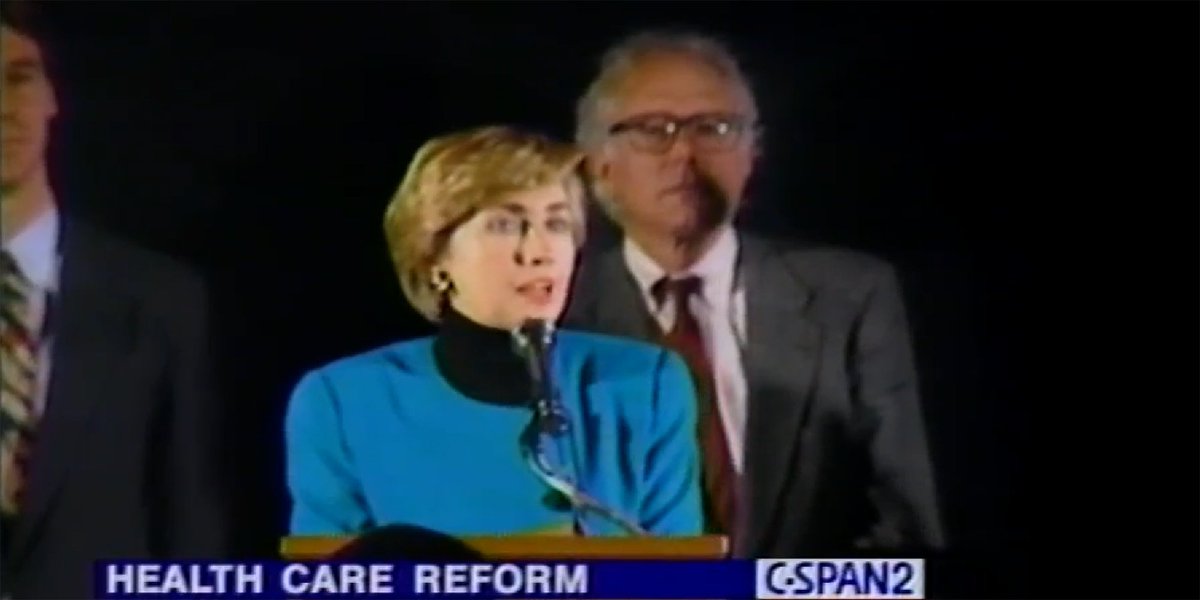
More examples of Hillary's dishonesty? She said today she didn't know where Bernie was on health care 20 years ago. Erm, he was ... "with her"!

Per Twitter, in case you're unaware:
There he was, right with you, just as pictured below.

I mean, with this issue on top of the AIDS issue, per Jaguar in comments, yes, it's a dogwhistle.

Or (and not mutually exclusive), per other links in Brains' piece, it's the old Overton Window:

Brains himself has added links in an update; Steve Thrasher agrees that it was a dogwhistle.

So, why? Cui bono?

Hillary herself benefits, or at least she thinks she does. That's the bottom line. Of course, she is less subtle about this than Bill.

To be more specific?
And, yes, establishmentarian pundits are trying to spin away the "misstatement" on AIDS by claiming establishment Dems thought that way in the 1980s.

No they didn't. Either that's two kiddos of the modern Inside the Beltway Brat Pack practicing something loosely related to journalism from being too young to know the 80s, or else, it's David Brock type spinmeistering. In either case, it's wrong.

Not just Ronnie, but a lot of Congressional Republicans were excoriated in the 1980s for their homophobia by Democrats. Maybe the party wasn't "gay friendly" in terms of promoting gay marriage 30 years ago, but it was gay friendly in the sense of calling out bigotry. Let's advance a decade and look at her own history, and Bill's, on DOMA, while we're at it. Democratic Underground has more.

Back to the Overton Window and dogwhistles plus today's spinmeisters.

Clinton's already adopted the strategy of trying to campaign past Sanders and campaign toward the general election, except in places like Rust Belt/Great Lakes states, where she's worried about him winning next Tuesday's primaries.

She's chasing those alleged centrist votes, espectially ones she thinks will shy away from voting Trump if the's the Republican nominee.

In other words, the same old shit that Democratic presidential nominees, and other A list national Dems, have done for 30-plus years. The reality is that most of Trump's support is from inside typical Republicans, just ones who haven't turned out to vote in past presidential primaries in some cases. Add that to repeated documentation that, at the Congressional level, Congresscritters of both parties think their constituents are even more conservative than is true, and Democrats who chase that Overton Window are on a mission as foolish as looking for the pot of gold at the end of the rainbow.

But, Dear Leader also dogwhistled about his love for Ronnie eight years ago.

There they are again. So, did Hillary contract Alzheimer's from Ronnie?
Maybe Jean Houston forgot to "channel" this at Nancy's funeral?
On the health care?

As we look at another picture of Bernie quite clearly showing #ImWithHer in 1993?

Snark in the caption aside, this is no gaffe. It's a sign of desperation. It's a kitchen sink that she's now throwing herself, without benefit of, or "distancing" via, intermediaries. Such things are always dangerous politically.

Especially because of the polling that sites credibility as the No. problem people have with her.

February 05, 2016

#FeelTheBern an actual #socialist on #BigAg — Just.Another.Politician.™

Specifically, Bernie Sanders is a both a corporate socialist and a welfare socialist, all in one bill signed into law in 2014 by President Barack Obama.
President Obama added his signature to legislation that will cut $8.7 billion in food stamp benefits over the next 10 years, causing 850,000 households to lose an average of $90 per month.  
And, like his stance on guns, it shows that, beyond pragmatism, Bernie can be Just.Another.Politician.™ when he feels it is politically necessary. Sometimes that's good, but sometimes that's not.

The 2014 Farm Bill cut a certain program within Department of Agriculture, the Feed and Eat program.

Yes, the link has been passed around the interwebz largely by Clintonistas, of that I have no doubt. But, it's still disconcerting, no matter who's peddling it.

Beyond the cuts, it pretty much left intact U.S. agricultural subsidies. Actually, it moved them to a back door and may have increased them. Those include to the dairy farmers of Vermont who supply Cabot Cheese and Ben & Jerry's ice cream. And, it increases corporate payouts to the privatized operators of ag insurance programs.

Bernie favored this bill, along with a squish like Michigan Sen. Debbie Stabenow:
“This is a nutrition bill that makes sure families have a safety net just like farmers do,” she said. “The savings in food assistance came solely from addressing fraud and misuse while maintaining the important benefits for families that need temporary help.”
When Democrats spout their version of Reaganesque “waste, fraud and abuse,” but never aim it at the corporatized farmers who benefit, in this case.

Of course, Bernie the corporate welfare guy had plenty of company with Stabenow. Only 9 Senate Dems opposed the bill.

However, to reframe that, nine Senate Democrats not named Bernie Sanders did find room to oppose this bill. It's a nice "meme" to call this a bill the Republicans held hostage. However, given that in places like California, most agriculture is owned by massive corporations, Democrats could have dug in their heels had they so chosen. (More here about corporate agriculture.)

There's yet more here, on America's top 100 landowners. Not all are farmers, but many are "farmers" for tax write-offs, if nothing else. And wingnuts like Phil Anschutz, Walton-in-law Stan Kroenke, the Simplots and others, populate that list heavily. No. 39 on the list, with farm holdings? The good old Koch Brothers. All potential hostages for Dems to get more money for food stamps — had they chosen to take hostages.

The bill's consequences, including for social justice, go beyond America.

Now, dairy, unless made into cheese or ice cream, especially the former, doesn't travel well. But, agricultural subsidies of the U.S. and the European Union penalize farmers in places like sub-Saharan Africa.

And, per that top 100 landowners link, many of them are not only corporatized in the US, but abroad as well. That only adds to the issue of farm subsidies.

This gets back to what I said a week ago about Sanders' one-note trumpet not sounding very much on foreign policy. There are issues of economic justice on fair trade promoting good labor rights and workplace safety rights. There are also issues of economic justice on developed world farm subsidies.

And, on that, as well as on corporate farm welfare, Sanders kind of missed the boat.

Of course, this isn't the good kind of corporate socialism. That good kind would be nationalizing some of our health care services.

Is Sanders "bad"? No. Is the lesser of two evils sometimes a big enough difference that the good is not the enemy of the best? Yes.

At the same time, this is why I remain, for now, a supporter of Sanders in the Democratic primaries only.

August 03, 2015

TX Progressives talk Ken Paxton, oil, energy

The Texas Progressive Alliance prefers Attorneys General who aren't themselves lawbreakers as it brings you this week's roundup.

Off the Kuff is dismayed but not surprised by the business community's apathy about the coming effects of climate change in Texas.

Ken Paxton's indictments broke news on Saturday afternoon, about 24 hours later than PDiddie at Brains and Eggs predicted.  The one remaining question is: how long does our lazy-eyed attorney general twist in the wind before Gov. Greg Abbott cuts down his stinking carcass?

Nonsequiteuse is concerned we may never get back through the looking glass. She realizes that facts are a quaint vestige of simpler times, but cannot resist offering not one but five of them, plus a conclusion, an opinion, and even a bonus prediction about Ken Paxton's pending felony indictment, words that give her great delight to type over and over and over again.

Socratic Gadfly talks about the initial rollout of Congress' "new" energy plan and how so little of it is new.

Neil at All People Have Value made note of former President Carter referring to the U.S. as an oligarchy. APHV is part of NeilAquino.com

CouldBeTrue of http://stxc.blogspot.com/2015/07/you-can-thank-ronald-reagan-for-all-of.html">South Texas Chisme
say http://stxc.blogspot.com/2015/07/you-can-thank-ronald-reagan-for-all-of.html">you can thank Ronald Reagan and his greedy friends for all of the mentally ill people out on the streets.  An Edinburg woman is a widow thanks to Ronnie and the new, militarized police.

====================

And here are some posts of interest from other Texas blogs.

Scott Braddock analyzes the Donald Trump-inspired proxy war between Rick Perry and Ted Cruz.

Lone Star Ma prays for peace and justice.

David Ortez explains what the Houston Equal Rights Ordinance is and why it matters.

Street Smart shows how sacrificing the local street grid for highways can be devastating to the surrounding area.

The Texas Election Law Blog has some hope for restoring regulatory balance to the voting rights process.

March 04, 2015

Lincoln rejects American exceptionalism and divine anointing

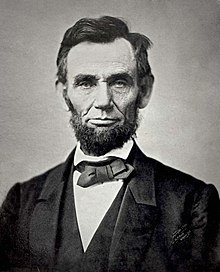
One hundred fifty years ago today, Abraham Lincoln challenged John Winthrop's (and later, Ronald Reagan's and today's religious right) idea that America was a "city on a hill." And, though this term wasn't around, arguably he at least indirectly challenged American exceptionalism.

First, Lincoln’s Second Inaugural Address, if anything, rejects the occasional off the wall claim, whether by some modern Gnu Atheists or his old law partner, William Herndon, that Lincoln was an atheist. Even when clerking with Herndon, he wasn’t; his “Doctrine of Necessity” pegs him as being something like a Deist run through a Calvinist filter.

But, by the time the Civil War was nearing its conclusion, even if he were not an “orthodox Christian,” he had become more religious than before, not less.

Let’s get to the meat of his Second Inaugural, which will show that, as he talks about the two sides in the Civil War.
Both read the same Bible and pray to the same God, and each invokes His aid against the other. It may seem strange that any men should dare to ask a just God's assistance in wringing their bread from the sweat of other men's faces, but let us judge not, that we be not judged. The prayers of both could not be answered. That of neither has been answered fully. The Almighty has His own purposes.
Since the Old Testament positively detailed slavery, and the New Testament had Paul telling Onesimus (and other unnamed slaves in other authentic writings of Paul) to accept slavery because the eschaton was near, Lincoln’s “strange” is interesting. I see it as being in part a rhetorical trope. Yet, I see it as being literally meant, as well. And Lincoln knew his bible well enough. This shows that he, whatever his religious background was at this point, was not a fundamentalist.

But, back to the main point. Because neither was fully right, and (taking Lincoln’s assumption of a divinity as fact for the sake of this piece), neither was fully granted its boons sought in prayer, a “divine anointing” of America, i.e., a city on a hill, simply wasn’t true. Nor was it true back in 1600s Massachusetts.

After all, Winthrop’s own Massachusetts explicitly legalized slavery in 1641. It was never huge, but it was about 2 percent of the population in the middle of the 1700s. And, as both Lincoln and Southerners knew, Massachusetts ships transported many of the South’s slaves from Africa. (And, Massachusetts never did formally and legally abolish slavery within its own borders until passing the 13th Amendment.)

So, if slavery were wrong, by some non-theistic natural law and morals, or whatever, Winthrop's city on a hill wasn't one so much.

And, further undermining at least the idea of American exceptionalism? This:
He now wills to remove, and that He gives to both North and South this terrible war as the woe due to those by whom the offense came, shall we discern therein any departure from those divine attributes which the believers in a living God always ascribe to Him? Fondly do we hope, fervently do we pray, that this mighty scourge of war may speedily pass away. Yet, if God wills that it continue until all the wealth piled by the bondsman's two hundred and fifty years of unrequited toil shall be sunk, and until every drop of blood drawn with the lash shall be paid by another drawn with the sword.
Divine justice, more than a denial of American exceptionalism, to be sure.

However, it is also a denial of American exceptionalism. If America were that exceptional, then it would not need to be so chastised by a deity as to learn again that:
(T)he judgments of the Lord are true and righteous altogether.
Now, some Christians of the conservative stripe may try to stand that on its head, and claim that the amount of chastisement god delivers to America is proof of his special love for America, and thus, as his city on a hill, its exceptionalism.

Hmm … Second Isaiah tried the same tack for post-exilic Judah. And, it was also wrong. And proven to be wrong by those post-exilic people.

As for Lincoln? He wasn't perfect, and he wasn't a 2-dimensional plaster saint, nor even the 2.5 dimensions that Spielberg made him. But, he was our best president and this shows why.

Meanwhile, 100 years later, Lyndon Johnson followed up on Lincoln with his "Selma" speech, explicitly calling for full civil rights for African-Americans — and Hispanics.

January 13, 2015

Obama's legacy: Historians take a first crack; so do I

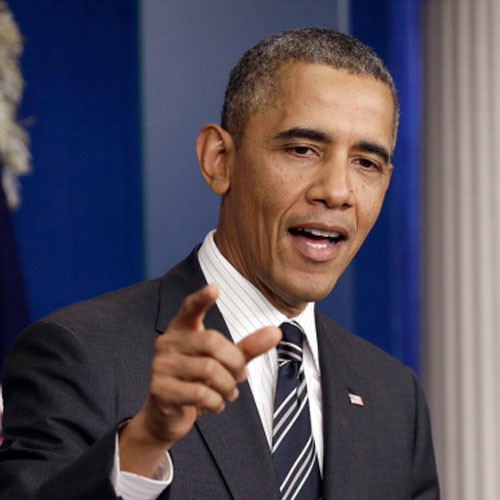
President Barack Obama —
how much is he actually like
Supreme Court Associate Justice
Clarence Thomas
If Charles Pierce considers George W. Bush our "C+ Augustus," where does that leave Barack Obama, who is arguably a better president, but primarily due to that Bush phrase "the soft bigotry of low expectations"? Since Obama actually — deluded not-too-liberal of liberals and "projections" aside — "delivered" even less on what he actually promised or semi-promised than did C+, too, in terms of any "base" of support, just how should we rank Dear Leader?

Well, at New York Magazine, a coterie of professional historians, ranging from from quasi-reactionary to left-liberal, give it their shot. (Clickable links lead to full reviews of DL by each historian.)

A fair amount of more liberal to left-liberal ones appeared to have, like me, "seen through" Obama at least by 2010, if not during his 2008 campaign. As for that group, I have no idea how many of them still voted for him anyway, rather than voting Green or Socialist or whatever.

Anyway, here's a roundup of the few best insights from left of center:
"His contributions were sometimes remarkable, but Obama’s primary legacy is his destruction of political idealism for the foreseeable future. He proved an impressive steward of the traditions of his party since the 1970s. Where Obama differed was his brief but unforgettable achievement of a surprisingly large consensus around a belief — or delusion — that Americans rarely entertain. Put simply, it was that American politics could and must fundamentally change. The energies he conjured will not reappear soon and are less likely to do so because he summoned them for so ordinary and predictable a set of policies." – Samuel Moyn
Those of us semi-idealists who "saw through him" before the 2008 general election haven't had our semi-idealism destroyed, or ditto on full idealists like me, because we never invested it in him in the first place.

Other than that, Moyn is totally right on Obama being a "worthy" steward of neoliberalism. As for Obama's "consensus"? Maybe Obama never intended that fundamental change. Either that, or a point I've hammered into the dust is true here, too — Dear Leader thought the mellifluous dulcet tones of his voice (sarcasm alert) would work fundamental change all along.

What about Obamacare? This is not a bad observation:
“It might very well be insurance exchanges, rather than the expansion of coverage, that stands as the most significant aspect of the Affordable Care Act. That is especially the case if the exchanges work and therefore lay the foundations for privatizing or ‘“marketizing” Medicare and Medicaid. As much as some called him a socialist, he might well be remembered as someone who de-socialized public health care.” – Alexander Gourevitch
Gourevich? I'm not sure if he means that in a good or a bad sense. It could be in a bad sense, as he is a left-liberal type. If so, I'd totally agree. It's hard to tell from his whole set of responses, but, since he is some sort of left-liberal, I'm going to take it he means it in a bad sense.

I certainly look at O-care that way myself. Sometimes, the good is the enemy of the best, and I fear that is very much the case here — he wrecked political capital, per Moyn, for a non-fundamental change which he chose as his target all along.

Next, let's look more directly at the myth of The Great Communicator 2.0:
“Talk to us — tell us what he is aiming at, what our challenges are, especially abroad. He may be our mutest president.” – Mark Lilla

Indeed, whether deliberately Sphinx-like, or simply unable to move much beyond TelePrompTer 101 on a regular basis, the allegedly divine powers of Obama here were often not displayed.

That said, regular readers won't be surprised by my allegedly. Obama as Great Communicator 2.0 was a flop, a lie, and a social construct all three. As for political oratory, he's never been close to Reagan.

His legacy? One of the historians said that he currently puts Obama at the top edge of the bottom one-third of presidents, but thinks he will rise in the future, and into the bottom slice of the top one-third of presidents. See my take below the fold.

August 04, 2014

Theodore Roosevelt: Who was this "progressive" president?

I'm sure you're familiar with all of this:

1. Busted more trusts than any other president.
2. Conserved more lands for environmental needs, and with strong legal protections, than anybody before him, and more than his immediate successors.
3. Fought to lower the high tariff on imported goods, which was strongly supported by big-business Republicans.
4. Got Congress to pass the 16th amendment and send it to the states, which allowed the federal government to base income tax on individual incomes, not on state populations, which obviously favored the likes of New York.
5. Showed more commitment to racial tolerance than some previous members of his own party by inviting Booker T. Washington to the White House.
6. Addressed the nation's banking problems, after multiple predecessors had been held hostage during financial crises by J.P. Morgan.

That's our man! Teddy, the first progressive president! Only, he did none of those things.

If I had added "by creating the Federal Reserve System" to the end of No. 6, knowledgeable people would have guessed Woodrow Wilson on that, wondered if Wilson did the previous stuff, but then scratched their heads at No. 5.

The reality is that TR wasn't that enlightened on race relations, and William Howard Taft did 1-4.

Yes. On No. 2, not just counting efforts started by Roosevelt, but only on efforts on his own, Taft busted more trusts than TR. That's in part due to Teddy's philosophy, that big wasn't necessarily bad, but what TR said was bad, was bad. Hence the appropriate title of Edmund Morris' volume of biography, "Theodore Rex."

That, in turn, leads directly to No. 2.

Many historically knowledgeable people know that TR broke with Taft due to his firing of Gifford Pinchot as the country's direct of forests. They may not know why.

Pinchot got in a tussle with Taft's Interior secretary. Then, as today, the forests were under USDA (another non-fix of TR), so there was a turf war. The big issue at stake was how, late in his administration, TR and Pinchot set aside land within forest preserves for hydrological protection. Taft and Interior Secretary Richard Ballinger were convinced that the TR-Pinchot methodology wouldn't withstand legal scrutiny. After releasing some lands back to private control, they went through the process again, and wound up protecting even more land in the end than the TR-Pinchot work.

No. 3? TR explicitly said during his tenure that he had no plans on taking on the tariff and advised Taft to do the same. Sadly, Taft got excoriated by TR worshipers for doing exactly that and not getting as much as they wanted.

That's even though, as part of what he did get, he got No. 4, Congress passing the 16th Amendment and sending it to the states, something that "progressive" TR didn't even try.

No. 5? When Southerners protested in horror about the first non-servant black man in the White House since Frederick Douglass during Lincoln's presidency (I'm unaware of Grant inviting any, and know that nobody after him did), he recoiled, especially when they mentioned that his mother was a Southerner. He even started cutting back on hiring blacks for Post Office jobs in the south. And, those that know TR know that the 1906 Brownsville affair was one of the blackest blots on his record.

No. 6? TR had had a run-in with J.P. Morgan over his work to break up Morgan-controlled Northern Securities in 1904. This was when Morgan famously said (not exact to the letter, you can Google it): "Send your man to my man and they can fix things up." And, TR knew about Grover Cleveland having to go to Morgan during the Panic of 1893 and a run on the nation's gold supply and beg for help, including being forced to meet Morgan personally. Yet, TR was short-sighted enough, limited in sight enough, or simply not progressive enough to not do anything to fix the nation's banking apparatus.

Then, along came the Panic of 1907, and TR having to kowtow to Morgan. Wilson's Federal Reserve, at the level of the regional Feds, may have left too much power in bankers' hands, but it was a big improvement beyond what we had.

As the Ken Burns series on the Roosevelts -- TR, FDR, and Eleanor -- comes on this fall, keep all of this in mind.

It's arguable that TR is the nation's most overrated president before GOP hagiography of Ronald Reagan.

July 29, 2014

#NYTimes forgets when Reagan sold $165M in arms as ransom to terrorists

If the President says it's not "arms for hostages," then it's not!
Ronald Reagan Library via Wikipedia
Oh, those spineless Europeans, with backbones like chocolate eclairs! Why can't they be like tough Americans?

The New York Times gives Western European governments an official Old Gray Lady (or would that be Old Grey Lady, in Times-speak?) spanking for giving Al Qaeda groups as much as $165 million in the last six years to ransom European citizens taken hostage:
While European governments deny paying ransoms, an investigation by The New York Times found that Al Qaeda and its direct affiliates have earned at least $125 million in revenue from kidnappings since 2008, of which $66 million was paid just in the past year.

In various news releases and statements, the United States Treasury Department has cited ransom amounts that, taken together, put the total at around $165 million over the same period.
Sounds horrible, does it not?

But, the Times article neglects to mention that the US did similar almost 30 years ago. I'll bet this stash was worth at least $165M in today's values, because Wiki gives us a nice Iranian shopping list about the Iran-Contra affair:
The following arms were supplied to Iran:
  • August 20, 1985 – 96 TOW anti-tank missiles
  • September 14, 1985 – 408 more TOWs
  • November 24, 1985 – 18 Hawk anti-aircraft missiles
  • February 17, 1986 – 500 TOWs
  • February 27, 1986 – 500 TOWs
  • May 24, 1986 – 508 TOWs, 240 Hawk spare parts
  • August 4, 1986 – More Hawk spares
  • October 28, 1986 – 500 TOWs
Too bad the Times neglected to tell us this.

Fortunately, we don't even have to guess. Weapons plutocrat Raytheon tells us that its current version of a TOW runs $58,000 per. Rounded to that even dollar value, all the TOWs alone?

A cool $140 million.

And, everything those naughty Europeans did sounds like it came from the pages of Ronald Reagan, Oliver North, John Poindexter, Robert McFarlane, Caspar Weinberger, George H.W. Bush, Bill Casey, Richard Secord and others:
These payments were made almost exclusively by European governments, who funnel the money through a network of proxies, sometimes masking it as development aid, according to interviews conducted for this article with former hostages, negotiators, diplomats and government officials in 10 countries in Europe, Africa and the Middle East. ...

Yet the fact that Europe and its intermediaries continue to pay has set off a vicious cycle.

“Kidnapping for ransom has become today’s most significant source of terrorist financing,” said David S. Cohen, the Treasury Department’s under secretary for terrorism and financial intelligence, in a 2012 speech. “Each transaction encourages another transaction.”
Yep ... exactly the same happened after Iran-Contra.

Going back to Wikipedia:
In September and October 1986 three more Americans—Frank Reed, Joseph Cicippio, and Edward Tracy—were abducted in Lebanon by a separate terrorist group. The reasons for their abduction are unknown, although it is speculated that they were kidnapped to replace the freed Americans.
So, if the Times is writing as a tsk-tsk mouthpiece of America's bipartisan foreign policy establishment, it needs to shut up.

January 28, 2014

#WendyDavis pulls an Obama on favorite politician

Remember in the 2008 presidential campaign, all the favorable comments made about Ronald Reagan, as a clear sign he was no Kenyan socialist was ready to pander to moderates, or worse?

Well, Wendy Davis' isn't nearly as bad, but naming a Republican as your most admired politician, even if Bill Ratliff indeed was (relatively) non-partisan? That's in the same neighborhood.

Why not name Bob Bullock? Fairly conservative, yes, so still gives you some pander factor, or a shout-out to rural current and former Democrats. Fairly non-partisan, though, too.

And, a Democrat.

I mean, whether actually using the word "favorite" or "admired" or similar, or not, any Democrat who blathers about a Republican like that, especially when there's a reasonable Democratic alternative, is going to lose a decent chunk of my trust.

Beyond that?

While Davis mentioned "education" too many times for me to count, I didn't see "income inequality" in there once as a direct phrase. Yeah, she kind of indirectly gets at it, about halfway down, and I know governors can only do so much, and state governments in general can only do so much, but, still ....

Guess she has even more in common with Dear Leader, eh?

Also didn't see "reproductive choice," or similar, anywhere there.

I understand education is important, that that's a key issue of reaching out to suburbanites who aren't necessarily "independent," but may just be getting turned off by Abbott.

However, one can do that and still (theoretically) articulate some theoretically core principles.

Or so I thought.

But this?

Must be in line with the pandering to moderates in Waxahachie. Wonder if Battleground Texas or Lone Star Project suggested she do this, just like I wonder if her endorsement of David Alameel, apparent closet pro-lifer, also was suggested by handlers.

Because that would be one way to "make Texas blue," as these folks assume is readily doable: tilt, tilt, tilt, right, right, right.

Also, she didn't have time, or whatever, to complete endorsement questionnaires from state LGBT groups, but did have time for this. Yep, moving right.

OTOH, per her Fort Worth City Council record, including willingness to sometimes jump in bed with the Bass Family for its money, she is not all that liberal outside of two hot-button social issues. And, while those are important, they're not the only things on my radar screen.

There is still the Green alternative for me, since it's too late for Dems to reverse their candidates in the top two spots.

October 31, 2012

Jon Chait fellates Obama

Actually, it’s really no surprise that Chait, a definite neoliberal most comfortable at about The New Republic’s political slant, would claim that Dear Leader is a “great” president, let alone make a claim like this:
Obama can boast a record of accomplishment that bests any president since Roosevelt, and has fewer demerits on his record than any of them, including Roosevelt.
That’s arguable at best. Chait says that LBJ’s accomplishments were offset by Vietnam without bothering to discuss whether they were greater or not.

And, if we use “greater” in terms of political realignment rather than “better for America,” Reagan had greater accomplishments, indeed. In fact, it’s Reagan, the Reagan whom Obama praised in 2008, that set constraints on what future Democratic presidents have tried to do, for the good, while bolstering some of what Democrats have done for the bad financially, like throwing out Glass-Steagall in Clinton’s reign, and Obama hiring Clinton’s finacial advisers and their followers, like Tim Geithner, quite possibly an unconvicted criminal.

And, while we’re on it, let’s not forget that Reagan, for worse rather than better, established the modern imperial presidency that thumbed its nose at Congress and the Constitution on war-making.

And, that leads to this.

Reality? Chait lists not one of Obama’s real “demerits,” such as expanding drone killings even to US citizens; calling anybody killed by a drone a “military target,” being more ruthless than Bush about “plugging leaks,” the shameful treatment of Bradley Manning, etc. And, all of that stems from St. Ronald of Reagan and his “record of accomplishment.”

He then, to excuse, I guess, Obama not doing more on anti-recession stimulus and other things, pens this:
How can a president “work his will” in such a way as to force autonomous members of the opposite party controlling a co-equal branch of government to sacrifice their own calculated self-interest?
Simple. Peeling off people where possible.

With the modern Senate, pushing Harry Reid to actually challenge a filibuster threat.

Making more use of recess appointments.

And, on that stimulus packages, several things:
1. Not using Clinton retreads who underestimated the size of the problem, and the size of the solution needed;
2. Listening to outsiders like Paul Krugman and Joseph Stiglitz who knew better;
3. Not “compromising away the compromise” for what he did decide to do, as Rahm Emanuel actually did, just to come in under $1 trillion.

Now, let’s look at Obama’s signature accomplishment of Obamacare.

First, since so much of it was backloaded to 2014 effective date, the jury’s largely still out.

Second, I’ve argued that, contra Chait, the cost controls in Obamacare aren’t as much as they are touted to be. And, given that Congress continually votes to cut Medicare payments to doctors, then takes that back every year, who’s to say how many of these cost containment items will stay in place?

Third, Obama didn’t take charge of this issue from the start, to some degree, and to an additional degree, he let known neoliberals, like “Mod Max” Baucus in the Senate run the show.

To be honest, given the circumstances, overall, I’d probably give Obama a “gentleman’s B” on domestic policy, NOT counting civil liberties issues. Note the “gentleman’s” part and that caveat.

The rest of his work? Let’s discount the actual value of killing bin Laden and give Dear Leader a straight D.