SocraticGadfly: Endangered Species Act
Showing posts with label Endangered Species Act. Show all posts

August 26, 2025

Muleshoe NWR expansion: Murdered by Arrington and USFWS

Shock me on the latter.

The Texas Monthly provides more information about how US Fish and Wildlife Service is a quisling pseudoenvironmental organization, with a detailed blow-by-blow of its total cave-in on what had been a planned massive expansion of Muleshoe NWR out in the Panhandle:

Outdoor enthusiasts are drawn to its remote beauty, where rugged swaths of wildflowers and mesquite trees shelter the elusive pronghorn antelope and the lesser prairie chicken.

Oy.

And part of this ties to the lesser prairie chicken, discussed here last week:

[Recently a] federal judge in Texas ruled there had been “serious error” in the agency’s classification of the lesser prairie chicken’s endangered status, temporarily removing Endangered Species Act protections for the bird in the state—a culmination of a Republican-backed effort that began in 2023 when Attorney General Ken Paxton filed a suit to overturn the listing.

Shock me that Kenny Boy was involved.

The key pusher on the ground was Lubbock Congresscritter Jodey Arrington. He had gotten a bill to shut down the expansion out of expansion just before USFWS caved.

As for this?

“Rep. Arrington’s opposition to Muleshoe was mostly, if not entirely, based in misinformation. The issue about the idea that landowners are somehow going to be forced or pressured to sell their land is simply not true,” says Nathan Marcy, a senior policy analyst at the conservation nonprofit Defenders of Wildlife.

It misreads Arrington. Information and misinformation isn't his concern. Nor is apparent hypocrisy of supporting state parks expansion. Instead, GOP wingnuts fellate the oil and gas industry, and will never, at the state level, allow a state park to even think about infringing on it. Beyond that, they hate the feds in general, until they start sucking off the federal teat.

It misreads USFWS as well.

That said, California Congresscritter Jared Huffman, known on these pages before, is a rank hypocrite for calling out Arrington on that bill as long as he continues to fight to keep cows INSIDE Point Reyes.

August 22, 2025

An introduction to saying Fuck the USFWS

This is a shortened form of a piece at Substack, to which I gave an introduction four weeks ago

First, the USFWS? For those unknowing of federal acronyms and shorthands, especially in land management and related agencies, that’s the U.S. Fish and Wildlife Service.

They’re the folks who run the system of national wildlife refuges. Especially in states with little public land, like here in Tex-ass and especially with little free public land in nature outside of cities, national wildlife refuges are a magnet for nature lovers. Unfortunately, these places aren’t so pristine.

Often, they’re heavily managed for the “hook and bullet” crowd — hunters (especially duck hunters) and fishermen. This may include use of irrigated water from non-environmental damned dams. It may include “overseeding” winter rye or wheat to keep geese, also part of the “bullet” crowd to some degree, from going even further south for winter. Ponds and berms for these birds, and for migratory shorebirds like sandpipers, plovers and such, can and will be manipulated.

That’s one of the two key facets of this piece.

Second? They’re the federal agency that handles Endangered Species Act listings. That is, should the grizzly bear, in the Lower 48, be listed as “endangered.” As part of this, at times, they will recommend a “delisting,” or at least a downgraded listing, like moving the grizzly from “endangered” to “threatened.” Often, this is under outside political pressure. However, sometimes, USFWS does this on its own.

Related to that is USFWS often using a “threatened” listing in the face of lawsuits by more active environmental organizations like the Center for Biological Diversity, to try to hold off a listing as fully endangered. And, yes, USFWS does this a LOT, for garden-variety environmentalists who don’t know. This is often, especially with the USFWS Southwest Region, done in the service of the oil and gas industry. That’s just the start.

They also have, more than once, at regional or national headquarters, improperly filed an ESA listing — often enough to make one wonder if it’s deliberate.

In addition, with animals like the Gunnison’s sage grouse, USFWS has often been slow to accept the biological science that what has been considered a subspecies is actually a separate species, and ergo, one thin enough on the ground that it may need ESA listing.

Finally, with both animals and plants, an ESA listing — IF it’s to be of any value — required designating critical habitat for the protection of the species. FWS is especially a foot-dragger on this.

And with that, stay tuned for the follow-up in a week.

August 19, 2025

Lesser prairie chicken gets screwed again — does US Fish and Wildlife tank ESA listings?

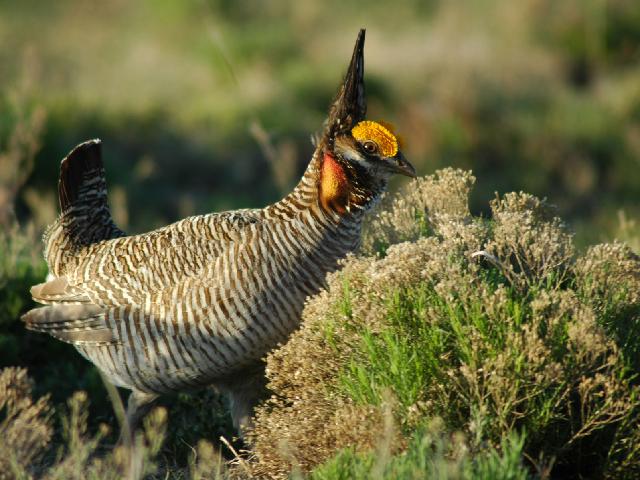
An indicator species of the high plains, the lesser prairie chicken, a type of grouse, can't get any environmental protection love and has been ill-treated by the U.S. Fish and Wildlife Service. (It got two years of "threatened" listing, then that was removed due to court ruling of being improperly instituted. It's been talked about for an "endangered" listing for 25 years; the oil people hate it like they hate the dunes sagebrush lizard.) 

Fast forward six years, to a re-listing. And, another loss.

Last week, the lesser prairie chicken's endangered listing got nixed by a judge. (When I saw the judge was from the Western District of Texas, before I saw the actual name, I thought it was Matthew Kacsmaryk, but I guess ESA attacks aren't high-enough profile for him.)   

Contra the dunes sagebrush lizard, going beyond the "in the field" level, this time, FWS had stood up to the oil and gas industry, which is why they brought the lawsuit.

But, it's another loss, and a loss that does, per the header, make things look that way, like FWS tanks.

Details from the ruling:

"Fish and wildlife's concession points to serious error at the very foundation of its rule," the court said in its Aug. 12, 2025, ruling. 
"Mere remand would not cure this error. Fish and wildlife therefore commits no handwaving when it also concedes that this failure causes the final listing rule to be 'unlawful' and therefore 'not in accordance to law.'" 
USFWS told the court that the agency's failure to "support the identification of the lesser prairie chicken as distinct population segments taints the findings" by the Biden administration that those populations were listable as endangered. 
USFWS said it plans to complete a new finding on the lesser prairie chicken by Nov. 30, 2026, in response to a 2016 listing petition by environmental groups that gave rise to the Biden administration rule.

So, per the "in the field"? I asked online friend and Race to Extinction author Lyle Lewis if USFWS ever "tanks" these filings.

His response?

Well, there you go. 

The Texas Monthly provides more information about how US Fish and Wildlife Service is a quisling pseudoenvironmental organization, with a detailed blow-by-blow of its total cave-in on what had been a planned massive expansion of Muleshoe NWR out in the Panhandle. And part of that is about the lesser prairie chicken.


December 30, 2024

Help protect monarch butterflies

Author photo: Monarch at Hagerman NWR.

FINALLY, the US Fish and Wildlife Service has proposed an Endangered Species Act listing as "threatened" the monarch butterfly. (I say "finally" because the Center for Biological Diversity was pushing for this a decade ago.)

But, it's just proposed. They're going to need backup, since the likes of Texas Ag Commish Sid Miller are going apeshit over this.

So?

Here's where you comment. In support!

Here's what I said:

Dear USFWS: I appreciate the proposed "threatened" listing. My one quibble is that most of the stronger protections, such as critical habitat areas being designated for protection, apply only to the Western monarch subspecies. (I know that USFWS can't do anything about Mexican overwintering grounds for most monarchs. I would like USFWS to consider critical habitat designation elsewhere. (I'm familiar with USFWS feet-dragging on critical habitat for the dunes sagebrush lizard.)
That said, any exception for pesticides should be extremely limited, and should only be adopted based on statements by lepidopterists etc allowing that limited use of certain pesticides will not be a monarch / milkweed danger.
Beyond the listing itself, USFWS should work with other federal and state agencies, including state transportation departments on roadways, to increase milkweed propagation through sowing, increased use of no-mow / limited-mow areas, etc. Sincerely, /me

Click that link! (Scroll to the bottom for the comment button.)

As for Sid? He's full of it. As noted in my comment, except for the Western subspecies, a fair chunk of whose acreage is on land either of a governmental agency or private conservation organization, there IS NO critical habitat designation. Per what I said about pesticides, FWS may well create a Mack Truck sized loophole.

And, contra Mr. Jeebus Shot? A number of farmers are, at least tentatively in support. Per the Chronicle, that includes one Zippy Duvall, head honcho at the American Farm Bureau.

That said? Per what I said in my comment about Mexico? The Chron notes that many scientists think FWS has the wrong focus:

Many scientists believe monarch butterflies are not endangered, but their migration is. A study released in October by the University of Georgia found the monarch butterfly's breeding population is relatively stable and similar to historical abundances. However, the species' fall migratory population is in serious decline. The study, which suggests the insects are dying off during their fall migration south to Mexico, points to the planting of non-native milkweeds along the migration path resulting in the rise of a parasite called Ophryocystis elektroscirrha (OE), which infects and debilitates monarch butterflies. The release of captive-reared butterflies, which are not as good at migrating, is also a factor.
Andy Davis, assistant research scientist at the University of Georgia Odum School of Ecology and lead author of the study, expressed frustration with the USFWS listing decision, opining that it may cause more harm than good. "I think the biggest problem will be that this ruling will further convince people that monarchs need to be saved in their own yards by rearing them in 'protective captivity,'" he wrote on Facebook. "And since this ruling has no real meaningful restrictions on this practice (in fact the USFWS encourages it in their press release), then we will likely see further increases in OE levels across the board, more non-native milkweed being sold, and fewer and fewer monarchs successfully reaching their winter destinations."

Hard to argue with that.

On the other hand, as the Chron also notes, a listing is the only tool in the FWS arsenal:

"Unfortunately, no possibility exists for listing a phenomenon such as a migration as threatened or endangered under the ESA," wrote Monika Maeckle, who tracks the insects and runs the website Texas Butterfly Ranch in San Antonio. "Listing the species itself may be the only recourse for protection."

Hard to argue with that, too. 

America's Ranchers™ also support a listing, well, if any conservation efforts are purely voluntary.

June 04, 2024

New pseudo-environmentalist head fake from Ken Salazar?

Last week, I saw a piece by Center for Biological Diversity citing Ken Salazar, our ambassador to Mexico, calling for a block of Mexican avocados being imported to the US, and I had multiple thoughts about the comment, and about the commenter.

We'll start with my thoughts about the comments, then frame them within my thoughts about the commenter.

Ken Salazar, the U.S. ambassador to Mexico, recently stated that avocados produced on plantations created by illegal deforestation shouldn't have a place in the U.S. market. It's time to turn those words into action.
The United States has made numerous international pledges to halt deforestation including commodity-driven deforestation. But it continues to allow the importation and promotion of Mexican avocados from deforested lands.

The concern is loss of monarch butterfly lands in Mexico, which is legit. From earlier in the piece:

The area of land used for avocado production is predicted to grow 70% by 2050. Nearly 2,400 acres of the Monarch Butterfly Biosphere Reserve have already been destroyed. Sadly this year's monarch population count was the second lowest ever recorded. If their winter home disappears, so will the butterflies.

But, Ken Salazar?

I thought: is this THAT Ken Salazar? The "Kenny Boy" along with Ken Lay of Enron and Ken Paxton of today? The man who I said was Dear Leader's worst Cabinet member outside of Tim Geithner? The man who told lies on behalf of BP and the Deepwater Horizon blowout? Repeatedly? Whom Obama kept around?

The man whom Gang Green kowtowed to over wolf ESA delistings? The man whom the aforementioned CBD was part of the kowtowing to?

The man who was in cahoots with Susan Combs on fake protections for the dunes sagebrush lizard?

The man who Hillary Clinton said in 2016 would lead her presidential transition team if she were elected?

First, by the person, yes, it's the same.

Second, by the persona, I expect it's the same, and don't trust this.

My first thought was that Salazar's statement was a fig leaf for trade protectionism for US-grown avocados.

Friend Chris Nagano offered another thought on Twitter.

This is a substitute for ESA listing for the monarch in the US. Do this, and say, "we've done all we can," Chris said.

(Spider milkweed, author photo at left, is among types liked by monarchs, and other butterflies.)

After all, in 2020, Fish and Wildlife said, in essence, "hey, they need help but they're going to have to sit at the back of the bus." They haven't updated that, but they have boasted since then about, "look at them visit milkweed at a fish hatchery!"

Option 2a would include "voluntary conservation habitats," of course. Like FWS fish hatcheries!

There's also the issue of just how sustainable avocados are as a crop. So, from the CBD link, this:

Since most avocados come from legal, longstanding avocado farms, banning imports associated with deforestation won't hurt the livelihoods of law-abiding avocado producers or keep people in the United States from eating avocado toast and guacamole.

Maybe we need to be eating less guac and avocado toast?

Seriously, the idea that we can continue current US avocado consumption when deforestation in Mexico has been fueling an import surge for a decade and leading to monocropping, whether or not from technically legal farms? (Per the first link, many of the farms are technically legal, but no more than that.) That's laughable, CBD.

Also laughable is that the top link is tied to a fundraising ask. Gotta get those millennials to donate while they eat their avocado toast. CBD coming close to Gang Green territory?

Part of the problem is avocado having become viewed as a "superfood," too. All good environmental agencies should be preaching against that nonsense.

May 20, 2024

Victory at last (we hope) for the dunes sagebrush lizard

After more than a decade of staling out by Texas officials, starting with Susan Combs, and a shitload of corruption by US Fish and Wildlife Service, last week FWS finally extended Endangered Species Act listing to the dunes sagebrush lizard.

More from regional media and from Center for Biological Diversity.

Let's start with them, before my old blogging, because it backgrounds the story well, starting with the early history:

The Service identified the dunes sagebrush lizard as needing protection in 1982 but didn’t act. In 2002 the Center submitted a scientific petition to place the lizard on the endangered species list. Prompted by the Center’s follow-up litigation, the Service proposed to protect the lizard in 2010. However, the agency instead struck a deal with the Texas Comptroller’s Office to deny the lizard protection in exchange for non-binding agreements to safeguard some of the animal’s habitat.

That's where Susan Combs, then the state comptroller, comes in.

That said, she had company, including the likes of Tricky Ricky Perry and Wayne Christian.

And, lizard liars outside of government.

And, continuing lizard backstabbing by the feds under Kenny Boy Salazar, Dear Leader's oily Secretary of the Interior.

That said? The biggest problem was often FWS itself. From CBD's link again:

In 2018 the Center again petitioned for protection and the Service issued an initial finding that a listing was warranted. But it took another lawsuit in 2022 to prompt today’s decision. 
The Service has long failed to provide timely protections to species in need. The entire process of listing species and designating critical habitat is supposed to take two to three years. On average it has taken the Service 12 years, and in many cases decades, to protect qualifying species. At least 47 species have gone extinct while awaiting protection.

How true.

And, we've not even talked about FWS management corruption. Oops, guess we have now! That's a long read, but if you have thought before now that middle and upper management at the Fish and Wildlife Service care that much about fish and widlife, other than for hunters and anglers, you need to read the full thing. There's more of that at this piece, from just two months ago, where I wasn't sure if protection would happen, and where I also called out Texas Monthly for pulling some punches. (As of yesterday, neither it nor the Trib had a story about the ruling.)

That said, per that image just above, per Twitter friend Chris Nagano, this isn't set in stone yet.

I quote:

Some USFWS higher ups & managers still have many tricks up their sleeves to continue serving their masters by ensuring the listed Lizard doesn’t stop or slow down any oil & gas projects

I have little doubts that things such as the conservation easements, which sound similar to what Combs pitched more than a decade ago, can be sabotaged, undermined, OKed without follow-up monitoring or other things.

I quote from the FWS release:

Conservation efforts for imperiled species can be greatly expanded through collaborative approaches that foster cooperation and the exchange of ideas among stakeholders. In New Mexico and Texas, around 100 ranchers and 100 oil and gas partners have enrolled in voluntary agreements to implement conservation practices that address specific threats with assurances that if the species is listed, they can continue to manage their land outlined in their agreements with no additional requirements or restrictions.

And, there's other ways this could be undercut, quoting again:

The designation of critical habitat was found to be prudent but not determinable at this time. The Service has up to one year from the time of listing to propose critical habitat.

Emphasis added by me, because this is where the rubber hits the road.

Stay tuned. And push FWS to designate that critical habitat. 

The proposed and final rules, as well as the comments received on the proposed rule, are available at http://www.regulations.gov by searching docket number FWS-R2-ES-2022-0162. The final rule is effective 30 days after posting in the Federal Register.

There you are. Unfortunately, you cannot comment on the final rule. I've emailed the CBD author about any other places to comment, but haven't heard back yet. You can visit FWS's Facebook page, specifically this post that talks about the dunes sagebrush lizard and give that a shot. Or the webmail contact form at the FWS website.

New Mexico Political Report also has a piece up, and talks to Michael Robinson of CBD about the types of threats the lizard faces. Per Chris Nagano and Lyle Lewis, also formerly of the FWS, and per what I am suspecting, FWS administrators may remain cozy with the oil and gas folks who still want to gut this. From NMPR: 

Industry groups have maintained that candidate conservation agreements—voluntary agreements to protect species that are being considered for listing under the Endangered Species Act—are making sufficient strides and that the listing is unnecessary and will have a detrimental effect on the economy of southeastern New Mexico. 
“The existing CCA and [candidate conservation agreements with assurances] in New Mexico and Texas have provided, and continue to provide, many conservation benefits for the dunes sagebrush lizard. However, based on the information we reviewed in our assessment, we conclude that the risk of extinction for the dunes sagebrush lizard is high despite these efforts,” the Fish and Wildlife Service wrote in the document announcing the listing. 
The Fish and Wildlife Service states that the habitat loss has continued even with the CCAs in place.

So, FWS, why aren't you already defining and determining critical habitat? You've had 42 years.

Robinson said the lizard relies on the shinnery oak to stay cool in the summer and warm in the winter, when it buries itself in the sand near the oak’s extensive roots. 
But the listing decision issued this week was not fully good news, according to Robinson. Critical habitat has not yet been designated. 
“Fish and Wildlife Service is saying that they might take up to a year to propose areas for critical habitat and we think this is an entirely unnecessary and unwarranted delay,” he said.

So, FWS, why aren't you already defining and determining critical habitat? You've had 42 years.

March 13, 2024

Partial punch-pulling on the dunes sagebrush lizard

At the Monthly, a Kaley Johnson has a story about A&M herpetologist Lee Fitzgerald battling the oil and gas industry to get the dunes sagebrush lizard protected as an endangered species. But, it's missing a fair amount, that doesn't really get into all the behind-the-scenes stuff.

Yea, it mentions folks like the Railroad Commission as part of the battle. (I have more, about RRC head Wayne [Not a] Christian's strident opposition to listing last year.)

It ignores former Comptroller Susan Combs fake protection shenanigans.

It TOTALLY ignores national-level US Fish and Wildlife Service stinking to high heaven on this issue. (It does mention USFWS dropping its Endangered Species Act proposal, but not WHY.) It ignores USFWS' ultimate boss, Dear Leader's first Interior Secretary, Kenny Salazar, aiding and abetting that. That, in turn is important because on federal lands, ie, the New Mexico portion of the Permian Basin, "Environmentalist Joe" has green-lighted more federal oil leases than did Donald Trump. (The story does mention Dear Leader himself essentially throwing shade on lizard protection.)

It also doesn't discuss how FWS is really less an environmental agency and more a "gun and rod" group.

The Monthly story isn't bad, overall, but, until it can suss out where FWS currently stands, it's incomplete. That said, I sadly think Fitzgerald's pessimism is warranted.

(I Tweeted my old link to the Monthly, and Johnson, but with the low signal-to-noise ratio, have yet to hear back. So, I posted on Hucksterman as well; can't even find a "contact" link on their web.)

Related? High Country News has not one but two stories on Joy Nicholopoulos, who retaliated against Gary Mowat in this; the second is directly related to that. Wait, there's a third about her gutting aplomado falcon protections in New Mexico, and (shock me) doing so for largely political reasons.

Add this further into the mix: Funding cuts to FWS (along with BLM and USFS).

January 04, 2024

Meet Mother Jones' half-baked ideas to "improve" the Endangered Species Act

"5 Big Ideas for Improving the Endangered Species Act" is good overall. That said, three of the ideas of Jackie Flynn Mogeson are already in the current ESA, just need to be used more. I support all of them, especially as they would let the ESA deal with climate change, and preserve habitat for ecosystems, not just species.

But, two of them? Not so much.

First? Carrots for landowners? I'm OK on that PENDING the landowner's overall holdings, previous history, individual vs corporate farm (no ESA carrot for Central Valley pistaschio grower numnutz, for example) and related. And, the author mentioning the spotted owl is strawmanning. Western national forests are the heart of where it lives; private West Coast monocrop forests, like Weyerhauser, couldn't give a shit about spotted owls. 

"Embrace delistings"? Wingnut lawsuits will force them on us anyway, and this is otherwise a "given them an inch, they'll take a mile" issue, so no.

May 13, 2023

Subspecies protection, the ESA and "institutional vertebratism"

Or, to put it another way, High Country News getting "woke" about butterflies.

Don't get me wrong. I'm all here to protect species, and within butterflies, on frittilaries, I've shot pix of the well-known G. fritt and one or two others, like this Hydaspe at Olympic.

That said, I have issues, issues biological, philosophical and public policy based about employing, or deploying, the Endangered Species Act at the subspecies level for ANY species, insects or other arthropods, birds, mammals, reptiles or amphibians. Have for years.

Biologically, as the folks at Fish and Wildlife, as well as Gang Green and not so Gang Green environmental groups know, there's no uniformly accepted definition of "species." And, I'm not going fundagelical Christian with "kinds." I think there's no problem at the genus level — at least in today's biological world, where we have the help of DNA analysis. And, there's definitely not a problem at the family level and above.

But species? Yes. And certainly, for subspecies.

Now, HCN might trump me and say that today's subspecies might be tomorrow's species. I can reply, I know that, and have run into it, with photos, on the blue grouse being separated into two species, dusky grouse and sooty grouse, rather than them being subspecies. 

At the same time? That Sword of Damocles cuts both ways.

This is related to the old "demarcation problem"in philosophy, as philosopher and biologist Massimo Pigliucci knows. What criteria do we use to define a species, and how "leaky" are the "borders" between two similar species?

This, in turn impacts public policy, and goes right to the story. Since insects in general get the short end of the stick on ESA protection money, why are we worried about subspecies? That's especially since, per the story, we still know MUCH less about lifestyles of many insects than, say, about mule deer vs. blacktail deer.

==

Non-HCN, while I'm here? Gender, while based on biological sex, is ultimately cultural, and therefore, contra Riley Black, snakes don't have gender.

December 28, 2022

Texas Parks and Wildlife butthurt over prairie chicken

Unlike nearly a decade ago, when the oily Kenny Boy Salazar ran the Department of the Interior, this time, Texas Parks and Wildlife Department, whether current Comptroller Glenn Hegar was backing it like judge-gaslighting Susan Combs back then on the dunes sagebrush lizard ...

The lesser prairie chicken has now officially been listed under the Endangered Species Act.

And, TPWD is butt-hurt. And lying.

Per that dunes sagebrush lizard, especially with the fracking boom taking off in the Permian after the timespan of the first link, its condition only worsened. "Voluntary conservation efforts" did nothing.

That's why folks like Center for Biological Diversity sued Fish and Wildlife again, after it was discovered that some of its staffers were in cahoots with Combs et al.


February 20, 2015

US Fish and Wildlife stinks to high heaven on sagebrush lizard

I have blogged more than once about former Texas Comptroller Susan Combs' voluntary, landowner-based plan for habitat conservation, or rather, "conservation," for the dunes sagebrush lizard, most of whose habitat happens to be in the oil-rich Permian Basin of West Texas and southeastern New Mexico, and whose voluntary habitat conservators, or "conservators," happen to be oilmen.

I first noted that is was the conservative half of a neoliberal idea that rancher/oil lover/Interior Secretary Kenny Boy Salazar loved, and agreed that the U.S. Fish and Wildlife Service, in charge of Endangered Species Act issues, should accept. Shock me.

As part of that, I noted that she was being sued by two of the more activist, non-Gang Green environmental agencies, with Center for Biological Diversity in the lead, because the people and groups overseeing her voluntary "conservation" were about as transparent as most things involving Texas government.

Unfortunately, as I noted next, Combs got a federal judge to agree with her that the oversight agency, officially a private entity and therefore exempt from the state's Public Information Act, should stay that way and remain non-transparent, while telling the judge to "just trust them" on how much "habitat conservation" was actually being done, but that her agency should be given legal standing to fight in the lawsuit.

And then, CBD and Defenders of Wildlife, a few months ago, lost in federal district court their attempt to reverse the Fish and Wildlife + Combs + oilmen agreement, discussed here with links.

Well, there's a backstory to this.

At about the time CBD and Defenders were losing their case in district court, Fish and Wildlife, documented here, was entering into a legal settlement with the former top official in Texas, who sued after being pushed out of his job.

And, why was he pushed out of his job?

Because he was fighting Kenny Boy Salazar and Susan Combs on the dunes sagebrush lizard, and saying everything about lack of enforcement and lack of transparency that I and the environmental groups were saying.
One person, however, did lose his job: Fish and Wildlife's top official in Texas, Gary Mowad, who ran afoul of his bosses after raising concerns about the decision to place the long-term survival of the lizard in the hands of those who opposed the listing. 
Mowad had told internal investigators that the federally approved plan to conserve habitat for the reptile through voluntary pacts between the state and landowners was not legal, verifiable or enforceable under the Endangered Species Act.

Oh, but wait, it gets better. 

He has civil service protection, so he couldn't be fired. Instead, like a surplus Japanese salaryman, he got the risutora treatment:
Within three months, Mowad was removed from his job in Austin and transferred to regional offices in New Mexico, where he had no significant work to do, according to testimony by him and colleagues before a judge in a whistleblower case. The power play, he said, forced him to retire prematurely. 
Fish and Wildlife has denied the allegations, but the agency decided to settle with Mowad last October for an undisclosed amount in spite of historically long odds against federal employees winning such cases. ... 
(N)o phone, no computer and no housing awaited Mowad when he arrived in Albuquerque in October 2012. And there was no significant work. He helped put out cookies and drinks for a meeting and afterward collected comment cards from the attendees. 
With no end date for the assignment, Mowad filed a 19-page request for a federal investigation, alleging reprisal for his claims of scientific misconduct within the service.
Those claims of scientific misconduct? Mowad had gone to FWS' Inspector General after it signed off on the Combs plan. And, why did it do that, only a couple of years after Mowad had been named top biologist in Texas for the agency and hired for his specific skills?

Bigger backstory, involving financial/service favors ... and who knows what else.

First, the backstory to the lizard's needs.

It was first identified for ESA listing in 1982. But, as with many other species, through a mix of understaffing and underfunding on one hand, and FWS foot-dragging on the other, it wasn't actually brought up for consideration until 2010. However, with the Permian Basin started to rebound from its latest, Great Recession-caused bust, that looked problematic.

Our story picks up again:
The Fish and Wildlife Service needed to sign off on the Texas plan, and Mowad was asked to assign someone to review it. But Mowad's first two choices — two of his most experienced biologists — were rejected by the agency's deputy regional director, Joy Nicholopoulos, a scientist who led the Texas office before him. 
The third choice? 
(Mowad) asked if Nicholopoulos wanted a biologist named Allison Arnold to lead the review and was told that she did. 
Here’s the real backstory. 
Mowad said he would not assign her without being ordered. The biologists he offered "would just do the science, let the science take 'em where it takes 'em," he testified. But in addition to having less experience, Arnold was living rent-free in a Driftwood house owned by Nicholopoulos, leading him to question whether she had undue influence over the staffer.
Then, Nicholopoulos’ boss, Bemjamin Tuggle, who had touted Mowad’s hiring for the Texas spot, upped the political ante.,
"There was no way we were going to list a lizard in the middle of oil country during an election year," Tuggle said.
That comment, although Tuggle (a Shrub Bush appointee to his position) later claimed he was joking, is what led Mowad to talk to Fish and Wildlife’s inspector general.

So, it's clear that FWS higher-ups, however high the chain of higher-ups goes past Tuggle, had the fix in. And, because of this financial/rental arrangement, they knew who to pick to sign off on Combs' plan.

The rest of the story is worth a read in itself. It discusses Mowad’s whistleblower hearing, including noting that federal employees rarely win them, but that FWS had a documented history of retaliation against employees like this.

It's also an illustration of the bad ethics there, vis-a-vis the rental situation. If anybody should have been disciplined by FWS, both Nicholopoulos and Arnold should have been suspended without pay.

Of course, to environmentalists and supporters who are familiar with FWS, none of this is very surprising. To people who know Gale Norton as BushCo's Interior Secretary, Tuggle's behavior in particular isn't that surprising. Nor is Ken Salazar, the slightly more pale green, more neoliberal follow-up to Norton.

October 01, 2014

Comptroller Combs 1, endangered lizards 0

Unfortunately, per PR from the Texas Comptroller, Center for Biological Diversity and Defenders of Wildlife have lost in federal district court the lawsuit they filed last year trying to reverse U.S. Fish and Wildlife Service, reject Combs' management plan for the dunes sagebrush lizard, and force Fish and Wildlife to reconsider its 2012 decision not to consider Endangered Species Act listing for the lizard.

Combs sweet-talked FWS into seeing things her way because West Texas oil and gas folks were shitting bricks over the idea of having to spend money to do more to protect the lizard's habitat. The link has all the details.  She had help from FWS' boss at that time, then-Interior Secretary Ken (Kenny Boy) Salazar, who had never met an oilman he didn't like. And, this is in spite of the fact that an ESA listing probably wouldn't have affected the O&G folks that much.

I certainly hope the environmental agencies appeal.

Because, if this stands, the likes of Combs will try it with other endangered animals, like the lesser prairie chicken.

Given her general favoritism toward Big Oil, this is no surprise, though.

March 27, 2014

Lesser prairie chicken — Time for more batshit-crazy Rick Perry et al vs. Fish and Wildlife

Lesser prairie chicken/Texas Parks and Wildlife photo
Remember a few years ago, when the dunes sagebrush lizard was listed as environmentally threatened? Little lizard, meet the lesser prairie chicken. (Oh, and lesser prairie chicken, get ready to meet Texas Comptroller Susan Combs and members of the Texas Railroad Commission.)

Because your habitat, like the lizard's, is in oil country. And, because Kenny Boy Salazar, like Dear Leader, has the environmentalism backbone of a chocolate eclair, the dunes sagebrush lizard didn't get an Endangered Species Act listing after all. And Combs bamboozled the feds to make that happen.

Given that the lesser prairie chicken's protection isn't supposed to start until May, I'll not take your bet that it stays protected, even if you give me odds. It's time for Greg Abbott to go to his office and sue Obama again, obviously.

And, the fact that Combs considers Endangered Species Act listings to be like "incoming Scud missiles" says a lot.

High speed rail in Texas? #HSR before California?

Jeff Turretine says that the Pointy Abandoned Object State could zip past the Leaden State (California, y'all) on high speed rail. A Texas consortium is organized to back HSR to connect the Texas Triangle.

I've long said that Dallas/Fort Worth, Houston, and San Antonio/Austin are perfectly situated for HSR. There's cities of big enough size to justify it, cities that are connected to each other for business reasons (or politics, with Austin), and just the right distance apart that HSR can easily compete with planes, especially with airport parking and boarding times, etc., on travel time.

The Texas group is also pitching this as a totally private issue, no "gummint" involved.

Flip side? Beyond the eminent domain Perry mentions (he'll have an update tonight or tomorrow) as part of his take, along with the conservative politics of the no "gummint," will be related issues. Among them, I'm sure, will be attempts to railroad through (I see what I did there) all the environmental parts of the permitting process. We've already seen that if it's oil vs. lizards, or water vs. cranes, we know who wins, damn the paperwork and damn the feds who are part of that "gummint."


Anyway, since the biggest push right now is coming from H-town, go back to Perry's website and look for updates. Or click this link; it's a fairly detailed update from him, linked to one from another Houston blogger.

January 07, 2014

Brian Schweiter — great but flawed #Hillary opponent?

Brian Schweitzer: Can he overcome his guns & greens flaws?
Getty Images photo via Slate
In the face of the potential landslide 2016 Democratic presidential nomination of the yet-unannounced Hillary Clinton, two potential opponents have been mentioned — financial populist Elizabeth Warren, now Massachusetts' junior U.S. Senator, and Brian Schweitzer, mountain West populist former Montana governor.

While I don't agree with Schweitzer on everything, or am even close to agreement in some areas, this Slate interview points out why I hope he runs and why, if I don't need to vote in a contested Green primary, I would consider pulling his lever in a Democratic primary.  

But, please note what I said. Consider, but not guarantee. While he's got a lot of positives, he's got some definite, and large, negatives, which I note later on in this piece.

He's definitely not going to be inside the bipartisan foreign policy box. That's the biggest plus.

First, he knows, and admits the truth of, why Iran dislikes and distrusts us — the anti-Mossadegh coup:
So we’ve had a bad history with Iran because of what we did in 1953, replacing an elected official with a dictator. 
Bingo.

And, he background that with his knowledge of the Middle East, having lived there and being a good Arabic speaker:
The Iranian deal makes sense. We linked up with the Saudis before and after World War II. Look, unlike virtually every member of Congress, I have a pretty good firsthand knowledge of the Middle East. The day after I got out of graduate school, after I defended my thesis, I went straight to Libya. I was there for a year; I was in Saudi Arabia for seven. I learned to speak Arabic. I can explain to you, in a way that almost no one else in the country can, the difference between a Sunni and a Shia. I can explain to you who and what the Wahhabis are in Saudi Arabia. I can talk to you about why we, the United States, initially got involved with the Saudi royal family, what we got out of the deal. I can explain to you why we knew Saddam Hussein had weapons of mass destruction. We knew, because we supplied chemical weapons to him so he could poison the Iranians. The Iranians are Persian, not Arab; they haven’t got along for several thousand years.
Hillary Clinton just isn't going to tell us that. And, as of now, I have no idea of Elizabeth Warren's stance on foreign policy issues.

Schweitzer goes on to criticize our still being in Iraq, bluntly saying the Taliban is in the Stone Age and of no threat to us.

That leads to the next issue.

He's not inside the bipartisan snooping policy box, either:
If Edward Snowden is a criminal, then so are a lot of people that are working within the CIA and the NSA who have been spying illegally on American citizens. They ought to grant Snowden clemency.
No way Hillary Clinton is saying that.

Meanwhile, he admits Obamacare isn't working well, probably won't work well, and says why: payoffs to lobbying groups, including those tied to former Montana Senator Max Baucus. That said, he says that he can make it work, as well as diagnosing those problems:
I will give you not just how this thing should have been written, but what it will get to be, because what we have right now will not work. No. 1: You pass national health insurance laws that say you can’t discriminate against women, charge them higher premiums than men of the same age, you can’t discriminate against people with pre-existing conditions, you can’t have annual caps. Then you allow insurance companies to compete wherever they want, in any state. Boom. The second thing is, you say to every citizen in the United States, now you have the option to buy into Medicare.
We just need to act like capitalists, not socialists. We need to negotiate to buy medicine. Now, what’s interesting is that the detractors hear that and say—this is like socialized medicine. No! Are you kidding me? France, the United Kingdom: They negotiate like capitalists to buy their medicine. The United States? We say to the pharmaceutical companies, how much would you like this for? We continue to pay them three times what they sell the same medicines for all over the world. Right after the bill was passed, big pharma was running ads for all the Democrats who voted for this thing. Even in Montana. What’d they get out of it? They now have a lot more money.
That's pretty much it in a nutshell. Keep the insurance coverage guarantees of Obamacare, do actual negotiations for drug prices, and make "Medicare for all" an option, at least.

As to why we got where we are on Obamacare, he's blunt about Dear Leader himself, too:
He’s not unlike Woodrow Wilson, who was the last really big Democratic corporatist.
Ouch. That said, he does have a somewhat more nuanced overall assessment:
In part what a president is able to do is elevate, through rhetoric, issues that need to be elevated. I’d give him an A in that area. His ability to communicate, to deliver the message about the values that set us aside as Americans, is very good. I just don’t think his administration has been very good at doing things, about organizing things. It’s not just about the rollout of the Affordable Care Act. As governor I had four years to work with the Bush administration and four years to work with the Obama administration, and they’re just not good at getting things done.
I think he's far from alone in the "competency" assessment, a think that Obamiacs who admit their man is a neoliberal still fight tooth and claw. The "competency" issue is, as some conservatives note, at the heart of liberal governance. Because neolibs want to surrender more of that to the private sector, "competency" is even more important for the slice of governance it wants kept in the public sector.

Also, the Wilson comparison quote shows he's a definite student of history in general. And, that he wouldn't be part of the bipartisan economic policy establishment, either.

That said, is Brian Schweitzer perfect, or nearly so, as a presidential candidate?

Probably not.

The main disagreement I have with him? He's a squish on environmentalism. When he was governor, he wanted to start a massive coal gasification program with eastern Montana's coal. First, that takes a lot of water — water that eastern Montana doesn't have. Second, it's air polluting. Third, the waste rock detritus is ground polluting. Fourth, it's carbon intensive. I don't know if he's ever apologized for that or not, but it would make me leery.  (And, while he may hoo-haw for Montana hunters, Montana farmers like the Jon Tester he semi-derides wouldn't like those water shortages, either.)

And, this isn't the only area where he's problematic, or worse, on environmental issues. He has advocated breaking federal law, namely the Endangered Species Act. Considering that elected officials are all supposed to swear to uphold the Constitution of the United States, he arguably broke his gubernatorial oath of office.

Even more leery? In his gubernatorial re-election run, especially, he touted his NRA membership and affinity. Now, the NRA of pre-Obama days wasn't quite as nutbar as today's, but it was already nutbar enough that this was after the time that Poppy Bush had resigned his membership. I'd specifically want his take on the need (or lack, he might say, for what I know) of additional gun control laws, and actual stricter enforcement of current ones (not just the NRA lip service mantra) post Newtown.

In short, his greens and guns stances leave me thinking that, overall, he might be an upgraded version of West Virginia Sen. Joe Manchin. I mean, the skeet shooting trick is about exactly like what Manchin did.

Hence, I said consider, but not guarantee, on voting for him in a Democratic primary. And, while he'd be a breath of fresh air, unless he changes his position on guns and green issues, I'd still vote capital-G Green in the general election if Schweitzer somehow got the Democratic nod.

November 07, 2013

Federal judge believes Susan Combs' environmental greenwash on dunes lizard

Texas Comptroller Susan Combs, even though she's not running for another office in 2014, made a naked pitch to Tea Partiers this summer, and now she's gotten a federal judge to buy it.

Defenders of Wildlife and Center for Biological Diversity are suing the US Fish and Wildlife Service over its refusal to list the dunes sagebrush lizard on the Endangered Species Act, after other environmentalists and oil companies agreed to a Texas Conservation Plan to help the West Texas critter out somewhat, at least theoretically.

Here's what Defenders says about the merits of the case:
“The Fish and Wildlife Service is operating completely in the dark in Texas on this one. Denying Endangered Species Act protection for a species that is clearly imperiled based on a wink and a nod from the state is downright negligent at best, since the Service has no way of validating the quality or effectiveness of the agreements,” said Jason Rylander, senior attorney for Defenders of Wildlife. 

After the lizard spent nearly 30 years as a candidate for endangered species protection, in 2010 the Service proposed to protect the lizard as endangered. This was a promising move for lizard survival, since the species’ narrow range has gotten narrower due to increased oil and gas drilling and herbicide spraying on livestock grazing land. However, 18 months later, the Service withdrew the proposal, citing the conservation agreement with Texas as a reason.
Don't forget that former Interior Secretary Ken Salazar never met an oilman he didn't like, even while in office, before I move you on to any comments by Combs, who helped develop that TCP and who is presiding officer of the legislatively created Interagency Task Force on Economic Growth and Endangered Species.

According to an emailed presser by her in August:
 At the time, U.S. Interior Secretary Ken Salazar lauded the TCP, calling it “a great example of how states and landowners can take early, landscape-level action to protect wildlife habitat before a species is listed under the Endangered Species Act.”
Translated: Salazar showed oilmen how to do neoliberal environmentalism-lite.

And, from that same presser, that task force "assists local communities and governments with maintaining continued economic growth while they respond to ESA actions."

Translated, that means that task force "refuses to price the value of environmental protection, and tourism and recreation based upon protected environments, while continuing to pursue growth often unwittingly subsidized by taxpayers through things like economic development agencies.
 new
Unfortunately, Combs has gotten a federal judge to agree with her. From a new PR email from her office:
Texas Comptroller Susan Combs was granted a motion to intervene in a lawsuit filed by environmental groups against the U.S. Fish and Wildlife Service (FWS) regarding the decision not to list the dunes sagebrush lizard (DSL) as a threatened or endangered species.

The court has agreed to hear input from those who would be directly affected by this litigation, according to the Oct. 24 ruling by U.S. District Judge Rudolph Contreras.

“The judge’s decision ensures that stakeholders who worked on an important lizard conservation plan have a say in the proceedings,” Combs said. “The plan is part of our continuing efforts to help Texas strike an appropriate balance between environmental protection and economic growth.”

The judge ordered the parties to submit a Joint Status Report with a proposed briefing schedule to the Court no later than Nov. 22, 2013.

The lawsuit, filed by Defenders of Wildlife and the Center for Biological Diversity, asked the court to require FWS to reconsider its June 2012 decision not to list the lizard. The plaintiffs argued the DSL was not being protected because the Combs-led Texas Conservation Plan (TCP) for the DSL was voluntary in nature, and the partners to the plan were providing too little information to FWS. According to Combs, this is simply not the case.
Well, according to We the Environmental People, this IS the case.

Defenders and CBD say the state and private landowning/oil-extracting partners aren't passing along enough information about how the TCP is actually working.

She says:
More than 110,000 of 197,000 acres of Texas DSL habitat are held by participants who are actively providing conservation measures for the species. 
But, if inadequate information is being provided, how do we know this is true? And, even if it is adequate, that's still just half its habitat.

And, in fact, the lawsuit specifically refutes such claims:
In announcing the lawsuit, Defenders of Wildlife and the Center for Biological Diversity criticized the Texas conservation agreement, saying it only vaguely described the actions required and leaving specific  conservation measures to be spelled out in certificates between each participant and the state of Texas. They criticized the fact that those certificates are guarded from public access by state law, leaving “no way for Fish and Wildlife, or scientists and other experts, to determine whether such measures are adequate to prevent the lizard’s extinction. The lack of knowledge and transparency in this case not only further threatens the survival of dunes sagebrush lizard, but also sets a dangerous precedent for other species waiting in line for protection.”

Compounding the problem, the two groups said, Texas has delegated authority to implement the agreement to a private entity, the “Texas Habitat Conservation Foundation,” which is run by three lobbyists from the Texas Oil and Gas Association.
This is the key. We the Environmental People have no way of knowing if Combs is telling the truth. And, given the state's general history on environmental issues in the last 20 years, it makes sense to assume she's lying until proven otherwise.

July 14, 2012

Golden-cheeked warblers - endangered or not?

Austin American-Statesman pic
The colorful Texas Hill Country songbird has been listed as "endangered" under the Endangered Species Act for years, but a new Texas A&M study claims they've been grossly undercounted.

Some environmetalists say the A&M method lends itself to overcounts, but even if it does? I think the totals are still going to rise. After all, there's a huge difference between 9,000, the low end of environmentalists' and others' old estimations, and the new count number of 263,000.


I agree they're not likely to be delisted. But, given this is Texas and oilmen got the feds to cave on listing the sagebrush dunes lizard, don't you think that Rick Perry's best bud, homebuilder Bob Perry, would like to get a bunch of residential developers to fight on this issue?


That said, there is another issue.


Environmental groups have worried about their habitat. For the unfamiliar, they nest only in Ashe junipers (the same ones that trigger allergies from midwinter through early spring). But ... Ashe junipers, in high profusion, are one of the top signs of cattle-overgrazed land in Texas. (In the Hill Country, too many prickly pear is No. 2; that "iconic Western" scenery of the southern Hill Country wasn't that, 150 years ago.)


So, maybe cattle ranchers altered their environment for the better 100 years ago? That, in turn, points out some of the issues with things like "wilderness" or semi-wilderness today. A lot of land requires human management to look pristine.


That said, a cute and lovely bird like a GCW makes a great environmentalist selling point, just like polar bears, pandas, and other "charismatic megafauna." And, I'm not against that, to some degree.


But, at the same time, let's be realistic on how non-pristine much of our environment is.

January 06, 2012

Texas tightwad money attacks sound science

I guess Tricky Ricky Perry is too busy running for president in Reconsiderationville, S.C., to attack those evil environmentalists himself, while David Dewhurst is too busy doing ... doorknob knows what to attack, so Comptroller Susan Combs gets to do the heavy lifting in attacking efforts to preserve endangered species. Here's the nut graf quote:
Combs said that Texas was “trying to have our priority of research match the feds,” but that this was often difficult to achieve and frustrating. 

“I think this listing process is very burdensome, and I don’t think it’s based on sound science,” she said.
First, it's not "burdensome" unless you think that getting science right, and acting rightly on that, is "burdensome." But, given the history of Perry-era Tejas' relation to any federal, or even state-level effort to do anything to protect the environment or climate, that's exactly Combs' mindset.

Therefore, it's not so much that she wouldn't know sound science, but that she would refuse to admit it when she saw it, even if it bit her in the tuchis.

Here's the better pull quote, from Michael Forstner, a Texas State biology professor who is overseeing research on the Houston toad.
“Losing the toad is losing a native Texan,” Dr. Forstner said. 
Just as much as you are a native Texan, Susan Combs, the toad is, but with a pedigree just a few thousand years longer.

And, some apparently non-Big oil money is helping pay for some of the scientific research as to what species to list. Sure, even smaller oil companies may not like this, but, they recognize that they're on the front lines of wildcatting and that it benefits them to get a situation stabilized, vs. the eXXXons of the world that just want to be anti-environmental monkey-wrenchers.

December 01, 2011

Stop the dunes sagebrush lizard hysteria

Center for Biological Diversity says that, even on oil-drilling lands, the lizard, a candidate for Endangered Species Act protection, has habitat on only about 5 percent of the land.

In other words, this is just more ardent red-state pushback against regulations in general.

That's even as U.S. Fish and Wildlife is pushing back an ESA decision by six months.

May 31, 2011

Non-Gang Green enviros: #CBD at least has down side

While I applaud a group like the Center for Biological Diversity for not sucking up to the Democratic Party, and for playing hardball as needed, some of its tactics do fuel pushes for tort reform, and give environmentalism a black eye.

Losing a $600K suit for defaming a rancher by claiming photos of a dirt parking lot were allegedly his denuded grazing allotment? And, the legal fees CBD gets undercutting Interior Department's funds for endangered species protection?
Amos Eno runs the hugely successful Yarmouth, Maine-based Resources First Foundation, an outfit that, among other things, assists ranchers who want to restore native ecosystems. Earlier, he worked at Interior's Endangered Species Office, crafting amendments to strengthen the law, then went on to direct the National Fish and Wildlife Foundation. Eno figures the feds could "recover and delist three dozen species" with the resources they spend responding to the Center for Biological Diversity's litigation.

"The amount of money CBD makes suing is just obscene," he told me. "They're one of the reasons the Endangered Species Act has become so dysfunctional. They deserve the designation of eco-criminals."

A senior Obama official had this to say: "CBD has probably sued Interior more than all other groups combined. They've divested that agency of any control over Endangered Species Act priorities and caused a huge drain on resources. In April, for instance, CBD petitioned to list 404 species, knowing full well that biologists can't make the required findings in 90 days."
Hmm. I might have to rethink clicking on all those CBD email action alerts.