SocraticGadfly: War on Christmas
Showing posts with label War on Christmas. Show all posts

December 24, 2013

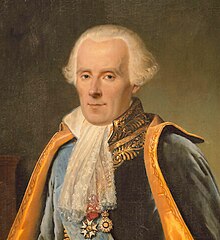
Laplace is "the reason for the season"


Pierre-Simon Laplace/Wikipedia
This is the time of year when fundamentalist-type Christians wail and moan about a largely nonexistent “war on Christmas.” Even nonfundamentalists often talk about Jesus being “the reason for the season.”

Some atheists, respond that Mithra is the reason for the season, as the Persian sun god’s holy day was celebrated Dec. 25. Yet others refer to Saturn as the reason, with the Roman Saturnalia. And, there are other candidates, too.

The commonality, of course, is that all of these gods had their holy day, nativity or whatever commemorated on or around the winter solstice.

And that’s why I say “Laplace is the reason for the season.”

That would be Pierre-Simon Laplace.

That would be the scientific progenitor of the nebular hypothesis for the origin of our solar system, which, with modern refinements, explains angular momentum of our planet and others, which, coupled with axial tilt (caused in fair part by early solar system microplanetary bombardments and collisions) created — seasons!

In short, Laplace explained how Earth, Gaia, Tellus or whatever name you give it, came to have its currrent seasons, including the shortest daylight of the year in the Northern Hemisphere. He explains the reason behind all of these religions having major celebrations around Dec. 25.

His thought was part of his larger work on classical mechanics.

And, he is sadly overlooked as the man who developed Thomas Bayes’ ideas into Bayesian probability as we know it today. In fact, we really should call it Laplacean probability. The idea as we have it today owes at least as much to Laplace as to Bayes.

So, Laplace is the reason for the season! And, per what I just wrote, someone who needs more "love" from popular science appreciators.

That said, it appears to be apocryphal that he bluntly told Napoleon, “I have no need for that hypothesis” when presenting his nebular theory, when Napoleon allegedly asked about god. Rather, more narrowly, Laplace was saying, contra Newton, he did not need to postulate god intervening at certain times and points to maintain the solar system in equilibrium.

That said, that was a bold enough statement. Post Reign of Terror, the equilibrium in France, and in general, was swinging back away from freethought in general and definitely from outright atheism.

Anyway, Laplace was a scientific genius who deserves more publicity.

And, starting with this point, from denizens of the northern part of the Northern Hemisphere possibly having SAD 2-3,000 years ago, just like today, there's good secular reasons to celebrate the solstice, and for taking a holiday for it, even if it's piggybacked as part of Christmas Day.

Besides Laplace, we can celebrate the technology that created light boxes to battle solstice-centered Seasonal Affective Disorder. Or the antifreeze the helps let cars run in winter. Or the human storytelling ability that developed narratives about gods, narratives centered on the solstice. Or, the historical-critical and  literary tools that show today how those myths developed. 

And, now, to tie celebrating Laplace into a bit of recent Gnu Atheist drivel ...

Or, you can be a Gnu Atheist Grinch about the idea of being even remotely associated with Christmas, as is Tom Flynn of the Center for Inquiry. But, to focus on Laplace here, I've got my thoughts about Flynn here.

And, per the commenter, the primary reason I edited the original end of this post was NOT because of "sniping." In fact, Flynn's blog post was in part what shaped some of the details of this one. And, if he doesn't even like our calendar because of how weeks and months are named, I doubt he will see any "light" in the future.

December 23, 2013

The Golden Rule vs. the Silver Rule and the War on Christmas

1. The small-town America background

I currently live in a small town in a small county in Central Texas. Indians run three of the motels here. I know at least one of them is not Christian, because the man has said so. I'll assume he's Hindu.

There's a Vietnamese family here. They could be Catholic, given that, especially in the earlier post-French governments of South Vietnam, Catholics predominated. There's still good odds they're Buddhist.

In the county, of 18,000, there's at least one Pakistani business owner. Presumably Muslim. And, even with a rural Texas discount from the national average, to just 0.1 percent, that would put 18 Jews in the count.

Hence, even in a smaller town in modern America, not everybody is a Christian. Per the Indians, Pakistanis and Vietnamese, and contra the likes of Supreme Court Justice Antonin Scalia, not everybody is a "cultural Christian," either.

And so, we should, at this time of year, think about the Golden Rule vs. the Silver Rule.

And, with that, the following several paragraphs are adapted from my most recent newspaper column.

2. How the Silver Rule shows itself to be better, often

One of the axiomatic moral guides of Christianity is, by many people, found in the Golden Rule: “Do unto others as you would have them do unto you.” It’s not just Christian, as Jesus cites it as a summary of the Old Testament Law, or Torah.

That said, in Judaism and elsewhere, there’s also the flip side, often called the Silver Rule. This maxim, to be found in other religion and philosophy as well, says, “Do not do unto others what you don’t want them doing to you.” It too is ancient. For example, in the Judeo-Christian tradition, the book of Tobit, part of the Catholic and Orthodox Bibles, and the Protestant Apocrypha, says, “Do to no one what you yourself dislike.”

It’s arguably a little bit more live and let live, a bit more libertarian if you will, than the Golden Rule version.

Let me give you an example. I might love chocolate cream pie. So, if I follow the Golden Rule, I might think, I’ll bring you my neighbor a chocolate cream pie. How loving, right?

But, if you’re diabetic, that’s about the worst thing I could do for you. Instead, I should be thinking, what can I do to be nice to someone else that he or she likes, not what I like and think he or she should like.

In other words, it’s an invitation to step into another person’s shoes, or moccasins, or slippers, and walk a few yards, if not a full mile.

I think of it in light of alleged “War on Christmas” talk that ratchets up this time of year.
From where I stand, many people say “Happy holidays” instead of “Merry Christmas” for one, or more, of several reasons that have no spiritual warfare involved.

Speaking of Judaism, maybe they’re Jewish. Or Muslim. Or non-religious. Or, they don’t know what your beliefs are. Or, if it’s in the business world, they certainly don’t know the religious beliefs of John or Jane Customer. Or maybe it’s Christians who believe Christmas has become so commercialized they don’t want to utter the “Merry Christmas” phrase any more.

And, having given you a prologue to that column, which was small-town focused, I move beyond it to the big picture again.

4. How this should play out today, the Christian side

Besides Faux News and Rush Limbaugh throwing red meat to fundamentalist Christians, there's really no need for fundamentalists, or conservative evangelical types, to buy into this.

If anybody's conducting a War on Christmas, it's the likes of Walmart, with ever-increasing commercialization, including Christian Christmas items made in China, to boot.

Most people who say "Happy Holidays" aren't trying to overthrow your celebration of your holiday. But, because Christmas has become secularized, far more than Easter (setting aside the pagan origins of most ways in which Christmas is actually celebrated), those people are just trying to carve out a bit of space to observe Christmas their way.

In any case, the idea of pastoral tranquility, the end of shortening days, the sharing of joyousness with family, even "spirituality," if you will, is a message not just limited to Christians at this time of year.

So, per the Silver Rule, honor the intent. Even Joel Osteen says the "War on Christmas" claims are overblown.

4. How this plays out today, the secularist side, part 1

As for displays on public property?

Certain Gnu Atheists who want to fight fire with fire there, if a Christmas seen is too religious and hasn't been denatured into Supreme Court type civic religion enough with the addition of something from Hanukkah, could and should "fire away." And, in Oklahoma City, they're being joined by Satanists and Hindus. That's why I don't always offer up blanket condemnation of Gnus. Sometimes they are, to riff on a phrase, doing the secularists work in the secular vineyards.

And, Nino Scalia aside, "civic religion" still has the word "religion" in it, and in the 21st-century United States, government at any level ought not to be promoting it.

So, here, I split with some secular humanists who always want to condemn Gnu Atheists. Tis always the season for insisting that the state not foster religion by overtly religious displays.

And, to be honest, not everybody involved with this might, technically, even be called a Gnu Atheist. Some might be more activist than I am, but yet not be deliberately courting antagonism.

And, until Christians, municipal governments, and even some secular humanists separate out issues of Christmas on public (government) property vs. private property, no, this one isn't going to go away. And, it's not the secularists' fault. I now deliberately switch from "Gnu Atheist" to "secularist," per the section subheader, to stress that.

And thus, I can't agree with those who want to condemn secularists who insist on proper interpretation of the First Amendment in the public square. That includes standing up to some Christians who want to fight back.

As I posted on Facebook, look at Oklahoma City. There, it's not just secularists, but Satanists and Hindus who are also insisting on proper interpretation of the First Amendment in the public square.

For Christians who insists this is part of a War on Christmas, St. Augustine, already, distinguished between two cities. For secularists of a stripe who say the same, no, it's a defense of civil liberties.

3. How this plays out today, the secularist side, part 2

That said, there are some so-called Gnu Atheists, about whom I've blogged before, who do engage in a war on Christmas.

Tom Flynn of the Center for Inquiry, as I said in my blog post from a year ago about French astronomer Pierre Laplace being "the reason for the season," thinks Christmas should not even be a secular holiday. And, in shades of the French Revolution's Reign of Terror, and more than just shades of outright cluelessness, he wants to rename the days of the week now named after pagan gods.

Other Gnu Atheists have put up deliberately in-your-face billboards, as much to put up in-your-face billboards, if anything else.

They seem to reflect and exemplify Albert Camus' idea in "The Rebel" that many an actual, or alleged, atheist, needs at least the idea of god to rebel against. On psychology of religion and philosophy of language grounds, one wonders whether this tar baby could not itself be called the god of such Gnu Atheists, and even more the ones who put signs on Christmas celebrators' lawns telling them to stop it.

They also seem to be clueless about Principle No. 1 of Marketing 101: You catch more flies with honey than with vinegar. (Actually, per what I just said, Gnus' claims aside, I suspect that the billboards actually have about zero to do with atheist evangelism.)

So, when it comes to public displays on public property, with First Amendment issues involved, I'm all for Gnus pushing the envelope a bit on civil liberties.

Even there, though, and certainly in all other cases, it's the season to ... don't be a dick.

Or, if you "have to" be a dick, find a more trivial cause for your dickery, at least.

Note: This is not a claim to be perfect at this myself.

Note 2: I'm not Chris Stedman, and don't have a massive "brand" to promulgate this, but you heard it from me first.

December 20, 2011

Nativities, #GnuAtheists, and nuttery

I agree that the nativity on the courthouse lawn in Athens, Henderson County, Texas, is technically unconstitutional. But, there are better ways to address this issue than the Freedom from Religion Foundation throwing Gnu Atheist firebombs.

First, since it's erected by a private group, per previous court rulings there is the option of putting up a countervailing display of some sort. Per the story:
If it is open to all faiths, then the Freedom from Religion foundation tells News 8 it wants to put it's own sign at the courthouse. One that reads, in part, "That there is no God, no devils, no angels or heaven" and that, "Religion hardens the heart and enslaves minds."

It's happened before.


The same sign was put up at the capital building in Washington state back in 2008. The same group, the Freedom From Religion foundation, got it posted right next to another nativity scene. The sign brought out angry protesters there, and county officials believe it would bring out the same anger, having an outsider forcing their hand.
That said, Olympia, Wash., is NOT Athens, Texas. That sign would be shredded the first night, as not a single cop in Athens would patrol the site, and not a resident there would admit to seeing anything being done.

Second, what do tactics like this do for Gnu Atheist evangelism?

People here have heard me say before: They backfire. It's the old flies and honey vs. vinegar cliche. If you're trying to get people to respect atheists, or trust them, since trust seems a big issue, this sure isn't the way to do it.

Why not put up a positive sign, like: "We're sharing caring and rejoicing in our own glad tidings without feeling the need to be religious." And then include a URL, whether to FFRF or a list of famous atheists or something.

In the light of an Anglo-American pundit's death, it does often seem that for Gnus, it's about rebellion more than civil liberties. Ridiculous.

December 20, 2010

Xns shooting selves in foot with 'War on Xmas'?

When I saw the title for Ross Douthat's latest op-ed column, I thought he had become the latest Bill O'Lielly/Faux News surrogate.

But, I read on, and was surprised, at least partially pleasantly. Especially in the latter part of the column, with this:
Having popularized the term “culture war” two decades ago, (University of Virginia sociologist James Davison Hunter) now argues that the “war” footing has led American Christians into a cul-de-sac. It has encouraged both conservative and liberal believers to frame their mission primarily in terms of conflict, and to express themselves almost exclusively in the “language of loss, disappointment, anger, antipathy, resentment and desire for conquest.”

That said, Hunter is, as Douthat notes, a social conservative.

Douthat then adds that
Harvard’s Robert Putnam (of “Bowling Alone” fame) and Notre Dame’s David Campbell ... argue ... institutional Christianity ... seems to be gradually losing its appeal.

The bottom line?
Putnam and Campbell are quantitative, liberal, and upbeat; Hunter is qualitative, conservative and conflicted. But both books come around to a similar argument: this month’s ubiquitous carols and crèches notwithstanding, believing Christians are no longer what they once were — an overwhelming majority in a self-consciously Christian nation.

Douthat, of course, laments that. I welcome it.

He does add a coda:
Or to put it another way, Christians need to find a way to thrive in a society that looks less and less like any sort of Christendom — and more and more like the diverse and complicated Roman Empire where their religion had its beginning, 2,000 years ago this week.

That said, he's ignorant of the history of Christian development and evolution, and ignorant of how battles over orthodoxy in those days made today's American Religious Right look like pussycats at times.

And, beyond that, Douthat does not seem cognizant that the mindset of the modern Religious Right simply isn't amenable to change.