A skeptical leftist's, or post-capitalist's, or eco-socialist's blog, including skepticism about leftism (and related things under other labels), but even more about other issues of politics. Free of duopoly and minor party ties. Also, a skeptical look at Gnu Atheism, religion, social sciences, more.
Note: Labels can help describe people but should never be used to pin them to an anthill.
As seen at Washington Babylon and other fine establishments
I like a history book that isn’t afraid to forcibly advance a thesis, even if I don’t totally agree with it, as long as it has at least a reasonable amount of factual backing. And, Bordewich’s does. It is that St. Abraham of Lincoln most certainly did not win the war single-handedly or even close to it. Rather, Congress had a significant role, and often took the lead, both in actions directly related to the war and ancillary ones.
Note: This is an expanded version, as is my wont here, of my Goodreads review, which was completed two weeks ago. This makes a perfect Memorial Day piece.
As Bordewich shows, one of the most important tools, beyond individual acts of legislation, was the Joint Committee on the Conduct of the War. This is directly parallel to the WWII US Senate committee, helmed by Harry Truman, that propelled him to the vice presidency nomination in 1944. Chaired by Ben Wade, it repeatedly investigated tactics and command by generals, starting with McClellan, as well as material and supplies, war profiteering and more. In 1864, it took testimony from the survivors of the Fort Pillow massacre. (Nathan Bedford Forrest being allowed to survive after the end of the Civil War is itself an indictment of Reconstruction.)
At its best on 1863-64. Noting the part-time nature of Congress and how the new one wouldn’t start until 1863, Bordewich notes how the Clerk of the House, Emerson Etheridge, a Tennessee Unionist who turned anti-administration after the Emancipation Proclamation, was going to use his powers as clerk to reject the credentials of as many Republicans as he could, in collusion with Vallandigham and Sunset Cox. But, Republicans sniffed it out, and reportedly, Lincoln was OK, in extremis, of using troops to oust Etheridge.
But part of the story is Smiler Colfax being elected as Speaker for that Congress, as Galusha Grow had lost re-election to his seat in the midterms. Lincoln reportedly wanted old Illinois friend Elihu Washburne, who wouldn’t have been bad, or the odious Frankie Blair, who would have been. This was all new to me.
Also new to me were details of Hannibal Hamlin being dumped for Veep, especially how much Lincoln was allegedly involved, even to the point of allowing a nominal pro-Hamlin vote on the first ballot. It’s arguable that, at the time, the concern to get a War Democrat as Veep was reasonable. But, it appears Lincoln wanted Hamlin gone anyway. I suspect it was because he suspected Hamlin would be more and more a Radical foot inside the White House as Reconstruction ramped up.
This, then, connects to Lincoln’s pocket veto of the Wade-Davis act. And, no, contra Wade’s modern chief biographer, even if the Wade-Davis Manifesto in the New York Times after the pocket veto was overblown, the act itself was NOT.
This, in turn, though little discussed by Bordewich, would seem to tie to Lincoln’s ongoing support for colonization — yes, even up to the week of his assassination. It definitely ties to Lincoln’s “rosewater” reconstruction plans, where Speaker Julian Ashley couldn’t get a deal to admit Louisiana’s congresscritters in exchange for Lincoln accepting something at least halfway like Wade-Davis for unreconstructed states. (I'll have an even more expanded review on my blog, and this will be part of it. (It should also be noted, per Bruce Levine, that Salmon Chase warned Lincoln at the start of his presidential reconstruction of Louisiana to net let it pass a black peonage law. Lincoln did anyway.)
Some historians, like James Oakes and David Reynolds, will give you the St. Abraham of Lincoln version of the story on colonization, claiming he never spoke about it in public after the Emancipation Proclamation. True, but a nothingburger. As the link in the previous paragraph shows, he DID talk about it with Butler two full years later. Before that, in early 1863, per email exchange I had with Oakes, Lincoln's Emigration Bureau continued to explore Belize as a colonization site — with his encouragement. Per that link, also, Lincoln asked Attorney General Edward Bates in October of 1864 — while worried about re-election, let us not forget! — if Emigration Commissioner James Mitchell could have his salary restored, though Congress had killed the commission's budget in July. (Mitchell himself, per that link, was apparently paid directly as an employee of the Department of the Interior.) Bates, as he prepared to resign as AG, did his best to dodge a formal legal opinion but informally admitted to Lincoln that the answer was yes.
Much more — Lincoln's whole pre-presidential and presidential history of support for colonization — is fascinating, if troubling, reading. Bureaucratic infighting between Mitchell, known to Lincoln since at least the late 1840s, and Interior Secretary Usher kneecapped the British Honduras and British Guiana possibilities. So did Seward's hatred of colonization, and, as Secretary of State, his willingness to say so in front of foreign envoys.
Back to the original review.
Per anti-Radical historians today who say that Ben Wade as president pro tem killed chances at impeaching Andy Johnson? He was freely elected. The GOP was going to stand by him. Recuse himself? Whoever was president pro tem wasn't going to recuse himself and besides, it was Chase (with a lot of horrible legal rulings, perhaps done with his own eye on the presidency) who was presiding over the impeachment trial.
That said, on some items, it was pushing at an open door in general. Lincoln, old railroad lawyer, certainly supported the Pacific Railway Act and its later emendations. Ditto, being from the Illinois prairie, on the Morrill Act, the Homestead Act and the creation of the eventual Department of Agriculture.
Possibly a stretch to claim the Civil War era sub-Treasury led directly to the Federal Reserve, although the National Banking Act was a step in that direction. And, Bordewich never ponders why Congress didn’t cut straight to the chase and create the third Bank of the United States.
Oh, Lincoln’s nationwide suspension of habeas corpus in fall of 1862 did NOT, in and of itself, create martial law. A journalist should know better than that. Not all people arrested and held without release went automatically to military commissions instead of civilian courts, though that was, yes, often the case, when Lincoln did go on to declare martial law. In any case, suspension of habeas corpus by itself does not create martial law. Ex parte Milligan makes this clear.
Add this to your Civil War reading list. I'm going to give a long review, but one that nonetheless still just gives the backbone of the book.
Lincoln once said that “somehow” the war was about slavery, even though most the North, including him, denied it at the start.
Most of the 11 Confederate states’ ordinances of secession admitted it, though. So, too, did the Confederate Constitution.
So, Bruce Levine starts there, in “The Fall of the House of Dixie.” (You know this book is good, beyond that, when Eric Foner is among those named in the Acknowledgements.)
As in, starts right there on page 4, with states from the 1860 US Census. But, we're putting that at the end of this expanded and edited version of my Goodreads review to get the problematic Lincoln legend, of the likes of mainstream Civil War authors and auteurs like Steven Spielberg, versus the reality, up top.
Details of Census numbers on slave ownership will be at the bottom.
Of the many other things in this excellent book, one more needs to be cited. And, that's the one we're going to move up top.
And,
that is Levine’s documentation of Lincoln’s war-long reticence over
land redistribution. Reconstruction would of course have gone better with him
still alive. He would have reacted to the Klan, Knights of the White Camelia
etc. much more rapidly than Andy Johnson. Example? The Second
Confiscation Act of 1862 gave him the formal right to seize not only
slaves of disloyal owners, but their other property. However, and as
Levine notes, AT LINCOLN’S INSISTENCE, on the death of said rebels, all
property except their slaves would revert to their heirs. Rich Northern
whites might pay to rent it under such terms; poor blacks couldn’t
afford to touch it.
In a related matter, in the reconstruction
of Louisiana’s beginnings, Lincoln ignored Salmon Chase’s cries not to
allow its new state government to pass “as a temporary arrangement”
special laws governing the newly freed slaves as a “laboring, landless
and homeless class.”
Levine doesn’t tackle the colonization
issue, but the two paragraphs above should refute the likes of David Reynolds and James Oakes about just how high-minded Lincoln was, or was
not, about the future of freed slaves after Jan. 1, 1863. Was he
continuing to evolve? Yes. Might have continued to evolve further, had
he lived? Yes. Did he also, as I have noted to those two gentlemen,
likely discuss the colonization issue with Spoons Butler the day before
his assassination? Yes.
So, Lincoln's "rosewater," already being implemented in Louisiana (and West Virginia, and bits of remnant Virginia) before he died, if carried over into Reconstruction, probably would have left freed slaves almost as high and dry as did Andy Johnson.
Yes, Lincoln would have given them more physical protection. But, in all likelihood, he would have offered them little more satisfaction on land. After all, Grant didn't do anything after he succeeded Johnson. And, to the degree he faced the issue as president, or jokingly in a militia unit during the Black Hawk War, Lincoln never really showed an understanding — or rather, never really showed a willingness to look behind the white stance — on American Indian land issues, either.
Was Lincoln our nation's greatest president? Yes. Was he 5-star? Only if we're grading on a curve.
One lesser thing to note. Levine also shows how racist Sherman was, up to the end of the war. Grant, and many other non-McClellan Northern generals, had at least moderated racism they had in 1861. Not Unc' Billy.
And now, back to the other main part of the book's original, and where Levine started: The 1860 US Census and slave ownership.
In all 15 slave states, 1 in 4 whites were slaveowners. (Levine later notes that in the 11 seceding states it was 1 in 3, so adjust the below accordingly.)
The typical master owned 4-6 slaves, he says. But, that was just the bottom rung of the highly capitalistic slaveowning South.
One in eight Southern masters had 20 or more slaves, and thus officially counted as “planters” according to the Census. The math says that’s 3 percent of Southern whites. In the seceding states, about 5 percent.
Next tier? The “ten thousand families” that owned 50 or more slaves, and now it gets more fun because Levine starts naming names. Allegedly “good master” Robert E. Lee and his wife were here; he and Mary Fitzhugh Custis Lee inherited 60 slaves with their Arlington mansion from her father, George Washington Parke Custis. (And that name should remind you of Lee’s connections.) As for the truth on Lee's brutality level toward slaves, it's not just modern research that shows this; one of his own freed slaves "gave testimony" in 1866, information used by modern researchers. Edmund Ruffin is in this group. So are two couples cited extensively in this book.
Next tier? The 1 in 15 planter families who owned 100 or more slaves, or 3,000 families. Jeff Davis and Robert Toombs were among this small group.
The semifinal cut for Levine? Those owning 250 or more slaves. Davis’ brother Joseph is here. So is Howell Cobb. So is the vile James Henry Hammond and the incendiary Robert Barnwell Rhett Sr. As is James Chesnut Sr., father-in-law of noted Confederate diarist Mary Boykin Chesnut.
The final cut? 500. Here, the father of the wife of one couple in the 50-plus class is here.
Add in, on the photo plates pages, the 1860 Census map of slave ownership percentages by county, and we’re good to go with the basic story.
Levine, lumping 1861 and 1862 together, does a yearly overview of the North’s military progress combined with the South’s reaction, much of it from people named in the various levels of slave ownership above. “Poor whites,” whether slaveless or the 4-6 class are also cited in detail. So are the two most states-rightists governors, Joseph E. Brown and Zebulon Vance, along with others noting the Confederacy’s internal contradictions.
Those contradictions culminate when Davis pushes a version of Patrick Cleburne’s proposal to arm slaves in exchange for (limited) freedom. Besides the argument that this would shatter the Confederacy’s basic operating principle, Levine notes that some planters still rejected the idea that slaves could fight. Others, on the other hand, thought they would — and for the Union, as soon as you gave them a Southern gun.
With it being estimated that there's more than 16,000 Lincoln bios in print, it's definitely hard to find new angles or new interpretations for new authors.
Two new books within the last six months or so have done just that, though. Unfortunately, in both cases, what has been good, even occasionally splendid new work, has been offset by whoppers in historical errors I know the authors could have avoided, and in both cases directly related to the header.
This is good overall, but it loses a star on Lincoln and colonization. With Oakes, it's more a throwaway than a full-throttled claim like that of David S. Reynolds in "Abe-Abraham Lincoln and His Times," (see below) but Oakes claims Lincoln stopped discussing abolition after 1862.
Update: Book lost a star due to email exchange with Oakes:
You have to be obsessed with colonization to give a shit about this. I’m not and I don’t.
Here’s why:
Q. Of the four million slaves emancipated by the Civil War, how many did the federal government colonize outside the United States?
A. Zero
I’m interested in explaining what happened, not what didn’t happen.
My response:
I'm "obsessed" with historical accuracy. I guess you're admitting you're not.
PLUS, you knows it "goes to motive" on explaining persona of Lincoln.
Oakes' main claim is half-true by the letter, at best, and totally untrue in spirit, as he allowed the Emigration Bureau to discuss Belize colonization in 1863, asked AG Bates in 1864 if colonization was legally still on the table, and reportedly discussed the issue with Spoons Butler just before his assassination. (See extended note at bottom.)
Given this, and that Oakes like Reynolds tries to "soften" old Lincoln statements from charges of racism, it's no wonder Reynolds blurbed it. Add to that the fact that they're peers at CUNY and even both went to Berkeley and there probably was some cross-pollinization.
As with Reynolds' book, were the five-star elements in it not fully five-star, the book would have gotten three stars because of this willful and egregious failure. (As with Reynolds, it is both; I know he knows the history I just cited.)
I would have loved to five star this book. And, even with some of the early problems on one issue, I was still leaning that way. But, more problems on that issue meant I couldn’t do it. And, if it weren’t so good otherwise, it risked falling to three stars.
(Update: In hindsight, and seeing James Oakes is peddling some of the same untrue claims about Lincoln abandoning colonization after 1862, and with these claims getting bigger play in Reynolds, I have decided that for this and other reasons noted by myself and mentioned by other reviewers in various places, the rating must be reduced to three stars after all.)
First, the good of what’s billed as the first ever “cultural biography” of Lincoln? Reynolds delivers in spades in many ways.
One area where he really impressed me was on Lincoln’s religiosity. He notes that his parents attended an anti-slavery Baptist church in Kentucky, and were steadfast in their own stance. Beyond that, Reynolds talks about Lincoln’s younger adult deism, and how he soft-peddled that as part of his political rise. At the same time, along with other biographers, especially after the death of son Willie, he shows Lincoln, though still not a churchgoer, moving toward a more fatalistic version of conventional Calvinism.
Reynolds is also good on Lincoln’s legal practice. Many biographers focus on his 1850s railroad cases. Reynolds looks at how many divorce cases the younger Lincoln handled, for women as plaintiffs suing on grounds of desertion. He adds that Illinois was one of the few states that allowed women to file for divorce on desertion as well as abuse, and that it was fairly generous, for that day, on what counted as abuse.
Fast forward to the 1850s. Reynolds talks about Lincoln avoiding ‘isms,” a charge Democrats hurled repeatedly at Republicans. He notes that Lincoln was like French tightrope walker Blondin, who had crossed Niagara Falls at this time. He adds how Lincoln sometimes made this modeling conscious, and how many newspaper columns and cartoons in the 1860 election explicitly drew this out.
He also talks about how Abe, not just Mary, was interested in spiritualism, especially after Willie’s death. Again, he puts this in the context of a rising national interest in spiritualism, fueled largely but by no means entirely by the Fox sisters. Among his contemporaries, Ben Wade, Josh Giddings and Garrison all had at least some degree of interest. Lincoln conversed with both Robert Edmonds and Robert Dale Owen, the son of utopian Robert Owen, and listened seriously to Owen on matters both within and outside of spiritualism.
(Sidebar: This puts paid to the lie by folks like the Freedom from Religion Foundation that Lincoln was an atheist.)
That’s just a sample.
On the non-cultural side, Reynolds does a good job of recognizing Anna Carroll’s contributions to the war effort. I had read basically nothing about her before.
Several problems with the book, though, and they all center around slavery. Reynolds isn’t quite doing the Spielberg movie version, but ….
First and foremost, no, Lincoln did not stop talking about colonization in 1862. His administration continued discussions with Central American countries well into 1864, and in 1865, Lincoln purportedly said he had only abandoned it at the time for political reasons. Spoons Butler said that Lincoln, the day before his assassination, asked him to continue to look into it. It’s dishonest of Reynolds to not even mention Bernard Kock and the Ile-de-Vache (Vache Island) scheme.
It's true that Vache Island wasn't actively promoted after 1862. But, colonizing Belize? That was an activity the Emigration Bureau did promote, under Lincoln's auspices, into 1863. And, per Wiki, Lincoln continued to have at least a background attachment to colonization into 1864, even if he and Butler didn't discuss it in 1865.
The question is, ultimately, after the war itself started swinging to the US more instead of the Confederacy and 1863 elections went pro-Republican, how much was Lincoln’s diminished public push for colonization his own change of mind and how much was change of politics? This site from the Journal of the Abraham Lincoln Association, by Michael Vorenberg pushes for Lincoln's abandoning colonization after 1863 elections, but not convincingly to me. Basically, I find Reynolds, given the amount of knowledge he has otherwise, to be intellectually dishonest.
Back to The Journal of the Abraham Lincoln Association, but a much different take. More here, about the likely reality of Lincoln holding on to colonization ideas until the end of his life. MUCH more, about that April 1865 meeting between Lincoln and Butler, which did in fact happen. Phillip Magness writes 15 years later than Vorenberg, and rejects the idea that he disproved the existence of such a meeting. He also notes, contra Oakes and Reynolds, that Carl Schurz and George W. Julian both say that Lincoln continued to push colonization after issuing the Emancipation Proclamation.
Magness expands on some of these thoughts in an edited and condensed version of his Lincoln journal thoughts, at his own website, in 2015, seven years later. Per that, Magness notes that even Thad Stevens supported re-funding James Mitchell, Lincoln's colonization commissioner, and that there was some indication that a Freedman's Bureau under Lincoln's development would have had colonization attached to it.
==
UPDATE, Feb. 12, 2026 (Lincoln's Birthday!). Magness has another piece with the Journal of the Abraham Lincoln Society talking about some lost papers that colonization commissioner (specific title: Administrator of the Emigration Office) took with him after leaving office. Secondary link here. It further puts the lie to Oakes and Reynolds. It includes that, in 1871, in the middle of his wrangling with President Grant over Santo Domingo, in part because he feared Grant wanted it as a colonization outlet, Charles Sumner asking Mitchell what Lincoln might have said on the subject. Mitchell had an 11-page response, which has since been lost, but he ran a summary in the Atlanta Constitution. Magness has that as well.
Just as we don't have these lost papers of Mitchell, for whatever reasons, Magness suggests the reason we don't have more on paper from Lincoln's own hand on colonization after Jan. 1, 1863, is that these papers were removed. By whom, he doesn't say. Mary Lincoln is quite unlikely. Robert Lincoln is a possibility in my eyes, as is Seward, of course.
Magness restrains speculations:
It would be unduly speculative and even irresponsible to suggest that the lost Mitchell papers contain evidence that would otherwise establish a detailed record of Lincoln’s colonization interests into the final days of his life. The small glimpse of their contents that Mitchell and others left behind suggests no such smoking gun but rather a diverse volume of letters, notes, and memoranda that may help to close the gaps in Lincoln’s sporadically documented—though indisputably existent—colonization work after the Emancipation Proclamation, particularly that which occurred in 1863 and early 1864.
Well put.
That said, we do have Abe's signature on an 1863 order related to colonization in British Honduras, today's Belize. Related to that, at footnote 12 in the main piece, three weeks AFTER the Emancipation Proclamation, Magness notes that Lincoln talked up the issue with British ambassador Lord Lyons.
The "smoking gun" vis-a-vis Oakes and Reynolds is that, in 1871, Sumner did not have information to clearly confirm for him that Lincoln had abandoned colonization after Jan. 1, 1863 and wrote Mitchell in part to that end. (Former Interior Secretary John Usher was still alive at the time; there's no information on why Sumner didn't ask him; maybe he knew enough to go straight to Mitchell.)
==
Back to Reynolds.
Second, he “sanitizes” some of Lincoln’s somewhat racist comments in the 1840s and 50s. No, they were racist, if not the worst racist for his age, and they weren’t all told in the service of politics.
Third, he claims the republic was strong against the slave trade, citing that the death penality was made a possible punishment in 1820. Reality? The Lincoln Administration’s imposition of it, once, was the ONLY time in the 42 years. More reality? The US refusing to cooperate with Britain in African shore naval policing. MORE reality? Very few cases brought in the US. W.E.B. DuBois may be too high, but, as of the start of the Civil War, I’d estimate 100,000 blacks had either been post-1807 illegally imported (whether from Africa or the post-1832 British Caribbean) or descendants of such people.
In addition, I found a phrase here and there jarring, such as calling Elizabeth Keckley’s son “light complexioned.” Of what relevance is that? None, obviously.
On the 13th Amendment? Lincoln may not have personally handed out favors. (I can’t remember what Speilberg claimed.) But, did he know that Ashley and others WERE? Yes. And, some of the favors being peddled? Federal jobs are executive branch appointments. For instance, only Abe (or Andy Johnson, later) could have named George Yeaman ambassador to Denmark. The movie part about Lincoln personally lobbying Yeaman at the White House is true.
And, again, I know Reynolds knows this. If not, he should
It’s anachronistic to call a Lollard like John Oldcastle a Puritan.
Per reviewers elsewhere, applying labels like "conservative" and "progressive" to the battle over slavery is also anachronistic and serves no purpose.
==
As with Spielberg's movie, promoting untrue claims about Lincoln does nobody any good today. All it does is give openings and fuel to libertarian pseudo-historians attacking Lincoln for violating civil liberties and stuff like that. (For the wondering, I'm referencing Thomas DiLorenzo. Yeah, Oakes, I know academics reject him, and largely rightly so, but a chunk of the general public eats him up. And, I haven't even mentioned Lerone Bennett, who would kick your ass if still alive.)
And, yes, that note applies to you, Prof. Oakes. And, assuming this is part of why Reynolds never responded to my email, it applies to you as well. And, I'm not going to add further email exchanges to the book review, or the full amount of them here.
Suffice it to say that I never claimed Lincoln uttered public calls for colonization after 1862, so I'm not even further answering that. The fact is that, officially, even without public pronouncement, Lincoln kept colonization on the official governmental plate through the first two-thirds of 1864. And, as is documented, he talked to Bates about it as late as late 1864. And, as great a historian as Foner is, if he uses the lack of PUBLIC discussion post-1862 to also pretend that colonization wasn't on Lincoln's plate after that? Well, Mr. Oakes, then Eric Foner, as great as he is? Is wrong.
And, all the links on the Reynolds review apply to Oakes as well. Hell, they apply to Foner if he really claims that Lincoln making no more public calls for colonization after 1862 means that he abandoned the idea of colonization general. The first of the three links in the one Reynolds review paragraph has Seward claiming in 1877 that Lincoln never abandoned the idea. Gideon Welles is quoted as saying the same, also in 1877. While Bates, Seward and Welles were on the conservative side of Lincoln's Cabinet, outside the Cabinet, Butler was an eventual Radical. George Julian, who also said after Lincoln's death that he supported colonization to the end of his life, was a Radical in the 1860s, though later a Liberal Republican then a Democrat. Samuel Pomeroy, also a Radical, recounts this as well.
Let's also add that both books are biographies of Lincoln, or biographies of select slices of him, NOT histories of the end of slavery in the US. That's another reason Oakes and Reynolds are guilty of intellectual dishonesty. And again, applies to Foner, too, if he really holds this.
And, contra Oakes' vituperative response to my "goes to motive" comment? It DOES go to motive. You come off as promoting a St. Abraham legend on the subject of colonization, per my header.
For the reader? Lincoln's colonization schemes were always voluntary. To riff on his famous 1862 letter to Horace Greeley? If he could have Black freedom and basic civil liberties while keeping all African-Americans in the U.S., that was his preference. But if not, he stood ready to continue to keep colonization on the back burner.
As for taking two stars away? With Reynolds, even more than Oakes, it wasn't just for this, it was for several other reasons, all obvious in the review. Both authors sanitize Lincoln's comments. Plus, I note Reynolds' wrongness on the slave trade and other things, including his "jarring" comments.
Oakes lost the second start for being contentious.
As for "goes to motive"? Much historical speculation ink has been spilled on how Reconstruction would have played out differently had Lincoln lived. Surely, he would have cracked down on the Klan, Knights of the Camellia, etc., quicker than Johnson did. He would have done other things more firmly. But, if Butler, Wells, Seward, Schurtz, the Blairs, etc., are all right, would he have started peddling colonization again, even with a Lincolnesque version of "see, I told you we can't live together"?
Rather, per Corey Robin, as most recently articulated here, and originally expressed here, he is a "disjunctive" president, usually the last type of president in each round of what has come to be known as the First through Sixth Party Systems.
The Second Party System began with Andrew Jackson, and Martin Van Buren teaming with him to form the antecedents of the modern Democratic party after original parties disintegrated under Monroe's Era of Good Feelings.
The Third Party System started with Lincoln as first Republican president. Free-soil movements outside the Democratic and Whig parties, as well as some within the party, helped lead to the end of the Whigs and the formation of the new movement.
The Fourth Party System began with McKinley. Republicans worked, as did Democrats, to accommodate at least some ideas of the Populist, then the Progressive, movements.
The Fifth Party System started with FDR. FDR's Democrats had to accommodate surging union rights, then Socialist turned Democrat Upton Sinclair's EPIC and Huey Long's Share the Wealth, which lead FDR to the Second New Deal. Per Robin, myself and many historians and political scientists and contra Wiki's expressed uncertainty, it ended with Jimmy Carter.
And, we need to look at Robin now to consider that.
Robin, and others, postulate four types of presidents, explained at his second link. The first, who will kick off a new system, he calls "reconstructive." The second, he calls an "articulation" president. Think of LBJ working to broaden, deepen and expand the New Deal. The third is a "preemptive" president. These presidents usually come from the minority party in a system, and attempt to pick off elements of the majority party's program while rebaptizing them. Think of Nixon, as Robin says, agreeing to the creation of the EPA, among other things, recognizing that environmentalism was bipartisan, but pandering to whites on things like crime and integration.
The fourth is the "disjunctive" president mentioned up top. Robin notes that previous examples include Carter, Herbert Hoover and Frank Pierce. (I'd add Buchanan here, with the Second Party System ending with back-to-back disjunctive presidents.) They are, or have been in the past, of the presidential majority party, and essentially go down with the ship of a dying program, at least to some degree.
Now, we get to a key point.
Robin notes, as I have outlined above, that other than the fading-away disintegration of the First System, the others up to this point have had their demise hastened by outside pressures. At the same time, he notes that these disjunctive presidents often see the problems and try to reach outside their current structures, to the degree they feel they can.
Now, this didn't happen at all with Pierce-Buchanan. And, arguably, it didn't with Benjamin Harrison. However, Grover Cleveland, second presidency, weirdly acts almost like a Republican in this. It certainly did happen with Hoover, who did try some stimulus, and some parts of which, like the Reconstruction Finance Corporation, carried on under FDR. And Carter, arguably the first fully, or nearly fully, neoliberal Democratic president, deregulated airlines, trucking and other industries.
And, he says that that doesn't really seem to be the case, as he explains in detail at his first link.
Anti-free trade, Trump's one bellwether, has no more support among the ruling class of Democrats than among Republicans. It's the only real way he's reached outside his traditional party.
Is that alone anything like the free-soil movement, Populism or Progressivism? I think not and neither does Robin. Meanwhile, single-payer national health care has yet to reach that critical mass to prod leadership Democrats.
So, are we stuck with a Sixth Party System that won't die, but just becomes more broken? Maybe.
I certainly agree with Robin otherwise. Trump is not a fascist, no more than he's a colluder with Putin. But he does have some other parallels with Carter. Neither won a majority of popular votes in their respective primary drives; related, both had fractured primaries with multiple seemingly viable candidates.
To explain more, and adapted from a response comment by me below.
Robin's idea
is that Trump is not a fascist precisely because he fits in an established arc
of types of presidencies. A disjunctive-type presidency isn't really compatible
with stereotypical fascist actions. I suppose in some sort of theoretical outlier,
you could have a fascist president lurking behind seemingly disjunctive
activities, or you could have an inept fascist who winds up as a disjunctive
president but I see those as really hypothetical.
I don't see
Trump as a non-inept fascist, and to some degree, I think inept fascist is a
contradiction in terms. (Mussolini made the mistake of taking an unprepared
Italy to war; in domestic policy from 1922-1938, he was actually pretty ept, so
he doesn't fit the definition of inept fascist.)
So, with all
that explainer? Robin is showing how pretty much one can't be a fascist and be
a disjunctive president, and then showing how Trump IS a disjunctive president.
Personally,
I've rejected the idea Trump was a fascist from the time he took office, and
for two reasons.
One is that,
like Robin, I don’t think Trump’s a fascist.
The second
is that #TheResistance was near the forefront of calling him a fascist, as an
epithet if nothing else. It was sometimes tied to the Putin collusion claims,
and we’ve seen how wrong it was on that. Even if it/Donut Twitter HAD been
partially right, I wasn’t going to play along.
BUT … Corey notes previous great alignments have had outside
pressures too and none currently exist.
What we seem to be mooting now is a purely political
reconstruction, shorn of the social movements that helped make previous left
reconstructions what they were.
Robin notes that this means the increased polarization of
the two mainstream parties is less open to outside movements.
If he’s right, then maybe we’re still in the Sixth Party
System, and assuming Trump loses and it’s not to Bernie Sanders, the transition
goes on for a while — if we’re even going to be in a transition.
And, if he's right, it's all the more reason to not be tempted by the duopoly.
Many lovers of poetry as well as Civil War and other history buffs know that Walt Whitman wrote two poems of tribute and elegy to President Abraham Lincoln after his assassination.
Walt Whitman, America’s first native poetic genius, wrote
two poems about Abraham Lincoln’s death. The first, and shorter is:
Oh Captain, My Captain
O Captain! My Captain! our fearful trip is done;
The ship has weather'd every rack, the prize we sought is won;
The port is near, the bells I hear, the people all exulting,
While follow eyes the steady keel, the vessel grim and daring:
But O heart! heart! heart!
O the bleeding drops of red,
Where on the deck my Captain lies,
Fallen cold and dead.
O Captain! My Captain! rise up and hear the bells;
Rise up—for you the flag is flung—for you the bugle trills;
For you bouquets and ribbon'd wreaths—for you the shores a-crowding;
For you they call, the swaying mass, their eager faces turning;
Here captain! dear father!
This arm beneath your head;
It is some dream that on the deck,
You've fallen cold and dead.
My Captain does not answer, his lips are pale and still;
My father does not feel my arm, he has no pulse nor will;
The ship is anchor'd safe and sound, its voyage closed and done;
From fearful trip, the victor ship, comes in with object won;
Exult, O shores, and ring, O bells!
But I, with mournful tread,
Walk the deck my captain lies,
Fallen cold and dead.
This is a lovely piece of musical art too.
Yes.
Kurt Weill has this as one of four "Walt Whitman Songs."
That "Captain" had just delivered his Second Inaugural Address. Speaking of that, I have no idea who Walter Trumbull is, and didn't find much on Googling, but he, while having done this half a century ago, has captured well the Second Inaugural:
If you want something a bit more modern, in recording quality, and, a bit more professional than that, perhaps, especially if you think Lincoln's voice may not have been that high-pitched or border-Southern (I do think it was both, myself), here's a presentation of Lincoln's Gettysburg Address, his other transcendent speech:
From there, with those interludes, we head back to Whitman.
The second, and far longer, of his Lincoln elegy poems is:
When Lilacs Last in the Dooryard Bloom'd
When lilacs last in the dooryard bloom’d,
And the great star early droop’d in the western sky in the
night,
I mourn’d, and yet shall mourn with ever-returning spring.
Ever-returning spring, trinity sure to me you bring,
Lilac blooming perennial and drooping star in the west,
And thought of him I love.
2
O powerful western fallen star!
O shades of night—O moody, tearful night!
O great star disappear’d—O the black murk that hides the
star!
O cruel hands that hold me powerless—O helpless soul of me!
O harsh surrounding cloud that will not free my soul.
3
In the dooryard fronting an old farm-house near the
white-wash’d palings,
Stands the lilac-bush tall-growing with heart-shaped leaves
of rich green,
With many a pointed blossom rising delicate, with the
perfume strong I love,
With every leaf a miracle—and from this bush in the
dooryard,
With delicate-color’d blossoms and heart-shaped leaves of
rich green,
A sprig with its flower I break.
4
In the swamp in secluded recesses,
A shy and hidden bird is warbling a song.
Solitary the thrush,
The hermit withdrawn to himself, avoiding the settlements,
Sings by himself a song.
Song of the bleeding throat,
Death’s outlet song of life, (for well dear brother I know,
If thou wast not granted to sing thou would’st surely die.)
5
Over the breast of the spring, the land, amid cities,
Amid lanes and through old woods, where lately the violets
peep’d from the ground, spotting the gray debris,
Amid the grass in the fields each side of the lanes, passing
the endless grass,
Passing the yellow-spear’d wheat, every grain from its
shroud in the dark-brown fields uprisen,
Passing the apple-tree blows of white and pink in the
orchards,
Carrying a corpse to where it shall rest in the grave,
Night and day journeys a coffin.
6
Coffin that passes through lanes and streets,
Through day and night with the great cloud darkening the
land,
With the pomp of the inloop’d flags with the cities draped
in black,
With the show of the States themselves as of crape-veil’d
women standing,
With processions long and winding and the flambeaus of the
night,
With the countless torches lit, with the silent sea of faces
and the unbared heads,
With the waiting depot, the arriving coffin, and the sombre
faces,
With dirges through the night, with the thousand voices
rising strong and solemn,
With all the mournful voices of the dirges pour’d around the
coffin,
The dim-lit churches and the shuddering organs—where amid
these you journey,
With the tolling tolling bells’ perpetual clang,
Here, coffin that slowly passes,
I give you my sprig of lilac.
7
(Nor for you, for one alone,
Blossoms and branches green to coffins all I bring,
For fresh as the morning, thus would I chant a song for you
O sane and sacred death.
All over bouquets of roses,
O death, I cover you over with roses and early lilies,
But mostly and now the lilac that blooms the first,
Copious I break, I break the sprigs from the bushes,
With loaded arms I come, pouring for you,
For you and the coffins all of you O death.)
8
O western orb sailing the heaven,
Now I know what you must have meant as a month since I
walk’d,
As I walk’d in silence the transparent shadowy night,
As I saw you had something to tell as you bent to me night
after night,
As you droop’d from the sky low down as if to my side,
(while the other stars all look’d on,)
As we wander’d together the solemn night, (for something I
know not what kept me from sleep,)
As the night advanced, and I saw on the rim of the west how
full you were of woe,
As I stood on the rising ground in the breeze in the cool
transparent night,
As I watch’d where you pass’d and was lost in the netherward
black of the night,
As my soul in its trouble dissatisfied sank, as where you
sad orb,
Concluded, dropt in the night, and was gone.
9
Sing on there in the swamp,
O singer bashful and tender, I hear your notes, I hear your
call,
I hear, I come presently, I understand you,
But a moment I linger, for the lustrous star has detain’d
me,
The star my departing comrade holds and detains me.
10
O how shall I warble myself for the dead one there I loved?
And how shall I deck my song for the large sweet soul that
has gone?
And what shall my perfume be for the grave of him I love?
Sea-winds blown from east and west,
Blown from the Eastern sea and blown from the Western sea,
till there on the prairies meeting,
These and with these and the breath of my chant,
I’ll perfume the grave of him I love.
11
O what shall I hang on the chamber walls?
And what shall the pictures be that I hang on the walls,
To adorn the burial-house of him I love?
Pictures of growing spring and farms and homes,
With the Fourth-month eve at sundown, and the gray smoke
lucid and bright,
With floods of the yellow gold of the gorgeous, indolent,
sinking sun, burning, expanding the air,
With the fresh sweet herbage under foot, and the pale green
leaves of the trees prolific,
In the distance the flowing glaze, the breast of the river,
with a wind-dapple here and there,
With ranging hills on the banks, with many a line against
the sky, and shadows,
And the city at hand with dwellings so dense, and stacks of
chimneys,
And all the scenes of life and the workshops, and the
workmen homeward returning.
12
Lo, body and soul—this land,
My own Manhattan with spires, and the sparkling and hurrying
tides, and the ships,
The varied and ample land, the South and the North in the
light, Ohio’s shores and flashing Missouri,
And ever the far-spreading prairies cover’d with grass and
corn.
Lo, the most excellent sun so calm and haughty,
The violet and purple morn with just-felt breezes,
The gentle soft-born measureless light,
The miracle spreading bathing all, the fulfill’d noon,
The coming eve delicious, the welcome night and the stars,
Over my cities shining all, enveloping man and land.
13
Sing on, sing on you gray-brown bird,
Sing from the swamps, the recesses, pour your chant from the
bushes,
Limitless out of the dusk, out of the cedars and pines.
Sing on dearest brother, warble your reedy song,
Loud human song, with voice of uttermost woe.
O liquid and free and tender!
O wild and loose to my soul—O wondrous singer!
You only I hear—yet the star holds me, (but will soon
depart,)
Yet the lilac with mastering odor holds me.
14
Now while I sat in the day and look’d forth,
In the close of the day with its light and the fields of
spring, and the farmers preparing their crops,
In the large unconscious scenery of my land with its lakes
and forests,
In the heavenly aerial beauty, (after the perturb’d winds
and the storms,)
Under the arching heavens of the afternoon swift passing,
and the voices of children and women,
The many-moving sea-tides, and I saw the ships how they
sail’d,
And the summer approaching with richness, and the fields all
busy with labor,
And the infinite separate houses, how they all went on, each
with its meals and minutia of daily usages,
And the streets how their throbbings throbb’d, and the
cities pent—lo, then and there,
Falling upon them all and among them all, enveloping me with
the rest,
Appear’d the cloud, appear’d the long black trail,
And I knew death, its thought, and the sacred knowledge of
death.
Then with the knowledge of death as walking one side of me,
And the thought of death close-walking the other side of me,
And I in the middle as with companions, and as holding the
hands of companions,
I fled forth to the hiding receiving night that talks not,
Down to the shores of the water, the path by the swamp in
the dimness,
To the solemn shadowy cedars and ghostly pines so still.
And the singer so shy to the rest receiv’d me,
The gray-brown bird I know receiv’d us comrades three,
And he sang the carol of death, and a verse for him I love.
From deep secluded recesses,
From the fragrant cedars and the ghostly pines so still,
Came the carol of the bird.
And the charm of the carol rapt me,
As I held as if by their hands my comrades in the night,
And the voice of my spirit tallied the song of the bird.
Come lovely and soothing death,
Undulate round the world, serenely arriving, arriving,
In the day, in the night, to all, to each,
Sooner or later delicate death.
Prais’d be the fathomless universe,
For life and joy, and for objects and knowledge curious,
And for love, sweet love—but praise! praise! praise!
For the sure-enwinding arms of cool-enfolding death.
Dark mother always gliding near with soft feet,
Have none chanted for thee a chant of fullest welcome?
Then I chant it for thee, I glorify thee above all,
I bring thee a song that when thou must indeed come, come
unfalteringly.
Approach strong deliveress,
When it is so, when thou hast taken them I joyously sing the
dead,
Lost in the loving floating ocean of thee,
Laved in the flood of thy bliss O death.
From me to thee glad serenades,
Dances for thee I propose saluting thee, adornments and
feastings for thee,
And the sights of the open landscape and the high-spread sky
are fitting,
And life and the fields, and the huge and thoughtful night.
The night in silence under many a star,
The ocean shore and the husky whispering wave whose voice I
know,
And the soul turning to thee O vast and well-veil’d death,
And the body gratefully nestling close to thee.
Over the tree-tops I float thee a song,
Over the rising and sinking waves, over the myriad fields
and the prairies wide,
Over the dense-pack’d cities all and the teeming wharves and
ways,
I float this carol with joy, with joy to thee O death.
15
To the tally of my soul,
Loud and strong kept up the gray-brown bird,
With pure deliberate notes spreading filling the night.
Loud in the pines and cedars dim,
Clear in the freshness moist and the swamp-perfume,
And I with my comrades there in the night.
While my sight that was bound in my eyes unclosed,
As to long panoramas of visions.
And I saw askant the armies,
I saw as in noiseless dreams hundreds of battle-flags,
Borne through the smoke of the battles and pierc’d with
missiles I saw them,
And carried hither and yon through the smoke, and torn and bloody,
And at last but a few shreds left on the staffs, (and all in
silence,)
And the staffs all splinter’d and broken.
I saw battle-corpses, myriads of them,
And the white skeletons of young men, I saw them,
I saw the debris and debris of all the slain soldiers of the
war,
But I saw they were not as was thought,
They themselves were fully at rest, they suffer’d not,
The living remain’d and suffer’d, the mother suffer’d,
And the wife and the child and the musing comrade suffer’d,
And the armies that remain’d suffer’d.
16
Passing the visions, passing the night,
Passing, unloosing the hold of my comrades’ hands,
Passing the song of the hermit bird and the tallying song of
my soul,
Semi-regular readers of this blog know that I’m a big Civil
War buff. I’ve been on two vacations where a fair amount of the focus was Civil
War battlefields and historic sites. My college minor was in history. And, it’s
always been an interest of mine.
And, as the sesquicentennial of the Civil War wraps up,
today is, of course, the 150th anniversary of what was arguably the most tragic
day in American history — the assassination of President Abraham Lincoln. There's no other word for it, given that he was followed by Andrew Johnson, the man many historians consider the worst president in U.S. history.
Here's how papers covered the assassination. The Newseum has a special on the coverage by the New York Herald.
Another interest of mine is alternative history, best
exemplified by three books whose titles start with the phrase “What If.” That
is, what if “X had happened instead of Y?” Or, as in events like April 14,
1865, “What if X had never happened?”
Namely, it’s the idea that, while Lincoln would have been a
better Reconstruction president than Andrew Johnson, he might not have been
that great, an arguable issue. He might have stuck with his “rosewater” Reconstruction too long.
He might have had some tangles with Congressional Radicals himself — and they
might have done, as with Andrew Johnson, and refused to seat Congressional
Southerners until the approval of the 14th and 15th amendments.
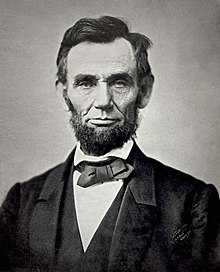
Lincoln in the famous Gardiner
photograph of Feb. 5, 1865.
Library of Congress
Would Lincoln have reacted more swiftly, with Army troops,
to the rise of the Klan than did Johnson? Although Radicals pushed Johnson, and
this was part of the motive for the Tenure in Office Act, designed to keep
Secretary of War Stanton in his job, the president is commander in chief of the
armed forces, not any member of Congress. So, there was only so much the
Radicals could do — or could have done if Lincoln were president and dragging
his own feet. It’s an open question.
Johnson’s version of Reconstruction was to make his pre-war
Southern “betters” kiss his hand asking for pardons, then, when that was done,
be even more racist than many of them. Lincoln, with less regard for social
niceties, and living in the North, wouldn’t have had that motive, but he might
have somewhat naively believed, for too long, that many upper-class Southerners
were more benighted than reality showed.
I discussed this briefly about Lee in my Appomattox piece,
noting that he stood idly by at the Battle of the Crater in 1864 when wounded,
thirsty black Union soldiers were shot to death. I noted this (linked there) in
my review of Michael Korda’s pseudohistorical biography of Lee, that he wasn’t
as kind a pre-war slaveowner as Korda would have us believe. Speaking of the
Klan, I’ve noted in various blog posts that Lee was the first person to be
offered its headship. Only when he said no was Nathan Bedford Forrest
contacted.
So, like John F. Kennedy and the Jackie-constructed Camelot
myth, Lincoln was probably luckyto die when he did, especially with Stanton’s epitaph of “Now he belongs
to the ages.”
I think he would have been slow to pivot on his
Reconstruction plan. I think he would have done little more to help freed black
than Johnson did, and certainly would not have extended Gen. Sherman’s “40
acres and a mule” for Sea Island blacks, or anything similar, to the larger
population of newly freed slaves.
He might have tried to make economic Reconstruction of the
South more orderly than the actual mix of carpetbaggers, scalawags, redeemers
and others, and might or might not have succeeded.
The tragic part, besides his own death, his martyrdom, and
his apotheosis, is that the wrong Johnson was his vice president, to extend the
Kennedy analogy. Lyndon Johnson could have given a fine start to Reconstruction
indeed, had he been president 100 years earlier.
Lincoln is arguably our greatest president, but, although
not as much dependent on mythos as JFK, he was perhaps, in the historical
sense, lucky to have died when he did.
Meanwhile, Lincoln has been commemorated in various ways in the arts, starting with two great poems by Walt Whitman. Here is my follow-up "in memoriam" about that.
Update, July 2, 2026: Per Bruce Levine's "The Fall of the House of Dixie," Old Abe probably would have remained reticent indeed on land redistribution, per what I said above about "40 acres and a mule."
And, even worse? Lincoln's presidency-long push to colonize freed slaves, as many as he could, somewhere outside the US, would probably have continued unabated in a second term.
The New Republic sums the case up well, on the 150th anniversary of Robert E. Lee surrendering to Ulysses S. Grant at Appomattox.
First, given that a racist president susceptible to flattery via pretended groveling from his pre-war Southern "betters," Andrew Johnson, took Abraham Lincoln's already mild "rosewater policy" and gutted it, and then that the Supreme Court gutted the intent of the 14th Amendment from the 1870s through Plessy v. Ferguson, it's hard to believe at times that the South did, in fact, lose the Civil War. (Would Lincoln have done as much better with Reconstruction as some thing? I ask that in Part 1 of my sesquicentennial tribute to his death.)
But it did. And Brian Beutler is right. It should be a federal holiday, though there's less than zero chance of the current Congress making that so.
Per Beutler and a New York Times article he links, yes, we also ought to rename military installations named for Confederate generals, like Fort Hood here in Texas.
And, contra Tony Kushner and Steven Spielberg and their Lincoln movie, Lincoln was wrong. Maybe the Wade-Davis Act was too harsh, but Lincoln was too mild, and he refused to negotiate with Congress on this issue after his pocket veto of Wade-Davis. Would he, in the face of the rise of the Klan in 1866, gotten tougher? Well, he would have been tougher than Johnson, but would he have stopped downsizing the Army or even asked for more troops? Possibly not, and maybe, probably not.
For good alliteration of sorts, I've long said that Reconstruction might have worked with 200,000 bluecoats in the South for a generation rather than 20,000 for a decade.
Really, the U.S. South, without a little bit of an "iron heel," essentially promulgated its version of something like the Dolchstosslegende a half-century before General Ludendorff, Adolf Hitler and other right-wing nuts did in Weimer Germany. Beyond denying that the Civil War had been about slavery, the "Lost Cause" idea claimed that, due to various factors, it hadn't been a fair fight.
Anyway, Lee wasn't such a five-star general as the Lost Cause makes him out to be, despite even a Brit fawning over him in an awful book. He was often a poor strategist who refused to implement a semi-modern general staff for the Army of Northern Virginia. Nor was Stonewall Jackson Paul to Lee's Jesus, despite a Texas historian who isn't worth his reputation trying to claim that. (As for long marches, the Union Fifth Corps once marched 25 miles in a day to get in place for the start of Gettysburg.)
As far as Southern pre-war boasts of licking five Yankees?
Well, the US Census was conducted, per the Constitution, in 1860. You knew how much you were outnumbered. Well, you were wrong, even if you try to hide that fact in Lost Cause mythos and trailing clouds of glory.
Anyway, just like Hitler, et al, Southern leaders might have accepted the reality of "you lost" more had their been a bit more pain, as well as a bit more Reconstruction in general.
That said, the Congressional Radicals all needed to view freed slaves as human beings first, political tools second, or third. Some did have this view, but others did not. At the same time, non-Radicals in the GOP needed to get a bit more Radical. Also, outside of New England, blacks were still not just second-class citizens, but only semi-citizens in much of the North, and New England then (versus, say, South Boston today) was seemingly more enlightened precisely because there were so few blacks.
So, that part of Lincoln's Second Inaugural, lauded by me here, was partially correct. The North had its share of blame in the perpetuation of slavery — and the perpetuation of its profits, and even the push for increasing "efficiency," just like in Northern factories, as detailed in this book.
That said, Lincoln didn't go far enough. While the Second Inaugural wasn't meant to be a policy speech, nowhere before his death did he go beyond it to indicate that fair chunks of the North would need their own quasi-Reconstruction. Of course, some Radicals, and some modern historians, argue that part of that quasi-Reconstruction still may have needed to start at 1600 Pennsylvania, had Lincoln lived.
Yes, Lincoln had gotten past his colonization schemes. Yes, after listening to Frederick Douglass, he finally realized that the United States, not an African kingdom or another, was home for African-Americans. He even accepted that some of them had American ancestries older than his.
But, he still didn't understand — despite facts such as tiny, almost slave-free, Delaware having rejected graduated emancipation and Stephen Douglas' racism in 1858 — that many people in the Border States and the Old Northwest (not to mention the Irish of New York), hadn't evolved like he had over the previous four years.
And so, the failure to insist on a thoroughgoing Reconstruction — maybe not punitive, but more than "rosewater" — before his death wound up failing North and South alike.
This, though, is the bottom line. Much of what was "rosewater" was like giving an inch and the South taking a mile:
That lack of consensus was an ineluctable consequence of
concerted postbellum efforts to sand down the seams reuniting the states. There
was a real but inadequate constituency for crushing the Southern establishment
after the Civil War, and reintegrating the country under an entirely different
paradigm. Instead, the North enabled the South by giving it unusual influence
over shaping the official mythology of the war. Yes, the South surrendered. The
states ratified the 13th Amendment. The Union survived. These facts couldn’t be
altered. But memorializing the rebellion as a tragedy of circumstance, or a
bravely fought battle of principle—those narratives were adopted in part for
the unspoken purpose of making the reunion stick. "You lost, we won, and
we're all living in the USA," Talking Point Memo's Josh Marshall once wrote.
"But we'll let you win in the battle of memory and valor and nostalgia."
Really, the U.S. South, with the "Lost Cause," was just living up to the "honor tradition" that led it to vapidly ingest the narratives of "Ivanhoe" and other Walter Scott novels, and otherwise claim to be Cavaliers, etc. These narratives were ready at hand to the South. (And, speaking of honor, and that book about the profits of slave capitalism? Southern "honor culture" hates nothing more than Southern-born whites writing about these things.)
Beyond that, as far as Southern "nobility"? It's easy to point a finger at Nathan Bedford Forrest and the slaughter of surrendered black soldiers at Fort Pillow in 1864. And, Southerners today probably wouldn't try to defend him. But, it's also easy to point a finger at Lee, watching wounded black soldiers at the end of the Battle of the Crater, during the 1864 Petersburg campaign, be bayoneted while he refused to intervene.
Beutler is right that a federal holiday for April 9 is unrealistic today.
But, we can rename those 10 forts, Fort Hood and others. "Fort Colin Powell" immediately comes to mind. We can stop federal dollars going to Confederate monuments. And, the rest of the nation in general can stoop kowtowing to Southern attitudes.
Beutler is kind enough to suggest "New Birth of Freedom Day" rather than either my straightforward or hard-core realism alternatives. But, I stand by his ideas — except, a bit, for making this part and parcel of American exceptionalism, which he hints at near the end.
And, while I've saluted Lincoln's Second Inaugural for questioning American exceptionalism, nascent at his time, and given an overall salute to the Lincoln movie, I stand by my caveats to that movie, too. Indeed, Lincoln was perhaps, like John Kennedy, lucky he died when he did. Unfortunately, he had the wrong Johnson as his vice president.