SocraticGadfly: child abuse (all types)
Showing posts with label child abuse (all types). Show all posts

September 12, 2022

New bad logic from Alexandria Ocasio-Cortez

Just when I think AOC can't "do it again," she can indeed.

In a longform GQ interview with Wesley Lowry, she says this about a rape of several years ago that she started discussing after the Jan. 6, 2021 Capitol insurrection:

Ocasio-Cortez never reported her assault, a choice she knows is familiar for many women and one she said she’d make the same way today. “If the vast majority of sexual assaults happen by a familiar person, the last thing you’re going to want to do is throw someone in jail,” she said. “There is an intersection with the work of abolition and healing and contending with the fact that we as people are capable of doing harm, but we are also capable of healing from harm.”

Wow.

By that logic, as I told her on Twitter, a child suffering physical abuse at the hand of parents or other family, let alone incest, shouldn't report them because they know their abusers.

I understand women who say they don't report sexual assaults because of the hurdles of reporting, and in many cases, the additional trauma of going through the criminal reporting process, even with support of hospital nursing staff and such. I not only understand, but accept that and even support it. 

But this? No. I "understand" it in the technical sense of knowing what AOC says. Other than that? No.

The next paragraph ain't much better.

Part of that healing, though, is the acknowledgment and accountability that she was denied. “Whatever the given circumstances of a situation, if a person is hurt or harmed it’s important to hold space for it, and it’s very, very, very difficult to hold space for a hurt person when you are the one they are saying hurt them,” she replied when I asked how she’d advise a man in her life to respond were he confronted with an allegation of assault.

Uhh, you chose to let someone else not be accountable. You denied it to yourself.

==

Meanewhile, neither she nor Lowry as scribe note the Dems' Green New Deal was ripped off from Greens. Don't forget Sunrise Movement's stealth assistance in that. Nor do either of them note all the Big Oil and other loopholes in Biden's Inflation Reduction Act. She also doesn't address what would happen if Nancy Pelosi breaks her pledge to step down as Speaker, should Dems keep control of the House.

September 03, 2022

RIP Barbara Ehrenreich — the good, the semi-bad, the full bad, and the sad

Via Twitter, per son Ben, she died Thursday.

We'll start with the good, then get into the semi-bad, with the sad at the end of that, then into the full bad (and it is) based on some late Googling. TLDR? I realized, after I got done with this long piece, that what was the real issue to me is what I perceive as intellectual dishonesty. Details at bottom. Yes, Ehrenreich fanbois and fangrrlz.

If you want to cut to the chase? For the start of the “Wild God” review, go here to get there immediately. For the start of everything behind that book that I’ve learned in the past 24 hours, that led me to drop its review another star and add yet more thoughts, including the “intellectual dishonesty,” go here.

I read "Nickel and Dimed" long ago, but apparently didn't write a review. It was a very good description of how capitalism depends on exploiting poverty, and even more, on how capitalists as actual, and individual, people, depend on exploiting the poor as actual, and individual, people.

Even better, IMO, getting off neoliberal capitalism and into something else, was "Bright Sided," where she explicitly called out New Age bullshit about thinking yourself healthy, visualizing cancer cells disappearing, etc. The somewhat connected "Natural Causes," which looked at health faddism in general, but had bits of New Agey angles in it as well? Also very good.

Extracts from my review of it, more detailed than "Bright Sided," follow. (With it and the other extract, ellipsis points are not separating sections of the original reviews; since these are extracts, they're serving their normal functions as ellipsis points.)

Natural Causes: An Epidemic of Wellness, the Certainty of Dying, and Killing Ourselves to Live Longer

Natural Causes: An Epidemic of Wellness, the Certainty of Dying, and Killing Ourselves to Live Longer by Barbara Ehrenreich
My rating: 5 of 5 stars

There's plenty of punch in this slim volume, and it goes beyond what most reviews note. .....

Your own body may exacerbate many cancers.

Ehrenreich looks at how macrophages can be "bad guys" as well as "good gals." They can "encourage" cancer cells in the area of tumors to continue reproducing rather than killing them. They supply cancer cells with chemical growth factors. They build new blood vessels for them. They help them enter blood vessels they couldn't on their own. This all is best documented with breast cancer, but also shown with lung, bone, gastric and other cancers, she says.

In addition, the spread of arthritis and other inflammation-generated diseases, are also assisted by macrophages.

So, from this, riffing on her previous book "Bright-Sided," Ehrenreich says New Agey ideas of visualizing your body, or "your body," attacking cancer is nonsense. The "your body" goes in scare quotes, because she also documents other ways in which macrophages can be free agents of sorts. She goes back to Russian zoologist Elie Metchenikoff, who first talked about this a century and more ago, but was roundly rejected. Now, his ideas are gaining acceptance. Some other immunological cells have lesser, but not insignificant, degrees of free agency, Ehrenreich says.

...

We're still not done, though.

Next comes philosophy.

If these cells have that much independence, what does this mean for the idea of a unitary "self"? And, if they're not conscious, but seem to have some independence, what word do we use for that?

...

And, we're still not done.

Ehreinreich, paralleling somewhat Irvin Yalom, talks about "successful aging" next. That means accepting that aging will happen. Accepting that many blows of aging cannot be fully dodged, not even by rich anti-aging gurus. Accepting and embracing that aging has positive sides. With that, people can stop wasting money on gimmicks and brainwaves on stressing out. They can accept that aging is a normal evolutionary process, too. And, those macrophages that are quasi-free agents, along with other parts of "our" immune system? Just maybe their biggest job is to help kickstart the process of decomposition when each of us dies.

From here, back to philosophy.

Ehrenreich talks about the invention of the "self." In Europe, she says it probably started with the Renaissance and the rise of humanism, then took off in the Enlightenment. Rousseau, of course, majorly boosted the idea.

...

Ehrenreich's conclusion? Kill the self, or at least diminish the attachment to it. She mentions psychadelic drugs; on the other hand, many modern Americans who talk about using them seem to look at attaching more to a "self" afterward than before. But, there's potential there, along with long, distracted walks in nature and other things.

Don't rage against the dying of the light; accept that you don't control the sunset or the light switch.  

Sadly, she had a cropper with "Living with a Wild God." Given specifically her take on New Ageyness, and in general, given the appearance that she seemed to be some sort of non-metaphysical secularist, the fact that that wasn't the total case with her personal life, plus her hinting that there were things hidden behind a thick, heavy curtain that she wouldn't talk about, left this book well short of others.

Excerpts from my review will illustrate, along with observations about an interview she had with Harper's about the book.

Living with a Wild God: A Nonbeliever's Search for the Truth about Everything

Living with a Wild God: A Nonbeliever's Search for the Truth about Everything by Barbara Ehrenreich
My rating: 1 of 5 stars

Call this book review "The deep loneliness of Barbara Ehrenreich" or maybe "The Tragedy of Barbara Ehrenreich."

I wrestled with exactly how to rate this book. Her alleged metaphysical experience as a teen, and her return to it at late-midlife crisis time? That part's a 1-star, and I knew that when I had read an excerpt online. She even admits that, as William James notes, the physical "symptoms" she had of her mystical experience are not uncommon. Yet, she wants to mystify them, rather than noting that hypoglycemia, sleep deprivation of a moderate sort and stress could easily have caused her own version of a common experience. (Update: With excerpts from two links at the bottom, it now IS a 1-star.)

That's especially true in light of her history of depersonalization and disassociation. There's fairly solid evidence that some people are by nature more susceptible to such things. Or -- by childhood. [As in, things like child abuse.]

And here we get to the reason I'll give the book a second star, and start talking about the title.

About 4/5 the way in, she says, (semi-exact quote), "If this were a biography, this is where it would begin."

But, the book IS a biography of sorts, a sad and tragic one. The fact that she doesn't seem to see it that way ties in with the very psychological tragedy that she seems to want to avoid discussing further, even in her 70s.

Here's the basics on her childhood:
1. Two alcoholic parents, with an emotionally manipulative father and an emotionally unavailable mother.
2. A physically abusive mother. (Yes, Barbara, that's what "slapping in the face" is, especially when done with some regularity.)
3. Frequent moves. (She notes that a stay of 18 months in Lowell, Mass., was longer than usual.)
4. Marital trauma that eventually led to divorce not too long after Barbara's "experience," both remarrying, dad divorcing a second time and mother near that point before her suicide.
5. Some history of mental health problems on her mom's side of the family.

Well, depersonalization/dissociation is a kind of common "defense mechanism" in such cases. And, perhaps she had some inherited susceptibility, too.

The "solipsism" she later on discovers in her teenage and college self is another defense mechanism. So, too, in all likelihood, are some of the ritual behaviors of her pre-teen life she describes but fleetingly. So, too, as an adult, is writing about your own life in a semi-detached, semi-third-person style.

And yet, she can be "hard" toward others who have as many, or more, depersonalization experiences than her, even referring mockingly to a self-help website for depersonalization.

...

I suspect her childhood was worse than she's told us, too.

The mystical attachments aside, the book isn't trash. But, it probably should not have been written. And, I think the disjointedness and sometimes poor style reflect the issues I mention above. Or, as part of professional help and other things, maybe it should have been written three years from now as an actual biography.

It's very hard to believe that the author of Bright-Sided could have written this. Unless, again, this is seen as cri de coeur first, paean to mysticism a distant second.

[Editorial addition: And, in hindsight, it's not just that she pulled punches as an autobiography or memoir. Assuming she was a child abuse victim, she could have done more for other victims and survivors by speaking out in detail. But, didn't.]

View all my reviews

==

And now, that Harper's interview.

She owns up to lifelong atheism, even telling her undergrad alma mater she was a "fourth generation" atheist, but yet takes her high school experience as not just "mystical," but, if you will, a "theophany." I quote:

After a night spent sleeping in a car, she went for a morning walk in the woods and felt the presence of another being — she later said she “saw God” — then spent the next several decades ignoring the experience and hoping it wouldn’t recur.

Somehow, I missed in my review that she actually said she had "seen God." I might have 1-starred the book instead (while still being sympathetic to her as a child abuse victim).

Harper's interviewer Ryann Lieberthal then asks her:

What would you attribute those experiences to now? If you saw something there in Lone Pine, what was that thing?

And, Ehrenreich simply refuses to give a straight-up answer.

The interview about the rest of her work, beyond and based on the previous books she had written? Very good stuff. This?  Even though the rest of the part of the interview that talks about "Wild God" only has her talking about consciousness of other animals, that's bad enough. A PhD scientist (she was, and in cellular immunology, a biological field, no less) strawmanning biologists as claiming that about all of them don't talk about, or even reject, consciousness in other animals. 

And, behind that, since she didn't answer Lieberthal straight up? I sense a hint at the same New Ageyness that she excoriated elsewhere. Even worse, since she read the old journals, that led to the book, while being treated for cancer — the sidebars to all of that treatment and other patients having led directly to the "Bright Sided" attack on New Ageyness.

Oh, but wait, Googling, or Duck Ducking, "Barbara Ehrenreich" + "mysticism" leads me to find out that she even had an interview with RELIGION NEWS SERVICE about this, and there claims MULTIPLE mystical experiences. 

Since millions of Theravada Buddhists are also atheists, not believing in a personal deity, I now wonder just what she meant by "atheism." Was she rather just more "irreligious," like many "Nones" of today?

And, oh fucking doorknob, this gets worse yet!!!!

The interviewer is Minnesota Nice Piety Brother Atheist Lite, or rather, Fake Atheist, Chris Stedman. And, her fuzziness level on responses goes WAY beyond the non-responsiveness to Lieberthal. Extended excerpt:

CS: You’re speaking at the third “Women in Secularism” conference this weekend. Over the last few years there has been a lot of discussion about sexism among nontheists, and this conference seeks to continue that. Why do you think the atheist community is struggling around issues of sexism and harassment? 
BE: I don’t know. I don’t spend a lot of time in what you might call the atheist community. It’s not a word that I think would adequately describe me—it’s just a starting point. I don’t believe, but that doesn’t exactly define a community, except in some circumstances when we’re up against real discrimination, which we often are. So I can’t say I know much about sexism in the atheist community. Certainly the very prominent atheists have been white men, and I don’t know what to do about that. We need to add some women to the list. 
CS: What will you be talking about at “Women in Secularism”? 
BE: I’ll base my remarks on Living with a Wild God, and I’ll talk about growing up as an atheist and coming to question some of the foundations of the science I had been taught. I hope to emphasize that atheism in itself is not a complete answer. That’s just where we start from—we don’t start with any belief. We’re still trying to figure things out. 
CS: You say that atheism is a starting point. What comes after? 
BE: Anything you like. As an atheist, you don’t start by saying, “There is a God and he or it has arranged everything as it is.” Every question is open once you put aside beliefs like that.

"Just wow." Or, since we're headed that way? To riff on an old cliché? "Oleaginous is as oleaginous does," for both of them. Or, "Oleaginous knows oleaginous."

Just one more. Fake nice Catholic Twitter evangelist Elizabeth Breunig pretended to semi-like it while largely hating it for not being explicitly religious, and thus showing years ago what a hater she is.

I hadn't meant for this to wind up becoming a "takedown" interview like I did on John McCain, Poppy Bush or semi-so on Madeleine Albright. I hadn't even meant for a semi-takedown, at least not as much as I did on Gorbachev earlier this week. 

But, the Harper's interview, revealing the mindset behind "Wild God," led me to all of Ehrenreich, not just her most famous class-based book, or class and sociology ones.

But, I didn't know all this about Ehrenreich. I don't go looking for atheist "heroes," but if any people perceived her as one? Tain't so.  

Maybe Laura Miller at Slate gets it right — as with Dostoyevsky (and St. Paul), we can blame temporal lobe epilepsy. Only problem? Ehrenreich has never said she had any type of epilepsy. 

And, with that, I've wasted enough time. To quote Jesus of Nazareth? "Let the dead bury their own dead."

No, one last note, since the hagiographic obits are focused on "Nickel and Dimed," barely touching "Bright Sided," and looking little at her other books.

On politics, she was, like Noam Chomsky and others, an ardent socialist who remained firmly ensconsed within the left hand of the duopoly, specifically as a DSA Rosey. With Noam and the others, she openly called for Green nominee Howie Hawkins to run a "safe states" campaign. Hawkins politely told her and the others to, in essence, STFU. Yeah, Wiki says she endorsed Nader in 2000, but that's yesterday's news and the last time she stepped outside the duopoly.

There. NOW we're in takedown obit territory. So sue me.

No, one "sad" item to add. In my focus on her bromance with mysticism, I forgot about the "sad" part of "Wild God." So did Lieberthal, Stedman and presumably many others. I can't believe nobody asked her to talk more about child abuse, especially since poverty is a contributing factor to parents becoming abusers. This would have squared the circle with "Nickel and Dimed."

So, intellectual dishonesty? Yes. First, on Ehrenreich's part for not offering straight answers to straight questions on mysticism and related metaphysical issues, and what got me started on "Wild God," for not being totally forthright on childhood history.

For those who claim that's unwarranted? She chose to include things that happened to her in childhood, then denied what they were. It's been a long time since I read it, and I can't remember if the denials were more of commission or omission. But, they were.

It's also intellectual dishonesty by interviewers. In the case of Minnesota Pi Brother Stedman on mysticism, no surprise. Given that I also think he's also a self-unidentified child abuse victim, no shocker he didn't ask Ehrenreich about that, either. But, Lieberthal, and others, who interviewed her and didn't ask more about the abuse, and the missed chance to square the circle? If you had any inkling what she didn't pursue, and didn't ask, you were intellectually dishonest, too.

NOW. "So sue me."

==

Updates: I'm going to add thoughts as I get any comments here, or responses on Blue Bird Satan, where I already have.

First, no, Ehrenreich didn't "owe" anybody anything, re being more forthright about child abuse. But, she had an opportunity, and passed on it. As I noted before, adult poverty correlates with child abuse. I'll add that, at least on sexual and emotional abuse, girls are much more the target than boys, so this ties to Ehrenreich's writings about feminism.

Related? I write a column every April about Child Abuse Prevention Month. I don't put my personal experiences in my columns, but close friends of mine know what they are. At some point, I may give a bare-bones description in the column, and note that it was abuse. (And more than what I have in the column.) Therefore, per the above paragraph and the body of the original post, I speak from experience. While my platform is much smaller than hers, me not being famous, I have used it. 

Related part 2, from my original review? I noted she seemed to be mocking other people who have had depersonalization or derealization. In today's "woke" world, that's a "microaggression." Or, pre-woke, that's being passive-aggressive or worse.

Second, in July, on vacation, I had what I have already called a "secular spiritual experience." That said, I found none of it mystical. Nor "ineffable," which is where I think Ehrenreich was headed, though weirdly, she never used that word. Nor did I find any of it "metaphysical."

Third, as far as the alleged inexplicability of such events? In a word, tosh. A better word to tackle? "Ineffable." In that RNS piece, especially, I think Ehrenreich was trying to insinuate her experience was "ineffable" but she didn't want to use that word because she was already standing on two stools.

Anyway, I'll take two angles on this.

The first part is from the actual science world, the world that Ehrenreich dissed in her strawmanning of biologists. (And, per feedback, that's part of her intellectual dishonesty.) Neither the quantum physics world nor the cosmology world knows which of the two, quantum mechanics or gravitation, wins out in the final shot at a "grand unified theory," let alone what's on the other side. But, nobody this side of Deepak Chopra claims that makes a claim that any of this is "ineffable."

DON'T even think about going Deepak on me. I'll kick you hard and after that, the conversation is over.

Second angle comes from philosophy of language, primarily Wittgenstein, but also a hat tip to ideas of self-referentiality from Kurt Gödel et al as explicated by Douglas Hofstadter in "Gödel, Escher, Bach."

To be blunt?

If a person were (note the subjunctive) to have an experience that they alleged was "ineffable," they could not use the word "ineffable" to make the claim that the experience was "ineffable." And, it's not just the word "ineffable" as a word, but as a signifier; plug in any close synonym and you'll fail again.

Per Gödel, there's the self-reference issue, but that's secondary.

Per Wittgenstein or related, there's the linguistic discourse issue. If the idea of "ineffable" / "ineffability" is that an experience cannot be described, then that apples to the two actual words (concepts). Ergo, one cannot talk about what it is to be "ineffable" as THAT would be indescribable. This takes us to Hofstadter and one of the GEB essays, where "GOD" is defined by the acronym of "God Over Demons." What we have, of course, is an infinite regress, a cousin of self-reference. And, trying to say something is indescribable when you can't describe what it means to be indescribable falls in the same class.

And, this is not just in public discourse.

Individuals cannot tell themselves that, in private mental languages. You cannot, not without remaining kiloparsecs away from knowledge as philosophically defined as justified true belief.

August 17, 2022

Never Abbotters go Dumpster diving for crappy ads

Yes, Texas has its equivalent of Never Trumpers, and they're exemplified by the Mothers Against Greg Abbott PAC, which like the Project Lincoln of Rick Wilson and other Never Trumper Republican Grifters, includes "moderate" Republicans and centrist independents as well as Democrats.

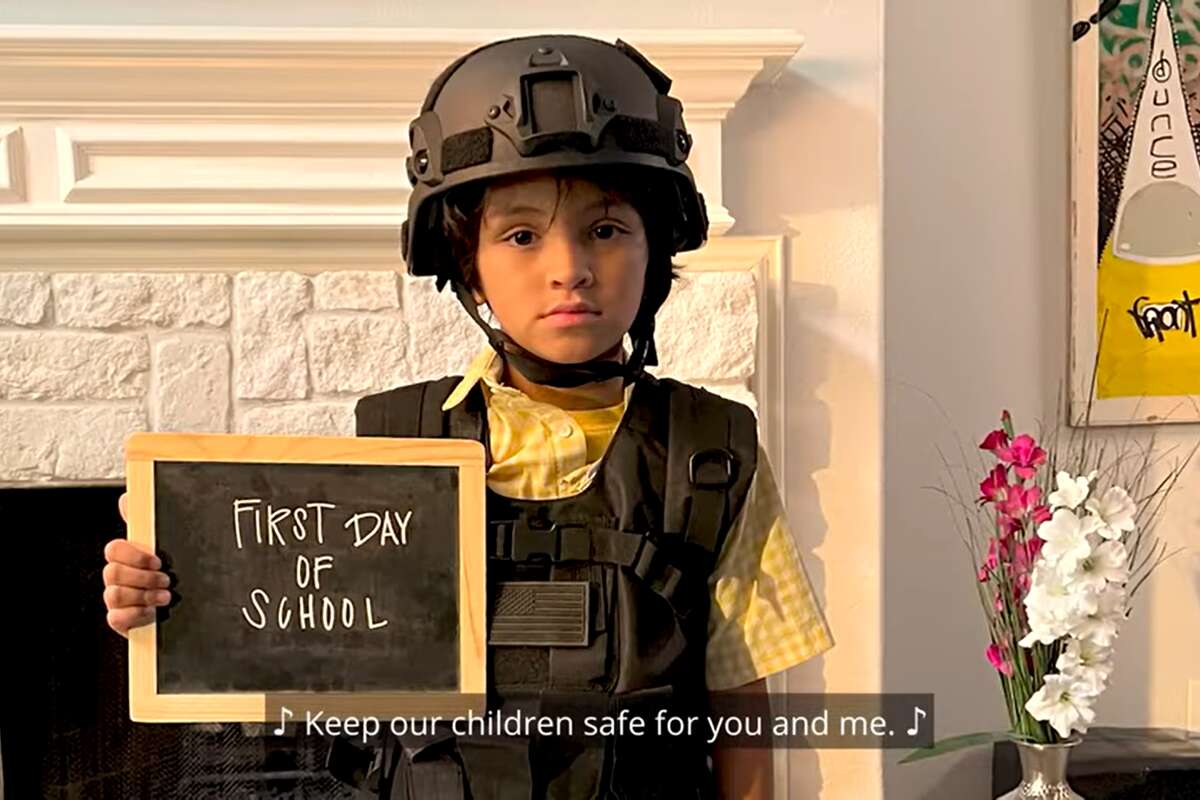
Their latest stunt? Exploitative of children, as shown by the picture below that leads the Chronic's story.

Abbott's a shit on guns, I totally agree. But, this is manipulative and exploitative of a kid's emotions.

Second, it's a PAC. Those of us not ensconced in the duopoly know the cozy arrangement that Beto-Bob, aka R.F. O'Rourke, has had with PACs in his political past.

Third, the Dems in Mothers Against Greg Abbott are surely ConservaDems at heart, as they call for change "from the center."

Fourth and related? Though they have a subvertical for "Press and News Articles," as well as an "About," under "Information," there's not a lot of detailed position-type stuff. For example, and knowing Beto-Bob's history, while also knowing that state-level "national health care" is dicey, where IS their position on anything beyond Medicaid expansion? Where is their position on unions? On actual lawsuit reform?

Fifth? Nancy Thompson's own story about realizing the acronym for her organization seems ... uh, not exactly the same?? ... from story to story.

Sixth, somebody's giving them big bucks for cutting ads like this, and the pros to help them do it, per this story.

Seventh, if only 25 percent of Texas' child abuse cases are sexual abuse, and if only 1 percent of those 18,000 happen in school settings, why aren't Mothers Against Greg Abbott wrapping kids in five oversized condoms instead?

==

To put it another way, per Zvi Mowshowitz, this ad is as exploitative and abusive of children as is an active shooter drill.

May 23, 2020

The full story of 'Roe,' Norma Jean McCorvey

Texas Observer gives its take on the last chapter in the life story of Norma Jean McCorvey — how the "Roe" of "Roe v. Wade" has said she never had a true pro-life conversion but did it for the money, as detailed in "AKA Jane Roe."

Well, I think she did it for two reasons, the second of which she admits through her full story. It was also for the attention. That's even if she didn't want to admit that.

She had it indicated to her, and apparently told to her, she was an unwanted child. She was an adult child of an alcoholic. She was also lesbian.

So she stuck out like a sore thumb all through school.

And, after the Roe decision? Many pro-choice groups, like 1960s and 1970s feminists in general, were wary of lesbians. And, she was uneducated. And poor. And already perhaps a bit mentally unstable.

And, ripe for the picking by Flip Benham. That's the way these people work.

Per the Observer, the CBS documentary does seem to miss something on the alleged conversion explainer. I think it's missing two somethings.

One, it's missing more depth on or about that anti-choice folks. Of course, if many of them refused to talk, there's only so much you can do.

It's missing something from McCorvey, though, as well. Did the antis, like the pro-choice side, toss her away and ignore her after peak political utility.

But of course!

Caitlin Cruz does note that McCorvey's "collateral damages" weren't mentioned.

She ended her romantic relationship with her lover, Connie Gonzales, and they became "just friends." And apparently, even as McCorvey secretly backslid again from the anti-choice movement, for fear of public exposure, that was never resumed.

And, sadly for McCorvey, unless she signed some contractual disclosures that said she'd have to pay back some money if she publicly backslid, she took 15 minutes of fame pseudo-attention over the real attention of a love relationship.

And, that's collateral damages from child abuse.

IndieWire notes the movie also doesn't give more voice to McCorvey, or more insight into her personal life, on the issue of her own children.

==

The antis have spoken elsewhere already, though, re the Observer. They claim that the documentary was manipulative, in a typical pots-and-kettles response. My sister said she was appalled when she heard about the money payments (none of which is denied by the anti-choice zealots). My stance is that being appalled by something is based in part on being shocked by it. Of course, I'm not. That said, it was the Protestant fundy types that were manipulative. Frank Pavone, head of Priests for Life, said he long knew she was a more complicated person, and that he doesn't think she abandoned her "move."

THAT then said, Slate notes that the documentary itself portrays McCorvey as a complex person. Methinks they doth protest too much. And if they don't like it? Make your own "counter-documentary." And, if you want it to be a real one? Per the link above, see if McCorvey's daughter will talk.

September 14, 2014

Dear #NFL players: What AP did always has been child abuse

Adrian Peterson
I'm going to tread a bit into cultural waters here, in discussing the horrific response by many NFL players to Adrian Peterson's alleged child abuse of his son. (I use "alleged" in purely a legal sense; looking at the photos on the link ... )

Per the "horrific responses" link, Darnell Dockett, Donte Stallworth, Mark Ingram and Roddy White are all African-American. Chris Kluwe, the one voice of reason, is not.

We're not in the land of stereotyping here. We are, I think, in the land of generalizations. African-Americans still present themselves as the most religious ethnic group in America. Whether that, and a certain part of that alleged Christianity, a "spoil the rod" belief, especially from blacks that still have strong connections to the small-town South, like a lot of white with similar beliefs, is part of the issue, I can't prove, but I think it is. Generalizations are about groups, not individuals, but the claims are more legitimate than stereotypes; where the line between the two lies is a judgment call to some degree, of course, and individuals can fall outside of generalizations.

(Per friend Perry, a lot of the comments from the general public on various websites defending actions like Peterson's as "tough love" or just "love" are from white folks, as he notes with the Houston Chronicle. That said, I'll stand by what I am blogging, that, I think this is in part due to African-American culture. There, too, it's probably strongest in African-American subcultures most connected to their Southern roots, as I note above; however, African-American religiosity is stronger than that of whites nationwide. Also, more liberal versions of Christianity have shallower roots in non-white portions of America.)

That said ...

I'm "sorry," (scare quotes apply to all future uses of the word) to some NFL players defending Adrian Peterson, especially if you fall in the African-American generalization above, but it always was child abuse. "Sorry" that you grew up in the wrong culture. "Sorry" that your parents grew up in the wrong culture. "Sorry" that the last of the divarim, per Jewish counting of the 10 Commandments, is right in a secular sense, and that the sin of child abuse in the name of "love" has gotten passed down from fathers to children, not because they hate a stereotypical angry patriarchal father god, but precisely because they love him that much. I'm also sorry that plenty of other dysfunction, including but not limited to, serial absentee fatherhood also got passed along, along with the claim to still be religious. Maybe you ought to look more honestly and less defensively at your past?

Actually, per the scare quotes, I'm not "sorry" at all. I'm kind of disgusted, or more than kind of.

Here's the worst, from Dockett:
I got a ass whippn at 5 with a switch that's lasted about 40mins and couldn't sit for 2days. It's was all love though.
I had to Tweet him that his idea that that was "love" is all wrong. Whether he, and others like him, will listen? I won't hold my breath.

I'm "sorry" that it's this same religiosity, or religiosity intertwined with more general culture, that has led to gay black men remaining closeted at higher rates than in other ethnic groups, despite Michael Sam coming out, even before done with his college career. I'm "sorry" that this closeting has lead to unprotected "down low" heterosexual sex that has fueled skyrocketing HIV rates in recent years. And, ultimately, I'm not "sorry."

And, to square circles, to connect Peterson and Rice, here's this:
“The Adrian Petersons of the world create the Ray Rices of the world,” wrote Kris Huson, a St. Paul woman, referring to the former Baltimore Ravens running back seen on video that emerged last week delivering a knockout punch to his now-wife. “Leaving bloody marks and bruises crosses legal line.”

That is often, sadly, what results. 


More sadly, per this Twitter picture, as shown, Peterson himself is also proving me right, on his Twitter feed.

And, this isn't a white-vs-black thing. American Indians, for all their atrocities in fighting against other tribes or whites, were by and large tremendously indulgent to their pre-pubescent children. (Post-puberty, as initiation rites show, it's a different story.)

Update: Per Perry's link in comments, I think Charles Barkley, buffoonery and all, actually proves me right. And, Kelly Dwyer can't distinguish between stereotypes and between social-statistics based, accurately stated generalizations. Which is fine; he's a sportswriter. What else do you expect?

And, Cris Carter has an insightful response. He notes that such abuse couched as loving discipline often comes from a strongly religious environment, which gets back to what I said about blacks generally being more religious than other Americans. He finishes, though, by noting that can be transcended. You can get video clips of both him and Barkley here.

And, reinforcing these issues, in both generalizations and in stereotypes, Peterson's mom has now also spoken. Among the new notes? She said he has six kids by four mothers.

I guess all those belts and switches don't teach the love of loyalty or fidelity, do they?

April 19, 2014

Let's do more to stop April being National Child Abuse Prevention Month

Note: The following is adapted from a newspaper column.

This is April, which means it’s National Child Abuse Prevention Month.

I didn’t do so last year, because I was new to my current newspaper setting, but it’s been a tradition of mine to write one or more columns every month about this issue, primarily about child sexual abuse.

First, I know that this is an uncomfortable topic. And rightly so. Nobody likes to think of the most vulnerable members of our society being abused like this before they’ve had a chance to grow up. But, only by addressing this issue in reality can we hope to translate the pain of that discomfort into reality.

Second, there are myths about child sexual abuse as well as realities. And part of addressing this issue, and reducing it (unfortunately, we will surely never eliminate it) is looking at the realities not the myths.

Some realities are hard to come by. Many victims don’t talk about, let alone legally report, their abuse even after entering adulthood. The pain, as well as the shame, of child sexual abuse, are both reasons why.

That word “shame” is as good a starting point as any for talking about some of the realities.

The shame is there in part because counselors tell us that child victims often believe they did something to cause the abuse, even though that’s not true. It’s often the only way a younger child, especially, can try to make sense of the inexplicable.

Sadly, the shame is also often there for another reason. Exact percentages are pretty much impossible to come by, but “stranger danger” child sexual assaults are a clear minority. Again, without exact percentages being available, perpetrators are normally known to their victims, and often known well, whether as trusted friends of the family, or as family members. A lot of child sexual abuse, because of this, happens at the residence of the victim or the perpetrator.

Girls are more often the victim of child sexual abuse than boys, but boys are a significant minority of victims. And, while men make up the vast majority of perpetrators, women are also sometimes abusers.

Child sexual abuse can include exhibitionism and display of pornography to victims, as well as more graphic physical acts. In some cases, one child may have severe reactions to one incident of abuse than another child does to multiple instances.

Children that come from broken homes or other unstable situations are generally more vulnerable to the effects of child sexual abuse, as are younger children. And, because poverty rates run higher, and stable family lives run lower, among minorities, that means that sexual abuse runs higher there, in general, along with its effects.

And, those effects are great. Childhood and adult depression, other mental health problems, drug addiction and alcoholism, teen pregnancy, children running away from home or dropping out of school can all hurt, even shatter, lives.

Children aren’t perfect, and can tell fibs, or have imaginary friends, even at younger ages.

But, when a child shows signs of depression or anxiety, let alone when a child has sexual-related comments or actions inappropriate to his or her age, that child’s behavior should be looked at with total seriousness. Even more so, when a child makes a comment about a certain adult’s behavior, the child should be listened to in all seriousness.

Doing everything we can to address social situations that may influence the likelihood of child sexual abuse — and physical and emotional abuse — is something else we need to treat with all due seriousness, too.

That includes income raises, and jobs with a better sense of security. In turn, that's yet another reason to address income inequality issues in America.

Beyond that, this includes doing what we can as a society to promote better parenting.

When we fail to prevent the abuse, it means doing a better job of counseling victims, whether as children or those who come forward much later as adults.

It also includes walking a fine line on the issue of old memories. Memories may not be “repressed,” as some researchers almost stereotype some claims, and as some counselors believe, and try to “induce” them to come back to life. That's especially true because not all allegedly false memories are totally false; rather, a fair amount are conflated or blended from two or more true memories.

However, sexual abuse victims can, and do, “detach” from their memories. I don’t care what exact terminology one wants to use, cases where this does happen clearly exist. And, any adult or child who does claim such memories without undue prompting from a counselor should be taken seriously.

March 31, 2014

#GregAbbott: Has time to sue Obama, but not hunt down child predators

With April, starting tomorrow, being National Child Abuse Prevention Month, it's too bad that Greg Abbott isn't doing more to track down child abusers.

Per the story, which links to a paywalled original at the American-Statesman:
There are a couple of reasons the Attorney General’s office might prefer to use Williamson County to arrange busts. There’s the jurisdiction’s tough-on-crime reputation, and an easy relationship with local police departments. There’s also the fact that it’s a short drive from the office—coordinating a bust in El Paso, of course, would require a much greater expense of both time and money for Abbott’s officers.

But it doesn’t seem like an ideal use of resources, as a deterrent or a general policy. We may hope that the herd of child predators in Round Rock has been thinned significantly, but what about cities far from the attorney general’s task force headquarters, where prospective sex offenders know they are significantly less likely to get caught if they look for prey in Uvalde and not Leander?
Beyond this, it seems like a much more thorough overhaul is needed. Why not (with some appropriate state funding) set up regional task forces to investigate child abuse? It would be a much better use of the state's time and money than the current drug tasks forces, we all know.

But, besides Abbott being too busy suing Obama and wasting state money while doing so, we all know that asking him to make his tough talk be matched by a tough statewide stand, Abbott says that's a PC dirty trick, to ask him to stand for anything.

Besides, being too tough on child abusers, which, in sexual abusers, largely adult men getting too friendly with young women of previous acquaintance, might offend his best bud Ted Nugent.

That said, given his relative lack of success in suing Obama, that's probably another reason he's cherry-picking his child abuse cases.

Too bad we have an AG who often does more about slinging shit than cleaning it up.

This isn't about politics alone. This is a gross dereliction of some of the basics of his duties to the public as attorney general. And, it's not the o nly issue where Abbott as AG is essentially AWOL.

For example, discussion is growing around the state about raising the age of consent, including for adult criminality, from 17 to 18. Given how this would affect the prison population, juvenile detention and many other things, one would think that an attorney general who actually cared about being an attorney general would have his office working on some analysis at a minimum, and ideally, some policy recommendations. Well, so far, all we hear from Abbott is crickets.

September 21, 2010

Parental denial about parenting? NYT denial, too?

Two of the top five killers of children under 18? Homicide, which as the story notes, is usually caused by someone the child knows, and child abuse, which is ALSO usually caused by someone the child knows. Also in the top five? Suicide, which may at times be provoked by that child abuse, which the NYT yet again doesn't mention.

So, informative story, but not as informative as it could be.

Meanwhile, parents, the story notes, continue to worry about things like "stranger danger."

But, the Old Gray Lady again falls short, not investigating WHY there's this disconnect. In fact, contrary to the author saying the human brain isn't posed to analyze long-term or abstract dangers, there's nothing long-term or abstract about child abuse. Nor is there, usually, in the case of homicide caused by a known person.

Piss-poor, NYT.

November 14, 2009

Child abuse affects the child brain

More and more, through things such as human physiological research, specifically on suicide victims, and discussed more here, it’s clear that child abuse, especially to younger children, can change both the structure of the human brain and how it expresses itself.

The first study, albeit with very small numbers, focues on the hypothalamic-pituitary-adrenal (HPA) function, as this is one of the most important stress “pathways” in the body.

Results revealed that genes associated with the good functioning of this pathway had been modified extensively as opposed to those found in the other 24 bodies, which ruled out the possibility of suicide causing these changes.
“In humans, childhood abuse alters HPA stress responses and increases the risk of suicide,” Michael Meaney of McGill Univeristy says in the new paper published in a recent edition of the journal Nature Neuroscience.

A “known” thing, now getting initial research confirmation.

The more detailed review of Meaney’s work indicates that early child abuse changed the expression of a gene that is important for responding to stress. In other words, it resets a person’s “anxiety thermostat.”

October 10, 2009

Make yourself aware about child sexual abuse

A good column, as far as it went, by Charles Blow. Would like to have seen more explicit discussion of the prevalence of incest. Let's definitely take child abuse in general more seriously, unlike Joe Paterno. Let's remember the likes of Laveranues Coles, specifically on incest.

April 17, 2009

Take child sexual abuse and child PTSD seriously

Let’s stop blaming priests, or dirty old men on park benches, and instead look inside the four walls of home, or relatives’ homes, a lot more. And, let’s recognize that this causes “PTSD on the home front” (now that, due to the Iraq War, we’re sadly aware of PTSD). That, and more, is in my annual April column.

Let's definitely take it seriously, unlike Joe Paterno. Let's remember the likes of Laveranues Coles.

September 08, 2008

Fat teens make for fatty livers

Which then makes for early-life liver transplants. This is NO JOKE/

Is this child abuse? Criminal child abuse? Scroll down for my thought.


Per the story, many of today’s obese teens may need a new liver by their 30s or 40s. The American Liver Foundation estimates from 2-5 percent of American children over age 5, nearly all of them obese or overweight, have the condition called nonalcoholic fatty liver disease that lies behind this.

How bad is it? In St. Louis, Dr. Jose Derdoy, head of liver transplants at Cardinal Glennon Children's Medical Center in St. Louis, said he’s treated a 15-year-old, 530-pound boy and many others with the condition.

Yes, genes have some influence on our weight, but …

DO NOT TELL ME a 15-year-old hits 530 pounds because of genes.

August 02, 2008

Beyond trolling to child-level Nietzsche; behind trolling, sociopathy

The real hard-core trolls of the Internet get a more-than-sympathetic look from The New York Times Magazine.

First note – if dead trees are migrating to electrons for the purpose of more and more articles like this, well, then, contrary to defenders of the Net as the greatest thing since sliced Gutenburg Bibles, it’s more of the same, spread thinner, with a different pastiche, that’s all.

That said, it’s said that übertroller Jason Fortuny has this horrendous past:
“Am I the bad guy? Am I the big horrible person who shattered someone’s life with some information? No! This is life. Welcome to life. Everyone goes through it. I’ve been through horrible stuff, too.”

“Like what?” I asked. Sexual abuse, Fortuny said. When Jason was 5, he said, he was molested by his grandfather and three other relatives. Jason’s mother later told me, too, that he was molested by his grandfather. The last she heard from Jason was a letter telling her to kill herself. “Jason is a young man in a great deal of emotional pain,” she said, crying as she spoke. “Don’t be too harsh. He’s still my son.”

And still hasn’t learned empathy. Maybe, he hasn’t even learned much in the way of self-empathy.

That said, Fortuny is wrong on page 6, when he claims the solution to trolling is to stop giving trolls attention. “Amateur-level” trolls will move on, to be sure. But, I think the Fortunys of the world will simply pump up the troll volume in an escalation of their demands for attention. I have no doubt Fortuny would do that himself. And get scarier as he did so, sort of acting out all the abusiveness he suffered himself.

Author Schwartz himself notes that “None of these methods (for controlling trolling) will be fail-safe as long as individuals like Fortuny construe human welfare the way they do.”

Also in the story is Weev; his child-level “Nietzschean” (for lack of a better term) pseudointellectual riffs on the world are on his LiveJournal.

“Deeply veiled gnosis.” What a load of crap.

Not-so-deeply-veiled narcissism would be more accurate. What a putz. But, behind the putz, I suspect is someone who also has a history of an abusive childhood. For one thing, I don’t think his racism came out of the blue.

April 04, 2007

Taking child abuse seriously

Improperly funding Child Protective Services in Texas is just as criminal as improperly funding Mental Health Mental Retardation services. And, like that, improper CPS funding is NOT a “liberal/conservative” issue. Also, to reduce it to coldly financial terms, if you don’t want to pay more in state tax moneys, you’re going to pay more in local school district property taxes, or county property and sales taxes, to deal with either problematic students or young criminals, as part of the fallout of abusive childhoods undetected or unaided.

Here’s much more on the problem.
The affects of abuse include learning disabilities, children disruptive in class for many, usually unconscious reasons, extra burdens on school nurses and more.

Superintendent Jennings Teel in Navasota and the other superintendents must bear these burdens, and the financial costs for their districts. And their teachers bear often being the first "eyes and ears" on noticing abused children.

It’s National Child Abuse Prevention Month. Let’s take it seriously.

April 03, 2007

Trapped — first comments this year on National Child Abuse Prevention Month

I became VERY afraid of being “trapped,” whether in physical spaces, social gatherings, with another person, bad or potentially bad jobs, geographic locations and more, from my childhood experiences.

One specific example.

When I was 12, after having had WAYYY too much instruction in different elements of life from two of my older brothers, one of them drove up outside a friend’s house (an acquaintance’s house, rather — I had no friends, really, until college). He, with a friend or two of his with him, said, “I’ll sneak you into the drive-in for free if you get in my trunk.”

Well, first of all, I’d heard, from the same brother, that Cheech and Chong routine about Chong getting locked in a trunk.

Second, though some of my memories from earlier childhood were already fading, or being repressed, I still didn’t trust this brother on something like this.

Third is something that I didn’t even think about until earlier this week:

As memory serves me, there was still almost two hours of daylight left. NO drive-in movie was happening.

Anyway, it’s my blog, and I’ll still blog about this (sorry, Chuck, or others) because this isn’t just about me. The various forms of child abuse, our failure as a society to take them seriously, and our refusal to admit how much of this happens at home are all serious societal issues, and this IS National Child Abuse Prevention Month.

BECOME aware.

March 03, 2007

CHILDHOOD MOONLIGHT MADNESS

Moon in the window
Late night riser, past the full;
Pale, cold, white and dead.

A pale distraction
Dissociative focus
Object of escape.

A hurt eight-year-old
Seeks to flee his own bedroom
His last refuge gone.

No one hears or knows;
Two a.m.’s heart of darkness
Envelops the room.

His own young mem’ry
Shattered, scattered, exploded
Childhood lost and gone.

Was it once? Or was it more?
Does it matter? And it was.
He still is missing.

February 10, 2007

Childhood abuses: Survivors vs. victims

I am not a victim (any more) of the various “slings and arrows of an outrageous childhood,” to riff on Shakespeare — I am a survivor. None of my previous personal posts have been meant to convey that I am a victim, let alone a “martyr.”

That includes my mentioning of my diagnosis several years ago with post-traumatic stress disorder. Rather, that was meant to explain a little more about “where I come from”; in other words, it’s a request for understanding, as have been the other more personal posts I have made here. With PTSD, it’s the same request as adult veterans of combat, especially hairy combat that can trigger PTSD for them; I just say I fought in a different war.

That said, it’s my impression that a lot of people are afraid to talk about, face, think about or feel about child abuse in its various forms, sexual abuse above all. Perhaps they’re afraid of seeing or hearing about its ugliness, especially if they know the adult survivor personally.

If I wanted to talk about ugliness with more personal detail, I could, but this is not the place to do into detail, for self-protection; nor do I have a desire to “get in anybody’s face.” Between professionals, group support and close friends who have listened without “flinching,” I have the avenues I need to talk, and talk through, issues in detail.

That then said, to people who may not be so comfortable with this type of talk, about physical, emotional and especially sexual abuse — I encourage you to open the door a little bit more. I’m not asking anybody to go out and buy some trauma recovery books or anything like that; I’m just hoping a few more people can face more of the more tragic realities of life without “flinching.”

And that’s not necessarily for my sake, especially for more casual readers here. You may never know when such openness comes in handy elsewhere in your life, though.

Finally, the question of why some, not others. Why do some people react more strongly and bear more scars from abuse?

Part of it is a genetic influence on temperament. In my case, it seems clear that a high anxiety thermostat runs through my dad’s side of the family, back further into Snyder males.

Of course, so does alcoholism, which raises other questions.

The other main factors as to why some are hurt worse by child abuse appear to be primarily based on the abuse itself. How severe was it, how chronic/ongoing was it, and how early did it start are the biggies.

Let’s just say that PTSD isn’t likely to develop from a one-time, relatively mild incident later in childhood.

With that, while I continue more personal posts for a while, I’ll be headed back to more political posting down the road. For obvious reasons, not much of it will be about where I am at now.

February 02, 2007

The unwanted touch

The violent, forceful touch;
The invasive, unwanted touch;
Are both worse than no touch at all.
But far less worse
Than the abandoned loneliness
Wanting no human touch at all
When the sadistic touching ends.

— I have a voice and it has emotions

February 01, 2007

PTSD: What it is, and is not

A sane reaction to an insane world

Post-traumatic stress disorder is not a mental illness. Instead, it is a psychological injury, as this website explains well.

And, its symptoms are not the same as those of mental illness. For example, hypervigilance is not the same as paranoia; the paranoia of schizophrenia stems from organic brain problems, whereas hypervigilance is in reaction to one or more specific external events — or, as I said in a previous poetic post, a sane reaction to an insane world. A complete list of contrasts to mental illness-type symptoms is on the website.

The website I linked above, and others, do a good job of explaining a potential new psychological diagnosis which may make it into to the fifth edition of the Diagnostic and Statistical Manual of Mental Disorders: Complex PTSD. This diagnosis would separate single-event trauma PTSD from the greater complexity of a chronic, ongoing series of related events, one from which the victim often has trouble escaping. This Medscape article has more.