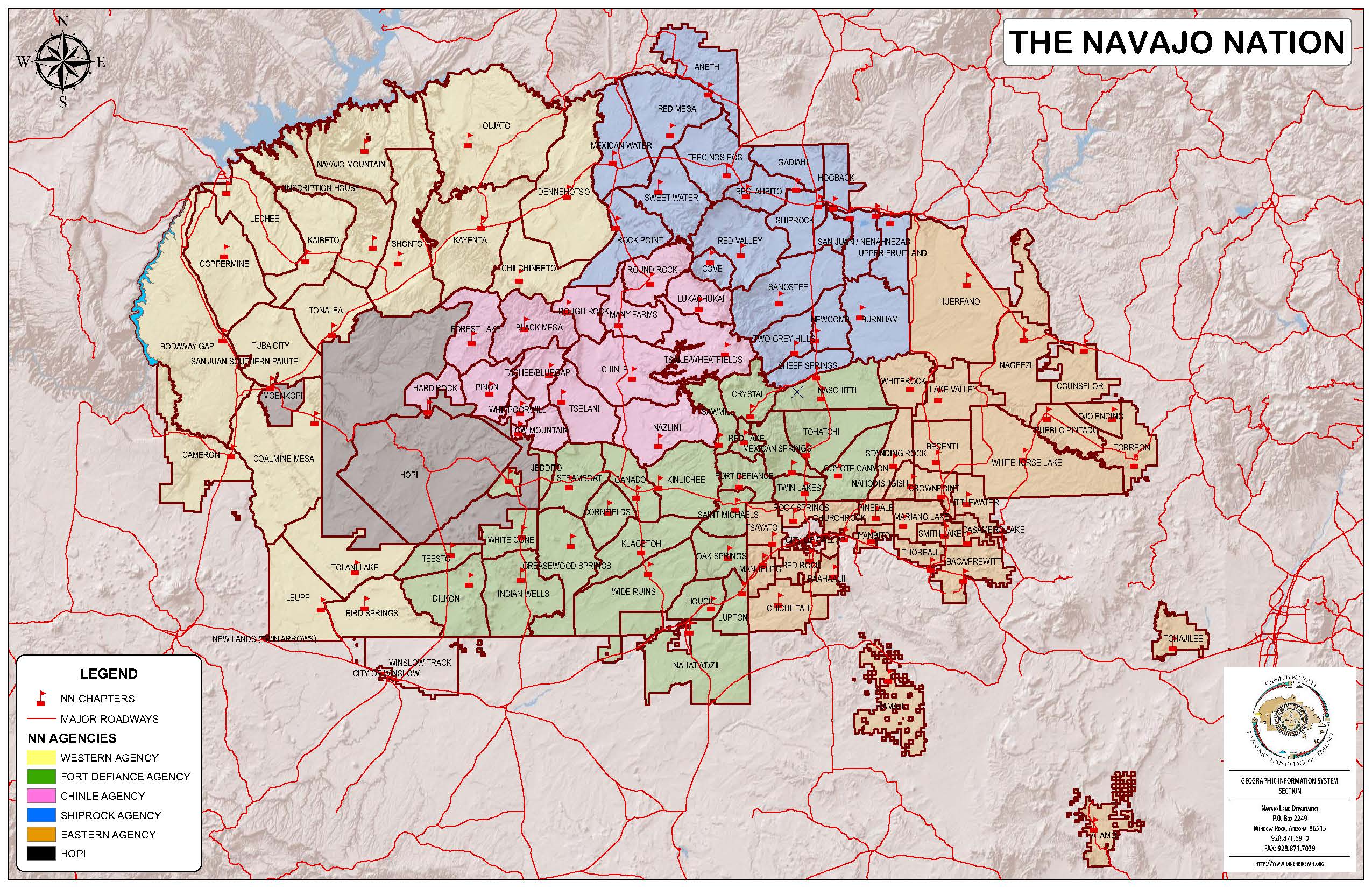
I grew up in Gallup, New Mexico, self-proclaimed "Indian Capital of the World."
Years and years ago, I read many, though not all, of murder mystery author Tony Hillerman's Chee and Leaphorn novels, about two Navajo Tribal Police officers, (I also read two non-Big Rez murder mysteries of his.)
Hillerman has long come off as sympathetic to Navajos in particular, and American Indians of the Southwest in general, as people. Going beyond oater dime novelist Louis L'Amour, who said more than once if he wrote about a place, "it was there," with Hillerman, not only was the place there, but so were the sociology and culture.
Well, recently, for various reasons, I started reading some of Hillerman again. But, after "Sacred Clowns," I may have hit a wall. An edited version of my Goodreads review will explain why.

Sacred Clowns by Tony Hillerman
My rating: 3 of 5 stars
On my "formula" for mid-level fiction reviews?
Characters 4.25-4.5
Plot 4.5
Dialogue 4-4.25I'll take that to 4.5 or so overall but, round down due to an error.
Nope, it's "dropped" to 3 stars due to other issues listed at bottom. Some are specific to this book; others, the majority, apply to the Hillerman "canon" in general. I'm going to get to that after a condensed version of the first part.
On characters, Jim Chee as acting sergeant shows a first round of character development within the Chee-Leaphorn books, accepting enough of Lt. Joe Leaphorn's experience-developed wisdom to actually follow some rules. He also finds out that he may not be enough of a traditionalist to satisfy old-time hataałii (usually rendered by Hillerman as "shaman" or similar) to become one himself, complexifying his look at Janet Pete as too much of a "city Indian." One book later than Coyote Waits and two earlier than First Eagle, when you look at the series, you can see this "character plot line" developing. In addition to their hot-and-cold at times, the ethical playoff late in this story is good. As with widower Leaphorn's quasi?-romantic relationship with Prof. Bourebonette, this is Hillerman writing a generally internally consistent set of stories.
...
St. Bonaventure in Thoreau? It was there when I was growing up in Gallup eons ago. Not sure if it's the same church building today or not. Back then, it had a wood-plank floor that doubled as a roller skating rink, including being rented out; my church's youth group went out there more than once. I don't know if Gallup didn't have a roller rink then, or it was too big to rent to small groups, or what. (Or so I thought it was there. Teh Google lists skating in Gallup itself and not in Thoreau today, but Google Maps with "roller skating Thoreau NM" pointed to the Thoreau Community Center. Maybe skating moved there, or maybe that was the original church building.)
This all is why Hillerman is not dime-novelist Louis L'Amour, who used to brag that if a place was listed in one of his novels, it's there. With Hillerman, the people and culture are there, too.
But now, the problems start, beginning with smaller ones and working to bigger.
First, he mentions an Iyanbito and Iyanbito Chapter House south of Gallup [pg 121, hardcover], and the only one I am familiar with is the one to the east. Besides, the Red Rock Chapter House is to Gallup's south. See for yourself. I have driven past Iyanbito many, many times. It has an exit on I-40. This is why I double-taked.
Sorry, Tony, but you don't explain why you "moved" Iyanbito if deliberate. And, a basic error otherwise? On the border on ratings, that gets you bumped down on the Navajo authenticity issue. That said, in this Smithsonian piece he admits to "shuffling around" places to meet his needs, but? There was no need for this. Nor for calling the Zuni Drive-In the Gallup Drive-In. Was it going to sue? It closed in 1982, anyway, so it couldn't. (I saw "Star Wars" there as a kid.)
There's an issue or two in other Hillerman novels that generally hold him at four stars, not five. For instance, he talks about "the Tuba City type of Navajo," a description both sociological, in terms of demeanor, and physiologically, in terms of build, as if genes work that deterministically and there's no outbreeding into that small area. And, of course, none of that is true.
Now, to a bigger issue, expressed in this novel, and I think one or two others.
That is his take on the American Indian Movement . Yes, many people within Navajo leadership didn't like it. That's because it challenged their authority, just as on the Sioux reservations. Calling its leadership, like Dennis Banks and Russell Means, "city Indians," comes off as a bit, or more, condescending. And, it's a lie. Banks was born on a reservation in Minnesota. Means was born on a reservation in South Dakota. Both Bellencourts were born on reservations. Banks was forcefully removed to a BIA boarding school at age 5. Means' parents moved to San Francisco at age 3 to escape poverty; the Bellencourt family moved to Minneapolis when older brother Vernon was 16.
This comes off sounding like my dad. (I remember when AIM came to Gallup.) I've outgrown that, Tony. This review goes down to three stars, and I read you more skeptically on "flavor of the Southwest" in the future.
(At least Hillerman doesn't try to view Navajo religion through an Opus Dei version of the Catholicism in which he had been raised, unlike my conservative Lutheran pastor father with that, even doing a Ph.D. on how particular Navajo and other Indian beliefs of course all reflected a literalist, fundagelical, interpretation of the Christian bible.)
For a truly nuanced and insightful book on AIM, especially in the Siouxan heartland of its operations, read "The Unquiet Grave."
And, I realized I have now been "triggered," or if I accept that something like free will exists (I do, if you emphasize the "something like" and that it is not necessarily totally conscious), I have self-triggered.
First, the quasi-sneer about "city Indian" (also Blizzard, the "city Indian" Cheyenne from Chicago BIA agent in this novel) surely affects Hillerman's authorial stance toward Janet Pete throughout the entire series of his novels. He doesn't totally throw her under the bus when he has the final break-up between her and Chee, but he does entirely write her out of future books. Did his attitude toward "city Indians" in general harden as he grew older?
Related? As I think more skeptically, while Hillerman may not totally paint a romantic Rousselian noble savage view of reservation Navajo life, the toes of one of his two feet, at minimum, are in that swamp. And I use that word deliberately. In reality, not only is the poverty worse than he portrays, but bits of it are to some degree self-inflicted. Navajos overgrazed the land badly enough a century ago that, for this reason as well as price controls, Navajo sheep, like Iowa hogs, were "culled" as part of the Agricultural Adjustment Act in the 1930s. There's some degree of overgrazing again. Beyond that, as disagreements between chapters over Bears Ears have shown, there's not a "unified Navajo stance" on many things. In either case, on the land, as he has Chee drive by the pivot irrigation lands of what is today Navajo Agricultural Products Inc, and contrast them with a bit of ruefulness to the buttes and mesas, he overlooks the sheepherding.
In other words, to mash up Colbert and a cliche? "Truth is truthier than fiction."
Another issue? I think Hillerman has a generally bilagaana take on frybread, which is a flash point among many modern American Indians of many tribes. That's
also not specific to this book, but, I never recall Chee, as an
"authentic" Navajo, in any of my past Hillerman reading, saying it's not
authentic Navajo food.
One other issue. One of Hillerman's novels is entirely on the Zuni reservation. Others have Hopi connections. But? Even though the Ute Mountain Ute reservation is directly north of the New Mexico portion of the Big Rez, I'm unaware of any Ute characters in any of his novels. Also not mentioned, IIRC? The Paiutes who actually live on the Utah strip portion of the Big Rez. (Indeed, some of these Paiutes have Navajo surnames like Begay or Yazzie.)
One OTHER other issue. Why, given Leaphorn's strident antipathy to alcohol, after his wife's death, does Hillerman name his new female interest Bourebonette? Yes, the initial "e" hides it, but really? Something like "bourbon"? Am I the first to notice this?
Update: "The Wailing Wind" is even worse,
especially given that Hillerman undermines his own schtick about
painting a genuine Sitz im Leben about Navajos, Navajoland and things
related.
Anyway, beyond being self-triggered, I realized my nostalgia leading me to re-read Hillerman wasn't as much nostalgia as escapism — not the escapism of reading fiction, but real escapism, the desire to move out of Tex-ass, with the New Mexico of my childhood years a reasonable option financially — should I get a pre-retirement job there — among today's US Southwest and Western states. I will further expound on this elsewhere.
(I don't know where, if at all, daughter Anne stands on these issues. I only read the first book in her continuation of the series, which I found overstuffed with characters and having other problems. One of those problems is not exactly the same as Christopher Tolkien turning piles of notes, or maybe even rambling marginalia, by dad JRR, into books, but it broadly parallels that.)
Update 2: I forgot that I did a full paean obit of Hillerman when he died in 2008. I'll update that.
View all my reviews