 |
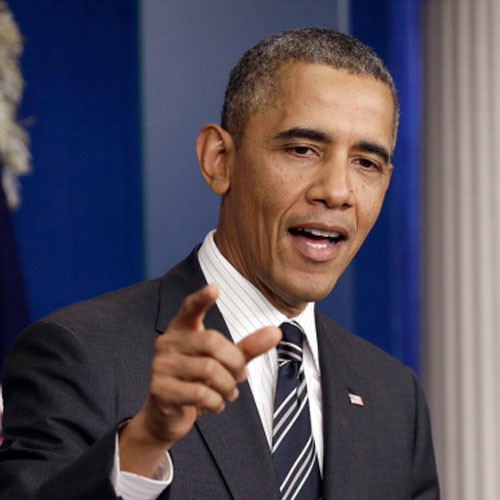
| President Barack Obama — how much is he actually like |
 |
| Supreme Court Associate Justice Clarence Thomas |
Well, at New York Magazine, a coterie of professional historians, ranging from from quasi-reactionary to left-liberal, give it their shot. (Clickable links lead to full reviews of DL by each historian.)
A fair amount of more liberal to left-liberal ones appeared to have, like me, "seen through" Obama at least by 2010, if not during his 2008 campaign. As for that group, I have no idea how many of them still voted for him anyway, rather than voting Green or Socialist or whatever.
Anyway, here's a roundup of the few best insights from left of center:
"His contributions were sometimes remarkable, but Obama’s primary legacy is his destruction of political idealism for the foreseeable future. He proved an impressive steward of the traditions of his party since the 1970s. Where Obama differed was his brief but unforgettable achievement of a surprisingly large consensus around a belief — or delusion — that Americans rarely entertain. Put simply, it was that American politics could and must fundamentally change. The energies he conjured will not reappear soon and are less likely to do so because he summoned them for so ordinary and predictable a set of policies." – Samuel MoynThose of us semi-idealists who "saw through him" before the 2008 general election haven't had our semi-idealism destroyed, or ditto on full idealists like me, because we never invested it in him in the first place.
Other than that, Moyn is totally right on Obama being a "worthy" steward of neoliberalism. As for Obama's "consensus"? Maybe Obama never intended that fundamental change. Either that, or a point I've hammered into the dust is true here, too — Dear Leader thought the mellifluous dulcet tones of his voice (sarcasm alert) would work fundamental change all along.
What about Obamacare? This is not a bad observation:
“It might very well be insurance exchanges, rather than the expansion of coverage, that stands as the most significant aspect of the Affordable Care Act. That is especially the case if the exchanges work and therefore lay the foundations for privatizing or ‘“marketizing” Medicare and Medicaid. As much as some called him a socialist, he might well be remembered as someone who de-socialized public health care.” – Alexander GourevitchGourevich? I'm not sure if he means that in a good or a bad sense. It could be in a bad sense, as he is a left-liberal type. If so, I'd totally agree. It's hard to tell from his whole set of responses, but, since he is some sort of left-liberal, I'm going to take it he means it in a bad sense.
I certainly look at O-care that way myself. Sometimes, the good is the enemy of the best, and I fear that is very much the case here — he wrecked political capital, per Moyn, for a non-fundamental change which he chose as his target all along.
Next, let's look more directly at the myth of The Great Communicator 2.0:
“Talk to us — tell us what he is aiming at, what our challenges are, especially abroad. He may be our mutest president.” – Mark Lilla


