SocraticGadfly: New York Times
Showing posts with label New York Times. Show all posts

January 24, 2023

Even Nature magazine rejects Russiagate!

A team of researchers has a piece there that looked in minute detail at the Internet Research Agency's activities on Twitter in the 2016 election campaign and says it was next to a nothingburger. (It's a long read, because it's detailed social science and social media research. But, #BlueAnon claims to be the "reality based party.")

The only limitation on the research is that it's only about Twitter, not the broader-reaching Facebook.

But, here's the bottom line:

We demonstrate, first, that exposure to Russian disinformation accounts was heavily concentrated: only 1% of users accounted for 70% of exposures. Second, exposure was concentrated among users who strongly identified as Republicans. Third, exposure to the Russian influence campaign was eclipsed by content from domestic news media and politicians. Finally, we find no evidence of a meaningful relationship between exposure to the Russian foreign influence campaign and changes in attitudes, polarization, or voting behavior.

But wait, that's not all.

One of the researchers, speaking of Twitter, has a Twitter thread that goes into yet more detail.

I know this will do nothing to deter #BlueMAGA, whether the likes of Mueller She Wrote on Twitter, Emptyhead I mean Emptywheel on her blog (along with other ex-Kossacks, or the exorcised Nancy Pelosi, from spouting bullshit, but, it's actual facts.

The callout above goes to the mainstream media, too, like the New York Slimes that tried to revive Russiagate just before midterms. As for them? I saw this piece linked and mentioned at Nieman Lab, in a Joshua Benton piece about how the power of both misinformation and information is overrated.

As for collusion claims? 

I've said it before and will say it again: Vladimir Putin is way too smart to have entangled himself with a flighty weathervane like Donald Trump. And, if it WERE true? Trump didn't stay bought. Proof? He sold arms to Ukraine that Obama wouldn't, something that the BlueMAGA Twitter rank and file appear clueless about but that the leadership class knows full well. The non-elected leadership class, like the bloggers and Twitterati I've called out above, know there's plenty of good grifting happening here.

As for other collusion? Well, Flynn may have done that — with Turkey. The ultimate end object of that, though, was Israel, proving that both duopoly parties think Tel Aviv is located in the United States. Related? Has Joe Biden moved our embassy back out of Jerusalem? And, that's yet another reason I'm not a Democrat.


May 27, 2022

Kissinger calls for negotiated peace on Russia-Ukraine, as does NYT and others

This is NOT just a once in a blue moon, but a once in a blue lunar eclipse that I would agree with Darth Kissinger, Hank the Knife or whatever you will, but ...

He's right in specifically calling for a "status ante quo" settlement. (I'd add in holding an official referendum in the Donbas, but that's the only quibble. Update: Second quibble, but Hank may be assuming that, is he doesn't mention explicit security guarantees for Russia as well as Ukraine.)

Now, the high panjandrums of the US bipartisan foreign policy establishment, known here recently as nat-sec nutsacks, or maybe Nat-Sec Nutsacks™, will never listen to a Noam Chomsky saying this. Actually, on Reddit, I've gone even further with phraseology and am calling these people US/NATO tankies. It's earened.

It's almost as doubtful they'll so so with Hank the Knife. That said, he peed in the cornflakes not just in general, but in the middle of Davos.

His analysis seems otherwise right, mainly that we've got about two months to settle this before real trouble. Putin's troops may not be able to advance further, but they'll certainly entrench by that time. There's no way that Zelensky can drive them out after that time, butt-hurt as he may be about this.

The US forcing Russia into default, blogged about earlier this week, will only further strain the global economy. That's primarily on continued high oil prices, but also on high ag prices for wheat, corn, sunflower oil and other major staples. US farmers will love getting $8 a bushel for wheat. US consumers, in addition to facing gas prices staying where they are or climbing further, will NOT love paying $2 a loaf for bland generic white bread.

But, not only are the nat-sec nutsacks not likely to listen, their fellow travelers on #BlueAnon aren't either. After posting that link on Twitter, and discussing the link on Reddit, where I saw it posted, I got various versions of "Fuck Kissinger" etc. I pointed out the broken NATO promises, etc., and had the de rigueur caveat that I wasn't "justifying" the invasion. I suggested Chomsky to a Twitter friend. She next claimed both have dementia. I suggested neither does (I didn't suggest that maybe Biden does, which, TBH and also contra Team Blue, wouldn't surprise me), and pointed out a link within the peace. The NYT editorial board, doing so many from a "what's best for the American establishment" lens, ALSO calls for a negotiated peace. Here's a paywall-skirting version. The NYT talks about inflation, etc., but also notes Zelenskyy can't win without a massive upping of the American ante. The NYT gets disingenuous at times, though. It claims Biden hasn't made clear his endgame, when actually he has. It's smashing Putin, and mic-check public slip noted, he's made that clear.

I've already dealt with Chomsky touting Trump as the guy who would have settled that. That's a duopoly-voting leftist's way of trying to "own the libs" within the Democratic Party. Stupid? Absolutely. Demented? Absolutely not. 

Kissinger? Going beyond the NYT editorial board, his two-month time frame and other aspects of his piece make clear he's not demented. Too bad 10 gallons of this sense can't be beamed back to Henry Kissinger 1969.

As for #BlueAnon lamenting gas prices? Well, a negotiated peace solves that. Second, the Saudis under MBS have an animus for Biden, rightly or wrongly or a big of both, that's independent of this war. The war just gives them more leverage. 

As for gas prices in general? The OPEC+ deal between the Saudis and Russia just before the start of COVID was pushing prices up then. Without COVID, maybe we wouldn't have hit $110/bbl for WTI in 2020, but we would have hit $90, and I doubt Trump could have talked down MBS.

To this ecosocialist leftist, this is why many Democrats come off as warmongers, and to a lesser degree (or maybe greater) as not being THAT serious about the climate crisis. Joking aside, this IS a bit like a carbon tax, is it not?

But, like Goldilocks' three bears, if neither Hank nor Noam nor the NYT is "just right," you've got problems, as I see it.

(Update: Make that FOUR bears. Pope Francis his own self talks about NATO "barking" at Russia, more than #BlueAnon and the parent of Hunter Biden's laptop ever will admit. He didn't use the word "provoked," so shut up, warmongers, but DID say this "perhaps facilitated" the invasion. He's also called out the Western military industrial complex and the new ramp-up in arms spending. Both links via the warmongering NeverTrumpers and ConservaDems at the Bulwark, from a piece that basically lies about what Francis says in his "barking" and thus shall NOT be linked, at all.)

As for the Redditors, I think that their bottom line as US/NATO tankies is "Slava Amerika." And as for their bitching about Russia calling it a "special military operation" not a "war," how often has Amerika done just that?

As for Zelenskyy himself? Is he trying to have his cake and eat it too? He personally shot down Kissinger, while a government representative poo-poohed the NYT. But elsewhere, he's on record as favoring a negotiated peace. Maybe he wants a negotiated peace with terms set in advance? Or maybe he's afraid that, just as he was probably afraid on trying to actually implement the Minsk Agreements in advance, that anything less than the toughest of lines would have Azov Battalion fanbois trying to run him out of Kyiv on a rail?

Per that link above, here's where we'll soon be at without a true negotiated peace that not only addresses Putin's invasion but everything post-Maidan:

Now, despite tens of thousands of lives lost, all Putin has achieved is moving that front line a little further to the West, and the region seems set for the same kind of standoff it has seen for the past eight years, only on a larger scale.

That's the bottom line. And, with a Ukraine about as corrupt as Russia and even poorer, something it can afford even less than Russia.

August 09, 2020

New York Times "discovers" today's Religious Right,
wants news "consumers" to know its genius

"Christianity will have power"? Yes, it's a nice phrase, but ... was one line in one speech in Iowa enough to elevate the speech into Donald Trump's version of a Cornerstone Speech vis-a-vis his relationship to the Religious Right?

The New York Times would have you think so, and with throwing in some breathless marketing Tweets, further confirms why I wouldn't pay to subscribe.

First, two of those marketing Tweets and my responses:
Uhh, no. I don't "need" anyone.
There you are, Mr. NYT National Editor Marc Lacey.

Then this:
Sorry, but no translator needed, Ms. Deputy National Editor Yang.

Here you are:
And, since I posted a link to my original Tweet thread in that Tweet, I'll use it as the basic for finishing up this post.

First, per the header, yes, this is typical NYT bullshit, thinking it's discovered something new, when in reality it has not. Related to that is the quasi-bigfooting idea that if anybody else wrote about this in other media before, it didn't count because they weren't the NYT.

Second is the marketing of this geenyus to today's "consumers" (god I hate that word) of news. Trotting out two of your top editors to Tweet away shows that. It's also pretty heavy-handed. Laughably so.

First, before the Twitter thread, one more example of the NYT's alleged brilliance at being Captain Obvious? This:
The Trump era has revealed the complete fusion of evangelical Christianity and conservative politics, even as white evangelical Christianity continues to decline as a share of the national population.
In reality, with data research sites like Pew having written about this for three or four years straight now, the "Rise of the Nones" (which is a broader issue than just the decline of conservative evangelical Xianity, and blogged about me three years ago, as well as last year) is yesterday's news. As for the "complete fusion" issue? Forty years ago, the Religious Right backed for president a man who had expanded abortion access while governor of California, who never went to church and who consulted astrologers. (Ronnie turned Nancy on to that, not the other way around.)

Now, onto my original Twitter thread, with this blogpost being added to the end of it after being finished.

First:
See, that "bully" part is important. Per "The Rise of the Nones" issues, the Religious Right has been losing power for some time. Rather than sidle up to Hillary Clinton and her conservative DC prayer circle warrior background with The Fellowship, though, because she was pro-choice, and ignoring that Trump long had been so, they backed Trump.

The bullying? Bullying and shaming people into expression of religious belief in small town America, even in blue states (Galloway vs Town of Greece) was and still is a real thing. Remember, most members of the Religious Right hate atheists even more than gays, and may hate non-Christians, especially Mooslims, almost as much.

OK, next:
The hypocrisy? Detailed above with Ronnie and Nancy Reagan. The faux-martyrdom goes hand in hand, and parallels, to link back to the "Cornerstone Speech" 1861, the South's faux-martyrdom after Lincoln's election. Fortunately, the Religious Right isn't getting to totally write or rewrite the history of the last 50-60 years of American life as a new Lost Cause, though people like Dias may be helping.

Trump has played the faux-martyr role to a T since HUD sued him and his dad 50 years ago for racism in apartment renting. He knows how to play an audience like a cheap fiddle.

Next:
This is true in conservative Catholic circles as well, something ELSE Dias left on the table. (Per the old phrase "cafeteria Catholics," there are conservative cafeteria Catholics, on the death penalty and gun control, just like there are liberal cafeteria Catholics on reproductive choice.)

And last, one other thing Dias left on the table (well, there's yet more, but this covers the basics):
Remember, Trump's speech was in Iowa, January 2016, before the Iowa caucuses. On paper, Dominionist Ted Cruz and his Seven Mountains daddy were the ideal candidates for the Religious Right to back. So, why didn't they? (Pew notes that, in polling, the most devout among the evangelicals DID tilt Cruz, even though, overall, the Religious Right tilted Trump. Obvious deduction? Lots of these people may be sincere in their belief claims but don't go to church that often!)

And why didn't Dias ask any of the people she interviewed those questions, whether about who they backed in 2016's primary/caucus, or about how regular they were in their churchgoing?

And, National Editor and Deputy National Editor, why didn't her editor catch that?

Also missing? Some local and regional demographics.

Did you know that Sioux Center isn't THAT small? More than 7,000 people and growing quite nicely since 2000, per City-Data. Did you know that, including the college students who claim residency there, it's still better-off than the Iowa average? Did you know it's less than an hour from Sioux City, Iowa, population 80,000 and metro area 180,000, and a flat hour from Sioux Falls, South Dakota, population 185,000 and metro 265K?

And, looking back locally, the college has 1,400 students. So, what, 40 faculty? Even at a small religious college, they're not being paid total peanuts. The typical associate professor there probably makes 10K a year more than a teacher at the public school district with similar experience.

In other words, Sioux Center isn't the Idaho Panhandle or something.

Were I doing this as an Amazon book review? This would be like seeing a new book with five-star touts turning out to be three stars at best.

February 10, 2020

Guardian ixnays fossil fuel ads; will it mean anything?

The British newspaper company says it will no longer accept ads from fossil fuel companies. However, as of this time, it will still accept ads for products that are major fossil fuel users, ie, CARS!

From the newspaper side, I understand still taking car ads, or travel ones. They're big sellers. Now, the idea that this will entice other advertisers? I doubt it. The Guardian is not the British equivalent of The Nation or something.

Nieman Lab comments more on both the policy and the paper's move to revamp its news language about climate issues. And on how the NYT (and presumably many other papers) talk "firewall" when called out for still running these ads. As an editor, I know that Amy Westervelt is right — readers don't see a "firewall."

And, as long as the NYT has people like John Schwartz on the editorial side, even if ads are a declining percentage of revenue, eXXXon will be OK with running those ads.

Beyond THAT, Schwartz is no idiot, even though he's currently playing one on Twitter. He knows that papers have either killed outright or modified stories before under pressure from advertisers. Big Oil doesn't have the chops to pull that off any more, but it has in the past.

Will this push politicians into a big political shift? Not as long as papers like the NYT still have reporters like John Schwartz.

May 31, 2017

NYT opens itself to #TrumpTrain punking and Google SEO punking

Liz Spayd has been neutered
So, the Old Gray Lady has decided to can its public editor position, apparently in part as a way of canning its current public editor, Liz Spayd, who didn't do the job as well as predecessor Margaret Sullivan.

That said, the position, created in the wake of Jayson Blair, was always about forward-looking PR for the paper at bottom. And, when the paper gives you shit, sometimes, shit-tasting lemonade being made at the end still isn't that good, if you're the public editor, no matter the seriousness of your lemonade-making endeavors.

That said, per a Salon overview, on paper, Spayd had the chops for the job. But, she not only appears antiquated in relation to social media, but in relation to ways in which the Times could be, and sometimes was, different in a good way.

In hindsight, she strikes me as "earnest." Like a fourth-grade schoolteacher from the 1950s. And, generally, that's not that good.

On the other hand, predecessor Margaret Sullivan was by no means perfect. I once both emailed and Tweeted her about staff "pre-writing" a weather storm in anticipation of a snowpocalypse that didn't pan out. Never heard back. How she would have handled Stephens, I have no idea. That said, per Nieman Lab, Sullivan's defense of the position, and by extension, her prior inhabitation of it, is kind of laughable.

But, back to the headline of this post.

The decision to eliminate the public editor comes a day after the Times announced the creation of a “Reader Center” led by editor Hanna Ingber. One role of the new “Reader Center” is to improve how the Times “respond(s) directly to tips feedback, questions, concerns, complaints and other queries from the public,” according to a Tuesday memo.
This is the TrumpTrain punking part of the headline. Have fun with THAT, Times! Because you will get it. You're probably already getting it with your idiotic "say something nice about Trump" schtick. I know that, if there's others like me, you're getting punked from the other side, too. Well, actually from the nonduopoly left-liberal third side.

Then, there's this, from the memo to staff from Punch Sulzberger:
We are dramatically expanding our commenting platform. Currently, we open only 10 percent of our articles to reader comments. Soon, we will open up most of our articles to reader comments. This expansion, made possible by a collaboration with Google, marks a sea change in our ability to serve our readers, to hear from them, and to respond to them.
Lemme see how interesting that is. Will readers try to Google SEO their own comments? Will Google AdSense try to sell Google ads into those comments?

What else will this involve? Google bots helping edit comments?

And, while the PE role was allegedly designed to address, or turd-polish, the Blair issue, it never did allegedly do that for Judith Miller. Or for the Times holding a 2004 story on President Bush spying on Americans until after the election. Or its sanitized photo coverage of U.S. wars in Iraq and Afghanistan.

Couple of other notes, coming primarily from the Times' own piece. One, Spayd is getting kicked to the curb on Friday. Wow. Second, this is part of larger buyouts. Third, they're going to hire some new journos. They claim that the moves are to hire journos who don't think in "legacy" ways, but what it really is, is younger people they can pay less.

Overall ad sales are still down. It's unclear if the post-election circ rise has come close to offsetting that. It's also not reported if the backlash over the Stephens hiring has ixnayed that rise or even reversed it.

In any case, getcha popcorn! And remember Spayd by this interview earlier in May.

July 29, 2014

#NYTimes forgets when Reagan sold $165M in arms as ransom to terrorists

If the President says it's not "arms for hostages," then it's not!
Ronald Reagan Library via Wikipedia
Oh, those spineless Europeans, with backbones like chocolate eclairs! Why can't they be like tough Americans?

The New York Times gives Western European governments an official Old Gray Lady (or would that be Old Grey Lady, in Times-speak?) spanking for giving Al Qaeda groups as much as $165 million in the last six years to ransom European citizens taken hostage:
While European governments deny paying ransoms, an investigation by The New York Times found that Al Qaeda and its direct affiliates have earned at least $125 million in revenue from kidnappings since 2008, of which $66 million was paid just in the past year.

In various news releases and statements, the United States Treasury Department has cited ransom amounts that, taken together, put the total at around $165 million over the same period.
Sounds horrible, does it not?

But, the Times article neglects to mention that the US did similar almost 30 years ago. I'll bet this stash was worth at least $165M in today's values, because Wiki gives us a nice Iranian shopping list about the Iran-Contra affair:
The following arms were supplied to Iran:
  • August 20, 1985 – 96 TOW anti-tank missiles
  • September 14, 1985 – 408 more TOWs
  • November 24, 1985 – 18 Hawk anti-aircraft missiles
  • February 17, 1986 – 500 TOWs
  • February 27, 1986 – 500 TOWs
  • May 24, 1986 – 508 TOWs, 240 Hawk spare parts
  • August 4, 1986 – More Hawk spares
  • October 28, 1986 – 500 TOWs
Too bad the Times neglected to tell us this.

Fortunately, we don't even have to guess. Weapons plutocrat Raytheon tells us that its current version of a TOW runs $58,000 per. Rounded to that even dollar value, all the TOWs alone?

A cool $140 million.

And, everything those naughty Europeans did sounds like it came from the pages of Ronald Reagan, Oliver North, John Poindexter, Robert McFarlane, Caspar Weinberger, George H.W. Bush, Bill Casey, Richard Secord and others:
These payments were made almost exclusively by European governments, who funnel the money through a network of proxies, sometimes masking it as development aid, according to interviews conducted for this article with former hostages, negotiators, diplomats and government officials in 10 countries in Europe, Africa and the Middle East. ...

Yet the fact that Europe and its intermediaries continue to pay has set off a vicious cycle.

“Kidnapping for ransom has become today’s most significant source of terrorist financing,” said David S. Cohen, the Treasury Department’s under secretary for terrorism and financial intelligence, in a 2012 speech. “Each transaction encourages another transaction.”
Yep ... exactly the same happened after Iran-Contra.

Going back to Wikipedia:
In September and October 1986 three more Americans—Frank Reed, Joseph Cicippio, and Edward Tracy—were abducted in Lebanon by a separate terrorist group. The reasons for their abduction are unknown, although it is speculated that they were kidnapped to replace the freed Americans.
So, if the Times is writing as a tsk-tsk mouthpiece of America's bipartisan foreign policy establishment, it needs to shut up.

August 10, 2013

Jeff Bezos and the death of print: Hypocrite, or right?

In the wake of Jeff Bezos buying the Washington Post, Tech Crunch and others are pointing to an interview he did in 2012 with a German magazine saying that print newspapers are going to be dead in 20 years.

Now, with his buy of the Post, some critics are saying he was hypocritical. More yet are saying he was, and is, clueless. Yet others are talking about papers as playtoys for the rich, implying that's all Bezos wants.

Let's briefly address those observations, then go on to discussing his original interview.

First, in response to all three critiques: Did Bezos promise he'd keep the Post open 20 years as a print paper? No. Has he retracted his interview comments? No.

Now, on to each individual one.

Hypocrite? Why? Even if he bought the post to get inside-the-Beltway access to politicos, lobbyists, etc., owners of all major metropolitan papers trade off access, at least to some degree, and have for decades. Some get too chummy at it. But, it's not hypocritical to do that, or at least  not in the way critics mean.

Clueless? I talked in my original post about all sorts of Amazon-Post synchronicities, even though it's Bezos as an individual, not as Amazon CEO, buying. The obvious, since the Post finally has a paywall running, is to ramp up a mobile version of the Post. It's obvious from the Amazon side, too; e-book sales have been basically flat for a year or so, and a number of publishing analysts think that's more than a short-term issue. So, Bezos needs more "product" on those Kindles. Not a bit clueless.

Playtoy? Again, don't think so. This is a man who has serious long-term money sunk in a private spaceport. With that, and surely with the Post, he wants concrete returns.

So, now that I've dismissed the carpers, what about his claim? Is he right?

If we narrow his focus, both for the sake of argument and the assumption that he probably meant this anyway, and confine his comment to major metropolitan seven-day dailies, I think he's spot on. That's even more true for larger dailies that, unlike the New York Times, Post, and McClatchy chain, don't have good in-house non-AP news bureaus for national and international news.

Take a look at, say, a metro as big as the Dallas Morning News. Sorry, "The" ...

Belo doesn't have that much of a "bureau" between its three biggies in Dallas, Riverside, Calif., and Providence, R.I. The Snooze itself has greatly trimmed its DC bureau and cut back its one in Mexico City over the past decade.

So, most national news, all international news, and a fair chunk of state news outside the Metroplex area or Austin is off the wires. Half or more of hard news in the paper is wire. It's already dumped some things like sending its high school sports coverage to a third-party website. And, until Google, Yahoo, et al are forced by rates being high enough for AP and Reuters stuff to paywall their news sites, the need to look at a paper for most hard news coverage will continue to decline. Ditto for non-local sports, which isn't profitable from an ad perspective anyway, as sports pages in hardcopy continue to get looser, even with need for all that white space for agate.

Let's take a fairly busy weekday, say, Fridays, because you have local society news, local society event previews, etc. Even then, in Dallas, you could put your locally generated news, feature, opinion and sports content, with current ad inches, on a 16-page paper. Maybe less, if you kill some use, or overuse, of white space.

Will younger readers (or today's readers, cohorted up in age) pay $1 for that, or a buck, inflation-adjusted, in 20 years? Doubt it. So, today's print readership decline will only continue, as will print ad dollars. (This despite newspaper execs who talk about booming auto sales while not looking at their own industry to see still-slumping auto ad sales. And, if/as auto execs see sales boom even as they cut their print ads, well, they're not dumb.)

Anyway, Friday was generous. A Tuesday or Wednesday Snooze of the type I mentioned might only be an 12-pager, unless  you're storing up a bunch of enterprise stories. (I didn't take Monday as an example because of the extra sports volume then, at least during football, for pro stuff.)

Related to this is newspapers finding a niche in the Internet world. In what's a pretty good column, the Times' Ross Douthat notes how British newspapers had their niches pre-Net, and how the Post blew its, post-Net, by letting Politico get started.

Next big question:

How does a Bezos, or somebody else, get there?

Look at Advance. Whether or not one agrees with its methodology, or the brutality of its implementation, or the details of its judgment, it's making some Bezos-like assumption and deciding to act now.

My take: I'm not sure what methodology might be best, but its isn't totally right; Advance is too brutal; it's cutting in the wrong areas.

The methodology is wrong because of its "hybrid" ideas of printing every day, but just not doing home delivery every day, as Advance is doing in most, but not all, places where it's transitioning. If Advance is trying that "split" to hang on to ad dollars, soon enough, advertisers will start wanting discounts on non-delivery days, if Advance isn't already offering them.

Rather, if a seven-day daily would simply junk, say, Monday, Tuesday and Thursday entirely, it could focus future cuts on copy editors and pressmen. If you're cutting hardcopy product specific days, that's the "easy" cuts. Gives you a five-day work week for both, with Thursdays for designing, building and printing special sections and such.

That said, per a throwaway line in this Tech Crunch piece, if the Post under Bezos is like Amazon under Bezos, he will be Advance-level ruthless once he decides on a goal and a path. We all know the crap level of Amazon warehouses.

Now, smaller seven-day dailies, in older, often more white, smaller cities? They can probably hang on past the 20-year mark by going to six-day, or eventually, five-day operation but still remain daily.

Definitely so for the six-day dailies that, along with non-dailies, Warren Buffet likes. They can survive past Bezos' deadline, but part of the price will likely  be dropping another day of print.

The non-dailies? They'll stay around but diminish as the old, mainly white, less-computer owning, less-Internet using, rural and small town core reader cohort ages out to death. But, 20 years from now? A lot of triweeklies will be semiweeklies and a lot of semiweeklies will be weeklies.

And, arguably, papers big enough to run separate digital and hardcopy/legacy operations should do so. Beyond the production benefits alleged in this piece, it makes easier to continue the trims, or whacks, on the legacy side as or when they're perceived to be needed.

November 13, 2011

Bill Keller hearts Romney with a tin ear

I think I'm beginning to understand why the New York Times has so many idiotic op-ed writers: Bill Keller hired them.

In his latest column, the former executive editor of the old puce lady lays out the case for how Mitt Romney can beat Barack Obama, with a series of talking points.

First, an idiot could make the "not-Obama" case.

But, really, Keller? You think Romney running as the "CEO President," as Occupy Wall Street sits practically outside your office window, is a good strategy?

The "taming Congress" case? If the GOP maintained control, in a Romney win, Eric Cantor and Paul Ryan in the House would hold Romney as a tea party hostage.

This just shows the stupidity of the inside-the-Beltway media establishment, as Keller and Teapot Tommy Friedman continue to whore after a fictitious "centrism."

Don't forget, this is the same Bill Keller who's either a liar or an idiot about the NYT having a paywall, when six months after a two-bit Javascript hack was invented to defeat it, the Times has done zip to upgrade.

Why? As I blogged here, fear of loss of influence.

November 11, 2011

Why big papers hate paywalls

First, by big papers, there's two that are really being counted here: The New York Times and the Washington Post. The Chicago Trib and the L.A. Times fall in a tier below that; next come top regional papers like the Dallas Morning News, Atlanta Journal-Constitution, etc.

I'm leaving out the Wall Street Journal, which already has a a paywall, of course. I'm ignoring McNewspaper, USA Today. It's a pale imitation of a real newspaper, and Gannett, even in today's times, is often a pale imitation of a real newspaper company, at the executive level.

Anyway, so, it's the NYT and the WaPost I'm talking about.

The Times does NOT have a paywall. A pseudo-paywall, defeatable by a two-bit Javascript hack created by a Canadian when the Old Gray Lady rolled out the paywall north of the border six months ago, a pseudo-paywall which is still defeatable by that hack, or, allegedly, by simply emptying your browser cache, is NOT a paywall. I don't care what lies Bill Keller or anybody else at the Times issues for public consumption, the Times doesn't have a paywall. It's even more a lie given how much fanfare the Times bloviated for us in the months before launching it.

That said, the WaPost doesn't even have a fake paywall and has no plans for one.

Now, I don't know about the Times' financials in detali, other than it having to remortgage its own office space a couple of years ago. But everybody who follows the media in detail knows the Post is hemorrhaging money like a drunken Republican president on a war-launching spree, and that only the Kaplan suite of businesses keeps the parent company alive.

So why don't either of these folks have paywalls? My proposed answer below the fold

September 30, 2011

Sarah Palin, Glen Rice; add an affair and coke

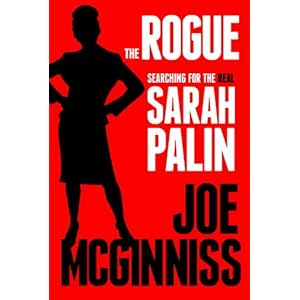
Supposedly, that's one of the things that Joe McGinniss has in his new Palin bio: the Quitter with a Twitter had a 1987 fling with University of Michigan, then NBA, basketball star Glen Rice.

First, there goes the chastity and purity righteousness angle.

Second, yes, there's a black Republican presidential candidate. Nonetheless, tea partiers are older and whiter than the typical GOP, which is certainly white enough. What does Palin having a relationship with a black man do amongst her biggest partisans? I suspect a whole lot of self-delusional denialism is coming down the pike.

Here's the bigger one, though:
According to the publishing source, McGinniss confirms an ENQUIRER exclusive – published in our Oct. 6, 2008 print issue – that Sarah carried on an extramarital affair with Todd’s business partner Brad Hanson, and Todd dissolved their snowmobile dealership after he learned about the affair.McGinniss  writes in the book that the affair lasted six months and he fuels rumors that the couple’s marriage has been on the rocks for decades.
Remember when Enquirer first reported this, that Palin had had an affair long after marrying Todd? Remember the massive follow-up by the mainstream media? Ahh, yeah, right. That's the sound of silence I recall.

That said, I love how, when the Palins refudiated (hey, c'mon, you saw that coming) the book, the AP reports Hanson released a statement through Palin allies. Did they pay him? How much? Can the Enquirer snoop more on that?

And, yeah, per First Dude, the New York Times did say this book "chases caustic, unsubstantiated gossip.” That's to the Times' detriment, not McGinniss'. It's also laughable, at best, hypocritical at worse, for the Old Gray Lady to chastise him for using anonymous sources. And, if it's "easily available to anyone with Internet access," then why didn't the NYT report more of this itself? Or is the "readily available" only the non-"unsubstantiated"? (Paging Judith Miller, paging Judith Miller!)

Ultimately, Janet Maslin's review, by turns tut-tutting, vaguely elitist/snooty, chiding and "inside New Yorkish" ... "yentas" in Palinville? ... says more about her and her paper than about McGinniss.

Having now read and reviewed McGinniss' book, I see the NYT protests WAYYYYY too much. Reality? This is a solid book; everything the Times calls "gossip" actually, per the legal profession, "goes to motive," to establish Palin's character and personality.

And, speaking of .... I think the Trig birth questions that McGinniss brings up are the "gossip" that the NYT abhors. And, McGinniss has a new answer to this: Palin filed to adopt a Down's baby in order to become a symbol for anti-abortion radicals. She had to hightail it back to Mat-Su Regional Hospital from Dallas because the adoption finalized early. It makes as much sense as anything. 

That said, given what he says about her and her parents, I wouldn't be surprised if there were sexual abuse in her background, given that she may well be manic-depressive, have a love-hate attitude about sexuality, and may be anorexic and/or bulimic.

Speaking of, Politico notes how it's not the first time the Times has shown Palin some love. And, I remember that nutbar column from the Aspen Institute person; it showed what was wrong with two institutions at the same time. I also didn't realize the Times' review violated a publisher's embargo. Niccceee ... hypocrisy and self-righteousness together.

More on the book's controversies, etc., below the fold.


August 06, 2011

Frank Bruni, secularly clueless

Frank Bruni, with the red herring false lead of Rick Perry's "The Promise' (certainly not a rose garden), then jumps to the real subject of his column: the claim that secularists have their own degrees of magical thinking.

I may have found somebody dumber than Teapot Tommy Friedman AND Mojo Dowd on the Sunday NYT op-eds, at least for this week. Bruni erects a straw man and calls it "secularism," showing he clearly knows no such thing of real secularist thought. Here's his entree into wrongness:
But if we stick with this honesty thing, don’t we also have to admit that to varying degrees and with varying stakes, there’s magical thinking in secular life, and that it springs from a similar yearning for easy, all-encompassing answers? Didn’t the debt-ceiling showdown show us that?
No, it did not, and ergo, no, we don't have to admit any such thing. First, there's only one avowed secularlist in Congress, Pete Stark. Second, the debt talks didn't involve "secularism" in any way, shape or form, other than some tea party types perhaps claiming divine backing for their stances.

This blather comes next.
We all have our religions, all of which exert a special pull — and draw special fervor — when apprehension runs high and confusion deep, as they do now.
Wrong again. Many of us accept that life simply doesn't have absolutes. Not all of us are existentialist about that, but some of us are. (I, like Camus' Mersault, sometimes open my arms to the empty starlit sky.)

Then, there's the allegation that secularism is somehow gullible in some way:
“The minute you decide to buy the Toyota, your evaluation of it goes up,” said Jon A. Krosnick, a social psychologist at Stanford University who studies attitude formation. “You overly romanticize it.”

The same goes for religious creeds, political theories or, for that matter, management philosophies.
Oh, some secularists may be. But, the educated, skeptically-minded (in its right sense) secularists are aware of just how irrational human behavior can be at times, and wisely make no exception for ourselves. We may still engage at times in irrational behaviors at first, but we next engage in some form of self-examination.

July 04, 2011

NYT op-ed roundup on freedom and America

The good Joe Nocera defends Cyrus Vance Jr. against Bernard-Henri LΓ©vy. Why can't he write more op-eds like this?

Even David Brooks thinks the modern Congressional GOP is pretty stupid on its rigid no-tax stance on debt negotiations.

Meanwhile, one Senate Republican and two Democrats are pushing for Afghanistan withdrawal.

And the usually good Roger Cohen is, again, with a solid look at the present and future of Brazil.

June 25, 2011

Dumb business op-eds day at NYT, part 1

The Sunday NYT op-eds page has two real clunkers, both on business news. (I'm not counting MoJo Dowd's clunker about Obama being "bi" on gay marriage; I know that's what it's about without clicking the link, which I refuse to do.)

Anyway, back to business stupidity, and from the NYT's two business-focused columnists not named Paul Krugman. Dave Leonhardt and Joe Nocera both write clunkers.

First, Dave Leonhardt argues going to college is a good investment even if you're just a cashier afterward.

Here's "interesting" comment one:
First, many colleges are not very expensive, once financial aid is taken into account. Average net tuition and fees at public four-year colleges this past year were only about $2,000 (though Congress may soon cut federal financial aid).
He ignores that more elite public colleges charge more than that, that much of the financial aid today is loan-based, not grant-based as when I was in college, and that much of the loan-based financial aid is not federal loans, or even federally-guaranteed private loans, therefore, it's loans with high interest rates.

Then, he subconsciously admits college today, and the alleged need for it, is due to academic inflation, even though that's NOT the gist of his argument:
Construction workers, police officers, plumbers, retail salespeople and secretaries, among others, make significantly more with a degree than without one. Why? Education helps people do higher-skilled work, get jobs with better-paying companies or open their own businesses.

This follows the pattern of the early 20th century, when blue- and white-collar workers alike benefited from having a high-school diploma.
But, if college today is for non white-collar people what high school used to be, then we have academic inflation.

Finally, there's this unsubstantiated claim:
Then there are the skeptics themselves, the professors, journalists and others who say college is overrated. They, of course, have degrees and often spend tens of thousands of dollars sending their children to expensive colleges.

I don’t doubt that the skeptics are well meaning. But, in the end, their case against college is an elitist one — for me and not for thee. And that’s rarely good advice.
No proof is offered of this alleged "elitism."

Beyond this, Leonhardt never asks if all high school graduates, or adult higher education students, are psychologically a good fit for traditional college.

Several recent surveys have addressed this issue by proposing a new vo-tech system, but one that doesn't have the race-based tracking of the past. Leonhardt appears clueless about this.

June 18, 2011

Dear NYT: I was afraid of that

The gray old lady, the New York Times, is going to present to inflict upon its readers a new section next week, called Sunday Reader.

Here's the huzzahs and hallelujahs PR announcement.
Starting Sunday, June 26, 2011, The Times will bring you a new section, Sunday Review, that reinvents, reimagines and reorganizes the Week in Review to offer new features and a new way of presenting our finest analytical and opinion writing.
Oh, goody.

Even MORE David (Bobos in Pop Ev Psychville) Brooks? And MORE Thomas (My Head is Flat, Teapot Tommy) Friedman?

Will we get analysis defending the paper's regular suck-ups to the D.C. Village? Please?

Can we, instead, get the best of outside writing as part of this new section?

That said, Teapot Tommy actually has a good idea for trying to implement a two-state Israel-Palestine solution.

Ahh, must be stopped clock time.

April 19, 2011

Trump spreads backside, Brooks inserts head

I think not just David Brooks, but New York Times columnry in general, has hit a new level of suck-up-itis after Brooks' new paean to Donald Trump. One quote, from near the end of the column, should suffice as proof:
A child of wealth, he is more at home with the immigrants and the lower-middle-class strivers, who share his straightforward belief in the Gospel of Success, than he is among members of the haute bourgeoisie, who are above it. Like many swashbuckler capitalists, he is essentially anti-elitist.
Brooks' Bobo-ism, married to a Trump lovefest. Does it get any more saccharine?

Let's deconstruct this.

First, Brooks has probably never even met, let alone interviewed, any "lower middle-class strivers."

Second, Brooks obviously hasn't read about Trump's boasting about how much more money he has than Mitt Romney.

Oh, Trump's an elitist all right. His "elite" list starts with one person: Donald Trump.

Is this the type of drivel the NYT wants to paywall? Good luck with that.

April 05, 2011

Dear NYT - A paywall should mean better guest op-eds

Former GOP nutbar Congresscritter Curt Weldon talking about his personal plan to talk Gadhafi into exile does NOT qualify.

Weldon doesn't mention the backers of his initiative, with whom he is talking in Libya, etc. Given his past history of alleged financial improprieties, for the NYT to run a column like this without at least having a backgrounder news story is kind of laughable.

March 25, 2011

First Frank Rich, now Bob Herbert

Bob Herbert, following Frank Rich, is the second New York Times op-ed columnist in less than a month to announce they were leaving the paper.

Both columnists said they wanted to pursue new angles in journalism.

Fortunately, the Times did NOT go craptacular on Rich's replacement, naming Joe Nocera. But, Nocera, at least from what I've seen of his blogging or commentary outside of Times news stories, isn't really, well, opinionated. And, to the degree he is, he's a business columnist.

I hope the Times thinks outside the New York-DC axis, and outside the traditional bipartisan poles, for a replacement for Herbert.

The story notes that the NYT is in the middle of revamping its Op-Ed section. And, of course, it has the paywalls going up. Both are good reasons for thinking outside the box.

Herbert's farewell column is here. Apparently, he's leaving now, unlike Rich. Interesting. Anyway, he goes out with a bang - call it millions for Libya, but not one cent for the homeland.

March 22, 2011

Paywalls and leaks — are they desirable?

The Nieman Labs note that the new New York Times paywall, already live in Canada, can, in current incarnation, be cracked with just four lines of Javascript. And, it says, beyond that, that some "leakiness" in a paywall, if the media company knows how to manage it, can actually be a good thing.

The story approaches the issue in part from a cost-benefit analysis. It notes that there are a couple of classes of people who are simply determined not to pay for content in such situations. Those who have the skill, or who get the information from someone else who has the skill, will work around the paywall easily enough. As long as they're looking at ads, the story says, and maybe clocking an occasional one, then the NYT is still ahead, rather than spending more money to tighten the paywall.

OOPS.

Just one problem with that analysis.

Those same people, in general, are already blocking ads on their computers. I can't believe Nieman was either that dumb or that naive.

And, beyond THAT, the reason WHY for paywalls is to generate revenue not only from falling Internet ad rates, but, because savvy online news readers are already blocking ads, and savvy online newspaper IT staff know that.

That said, from there, we can honestly discuss whether a "straight" paywall, a "freemium" system, or a metered system like that of the NYT is the best thing for a daily newspaper vs. a "weekly" (in hardcopy) magazine, etc.

But, this idea that a fair amount of "leakage" will actually help on the ad side? Stupid.

March 18, 2011

CFLs, libertarians, and hidden cost denial

Another shock me here.

From one of the New York Times' "Room for Debate" set of mini-columns on a subject, we get one that doesn't really even deserve such space, namely the wingnut conspiracy theories over compact fluorescent lights and the GOP Congressional wingnuts' attempt ot roll back the mandated phase-out of current incandescent bulbs.

And, gives in doubly. One writer is from Cato, and another from the Competitive Enterprise Institute.

Leave it to pseudo-free market rationalist Cato to compare apples and oranges with European and American energy costs without talking about hidden American costs.

Ditto for someone from the Competitive Enterprise Institute.

And, the Times will either be stupid enough or arrogant enough to put this behind the metered paywall.

Update: Ron Brownstein at National Journal agrees about hidden energy costs.

February 27, 2011

NYT searches out -ex gubernatorial brilliance

I guess in light of the whackjobbery of Scott Walker and John Kasich in Ohio, the New York Times op-ed section felt it had to get some wisdom on state budget issues from recently retired governors.

Let's see, what four departing governors could the New York Times op-ed page turn to for insights about governance? These four:

1. Bill Richardson, derailed from an Obama Cabinet position by an ethics charge, related to shady financial deals while New Mexico governor;
2. Mark Sanford, a philanderer, and on the South Carolina state travel dime, to boot;
3. Bill Ritter Jr., a policy wonk who was OK overall but uninspiring (that said, he would have been a better choice for Interior Secretary than fellow Coloradoan Kenny Boy Salazar);
4. Phil Bredesen, an equally uninspiring Democratic wonk governor.

Seriously? Sanford over Charlie Crist? If you were going to give me a laugh, where's Pataki and Schwarzenegger?