SocraticGadfly: Colorado River
Showing posts with label Colorado River. Show all posts

September 09, 2026

Fact-checking Texas Monthly on Rio Grande water supply

The Monthly never responds on either Hucksterman or Shitter, so when reporter Jack Herrera, on his personal Shitter account, asked for feedback on "The War for the Rio Grande," he got it.

It's good in some ways, but has a mix of errors and Texas exceptionalism hyperbole.

First, if one goes by more than water supply, per American Rivers, neither the Rio Grande nor the Colorado is on the ten most endangered list. (Both have been on its list in the past, the Colorado more often, the Rio Grande more recently, aka last year.)

Second, no, Geronimo didn't flee from Arizona into Chihuahua, it was into Sonora. 

The Colorado gets more headlines because it passes through more states, and more, because a lot more agriculture depends on it than the Rio Grande. So does more urban water supply.

The High Plains, not the small, HIGH-elevation San Luis Valley, is the heart of Colorado's ag industry. The Grand Junction area with its orchard fruits is arguably No. 2.

You're totally right on the 1944 treaty, but could go further. It needs to be redone. 

I disagree with you on not targeting certain crops. Lots of pecans like the ones Rogers grows sell overseas, just like the alfalfa you mentioned going to Saudi Arabia. Yes, Rogers has a market — and outside of Trump tariff stupidity, a lot of that market is in China.

El Paso scientists are right — the drought in the Southwest is expected to last the rest of this century, due to climate change. Water recycling has been done in LA's Southland for what, a decade or more? Here in Texas, Wichita Falls started it a few years ago. Neither one may have as fancy of an operation as El Paso plans, but the concept in action is itself not new. If there's something special and new in El Paso's details, it should have been spelled out more. Saying it's "the first of its kind in the nation" is incomplete at best and possibly inaccurate at worst unless it's massively different from others.

I concluded by telling Herrera what I start with here and I was waiting to see if anything would be different this time on responsiveness. 

=

A second piece, whether prequel or sequel, is better. 

Setting aside Herrera's untruths about the San Luis Valley as the heart of Colorado agriculture (pre-Spanish entrada, it wasn't, either; that would be Colorado's part of the Four Corners) his story about his trip to the headwaters of the Rio Grande is more worth it. I've not hiked to the headwaters myself, but I've been to Creede, and have hiked in American and Yankee basins on the west side of the Continental Divide just above the headwaters.

=

Sidebar: Neither story has the magic phrase "climate change." 

==

Follow-up: A full week later, and no response from Herrera, who's obviously a liar. And, no response from either him or the Monthly on Shitter or Hucksterman. Shock me. I guess Herrera didn't fall far from the Texas Monthly apple tree.

April 10, 2026

The Colorado River's situation is looking dire as Compact renewal looms

Two snapshots, which I will explain in more detail, in all likelihood, over at Substack.

First, the major drought that hit the Colorado River basin from the start of the year on, if not already late last year, was massively exacerbated, in terms of snow water, by the major heat-up in March. 

As a result? The Upper Colorado is down to just 25 percent of its median normal on snowpack water equivalent. For people unfamiliar with what this means, normally, there's snow melting in the upper Rockies in May and June that's filling the river, and more importantly, the river's damned lakes behind its damned dams, above all Lake Powell behind Glen Canyon Dam and Lake Mead behind Hoover Dam.

There will be little to no such snow this year. What snow is currently left will probably not be bulked up by any major new snowfall before the end of this month. The snow still left was already heated up, as was the surrounding ground, now snow-bare, and therefore it will melt off earlier.

This is going to be problematic, especially for Powell. 

How problematic?

EVERY dam has one red-line point that even a few non-Westerners may have heard of: Dead pool, also the title of a book by James Powell about Lake Powell. That's the point where what's left of water in a damned lake is below the outlet holes in a dam. Short of drilling new holes, that means what you have is something that's in the process of becoming a big silty mud puddle, absent major new water input.

Hydroelectric dams have a second red-line point. That's called "power pool."

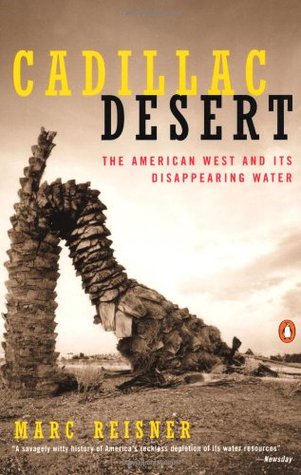
That's where water in a lake falls below the top of penstock openings in a dam — the penstocks that feed turbines that generate electricity. This is problematic in two ways. One is the loss of electricity itself. The second is that the penstocks must be monitored for things like cavitation, should something like a major flash flood hit the lake and its drainage area and threaten to send lots of water through air-open feedways. Cavitation is what happened to Glen Canyon Dam's emergency water feed holes in the early 1980s when it had no choice but to draw down water as rapidly as possible. Marc Reisner discussed that in "Cadillac Desert."

That leads to our second issue.

Per BuRec, the old Bureau of Reclamation itself, there's a good chance Powell hits power pool by this August, even as the current Colorado River Compact ends later this year and the squabbling over renewal is only heating up. For government bureaucrats to issue a worry this openly pessimistic is huge.

In March, before the big heat-up, BuRec said Powell might hit power pool by this December. With that heat-up, it's advanced that to August. Before the Compact expired and also, for Phoenicians of Aridzona, before the summer expires. That means no more cheap electricity for AC in 105 or 110 F heat. 

Per the story, they have two main options. First is opening the gates at Flaming Gorge Dam on the Green River, the Colorado's main tributary, as much as possible. Flaming Gorge Reservoir is in northeast Utah and backs into southwest Wyoming. Both states oppose maximum drawdown but probably have little choice. Second is cutting the release of water out of Powell to Mead to the minimum allowable.

But outside agencies say even that won't be enough:

“Those two tools taken together at those levels are not sufficient to prevent Lake Powell from going below 3,500, according to these most recent forecasts,” said Anne Castle, a senior fellow at the University of Colorado’s Getches-Wilkinson Center.

There you are. 

Also, at a water height still slightly above power pool, the story notes, damage to the dam is possible.

For more on power pool and dead pool, complete with graphics, go here

BuRec promises another update later this month and you'll get more from me.

Longer term? The "panic button" has always been that one of the two dams has to die, and per private entities like Glen Canyon Institute, Glen Canyon Dam has always been the preferred option in the big picture, though the option vociferously opposed in Aridzona.

Now, per BuRec, Congress has technically said no to that idea.

Because of the many significant benefits provided by Lake Powell, Congress continues to include a direct prohibition concerning any planning actions or expenditure of public funds related to consideration or actions toward draining Lake Powell. Former Reclamation Commissioner, John W. Keys III said, "Previous administrations of both political parties, as well as the U.S. Congress, have said that Glen Canyon Dam is here to stay because it is serving millions of people in the Southwestern United States. Congress, through the passage of the Grand Canyon Protection Act of 1992, clearly stated that the dam and reservoir have a place in the tapestry of the country." Reclamation is committed to operating Glen Canyon Dam in accordance with the Law of the River and all applicable environmental laws.

But, not all of Congress nor all of Trump's Norman Vincent Peale can get rid of this reality. 

On electric juice, about all of Glen Canyon Dam's goes to Aridzona, while Mead's generally goes to California and Nevada. That Glen Canyon juice not only runs the AC in Phoenix, but pushes Central Arizona Project water uphill from the lower Colorado to farms in southern Arizona, and cities in greater Phoenix and Tucson.

BuRec's apparent pessimism is itself a shocker. Per another story from the Salt Lake Trib, the bureau usually pulls its punches on Colorado River water supply issues. 

If you live there, like my sis and brother-in-law, really, you should be moving. Really really, you should already have moved. 

It's time to face reality, per my previous posting on the subject. 

Maybe Phoenix only gets 5 percent of its electricity from the dam, but in summer, even that eliminates any cushion.

The CAP? The larger Western Area Power Administration, including but not limited to Glen Canyon Dam, supplies 80 percent or so of its electricity. 

You can follow Lake Powell water levels here

Contra this Sarah Connor, BuRec never said the lake would hit power pool "early" this year. And, it's still nowhere near dead pool.


February 12, 2026

Shock me that Western states and the feds still don't want to face Colorado River reality (updated twice)


Or, in specific, Glen Canyon Dam reality. (My Photoshopped version of the dam, above.)

High Country News, actually getting back to its roots in some ways, has a good piece on the dam, the Colorado River, and the status of a new Colorado River Compact. Here's the latest:

Indeed, a state of crisis has been building on the Colorado for decades, even as the parties that claim its water argue over how to divide its rapidly diminishing flows. Lately, things have entered a new and perilous phase. Last Nov. 11 was a long-awaited deadline: Either the states involved — California, Arizona, Nevada, Utah, New Mexico, Colorado and Wyoming — would have to agree on a new management plan, or else the federal government would impose its own, something none of the parties would welcome. Meanwhile, the 30 tribes that also hold claims to the river have historically been and continue to be excluded from these negotiations. 
That deadline came and went, and instead of acting, the government punted, this time to Feb. 14. Nobody was surprised: Unmet deadlines and empty ultimatums have been business as usual on the river for years. Decades of falling reservoir levels and clear warnings from scientists about global warming and drought have prompted much hand-wringing and some temporary conservation measures, but little in the way of permanent change in how water is used in the Colorado River Basin.

That deadline is, of course, just a couple of days ahead now passed. I semi-guarantee you won't lose any money if you bet that the seven states of the Colorado River Basin do nothing by then and the feds kick the deadline down the road.  (Shock me that the lower basin states want more concessions from the upper basin. That said, contra John Fleck, the current basins division is itself part of the problem.)

After all, in the Biden Administration, BuRec did a head fake about doing anything serious. (There was semi-serious stuff around the edges, and that was that, but it motivated the states to do nothing.) 

In response, Interior says it will move forward with new operating guidelines. Well, those are guidelines, no more, and per Interior head Doug Burgum and his department's press release, they're kicking the can down the road just like Team Biden. (Per the second of the two links above, Biden's DOI jumped over BuRec to pontificate and do nothing.)

“Negotiation efforts have been productive; we have listened to every state’s perspective and have narrowed the discussion by identifying key elements and issues necessary for an agreement. We believe that a fair compromise with shared responsibility remains within reach,” said Secretary of the Interior Doug Burgum. “I want to thank the governors of the seven Basin States for their constructive engagement and commitment to collaboration. We remain dedicated to working with them and their representatives to identify shared solutions and reduce litigation risk. Additionally, we will continue consultations with Tribal Nations and coordinate with Mexico to ensure we are prepared for Water Year 2027.”

Let's unpack that sack of shit. 

Bottom first.

"Consultations" with tribal nations mean they'll keep getting screwed, especially in Aridzona.

The stuff within the top half of the quote? Nah, not within reach, not without an actual hammer, which Burgum will use no more than Biden's BuRec head, Camille Touton. (As is the case in many departments, Trump has a nominee, Ted Cooke, but no actual commissioner.)

The stuff before "tribal nations"? BS boilerplate. 

That said, as HCN goes on to note, part of the problem is Glen Canyon Dam itself:

The 710-foot-tall dam was designed for a Goldilocks world in which water levels would never be too high or too low, despite the well-known fact that the Colorado is by far the most variable river in North America, prone to prodigious floods and extended droughts. But the Bureau, bursting with Cold War confidence — or hubris — chose to downplay the threat. In the record-breaking El Niño winter of 1983, the Bureau almost lost the dam to overtopping, due to both its mismanagement and its design, because the dam lacks sufficient spillway capacity for big floods. Only sheets of plywood installed across its top and cooler temperatures that slowed the melting of that year’s snowpack saved Glen Canyon Dam.

And yes, it was serious.

Marc Reisner opened his magisterial "Cadillac Desert" with that scene, going into much more detail than HCN's story. 

Of course, Glen Canyon Dam was itself built on a lie, a lie that's inside the visitors' center:

Oops! 

For those who haven't lived out there, there is no good farm land above the surface of Lake Powell, so no irrigation in the immediate area. There are no towns of more than 10,000 in the immediate area, though Utah, pursuing the cancerous idea of growth for growth's sake, continues to talk about pumping water for municipal needs some 250 miles west to St. George.

It has not improved water quality, and has killed fish below the dam.

As for that infrastructure? HCN goes on to note that, already in 2023, it has come close to "minimum power pool."

If Hoover Dam gets that close, the theoretical solution is to open the penstocks at Glen Canyon Dam. For Glen Canyon Dam, Flaming Gorge is further away with less water. There's not much on the main stem of the Colorado, and dams above Black Canyon of the Gunnison would help even less. 

The story notes that is actually above the generators' intake level but that, due to the force of water flow, getting down to that mark would cause cavitation in the dam's penstocks. Some of that happened in 1983 because water had to be released from the dam so fast, and with such a head weight due to the lake being full, that the water pressure caused small boulder size cavitation, if I recall correctly.

HCN's Wade Graham notes the dam has two additional outlets, called river outlet works. But, they're not designed for extended use, and can deteriorate when water levels are low. (I can't recall if they were used in addition to the regular penstocks in 1983.)

That water level is what is known to those of us in the know as "dead pool." But, as Graham notes, that's still 240 feet above the base of the dam. That's 240 feet of fetid, stagnant, algae- and mosquito-breeding water. 

Graham notes that old BuRec head Floyd Dominy, subject of John McPhee's "Encounters with the Archdruid," talked long ago about drilling into the sandstone around the dam with emergency outlet valves.

That's interesting. But, knowing the nature of that sandstone, also discussed by Reisner, if those valves aren't concrete lined, that water migrates. Does any of it "gnaw away" at the base of the dam?

And, the author's explainer on that:

In 1997, the former commissioner sketched on a cocktail napkin how new bypass tunnels could be drilled through the soft sandstone around the dam and outfitted with waterproof valves to control the flow of water and sediment. What it prescribes is treating the patient — the Colorado River, now on life support — with open-heart surgery, a full bypass. Dominy’s napkin, which he signed and gave to my colleague Richard Ingebretsen, the founder of Glen Canyon Institute, is effectively a blueprint for a healthier future for the Colorado River and the people and ecosystems that depend on it.

Needs a caveat. 

It would be healthier than dead pool, but not healthier than much other options. Like not building the damned thing. Or else blowing it out. 

(I'm with the Monkey Wrench Gang!) 

To add to the concern, the Upper Colorado Basin Snowpack index is horribly low.  It's far and away the worst in the past decade and well below the 30-year average. Now, as 2023 shows on that graph, sometimes, middle and late spring snow will bail things out. But, one shouldn't hang their hat on that, and even before the big surge, 2023 was well ahead of this year.

And, the big concern for the long term? The US Southwest is likely to remain in drought for the rest of the century. 

==

An Outside Mag story of March 3 says that the feds have proposed five different plans if the states can't agree. That said, without, or refusing, to connect the dots, it notes those five plans were on the table in mid-January, well before the Feb. 14 deadline. The story ends with: 

A proposed rule is set to be finalized by September 30, 2026. New rules, whatever they may be, are set to begin the following day.

Yes, and pigs will fly over Rainbow Bridge, too. 

I cite an edited version of what I posted on their Hucksterman page:

Please, don't buy the federal government's bullshit on this issues from either duopoly party. Just like BuRec had a semi-nothingburger under Biden in 2022, we've got the same here. The five plans were released before the Feb. 14 deadline, which has of course since passed. I would NOT hold my breath over that Sept. 30 deadline being worth the paper it's written on, and besides, none of the five plans address other issues, like if the current Upper/Lower Basin division is outdated. Let's also remember the current admininistration is full of climate-change denialists.

There you are. 

That said, Outside has largely gone in the crapper in the past several years. I'm not surprised that dots were not connected. 

==

See also this April 1 update

See also this April 10 update

You can follow Lake Powell water levels here


April 02, 2024

Contra High Country News, yes, banning alfalfa IS the answer

Specifically, contra High Country News' Jonathan Thompson and specifically, banning alfalfa from being irrigated off the Colorado River and tributaries.

Two years ago, HCN's editor at large Thompson claimed, straight up: 

So, banning alfalfa is not the answer.

And, I fired back at him.

Last year, a year later, the NYT of all people weighed in with a story on the Colorado's woes, that noted that livestock feed off all types uses a bit over half of total Colorado River basin usage.

And now, the LA Times, with more regional skin in the game than New York has, drops the hammer even harder. Alfalfa and other hay by itself — no corn, no milo, no other feedstocks — uses one-third the total water usage in the Colorado River basin.

And, more specific to the HCN plaint by Johnny Peace, who was looking at the San Juan River drainage in southwest Colorado? This:

In the upper basin states — Colorado, Wyoming, Utah and New Mexico — cattle-feed crops consumed 90% of all water used by irrigated agriculture on average.

Nails it.

Sadly, some of the researchers, like Brian Richter, while they get the math right:

“We need to get very serious about shifting to a different mixture of crops, and we need to reduce the overall footprint, the acreage of land, that is being used for farmland,” Richter said.

Miss the political science. This:

Richter said that as a scientist, he is reluctant to tell people what to eat, and thinks everyone should “act on their conscience.”

Is just wrong. The personally:

“Personally, once I started this research, I gave up beef consumption altogether,” Richter said.

Is nice. (I'm at near-zero on beef, and only modest-moderate amounts of pork.)

But, the other part? Wrong.

We use scientific information all the time to tell people not to do stuff. We use it, in another issue related to climate change, for private insurers to jack rates as hurricane and wildfire dangers increase.

Richter does get this right:

As the region’s water managers continue negotiating long-term approaches for reducing water use, Richter said it will be vital to create a fund with federal and state support to help farmers change crops or retire some cropland.

In other words, putting alfalfa on a glide path to extinction in the Colorado River drainage.

But, we should only do that in combo with other things, like the SEC requiring the ag sector overall to account for carbon emissions.

AND, in terms of the matter at hand? Contra that neoliberal nutter John Fleck, IMO, the new, post-2026 Colorado River Compact needs to get rid of the "Upper Basin" / "Lower Basin" division. Fleck, like Thompson, is also an alfalfa lover, per that second link.

To put it another way? Thompson needs to read Lyle Lewis' "Racing to Extinction." Amazon reviews here.

==

And, it's on the other side of the Rockies, on the High Plains, but, Thompson, there's a replacement that's gaining popularity. Grow millet.

February 07, 2023

The future of Lake Powell, and the whole Colorado

First, per Yale Climate, and rightly so, it will NOT be "solved" by one year of heavy snowpack. (As of Feb. 6, we were at 129 percent of the 10-year average.) In fact, it won't be "solved" within current parameters, period. (The only problem I have with Yale's piece is way too much quoting and referencing of neoliberal Kumbaya environmentalist John Fleck and his partner in neoliberal environmentalism crime Eric Kuhn.)

The key on the good, yet bad, is that Powell (and Mead) are now only at 10 percent danger of "power pool," per a BuRec update. As Bob Henson notes at the Yale piece, this of course drops a sense of urgency among the member states of the Colorado River Compact. It also lessens the possibility of BuRec threatening a banhammer, let alone following through on it, after its fake banhammer last summer.

In fact, contra Kumbaya Fleck, I expect one, or more, lawsuits to be the nudge to a new version of the compact. One lawsuit would be by one individual state vs. another. (Looking at you, Aridzona, vs. California, given early post-compact history.) A second would be by Upper Basin vs. Lower Basin states. A third would be one or more American Indian tribes suing one or more states and/or the federal government.

Bob's piece is creative in some ways. As people who are from the Colorado Plateau and surrounding areas note, evaporation, from both the two big lakes and the irrigation canals, is a problem. And a growing one. So, why not cover them with floating solar panels? Boaters would push back on the lakes, but push back on the pushback. They can steer around. And absolutely on the canals.

That said, the price for this would be huge on one or both of the lakes. You'd have to have transmission antennas beaming the electricity to some grid connection, for example. Panels fixed in place over irrigation canals wouldn't have such problems.

Outside of Nevada's conservation — which Bob didn't note was largely a one-off effort — the biggie, especially on the lower Colorado? Agriculture. Sorry, Johnny Peace, but the alleged romance of grazing cows on river-raised alfalfa? De-romanticize it.

For the unknowledgable, Yale then gives readers the nickel version of the Colorado River Compact. They then talk about climate change's impacts — important, as the snowpack numbers are based on just the seven previous years.

The biggie? Can the Compact be saved? Bob says yes, if there's enough flexibility in a highly overhauled new Compact. Color me skeptical, since, per Bob and big snow, the seven Basin states procrastinated past Jan. 31, as I expected, part of the impetus for his article.

That said, there's a flip side to that bathtub ring at Lake Powell, even if the lake itself is never fully restored. 

That's the unveiling of Glen Canyon itself, and its own self-restoration, documented in detail at High Country News by author Craig Childs and photographer Elliott Ross. The recovery of the canyon, with people now knowing about it, might partially replace the recreation dollars of Lake Powell, even as Jim Stiles shudders. Lessening total boating would also lessen fuel burning of the boats, and of driving them to the lake, too.

As for the actual vistas? I'd love to see at least a fraction of the re-revealed natural beauty from before Powell started filling, as in, see it in person wearing my own hiking boots. Ditto on seeing if some of the Anasazi or Fremont or Basketmaker or Archaic ruins, petroglyphs and pictographs survived 50 years or so of inundation.

December 16, 2019

John Fleck is NOT Marc Reisner

I stumbled across his blog about two years ago while Googling for information about Colorado River annual precipitation, basin snowpacks and related material.

While I recognized that he had good information about those numbers, I saw more and more that his "framing" was horrible. Like a junior president Obama, he thought all problems within water allocations could be — and had been, in cases already solved — fixed by "Kumbaya."

Along with this, he, and even more, a second-level co-blogger, slammed Marc Reisner, along with newspaper journalists and others, for promoting "conflict narratives." The co-blogger on the site was worse, claiming Reisner was out of date and other things.

Well, this summer, Fleck started touting his own new book, and how it would build on his previous book of years ago. So, I decided to make an interlibrary loan request for said first book.

I got it.

It was horrible.

I gleefully savaged it.

Here you go.

Intellectually dishonest, in my opinion.

I have Fleck’s blog (with some coauthors, mainly Eric Kuhn, the coauthor of his new book, but it’s primarily his) on my blogroll.

He knows the numbers stuff, or has friends and blog coauthors that do.

But, he’s Kumbaya on Colorado River stuff, as in like Preznit Kumbaya, aka Obama. And, on his blog, he sneered about Marc Reisner. And, yes, IMO, sneered is the right word. Look for yourself.

 So, knowing Fleck had written this book, and that he had a new one coming out, I wanted to see what he was like in more than blogging depth.

Answer?

Worse than on the blog.

Let’s start with the most egregious issue. A 2016 book about Colorado River water issues doesn’t even use the words “climate change” until page 199? UNACCEPTABLE.

Second, and the point behind the header?

Much of the “Kumbaya” that Fleck mentions was only achieved with the threat of a legal mailed fist behind it. Kumbaya by force of law is hardly Kumbaya.

Other issues that pop up early on?

More dissing of Reisner. After initial mention, simply ignoring James Powell, author of “Dead Pool.” I have re-read “Cadillac Desert” half a dozen times and “Dead Pool” twice. Both are in my small “keepers” library.

Next? More Kumbaya, even as places like today’s Aral Sea basin, Jordan River, Tigris-Euphrates and Nile show that Kumbaya ain’t working so well as we speak.

We don't even need to go outside the Colorado Basin! The fate of the Hohokam should indicate that Kumbaya doesn't always win.

Next next? Ignoring that Colorado River water usage has been mitigated by ever-heavier drawdowns of groundwater, both in groundwater basins connected to the Colorado (Arizona) and in those not (California), though there it’s more to reduce Sacramento-San Joaquin water u se in the Central Valley.

Next next next? Ignoring the connection between groundwater basins and river recharge. Anybody who knows the godawful state of southern Arizona tributaries of the Gila also knows why.

And, we’ll keep going. In supporting growing alfalfa as a flexible crop, he ignores that the methane farts of the cows it feeds contribute to the climate change that is making the Colorado ever drier. But, since he doesn't mention climate change until the end of the book ...

A lot of the Kumbaya cooperation Fleck cites, like in SoCal, has the fist of threatened legal power behind it, in specific, just as has most Colorado River stuff. Doesn’t matter if the threat is rarely invoked; it exists. That’s “forced Kumbaya,” not Kumbaya.

Also, it comes off as a bit cherry-picking to discuss a couple of small Southland water districts and never discuss the massive water headaches in the Central Valley, which were a large part of Reisner’s book.

One other reviewer notes water fights in the Central Valley (speaking of) are even worse than in the Colorado, and large scale corporate farms have no problems putting their thumb on the scales.

Back inside the Colorado basin, and after the date of this book, Arizona’s state Speaker of the House Bowers nearly gutted a needed agreement for new water use reductions earlier this year with a proposed rider on the bill. Only the threat of the Maricopa affiliation of Indian tribes forced his hand. Fleck made light of it.

Speaking of that, that water agreement was required because of Lake Mead hitting 1.075 elevation. Fleck, near the end of the book, notes that a previous agreement didn’t directly address 1,075, but appears to believe there that this point wouldn’t hit until after 2020.

Well, Fleck, it hit before then, and it hit before then in spite of a record Rockies snowpack in 2019. Did you talk about climate change in your new book?

One other point vis-à-vis the Anglo water world in the Southwest in general, American Indian water rights are the 800-pound gorilla in the room. Fleck does eventually discuss them – for half a dozen pages or so in the last 10 percent of the book. But he doesn’t go into detail.

Next, he never considers whether a “moon shoot” shouldn’t overhaul the current Upper / Lower Basin divisions. (I say it should; I’d put the Virgin River in the lower basin and the Little Colorado in the upper.) Related to that, on his blog, Fleck appears wedded to giving the Upper Basin just as much water despite its lesser population and its agricultural challenges.

Something almost as inexcusable as not mentioning climate change until the end of the book? Talking early on about the Mormons and the amount of water management ideas they spread around the West while ignoring that they got much of that, in turn, by learning from the majordomos who ran (and still run, in many cases) acequias in New Mexico. It’s doubly inexcusable not to mention this since Fleck is a long term reporter at the Albuquerque Journal.

(Update: It now becomes triply inexcusable. New research from the U.S. Geological Survey shows the river has lost 20 percent or more of its flow since 1913 and more than half of that is definitely attributable to climate change. More information from that study shows that, in just 30 more years, it will lose another one-quarter of its flow. Maybe more. So, Fleck is not only "criminal" for not discussing climate change in his first book, he's also "criminal" for its effects playing out, and he's criminally stupid in his Kumbaya belief if he things the future's going to be addressed without elbow-throwing lawyering.)

That’s even though he mentions it in his blog. While, at the same time, it's a throwaway line.

Look, some "gloom and doom"  newspaper reporting and books over the state of the Colorado may have been too much. BUT, they were reasonable extrapolations from the status quo at the time they were written. Killing a perhaps sometimes overdone angle the way Fleck has done is proverbial gnat meeting sledgehammer.

Of course, a sledgehammer can't be swung quickly and accurately enough to actually kill a gnat.

Finally, beyond the thumb-on-scales slant, I just don't think the book is that well written. The throwaway nature of the Mormon comment would be one example.

==

Update, Feb. 5, 2020: Apparently I've been ghosted out of commenting on his blog. I could just use a new email address, but he's not worth it.

April 08, 2015

'The desert always wins': The last word on California drought

The quote above, whether most popularized by Cactus Ed, good old Ed Abbey, or someone else, is true indeed. indeed.

As Marc Reiser demonstrated in "Cadillac Desert," along with many others, some before, many since him, the Colorado River was highly overappropriated among its seven basin states because the 1920s were an outstandingly wet period within a larger wettish period. While Colorado River system water is not the same as the snowmelt from the Sierras that fills (Californians hope) in-state reservoirs, it too is snowmelt-based, with all that implies in our era of global warming, El Niño-related oceanic oscillation changes and more.

Let's not forget that the Los Angeles Aqueduct of "Chinatown" fame was built less than 20 years before the Colorado River Compact, also during a wet period. And, although the 1960s of California State Water Project fame were less wet than the 1920s, they were far wetter than today, or than long-term droughts we know hit the Southwest in the past and are likely to do again in the near future. And, while that megadrought is expected to center on the Four Corners, not California, it will have its "fair share" of effect on the Golden State. And, for students of paleo-American history, this drought is expected, at least in the Southwest, to be worse than the one that shuttered Chaco Canyon and destroyed Anazasi culture. In other words, anthropogenic climate change, while part of the problem, is not all the problem. Rather, it is, in part, intensifying what's more "normal" than European settlers thought, 100 years ago.

So, that leads to Abbey's most famous statement certified statement: "Growth for growth's sake is the theology of the cancer cell."

This NYTimes graphic, from the linked story about
groundwater regulation, shows the amount of sinkage
in many areas; the largest red dots have shown
more than 100 feet of sinking. See story for more.
And thus, the quasi-rhetorical, yet seriously asked, question in this long New York Times piece has but one answer: "no." Relentless growth has limits. There is no perpetual motion machine in general and certainly not with water supplies. Meanwhile, even as Jerry Brown has imposed water cuts (that don't affect agriculture, don't affect oil fracking and don't start until July 1), there's really a bigger scandal in California water issues: groundwater, unlike in most western states (but, unfortunately, very much like in Texas) is currently not regulated at all, and under a weak-tea system the state finally, recently, adopted, will not be semi-effectively regulated until the 2040s.

By that time, the groundwater may be almost gone, with storage capacity, flow, and more of reservoirs irreversibly damaged.

(In turn, this is part of why I said last week that Californians should recall Jerry Brown.)

Now, Reisner did not directly cover these issues. But he did indirectly cover them when he wrote about overpumping of the Ogallala Aquifer.

Having grown up in New Mexico, and been the editor of one newspaper in that state, I personally know this.

Most Western states have a state water engineer, who is god and czar of the state's water supply, with the partial exception of any rivers that come under interstate compacts.

For example, in New Mexico, at least at the time I was editing there, if a person wanted to drill a new water well, they had to run an ad in the newspaper three weeks straight, giving a precise metes-and-bounds description of the well's location AND its planned depth. At the end of said legal notice had to be a date for a public hearing about that well. The regional office of the state engineer conducted that hearing.

From what I understand, even if California does have a state engineer, said office has nothing like that regulatory power.

Meanwhile, fallowing of the fields could damage the fields themselves.

Reiser, whether the water source was irrigation or groundwater, wrote about improper irrigation and the salination problems it caused to land. As California farmers are having to fallow more land, the salinity problems are apparently starting to show up in places in the Central Valley.

Add in that the current drought is worsened by climate change, and many Californians' blithe belief that the state will "escape again," like it escaped Enron gaming its electricity nearly 15 years ago, is kind of appalling. It's also a proof that blue states aren't exempt from the delusion of American exceptionalism.

Abbey addressed that, too:
“There is no shortage of water in the desert but exactly the right amount, a perfect ratio of water to rock, water to sand, insuring that wide free open, generous spacing among plants and animals, homes and towns and cities, which makes the arid West so different from any other part of the nation. There is no lack of water here unless you try to establish a city where no city should be.”
So, Californians? (And, Arizonans, Nevadans, etc.?) It's time for a lot of you to move back to Minneapolis, or Cleveland, or St. Louis — where the water is.

And, speaking of Arizonans and Nevadans? Here's Part 1 and Part 2 of what's going to be a three-part series on drought in the Colorado River basin, from the Arizona Republic.

For those who think desalinization is the answer? In the Colorado River Basin, per that Part 2 link immediately above, maybe think again. In coastal California, even if the price drops a lot, and quickly, which is open to debate, you have the issue of thermal pollution from "wastewater" being dumped into a coldwater ocean current. The only plant currently under construction is only going to meet 7 percent of San Diego's needs, a drop in the bucket for overall California use. If desalinization in Florida is any indication, it will probably not run as well as expected, and be pricier than expected. (Right now, the San Diego project will deliver water at twice the current cost, and the same company that built that troubled Florida desal plant is doing the one in San Diego. It would probably be cheaper to move people back to the Midwest.)

Salvific technologism, as I've called it before, has no guarantees. Re-read those Abbey quotes.

January 08, 2014

Requiem for a river: The Colorado

Lake Mead and its infamous bathtub ring, behind Hoover Dam./NYT photo
Good piece here from the New York Times, especially for Easterners unfamiliar with how overtapped the Colorado River already is, and its likely future.

Its likely future? For the man-made version of the river, in which almost none of the river flows "free" below Grand Canyon, and almost none ever reaches the Gulf of Mexico? Grim.

And getting grimmer.

The keys to the central and lower Colorado are two massive dams, Glen Canyon and Hoover, starting from upstream to downstream, and two massive (for now) man-made lakes behind them, Powell and Mead, respectively. (The two are, respectively, the second-largest and largest man-made lakes in the U.S.)

Mead, with both its water supply and its dam being closer to major user areas, and being the older of the two, is the biggie. And, "getting grimmer" indeed:
Lake Mead currently stands about 1,106 feet above sea level, and is expected to drop 20 feet in 2014. A continued decline would introduce a new set of problems: At 1,075 feet, rationing begins; at 1,050 feet, a more drastic rationing regime kicks in, and the uppermost water intake for Las Vegas shuts down. At 1,025 feet, rationing grows more draconian; at 1,000 feet, a second Las Vegas intake runs dry. 

But, Powell isn't off the hook.
Lake Powell is another story. There, a 100-foot drop would shut down generators that supply enough electricity to power 350,000 homes.
The story notes how the early 20th century was, as we now know, far wetter than normal, and thus water appropriations in the seven states of the upper and lower Colorado basins were "oversold." Sometimes massively so.

And, here's another part of the problem. Let's call it the "ostrich effect."
The federal Bureau of Reclamation’s 24-month forecasts of water levels at Powell and Mead do not contemplate such steep declines. But neither did they foresee the current drought. 
But, BuRec, as it's known out west, has no excuse for making such over-optimistic forecasts — other than pandering to all of the river's overallocated water users.

A fellow federal agency, the National Weather Service, says so. Per maps at the link, the Southwest is supposed to be above average on temperatures for all of 2014. (So much for the climate change denialists.) And, precipitation is supposed to be average through May. Given that, especially in the upper basin, the majority of precipitation is winter snow, this is a biggie.

Given that other research has said, per the Las Vegas Review-Journal, there's a 50-50 probability at least one of the two lakes hits "dead pool" by 2021, and that they hit minimum electric power generation by 2021, pandering to overallocated water (and electric) users is long past its expiration date.
The report unveiled Tuesday by the University of California-San Diego's Scripps Institution of Oceanography places Lake Mead's chances of running dry by 2021 at 50 percent, better than your odds of winning at any casino.

According to Scripps researchers, there is also a 50 percent chance that reservoir levels will fall low enough to shut down power generation at Hoover Dam by 2017, and a 10 percent chance the lake could be dry by 2014.

But the study's co-author, Tim Barnett, said those doomsday dates aren't as important as the overall message.
"The point is this is coming in 10 years, not 20 or 30 or 40. We're looking it in the face now," said Barnett, a research marine physicist who wrote the paper with climate scientist David Pierce.
Indeed. Pandering to users is long past its shelf life. The original report, here, has more detail. That's especially true since the report is now more than 5 years old and BuRec keeps its head buried in the (ever-increasing) sand.

As for claims that this will never happen, per the Review-Journal story? The BuRec is being ignorant, probably willfully so, of past history. It took decades of ongoing suits before Arizona finally joined the Colorado River Compact. It took more suits before the Central Arizona Project took off. It took an international lawsuit PLUS the first Arab oil embargo before we as a nation agreed to guarantee any Colorado River water to Mexico.

The idea that we would never let either lake reach dead pool has about as much guaranteed truth value as the idea that we'd never kill off every one of those 100 million passenger pigeons.

And, it's not even dead pool. If Lake Mead falls just over feet this year, instead of 20 feet, water rationing starts. This year. Not some date in the future.

And, it's possible. Beyond above average temperatures predicted for the Southwest through at least mid-summer, as of right now, the Rockies' snowpack is, overall, average to below average. And, the West Coast is just bone dry. Here's the details.

Plus, it's not just water issues. Note the other issue — power generation at Hoover Dam could die by 2017. Even if Las Vegas has some water, do people want to live there with almost guaranteed summer brownouts? Also, the lower the lake sinks, and the lower you have to run tubes to get water out of it, the more electricity you have to use to pump it, as Las Vegas, at 2,000 feet, is well above the bottoms of those siphons.

And, soon enough, the pressure's going to come for more water to be released from Lake Powell. Besides the lawsuits that will trigger, that will cut electric generation there. Phoenix gets to duel with Las Vegas as to which one has more brownouts and blackouts, then.

The answer? Far beyond what the Times quotes federal and state officials as saying. Rather than bailing out people in Arizona, Nevada, and exurban L.A's Inland Empire when the housing bubble burst, we should have paid to move them back to the Midwest.

Instead, if the Central Arizona Project is indeed taken out of commission by, say, 2025, and another one-third of the Imperial Valley in California faces the same fate, Phoenix, in addition to becoming even hotter, will face another problem.

Those haboobs that tea partiers think are the name for a Muslim incursion? They'll be carrying more and more agrichemicals from fallow desert farmland to the west and dumping it in the Valley of the Sun. People who either moved there themselves, or had ancestors do so, for their lungs, will be living in one of the most unhealthy areas in the country.

There is a bit of schadenfreude here. The area around the Valley of the Sun, plus Orange  County and San Diego County in California, are hardcore red staters. Climate denialists. Swelter away in intermittent summer electricity, and croak away in diminishing water.

It's also a bit of caution for Texas. The Rio Grande involves international compacts and the Pecos has an interstate one. Even where rivers are all in Texas, like the Colorado of Texas, the ones that start in West Texas, as heat and possible drought continue, are under similar pressures. And, given how the current Texas government has far more ostrichitis on climate change than BuRec, they're likely to mismanage addressing that pressure even worse than the feds.

February 18, 2011

'New normal' on Colorado Plateau starts having results

As most environmentalists know, the "drought" in the Colorado River watershed is really closer to the basin's long-term normal. Now, the lack of water in the overappropriated, overdammed river is starting to have fallout.

Boulder City, Nev.,and other smaller communities south of Vegas are finding hydropower from Hoover Dam is harder to come by. At the same time, they're finding that their current supplemental supplier is too expensive.

Of course, the real story is the explosive growth of Boulder City, Laughlin and other cities that are in the middle of a freaking desert! The city's use of dam power has dropped from 80 percent to 50 percent in the last 15 years.

And so, you white folks retirees slumming at small-town casino cities are getting hoist by your own capitalist petard.

Once again, I quote Ed Abbey: "The desert always wins."

Retire in Mississippi, where there's water, and hit one of the oceanfront floating casinos if you have to. (And, get more schadenfreude from more Class 4-5 hurricanes, maybe.)

March 27, 2009

Major bankruptcy may be headed to Vegas

If Dubai World, as threatened, pulls out of a partnership with MGM Mirage on Vegas’ City Center, it could have a domino effect on the whole Strip.

With other construction projects there on hold or shuttered, and Vegas near ground zero of the subprime bubble, this could be the last straw for Sin City.

Which, in a sense, is fine by me.

I have no problems with gambling.

But, there’s already too damned many people in that spot in the Mohave Desert, and the Colorado River’s about to run dry in its lower stretches.

Vegas could stand to lose about half a million people. At a minimum. Probably an even million population loss wouldn't be too off the mark.

February 24, 2009

Is the Colorado running dry?

Silly question for those of us who know Lake Mead has a 50 percent chance of going dry in 20 years.

But, if you’re NOT familiar with the idea, the proof that the Colorado River system is in danger continues to accumulate, and in a way that scares Colorado boosters who know they’re generally last in line for the river drainage’s water, even though much of it starts there.

September 05, 2008

'Cadillac Desert' on clear display


The picture above is of high-altitude alfalfa irrigation, at about 6,500 feet, in Colorado’s Dolores River watershed. The Dolores is a tributary of the Colorado River in southwest Colorado.

It’s this type of use, or misuse, of water for high-altitude crops, and ones with only an indirect return, getting processed through a cow (or worse, fed to somebody’s pet horse), rather than direct human benefit crops such as dryland or semi-dry spring wheat or pinto beans, that Marc Reisner decried in “Cadillac Desert.”

I saw this while on vacation last month and was inspired to the following poem:

Fresh-cut green alfalfa —
Brick bales shit upon the land,
Grown in a land of little rain;
Grown in a land of short summers.

Short-season high-country rivers
Could be put to better use
Than supplemental feed for mountain cattle;
Supplemental water, rather,
To boost dryland wheat and beans.

Send it downriver? No.
Not until Los Angeles, Las Vegas and Phoenix
And Imperial Valley and Central Arizona farmers
Learn more water prudence.

Fresh-cut green alfalfa —
Brick bales shit upon the land,
Grown in a land of scarceness
For fat, lazy Americans to indulge themselves.

Maybe the wrong cows are being fed.

June 08, 2008

The future of California will only come up dryland roses

Don’t expect new drought-related restrictions on development to be just a passing fancy.

Assuming everything is correct about how climate change is going to affect the Desert Southwest, water in southern California will get even tighter in the future. And, in neighboring Arizona and Nevada, too.

Eventually, either the federal government will take the voluntary lead in renegotiating the Colorado River Compact, or else one state is going to sue.

In all likelihood, it would be California suing to try to force the other two states of the Lower Colorado Basin to implement similar governing restrictions on development.

May 17, 2008

Say goodbye to the Colorado River as you know it

As the U.S. Southwest is expected to heat up faster than the world average during the coming decades of global warming, what’s that mean for the lifeblood of the Southwest, the Colorado River?

The U.S. Geological Survey says it could hit a 500-year low in its flow.

Between that and reduced snowpack in the Sierras, 40 percent of SoCal’s water supply could become vulnerable in the next 20 years. Farmers will either get pressured to sell more water rights to cities (which I contend is illegal under the Newlands Act, which established the Bureau of Reclamation; read Marc Reisner’s excellent “Cadillac Desert” for more on this in particular and Desert Southwest water issues in general), or else pony up the money (which SoCal’s big corporate farms can easily afford) to get more efficient with irrigation, like folks like the Israelis do.

Remember, the Colorado is NOT the Mississippi or even close to it. In fact, it’s closer in size (and geographic setting) to the Amu Darya and Syr Darya rivers of (the former Soviet) Centra Asia, the Oxus and Jaxartes of Alexandrine fame. (The Amy Darya is shown at right, on the Afghanistan/Tajikstan border; doesn’t that just look like the Colorado Plateau?) And we all know what has happened to the Aral Sea as a result of too much tapping of these two rivers.

The USGS has predicted a 25-30 percent chance of a basin-wide water shortage by 2020. That’s the basis of the prediction, made last month, that Lake Mead could dry up by that date.

USGS scientist Gregory McCabe, the author of the report, is due to testify to Congress next month. Stay tuned.

March 15, 2008

What it’s like to be a Navajo – and how water rights could change that

Unemployment officially at 50 percent and possibly 67 percent. Per-capita income at $8,000 a year. Driving as much as 40-50 miles off the Big Rez to get water in Gallup. Living as close as you can to “Third World” existence here in the United States.

That’s why Navajos want their cut of Colorado River water.

But, will they? The 1922 Colorado River Compact only made allowance for the seven states of the river basin. No Navajos, or other Indian tribes, need apply. But, the Supreme Court’s Winters decision, in another case, gave Indian tribes the right to retroactively claim water rights. Given that Navajos live bordering both a long stretch of the Colorado and most of its third largest tributary, the San Juan River, they’re in a position to make some claims. And, the Navajos’ eligibility for those rights go back to the founding of their reservation in 1868, before most of the Colorado River Basin was settled and when only two of the current seven basin states were established as such.

Plus, the compact itself says:
“Nothing in this compact shall be construed as affecting the obligations of the United States of America to Indian tribes.”

The Navajo, like other tribes, can either sue for their rights, or negotiate compacts with various states, pending Congressional approval. The Navajos have already started down the latter path:
That’s the path that the Navajo Nation has taken in New Mexico. In 2004, the tribe and the state announced a settlement agreement that would award the Navajo 326,000 acre-feet of water from the San Juan River, a major tributary of the Colorado. (An acre-foot is enough for about two families in Phoenix or Las Vegas for a year.) The settlement also authorizes more than $800 million in federal and state money to build a pipeline that will take the water to the east side of the reservation and to the city of Gallup. The Navajo Nation is now seeking congressional approval of the deal, the tribe’s first step toward asserting its rightful claims on the Colorado.

Stanley Pollack, an assistant attorney general for the Navajo Nation’s Department of Justice, says the Navajos could claim as much in Arizona, plus 100,000 acre-feet more in Utah. Out of the 17.5 million acre-feet the compact claimed the river produced, or the 15 million that is a more realistic yet still quite optimistic number, 800,000 acre-feet is huge.

Let’s put it this way. It’s half again the water rights of the city of Las Vegas. And, going by age, the Central Arizona Project is the last in line.

But, Pollack is a bilagaana — a white man — and so, distrusted by many Navajos. With Arizona pushing back against Navajo claims, and Pollack very much a pragmatist, he’s even been accused of creating a water rights holocaust against the Navajos.

And, that problems stems back to legendary, and ultimately criminal, former Navajo Tribal Chairman Peter McDonald. McDonald tried to get a Navajo water rights claim based on their current reservations, but “Dinetah” — the Navajo claim to all the land inside their four holy mountains. Problems with that include not only that the federal and state governments wouldn’t recognize that, but McDonald and other Navajos were ignoring the Hopi, Utes, Zuni, Jicarilla Apache and the 19 Indian pueblos on the Rio Grande who lived in the area, as the High Country News article notes.

But the dreams went up in smoke with Peter Mac’s arraignment on corruption charges, for which he was eventually convicted.

But, the idea still holds sway in many Navajo minds. And, Jack Utter, a bilagaana conspiracy theorist who also works for the tribe, is fueling the anger against Pollack.

Anyway, who knows how this will turn out. As far as intra-Navajo scrums, the HCN story quotes an old aphorism:
The Navajos would rather have 100 percent of nothing than 50 percent of something.

Growing up in Gallup, I can attest to this having some degree of truth.

And, in this case, the Peter McDonald will-o’-the-wisp could be 100 percent of nothing for decades.

Or, with global warming and a drought of nearly a decade and counting tightening its grip on the Colorado Plateau, the Navajos could be pragmatic while still sitting in a large driver’s seat.

Anyway, read the full, in-depth story. This is why I subscribe to High Country News.