SocraticGadfly: Randi (James)
Showing posts with label Randi (James). Show all posts

October 25, 2020

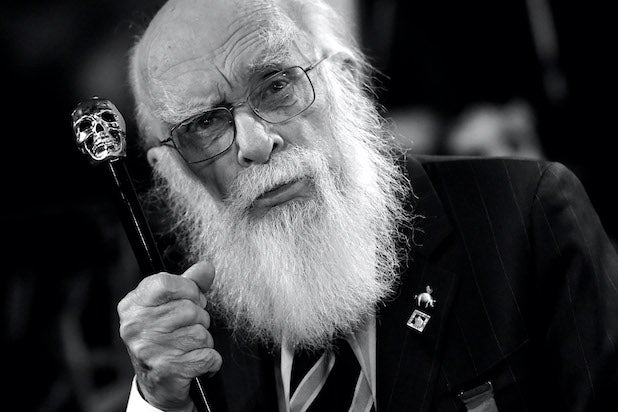
James Randi is dead — and won't be totally missed here (and neither will his cult be missed)

So-called "movement skepticism" isn't in general missed in these corners, but, for the less informed, let me explain why the (Not so) Amazing Randi, aka, The Amazing (Deceiver) Randi, won't be missed here after his death at 92 last week. (Hat tip Kuff in his weekly roundup for noting this.) A better, but not perfect, NYT obit is here.

From lesser to greater?

There's his libertarianism that enabled the likes of Penn and Teller to be denialist about secondhand smoke as a carcinogen, and to still be denialist about things like climate change. That's too common in movement skepticism; Michael Shermer is yet another prominent member, at least partially influenced by Randi, who has conflated some version of modern movement (it's NOT "scientific," per the above, so I don't call it that) skepticism with philosophical and political libertarianism.

Next, there's his condoning of #MeToo related problems in movement skepticism. (And, allegedly, Shermer was part of those problems, too.)

Finally, Randi almost certainly knew that his long-time lover, Devyi Peña, was an identity thief. Hiring him at JREF, the nepotism wouldn't look good even without the above. That, of course, makes it worse. Even if Randi didn't know that Peña had engaged in willful criminality, the hiring made it look like he did know and was trying to protect him.

See update below for more wrongness by Randi, and more important, for how the cult doesn’t like any questioning of him.

All the information two paragraphs up, plus Shermer's history, is documented here. More on Shermer here. That documentation notes that this goes back to the time of Paul Kurtz as founder of CFI. (Randi as founder of JREF, as much as Kurtz at CFI, also fell willing victim to founders syndrome.)

Related? Randi started sniffing his own press clippings too much later in life. The claims that Peña magically (I see what I did there) skeptically enlightened most of Australia have been put paid to by many people, for example.

So, contra Penn Jillette, I won't love him forever. "Flim Flam," his first famous book? Might be a good title for his biography. (And, neither of the above obits included most of this. The NYT, at the second link, touched on a bit of the first issue, indirectly, and on the third issue, but only to claim that it was an accident by Peña, not willful identity theft, a claim which is, per Harry Frankfurt, "bullshit.) 

When I was a kid, I remember seeing Randi on the Tonight Show and being interested.

As a much younger adult, doing intellectual judo on my seminary education, he and other skeptics were of a bit of help, though not nearly as much as Messrs. Hume and Wittgenstein, followed by some atheistic (but not "Gnu") philosophers.

As I got older yet, though, and moved left politically, and developed my own skepticism, though, I took a look at Randi's movement more carefully. And, even before the MeToo antics, the more and more I saw, the less and less I liked.

And moved on.

Probably why I didn't hear of Randi's death until four days after it happened.

This all said, since an announcement of his death is one of just two announcements posted to JREF in the past six months, I may not be missing much anyway.
 
In addition, founders syndrome is semi-cultic, something that any good skeptic should steer clear of, of course.
 
Update: Via Orac, Mitch Horowitz at Boing Boing has a takedown obit at least as scathing as anything I've ever written. 

And, let's look at Horowitz.

That said, this is as close to true as he gets.
He was to skepticism what Senator Joseph McCarthy was to anticommunism — a showman, a bully, and, ultimately, the very thing he claimed to fight against: a fraud.
Half-true on some, less than half on others. A showman, yes. To the degree showmanship affected his skeptical claims, not so much. Less true of the bullying — except possibly inside his management of JREF. A fraud? Well, with Peña, take your choice of "fraud" or "hypocrite."

That said, Horowitz trying to cite Ray Hyman as supporting him shows how far off base he is. And, while Orac mentions that and more, I don't need Orac to know that. Ditto when Horowitz mentions the likes of Dean Radin.
 
Horowitz is himself a non-skeptic of the first rank on paranormal claims. And, thus, wrong!
 
That said, Orac, in savaging Horowitz?
 
I've commented at Orac, essentially summarizing my points here and, while not saying Horowitz is right, that Orac cut Randi a fairly big pass on several issues. 

Update, June 7, 2021, in light of the updates below and other things.

Having tangled with Orac twice now over issues related to St. Anthony of Fauci, and knowing that Movement Skeptics / Skeptics™ are their own set of tribalists, as Orac's fellow-travelers at Evidence Based Medicine have shown before in a back-and-forth with Massimo, I've decided to expand this.

First, I'm sure that Orac is more than a micro-celebrity, and certainly more than a nano-celebrity, within Skeptics™. Such modesty!

Second, to get to some meat? Orac ignores Peña. Flat-out ignores him. Never discusses him. Not just the ID theft, but the allegations of shammery in Australia. If that's not intellectual dishonesty?

Third, he doesn't tackle the issue of founder's syndrome. Since Paul Kurtz had shown it several years prior, and to some degree, like Randi, on #MeToo issues, this wasn't good, either. I mean, Orac even commented, as I blogged about, a non-MeToo problem with Kurtz.

Fourth, he (and fellow travelers at NECSS) have evidenced tribalism and twosiderism before! I forgot about John Horgan calling him out, and them, five years ago, and that I blogged about that. What Orac in his insolence really hated was getting called out by someone at his pay and fame grade. (I also wonder how much both Orac and Steve Novella, per that link, disliked Horgan's comments not on skepticism, but on fee-for-service medicine. Orac strikes me as a mainstream neolib Democrat type who at a minimum isn't highly favorable to single-payer national health care.)

Fourth, part 2: Per Horgan, and contra Orac, the asshole wasn't Horgan. Besides Orac and Novella, it was first Jamy Ian Swiss. That said, for not having a single word of praise, Orac and Novella are assholes themselves. I might wind up writing something just about Orac at some point!

Fourth, part 3: The likes of Orac, though not a lot himself personally (rather, Shermer, Randi, philosophy-hating Barbara Drescher and philosophy-minimalizing mild Daniel Loxton) are part of why I don't call myself a skeptic any more, and haven't for five years, like Massimo — at least not without the word "philosophy" or "philosophical" attached. (I suspect that Orac's probably not big on philosophy, either.)

==

Update, Dec. 22. So, Randi was also a Jesus mythicist, at least buying into the bullshit that Nazareth didn't exist 2,000 years ago?
 
 
Oh, he's wrong, by the way. Exist it did indeed, so shut up mythicists.

==

Update, March 27, 2021: Per the header, I DID say "won't be totally missed." I did NOT say, "won't be missed at all." But, per a Hucksterman discussion to which I won't link ... too many people are still too ardent of Randi fans to consider that.

Sadly (and this particular person isn't THAT bad), but, beyond Randi sniffing his own press clippings too much in later life, on #MeToo, and on Peña I think, and on founder's syndrome in general, he had too many enablers. He should have been nudged out of leading JREF at least half a decade before he actually was.

Yeah, the opening graf may have been a bit harsh for the particular person's taste. But, for many acolytes of his (cultists?) it was just right, if not too soft.

Note to Phil Stilwell: Susan Gerbic's original post was about a person. If I disagreed, as I did, then wouldn't I be focusing on a person in response?

Note to Susan: If you don't like critical comments, then don't post to "public."

And, it's "funny" (insert other word here) for a skeptic to be deleting comments from a thread.

XXXXX in case you are wondering I removed that hateful thread. That person can buzz off and keep their nasty crap to themselves.

And, no, it wasn't hateful. Labeling something you don't like as "hateful" is facile, but often not true. But, if you've won awards from Randi, as she has, you've got an investment in promotional materials.

(I have since gotten into a Hucksterman argument with a Phil Stilwell, who arguably, even if my original first comment below my post "thank god for screenshots" was a bit convoluted, came off as gaslighting me. He would have remembered commenting on Gerbic's post less than 24 hours previously, and telling me not to focus on the personal. As Gerbic was trying to glorify the effects of Randi as a person, dude, how could I NOT comment on Randi as a person? Put that and your gaslighting in your pipe and puff it. Seeing as how you've gotten lucky enough to get played up by the likes of Jonathan M.S. Pearce, for whom I have less and less respect, as a deconversion success story, and you've been a regular commenter on the major skeptatheism sites, I'm sure of what you said, even if it's now gone. Pearce being an apparent Islamophobe only makes matters worse. Further update to this, June 7: Looking back at Orac's piece, I see Gerbic mentioned. )

I think that, per discussion on one social media site, "fossilized" is a good word to describe JREF, and other orgs, whether "movement skepticism" or Gnu Atheism like the Freedom from Religion Foundation, aka the folks who once tried to claim that Abraham Lincoln was an atheist. 

I don't know as much about their fundraising psychology as I do, say, major environmental organizations, but I suspect there's a certain amount of crisis-mongering, which mingles with a certain amount of tar-babying off the Religious Right.

Re movement skepticism, I've long said that it could stand to learn some philosophical Skepticism. Re the Gnu Atheist orgs, since the "nones" are growing fast — but aren't really atheist, contra Gnus — there's definite tar-babyism as far as how American religious demographics are changing. On the secular humanist world, per said friend, it should be focusing on things like the dehumanization factors of the "always on" world, or the future of the precariat (the word I first heard from the late Leo Lincourt) and other socio-economic issues.

September 27, 2014

Michael Shermer, meet Barbara Ehrenreich: two self-flunked not-so-#skeptics

Mr. & Mrs. Michael Shermer; not a ghost of a chance?
I've already blogged about Ehrenreich and her new book on alleged teenage mystical experience, starting with a long book review and then adding blogging thoughts about the psychological struggles I see lying behind both the teen and the modern Ehrenreich.

Well, now, Michael Shermer, at a minimum, leaves himself open to the criticism and interpretation of seeming to have dived even deeper into the ex-skeptic pool, but all based on recent adult experience.

He married the loverly Jennifer Graf (more related to this further down) just a few months ago. Shermer notes that she was raised by her mother, and describes her late grandfather, Walter, as "the closest father figure she had growing up, but he died when she was 16."

Anyway, Ms. Graf is a native of Germany. Before their marriage, they had her possessions shipped over here to the States.

Among them was one item of sentimental value once owned by her grandfather, an old radio.

Shermer gives the details:
His 1978 Philips 070 transistor radio arrived safely, so I set out to bring it back to life after decades of muteness. I put in new batteries and opened it up to see if there were any loose connections to solder. I even tried “percussive maintenance,” said to work on such devices—smacking it sharply against a hard surface. Silence. We gave up and put it at the back of a desk drawer in our bedroom.
OK, so Shermer admits he's not a professional electronics repairman, while also letting us know that he could have hit the radio hard enough to jiggle something loose.

Moving on ...

We're at their at-home wedding and reception, when this:
Being 9,000 kilometers from family, friends and home, Jennifer was feeling amiss and lonely. She wished her grandfather were there to give her away. She whispered that she wanted to say something to me alone, so we excused ourselves to the back of the house where we could hear music playing in the bedroom. We don't have a music system there, so we searched for laptops and iPhones and even opened the back door to check if the neighbors were playing music. We followed the sound to the printer on the desk, wondering—absurdly—if this combined printer/scanner/fax machine also included a radio. Nope.

At that moment Jennifer shot me a look I haven't seen since the supernatural thriller The Exorcist startled audiences. “That can't be what I think it is, can it?” she said. She opened the desk drawer and pulled out her grandfather's transistor radio, out of which a romantic love song wafted. We sat in stunned silence for minutes. “My grandfather is here with us,” Jennifer said, tearfully. “I'm not alone.”
First, we have a clearly emotional situation for both, which he later admits. And, doubly so for her.

However, he seems to "recover" with this observation:
What does this mean? Had it happened to someone else I might suggest a chance electrical anomaly and the law of large numbers as an explanation. ... In any case, such anecdotes do not constitute scientific evidence that the dead survive or that they can communicate with us via electronic equipment.
All would be fine and dandy if he ended there.

Next, he tells us:
Yet the eerie conjunction of these deeply evocative events gave her the distinct feeling that her grandfather was there and that the music was his gift of approval. I have to admit, it rocked me back on my heels and shook my skepticism to its core as well. I savored the experience more than the explanation.
Seemingly, he wants to believe. Not just wanted to believe, then, past tense, but wants, present tense, a couple of months later. Note the "had it happened to someone else" caveat from the previous pull quote. And, add to it that, even with others, he "might suggest a chance electrical anomaly." Not "would suggest," but "might suggest."

And, we're still not quite done.

But, he doesn't.

First, though, I want to go to the first sentence from the paragraph where the last pull quote came from, which says:
Jennifer is as skeptical as I am when it comes to paranormal and supernatural phenomena.
Sounds great, right? Also sounds like a typical "pitch," with the pitchman establishing his alleged bona fides before making the sale.

Now, let's go to his last sentence:
And if we are to take seriously the scientific credo to keep an open mind and remain agnostic when the evidence is indecisive or the riddle unsolved, we should not shut the doors of perception when they may be opened to us to marvel in the mysterious.
Boy, is that laden with loopholes, both stated and unstated.

First, true scientific investigation would have taken the radio to a repairman. Note that Shermer said he HAD changed batteries, so a normal power source for the radio was in place. Change in humidity or other things could have caused a connection to be made. A transistor radio would then have played for what? About a day, that's what, until the batteries died.

Indeed, he didn't even have to start by taking the radio to a repairman. A scientific investigation, or a semi-scientific skeptical investigation, would have started with carefully, carefully removing the old, dead batteries from the radio -- carefully so as not to jar again whatever loose wiring, or loose crud that can build up on batteries and connections -- Shermer presumably jarred loose with banging the radio in the first place. Then, replace the batteries with fresh ones! If it plays, voila! Solution and answer.

Second, both a true skeptic and a true scientist wouldn't operate off "sample size = 1." That's even more so when a true skeptic or a true scientist recognize that when that "1 = yourself," you don't have single-blinding, let alone double-blinding.

Third, a true skeptic, and a true philosopher, would recognize the logical fallacy or fallacies being committed. I could argue that they include shifting the burden of proof, appeal to authority, the regression fallacy (since he claims the event's importance is what it is, without looking at its cause), and the bull's-eye fallacy, also called the sharpshooter fallacy (relates to that "sample size =  1).

Fourth, you can't tell me that the phrase "the doors of perception" isn't a deliberate play toward Aldous Huxley's book of that name. Fifth, the phrase "marvel in the mysterious" also tells me Shermer wants to believe.

Thus, I have to agree with the current top commenter on the story page; the last paragraph is an embarrassment.  Next thing, Michael Shermer will join Barbara Ehrenreich in writing a book about his teenaged mystical experiences. And, per that note, and feedback I've gotten, if I'm misinterpreting this piece, I'm not alone; I may be taking my interpretation up a step from that commenter, but we're in the same neighborhood.

Barbara Drescher, maybe it's time you write about your new boss as part of blogging about why smart people do (or believe) stupid things. Beyond her, I wonder what Jim Lippard, Daniel Loxton and others at Insight think about this. I know I'm not alone in my interpretation. Besides the scornful first commenter on the piece, another person, on the place on Facebook where I saw this shared, invokes Marcello Truzzi, who fell out of the modern skeptical movement precisely because he wanted to treat the study of paranormal phenomena with too much use of intellectual kid gloves.

Does Shermer actually "believe"? I don't think so. But, the eagerness of his degree of "wanting to believe" is, in itself, highly anti-skeptical and strong enough to leave him open to the charge that he does appear to actually believe, at a minimum.

And, if Shermer didn't want to leave himself open to critique like this, at a minimum, he didn't have to write the piece he actually did write, since he had a couple of months of reflection time since the wedding. At a maximum, he didn't have to write anything.

Also, is Scientific American now embarrassed by this? No Tweet and no Facebook post about it, though it does a lot of other stuff on both its social media.

==

Sidebar: Now that he's married, that puts up another (theoretically) obstacle to his (alleged) pantsitis, which I discuss in moderate depth in this post about the James Randi Educational Foundation's problems with finances, alleged sexism, and apparent founder's syndrome, and with a more narrow focus, this piece about Shermer's alleged sexual behavior problems.

Also, per that "pantsitis" issue, which I discuss in those two blog posts linked two paragraphs up, that picture of the Mr. and Mrs., while not quite cradle robbing, seems to indicate a full decade of age difference, at least. If there's fire behind the smoke of sex-related allegations against him, the picture's a partial explainer.

So, arguably the three biggest leaders in movement skepticism today are an ill-healthed octegenarian with founder's syndrome (Randi), a mystic pseudoskeptic with a pants problem (Shermer), and a libertarian-leaning lawyer with his own baggage (Ron Lindsay of Center for Inquiry). Seriously, who would want to be involved with that until the Augean stables are cleansed?

At the same time, an overall good roundup here of why PZ Myers has no business criticizing anybody else's sexual behavior. Liquor him up as much as Shermer may have been at times, and the yucky behavior toward women he sometimes has shown himself would probably be at the level of rumors of criminal behavior on his own part.

==

Sidebar 2: If it's all for the sake of love, then surely the irrationality of love had Shermer ready to feel this way before the wedding, and will do so in the future, too. And, that's probably another reason I'm single. It's not romantic idealism about marriage or other romantic partnerships; it's compatibility idealism.

==

Sidebar 3: I don't think that most people at a skeptics' group who are commenting on my posting this there are actually reading through to read all of this.

September 25, 2014

James Randi and founder's syndrome at #JREF? Like #CFI?

Special update, Sept. 24: Jeff Wagg, a non-immediate predecessor of D.J. Grothe's, albeit under different title (assuming that "general manager" = "president," and with the stipulation that at least Phil Plait was intervening), supports Alison Smith's account about an alleged sexual assault by skeptic Michael Shermer at the 2008 The Amazing Meeting, part of this piece by Michael Oppenheimer on misogyny in the skeptical community.

Per the whole thread on which Wagg comments, he adds that Smith told him at that time that Shermer had raped her, as well as her being very drunk before she went to her room.

And, Wagg says Smith's story hasn't changed.

That said, did Wagg contact police himself? It doesn't look like it. He reportedly talked to Randi, but obviously Randi didn't call police. As for why Smith didn't? Well, many rape victims, especially if away from their normal surroundings, are hesitant to do that. And, it looks like, per an Ophelia Benson post at Free the Bullies, that Smith apparently didn't want outside action.

At the same time, even if Shermer was "trying to get her drunk," nobody put a gun to her head. Nobody forced her to let Shermer in her room, either.

However, that said, we also at a minimum seemingly have further confirmation further confirmation about what Randi said about Shermer in the Oppenheimer piece: That he blamed alcohol for alleged bad behavior like this. We also have further confirmation that, in Shermer's reaction to said piece, he seems to have been lying about his relationship to alcohol.

And, per the original header of this piece, if all Randi can do is call Shermer a "bad boy," we also seemingly have further confirmation of founder's syndrome at best and toleration of unethical and possibly illegal behavior in the name of money and PR at worst.

Meanwhile, I'm going to respond to a general train of thought on Ophelia's comment list.

Per a number of the comments, reporting an alleged crime is not necessarily legally limited to the victim. In fact, adults in most states are **required** to report allegations they hear about child abuse, especially child sexual abuse. Even if the victim is an old enough juvenile to theoretically talk to police himself or herself, or even if the victim is now an adult, but statute of limitations has not expired.

Nor is someone who has heard about an alleged crime perpetrated by one adult on another necessarily morally limited. Let's say something similar to this happened in 2012, and the person to whom Smith, or some other victim, talked to, knew that Shermer had an alleged history by that time. Were I, at least, the person getting my ear bent, I would at least consider going to the police on my own.

Again, none of this is meant to blame Wagg for not doing more than he did.

And, there's further evidence of founder's syndrome at Randi anyway — the nepotism. Randi's then-boyfriend, now-husband, "Jose Alvarez," Devyi Peña of identity theft infamy, was the board's secretary at JREF. Even for an unpaid board position, that's not best practices.

Meanwhile, related to this? If more and more of this starts panning out, will skeptics, at least one of them a refugee from JREF, stay on board with Shermer's new blogging platform, Insight, at Skeptic? Again, this isn't an immediate question, as both a question to said participants and a rhetorical one, but ... it is one that at some point, per my "if," may need to be answered.

On the apparent drunkenness level of Smith, there's also the issue of liability. And not just of the hotel or whatever. If JREF had its own wet bar, and that's where she was getting sloshed, if outsiders were running it, they're responsible. If JREF ran it, ditto.

Finally, on this update, to once again riff on an old proverb:

"Where there's smoke, there's fire — and often, there's also someone fanning the flames."

===

Earlier this week, I blogged about the stunning (not necessarily shocking), just stunning, news that D.J. Grothe had been axed as president of the James Randi Educational Foundation, with the 86-year-old founder himself coming back to run the organization.

(Update, Sept. 5: Randi provides a pablum update as opaque as the original. This, in layperson's terms, might be called "adding fuel to the fire of rumors." Maybe Randi is now in Bill Nye territory and figures any PR is good PR.)

A few follow-up points here, mainly related to the header.

First, Grothe's $95K plus benefits, especially given the cost of living in LA, is not a huge amount for a man in his position.

Second, Randi's $250K as non-executive chairman of the board (page 7 of the PDF of a recent IRS 990 form) IS a huge amount, and would be at an even larger nonprofit. True, that's from 2012, and in 2013, he made "just" $195K, as reported on the latest 990. The principle still stands, I think.

(At Skeptics Society, both Michael Shermer as president and Pat Linse as CFO make a shade under $80K, per its 990. So, we'll say $160K vs $300K; that said, even with a down year, JREF's revenue ratio is also at least 50 percent above that of Skeptics' Society, and was twice that in a good year. So, still a bit of an edge to Skeptics' Society, but not a huge one.)

In fact, it reminds me a small bit of the "skeptic" whose feet of clay (or dollar bills) I have pointed out strongly in the past — Brian Dunning. If JREF had gotten to the point where nobody on the board, or other staff, was questioning this level of salary, that's not good. And, it makes it look like Randi, like Dunning, was getting a bit of the guru treatment.

If JREF was in existence at this point primarily to put on the annual The Amazing Meeting which, in turn, served as a fundraiser and kept Randi's name and face in the public eye, which, in turn, helped pay the freight for $250K, then lather, rinse, repeat, I guess. I mean, I could call that the functional equivalent of money-laundering.

Speaking of, I'm also, per Pro Publica, comparing JREF and Skeptics' Society on net revenue.

(Gnu Atheists, don't try to dogpile. P.Z. Myers' "book," to use the term loosely, of almost totally unedited blog posts, was the same thing. He — and Ed Brayton — aren't old enough for founder's syndrome, but there's plenty of guru syndrome already at Freethought Blogs.)

And that's not a whole lot better than the board at Center for Inquiry several years ago, questioning one donor making up, reportedly, one-quarter of annual contributions, nor questioning if that person's money couldn't be used for things like matching donations fundraising drives rather than just dumped in the kitty.

If "movement skepticism" groups aren't going to start, with a page from Descartes, by being skeptical about themselves, that's also not good. Many seem to be, and some were before this point. I'd love to hear more about not only legitimate concerns about Grothe's management, but also any legitimate concerns about Randi's larger stewardship or similar issues. That includes whether some people have felt uncomfortable saying more, earlier, due to Grothe's shadow. Or Randi's, perhaps even more.)

Related to that, how many different skeptical organizations are needed? One person on a Randi forum suggested that Michael Shermer and his Skeptics Society might just swallow up JREF — most likely waiting tastefully until his death, unless Randi himself initiates action first. Yes, the SJWs don't like Shermer, but, you just have to fight them off. As far as "branding" issues, well, hell, death is going to force the Randi branding issue front and center anyway; did he think he was immortal?

And, that's just a couple of many questions.

Why does JREF still exist? Why doesn't it just let Shermer take it over? How many different national skeptics' groups are needed? Does a non-executive chairman of the board of a small nonprofit need a $250K salary, if finances are a concern? Is said $250K, or even $200K, part of why he's worried about his organization's finances? Does founder's syndrome exist here as well as it did at CFI? Without getting into allegations about Grothe's character, or his management skills, those are just a few of many questions to ask, aren't they? (That said, his management skills, at least his time-management skills, as well as his fundraising, do seem to be questionable. That said, P.Z. praising Eugenie Scott? What alternate world is this?)

Per that phrase "founder's syndrome," I think it can come in a variety of forms. Note my "did he think he was immortal" rhetorical question.

Randi has the opportunity to address several of these after a new president is named. He can expand the board by a couple of members, become a non-voting chairman, and reduce his pay down to, say, $100K.

(Note: I just got done serving four years on the board of directors of a small nonprofit. The founder, the year before I came on the board, stepped down as both executive director and chairman of the board, as well as not running for a non-chairman board position. That's how you stop founder's syndrome, if that's part of what's up here.)

Beyond that, what is "movement skepticism"? What should it be? Without going down the road of Gnu Atheists and saying it should cover the theism-atheism debate, should it get into more than cryptic creatures, ghosts, UFOs, and other fringe claims? Should it branch into politics and related social issues (and not in a social justice warrior way), in which case, libertarianism within the movement might finally be flushed out, once and for all? (That said, Shermer himself appears to have moderated his libertarianism again.) Of course, Snopes currently has kind of a lock on some of that.

In other words, how big — or how small — of a pond do modern "movement skeptics," or "scientific skeptics," or Skeptics™, as I call them at times, really want?

These last questions are, in part, rhetorical. I suspect many may want a smaller pond. And some may still want a guru or two as well.

As for the "unification" of different groups, as I've blogged before, Shermer's SkepticBlog is down to just 1.5 regular posters, Donald Prothero plus an occasional assist from Daniel Loxton. Some of this is also probably "all things Internet." People come and go from various movements in the online world.

===

Update, Sept. 12: Although Grothe is not mentioned, the issue of sexism and misogyny in movement skepticism gets a thorough walk around the block by Mark Oppenheimer in Buzz Feed. The biggie? Naming Shermer's hitherto-nameless 2008 accuser. Shermer, in turn, has issued a long denial. That said, as with other forms of abusive behavior (Ray Rice and his wife) an (alleged) abusee remaining amicable with an (alleged) abuser, whether sexual or physical, is not all that out of the blue. It's surely a minority, but how small of one? On the third hand, and I know the social justice warriors don't want to hear about it — if alcohol was involved, nobody put a gun to your head to make you drink, did they?

It is interesting that Shermer didn't comment on this Randi comment from Oppenheimer's piece, though:
“Shermer has been a bad boy on occasion — I do know that,” Randi told me. “I have told him that if I get many more complaints from people I have reason to believe, that I am going to have to limit his attendance at the conference. 
“His reply,” Randi continued, “is he had a bit too much to drink and he doesn’t remember.”

Very interesting, especially since Shermer claims, at least on the 2008 issue, to have been sober.

Let me put it this way. At age 60, Shermer is old enough, and has been around movement skepticism enough, to be part of the old guard in more ways than one. 

The overall truth, on Shermer in particular, and Oppenheimer's piece in general, is probably somewhere in the murky middle. And, again, why I can declare at least part of a pox on Skeptics™as well as Gnu Atheists.

To riff on an old cliche:

"Where there's smoke, there's usually fire. ... And, there's also often someone fanning the flames."

Know what I mean? If not ...


In other words, there's probably problems and issues on both sides of this street.

Does Oppenheimer's original piece infantilize women? I don't think so. I 'm not as much inside "movement skepticism" as some, so I don't know.

Did it perhaps put lipstick on a pig in its discussion of Rebecca Watson? Probably yes, on second read.

Update, Sept. 13: Shermer's now drawing fire from many humanist types for a letter he wrote supporting sentencing leniency for convicted conservative icon Dinesh D'Souza, who pled guilty earlier this year to a campaign finance violations charge. I agree, per a Facebook comment, that it's not that Shermer agrees with D'Souza on everything, but that, due to the number of times they've debated each other in front of paid audiences, it's a "follow the money" issue.

Update, Sept. 18: Skepticblog is being replaced with something new, per Barbara Drescher's comment. Jim Lippard has one of the first posts. Questions of "why," that run through my thoughts, are answered well right here, in his tracing the roots of modern movement skepticism back to the Committee for the Scientific Investigation of Claims of the Paranormal, or CSICOP:
But what were CSICOP’s original goals, and has the organization successfully met them? What are the goals of the other skeptical organizations that have been formed in the U.S. and around the world since (and in a few cases, before) CSICOP, and are they being achieved? Just what is the value and purpose of “organized skepticism” as a movement, as a set of institutions, as a network of people participating in conferences, writing articles and books, recording podcasts and videos, and interacting online? What does it accomplish, what is the broader social context in which it resides, and what is its relation to the institutions, practices, and subject matter of science? Does it do anything that isn’t already done by science, science journalists, science communicators, historians and philosophers of science, social studies of science, science museums, science educators, and just ordinary amateur science-interested people? What can skeptics learn from these other areas? What does it mean to self-identify as a “skeptic”? Where has skepticism gone wrong, and what can we learn from its failures? Are there alternatives to “organized skepticism” that might better achieve all or some of its goals?

Click the link; you'll learn what Jim plans to cover and more. 

And, for more background, click this link, also included in Jim's piece. Daniel Loxton goes into a bit more depth, already in 2007, on some of these issues.

Also, if Drescher is part of the new effort at Skeptic, is she still going to be doing anything with Randi, or not? Especially since Randi's own column is reportedly not in the latest issue of his foundation's magazine, that plot thickens, too.

Update, Oct. 7: At the same time, an overall good roundup here of why PZ Myers has no business criticizing anybody else's sexual behavior. Liquor him up as much as Shermer may have been at times, and the yucky behavior toward women he sometimes has shown himself would probably be at the level of rumors of criminal behavior on his own part.

September 15, 2014

Michael Shermer latest skeptic in hot water

Although former James Randi Education Foundation President D.J. Grothe is not mentioned, the issue of sexism and misogyny in movement skepticism gets a thorough walk around the block by Mark Oppenheimer in Buzz Feed. The biggie? Naming Shermer's hitherto-nameless 2008 accuser. Shermer, in turn, has issued a long denial. That said, as with other forms of abusive behavior (Ray Rice and his wife) an (alleged) abusee remaining amicable with an (alleged) abuser, whether sexual or physical, is not all that out of the blue. It's surely a minority, but how small of one? On the third hand, and I know the social justice warriors don't want to hear about it — if alcohol was involved, nobody put a gun to your head to make you drink, did they?

It is interesting that Shermer didn't comment on this Randi comment from Oppenheimer's piece, though:
“Shermer has been a bad boy on occasion — I do know that,” Randi told me. “I have told him that if I get many more complaints from people I have reason to believe, that I am going to have to limit his attendance at the conference. 
“His reply,” Randi continued, “is he had a bit too much to drink and he doesn’t remember.”

Very interesting, especially since Shermer claims, at least on the 2008 issue, to have been sober.

Let me put it this way. At age 60, Shermer is old enough, and has been around movement skepticism enough, to be part of the old guard in more ways than one. 

The overall truth, on Shermer in particular, and Oppenheimer's piece in general, is probably somewhere in the murky middle. And, again, why I can declare at least part of a pox on Skeptics™as well as Gnu Atheists.

To riff on an old cliche:

"Where there's smoke, there's usually fire. ... And, there's also often someone fanning the flames."

Know what I mean? If not ...

In other words, there's probably problems and issues on both sides of this street.

Does Oppenheimer's original piece infantilize women? I don't think so. I 'm not as much inside "movement skepticism" as some, so I don't know.

Did it perhaps put lipstick on a pig in its discussion of Rebecca Watson? Probably yes, on second read.

Update, Sept. 13: Shermer's now drawing fire from many humanist types for a letter he wrote supporting sentencing leniency for convicted conservative icon Dinesh D'Souza, who pled guilty earlier this year to a campaign finance violations charge. I agree, per a Facebook comment, that it's not that Shermer agrees with D'Souza on everything, but that, due to the number of times they've debated each other in front of paid audiences, it's a "follow the money" issue.

Special update, Sept. 26:
Special update, Sept. 24: Jeff Wagg, a non-immediate predecessor of D.J. Grothe's, albeit under different title (assuming that "general manager" = "president," and with the stipulation that at least Phil Plait was intervening), supports Alison Smith's account about an alleged sexual assault by skeptic Michael Shermer at the 2008 The Amazing Meeting, part of this piece by Michael Oppenheimer on misogyny in the skeptical community.

Per the whole thread on which Wagg comments, he adds that Smith told him at that time that Shermer had raped her, as well as her being very drunk before she went to her room.

And, Wagg says Smith's story hasn't changed.

That said, did Wagg contact police himself? It doesn't look like it. He reportedly talked to Randi, but obviously Randi didn't call police. As for why Smith didn't? Well, many rape victims, especially if away from their normal surroundings, are hesitant to do that. And, it looks like, per an Ophelia Benson post at Free the Bullies, that Smith apparently didn't want outside action.

At the same time, even if Shermer was "trying to get her drunk," nobody put a gun to her head. Nobody forced her to let Shermer in her room, either.

However, that said, we also at a minimum seemingly have further confirmation further confirmation about what Randi said about Shermer in the Oppenheimer piece: That he blamed alcohol for alleged bad behavior like this. We also have further confirmation that, in Shermer's reaction to said piece, he seems to have been lying about his relationship to alcohol.

And, per the original header of this piece, if all Randi can do is call Shermer a "bad boy," we also seemingly have further confirmation of founder's syndrome at best and toleration of unethical and possibly illegal behavior in the name of money and PR at worst.

Meanwhile, I'm going to respond to a general train of thought on Ophelia's comment list.

Per a number of the comments, reporting an alleged crime is not necessarily legally limited to the victim. In fact, adults in most states are **required** to report allegations they hear about child abuse, especially child sexual abuse. Even if the victim is an old enough juvenile to theoretically talk to police himself or herself, or even if the victim is now an adult, but statute of limitations has not expired.

Nor is someone who has heard about an alleged crime perpetrated by one adult on another necessarily morally limited. Let's say something similar to this happened in 2012, and the person to whom Smith, or some other victim, talked to, knew that Shermer had an alleged history by that time. Were I, at least, the person getting my ear bent, I would at least consider going to the police on my own.

Again, none of this is meant to blame Wagg for not doing more than he did.

And, there's further evidence of founder's syndrome at Randi anyway — the nepotism. Randi's then-boyfriend, now-husband, "Jose Alvarez," Devyi Peña of identity theft infamy, was the board's secretary at JREF. Even for an unpaid board position, that's not best practices.

Meanwhile, related to this? If more and more of this starts panning out, will skeptics, at least one of them a refugee from JREF, stay on board with Shermer's new blogging platform, Insight, at Skeptic? Again, this isn't an immediate question, as both a question to said participants and a rhetorical one, but ... it is one that at some point, per my "if," may need to be answered.

On the apparent drunkenness level of Smith, there's also the issue of liability. And not just of the hotel or whatever. If JREF had its own wet bar, and that's where she was getting sloshed, if outsiders were running it, they're responsible. If JREF ran it, ditto.

Update, Oct. 7: At the same time, an overall good roundup here of why PZ Myers has no business criticizing anybody else's sexual behavior. Liquor him up as much as Shermer may have been at times, and the yucky behavior toward women he sometimes has shown himself would probably be at the level of rumors of criminal behavior on his own part.

September 01, 2014

Turbulence in Randi-world? Grothe booted, LA office closed at #JREF

Special update, Sept. 24: Jeff Wagg, a non-immediate predecessor of D.J. Grothe's, albeit under different title (assuming that "general manager" = "president," and with the stipulation that at least Phil Plait was intervening), supports Alison Smith's account about an alleged sexual assault by skeptic Michael Shermer at the 2008 The Amazing Meeting, part of this piece by Michael Oppenheimer on misogyny in the skeptical community.

Per the whole thread on which Wagg comments, he adds that Smith told him at that time that Shermer had raped her, as well as her being very drunk before she went to her room.

And, Wagg says Smith's story hasn't changed.

That said, did Wagg contact police himself? It doesn't look like it. He reportedly talked to Randi, but obviously Randi didn't call police. As for why Smith didn't? Well, many rape victims, especially if away from their normal surroundings, are hesitant to do that.

At the same time, even if Shermer was "trying to get her drunk," nobody put a gun to her head. Nobody forced her to let Shermer in her room, either.

===

I'm not hugely plugged into the world of "scientific skepticism" or "movement skepticism," but the dismissal of D.J. Grothe as president of the James Randi Educational Foundation seems a bit out  of the blue.

Here's the whole release:
In order to achieve cost-savings and greater efficiency, the Los Angeles office of the JREF has closed effective September 1, 2014. All operations have been moved to Falls Church, Virginia. 
 DJ Grothe is no longer with the JREF. James Randi has taken over as acting President. 
 This restructuring is part of an enhanced educational agenda aimed at inspiring an investigative spirit in a new generation of critical thinkers by engaging children and their parents, as well as educators and the general public, in how to think about the many extraordinary claims we hear every day.

Color me, er, skeptical! There's surely more to it than this.

(Update, Sept. 5: Randi provides a pablum update as opaque as the original. This, in layperson's terms, might be called "adding fuel to the fire of rumors." Maybe Randi is now in Bill Nye territory and figures any PR is good PR.)

While I don't follow JREF as much as Center for Inquiry, which I also don't follow a whole lot, I'd heard no major rumors among more plugged-in Facebook friends about significant financial worries.

Beyond that, is Grothe's salary that huge? Probably less money than rent of the L.A. office, along with utilities and expenses. And, the idea that an 86-year-old Randi will be "acting president" in any real sense for any length of time is laughable.

Unless the real president is "Carlos," aka José Alvarez, aka Devyi Peña, aka Uri Geller for all the hell I know. That said, as I've blogged before, I have no doubt that Randi knew who "Carlos" was, and had at least a hint about his identity theft, long before either one came clean.

Out of curiosity, I bopped over to CFI; no beans spilled there about any inside information on this.

Anyway, so, no rumors. And, if it needs change, it surely needs it beyond an 86-year-old being acting president. Maybe Randi, like Paul Kurtz, has founder's syndrome? After all, per Wikipedia, Randi himself was chairman of the board. Maybe Grothe wasn't taking orders well enough or whatever.

Even if other people affiliated with JREF had problems with Grothe, part of that could be larger "alignment" issues. And, beyond the savings in salary and office space, a head of a nonprofit is supposed to help out with fundraising, and Grothe apparently wasn't doing that. If it's as bad as it may be, this can't be a surprise — other than it being a surprise he wasn't escorted out even earlier.


Per a Tweet by Jim Lippard, it is that bad, on funding: JREF Revenue: 2011: $1.56M, 2012: $1.29M, 2013: $887.5K.


Still, the suddenness seems "interesting." Because financial problems, if known, don't suddenly pop up out of nowhere. Ones that bad certainly don't.

Unless .... the board and/or Grothe had been pretending things weren't that bad, and suddenly, voila, their lessor padlocked the doors for nonpayment of back rent in LA.

On the savings? Grothe was getting about $95K a yaer plus benefits. The LA office cost about $85K a year.

That said, Randi himself supposedly pulls down  $250K a year as non-executive chairman. If true? Like with Brian Dunning, behind many a skeptic, there's many a sucker for a guru to follow. Second, Randi's $250K as non-executive chairman of the board (page 7 of the PDF of a recent IRS 990 form) IS a huge amount, and would be at an even larger nonprofit. True, that's from 2012, and in 2013, he made "just" $195K, as reported on the latest 990. The principle still stands, I think.


(This all said, I have a new post on questions JREF's board, contributors and volunteers should be asking, as well as others that the skeptical movement should be asking itself in general.)

And, neither does larger mismanagement. That includes social media mismanagement of posting the same annoucement on Facebook and adding a "no comments" at the end of it. And, now, the beginnings of a flame war between social justice warriors and others have broken out there.


And, it's being abetted by P.Z. Myers, aka Pharyngula, to whom I shall not link. (P.Z. has some information wrong, but, since I'm now also blocked from commenting there with my Yahoo account,I won't try to figure out some other way to straighten him out.)

Meanwhile, the Randi site's forums, which I know led to a lot of interesting discussion, and probably some occasional flaming, are being cut off from the organization? Jim Lippard notes that this is a few days old, and has been done by other skeptical or atheist nonprofits. That said, I think it would be smarter to kill a forum outright rather than hand its ownership over to somebody else. Branding issues, etc.

That said, if you look at the forums homepage and the dog's breath of topics, it should have been either farmed off, killed, or more tightly run, one of the three, years ago. I mean, whoever let it become a generalized political and social commentary site blew it.

Especially given that Gnu Atheist type social justice warriors are "goosing" this whole situation, and probably have been since rumors started a year ago about Grothe's management, the forums should have either been killed outright or handed off to a third party some time ago.

Flip side is that the Gnus are surely at least partially righton the amount of libertarianism under guise of alleged skepticism that runs around JREF. If someone like Sharon Hill, the blank-check defender of Brian Dunning, is that involved, that says something.

As usual, a bit of pox on both houses from where I stand.

And, yes, bad management happens in the skeptics world. Witness both problems Paul Kurtz had at Center for Inquiry and some  that his successor, Ron Lindsay, has had. Some were financial; some were other management issues. 

Related to that, "founder's syndrome" doesn't necessarily just apply to the founders of non nonprofit advocacy-type groups. Witness the "single donor" issue at Center for Inquiry, withdrawing his 25 percent of budget donations when Kurtz was pushed aside. That said, in Randi's case, given that he named the organization after himself, there's an extra twist there.

Beyond that, how many skeptics' groups are needed? One commenter on Randi's forums may be right: Michael Shermer will take over The Amazing Meeting (for now), and perhaps the whole Randi shebang eventually. 

And, Randi  was getting $250K as chairman of the board? Or even $200 after a cut? Really? That is founder's syndrome. At Skeptics Society, both Shermer as president and Pat Linse as CFO make a shade under $80K, per its 990.

But, don't worry, Gnus; if P.Z. and his Freethought Blog co-founder Ed Brayton get the idea for a larger Gnu Atheist "portal" or something, they'll have some of the same issues, in all likelihood.

===

Update, Sept. 12: Although Grothe is not mentioned, the issue of sexism and misogyny in movement skepticism gets a thorough walk around the block by Mark Oppenheimer in Buzz Feed. The biggie? Naming Shermer's hitherto-nameless 2008 accuser. Shermer, in turn, has issued a long denial. That said, as with other forms of abusive behavior (Ray Rice and his wife) an (alleged) abusee remaining amicable with an (alleged) abuser, whether sexual or physical, is not all that out of the blue. It's surely a minority, but how small of one? On the third hand, and I know the social justice warriors don't want to hear about it — if alcohol was involved, nobody put a gun to your head to make you drink, did they?

It is interesting that Shermer didn't comment on this Randi comment from Oppenheimer's piece, though:
“Shermer has been a bad boy on occasion — I do know that,” Randi told me. “I have told him that if I get many more complaints from people I have reason to believe, that I am going to have to limit his attendance at the conference. 
“His reply,” Randi continued, “is he had a bit too much to drink and he doesn’t remember.”

Very interesting, especially since Shermer claims, at least on the 2008 issue, to have been sober.

Let me put it this way. At age 60, Shermer is old enough, and has been around movement skepticism enough, to be part of the old guard in more ways than one. 

The overall truth, on Shermer in particular, and Oppenheimer's piece in general, is probably somewhere in the murky middle.

==

Update, Sept. 18: Skepticblog is being replaced with something new. Jim Lippard has one of the first posts. Questions of "why," that run through my thoughts, are answered well right here, in his tracing the roots of modern movement skepticism back to the Committee for the Scientific Investigation of Claims of the Paranormal, or CSICOP:
But what were CSICOP’s original goals, and has the organization successfully met them? What are the goals of the other skeptical organizations that have been formed in the U.S. and around the world since (and in a few cases, before) CSICOP, and are they being achieved? Just what is the value and purpose of “organized skepticism” as a movement, as a set of institutions, as a network of people participating in conferences, writing articles and books, recording podcasts and videos, and interacting online? What does it accomplish, what is the broader social context in which it resides, and what is its relation to the institutions, practices, and subject matter of science? Does it do anything that isn’t already done by science, science journalists, science communicators, historians and philosophers of science, social studies of science, science museums, science educators, and just ordinary amateur science-interested people? What can skeptics learn from these other areas? What does it mean to self-identify as a “skeptic”? Where has skepticism gone wrong, and what can we learn from its failures? Are there alternatives to “organized skepticism” that might better achieve all or some of its goals?

Click the link; you'll learn what Jim plans to cover and more. 

And, for more background, click this link, also included in Jim's piece. Daniel Loxton goes into a bit more depth, already in 2007, on some of these issues.

Also, if Barbara Drescher is part of the new effort at Skeptic, is she still going to be doing anything with Randi, or not? Especially since Randi's own column is reportedly not in the latest issue of his foundation's magazine, that plot thickens, too.

Update, Oct. 7: At the same time, an overall good roundup here of why PZ Myers has no business criticizing anybody else's sexual behavior. Liquor him up as much as Shermer may have been at times, and the yucky behavior toward women he sometimes has shown himself would probably be at the level of rumors of criminal behavior on his own part.

December 23, 2013

I can see why Gnu Atheists don't like movement skeptics, too

(NOTE: The header to this post should by no means be taken as an assumption that I've moderated much of my general assessment of Gnu Atheists.)

Fortunately, I don't consider myself to be an officially follower of either group.

That said, what started this?

A social media discussion. The person who started it indicated that it was essentially verboten to critique either Brian Dunning or James Randi.

Well, I did, and added Michael Shermer and Penn and Teller in the mix, too. (All links go to blog tags.)

I noted that all of them but Randi tended to fuse libertarianism with skepticism. I also mentioned that I thought Randi knew a lot about his lover, "Carlos," and his true identity, and his identity theft, before it became public knowledge, and said that he had oversold some of his early skeptical claims.

Then, on a social media forum, I got deluged with a demand for evidence. I posted a link to my blog and told all the "movement skeptics" they could look for what I had written about the individually named persons, and evidence for that, by name, right here.

As for relevance?

Dunning's Internet fraud undermines a level of trust, among other things. So, it's of relevance. I've also pointed out the number of overpriced tchotchkes on his website and stated my opinion that only people who had uncritical acceptance of him would think they're not overpriced.

In short, how do you know he's not ripping YOU off with those prices? For that matter, per his criminal conviction, how do you know he didn't rip YOU off on eBay?

(Note: Dunning's sentencing hearing has been delayed until early January. Trust me, I'll post details when I hear about them.)

Finally, I also agree with the Atheism Plus subset of Gnu Atheists that Dunning has had some clearly sexist posts on his website before.

Randi? Assuming he oversold some of his claims as to how much he had deceived Australian skeptics years ago, that speaks to issues of showmanship, which magicians certainly are. That's you, too, Penn and Teller.

Speaking of, in the past, Randi like them has been a climate change denier, just like them.

Penn and Teller also, though eventually pulling back, claimed that secondhand smoke wasn't carcinogenic to any serious degree. So, skeptics can criticize pseudomedicine, then turn around and offer their own pseudoscience?

Shermer? My issues with him start with him having known racialists Vince Sarich and Frank Miele on the masthead of Skeptic magazine for years.

I then mentioned that someeone I did look up to, if you will, was Massimo Pigliucci. At which point, more than one person wondered what philosophy has to do with skepticism.

If you are seriously asking the question, that explains part of the problem with "movement skepticism," and why I'm not a follower, right there.

Afer that, I mentoined that I had been barred from commenting, or banned, from Skepticblog for my degree of pointing out Dunning and Shermer's libertarianism.

I also, to show how I am an independent thinker, mentioned I had been banned from Daily Kos for being too liberal and too Green.

At that point, a couple of commenters treated me like I had surely deserved all of this, on the bans and blocks.

Wow.

And stuff like this why I also invented the blog tag of pseudoskepticism.

And, I haven't even mentioned Center for Inquiry, back in its pre-Gnu Atheist days, and its problems with Al Seckel.

Folks, once you put movement skepticism leaders on a platform and declare them immune, in some way, to some degree, from properly critiquing criticism, you've just forfeited your own skeptical high ground. It's not restricted to these particular skeptical leaders of today, it's the general idea.

That relates to the social media thread in question and me being asked who was a leading idea generator, or whatever. I mentioned Massimo Pigliucci, but don't put him on a pedestal, either.

Instead, the question, and its tone, seemed to imply that skepticism was something to be learned almost by rote, almost by semi-blindly following a school of skepticism, or whatever.

Wrong, wrong, wrong!

Like Nietzsche, I have no need for idols, either secular or sacred. And, yes, I do take a hammer to others' at times.

Second, I've long said that today's "movement skeptics" should study Skepticism the philosophy (there's that word!) and also look at applying skepticism beyond apparent pseudoscience issues. Modern movement, or scientific, skepticism, actually operates in a shallow pond relative to all the broader issues of critical thinking. (That said, I am not taking the Gnu Atheist side on the idea that skepticism implies atheism.)

I mean, the idea that I would first name a professional philosopher to "turn to," on skepticism? Why was that so incredible? For a non-living one, I'd name Hume.

Thrid, yes, one could consider my comments on the social media thread, like the ones on Skepticblog and Kos that got me banned, as a form of trolling. But, that's defining that word quite broadly and quite vaguely. If your idea of trolling is nothing more than contrary, even contrarian, comments, which nonetheless do not engage in personal attacks, or in vulgarity or profanity, than your definition of trolling is in line with your putting people (or yourself) on a pedestal.

No thanks. I'm not playing that game, or playing along.

(And, I'll admit to being willfully contrarian in some of my comments on blog sites. But, really, that's still not trolling. My objections are always still legitimate, and still on issues of some substance.)

That said, calling me a "hater" for making observations about skeptics, the above-named ones, that I am far from alone in making is ridiculous. So, too, is assuming that, just because I didn't post 50 blog post links, or other URLs, that I don't have evidence behind my claims.

And, now unfriending me?

Ahh, now we've descended into treating me like a child.

I mean, to bluntly say, Brian Dunning is not a criminal, when he's pleaded guilty to a federal fraud charge? OK, whatever floats your boat. Just don't pretend to be a critical thinker around me.

Vis-a-vis Gnu Atheists, I've said more than once that atheism is no guarantor of either moral or intellectual superiority. Well, in the modern "movement skepticism," I'm starting to think the same applies. And, both appear to have their leaders, who often draw blind or semi-blind followers.

Ultimately, it's called "tribalism." That's why I find Groucho Marx's dictum about not wanting to belong to any club that wanted him as a member to be so appealing.