SocraticGadfly: Tibet
Showing posts with label Tibet. Show all posts

March 20, 2025

Shed not too many crocodile tears for the Dalai Lama

Actually, for many people, tears for his post-1959 plight would be real.

And, this is not an apologia post for defending Xi Jinping's minions hacking computers and devices of modern exiled Tibetans.
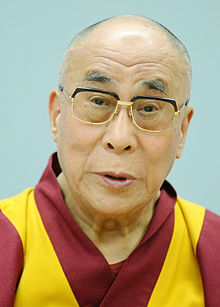
But, as Tenzin Gyatso officially has announced that his successor, the to-be 15th Dalai Lama will come from outside China, let us take note that, even if he's being truthful in denying original knowledge himself, his brothers were major assets in a CIA campaign of skullduggery against Beijing, a campaign that also involved Chiang Kai-shek and his Kuomintang in Taiwan. Wikipedia has a page about it that, while it gets a flag for possible "original research," is still worth a read. Indeed, per the Wiki page, before the 1949 "fall" of China, the older brother of Tenzin Gyato (who was born Lhamo Thondup), Gyalo Thondup, lived in Nanking 1947-49 and boasts about eating dinner at Chiang's table.

The backstory is that, before Beijing invaded in 1950, Tibet was not part of China. And, we'll get to backstory to that in a minute. Essentially, the Dalai Lama and other lamas ruled it as a semi-feudal theocracy. Now, it was not religiously or otherwise coercive in the way the mullahs are in Iran, let alone the Taliban in Afghanistan, or the way some Christian Right folks would like to be in the USofA, but it wasn't exactly enlightened.

Before that, Lhamo Thondup was officially declared to be that 14th Dalai Lama in 1939. His birthplace was in a northeastern borderland which has both Tibetan and non-Tibetan people and was ruled at this time by a warlord whose nominal superior was Chiang.


Even today, per the map at the top of the Wiki page on Tibet, Tibetan exiles claim a vast amount of land beyond what is clearly Tibet. The orange and red areas on the map contain, by ethnicity and/or language, Han Chinese, Mongolic peoples, peoples of Southeast Asia that live in various parts of southern China, Turkic peoples in its northern areas, etc. And, vis-a-vis this piece, ethnic Han have lived in large numbers in much of that area since the Yuan Dynasty if not earlier. (In today's Tibetan Autonomous Area within China, Beijing trod more lightly in Western Tibet in the first decades, not just first years, post-1950.

Looking back in Tibet's history, the Qing Dynasty, at peak, had semi-full control over Tibet. The Ming, before that, claimed they did, but many scholars reject that. The Mongol Yuan Dynasty indeed controlled the area, but Chinese dynasties before that generally did not. At the tail end of the Qing, in response to "Great Game" meddling by both Britain and Russia, the Qing in the early 20th century for the first time staked a formal legal claim to the land, and began a process of "Sinifiction."


As for long ago history, before Genghis Khan and his descendants and the Yuan Dynasty, there was a "Tibetan Empire" about the same time as Tang Dynasty China, pictured above. As you can see, at its maximum, it controlled or had influence over all of today's Tibet, all of today's Xinjiang, and much if not all of today's Gansu, Yunnan and Sechuan areas of China. To the west, it went into Kashmir and Turkic Central Asia.

See Wiki's "History of Tibet" for more on Tibetan history in general.

The point of this part of this piece is that Tibet does not have something unique and special in its cultural DNA, no more than the Hopis of the US Southwest, or other modern Puebloans. With the Hopi, Awatovi should tell you that. (If that doesn't, Ekkehart Malotki has said that, contrary to legend — whether first propagated by Hopi or by Anglos — that the etymology of the word "Hopi" is NOT related to any Hopi word for "peace.")

Now, one could counterclaim that this was pre-Buddhist Tibet. And, I would counterclaim back to that? The murderous Islamophobia of the 969 Movement in today's Burma, as well as past history in Buddism; I've covered this in a bit of depth.

Back to closer to where we are now. Tibetans eventually resisted the 1950 invasion — with help from the US. The Dalai Lama himself first appeared to encourage some degree of passive resistance against China, including limiting how many troops they would send, while signing off on a 17-point agreement that he repudiated after escaping to India in 1959. What led to that was him becoming, by the middle 1950s, a symbol of resistance whether he was personally leading it or not. Per that link, he may well have lied about signing the agreement under duress.

After he fled into exile, China stopped trying to do its version of Sinification through Tibetans and rather through direct Chinese control and action. Meanwhile, Tibetan exiles continued to resist as they could.

The Dalai Lama himself, at best, made a devil's bargain with his brothers. Could he have done better? Maybe. What led to Beijing's invasion was a decision by parts of Tibet's complex leadership — but definitely not all — to boot all Chinese. It appears to be a bid for "neutrality" after Mao and the Communists had chased Chiang and the KMT off the mainland. But, it was too late for that, it would seem. Even if the Dalai Lama himself were not directly involved, as a teen, he might have been asked for thought. Today? Could he be forthcoming about what he knew and when about the CIA a few years later? I don't totally buy his claim that he was originally ignorant of his brothers' activities.

And what brings us to today is the Dalai Lama's announcement above, in a new book, which directly confronts Beijing's claim it will chose the 15th Dalai Lama.

Today, per Wiki's article on the Kashag, a Qing-era body of Chinese governance reconstituted by the Dalai Lama after his 1959 flight, Gyatso has himself repudiated the idea of full independence for Tibet or a political role for either himself or successor Dalai Lamas. On the former, what degree of autonomy does he want, and what degree of confessional vis-a-vis his ties to the CIA, and other things, will he do to get even a mildly lighter hand by Beijing? On the second? I think you are playing a political role as is. And, playing with a self-dealt bad hand by rejecting Tibetan independence.

That all said, since this is the site for non-twosiderism, isn't the regime of "godless Communists" in Beijing hypocritical for saying it will choose the next Dalai Lama rather than declaring the office abolished? (That said, Lenin and Uncle Joe Stalin didn't abolish Russian Orthodoxy, they just made it more servile inside the country.) That said, this secularist awaits the idea of dueling Dalai Lamas and anti-Dalai Lamas, like the papacy of the late 1300s and early 1400s at the end of the Avignon period. That then said, since Qing times, formalized in 1793, the Chinese government has claimed the right to select, or denote, or whatever term we should use, the next Dalai Lama. It may not always have exercised that right, but it has claimed it. And, we already have dueling Panchen Lamas. (Per the matter at hand, that link notes the Panchen Lama has traditionally been involved with selection of the Dalai Lama.)

And, otherwise? Most the Nat-Sec Nutsacks™ world inside the DC Beltway knows at least the basics of the story above. They're the ones being called out for decades of crocodile tears.

THAT then said, the likes of Max Blumenthal are wrong about Xinjiang. And, good leftists like Cory Doctorow have written much more on that, so it's not just Nat-Sec Nutsacks™ talking about the labor camps, etc., there.

March 10, 2009

The Great Wall – of Silence – surrounds Tibet

On the one-year anniversary of Tibetan civil liberties protests, and the 50th anniversary of the current Dalai Lama’s flight from the country, Beijing has put the entire region under a cone of silence. Landline phones are largely down. Inside China, even websites that previously had official imprimatur have been shut down.

Read the full story for details.

February 03, 2009

Ahh, those non-violent Hindus – and Buddhists

When I posted a review of a new Churchill-Gandhi dual biography on Amazon last fall, several Indian nationals made negative review comments, all variants on the “sainted, can do no wrong” claims about Hinduism. Well, as carnage in Sri Lanka shows, the Hindu-religion driven Tamil Tigers, inventors (yes, them, not Muslims) of suicide bombings, are anything but nonviolent.

That’s why Chris Hitchens’ “God is not Great” is the best of the “new atheist” apologetics books.

(Oh, you Buddhists, you shouldn’t be so smug. Although Hitchens points out that Gen. Tojo and other Japanese war criminals worshipped at Shinto shrines, japan has strong Buddhist elements, too.

None of this is to excuse the less-than-savory actions of Sri Lanka’s ethnic Sinhalese majority government over the decades. That said, that government theoretically most represents the Buddhist religious majority of the island, further reason to tell adherents of the other great Eastern religion to not be so smug about themselves.

Nor should the devotees of the Dalai Lama.

Yes, Beijing is trying to wipe out both Tibetian Buddhism and Tibetian ethnicity behind a wave of Han Chinese migration to/resettlement in Tibet.

But, that said …

Before Beijing’s takeover, the Dalai Lama and other Tibetan lamas ruled the country as the equivalent of a Western European feudal religious holding, like the archbishopric of Cologne or something similar.

July 31, 2008

Dalai Lama not ‘all that’ for younger Tibetan Buddhists

Many object to his acceptance of a middle way as an acceptable form for Tibet’s future.

Without forsaking nonviolence, younger Tibetan Buddhist monks want full independence for Tibet, not autonomy. Well, that ain’t gonna happen.

And, given the definition of how one becomes the Dalai Lama, he can’t appoint a successor in advance, either.

June 29, 2008

Robert Thurman spins myths and lies about Tibet and Dalai Lama

People like Robert Thurman (father of actress Uma) are why Christopher Hitchens, in “God is not Great,” was prescient to tackle the foibles and worse of Eastern as well as Western religion.

Thurman, the first American to be ordained as a Tibetan monk, has a few untruths about China vis-à-vis Tibet:
The Chinese have been brainwashing their people into thinking that Tibet is an inalienable part of their territory. No Chinese people lived in Tibet before 1950. Zero. It’s absurd they claim that they were there.

I don’t disagree with the first sentence at all; no country has an “inalienable” right to ANY of its current territory. That’s like believing in the “end of history.”

That said, “zero” Han Chinese in Tibet before 1950 is a flat lie. The implication that pre-1950, Tibet was never part of the land holdings of any Chinese dynasty is also a lie.
The Chinese have been brainwashing their people into thinking that Tibet is an inalienable part of their territory. No Chinese people lived in Tibet before 1950. Zero. It’s absurd they claim that they were there.

I don’t disagree with the first sentence at all; no country has an “inalienable” right to ANY of its current territory. That’s like believing in the “end of history.”
(Question): In a recent article Slavoj Zizek argued that the Tibetans are not necessarily a spiritual people — that we’ve created that myth out of a need to imagine an alternative to our crazy Western consumerism.
Zizek is simply misinformed. It’s leftist propaganda meant to legitimize China’s aggression in Tibet.

No, it’s a very thought-provoking argument. While not justifying Han Chinese aggression, it should be noted that, pre-1950, Tibet was a feudal theocracy that, if not Afghanistan, arguable had as much in common with the 13th-century Brabant as the modern world.

Thurman goes on to talk about being breast-fed by Dick Cheney as his mother in a previous life, and how Freud would regard such a search for enlightenment as “infantile regression.”

Well, Freud could be right at times.

May 28, 2008

Sharon Stone babble the real ‘bad karma’

Actress Sharon Stone wondered aloud whether the recent Chinese earthquake wasn’t bad karma over the country’s treatment of Tibetans.

So, let me see. 80,000 innocent people died over the policy of a government they were in no condition to control? Yep. That would be their bad karma.

On a more serious level, I find karma as intellectually unacceptable as fundamentalist monotheists’ belief in heaven and hell, and I also find it emotionally more repulsive.

How can you be punished for a past life you can’t readily remember (assuming for the argument there are past lives)? Or, even worse, per Buddhism, where many of its branches believe just a life force and no personal soul is reincarnated, how can you be punished for something it’s impossible to remember?

April 13, 2008

News briefs – Pope disses Bush, possible quake for Cali, Tibetan terror monks?

No schedule conflict for Pope
Benedict XVI has no conflict on his schedule with a White House dinner in his honor April 19. He apparently just doesn’t want to show up. The White House continues to insist this is a dinner to honor Benedict, but, when he’s clearly declining the honor, this is a shallow lie even by White House standards.
The next “big one” about to hit West Coast?
A number of offshore earthquakes have recently been felt onshore in central Oregon. From what I’ve read, when the triple fault junction almost due west of this part of the Pacific Coast starts getting antsy, it can mean something hitting the San Andreas Fault in the not-too-distant future. And, throw out the 1989 7.1 earthquake in San Francisco. It’s been a long time since California had a real biggie.
Were Tibetan monks in an Olympic terror plot?
It’s possible, as many younger Tibetan monks, descendants of those who never went to Dharmasala in 1959, have slipped further out of the Dalai Lama’s control, and may indeed have resorted to this level of violence. On the other hand, this could all be a setup by Beijing with trumped-up charges.

April 09, 2008

Can Tibet in exile survive the current Dalai Lama?

I say the current Dalai Lama, of course, because it’s a title not a name, and I don’t say “current reincarnation of,” of course, because no such metaphysical event happens. But, the more serious question of what Tibet’s future will be is related in part to how today’s Tibetans in exile relate to the Dalai Lama’s reforms As the story notes:
In the past 20 years, the Dalai Lama has transformed the Tibetan government in exile from the semitheocracy he brought from Tibet to a relatively independent democracy. In doing so, he has invested it with more responsibility.

But, not all Tibetans in exile are comfortable with that. Some can’t comprehend the idea of questioning the Dalai Lama. (Think of traditional Catholics suddenly being encouraged to question the pope.)

Also, it’s not just Tibetans in exile. Many Tibetans, not just commoners but lamas, remained inside the country/region after 1959. As the years go on, even insiders who are anti-Beijing may drift apart more and more from the exiles. It’s been almost 50 years since the revolt and exile.

And, it’s not a moot question, as far as time frames, either. Tenzin Gyatso, the current Dalai Lama, is 72 years old. He won’t be around that much longer.

And, being in power since 1950, he’s the only Dalai Lama, as far as temporal powers, Tibetans under 65 know. Having been recognized as the “reincarmation” a decade before that, as far as spiritual counsel, he’s the only Dalai Lama just about any Tibetan knows.

So, you have the table set for massive psychic shock when Gyatso dies.

And, as far as the Tibet-China history, it’s not so one-sided as one might think. Yes, the Dalai Lama has promoted reforms today, but it required the original 1950 Chinese invasion to get him to basically move Tibet beyond being a feudal theocracy.
The initial People's Republic of China's military invasion of Tibet in 1950 met with high resistance in the heart of the country. The 14th Dalai Lama, on the urging of his elder brother, Gyalo Thondup, proposed reforms, including limitations on the land holdings of the monasteries, abolishing of debt bondage, and other government and tax reforms as a response to the invasion. These were designed to forestall expected revolutionary initiatives of the Communists. However these ideas found little support among the entrenched Tibetan power structure.

So, while the Richard Geres of the world may want to romanticize Tibet, let’s take that with a grain of salt.

As for the U.S., we aided the original Tibetan independence movement from 1950 on. Beyond that, the CIA gave arms and training to the Tibetan resistance in 1956 and until 1964. In usual CIA fashion, it wasn’t enough, other than to give Mao Zedong, like Fidel Castro, invaluable PR talking points.

As for cultural genocide, well, to the degree Communism in China is hostile to religion that may be true. But, if intermarriage is “genocide” or similar, well, I don’t think Han Chinese in Tibet are putting guns to the heads of ethnic Tibetans.

March 25, 2008

Quo vadis Dalai Lama and today’s young Tibetans?

Who, really, is the Dalai Lama? Will young Tibetans reject him as a political leader? Is he OK with that? Just what is the Tibetan exile community today like? Pico Ayer tackles all this and more, but in the end, may sink too much into Richard Gere-level hagiography.

And, Iyer doesn’t seem to fully grasp the question of his relevance, or not, to young Tibetans. Book review Louis Bayard notes that his “middle way” is considered appeasement by some:
If what the Dalai Lama professes is truly Buddhism, then it raises the question, finally, of whether a monk can be an agent for political change in such a complex and dangerous world. Certainly, many of his own followers have begun to doubt it.

To talk about peace while Tibetans are being killed, suggests one dissident interviewed by Iyer, is “tantamount to manslaughter.” A 28-year-old protester in Kathmandu, Nepal, recently told a reporter, “I’m Tibetan, but I’ve never seen Tibet. All my life, we’ve been campaigning peacefully — and what have we achieved?”

“Nobody takes the middle way seriously anymore,” declares writer Jamyang Norbu. “This is not non-violence. It is appeasement.”

And, Iyer seems to give a free past to Tibet’s history under the lamas.

Too many people rightly condemn China’s crackdown on Tibetan spirituality and religion without acknowledging that the previous “reincarnations” of the Dalai Lama, and other senior lamas, ran Tibet like a feudal state of 13th-century Europe. Beijing did bring, over time, modern amenities, healthcare, and more, to the Tibetan plateau.

Bayard notes this, also:
Something quite disarming, I would counter. In the warmth of the Dalai Lama's bespectacled gaze, we can more easily forget the less attractive aspects of his thinking — his endorsement of nuclear weapons in India, his acceptance of contributions from Japanese terrorists.

Church and state can be a bad mix everywhere, not just here.

March 16, 2008

Tibet protests expand in China as does censorship

Tibetan protests against China have moved outside Tibet to other parts of China such as Sichuan, parts of which were once parts of Tibet. At the same time, Beijing is increasing censorship of coverage of the protests, now blocking YouTube inside the country.

March 15, 2008

China leadership unanimously votes Dalai Lama to blame for Tibet deaths

Well, not quite. Actually, I’m mashing two stories and heads together.

First, China does blame the Dalai Lama for stirring up rioting in Lhasa, the capital of Tibet. Second, Hu Jintao was re-elected as China’s president, presumably unanimously. That said, Xi Jinping, a rapid climber in the Chinese Communist hierarchy with no real connection to Hu, was elected vice president, perhaps putting Hu on some sort of notice that pollution, corruption and inflation all need more fighting from him.