SocraticGadfly: U.S Fish and Wildlife Service
Showing posts with label U.S Fish and Wildlife Service. Show all posts

June 09, 2026

US Fish and Wildlife — even if on higher order — stabs dunes sagebrush lizard in the back

Anymore, NOTHING in the way of actions by the US Fish and Wildlife Service, especially Endangered Species Act listings, surprises me. 

In fact, over the lesser prairie chicken last year, I accused the agency of deliberately tanking ESA listings.

And now, meet the dunes sagebrush lizard. It's how I met online Fish and Wildlife "dissidents" Chris Nagano and Lyle Lewis, who gave me the backstory of how shamefully FWS was acting decades ago.
 
I have blogged more than once about former Texas Comptroller Susan Combs' voluntary, landowner-based plan for habitat conservation, or rather, "conservation," for the dunes sagebrush lizard, most of whose habitat happens to be in the oil-rich Permian Basin of West Texas and southeastern New Mexico, and whose voluntary habitat conservators, or "conservators," happen to be oilmen.

I first noted that is was the conservative half of a neoliberal idea that rancher/oil lover/Interior Secretary Kenny Boy Salazar loved, and agreed that the U.S. Fish and Wildlife Service, in charge of Endangered Species Act issues, should accept. Shock me.

As part of that, I noted that Combs was being sued by two of the more activist, non-Gang Green environmental agencies, with Center for Biological Diversity in the lead, because the people and groups overseeing her voluntary "conservation" were about as transparent as most things involving Texas government.

Unfortunately, as I noted next, Combs got a federal judge to agree with her that the oversight agency, officially a private entity and therefore exempt from the state's Public Information Act, should stay that way and remain non-transparent.

And then, CBD and Defenders of Wildlife, a few months ago, lost in federal district court their attempt to reverse the Fish and Wildlife + Combs + oilmen agreement, discussed here with links.

Well, there's a backstory to this.

At about the time CBD and Defenders were losing their case in district court, Fish and Wildlife, documented here, was entering into a legal settlement with the former top official in Texas, who sued after being pushed out of his job.

And, why was he pushed out of his job?

Because he was fighting Kenny Boy Salazar and Susan Combs on the dunes sagebrush lizard, and saying everything about lack of enforcement and lack of transparency that I and the environmental groups were saying.
One person, however, did lose his job: Fish and Wildlife's top official in Texas, Gary Mowad, who ran afoul of his bosses after raising concerns about the decision to place the long-term survival of the lizard in the hands of those who opposed the listing. 
Mowad had told internal investigators that the federally approved plan to conserve habitat for the reptile through voluntary pacts between the state and landowners was not legal, verifiable or enforceable under the Endangered Species Act.

Oh, but wait, it gets better. 

He has civil service protection, so he couldn't be fired. Instead, like a surplus Japanese salaryman, he got the risutora treatment:
Within three months, Mowad was removed from his job in Austin and transferred to regional offices in New Mexico, where he had no significant work to do, according to testimony by him and colleagues before a judge in a whistleblower case. The power play, he said, forced him to retire prematurely. 
Fish and Wildlife has denied the allegations, but the agency decided to settle with Mowad last October for an undisclosed amount in spite of historically long odds against federal employees winning such cases. ... 
(N)o phone, no computer and no housing awaited Mowad when he arrived in Albuquerque in October 2012. And there was no significant work. He helped put out cookies and drinks for a meeting and afterward collected comment cards from the attendees. 
With no end date for the assignment, Mowad filed a 19-page request for a federal investigation, alleging reprisal for his claims of scientific misconduct within the service.
Those claims of scientific misconduct? Mowad had gone to FWS' Inspector General after it signed off on the Combs plan. And, why did it do that, only a couple of years after Mowad had been named top biologist in Texas for the agency and hired for his specific skills?

Bigger backstory, involving financial/service favors ... and who knows what else.

First, the backstory to the lizard's needs.

It was first identified for ESA listing in 1982. But, as with many other species, through a mix of understaffing and underfunding on one hand, and FWS foot-dragging on the other, it wasn't actually brought up for consideration until 2010. However, with the Permian Basin started to rebound from its latest, Great Recession-caused bust, that looked problematic.

Our story picks up again:
The Fish and Wildlife Service needed to sign off on the Texas plan, and Mowad was asked to assign someone to review it. But Mowad's first two choices — two of his most experienced biologists — were rejected by the agency's deputy regional director, Joy Nicholopoulos, a scientist who led the Texas office before him. 
The third choice? 
(Mowad) asked if Nicholopoulos wanted a biologist named Allison Arnold to lead the review and was told that she did. 
Here’s the real backstory. 
Mowad said he would not assign her without being ordered. The biologists he offered "would just do the science, let the science take 'em where it takes 'em," he testified. But in addition to having less experience, Arnold was living rent-free in a Driftwood house owned by Nicholopoulos, leading him to question whether she had undue influence over the staffer.
Then, Nicholopoulos’ boss, Bemjamin Tuggle, who had touted Mowad’s hiring for the Texas spot, upped the political ante.
"There was no way we were going to list a lizard in the middle of oil country during an election year," Tuggle said.
That comment, although Tuggle (a Shrub Bush appointee to his position) later claimed he was joking, is what led Mowad to talk to Fish and Wildlife’s inspector general.

So, it's clear that FWS higher-ups, however high the chain of higher-ups goes past Tuggle, had the fix in. And, because of this financial/rental arrangement, they knew who to pick to sign off on Combs' plan.

The rest of the story is worth a read in itself. It discusses Mowad’s whistleblower hearing, including noting that federal employees rarely win them, but that FWS had a documented history of retaliation against employees like this.

It's also an illustration of the bad ethics there, vis-a-vis the rental situation. If anybody should have been disciplined by FWS, both Nicholopoulos and Arnold should have been suspended without pay.
 
OK, that's largely from back in 2015, but you need to know just how oily FWS is. 
 
Oily? Yes, literally, as in placed like Hagerman National Wildlife Refuge, whoring themselves out to the oil business. That's part of why I said Fuck the USFWS a year ago.
 
Oily on the management side? Mowad is not the only person to face retaliation from USFWS management. More on that in this piece
 
FWS finally gave an Endangered Species Act listing to the lizard in 2024, relatively late in the Biden Administration, and possibly because they knew Trump 2.0 would kill it. 
 
It was a punch-pulling listing, anyway, as I noted at the time. Why? It did not list a critical habitat for the lizard. It's pretty basic that you need to say what habitat of an endangered species is most important to it, right?
 
Well, that's all academic now. Last week, which I didn't notice until this week, Fish and Wildlife officially did another political cave-in, in response to a suit by the oily Ken Paxton, and agreed to delist it again as part of settling the suit. 
 
Here's the official tanking language:
But the service now believes it made a "serious and fundamental" error by improperly assuming that habitat restoration could not occur, and by discounting experimental efforts that "showed promise," the U.S. Department of Justice said in a Wednesday court filing accompanying the settlement. 
That error "led to an incomplete and potentially inaccurate assessment of the potential and ongoing conservation efforts in New Mexico and Texas," the Justice Department said.
What lies. 
 
Above all, how can you assume that habitat restoration could not occur when per your 2024 press release:
The designation of critical habitat was found to be prudent but not determinable at this time. The Service has up to one year from the time of listing to propose critical habitat.
You never determined critical habitat! And, per Center for Biological Diversity and others, you were likely playing a stall game there, too.
 
What liars. 
 
Lewis notes the push from this surely comes from above USFWS' head, as in somewhere inside, near the top, of the Department of the Interior. (Doug Burgum's been as bad a Trump-tard as any other Cabinet member.)
 
That said, somebody at USFWS, even if an Anon Y Mous, holds for public consumption that it made a "serious and fundamental" error. In other words, Interior may be leading the push, but it has flunkies at Fish and Wildlife. It did 15 years ago, when Mowad called bullshit on management. Even if the push for his risotura came from higher up in Interior, somebody still wanted to do that. Look at other FWS people who have faced revenge.
 
Lewis notes that an Undersecretary at Interior reviews critical habitat designations. Here's DOI on that, not on the big picture, but some specific issues. From the Dear Leader era, too, take note. Tis also true, but? In 2024, again, FWS never proposed anything. I presume then Interior Secretary Deb Haaland, from New Mexico, might know what the dunes sagebrush lizard is, even if 350 miles away from Laguna Pueblo.
 
That said, that top management at FWS proposed changes to the ESA cuz oil drilling late last year
 
And, not directed at Lyle, but at the general oversight. First, where's the Forest Service fit? Last I checked, it's not part of Interior.
 
A president with cojones would either make all of USFWS an individual stand-alone agency like EPA, or at least its core protective services, or else carve them out of FWS and add them to EPA.
 
Remember the timeline goes back to the 1980s. Democratic presidents since then include Clinton and Obama as well as Biden. It's amazing that Democratic presidents, or agencies under their control, can often wait until the last year of a presidential term to take action. Obama did this on increasing the pay cutoff for wage vs salary, and with an immediate near-doubling without phase-in, in 2016. It's like he figured it would be overturned anyway and he was being a pretendian. 
 
==
 
And, per the various rulemaking changes to the ESA, how semi-toothless is it anyway? I may have to write something just on that.

February 07, 2026

Hagerman NWR is turning 80 in a week, and I'm not going to the celebration

Why not?

Because, as with a year ago with a special presentation by the Friends of Hagerman support group, the national wildlife refuge is whoring itself out to the world of oil and gas. 

Indeed, the Feb. 14 presentation of Hagerman's history sounds very much like what the Friends group did last year, per its monthly e-newsletter from a year ago. (Scroll not quite halfway down.) Then, it was Mary Maddux, then a regional oil and gas specialist with US Fish and Wildlife. I can't find her listed as that in the past year with teh Google. Maybe she retired or got pushed out with Trump's cuts across Department of Interior in general and USFWS in general.

That said, next week is providing essentially the same person:

Step back in time with Mary Istre, Acting Deputy Refuge Manager, as she explores 80 years of conservation at Hagerman National Wildlife Refuge. Using historic photographs and engaging stories, Mary will bring to life the people, decisions, and defining moments that shaped the refuge’s landscapes and wildlife. You’ll also discover how lessons from the past continue to guide conservation efforts today—and why this history matters more than ever. 
Mary Istre has spent 15 years with the U.S. Fish and Wildlife Service, serving as the Southwest Region’s regional oil and gas specialist. She is currently the Acting Deputy Refuge Manager at Hagerman National Wildlife Refuge, bringing extensive experience in energy, conservation, and collaborative resource management.

Hard pass. 

Her predecessor lied about how little or how much oil pumpjacks might have damaged Lake Texoma and the refuge in 2015 flooding, and Istre will probably tell the same lies if asked about last year's flooding.

(Not that I suspect anybody in attendance will.) 

August 29, 2025

Fuck the US Fish and Wildlife Service

I've long grown to have more and more animus against USFWS, both on the details of how what is supposed to be the lead agency on Endangered Species Act designation and enforcement is not that leader at all, but also, the artificial nature of many national wildlife refuges.

(I gave a lead-in to this piece last week; here it is.) 

And, an issue on summer vacation has been new fuel to the fire, leading to the desire to give Fish and Wildlife a big new ass-kicking wherever and however I can. 

Already 20 years ago, I learned not only the basic truths about FWS' deliberate refusal to grant the dunes sagebrush lizard an Endangered Species Act listing, but how one "resister" in its regional office covering New Mexico and Texas got the Japanese broom closet treatment for his resistance.

Finally, after it got sued enough, FWS gave the lizard an ESA listing. But, it refused (that's the only word, refused) to designate specific sites of critical habitat for protection. You know, if a species is endangered, and it's based on certain habitat, you know, like "dunes" where "sagebrush" grows, which is the normal habitat for an animal called the "dunes sagebrush lizard," if you really cared, you'd designate such habitat as being off-limits.

But, FWS refused to do this. Period. Even though it's known the lizard has been in trouble for more than 40 years.

A couple of years ago, I met online Chris Nagano, one of FWS' "dissidents," who though not directly involved with the dunes sagebrush lizard, knew the score. (He's first mentioned in the link above.) Via him, I met "Race to Extinction" author Lyle Lewis, another "dissident."

Lewis didn't realize everything about FWS in my part of the world, namely, the oiliness at Hagerman NWR

Hagerman is on the Texas side of Lake Texoma. The feds, when building Denison Dam, bought up surrounding land that might flood out. They were too cheap to buy the mineral rights, though; only the surface estate. Result? A few dozen pumpjacks — active ones — inside the refuge.

And so, that oiliness goes beyond the Permian Basin.

Sadly, or more disgustingly, that oilness includes the volunteer "Friends of Hagerman" support group. (Many larger NWRs have such support groups, similar to national monuments and parks.) I am not sure how much of Friends of Hagerman's suck-up to oil companies is ignorance, and how much is willful blindness. I suspect it's more the latter, and I am more and more in a mood not to be charitable to such local support groups as well as the agency in general.

As for FWS and endangered species? Finally, late last year, it proposed giving the monarch butterfly a listing, but, once again, that listing had no critical habitat protection, except for a West Coast subpopulation. "Conveniently," that subpopulation is found mainly on lands owned by private conservation organizations and therefore already protected.  And, per the italics, it wasn't an actual listing, just proposed, and probably designed to stall out the clock until after Jan. 20 of this year.

Or let's talk about the Gunnison's sage grouse. After lawsuit threats, FWS agreed to list it as threatened, but not endangered, and work on a habitat recovery plan. However, for its failure to follow through on this, it got sued again two years later. Its cousin, the lesser prairie chicken, has also been ill-treated by FWS. (It got two years of "threatened" listing, then that was removed due to court ruling of being improperly instituted. It's been talked about for an "endangered" listing for 25 years; the oil people hate it like they hate the dunes sagebrush lizard.)

Worse? The Texas Monthly provides more information about how US Fish and Wildlife Service is a quisling pseudoenvironmental organization, with a detailed blow-by-blow of its total cave-in on what had been a planned massive expansion of Muleshoe NWR out in the Panhandle. And part of that is about the lesser prairie chicken:

Outdoor enthusiasts are drawn to its remote beauty, where rugged swaths of wildflowers and mesquite trees shelter the elusive pronghorn antelope and the lesser prairie chicken.

Oy. (There's more from this article added to that piece.)

And, per Center for Biological Diversity, that's just another of many species where FWS has used a "threatened" status to try to head off an "endangered" listing.  Other animals include the well-known Florida manatee and the northern long-eared bat.

Also, per the manatee information, FWS gets itself more politicized (as the dunes sagebrush lizard saga shows) than any other agency in the Department of the Interior.

And, a bird like the LeConte thrasher shows that the dunes sagebrush lizard isn't the only animal over which FWS will drag its feet for a decade or more. The Rio Grande shiner, a fish, was "tagged" for an ESA listing by actually caring FWS staff at the same time as the lizard, 40-plus years ago, but as of recently, still hadn't gotten it as of earlier this decade. (Per that link, the FWS also has an ESA responsibility for plants as well as animals, and often fails it, too.)

Most recently? Last week, the lesser prairie chicken's endangered listing got nixed by a judge. More here.

Fast forward to my vacation.

The Klamath Basin Visitor Center serves both Tule Lake NWR and Lower Klamath NWR. (Wikipedia links; even with a "do not follow," I'm not linking directly to an NWR.)

At the back of the visitor center is a half-mile long or so set of three channels. They're touted (yes) as a way to explore a small part of the refuge by canoe or kayak for free.

Well, if you've been to Aridzona or California, you'll understand what I'm getting at when I say they're basically just like irrigation ditches off the Central Water Project, Imperial Irrigation District or Salt River Project. No wider than one of those ditches — or one of the ditches in the two refuges, since they have a "partnership" with private farmers. 

I'm going to jog sideways for a minute here.

This is another dirty secret of the FWS, in two parts.

First, many refuges are near damned lakes created by damned dams for agriculture and/or flood control. That's the case here. It's diverted irrigation water, just as at Sonny Bono/Salton Sea, Bosque del Apache and other sites.

Second, either the farmers' grain, or at southern refuges like my Hagerman (damned lake, but not irrigation water), overseeding of winter rye or wheat, is a magnet to attract ducks and geese. All the other migratory birds touted by FWS are along for the ride, as it still views the "hook and bullet crowd" as its primary customer.

Yes, all federal land management agencies that have official wilderness areas "manage" those wildernesses as though Rousellian noble savages were real and just around the corner. That said, the angle, at least, is wilderness. In NWRs that do like the above, the "angle" is kettling wildlife into a compound. USFWS says it has "more than 570" units, overall. It allows hunting at 436, plus 20 fish hatcheries. (Really? Hunting at a fish hatchery?) That's a full three-quarters.

And, per what I said in my previous, introductory piece, in states like mine where public lands outside of city parks are at a premium, wildlife refuges may seem to many to be like state or national parks. So, hunting, even when announced well in advance, and for necessary control in the case of wild hogs, can still seem inclusive. (Hagerman also allows bow-hunting deer, and one weekend of bows or shotguns for turkey.) 

In the case of Lower Klamath and Tule Lake, I'm also wondering how the just-completed removal of four Klamath River dams in its vicinity, along with the likelihood we're going to have long-term drought in the Southwest, broadly speaking, for the rest of this century, will affect their future.

Lyle Lewis has said that he expects the Klamath dam removal will have a fair amount of effect. He expects that, combined with another 75 years of likely drought, that those two NWRs, are semi-toast. Others in the region, that are on actual lakes of Klamath tributaries, not former lakes backfilled with irrigation water, may not be so bad off, but probably won't be in peachy shape.

OK, that's the digression.

So, this visitor center pushes canoeing or kayaking with its free boats on a glorified irrigation ditch overgrown with reeds, algae, etc. (I've been in the Imperial Valley many times, as well as around acequias in northern New Mexico; these are somewhat bigger than individual field irrigation ditches, but they're not huge.)

And now, we're getting to the pissed-off moment.

I thought, "OK." Maybe I even thought "cool."

I didn't think to take my cellphone out of my pocket. I deliberately did think to take along my non-waterproof, new, basic-level mirrorless camera.

Someone just coming out talked about how "overgrown" the central channel was.

So, I took the left-hand channel. And, no more than 30 feet or so in (it was my first time in a kayak, and I chose it instead of a canoe) I had drifted to the right-hand bank, and gotten entangled in the reeds on the bank, and the algae and whatever else was growing on the channel floor.

So, I pushed myself out.

I'm 6-5, or 1.95 meters, tall. Tall upper body. High center of gravity for a kayak.

Did you know you can tip a kayak in totally slack water no more than 4 feet or so deep and no more than 14 feet or so wide? You do now.

Camera and cellphone got toasted. Camera memory card did, too, which means I lost EVERY PHOTO from my first six days of vacation. I lost pelicans and osprey catching fish on the redwoods coast. Harbor seals at Shelter Cove on the lost coast. Lots and lots of butterflies. Songbirds. Waterfalls on the west side of the Sisters in Oregon.

I had posted originally to the refuge's Facebook page after I got home but before I realized the memory card was toast. I got nominal condolences — along with the admission other people have tipped, and along with no pledge to dredge the channels and no pledge to shut them down until they do that. I posted a follow-up comment after realizing the card was toast and didn't hear back.

And, I am not even going to post there about later learning that the repair bill estimate for my camera was 90 percent or more of its original cost, which is stupid to pay on an already refurbished camera. 

My most charitable take is that they think there's people too poor to own their own kayaks and might want a way to do starter kayaking for free. Those people generally are also too poor to travel to national wildlife refuges in the boonies and that still doesn't excuse the lack of dredging if you are going to do this.

So, this is my takedown.

Folks, stop going to national wildlife refuges. They're artificial. If you can't break yourself of that, do NOT NOT NOT buy one single damned thing at a visitor center. Even if every penny goes to a "friends" group, since they're complicit in this bullshit. 

For me personally?

When it's late October, Hagerman will have a siren song to come watch the Ross and snow geese, or catch long-billed dowitchers in migration, it may require mental exertion to resist. I'll do my best. I'll try to remember Lucy, the long-term resident bald eagle, electrocuted because she let a fish she had caught, that was still in her claws, contact a non-insulated portion of an power line — a power line that services a pumpjack.

Yep, FWS won't even require these people to install solar panels for any electricity needs. 

Meanwhile? 

This has ripple effects. Even if it's nothing other than a drink and a few bucks of gas, that's that much less I'm contributing to the economy, especially at an out-of-the-way NWR. Or, locally, it means I don't shop in Sherman or Denison, Texas, going on there after a visit to Hagerman.

The next closest free federal public land? Either some semi-degraded U.S. Forest Service national grassland checkerboard, or a National Park Service National Recreation Area behind a damned dam, which violates the Park Service's Organic Act. 

Beyond that, I was already reaching a point of "Overfamiliarity breeds frustration" in re Hagerman, which I was already hitting, off and on, a year ago, well before the spring oiliness there. Friends of Hagerman's Photo Group on Hucksterman was feeling competitive plus me having camera envy. It was also, when Hagerman was flooded out this spring for six weeks due to climate change (see "oiliness") seeing so many people from the Metromess being like 6-year-olds and asking "are we unflooded yet"? Neither the Friends on their photo group page, or the main page, or the refuge itself, for that matter, on its Facebook page, were proactive enough on dealing with these laments, either, as in "pinning" a post at top and updating it as needed.

August 26, 2025

Muleshoe NWR expansion: Murdered by Arrington and USFWS

Shock me on the latter.

The Texas Monthly provides more information about how US Fish and Wildlife Service is a quisling pseudoenvironmental organization, with a detailed blow-by-blow of its total cave-in on what had been a planned massive expansion of Muleshoe NWR out in the Panhandle:

Outdoor enthusiasts are drawn to its remote beauty, where rugged swaths of wildflowers and mesquite trees shelter the elusive pronghorn antelope and the lesser prairie chicken.

Oy.

And part of this ties to the lesser prairie chicken, discussed here last week:

[Recently a] federal judge in Texas ruled there had been “serious error” in the agency’s classification of the lesser prairie chicken’s endangered status, temporarily removing Endangered Species Act protections for the bird in the state—a culmination of a Republican-backed effort that began in 2023 when Attorney General Ken Paxton filed a suit to overturn the listing.

Shock me that Kenny Boy was involved.

The key pusher on the ground was Lubbock Congresscritter Jodey Arrington. He had gotten a bill to shut down the expansion out of expansion just before USFWS caved.

As for this?

“Rep. Arrington’s opposition to Muleshoe was mostly, if not entirely, based in misinformation. The issue about the idea that landowners are somehow going to be forced or pressured to sell their land is simply not true,” says Nathan Marcy, a senior policy analyst at the conservation nonprofit Defenders of Wildlife.

It misreads Arrington. Information and misinformation isn't his concern. Nor is apparent hypocrisy of supporting state parks expansion. Instead, GOP wingnuts fellate the oil and gas industry, and will never, at the state level, allow a state park to even think about infringing on it. Beyond that, they hate the feds in general, until they start sucking off the federal teat.

It misreads USFWS as well.

That said, California Congresscritter Jared Huffman, known on these pages before, is a rank hypocrite for calling out Arrington on that bill as long as he continues to fight to keep cows INSIDE Point Reyes.

August 22, 2025

An introduction to saying Fuck the USFWS

This is a shortened form of a piece at Substack, to which I gave an introduction four weeks ago

First, the USFWS? For those unknowing of federal acronyms and shorthands, especially in land management and related agencies, that’s the U.S. Fish and Wildlife Service.

They’re the folks who run the system of national wildlife refuges. Especially in states with little public land, like here in Tex-ass and especially with little free public land in nature outside of cities, national wildlife refuges are a magnet for nature lovers. Unfortunately, these places aren’t so pristine.

Often, they’re heavily managed for the “hook and bullet” crowd — hunters (especially duck hunters) and fishermen. This may include use of irrigated water from non-environmental damned dams. It may include “overseeding” winter rye or wheat to keep geese, also part of the “bullet” crowd to some degree, from going even further south for winter. Ponds and berms for these birds, and for migratory shorebirds like sandpipers, plovers and such, can and will be manipulated.

That’s one of the two key facets of this piece.

Second? They’re the federal agency that handles Endangered Species Act listings. That is, should the grizzly bear, in the Lower 48, be listed as “endangered.” As part of this, at times, they will recommend a “delisting,” or at least a downgraded listing, like moving the grizzly from “endangered” to “threatened.” Often, this is under outside political pressure. However, sometimes, USFWS does this on its own.

Related to that is USFWS often using a “threatened” listing in the face of lawsuits by more active environmental organizations like the Center for Biological Diversity, to try to hold off a listing as fully endangered. And, yes, USFWS does this a LOT, for garden-variety environmentalists who don’t know. This is often, especially with the USFWS Southwest Region, done in the service of the oil and gas industry. That’s just the start.

They also have, more than once, at regional or national headquarters, improperly filed an ESA listing — often enough to make one wonder if it’s deliberate.

In addition, with animals like the Gunnison’s sage grouse, USFWS has often been slow to accept the biological science that what has been considered a subspecies is actually a separate species, and ergo, one thin enough on the ground that it may need ESA listing.

Finally, with both animals and plants, an ESA listing — IF it’s to be of any value — required designating critical habitat for the protection of the species. FWS is especially a foot-dragger on this.

And with that, stay tuned for the follow-up in a week.

August 19, 2025

Lesser prairie chicken gets screwed again — does US Fish and Wildlife tank ESA listings?

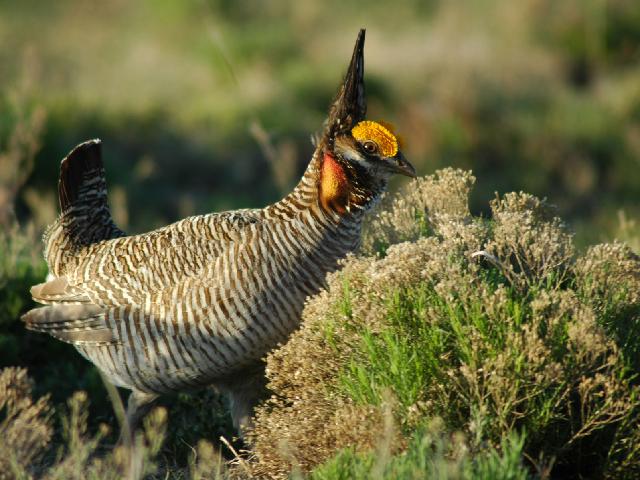
An indicator species of the high plains, the lesser prairie chicken, a type of grouse, can't get any environmental protection love and has been ill-treated by the U.S. Fish and Wildlife Service. (It got two years of "threatened" listing, then that was removed due to court ruling of being improperly instituted. It's been talked about for an "endangered" listing for 25 years; the oil people hate it like they hate the dunes sagebrush lizard.) 

Fast forward six years, to a re-listing. And, another loss.

Last week, the lesser prairie chicken's endangered listing got nixed by a judge. (When I saw the judge was from the Western District of Texas, before I saw the actual name, I thought it was Matthew Kacsmaryk, but I guess ESA attacks aren't high-enough profile for him.)   

Contra the dunes sagebrush lizard, going beyond the "in the field" level, this time, FWS had stood up to the oil and gas industry, which is why they brought the lawsuit.

But, it's another loss, and a loss that does, per the header, make things look that way, like FWS tanks.

Details from the ruling:

"Fish and wildlife's concession points to serious error at the very foundation of its rule," the court said in its Aug. 12, 2025, ruling. 
"Mere remand would not cure this error. Fish and wildlife therefore commits no handwaving when it also concedes that this failure causes the final listing rule to be 'unlawful' and therefore 'not in accordance to law.'" 
USFWS told the court that the agency's failure to "support the identification of the lesser prairie chicken as distinct population segments taints the findings" by the Biden administration that those populations were listable as endangered. 
USFWS said it plans to complete a new finding on the lesser prairie chicken by Nov. 30, 2026, in response to a 2016 listing petition by environmental groups that gave rise to the Biden administration rule.

So, per the "in the field"? I asked online friend and Race to Extinction author Lyle Lewis if USFWS ever "tanks" these filings.

His response?

Well, there you go. 

The Texas Monthly provides more information about how US Fish and Wildlife Service is a quisling pseudoenvironmental organization, with a detailed blow-by-blow of its total cave-in on what had been a planned massive expansion of Muleshoe NWR out in the Panhandle. And part of that is about the lesser prairie chicken.


July 25, 2025

Familiarity breeds semi-discontent in re Friends of Hagerman NWR's Photo Club

NWR, for the non-environmental types, is a national wildlife refuge. All national wildlife refuges in the U.S., including Hagerman in north Texas, are parts of, and run by, the U.S. Fish and Wildlife Service.

Hagerman, like some other larger, and generally more popular and visited, NWRs, has a "friends of" support group. It has a Facebook page, restricted to members.

The friends group, in turn, has a nature photography group Facebook page, NOT limited to official friends supporters, of which I am a member.

And, that brings us to the header.

For nearly a month straight in early summer (starts in May here in my climatological definitions) and into early June in full summer, most of Hagerman was underwater due to heavy rains.

To explain, Hagerman was created after the feds bought land on both sides of the Red River in the 1930s while Denison Dam, built to impound today's Lake Texoma, was being built, in anticipation of floods at times putting most this land underwater. This year, my area near and upstream of the dam got about 11-12 inches of rain, on average, in April, hugely above normal, and about 7-8 in May, a fair amount above normal. It's very flat land, largely surrounding Big Mineral Arm of the lake.

There's an additional twist, which ties indirectly with the header.

The feds bought ONLY the surface estate of all this land in the 1930s, primarily out of cheapness. Well, soon, the first exploratory drilling happened, and yes, found oil. There are still-active muleheads / nodding donkeys on pads within Big Mineral Arm, as well as in higher areas, in the latter case, having oil tank storage batteries with them.

Well, greenhouse gases and climate change, right?

A few of the members have talked at times about climate change, though none has talked about the climate crisis. And none of them batted an eye when a regional FWS admin this spring gave a presentation about how good the awl bidness was to FWS, as I wrote here, when I accused the friends group, since this was a regular event sponsored by IT, not Hagerman FWS, of whoring themselves out.

This:

Learn all about the oil rigs on the refuge, and the ways in which they benefit Hagerman NWR.

Along the lines of eXXXon saying "Carbon brings things to life," is whoring yourself out.

Few of the people there seem to have any idea how anti-environmental FWS is in general, specifically on things right here in Tex-ass like the dunes sagebrush lizard (with original help there from then-Texass Comptroller Susan Combs, then from O'bummer's Interior Secretary Kenny Boy Salazar), so bad it led to a new lawsuit, and the monarch butterfly, where even the Center for Biological Diversity fell for kind of a head fake — since Kenny Boy Salazar was involved. They just want to see purty birdz, probably mainly while driving in their cars.

Or now, FWS being a sellout again, this time on the lesser prairie chicken. (And, yes, that's in part Trump-related, but I'm sure not entirely) 

That's part 1 of the discontent.

==

Part 2? Non-locals, like people from the Dallas-Fort Worth Metromess, asking all during this time "Is it above water yet," and some even driving up here.

Admins have written occasional posts about how long it would still be before it aired out. But, they never "pinned" a post to the top of the Facebook page to cut off such dumb questions.

They never went beyond that and suggested to Metromessers alternatives to Hagerman, like I did in comments to two of the posts.

And there are!

From where I live, within 40 miles, there's national grasslands near Alvord, Texas, a city lake with 3-4 miles of trails at Muenster, Texas, and a city nature preserve at the northeast corner of Denton. In Fort Worth, Samson Park gives you up-and-down hiking and as for birds, I've seen a black-crowned night heron there. You can see all sorts of birds in the Trinity parks complex there, or White Rock Lake in Dallas, or one of the undeveloped Dallas County parks, all of which I've been to. 

During the "wet" time, I saw dickcissels, painted buntings and yellow kingbirds at Muenster, and further away, black-capped and white-eyed vireos at Wichita Mountains NWR.

Of course, at all these places, you have to actually get out of your vehicle and hike, per Cactus Ed Abbey.

==

Part 3?

Some of the newer members of the photo club.

There's one whose Hucksterman profile calls herself "digital creator," and whose home page says "Owner/Manager/CEO at Backroad Photography," with no website, in other words: 

"I'm a person who has a camera and shoots photos in the country."

To make it worse, her first profile photo looked like someone playing with Photoshop while indulging substances and who should have their Photoshop privileges revoked.

As it turns out, her "organization" actually a Hucksterman group created by said person. She's about the only person who posts there herself, and a bunch of it is cheesy 3-D Hucksterman photo effects that confirm what I just said above. Fortunately, she doesn't try this on the Hagerman site, or else they don't let her. 

That said, to sidebar? Hagerman photo group admins DID let one person, a very occasional poster, post a picture of a Brahminy kite from India claiming they'd seen one in or near Hagerman. Worse? It was the actual illustration photo on Wikipedia's article. He either hauled it down himself, or  admins did. I don't know if he got booted; he should have.

Back to the person at hand. I suppose I should salute their love of nature, but I don't, because of how it's expressed.

==

Part 4?

I've often suspected the photo group of playing favorites. And, the most recent Facebook "header" photo? The shooter said it was in a small pond "near Hagerman." As in, not inside refuge boundaries.

Add that to "overposters," who have to dump photos from a month earlier?

Off-putting.

"Hagerman influencers" would be another way to describe them.

==

Part 5? Friends of Hagerman itself.

I know more than most people about how "managed" many national wildlife refuges are, primarily to serve the "hook and bullet" constituency. So, "Adopt a Goose"? Uhh no. First, I'm not a total fan of the overseeding, any more than water diversions out west to places like Sonny Bono and Bosque del Apache. (Interestingly, a state part or wildlife refuge in the same area doesn't have the same problems right now.) Also, why not get the oil industry best buds to take up the slack? 

December 30, 2024

Help protect monarch butterflies

Author photo: Monarch at Hagerman NWR.

FINALLY, the US Fish and Wildlife Service has proposed an Endangered Species Act listing as "threatened" the monarch butterfly. (I say "finally" because the Center for Biological Diversity was pushing for this a decade ago.)

But, it's just proposed. They're going to need backup, since the likes of Texas Ag Commish Sid Miller are going apeshit over this.

So?

Here's where you comment. In support!

Here's what I said:

Dear USFWS: I appreciate the proposed "threatened" listing. My one quibble is that most of the stronger protections, such as critical habitat areas being designated for protection, apply only to the Western monarch subspecies. (I know that USFWS can't do anything about Mexican overwintering grounds for most monarchs. I would like USFWS to consider critical habitat designation elsewhere. (I'm familiar with USFWS feet-dragging on critical habitat for the dunes sagebrush lizard.)
That said, any exception for pesticides should be extremely limited, and should only be adopted based on statements by lepidopterists etc allowing that limited use of certain pesticides will not be a monarch / milkweed danger.
Beyond the listing itself, USFWS should work with other federal and state agencies, including state transportation departments on roadways, to increase milkweed propagation through sowing, increased use of no-mow / limited-mow areas, etc. Sincerely, /me

Click that link! (Scroll to the bottom for the comment button.)

As for Sid? He's full of it. As noted in my comment, except for the Western subspecies, a fair chunk of whose acreage is on land either of a governmental agency or private conservation organization, there IS NO critical habitat designation. Per what I said about pesticides, FWS may well create a Mack Truck sized loophole.

And, contra Mr. Jeebus Shot? A number of farmers are, at least tentatively in support. Per the Chronicle, that includes one Zippy Duvall, head honcho at the American Farm Bureau.

That said? Per what I said in my comment about Mexico? The Chron notes that many scientists think FWS has the wrong focus:

Many scientists believe monarch butterflies are not endangered, but their migration is. A study released in October by the University of Georgia found the monarch butterfly's breeding population is relatively stable and similar to historical abundances. However, the species' fall migratory population is in serious decline. The study, which suggests the insects are dying off during their fall migration south to Mexico, points to the planting of non-native milkweeds along the migration path resulting in the rise of a parasite called Ophryocystis elektroscirrha (OE), which infects and debilitates monarch butterflies. The release of captive-reared butterflies, which are not as good at migrating, is also a factor.
Andy Davis, assistant research scientist at the University of Georgia Odum School of Ecology and lead author of the study, expressed frustration with the USFWS listing decision, opining that it may cause more harm than good. "I think the biggest problem will be that this ruling will further convince people that monarchs need to be saved in their own yards by rearing them in 'protective captivity,'" he wrote on Facebook. "And since this ruling has no real meaningful restrictions on this practice (in fact the USFWS encourages it in their press release), then we will likely see further increases in OE levels across the board, more non-native milkweed being sold, and fewer and fewer monarchs successfully reaching their winter destinations."

Hard to argue with that.

On the other hand, as the Chron also notes, a listing is the only tool in the FWS arsenal:

"Unfortunately, no possibility exists for listing a phenomenon such as a migration as threatened or endangered under the ESA," wrote Monika Maeckle, who tracks the insects and runs the website Texas Butterfly Ranch in San Antonio. "Listing the species itself may be the only recourse for protection."

Hard to argue with that, too. 

America's Ranchers™ also support a listing, well, if any conservation efforts are purely voluntary.

June 04, 2024

New pseudo-environmentalist head fake from Ken Salazar?

Last week, I saw a piece by Center for Biological Diversity citing Ken Salazar, our ambassador to Mexico, calling for a block of Mexican avocados being imported to the US, and I had multiple thoughts about the comment, and about the commenter.

We'll start with my thoughts about the comments, then frame them within my thoughts about the commenter.

Ken Salazar, the U.S. ambassador to Mexico, recently stated that avocados produced on plantations created by illegal deforestation shouldn't have a place in the U.S. market. It's time to turn those words into action.
The United States has made numerous international pledges to halt deforestation including commodity-driven deforestation. But it continues to allow the importation and promotion of Mexican avocados from deforested lands.

The concern is loss of monarch butterfly lands in Mexico, which is legit. From earlier in the piece:

The area of land used for avocado production is predicted to grow 70% by 2050. Nearly 2,400 acres of the Monarch Butterfly Biosphere Reserve have already been destroyed. Sadly this year's monarch population count was the second lowest ever recorded. If their winter home disappears, so will the butterflies.

But, Ken Salazar?

I thought: is this THAT Ken Salazar? The "Kenny Boy" along with Ken Lay of Enron and Ken Paxton of today? The man who I said was Dear Leader's worst Cabinet member outside of Tim Geithner? The man who told lies on behalf of BP and the Deepwater Horizon blowout? Repeatedly? Whom Obama kept around?

The man whom Gang Green kowtowed to over wolf ESA delistings? The man whom the aforementioned CBD was part of the kowtowing to?

The man who was in cahoots with Susan Combs on fake protections for the dunes sagebrush lizard?

The man who Hillary Clinton said in 2016 would lead her presidential transition team if she were elected?

First, by the person, yes, it's the same.

Second, by the persona, I expect it's the same, and don't trust this.

My first thought was that Salazar's statement was a fig leaf for trade protectionism for US-grown avocados.

Friend Chris Nagano offered another thought on Twitter.

This is a substitute for ESA listing for the monarch in the US. Do this, and say, "we've done all we can," Chris said.

(Spider milkweed, author photo at left, is among types liked by monarchs, and other butterflies.)

After all, in 2020, Fish and Wildlife said, in essence, "hey, they need help but they're going to have to sit at the back of the bus." They haven't updated that, but they have boasted since then about, "look at them visit milkweed at a fish hatchery!"

Option 2a would include "voluntary conservation habitats," of course. Like FWS fish hatcheries!

There's also the issue of just how sustainable avocados are as a crop. So, from the CBD link, this:

Since most avocados come from legal, longstanding avocado farms, banning imports associated with deforestation won't hurt the livelihoods of law-abiding avocado producers or keep people in the United States from eating avocado toast and guacamole.

Maybe we need to be eating less guac and avocado toast?

Seriously, the idea that we can continue current US avocado consumption when deforestation in Mexico has been fueling an import surge for a decade and leading to monocropping, whether or not from technically legal farms? (Per the first link, many of the farms are technically legal, but no more than that.) That's laughable, CBD.

Also laughable is that the top link is tied to a fundraising ask. Gotta get those millennials to donate while they eat their avocado toast. CBD coming close to Gang Green territory?

Part of the problem is avocado having become viewed as a "superfood," too. All good environmental agencies should be preaching against that nonsense.

May 20, 2024

Victory at last (we hope) for the dunes sagebrush lizard

After more than a decade of staling out by Texas officials, starting with Susan Combs, and a shitload of corruption by US Fish and Wildlife Service, last week FWS finally extended Endangered Species Act listing to the dunes sagebrush lizard.

More from regional media and from Center for Biological Diversity.

Let's start with them, before my old blogging, because it backgrounds the story well, starting with the early history:

The Service identified the dunes sagebrush lizard as needing protection in 1982 but didn’t act. In 2002 the Center submitted a scientific petition to place the lizard on the endangered species list. Prompted by the Center’s follow-up litigation, the Service proposed to protect the lizard in 2010. However, the agency instead struck a deal with the Texas Comptroller’s Office to deny the lizard protection in exchange for non-binding agreements to safeguard some of the animal’s habitat.

That's where Susan Combs, then the state comptroller, comes in.

That said, she had company, including the likes of Tricky Ricky Perry and Wayne Christian.

And, lizard liars outside of government.

And, continuing lizard backstabbing by the feds under Kenny Boy Salazar, Dear Leader's oily Secretary of the Interior.

That said? The biggest problem was often FWS itself. From CBD's link again:

In 2018 the Center again petitioned for protection and the Service issued an initial finding that a listing was warranted. But it took another lawsuit in 2022 to prompt today’s decision. 
The Service has long failed to provide timely protections to species in need. The entire process of listing species and designating critical habitat is supposed to take two to three years. On average it has taken the Service 12 years, and in many cases decades, to protect qualifying species. At least 47 species have gone extinct while awaiting protection.

How true.

And, we've not even talked about FWS management corruption. Oops, guess we have now! That's a long read, but if you have thought before now that middle and upper management at the Fish and Wildlife Service care that much about fish and widlife, other than for hunters and anglers, you need to read the full thing. There's more of that at this piece, from just two months ago, where I wasn't sure if protection would happen, and where I also called out Texas Monthly for pulling some punches. (As of yesterday, neither it nor the Trib had a story about the ruling.)

That said, per that image just above, per Twitter friend Chris Nagano, this isn't set in stone yet.

I quote:

Some USFWS higher ups & managers still have many tricks up their sleeves to continue serving their masters by ensuring the listed Lizard doesn’t stop or slow down any oil & gas projects

I have little doubts that things such as the conservation easements, which sound similar to what Combs pitched more than a decade ago, can be sabotaged, undermined, OKed without follow-up monitoring or other things.

I quote from the FWS release:

Conservation efforts for imperiled species can be greatly expanded through collaborative approaches that foster cooperation and the exchange of ideas among stakeholders. In New Mexico and Texas, around 100 ranchers and 100 oil and gas partners have enrolled in voluntary agreements to implement conservation practices that address specific threats with assurances that if the species is listed, they can continue to manage their land outlined in their agreements with no additional requirements or restrictions.

And, there's other ways this could be undercut, quoting again:

The designation of critical habitat was found to be prudent but not determinable at this time. The Service has up to one year from the time of listing to propose critical habitat.

Emphasis added by me, because this is where the rubber hits the road.

Stay tuned. And push FWS to designate that critical habitat. 

The proposed and final rules, as well as the comments received on the proposed rule, are available at http://www.regulations.gov by searching docket number FWS-R2-ES-2022-0162. The final rule is effective 30 days after posting in the Federal Register.

There you are. Unfortunately, you cannot comment on the final rule. I've emailed the CBD author about any other places to comment, but haven't heard back yet. You can visit FWS's Facebook page, specifically this post that talks about the dunes sagebrush lizard and give that a shot. Or the webmail contact form at the FWS website.

New Mexico Political Report also has a piece up, and talks to Michael Robinson of CBD about the types of threats the lizard faces. Per Chris Nagano and Lyle Lewis, also formerly of the FWS, and per what I am suspecting, FWS administrators may remain cozy with the oil and gas folks who still want to gut this. From NMPR: 

Industry groups have maintained that candidate conservation agreements—voluntary agreements to protect species that are being considered for listing under the Endangered Species Act—are making sufficient strides and that the listing is unnecessary and will have a detrimental effect on the economy of southeastern New Mexico. 
“The existing CCA and [candidate conservation agreements with assurances] in New Mexico and Texas have provided, and continue to provide, many conservation benefits for the dunes sagebrush lizard. However, based on the information we reviewed in our assessment, we conclude that the risk of extinction for the dunes sagebrush lizard is high despite these efforts,” the Fish and Wildlife Service wrote in the document announcing the listing. 
The Fish and Wildlife Service states that the habitat loss has continued even with the CCAs in place.

So, FWS, why aren't you already defining and determining critical habitat? You've had 42 years.

Robinson said the lizard relies on the shinnery oak to stay cool in the summer and warm in the winter, when it buries itself in the sand near the oak’s extensive roots. 
But the listing decision issued this week was not fully good news, according to Robinson. Critical habitat has not yet been designated. 
“Fish and Wildlife Service is saying that they might take up to a year to propose areas for critical habitat and we think this is an entirely unnecessary and unwarranted delay,” he said.

So, FWS, why aren't you already defining and determining critical habitat? You've had 42 years.

October 10, 2023

Wayne (Not A) Christian follows Susan Combs on hating the environment

Wayne (Not A) Christian, head of the Texas Railroad Commission, is following the decade-plus old steps of former Texas Comptroller Susan Combs and hating on the dunes sagebrush lizard, which, once again, the U.S. Fish and Wildlife Service is considering for Endangered Species Act protection.

That said, beyond his bullshit, I don't know why he's worried.

Back then, Fish and Wildlife, as I reported here in 2015 and again here in 2019, was documented as getting in bed with Combs and the oil and gas business. In fact, FWS was busted in egregious lying. (For those who don't know, Fish and Wildlife in general treats its No. 1 mandate as being working with state parks and wildlife / conservation departments to "improve" hunting and fishing opportunities.)

In the "hating" at the second link, Wayne (Not A) Christian is also a liar about his claims to support the environment, and more specifically, about claims that an ESL listing will hurt oil drilling. Those were demolished more than a decade ago, two years before a federal judge bought Combs' lies. And, within both wingnut and more liberal Christianity, I believe lying, when it brings reputational harm to others, is called "false witness." Center for Biological Diversity et al probably didn't have their legal case helped by the caving of Dear Leader's first Interior Secretary, the oily Ken Salazar, whose department includes FWS. Whether Biden's Interior Secretary, Deb Haaland, will do better, I don't know. FWS has a history of snookering people regularly.

And, (Not A Christian) lies in this second presser letter as well, claiming that Biden "hates" oil and gas drilling in general, when he's approved more federal leases than Trump. And, that includes on federal land in New Mexico, which also harbors dunes sagebrush lizards and is now the second-largest oil state in the nation.

In a bit of good news, Biden vetoed a bill that would have required FWS to withdraw its proposed ESA listing.

March 09, 2011

More environmental low marks for Obama

We could absolve higher-ups in Team Obama of the original push by U.S. Fish & Wildlife to remove grizzlies in Greater Yellowstone from Endangered Species Act preservation.

But, after USFW lost that case, to bring it up on appeal, when the griz are listed as threatened again, and nothing else has changed in the plan? Where's Kenny Boy Salazar?

That's even as Obama and Washington state's Democratic Senators Patty Murray and Maria Cantwell are ready to keep playing politics with salmon.

October 08, 2010

U.S. Fish and Wildlife selling out wolves

We've already seen how the northern Rockies states want to treat wolves; I cannot believe FWS is this stupid. It's beyond being naive, it's being stupid.

Hey, Kenny Boy Salazar? After you finish cleaning up the former Minerals Management Service, how about starting on Fish and Wildlife? Maybe you can actually become an ... environmentalist! Nahhh ...

If FWS really wanted to do something, it would impose a bison management plan on Wyoming, and an elk management plan that didn't have the word "hay" in it.

April 02, 2009

Jaguars to get ESA protection?

A federal district court has ruled the lethargic U.S. Fish and Wildlife Service has zero excuse for not drafting a recovery program for jaguars, unless it can come up with much better evidence than it has so far to justify inaction.

A little more attitude adjustment is in order with post-ruling comments like this:
The court’s decision does not mean a recovery plan and habitat designation are a foregone conclusion, said Fish & Wildlife spokesman Jeff Humphrey.

Sounds like pre-emptive foot dragging.

Meanwhile, the state of Arizona has something to answer for on jaguars, too.

The recently euthanized Macho B was allegedly baited with female jaguar scat for his first capture.