SocraticGadfly: theodicy
Showing posts with label theodicy. Show all posts

March 13, 2026

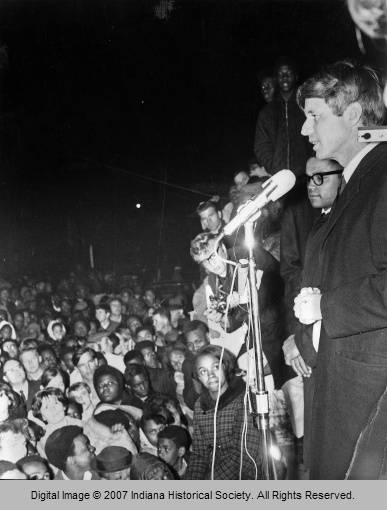
Bobby Kennedy, Edith Hamilton and Aeschylus — wrongness compounded, perhaps deliberately

Bobby Kennedy's quotation of Aeschylus on the night of Martin Luther King Jr.'s death is probably one of his greatest known moments. It has flickered in and out of my mind through the years, and came to my starker attention recently. On the divine? It's bullshit, really, whether classical Greece's panoply or Aeschylus going henotheistic, on one hand, or Kennedy's Christian god on the other. 

Anyway, here it is:

"In our sleep, pain which cannot forget falls drop by drop upon the heart until, in our own despair, against our will, comes wisdom through the awful grace of God."

First, per several sites, the Edith Hamilton translation is "despite," not "despair." Aeschylus is slightly less bullshitting than RFK with "despite." The original idea doubles down on "against our will." Bobby's sounds more poignant.

But, neither is true. In the Christian dual-omni god world of Bobby, this runs straight on into the problem of evil, Aeschylus' original or his misremembered version equally so. A god who can't teach wisdom outside of suicides or homicides is either less than omnipotent or less than omnibenevolent.

That said, of course, Hamilton herself mistranslated the last word. In Aeschylus, it's, to give the whole phrase, "the awful grace of the gods." 

For more on that, and other problems with Hamilton's translation, go here. I quote author Tara Wanda Milligan:

Even more than this, it is perhaps Hamilton’s reconstruction of Athenian tragedy, Americanized to focus on individual “poetically transmuted pain,” that appealed to Robert F. Kennedy. Hallett says that tragedy as conceived by Hamilton, a school headmistress with a master’s degree in classics but no further training, “focused intensely on individual suffering, democratic to the extent that it equalizes, and minimizes differences among, individuals who suffer and exult in their suffering.” A man of forty-two who had witnessed both his elder brothers die unexpectedly (Joe Jr. died while fighting in World War II), Kennedy needed solace and founded it in Hamilton’s writing. “Reading the Greeks was Jackie’s idea but something Bobby was ready for,” writes biographer Evan Thomas, adding that Aeschylus’s words “seemed to be speaking directly to Bobby.”

Going past that, the author notes that Hamilton misconstrues Hellenic Greek tragedy in general. Indeed, the Americanization is tragedy as individualized pathos.  

While that's not "the problem of evil," per se, and it's not "theodicy," it is A problem of evil of sorts.

Go back to World War II, where African-American combat deaths, or service short of death, received less valourous recognition than that of Whites. Or look at "Drunken" Ira Hayes. 

But, that issue goes yet deeper.

And I quote her again:

Donald Lateiner, professor of classics at Ohio Wesleyan, says that Hamilton’s notion of Athenian democracy, which overlooks its oppressive and hierarchical qualities and use of slavery, could serve as a sort of justification for American anti-communist foreign policy during the Cold War. That Robert, who served as his brother’s attorney general and enforcer during John’s presidency, found Hamilton’s depiction of Athens inspiring is unsurprising. “The Kennedys found in Edith Hamilton someone who presented a way of conceiving of American power that gave them some cache of the ancient democracy but also found justification for the use of power in the promotion of an ideology of democracy,” Lateiner says. Kennedy, therefore, was an ideal embodiment and champion of Hamilton’s conception of tragedy, and, conversely, Hamilton’s rendering of Athens provided a template for Kennedy to project his longing on—a nostalgia for an existence that never existed, a sort of left-leaning version of the #MAGA moment that took hold of Americans in 2016.

Ouch. Right?

Well, not so "ouch" for those who know the real RFK. That's especially true for those of us who know that in the 1968 primaries, he threw elbows at Clean Gene McCarthy, and also, in California, in a debate shortly before his assassination, opposed moving public housing in Los Angeles out to Orange County, while McCarthy supported it, noted in the link below. It's also not so ouch for those of us who know, re our current geopolitics, that he was a Zionist (contra overblown anti-Zionist conspiracy theories about Jack's assassination).

And, as far as the Kennedy take on Hamilton's take on Greece, another way of putting it is that "the grandeur of the Fourth Rome" was being covered with the lipstick of "the glory of Greece." 

In other words? American Exceptionalism 101. 

April 30, 2017

Jesus and god and tornadoes and Canton

Going beyond any snark-in-brief I've posted in past such cases on Twitter, and going beyond a briefer post about a woman allegedly "praying and diverting away" a tornado in metropolitan Dallas a year ago, in light of the tornado in Canton, Texas, that killed at least five people yesterday, and per the header, there's nothing to do but jump in.

Why are you, if you are, praying to your Jesus for the people of Canton, when he was either not strong enough, or else not morally good enough, to keep that tornado from happening in the first place?

In theology, the issue is called "theodicy," or the issue of divine judgment.

In this case within theodicy, where alleged omnipotence directly conflicts with alleged omnibenevolence, it's calls "the problem of evil."

Or, as Rabbi Kushner put it, "why do bad things happen to good people?" More on that in a minute.

Now, some of you, conservative evangelicals or fundamentalists, will quote either Job or Paul's quoting of Job, of god saying "my ways are not your ways."

Well, the alleged inscrutability of god is nothing more than a dodge itself.

Because you now have a god either not omnipotent, not powerful enough to make his ultimate plans clearly known to intelligent humans, his alleged creation, or else you have a god not good enough to keep his intelligent human creation from avoiding psychological pain by being left unaware of god's ultimate plans through a tragedy.

And don't try to go meta on me. If you claim that god or Jesus trying to explain himself would cause further turmoil itself, re-read the immediately preceding paragraph, because it's what I would repeat to you.

But, this isn't just a piece for the fundamentalist or nearly so — whether within Christianity or the other Middle East-based monotheisms.

If you believe in a more liberal version of your faith, whether Christianity, Judaism or Islam, have you ever wrestled seriously with this issue? Do you still, even if not taking your scriptures literalistically, still believe in a god who is both all-powerful and all-good?

What if' you don't?

How much short of omnipotent, or omnibenevolent, can a monotheistic deity be and still rightfully be accorded worship, etc.?

Or, if you're a New Ager, how much short of omnipotent, or omnibenevolent, can a depersonalized Higher Power be and still be trusted or sought out?

And, New Agers of certain stripes who literally believe in it (ditto for Hindus and Buddhists) do NOT cite "karma." That's more offensive than conservative Christians' "original sin." (And, yes, like Ken Ham, some Xns actually will attribute the cause of anything wrong in our world to original sin.)

And, this isn't just logic chopping. Divine goodness or not, human confusion in the face of trying to puzzle out an alleged divinity's actions and more are all highly emotional matters.

Also, this isn't just about so-called natural evil. Human evil falls in the same place.

Substitute "child sexual abuse" for "tornadoes."

I write this in a mix of sorrow and anger.

I feel sorrow for (and sorry for) people who can't or won't open themselves up fully to the deep feelings behind the confusion — and perhaps anger — they feel themselves over where they're at religiously at times like this.

And, per Hume, since reason should be the slave of the passions, yet guide it, I feel a second sense of sorrow that this means people can't or won't reason their way to new insights because they refuse to be fully in touch with their emotions.

And then I feel anger at those within conservative Christianity in the US who attack non-Christians, and especially secularists as allegedly immoral (not true on divorce or adultery), anti-American (we're not a Christian nation), or that there's a "war on Christianity" (hyped by Bill O'Reilly of moral problems galore).

Jesus allegedly spoke about specks of wood in others people's eyes vs. wood planks in one's own. Paul talked about believers who could only take milk, not being ready for meat or other solid food. Please take note.

Within faith-based major thinkers, of the last century or so, I suggest starting with Unamumo's "The Tragic Sense of Life," available in text online here. I'm not here to convert anybody to secularism; I am here to challenge shallow, unreflective belief systems when they're thrust in other people's faces.

February 04, 2017

One will be taken and the other left

For people not familiar with the Christian scriptures, whether some atheists, or some Xns both liberal and fundamentalist or conservative evangelical, that's Matthew 24:40 I'm referencing. And, whether riffing directly off Pauline material or not, the "Great Apocalypse" of the synoptic gospels at least arguably supports Rapture-type ideas, contra, oh, an L.D. Burnett at S-USIH, the Society for U.S. Intellectual History, who claims the Rapture is un-Christian.

Baptism for the dead, of Mormon doctrine, is also Christian, L.D. and others. Deal with it.

But let's get back to why that header I have us up there.

In the fairly small town to which I recently moved, a lady announced earlier this week that she had officially been pronounced cancer-free by her doctor after a fairly severe cancer with arduous treatment process.

She took this all as a gift from Jesus, etc. She also went so far as to say, even for comment to the newspaper, that she was using this as a tool to try to convert her atheist doctor.

Erm, not so fast, ma'am.

The very next day, a decade-younger emergency services worker, or former such worker due to extensive radiation-induced heart damage due to an infancy neuroblastoma cancer, died.

And, where was god then, when in an existential Rapture-like sense, one was taken and one was left.

Was it better for the firefighter to die as gain than live for Christ?

Well, the conservative Christian apologists will offer up the tender mercies of god, the inscrutability of god, silver linings that we can't see, etc.

Then, when the likes of me counter with Ye Olde Problem of Evil?

Some of them will counter with "original sin." (And, yes, like Ken Ham, some Xns actually will attribute the cause of anything wrong in our world to original sin.)

Do not go there, unless you really want your biblical literalism to be that repugnant.

Beyond that, what if someone from the firefighter's family gets mad at the lady's family? Is the lady's family really going to go there? Or what if the lady, and/or family, stop by the firefighter's funeral and offer the inscrutability statement?

Growing up in a conservative Protestant denomination, but one in the mainline tradition, not the US version of "evangelical" Christianity, people didn't try to attribute everything to the will of god. Perhaps one way in which the Midwest is still a bit different than the South.

But, seriously, would someone try that?

Or, to get back to the bible, how many people from either family would pray, in the next week, or offer words to the other, out of the mouth of Job: "The Lord gives and the Lord takes away; blessed be the name of the Lord"?

And, as for the claim of original sin as the ultimate cover up for the theodicy of a seemingly cruel god, I can quote Jesus healing the blind man in John: "Neither this man sinned, nor his parents but this happened so that the works of god would be displayed in him."

Of course, if there's an unhealed blind man, or an unhealed, now-dead firefighter, without either an actual sin, or a bloodline-like soulline of original since, we're back on the theodicy of an unjust god.

==

As for the likes of Burnett? Usually such people are more liberal Christians. And they usually know enough about Christianity, in my opinion, to know in their mind of minds, and even more, deep inside their heart of hearts, that "doctrine X" really IS Christian, and they're humiliated. Perhaps even appalled.

And, even ignoring the Old Testament, and the Priestly Code prohibitions on blending fabrics in clothes, prohibitions on tattoos, etc., I can find other things that many Christians would like to call un-Christian.

I've already refudiated both liberal Christians and some sympathetic atheists as to whether the New Testament is anti-gay or not. Paul is by active discourse and Jesus is by silence.

Tertullian's idea of saints in heaven gloating over sinners in hell is arguably backed up by Revelation, especially when joined with the Lucan parable of Lazarus and Dives. And, I'm sure I can think of more.

January 11, 2015

If god delivered you, then why ....

I don't do this often, because I'm not a Gnu Atheist, but I get tired of these "God put me in the right place" types of nuttery. Among the latest is one from Austin, and the nutbar would-be bomber Steve McQuilliams. Officer Johnson, if god were really involved, then why didn't he prevent Steve McQuilliams from getting his guns and bombs in the first place?

And, it's not just Christians, it appears.

Chandra Susanto, if he's from Indonesia, is likely to be thanking Allah for not boarding the recent Air Asia flight that crashed and killed all 162 on board.

The mainstream media don't help on things like this when, even before survivors use the word, they talk about someone "miraculously" surviving a crash of some sort. 

And, "true believers," whether in Jesus, Allah, Metatron (or Megatron?) or any other variety of an omnipotent deity, please do NOT trot out the "inscrutability of god" issue. I've covered the Psychological Problem of Evil here more than once.

March 14, 2013

More thoughts on #Francis the talking pope & #PZMyers

I blogged some initial thoughts about the election of Frances the Unnumbered yesterday.

Just a couple more, though, and a bit on the snarkier side.

First, whether in cardinals electing a pope, a high-church Protestant denomination calling a pastor, or similar, if it is really a "divine call," then why doesn't god make his divine will immediately clear?

Why do the cardinals have to cast multiple ballots?

Or why does the initial divinely called Protestant pastor turn down the call?

Well, you know the real answer: "God works in mysterious ways."

Followed by various declarations about how "his ways are above are ways," etc.

Yep, more of the inscrutability of god.

And, if the pope turned over some of his own priests to the Argentinian junta, then ... that, too, was god's will, right? Because god foresaw all of this.

I don't often venture into snarky Gnu Atheist territory, but I do on occasion.

And this is one of them.

This is a simple, and clear, illustration of the "problem of evil," and of what length orthodox Christians will go to in an attempt to dodge the issue.

And, Gnu Atheist kingpin P.Z. Myers is right on this issue of "crunchy theology" vs "squishy theology." And, like him, I actually prefer dealing with crunchy theology at times.

Of course, on the narrow issue of the election of a pope, I'm not being half as snarky as Taslima Nasreen.

December 26, 2012

Christian existentialism, Ground of Being, Christmas and faith

Three columns finally led me, at my philosophy blog, to put together some in-depth refutation of liberal theological mush, as I call it.

I blogged about the first and second separately over there, respectively about the Grand Inquisitor and about ev psych proving the need for religion. But, Maureen Dowd letting her column be hijacked was the last straw, so I took it plus the two previous posts to go in depth about the Ground of Being here.

To me, there's an analogy. Much as I like the Green Party, one can't logically demand that conservatives "support the science" on global warming, then turn around and "support the pseudoscience" on anti-vaxxer claims and such.

Ditto, one can't demand that conservatives be honest about what biology has taught us vis-a-vis fundamentalism and then be less than honest about what evolutionary psychology has and has not taught us about religious belief, and what the likes of Chomsky and Wittgenstein have taught us about the use of language.

Two of the three columns, the first of the two about which I blogged previously, and Dowd's priest, were both writing about Newtown. And, that's the ultimate angle.

Some Facebook dialogue helped me to see more of where I was really heading with this post, especially vis-a-vis Dowd's priest, who was writing in light of the Newtown mass shooting.

And, beyond criticizing the Ground of Faith or Christian existentialism, it's a warning shot related to that old Gnu Atheist word "accomodationism."

Sometimes, that's not a four-letter word, but potentially an actual problem for some secular humanists. My answer to that is that secular humanists can challenge liberal Christian as well as conservative Christian theodicy, but in a non-arrogant way. More details on that are at the third link.

August 07, 2012

A failed attempt at theodicy

Rev. Timothy Keller makes a nice try, when he says that if one uses the existence of suffering or natural evil, and its seeming unfairness, as part of rejecting the existence of god, it doesn't work, because the suffering remains senseless without a deity.

Not true; that's a framing mistake. It's really similar to Gilbert Ryle's idea of category mistakes.

"Sense" and "senseless" are both related, in general, to the issue of agency. And obviously, nature (unless one is a New Ager) isn't a personal being with powers of agency. A good existentialist could do more to straighten out Keller.

That's just the first of four straw men that Keller sets up to knock down.

The second is that this means that any god who exists is less than omnipotent.
But that kind of God doesn’t really fit our definition of “God.” So that thinking hardly helps us with reconciling God and suffering.
Well, maybe your definition is wrong. Isn't it arrogant to assume it isn't? And, that's a problem I have with theologically liberal Christians. It's for similar reasons I unfriended on Facebook, and eventually blocked there, a Harvard Divinity student who claimed Plato's famous Euthyphro dilemma (is "good" what it is because god orders it? then god can be capricious; is "good" what it is by its own nature? then "good" has moral standing independent of god) didn't apply to the god of Christianity.

(Honest grasping of the dilemma, perhaps through distinguishing between contingent and necessary moral truths, while ultimately a failure, would still be an effort, at least, not a craven dismissal. The "false dilemma" claims of some Christian Fathers, as listed on Wikipedia, aren't very good, either; they're halfway on the road to the ontological argument for god's existence, and it's no wonder Anselm is among those making this claim.)


The third one is that some people suffer because they're more evil. Well, about no nontheist claims that. Many of us do claim that, within a monotheistic theodicy, it sure looks that way, though, even if we're not Gnu Atheist knife-twisters.


Fourth is what he says is a half-answer; it's the will of god, we have to but accept.


He spins on this to go to us needing to be like children before god.

Not true. In fact, a god who creates sentient, curious, thinking beings, but then says "hey, wait a minute" and hides behind inscrutability is ultimately guilty of inflicting psychological evil on those creatures, thereby making the "problem of evil" worse, if anything.


Now Keller is just a parish pastor, not a theologian. Nonetheless, he's a pastor in New York City for a mainline, vaguely liberal Protestant denomination. And, he can't do better than this?


March 05, 2012

What about God and the first tornado, ma'am?

I'm no Gnu Atheist, and I know at bottom line people in general are creatures of emotion, and desire for psychological comfort first, then rationality second.

Nonetheless, I can't help but point out this line from a survivor of the Harrisburg, Ill., tornado, in light of the possibility that a new round of severe weather could bring more twisters to the area:
"You just keep thinking, 'God, please don't let there be another tornado.'"
Sorry, Ms. Wise, but the god you believe in, under your belief system, already let one happen there. Why not another?

UPDATE: Apparently no God, or karma-reliever, for this 14-month-old tornado victim, either.

IF religious people were willing to drop either omnipotence or omnibenevolence from belief systems, then non-Gnu Atheists like me would dialogue more on more issues. And, this is primarily an  issue of western monotheisms.

But ...  

Or course,. as I've said before, karma is in some ways  worse than hell, so I'm not letting Buddhism or Hinduism off the hook.

In eitherr caser, at some point, when the emotoinal and psychological burdens get to be enough, don't the shells crumble? Now, for non-Gnu Atheist, I recognize that until those shells DO crumble, the psychological value they offer isn't to be sniffed at. But, large swaths of the ancient west knew better, that religions less overarching, with fewer, less absolute emotional shells, often were better in the long run.

It's called "acceptance," without invoking an omnipotent-and-omnibenevolent deity who, as "a lover of life but player of pawns," will ultimately tie you in emotional, not just intellectual, knots.

January 31, 2012

Did God only talk to 1 of 2 pastors?

Did the message to 1 get garbled? Was only 1 listening?

I'm normally not like Gnu Atheists, taking cheap potshots at organized religion. But, per this interesting substory within last week's Florida traffic accident tragic pile-up, this is one time to partially set aside those rules.


For the omnipotent god of conservative Christians, of course, the only answer is that "god is inscrutable." Really? Well, as I have said before, then such a god causes psychological pain to his creatures, at least those who would like to believe in some higher order in the universe, but can't blindly accept "inscrutable."


And, contra Gnu Atheists, but contra stereotyped conservative Christian beliefs, there are people who at times wish such psychological comforts existed, but not on terms of blind faith. To use human parenting language, children have blind faith in a parent only to the point in their maturity in learning what non-blind levels of trust are, and are to be offered.


That said, non-literalist Christianity hasn't, for people in the pews, figured out a way beyond this, at least for thinking people in the pews who would still like some sort of "higher order." If this order, power, or divinity is less than omnipotent, while we might yearn for it/him/her to do something, how much can actually be expected?


In short, without endorsing ideas of "progress," in the modern social world, many people who are willing to think these things are at least 16 years old, psychologically. We're old enough to see that, if there is any "higher order," it may not be that much above our heads, and that alleged "answers" for these issues aren't, either.


But, many of us also aren't social Darwinist Gnu Atheists, either. We reject the idea that it's "weak" to feel the need for religious solace (or solace of support/comfort groups in general). And, yes, Gnu Atheists, "name it and claim it" New Agers, and success gospel Christians are all social Darwinists, or the psychological equivalents thereof.

May 18, 2008

Ehrman – the ‘problem of evil’ and a personal journey

“The problem with evil” is where the collision between ideas of an omnipotent god and an omnibenevolent one hit the road.

It’s THE emotional/psychological reason many people question their faith, whether Christian, or perhaps Jewish or Muslim, and why some of the more courageous of them, willing to live with their new answers, leave their old faiths behind, especially if they have also raised and wrestled with intellectual questions such as the validity and accuracy of their bibles or other spiritual books.

Bart D. Ehrman has made such a journey, on both the emotional and intellectual sides. The Duke University New Testament professor deals with the “problem of evil,” often known by the theological name of “theodicy,” in his good new book, “God's Problem: How the Bible Fails to Answer Our Most Important Question — Why We Suffer.”

On Amazon, it got 1-starred by a lot of conservative Christians who simply couldn’t stand to see their worldviews challenged.

My response? Is your faith actually that weak, then?

Two-star reviewers there are either that, or people who can’t stand to have Ehrman provide a litany of suffering.

Well, that’s exactly why he needed to do that. Hardened hearts take more effort to break down.

After starting with the Holocaust and other examples of litany, Ehrman takes a look at what the Bible says about suffering.

Of course, and contrary to 1-star reviewers, the Bible was not written as one book, with one theology.

There are several theologies on suffering, including two different, uneasily co-existing ones, within the book of Job, cited by most Christians as the exemplar of such a theology.

First, there’s the theology of the Torah and the prophets: You sinned, and that’ why bad things are happening.

Then, there’s Job. Neither the prose nor the poetic sections ever say Job is a sinner. That’s not even on the lips of Yahweh (poetry) or Eloah (prose) sections of the book, again, contrary to what many people think.

In the prose section, we get a capricious God playing a giant poker game with The Satan, in his role as God’s devil’s advocate. Ehrman rightly notes the ending of the book, in the prose section, is offensive. God waves his magic wand, and restores all Job had lost, including doubling his family size with additional children popping up out of nowhere.

On the poetry side of Job, he notes Yahweh never gives Job an answer, which Paul also notes in Romans. Job never gets his this-world advocate (and NO, he is not asking for a Messiah to die for his sins with “my redeemer liveth, burn your KJVs) to argue his case before Yahweh that he is indeed blameless.

From there, Ehrman moves on to address the Stoic/Existentialist view of suffering in Ecclesiastes. He says as an agnostic that this is something he can accept; we’ll probably never get a “why” answer.

From there, he wraps up with Daniel, the book that originated the apocalyptic explanation for suffering that permeates the New Testament.

For me, this is a solid four-star book. Drawbacks? It’s a bit thin; I’d love to have heard more of Ehrman’s personal story. And, although he’s a New Testament scholar, to the degree he’s comfortable, I’d love to hear him tackle theodicy in other world religions.

For more on books I like, see my Amazon top-1,500 review link at right.