SocraticGadfly: American exceptionalism
Showing posts with label American exceptionalism. Show all posts

March 13, 2026

Bobby Kennedy, Edith Hamilton and Aeschylus — wrongness compounded, perhaps deliberately

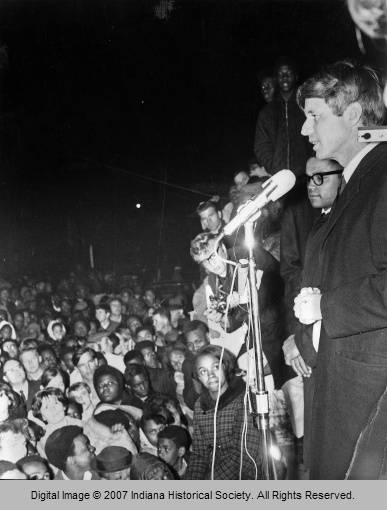
Bobby Kennedy's quotation of Aeschylus on the night of Martin Luther King Jr.'s death is probably one of his greatest known moments. It has flickered in and out of my mind through the years, and came to my starker attention recently. On the divine? It's bullshit, really, whether classical Greece's panoply or Aeschylus going henotheistic, on one hand, or Kennedy's Christian god on the other. 

Anyway, here it is:

"In our sleep, pain which cannot forget falls drop by drop upon the heart until, in our own despair, against our will, comes wisdom through the awful grace of God."

First, per several sites, the Edith Hamilton translation is "despite," not "despair." Aeschylus is slightly less bullshitting than RFK with "despite." The original idea doubles down on "against our will." Bobby's sounds more poignant.

But, neither is true. In the Christian dual-omni god world of Bobby, this runs straight on into the problem of evil, Aeschylus' original or his misremembered version equally so. A god who can't teach wisdom outside of suicides or homicides is either less than omnipotent or less than omnibenevolent.

That said, of course, Hamilton herself mistranslated the last word. In Aeschylus, it's, to give the whole phrase, "the awful grace of the gods." 

For more on that, and other problems with Hamilton's translation, go here. I quote author Tara Wanda Milligan:

Even more than this, it is perhaps Hamilton’s reconstruction of Athenian tragedy, Americanized to focus on individual “poetically transmuted pain,” that appealed to Robert F. Kennedy. Hallett says that tragedy as conceived by Hamilton, a school headmistress with a master’s degree in classics but no further training, “focused intensely on individual suffering, democratic to the extent that it equalizes, and minimizes differences among, individuals who suffer and exult in their suffering.” A man of forty-two who had witnessed both his elder brothers die unexpectedly (Joe Jr. died while fighting in World War II), Kennedy needed solace and founded it in Hamilton’s writing. “Reading the Greeks was Jackie’s idea but something Bobby was ready for,” writes biographer Evan Thomas, adding that Aeschylus’s words “seemed to be speaking directly to Bobby.”

Going past that, the author notes that Hamilton misconstrues Hellenic Greek tragedy in general. Indeed, the Americanization is tragedy as individualized pathos.  

While that's not "the problem of evil," per se, and it's not "theodicy," it is A problem of evil of sorts.

Go back to World War II, where African-American combat deaths, or service short of death, received less valourous recognition than that of Whites. Or look at "Drunken" Ira Hayes. 

But, that issue goes yet deeper.

And I quote her again:

Donald Lateiner, professor of classics at Ohio Wesleyan, says that Hamilton’s notion of Athenian democracy, which overlooks its oppressive and hierarchical qualities and use of slavery, could serve as a sort of justification for American anti-communist foreign policy during the Cold War. That Robert, who served as his brother’s attorney general and enforcer during John’s presidency, found Hamilton’s depiction of Athens inspiring is unsurprising. “The Kennedys found in Edith Hamilton someone who presented a way of conceiving of American power that gave them some cache of the ancient democracy but also found justification for the use of power in the promotion of an ideology of democracy,” Lateiner says. Kennedy, therefore, was an ideal embodiment and champion of Hamilton’s conception of tragedy, and, conversely, Hamilton’s rendering of Athens provided a template for Kennedy to project his longing on—a nostalgia for an existence that never existed, a sort of left-leaning version of the #MAGA moment that took hold of Americans in 2016.

Ouch. Right?

Well, not so "ouch" for those who know the real RFK. That's especially true for those of us who know that in the 1968 primaries, he threw elbows at Clean Gene McCarthy, and also, in California, in a debate shortly before his assassination, opposed moving public housing in Los Angeles out to Orange County, while McCarthy supported it, noted in the link below. It's also not so ouch for those of us who know, re our current geopolitics, that he was a Zionist (contra overblown anti-Zionist conspiracy theories about Jack's assassination).

And, as far as the Kennedy take on Hamilton's take on Greece, another way of putting it is that "the grandeur of the Fourth Rome" was being covered with the lipstick of "the glory of Greece." 

In other words? American Exceptionalism 101. 

July 14, 2024

Trump shooting brief thoughts, ending with the NYT

First, we now know the suspect is Thomas Michael Crooks. He was 20 years old. His dad reportedly bought the weapon, about six months ago. The son appears to have been a gun and explosives semi-nut, if the T-shirt he was wearing is any indication. Also, per the AP, bomb-making materials were found inside his car. Also per that first link, he was a registered Republican, but also reportedly donated to the Progressive Turnout Project PAC. Even that donation isn't what it seems, per Ryan Grim. He notes it's a more spammy org than something like Politicus, and also that, by the date of the donation, Crooks would have been 17 at the time and it was thus illegal.

As of the time of this posting, no motive has been identified. He apparently left no social media hints or anything like that.

That story has a good aerial photo of the layout of the site. And, yes, it's pretty unbelievable that the Secret Service did not have the building where Butler was at secured. No, it doesn't look good that the shooter got with 150 meters. And, unlike Lee Harvey Oswald, this wasn't a weekday and I'll presume he didn't work there. (Oswald was at roughly the same distance from JFK.) Per another Beeb piece, a witness said he could see Crooks "bear crawl" onto the roof, and even see that he had a gun.

The Beeb now has a video reconstruction.

The Independent has more, as British newspapers appear to be having fun generally running circles around American ones:

A local police officer encountered Crooks before he fired towards Mr Trump, AP sources say. Not long before shots rang out, rally goers noticed a man climbing to the top of a roof of a nearby building and warned local law enforcement, according to two law enforcement officials.
One officer climbed to the roof and encountered Crooks, who pointed his rifle at the officer. The officer retreated down the ladder and Crooks quickly took a shot toward former President Trump, and that’s when the US Secret Service counter snipers shot him, said the officials who spoke to the AP on condition of anonymity.

Oy.

Longer-term issue: How well or or how poorly do presidential detail Secret Service coordinate with local law enforcement and what can be done to improve that?

The Independent also got his uncle to speak.

Reached by phone, Crooks’s uncle, Mark Crooks, told The Independent that he had “no idea” what might have spurred his nephew to take aim at the former president.
“I don’t know what to say,” he conceded.
The uncle said he hadn’t had any contact with Crooks “in years”, despite living just 20 miles away.
“I haven’t seen the kid since he was little,” Mark Crooks said. “He never wanted to bother [maintaining a relationship with me and my wife], so we don’t see him.”

More oy, and the kid now officially seems a bit thrown off.

==

More sidebar to the story:

First, yes, NRA wingnuts, this does raise again the issue of gun control and peripherals, just weeks after SCOTUS said bump stocks were constitutional.

Second, per the general tenor of tweets that I was calling out, duopoly-style tribalism got played up on Musk's cesspool.

Third? No, Speaker Mike Johnson, there's no need for the House to conduct a full investigation. That's what law enforcement agencies do. And, now that we know he was a registered Republican and his dad bought the gun, that's going to be a big fail, but you'll make it an ugly one, I'm sure.

==

Now, to the backstory:

I had LESS THAN ZERO desire to post something here last night, though I did do some callouts of the nuttery on Twitter.

This is the first:

Of a four-part chain, followed by:

And part 3:

Then part 4:

With a special sidebar for Jim Stewartson, 

who's already a conspiracy theorist and I think mentally ill, and I have no idea why people whom I follow or vice versa follow him.

That said, my ideas on "following" on Twitter may be different from others. If I want to see the latest stupidity from an egregious idiot, I can just search for them without following.

Per this Beeb piece, not all the Twitter nuttery was (apparently) from the US, but a great majority of the social media nuttery was from Twitter, as Elmo's clown car was exactly that yesterday. 

And, "oh, goody," a political advisor to LinkedIn owner and BlueAnon mega-donor Reid Hoffman tried to push the "staged" idea onto journos. Dmitri Mehlhorn appears to have been smoking Russiagate-style crack. Meanwhile, Hoffman's own comment from recently about wishing he had made Trump "an actual martyr," looks incredibly stupid.

==

Meanwhile, I must ask WHAT ROCK the NYT editorial board has been sleeping under with a rushed-out Saturday house editorial with the title: "The Attack on Donald Trump is Antithetical to America."

Another tweet of mine has the reality, instead, or at least a nickel version of it:

OK, let us break that out more.

Jackson's attempted assassin was just nuts. (Interestingly, he went to St. Elizabeths, eventual home 150 or so years later, for John Hinckley.)

But, most other actual or would-be assassins, as I noted in a newspaper column on the 60th anniversary of the JFK assassination?

None of them were criminally insane by the definition of either their times or ours, but all of them had some degree of mental unsteadiness.

And, they were all politically motivated.

John Wilkes Booth assassinated Lincoln after recognizing the Civil War was almost over and kidnapping him wouldn't work.

Charles Guiteau? A semi-insane office seeker upset that James Garfield wouldn't give him a major position.

Leon Czolgosz? An "anarchist of the deed," as they were known back them.

Oswald? Off his rocker, but believing that Cuba was indeed the worker's paradise, and that it did deserve "fair play."

Squeaky Fromme? To the degree that "Charlie's Girls" and the whole Manson cult was politicized, this was political. And, to the degree that being a Charlie's Girl was nuts ...

Sara Jane Moore? Many years later, she cited her radical political views related to the Symbionese Liberation Army. But, she had other issues that indicated she wasn't fully together.

So, only Hinckley and Richard Lawrence, Jackson's would be assassin, were apolitical.

But, the NYT editorial is worse beyond that.

America's "culture of the gun" also means this is not antithetical to America. Rather, it's right up the American exceptionalism alley.

And, the NYT is in a city in a state which DRASTICALLY changed its ballot access laws for third-party and independent candidates at the presidential level in 2021, and as far as I know, the NYT said boo about that on its editorial page. For its editorial board to try to lecture intelligent non-duopoly voters in America about democracy is both laughable and disgusting.

Oh, my callout of this American exceptionalist pontificating extends to any Congresscritters and other politicos, as well as other members of the media, who talk similar stupidity.

And, above all, to


John Nichols actually gets it right, and draws parallels to the attempted assassination of Teddy Roosevelt in Milwaukee.

==

Finally, while I have no political use for Brainworm Bobby, I don't give a rat's ass that the Secret Service says you need to poll at 20 percent to warrant protection. Biden can override that anyway, or Homeland Security Secretary Mayorkas can if Biden's not blocking that. Update: That FINALLY is going to happen.

July 04, 2021

Happy Fourth: How close is America to being a failed state?

As a non-duopoly independent leftist, this is not an idle question on the 245th anniversary of the passing of our Declaration of Independence.

Four main issues lead discussion of this, followed by some others.

The first is climate change, including both the denialism by many wingnuts and the denialism of just JUST how serious it is by most elected-level Democrats, and indirectly, by #BlueAnon backers.

If you included all the carbon dioxide pollution, along with other pollution, despite some tightening of pollution there since the Clinton years, that the US has exported to China, we're still really the world's largest CO2 emitter. And, as wingnuts either still continue to deny this is a thing at all, or else minimize it, even in the face of the latest heatwave, it's not good.

It's also not good that the best Status Quo Joe can even talk about is a watered-down version of Alexandria Ocasio-Cortez's already watered down Green New Deal, the original being stolen from the Green Party by the Sunrise Movement, essentially the youth division of Gang Green neoliberal environmentalist group Sierra Club.

Per David Wallace-Wells, we're already entering a permanent climate emergency. Details from a leaked report at the most recent climate meetings here.

America, as the richest nation on earth, will find it harder and harder to move office towers in places facing more climate change flooding ... places like New York and Miami. Our nation's capital will face more of this in the future. And, the petrochemical industry adding to the problem will face this in southern Louisiana and Houston (and likely expect a bailout).

Second is energy in general. How are we going to get enough energy not only to replace the fossil fuels used for air conditioning, heating and manufacturing, but also to stop building fossil fuel cars? Sorry, some Greens, but I don't see this being possible without nuclear power. And, you carmakers who say you'll build electrics only by 2035, what are YOU doing to make sure your cars will have juice by then? Nuclear power is not perfect. Concrete containment domes and the work of mining are carbon emitters; that said, mining lithium also generates carbon. There is the security issue. Security can be fixed; it will take money, but it can be fixed. On-site waste disposal should be part of the issue. But, this will surely add to tearing America apart.

Second, part 2? To the degree America still depends on oil? Fracking's day is dying and it's back to the Saudis and the rest of OPEC more and more.

Third is income inequality. It's already as bad as Mexico, and likely will slide further.

Fourth is lack of national healthcare. As income inequality increases, and private health insurance, when offered by a job, also increases, this pinches more and more. Three and four combined will probably affect tribalism on the right with neoliberal Dems continuing to refuse to have answers in the center.

So, by the time all-electric car fleets start hitting in 2035, it will probably be too late. Compared to where we're at today, the U.S. will probably be on an irreversible slide to be at least a semi-failed state.

That said, the people who need to be convinced of this — leaders of and voters for duopoly parties — won't be. American exceptionalism reigns supreme.


April 29, 2021

Status Quo Joe serves a heaping helping of American exceptionalism

Even though I'm in the media biz, I long ago stopped watching State of the Union addresses (which is what his really is), let alone pandering efforts like "100 days" stuff. That died long ago, and FDR had a tidal wave in Congress behind him, which Biden doesn't.

The infrastructure stuff? Good.

The more taxes to pay for it? You may have to bribe Joe Manchin, but something more subtle than the Cornhusker Kickback, please.

That said? Not much on health care.

Not much on his just-completed climate change summit.

BUT?

"America is the most unique idea in history."

Not.Even.Close.

Historians and cultural anthropologists might argue over what ideas surpass it, but I'll give you my list.

(Sidebar: This is bad grammar, as "unique" is an absolute adjective and one thing cannot be "more unique" than another.) 

First is the idea that literally gave us history, that is, the invention of writing.

Second would be the invention of agriculture, especially if it includes animal domestication.

Third, and yes, I'm a post-capitalist of some sort, but I'll go with the invention of money.

"America" is like at AA baseball level (didn't Scranton, Pa., used to have one of those, Joe?) compared to what I just mentioned.

===

As for the full speech? Some other notes?

1. You've got a 6% growth rate because Trump fucked up, wouldn't do a hard shutdown at first, and left too much in the hands of governors. That said, had he done more earlier on, you might not be giving this speech.

2. While the power grid in Texas may need improving, its structure didn't cause the Abbott Blackout. Its lack of connection to the rest of the US did. Nothing else on the Green New Deal double-lite or whatever.

3. It was good for him to call for a $15/minimum ... IF it's phased in, and even then, I'd like to see the US do like Oregon and have different levels for rural, suburban and urban areas.

4. Oh, fucking doorknob, the "war on cancer." Stop.

5. Obamacare-plus the only other healthcare item? Sure.

6. Good on calling out the Trump Tax Cut.

7. No mention of Israel violating Palestinian human rights. Of course not.

8. Good on guns.

9. Bad on HR 1, unless you explicitly call on Congress to strip out anti-third party provisions.

10. I wasn't created in the image of god. I wasn't created in anybody's image.

March 19, 2021

Greenwashing Joe Biden

Trees and other plants may already be past their peak on their ability to absorb carbon dioxide. As Status Quo Joe gives little indication he'll even sign off on "the Squad's" weak tea Green Party-ripoff version of a Green New Deal, let alone what's really needed, this is serious.

So is the likes of a Mark Hertsgaard greenwashing Biden when he knows it ain't so. Or, if he doesn't, even for non-public consumption, know it ain't so, it's scary on his part.

As I Tweeted him: There is NOT "a climate realist now in the White House." Nor (which I missed originally) did Biden "dramatically strengthen his climate proposals" during last year's presidential campaign.

"We" who know such things know that his climate "plan" didn't even directly address fracking.

The rest of the piece, the non-Biden stuff, is decent.

But, we don't need to be greenwashing Joe Biden.

At least Hertsgaard didn't try to tell me the Paris Accords are real and not their actual Jell-o.

Ben Ehrenreich tells the truth, noting that Biden had issued drilling permits before the pause on them, and taken many other half-steps. It's in the larger framework of analyzing a paper co-written by 17 scientists about just how self-screwed we're getting. More in a separate post.

Update: That said, a new study from the Journal of Environmental Psychology says that people who have strong "national narcissism" (ie, big time American exceptionalism, Polish exceptionalism, etc.) are likely to believe greenwashing by/about their political leaders. A TL/DR summary is at Psy Post. The survey focused on Polish President Andrzej Duda, a conservative populist claiming to be an environmentalist, hence my use of "Polish exceptionalism." But, it did reference Trump twice, in indicating Duda is like him in some ways in general, and on this issue.

But, many neoliberal Dems (as in Dear Leader's new memoir) ALSO believe in American exceptionalism. And, with Obama, and now with Status Quo Joe, they tribally believe that their Dem leaders are great gunz on environmentalism.

February 12, 2021

Abraham Lincoln, black colonization pusher — until his death? Rethinking St. Abraham of Lincoln

With it being estimated that there's more than 16,000 Lincoln bios in print, it's definitely hard to find new angles or new interpretations for new authors.

Two new books within the last six months or so have done just that, though. Unfortunately, in both cases, what has been good, even occasionally splendid new work, has been offset by whoppers in historical errors I know the authors could have avoided, and in both cases directly related to the header.

Here you are, first with:

The Crooked Path to Abolition: Abraham Lincoln and the Antislavery ConstitutionThe Crooked Path to Abolition: Abraham Lincoln and the Antislavery Constitution by James Oakes
My rating: 3 of 5 stars

This is good overall, but it loses a star on Lincoln and colonization. With Oakes, it's more a throwaway than a full-throttled claim like that of David S. Reynolds in "Abe-Abraham Lincoln and His Times," (see below) but Oakes claims Lincoln stopped discussing abolition after 1862.

Update: Book lost a star due to email exchange with Oakes:

You have to be obsessed with colonization to give a shit about this. I’m not and I don’t. 

 Here’s why:

 Q. Of the four million slaves emancipated by the Civil War, how many did the federal government colonize outside the United States?

A. Zero

 I’m interested in explaining what happened, not what didn’t happen.


My response:

I'm "obsessed" with historical accuracy. I guess you're admitting you're not.

PLUS, you knows it "goes to motive" on explaining persona of Lincoln.

Oakes' main claim is half-true by the letter, at best, and totally untrue in spirit, as he allowed the Emigration Bureau to discuss Belize colonization in 1863, asked AG Bates in 1864 if colonization was legally still on the table, and reportedly discussed the issue with Spoons Butler just before his assassination. (See extended note at bottom.)

Given this, and that Oakes like Reynolds tries to "soften" old Lincoln statements from charges of racism, it's no wonder Reynolds blurbed it. Add to that the fact that they're peers at CUNY and even both went to Berkeley and there probably was some cross-pollinization.

As with Reynolds' book, were the five-star elements in it not fully five-star, the book would have gotten three stars because of this willful and egregious failure. (As with Reynolds, it is both; I know he knows the history I just cited.)

View all my reviews
And followed by:  

Abe: Abraham Lincoln in His TimesAbe: Abraham Lincoln in His Times by David S. Reynolds
My rating: 3 of 5 stars

I would have loved to five star this book. And, even with some of the early problems on one issue, I was still leaning that way. But, more problems on that issue meant I couldn’t do it. And, if it weren’t so good otherwise, it risked falling to three stars.

(Update: In hindsight, and seeing James Oakes is peddling some of the same untrue claims about Lincoln abandoning colonization after 1862, and with these claims getting bigger play in Reynolds, I have decided that for this and other reasons noted by myself and mentioned by other reviewers in various places, the rating must be reduced to three stars after all.)

First, the good of what’s billed as the first ever “cultural biography” of Lincoln? Reynolds delivers in spades in many ways.

One area where he really impressed me was on Lincoln’s religiosity. He notes that his parents attended an anti-slavery Baptist church in Kentucky, and were steadfast in their own stance. Beyond that, Reynolds talks about Lincoln’s younger adult deism, and how he soft-peddled that as part of his political rise. At the same time, along with other biographers, especially after the death of son Willie, he shows Lincoln, though still not a churchgoer, moving toward a more fatalistic version of conventional Calvinism.

Reynolds is also good on Lincoln’s legal practice. Many biographers focus on his 1850s railroad cases. Reynolds looks at how many divorce cases the younger Lincoln handled, for women as plaintiffs suing on grounds of desertion. He adds that Illinois was one of the few states that allowed women to file for divorce on desertion as well as abuse, and that it was fairly generous, for that day, on what counted as abuse.

Fast forward to the 1850s. Reynolds talks about Lincoln avoiding ‘isms,” a charge Democrats hurled repeatedly at Republicans. He notes that Lincoln was like French tightrope walker Blondin, who had crossed Niagara Falls at this time. He adds how Lincoln sometimes made this modeling conscious, and how many newspaper columns and cartoons in the 1860 election explicitly drew this out.

He also talks about how Abe, not just Mary, was interested in spiritualism, especially after Willie’s death. Again, he puts this in the context of a rising national interest in spiritualism, fueled largely but by no means entirely by the Fox sisters. Among his contemporaries, Ben Wade, Josh Giddings and Garrison all had at least some degree of interest. Lincoln conversed with both Robert Edmonds and Robert Dale Owen, the son of utopian Robert Owen, and listened seriously to Owen on matters both within and outside of spiritualism.

(Sidebar: This puts paid to the lie by folks like the Freedom from Religion Foundation that Lincoln was an atheist.)

That’s just a sample.

On the non-cultural side, Reynolds does a good job of recognizing Anna Carroll’s contributions to the war effort. I had read basically nothing about her before.

Several problems with the book, though, and they all center around slavery. Reynolds isn’t quite doing the Spielberg movie version, but ….

First and foremost, no, Lincoln did not stop talking about colonization in 1862. His administration continued discussions with Central American countries well into 1864, and in 1865, Lincoln purportedly said he had only abandoned it at the time for political reasons. Spoons Butler said that Lincoln, the day before his assassination, asked him to continue to look into it. It’s dishonest of Reynolds to not even mention Bernard Kock and the Ile-de-Vache (Vache Island) scheme.

It's true that Vache Island wasn't actively promoted after 1862. But, colonizing Belize? That was an activity the Emigration Bureau did promote, under Lincoln's auspices, into 1863. And, per Wiki, Lincoln continued to have at least a background attachment to colonization into 1864, even if he and Butler didn't discuss it in 1865.

The question is, ultimately, after the war itself started swinging to the US more instead of the Confederacy and 1863 elections went pro-Republican, how much was Lincoln’s diminished public push for colonization his own change of mind and how much was change of politics? This site from the Journal of the Abraham Lincoln Association, by Michael Vorenberg pushes for Lincoln's abandoning colonization after 1863 elections, but not convincingly to me. Basically, I find Reynolds, given the amount of knowledge he has otherwise, to be intellectually dishonest.

Back to The Journal of the Abraham Lincoln Association, but a much different take. More here, about the likely reality of Lincoln holding on to colonization ideas until the end of his life. MUCH more, about that April 1865 meeting between Lincoln and Butler, which did in fact happen. Phillip Magness writes 15 years later than Vorenberg, and rejects the idea that he disproved the existence of such a meeting. He also notes, contra Oakes and Reynolds, that Carl Schurz and George W. Julian both say that Lincoln continued to push colonization after issuing the Emancipation Proclamation. 
 
Magness expands on some of these thoughts in an edited and condensed version of his Lincoln journal thoughts, at his own website, in 2015, seven years later. Per that, Magness notes that even Thad Stevens supported re-funding James Mitchell, Lincoln's colonization commissioner, and that there was some indication that a Freedman's Bureau under Lincoln's development would have had colonization attached to it.
 
== 
 
UPDATE, Feb. 12, 2026 (Lincoln's Birthday!). Magness has another piece with the Journal of the Abraham Lincoln Society talking about some lost papers that colonization commissioner (specific title: Administrator of the Emigration Office) took with him after leaving office. Secondary link here. It further puts the lie to Oakes and Reynolds. It includes that, in 1871, in the middle of his wrangling with President Grant over Santo Domingo, in part because he feared Grant wanted it as a colonization outlet, Charles Sumner asking Mitchell what Lincoln might have said on the subject. Mitchell had an 11-page response, which has since been lost, but he ran a summary in the Atlanta Constitution. Magness has that as well.
 
Just as we don't have these lost papers of Mitchell, for whatever reasons, Magness suggests the reason we don't have more on paper from Lincoln's own hand on colonization after Jan. 1, 1863, is that these papers were removed. By whom, he doesn't say. Mary Lincoln is quite unlikely. Robert Lincoln is a possibility in my eyes, as is Seward, of course. 
 
Magness restrains speculations:
It would be unduly speculative and even irresponsible to suggest that the lost Mitchell papers contain evidence that would otherwise establish a detailed record of Lincoln’s colonization interests into the final days of his life. The small glimpse of their contents that Mitchell and others left behind suggests no such smoking gun but rather a diverse volume of letters, notes, and memoranda that may help to close the gaps in Lincoln’s sporadically documented—though indisputably existent—colonization work after the Emancipation Proclamation, particularly that which occurred in 1863 and early 1864.
Well put. 
 
That said, we do have Abe's signature on an 1863 order related to colonization in British Honduras, today's Belize. Related to that, at footnote 12 in the main piece, three weeks AFTER the Emancipation Proclamation, Magness notes that Lincoln talked up the issue with British ambassador Lord Lyons. 
 
The "smoking gun" vis-a-vis Oakes and Reynolds is that, in 1871, Sumner did not have information to clearly confirm for him that Lincoln had abandoned colonization after Jan. 1, 1863 and wrote Mitchell in part to that end. (Former Interior Secretary John Usher was still alive at the time; there's no information on why Sumner didn't ask him; maybe he knew enough to go straight to Mitchell.)
 
== 
 
Back to Reynolds.

Second, he “sanitizes” some of Lincoln’s somewhat racist comments in the 1840s and 50s. No, they were racist, if not the worst racist for his age, and they weren’t all told in the service of politics.

Third, he claims the republic was strong against the slave trade, citing that the death penality was made a possible punishment in 1820. Reality? The Lincoln Administration’s imposition of it, once, was the ONLY time in the 42 years. More reality? The US refusing to cooperate with Britain in African shore naval policing. MORE reality? Very few cases brought in the US. W.E.B. DuBois may be too high, but, as of the start of the Civil War, I’d estimate 100,000 blacks had either been post-1807 illegally imported (whether from Africa or the post-1832 British Caribbean) or descendants of such people.

In addition, I found a phrase here and there jarring, such as calling Elizabeth Keckley’s son “light complexioned.” Of what relevance is that? None, obviously.

On the 13th Amendment? Lincoln may not have personally handed out favors. (I can’t remember what Speilberg claimed.) But, did he know that Ashley and others WERE? Yes. And, some of the favors being peddled? Federal jobs are executive branch appointments. For instance, only Abe (or Andy Johnson, later) could have named George Yeaman ambassador to Denmark. The movie part about Lincoln personally lobbying Yeaman at the White House is true.

And, again, I know Reynolds knows this. If not, he should

It’s anachronistic to call a Lollard like John Oldcastle a Puritan.

Per reviewers elsewhere, applying labels like "conservative" and "progressive" to the battle over slavery is also anachronistic and serves no purpose.

==

As with Spielberg's movie, promoting untrue claims about Lincoln does nobody any good today. All it does is give openings and fuel to libertarian pseudo-historians attacking Lincoln for violating civil liberties and stuff like that. (For the wondering, I'm referencing Thomas DiLorenzo. Yeah, Oakes, I know academics reject him, and largely rightly so, but a chunk of the general public eats him up. And, I haven't even mentioned Lerone Bennett, who would kick your ass if still alive.)

And, yes, that note applies to you, Prof. Oakes. And, assuming this is part of why Reynolds never responded to my email, it applies to you as well. And, I'm not going to add further email exchanges to the book review, or the full amount of them here.

Suffice it to say that I never claimed Lincoln uttered public calls for colonization after 1862, so I'm not even further answering that. The fact is that, officially, even without public pronouncement, Lincoln kept colonization on the official governmental plate through the first two-thirds of 1864. And, as is documented, he talked to Bates about it as late as late 1864. And, as great a historian as Foner is, if he uses the lack of PUBLIC discussion post-1862 to also pretend that colonization wasn't on Lincoln's plate after that? Well, Mr. Oakes, then Eric Foner, as great as he is? Is wrong.

And, all the links on the Reynolds review apply to Oakes as well. Hell, they apply to Foner if he really claims that Lincoln making no more public calls for colonization after 1862 means that he abandoned the idea of colonization general. The first of the three links in the one Reynolds review paragraph has Seward claiming in 1877 that Lincoln never abandoned the idea. Gideon Welles is quoted as saying the same, also in 1877. While Bates, Seward and Welles were on the conservative side of Lincoln's Cabinet, outside the Cabinet, Butler was an eventual Radical. George Julian, who also said after Lincoln's death that he supported colonization to the end of his life, was a Radical in the 1860s, though later a Liberal Republican then a Democrat. Samuel Pomeroy, also a Radical, recounts this as well.

Let's also add that both books are biographies of Lincoln, or biographies of select slices of him, NOT histories of the end of slavery in the US. That's another reason Oakes and Reynolds are guilty of intellectual dishonesty. And again, applies to Foner, too, if he really holds this.

And, contra Oakes' vituperative response to my "goes to motive" comment? It DOES go to motive. You come off as promoting a St. Abraham legend on the subject of colonization, per my header.

For the reader? Lincoln's colonization schemes were always voluntary. To riff on his famous 1862 letter to Horace Greeley? If he could have Black freedom and basic civil liberties while keeping all African-Americans in the U.S., that was his preference. But if not, he stood ready to continue to keep colonization on the back burner.

As for taking two stars away? With Reynolds, even more than Oakes, it wasn't just for this, it was for several other reasons, all obvious in the review. Both authors sanitize Lincoln's comments. Plus, I note Reynolds' wrongness on the slave trade and other things, including his "jarring" comments. 

Oakes lost the second start for being contentious.

As for "goes to motive"? Much historical speculation ink has been spilled on how Reconstruction would have played out differently had Lincoln lived. Surely, he would have cracked down on the Klan, Knights of the Camellia, etc., quicker than Johnson did. He would have done other things more firmly. But, if Butler, Wells, Seward, Schurtz, the Blairs, etc., are all right, would he have started peddling colonization again, even with a Lincolnesque version of "see, I told you we can't live together"?

August 31, 2020

RIP Ed Brayton

I already said RIP to the co-founder of Freethought Blogs at my Philosophy of Socratic Gadfly site but wanted to speak here as well, with expansion of some of the political ideas I wrote about there, both where I agree and where I disagree.

Basically, the political issues of disagreement reflected some of the same tribalism of Gnu Atheism, with which Ed had a conflicted, but yet enabling, relationship. Let's dig in.

I've long since stopped following "movement" skepticism or most "organized" atheism, especially anything that tilts Gnu-ish. I knew Brayton had been in somewhat declining health for some time, indeed, even from when he split off from the Freethought Blogs he co-founded with P.Z. Myers.

And now I see he died the early part of August, three days after his last blog post. Unfortunately, his dying reportedly was not as pain-free as he had hoped.

My take? He'll be missed to a degree, but not as much a degree as many paeans would have you believe.

I wrote about problems at FtB when Ed was still large and in charge. Tolerance of social justice warriors, above all Stephanie Zwan and "husband" Greg Laden, which sent Laden the rabid pit bull after me when I joked, with roles reversed, of him and his "wife."

The big thing I have against Ed, per the link above, is this, and that's Ed getting into bed with PZ in the first place. And, the loonies he let stay there far too long. And the hypocrisy a year before that. Per the first link in the graf, he and PZ were both cheap asses to the late Leo Lincourt in not paying his surely reasonable price to make FtB better as a website. And, I have no doubt Leo's price was reasonable, and that FtB would have looked like what Patheos, and Ed's eventual "Dispatches from the Culture Wars," did look like.

Probably what I'll miss most about him is what most of us miss about ourselves later in life: The could have beens. That would mainly be, in Ed's case, a FtB that never had P.Z involved in the first place. Can't say you weren't warned, Ed, from this small corner of the blogosphere; as I noted, from the start, you were turning over too many of the keys to PZ. Had that been the case, Greg Laden and Stephanie Zwan might not have been part of FtB, as well, and the problems never would have reached that point. In other words, a secular humanist version of Panda's Thumb or something.

Patheos wound up kind of fulfilling that, but not really. The Patheos "nonreligious" vertical doesn't have some of the broader secular humanism and civil liberties focus Ed did himself, and that he surely originally intended for FtB. Nor does it have a personal "face."

Leo and I used to talk about looking for the sweet spot in the center of a triple Venn diagram between non-Gnu atheism, or a modernized secular humanism, on one circle, a broad-focus skepticism that looked beyond Skeptics™ (I first met Leo online in the old Skeptics' Circle blog circle), and a non-conspiratorial leftist politics. Ed wasn't lefist, but his civil libertarianism would have halfway checked the box on the third circle. He could have checked, pretty much, the first and second circles had he done things differently. Picture something like the Venn at left, which is a snapshot of my takes on philosophy, atheism and secularism, and true skepticism.

But, he had his good points, and he wasn't fully a Gnu, and he called out Islamophobia in people like Dawkins and Harris, which is why some weren't fans of him at all. And, in today's day and age, calling out Islamophobia is a big deal. Contra some full-on Gnus who disliked him, his battles against things like Islamophobia were battles for social justice. And fact based. If you don't like being challenged that Islamophobia is real, and not just an excuse word for Islamic bad behavior, you can go fuck yourself. And, that too, I think was part of what was being him running away from PZ again.

I also, per this piece, apparently had disagreement with Ed on something related to the Seth Rich conspiracy theory. Can't remember what it was, but I think it was twosiderism, in that he believed not only Trump wanted Putin's help, but Putin gave it. Nope.

It was probably related to his thinking being confined to within the duopoly parties, and being a Dem tribalist there, as he showed in discussing American exceptionalism. And, that's one of the areas I want to expand on. Joe Biden is just as much an American exceptionalist, in his own way, as is Donald Trump. Especially at the national level, most members of both duopoly parties are.

If I am correct, all the faults of the Green Party aside (and all the things I reject about the Libertarian Party), it's a shame that a sharp thinker couldn't work more outside the duopoly box in general, and on particular things like the 2016 election, outside the twosiderism box.

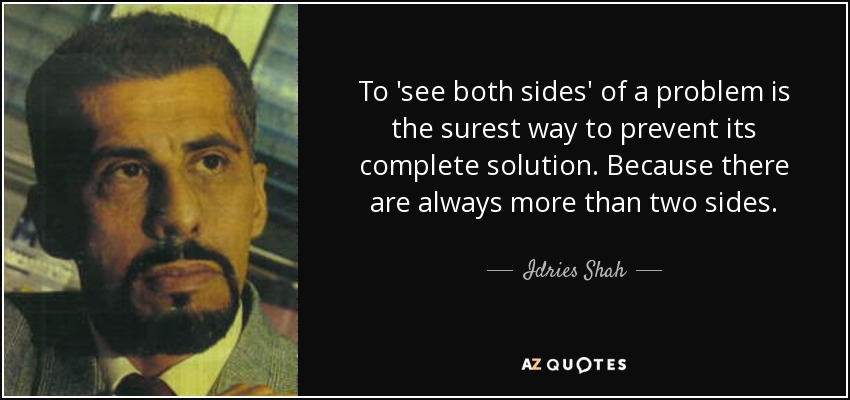
Guess Ed hadn't familiarized himself with Idries Shah.

This is clearly an Idries Shah issue:


Yes, yes, Electoral College straitjackets and other issues, but I'll continue to look for third sides, either on duopoly politics in general, or on things like Russiagate that transcend duopoly, and third party, lines.

I've said before that being an atheist is no guarantor of either moral or intellectual superiority. Ed was above average on both, but again, nothing was guaranteed.

April 11, 2020

Top March blogging — shock, it's coronavirus!

A few days late in the month, but here you are! Seven of the top ten were coronavirus related. A couple of them were in early April. All were popular based on reading in the last month, and not a new surge of interest in any old pieces.

No. 1, which is now in my top ten for the last year, is about humans being "predictably irrational," as shown at this time.

No. 2 was one of the three outliers. It was about a kind of smug Berniecrat complaining that the Green Party was allegedly oh-so-unwelcoming.

No. 3 was about my suggestions for shopping, etc. in the "new normal." Whether from my few words or not, more people are doing these things — but not yet enough.

No. 4 was actually written in what seems almost a coronavirus eternity ago, it seems. It was about how American exceptionalism is crumbling in the face of the coronavirus. Many Trumpers, especially, between moments of still pretending this isn't ultimately mainly Trump's fault, are in panic-frustration emotional crossbreeding because they somewhere, dimly, recognize this is true.

No. 5 is also from that time. That's when I started splitting the weekly Roundup of Texas Progressives news into two blog posts, one for coronavirus, one for "the usual idiocy." This was the coronavirus half of the first week's split, with future weeks being linked at the top of the post.

No. 6 was a bible-based AND constitution-based refudiation of rebellious (yes) wingnut pastors who claim that government has no right to shut churches.

No. 7 was about coronavirus and ugly Chinese nationalism. NO, not spates of anti-Chinese racism here in the US, fueled in part by Trump himself. I'm talking about coronavirus-related Xi Jinping Thought.

No. 8 was from early March. I explained why I'm still a Green, not a Bernie or Bust guy. More relevant now that Bernie has busted and, as in 2016, it's likely Bernie will sheepdog and most Berners will sit out, if they don't vote Biden, rather than voting Green. Hot air's still free, folks.

No. 9? Jefferson Morley claimed a while back that he had left the JFK conspiracy theory world. From where I sit, it doesn't look that way.

No. 10 is that Texas icon Half Price Books seems severely wounded, if not mortally so, by the coronavirus. I talk about that, and reminisce about visits.

March 13, 2020

American Exceptionalism crumbles in the face of coronavirus


As school districts around the country propose closing for three weeks, with two weeks of extended spring break, followed by a week of online learning, this looks like a bunch of ex post facto actions that nobody has any idea of whether they will work that well or not, either in terms of quasi-quarantine, or in terms of addressing what they're disrupting, like school attendance.

Let's start with that, per a set of tweets of mine from last night.

First, the extended spring break? That will work out how well?
Seriously. I'm not joking.

I don't know about younger students, but teens will likely go to the movies, or what's left of malls in America if they've got wheels. Are we really going to push malls and movie theaters to close? If they don't, are we going to expect capitalist corporations like Cinemark to invest a buttload of extra money into sanitary measures?

If you're a regular reader here, you know the answer to that.

And, if you DO do that, then what next? Especially with teens of the male gender, are you prepared for a rise in petty vandalism and hoodlumism out of frustrated boredom? Or are you prepared for a bunch of teen boys and girls with three weeks straight of hang-out time? Religious Right parents, are you ready for a new outbreak of preggers daughters?

Now, about that week of online classes afterward?
And, you know the typical school district is pretty tightly strapped. Many of them don't even have enough cheap-ass Chromebooks to pull something like this off. And, here in Tex-ass? The Texas Education Agency ain't helping out, and with an every-other-year Lege, ain't in position to do so anyway. All this is going to do is further expose the "digital divide" section of American income inequality.

And, will expose plain old inequality.

Are school districts going to give poor parents who are working during school hours money for a week or two of extra child care? Doubt that one, too. Help out if they're on free, or even reduced, lunch program? You know the answer there as well.

But, this is just symptomatic of a larger disease. If you're a regular reader, you know its name. 
By the "bldg" at end, I mean things like highways and bridges, sewer and water infrastructure, and so forth. On a lot of civil engineering, America is great at building stuff.

And it's atrocious at maintaining stuff.

Sprawl, white flight, NIMBY-ism and many other things contribute. But so does a part of American Exceptionalism, that, as I said, believes American shit is built tougher than Ford tough or whatever.

It ain't.

Per the issue at hand, coronavirus and control, I was asked — rhetorically — on Twitter if I have either kids or parents at home.

No, I don't. And my own age, and vulnerability likelihood, are irrelevant in a sense anyway.

Public health, and public health policy, is about  PUBLIC issues.

N=1 stories, whether the 1 is an individual or a family, are real.

They're also anecdotes, and private anecdote.

I don't apologize for being unafraid to publicly state that some over-reaction seems to be happening, while at the same time rejecting denialism. It's my take on public health and public policy about public health.

Beyond that, re the specific issue of school closures, I also have professional knowledge to relate of multiple school districts that I know of that ramped up precautionary measures weeks ago. Maybe Houston ISD and Fort Bend ISD are that incompetent. At the same time, I know of a local community college district that's already gone the panic route. (Students in college are much more likely to be wired for a week of online classes, at least.)

In addition, we're in Tex-ass. Respiratory viruses in general lose communicability in warmer weather. Colds and other coronaviruses we already have more information on tend to recede with the seasons; most infectious disease experts believe the same is likely (though not known for sure) with COVID-19.

But, it's not just Texas. Denver is closing its schools for this time period. So is all of Ohio and all of New Mexico. Panic? Yes, given that the normal isolation time is 14 days, not 21.

That said, IF school districts had better prepared in advance, this wouldn't necessarily be a bad idea. It might even be good to very good. But that's a counterfactual.

That's on top of New Mexico banning all public gatherings of more than 100 people. Really? You gonna arrest people in Santa Fe, Taos and elsewhere a month from now when they gather to watch Penitentes over Holy Week? Have fun with that.

But, let's move back to the big picture, per my fourth Tweet in the thread:
And it did crumble then, and is crumbling today, in something not a lot stronger than a light breeze.

We can point to Trump being a Republican as well as an idiot, and to Bush being a Republican and a semi-idiot. But, despite Obama having some now-gutted preparedness issues in place, who knows if the same hysteria, overall, wouldn't have happened when he was president? Or 50 percent of it, at least? And, state and local governments aren't Trump or Obama. And all have had months to think of something since China, and several weeks since Iran and Italy.

I haven't even touched on the bullshit of the Fed's $1.5 trillion quantitative easing plus.

That's because nobody inside the duopoly would support my idea of nationalizing the shit out of some companies.

Meanwhile, as I note in a second post, there's plenty of science and math illiteracy among the general populace, and there's even more irrationality, not because some people are idiots but because lack of rationality really is default human nature.

And, in a third post, I talk about medical lying and Chinese nationalist conspiracy-mongering, all part of Xi Jinping Thought.

December 05, 2018

American exceptionalism and presidential mourning

That's what's behind this picture at the George H.W. Bush funeral.


And, the mainstream media, insisting it is part of this ruling class as the Fourth Estate, insists we mourn. Because without such mourning, especially when based on the mythos of American exceptionalism, both that mythos and the American empire associated with it are hard to maintain.

So, with both George H.W. Bush and John McCain, the Fifth Estate insists we mourn — for the mythos of these individuals to prop up the mythos of American exceptionalism and American imperium.

Of course, there are exceptions. The media exceptions are usually from the left, with the exception of a few paleoconservative and libertarian sites that will object to the foreign policy of the likes of Poppy Bush and the Schmuck Talk Express.

What needs to be mourned, instead, is the tenacity of this mythos, and the tenacity of the subservience to it of the 99 percent of American media.

July 30, 2018

The coming collapse — thoughts from Hedges and Camp

Is the United States headed for some sort of collapse?

Chris Hedges makes a cogent argument that this is the case.

Lee Camp offers eight reasons why people probably don't want to believe this, and thus will let it happen, and how they've propped us up against collapse already.

On Hedges, it's great as far as it goes. Surprisingly, though, Hedges mentions little about climate change, just in passing, nor about Republican animosity toward the science behind it. (Many Republicans, in private, would be climate change minimalists rather than denialists, and would have their fingers crossed that they're correct on minimalism. Others may not be minimalists, but probably believe that the salvific technologism of late-stage capitalism that got us here will rescue us through geoengineering or similar. And a third wing is the evangelicals who, if they're young-earth creationists, reject the whole idea, or even if not, still believe that it's either god's judgment or that his deliverance from it will soon come. Probably less than 10 percent of major Republicans accept that climate change is real and that capitalism alone — except for the capitalism of a carbon tax with teeth, which they'll reject — cannot fully fix it by itself.

Of course, the Dems are little better. Obama made sure right along with Xi Jinpeng that Paris would be toothless.  And most Dems still won't face the reality themselves.

Weirder yet is that Hedges, a former foreign correspondent, says nothing about how both Republicans and Democrats back the duopoly. He says nothing about the military Keynesianism of the American economy.

So, it's good enough as far as it goes. 

But it doesn't go nearly far enough.

With that?

Lee Camp.

We don't have a democracy. Even Glenn Greenwald, with worries about, but still acceptance of, Citizens United, knows that. Money's bought it. The First Amendment weaponizers like Ken White, aka Popehat, who pretend that all other judicial theorists and the jurists they back engage in results-oriented jurisdiction but his ilk — yes, ilk — don't, are full of it. We regulate advertising campaigns. We have for decades. Political money is used for advertising. If you don't think we can regulate the money spent on it, we sure as hell can regulate where it's placed. No more TV ads before the "family hour" is  done. No daytime ads so kids won't see them. Ditto for websites.

Camp and Hedges are jointly right about the media. It fawns, then comes back for yet more "access" even when the likes of a Trump kick it.

Buying certainly won't make us happy. Hedges hints around the edges; Camp says that flat out. It IS our version of bread and circuses. It has been for decades, and became that in spades when Shrub Bush told people to go out and shop after 9/11. Beyond that, as the income gap widens, more people can't shop.

Working harder doesn't make you feel better, or happier, or free, in America any more than Arbeit macht frei meant you stayed alive in Auschwitz. That's the Calvinist myth, updated with a religified version of Social Darwinism for gloss.

On solutions, Hedges has the goods to mention third parties. I disagree with things like alternative currencies, unless that's for trading inside a communal system only. Once you undercut an actual money system, you have surrendered to either Ron Paul goldbug libertarians or cryptocurrency tech-libertarians. Pass.

September 22, 2017

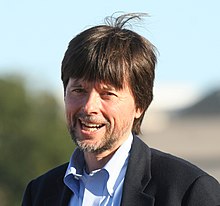
If you've been watching Ken Burns on Vietnam

Ken Burns/Wikipedia photo
First, the amount he gets wrong seems fairly big, and I'll detail that in a moment.

But, really, you shouldn't be surprised.

As I've noted, his bland pro-Americanism is like eating Chinese food. (And, as that link shows, his Vietnam series isn't the first time he's gotten Koch Bros money, either.)

As for what he misses or gets flat wrong?

He gets Tonkin Gulf, the non-event that LBJ used to get a blank check for war, totally wrong.

He doesn't even interview Daniel Ellsberg of Pentagon Papers fame, brought to the eye of some younger Americans by the Edward Snowdon issues.

He acts determined to present the war as nothing but a simple mistake, rather than willful stupidity mixed with imperialism that could have been avoided. (More on this lower in the piece.)

Bruce Dixon, managing editor of Black Agenda Report, notes that the death of 3 million Asians is a "crime" not a "mistake." (Not sure if Burns provides totals on non-US dead.) Anyway, per the reference he and others make about Noam Chomsky, the war was indeed ultimately deliberate and ultimately in the service of American imperialism.

Related to that, History News Network says Burns and co-producer Lynn Novick are patronizing to the Vietnamese. This one deserves a pull quote.
Did the Vietnamese really need two Americans, Ken Burns and Lynn Novick, to finally teach them about the bloodshed and devastation their own land suffered because of the Americans? 
And therein lies the core flaw of the entire project—it’s a series of stories, but not really a history of the war. That’s the Burns-Novick trademark and it’s worked for a long time, making them famous and I suspect wealthy. But it substitutes vignettes for ideas, personal anecdotes for larger structural factors, bathos for analysis.
THIS! Yes, Burns is an “auteur.” I’ve never denied it. But, per my top link, that’s why watching him is like eating stereotypical Chinese food.
And it ends up providing a misguided view of the war, one that has politically conservative consequences (ironic because Burns himself is openly liberal) by shifting attention away from the historical, material reasons for American intervention and focusing on 79 people interviewed who were directly involved in Vietnam. Instead of an exposΓ© of aggressive militarism, they give us sentimental stories of survival and perseverance. 
Burns and Novick, despite their claims of originality, provide a pretty boilerplate liberal examination of the war.
And, even though Counterpunch went overboard in one piece in calling Dems the war party of the 20th century, nonetheless, the Wilsonian angle was partially there in WWII, and elsewhere in the 20th century. It was LBJ's meat and potatoes in foreign policy, arguably.

(Sidebar: The Eastern Establishment wing of the GOP,  including returning Bull Mooser TR, were just as pro-intervention as Wilson in 1916; they just tried to get TR to not be vocal about it. There was more geographical division within both parties than a split between the two. In 1940, GOP presidential candidate Wendell Willkie was just as pro-intervention as FDR. In Korea, don't forget that MacArthur had already toyed with trying to get the GOP presidential nomination in 1948. In Nam? Yes, LBJ was president, but look at the vote for Tonkin Gulf; totally bipartisan.

I earlier said on Twitter than Counterpunch sounded like Bob Dole, 1976, in talking about "Democrat wars." I stand behind that, redoubled.

And, for any leftists who think that Democrats are somehow especially warmongering? I guess this might make for a separate blog post.)

OK, we've not kicked the dynamic duo enough. More from the same piece:
Burns and Novick talk a lot about reconciliation and healing, sort of a Vietnam War version of Dr. Phil and Oprah. ... 
Is America really still divided over Vietnam the way it was in, say, 1968, when Walter Cronkite stunned the White House and Main Street by essentially declaring that the war was unwinnable? ... 
Reconciliation and healing are always worthwhile and necessary goals, but that process has been well in place long before Burns and Novick arrived. The promotional material for the series boasts that they “unbury the secrets of the Vietnam War.” They also stress they want to let Americans know about Vietnam. But don’t we know a lot already?
Indeed. 

They're really that way, in the smarmy-preachy liberalism way, that ALSO is a hallmark of 20th-century Democrats.

Finally, the "necessary" claim gets its own butt-kicking:
The war was necessary because the U.S. made it necessary—the politburo in Hanoi and the NLF in the south would gladly have taken control of Vietnam without getting blown up and killed in apocalyptic numbers by American weapons. Equivalency and objectivity are the tools of liberal apologetics, and Burns and Novick have always used them well to make Americans (and Americans below the Mason-Dixon Line) feel good about themselves. Instead of examining American aggression, they ruminate on Vietnamese irredentism. Love them, they’re liberals.
Indeed. This is what tempts me to drop the "left-liberal" phrase for myself and just call myself a leftist, or per the blog header, a "skeptical leftist."

Here's a politer version of some of the same criticism — claims of "false balance," an old bugaboo of centrist "the media."

It too gets a pullout, because it too expresses issues emblematic of Burns' whole corpus:
Burns and Novick are the masters of false balancing, the technique of countering one story line with another to create the impression of objective evenhandedness. The same good-guy, bad-guy lens through which the war was viewed also filtered perceptions of the antiwar movement at home. Jack Todd is one of 30,000 Americans who deserted to Canada but, we are reassured, 30,000 Canadians volunteered to go to Vietnam. Never mind that, by other estimates, over 100,000 Americans are estimated to have gone to Canada during the war. The first figure apparently called for such dubious balancing because, as we later learn, Todd regrets having renounced his US citizenship.
Indeed. The "false balance" of including Shelby Foote as one of the top talking heads on his Civil War series made it bad enough at the time, and much worse in hindsight. The "false balance" of not having more Eric Foner, or any significant black historians, made the Reconstruction series, with my having gotten wiser, suck at the time. More here, thanks to S-USIH, on the outright racism of Foote and Burns, when later corned on how much he used Foote, doing a tap dance around it. The general appeal to violence by Foote underscores that the South is one of those "honor cultures" similar to much of the Middle East that Southern white wingnuts foam at the mouth about.

And, if all that isn't enough, there's a full website devoted to nothing but what Burns, and his ilk, got and get wrong by either omission or commission. (It was started five years ago, but for obvious reasons, is getting new circulation now.)

Bottom line is that, contra Burns, the Vietnam War was more than a mistake, it was imperial hubris, and also, that to the degree it was a mistake, it was easily avoidable.

"Old China hands" who had not yet been chased out of the State Department by McCarthyism knew the millennia, literally, of Vietnam-China animosity. So, that part of the domino theory was out the door. Chinese-USSR animosity meant that, while the Russkies had Cam Ranh Bay, the Chinese wouldn't help them there. Old State hands in general knew the history behind the Geneva accords and knew that, if we had tried, we probably could have cut a deal to make a unified Vietnam under Ho Chi Minh the Yugoslavia of Southeast Asia.

But, that's not in Burns' narrative either.

Why is all of this important?

Tonkin Gulf was similar to Shrub Bush's request for Congress to let him use military force in Iraq. And thus, to pass one off as a "mistake" invites people to do the same with the other. You know, like Obama's "look forward, not backward."

Snowden, and Chelsea Manning, had leaks similar to Ellsburg, vis a vis Afghanistan. We didn't learn from them, either.

Today, many Democrats have joined Republicans in calling Afghanistan, now a longer war than Vietnam, a simple mistake, which it may or may not be, and many have done the same with Iraq, which definitely is not true.

And, President Obama, as the likes of Andrew Bacevich have noted, simply became a hypocrite on Afghanistan. Not only did he continue the war, he did a "surge" similar to what he opposed in Iraq. And politicized it further by splitting the difference.

My overall opinion on Afghanistan is not as harsh as Ted Rall's. In hindsight, I'm still OK with the original action — well, I'm OK with what SHOULD have been done, i.e., putting real amounts of US boots on the ground at the start of the war, rather than depending on Afghan tribespeople to hold the line at Tora Bora, which they deliberately chose not to do. Per Bacevich, Obama should have had some cojones and gotten us out of there rather than doing ANY version of a "surge." (I did not support any version of a "surge.")

But, he didn't want to. Per Consortium News:
Barack Obama provided the apotheosis, with seven simultaneous wars, a presidential record, including the destruction of Libya as a modern state. Obama’s overthrow of Ukraine’s elected government has had the desired effect: the massing of American-led NATO forces on Russia’s western borderland through which the Nazis invaded in 1941.
That's pretty much right.

(Noting Bacevich, above, I think a number of non-imperialists of the right and left alike reject the idea that the Afghanistan war as originally presented to the American public was a war of imperialism. And, while Counterpunch has opened my eyes on some things, like Bosnia, on others, it and other leftist opinion magazines remain wrong, IMO. For all I know, somebody could call the American Civil War imperialist; certainly, Southerners did, in essence.)

On the link from my previous blogging? Besides this not being his first use of Koch money, Burns overhyped the National Park Service into "America's greatest idea," got a number of things about both TR and FDR wrong, turned dealing with cancer into an American-style war to win (at that top link), pulled punches on the history of baseball in his iconic early series and more in his folo, commits American exceptionalism and ignores the Russkies in WWII and more.

His American exceptionalism fellatio goes back to his original Civil War series, bad enough that a Smithsonian Magazine contributor now harshly scores him.

That WWII series also failed to include anything about Hispanic or Native American contributions. And, even though it was before good DNA testing, Burns got all the white historians in his Thomas Jefferson miniseries to pooh-pooh over the idea that he had a sexual relationship with Sally Hemings. Now, it's true, that was before the 1998 DNA Y-chromosome testing, but still.

If it harshes some people's mellow too much, sorry. But, many you're viewing Vietnam through rose-colored glasses yourself.

(Update, April 23, 2019: This is all also bad enough to make me wonder if Burns is, if not necessarily consciously racist, at least carrying a big bag of implicit bias.)

And, I understand that for many from vague moderate conservatives to vague left-neoliberals, PBS = Polite Broadcasting System just like NPR = Nice Polite Republicans. I understand that a centrist version of Merika is engrained into its cultural DNA just as much as, by 1888, the fact that Lincoln's Gettysburg Address was actually about emancipation was whitewashed into the pretense it was about post-Civil War healing and unity.

The idea that the NPS might NOT be "America's greatest idea" shocked a lot of environmentalists when the National Parks Conservation Association's Congressional liaison did a long blog post on its website, noting the Emancipation Proclamation + 13th Amendment would probably qualify instead. [I suggested the First Amendment myself. In any case, I agreed with the NPCA person that America's national parks not only aren't America's greatest idea, they're not even in the top three.] Seriously, a bunch of nice, polite, white environmentalists suddenly, for them at least, got strident. I suspect a fair chunk of them don't like to see that Ken's getting called out for whitewashing Nam, either.

And, for that matter, not only were national parks, and the Service, NOT America's greatest idea, Ken didn't tell you that, even as he was producing the episodes, the NPS continued to fall apart even as Dear Leader planned a thorough neoliberal centennial celebration. (And, per the likes of High Country News, Ken told you bupkis about the history of sexual harassment and sexual abuse in the Park Service.)

For you, whether or not this is particularly about being a Ken Burns fan or not, I understand the shock. But, if you're a left-liberal or beyond, this shouldn't be anything new. Sorry, but that includes my blogging cousin by a different aunt. (And, given that Ken didn't talk about petrochemicals — you know, in places like Houston's Petrochemical Alley — being carcinogens in his cancer series, again, left-liberals and beyond in places like that ... I don't get the love for Burns.)

Is this particular piece all bad? I'm sure it's not and even Consortium News mentioned good things in another link. But, for people under 40, and especially under 30, for whom Burns is quasi-godlike, there's a lot of problems.

Theoretically, the cuts to federal funding for PBS and NPR should make it more willing, not less, to take risk. In reality, the likes of George Soros aren't much more likely to fund anything that counteracts belief in American exceptionionalism much more than Charles Koch and David H. Koch.

Per that, Consortium News has a new piece up about Ken's funders in general, among other things, over whom he gushes.
Burns says he is grateful to “the entire Bank of America family” which “has long supported our country’s veterans.” Bank of America was a corporate prop to an invasion that killed perhaps as many as four million Vietnamese and ravaged and poisoned a once bountiful land. 
Thanks, BofA. Maybe Ken can do a series about subprime loans and CDOs in a few years.

Real American exceptionalism, if it actually existed, would be a fairly widespread acceptance that America's shit does stink, stinks a fair amount of the time, and stinks in ways that should upset notional liberals as much as conservatives, if they're honest.

As for the "have you watched it?" rhetorical question? No. I'm in a place where, since my most recent forced job change, I'm pretty sure I can't get TV without cable and I'm pretty sure that PBS won't let me watch it online. Even if these weren't all problems, per Wiki, I don't think I need to waste 18 hours, longer than anything else he's done since his original Baseball series.

That said, I didn't say it was all wrong. And I've never claimed that in stylistic, framing and narrative skills, that Ken Burns is anything but a master of the TV documentary craft.

But, per my link at top, and chunk of links at bottom, I don't need to watch. I have no real surprise about what Burns does get wrong. And I have no need or desire to have American exceptionalism and mythmaking about the Vietnam War served up on a plate, even if it's by a French chef.

And, longtime Burns narrator sidekick Peter Coyote may be a nice and decent guy, and at one time more lefty than he is now, but he's not a national treasure, and if he really believes that Vietnam was "started in good faith by decent men," then he's whored himself out for Koch Bros money and contra a comment of his on his Wiki page, he's "capitalist first, activist second, actor third."

Hey, sh-it happens. John Kerry might have been a national treasure 40-something years before his presidential run, talking some truth as part of Vietnam Veterans Against the War, but he's not today.

And, at times, I'm also a deliberate contrarian, part of becoming a neo-Cynic. Brains, at least, knows this. And, this is one of those times.

Burns also, while covering Speedy Express, pretty shortchanged it — and it was worse than MyLai and more emblematic of how America fought in Vietnam. See Nick Turse, then a decade ago, and Nick Turse now, directly on the series.

==

Sadly, Philip Weiss, editor of Mondoweiss, says he likes the series even though he admits he knows a fair amount of what I said above about Burns' modus operandi.

Wonder if he would say the same if Burns next makes a series about the creation of the nation of Israel that turd-polishes Zionism?

That said, Donald Johnson has a follow-up piece there, which more politely raises similar criticism.

==

Updates: First additional note? Burns (h/t Consortium News), if his series was trying to imply Merika is a specially peace-loving nation, sadly forced into Nam, is totally wrong on that.

Next: Per a comment back to me from S-USIH, I didn't need to watch this. Others' critiques confirmed my observations of Burns from having seen most of his previous documentary series. Seriously, when Doris Kearns Goodwin gets Taft v. TR more correct than you do?