SocraticGadfly: California
Showing posts with label California. Show all posts

February 20, 2026

Neoliberal California climate change environmentalism in action

Shock me that the state governed by the former Mayor Pothole is doing toothless state carbon offsets by funding "renewable" natural gas plants in North Carolina, extracting and purifying the methane out of hog shit. And yes, per the piece, California FUNDS something that is not really environmental, is neoliberal greenwashing, involves cheating within that and also has environmental justice problems.

First, of course, some of that methane goes into making fertilizers, herbicides and pesticides for the food that feeds the hogs that produce .... methane and shit. It's "renewable" but in just the opposite way from Gavin Newsom's idea. 

And, as said Devon Hall, an environmental justice organizer who founded the Rural Empowerment Association for Community Help (REACH) in Warsaw, North Carolina, about fifteen minutes down the road from the facility:

“Communities have been suffering with the swine CAFOs for many years,” said Hall. “Whenever you begin to talk about biogas, then it just further embeds the problem.”

There you are. 

The hypocrisy is compounded because Newsom signed into law a bill from the Cal Lege banning eggs from states that don't give chicken minimum room to roam but won't ban pork from CAFO farms.

Meanwhile, the biogas technology, a greenwashing effort by the Big Hog industry, doesn't actually solve the problem anyway:

The United States Department of Agriculture warns that the methane capture process can exacerbate certain water quality issues by increasing the water-solubility of nitrogen in livestock waste. That raises the risk of nitrate contamination of drinking water which is linked to miscarriages and infant mortality and is a particular concern in an area where most residents draw their water from wells.

Again, there you are. 

The story goes on to note that, back in Newsom's own state, biogas for dairy farms doesn't get the carbon reductions Newsom's state credits it for.

Worse yet? Newsom's California cheats:

Even more egregious, they say, is the fact that the program allows farms in Wisconsin, Texas, New York, Missouri and several other states to sell biogas credits into the California market for fuel that never makes it into California pipelines.

Cheats.

Go read more. I'm just halfway into the piece with that quote. 

No, there's more. California's hypocritical even compared to North Carolina! Yes:

Years before the LCFS existed, utilities in North Carolina were required by a 2007 state law to source some of their power from renewable sources, including 0.2 percent from swine biogas by 2018. It’s the only state in the country that mandates sourcing electricity from animal waste.

Again, there you are. The "only state that mandates" means no California. (That said, the mandate targets in NC aren't close to being reached.)

That all said, the story notes other environmental problems with the whole biogas idea. It also notes a shitload of environmental justice ideas. 

And people wonder why I don't vote Democrat, not only not for president, but also not for U.S. Senator nor any statewide state office. 

June 13, 2022

Dear California Dum Fuqs moving to Austin

A year ago, you tech neoliberal types spiked the cost of a new house there to more than $600K. Perhaps not as bad as the Bay Area, but I venture worse than Sacramento. And, in your lust for a state with no state income tax, you ignored that in a metropolitan area, you can pay $2.50 or so per $100 valuation in city, county, school board, hospital district and other special tax district property taxes.

Well, beyond that, feast your eyes on this:


Yeah, you may say, you've been to Sacramento, so you know what a 100-plus day is.

Know what? There's this thing in Texas, from the Hill Country eastward, and especially from I-35 eastward, called "humidity." Go visit Weather Underground's Austin page, where I got that screenshot from. You'll see that, even at a 102-degree high, the relative humidity is still near 30 percent.

And, in California, besides the truly dry heat of Palm Springs and Death Valley, I've been to Redding when it was 110 or so. But, you know what? The humidity there was below 20 percent, even though not in a desert. (That's part of why you have all those summer wildfires.)

So, per a heat index chart, lets do, say 102 at 33 percent versus 112 at 16 percent. The Austin heat index is 108 and Redding's is 112. So, pretty close.

But, those aren't the only factors. AccuWeather's "real feel" takes into account other things, like wind speed and sun angle. Sun angle is not just time of day, but latitude. Austin is a full 10 degrees of latitude further south than Redding. Eight degrees further south than the Bay Area. The sun is close to overhead from late morning through mid-afternoon.

And, this applies to you Southland folks moving to Tex-ass, too. Sure, the Inland Empire area also gets hot at times, but not like the actual desert, and, it also has no humidity in the summer. And, LA is four degrees of latitude further north than Austin.

Also, notice that it doesn't cool down a lot at night and the humidity goes way back up.

"Congrats" for coming here and burning through electricity on a Texas-exceptionalist electric grid not connected to the rest of the nation that's barely winterized and really not at all summerized.

(Update, July 2: Outside energy experts warned again about grid and supply concerns a couple of days ago, even as ERCOT again said, "move along, nothing to look at.")

But wait, that's not all. Due to the geography of the Hill Country, freeway type highways running straight in any direction once you're west of the Mopac don't exist. The Mopac, at least on some of my years-ago visits to Austin, at times could be worse than 35. (It was usually the other way around, though.) Sounds almost like the Bay Area you left, doesn't it? It's not quite that bad, but it can be as bad as Dallas or Houston, and all you folks moving there are just making it worse.

August 26, 2020

California is not a failed state, but it is a state failed by both Republicans of all stripes and neoliberal Democrats

To me, it's long been a toss-up over which allegedly librul big state mosts wastes its gubernatorial and senatorial offices, California or New York.

Overall, though, as Silicon Valley gets more monstrous than Wall Street, I think it's more California. (That would be the Silicon Valley that is not as monolithic as Rethugs claim, either. The prosecution calls Peter Thiel to the stand.)

Anyway, per the first half of the header, as started Monday night at, and in conjunction with, the Republican National Convention, you and I are hearing a drumbeat of "failed state" stories about California.

It's not failed, but it does have problems. Just different problems than lying-by-omission Rethugs are telling you.

Those lightning strikes? The ones in the dry thunderstorm?

That dry thunderstorm and its intensity are believed to be at least partially connected to climate change. So say such experts as Michael Mann as quoted by the folks at Yale Climate Connections. Won't hear the GOP mention that. Sadly, you're not hearing a lot of mainstream media mention that either, per Heated. That lets the wingnuts get away with this unchecked. CJR's Jon Allsop adds that this was also true in 2018 and 2019.

The bad Paradise Fire of a couple of years ago? Officially knows as the Camp Fire? Bad electric wires caused by the cheap-ass capitalist utility PG and E, for which it corporately pled guilty. That's the same PG and E of San Bruno gas line explosion infamy. That would be the PG and E that is owned by a holding company.

Pro Publica now reports that bribery of PG and E employees, in the form of a house in the Bay Area, appears to be tied to that fire.

So, that's one set of lies right there. It is aging infrastructure, not increased use of renewable energy, that has caused capitalist PG and E to fall down on the job. (And, in this sense, with 33 percent renewables, PG and E actually IS following the market as well as state goals. Wind is not only cheaper than coal, it's at least as cheap as natural gas.)

As for Cal leadership? Arnold Schwarzenegger was gov during the gas line explosion, but Newsom was during the fire.

Back to that representation.

In the governor's office in Sacto, the state's been ill-served for some time. You had Gov. Moonbeam Jerry Brown, arguably the first modern neoliberal in a statehouse, from 1975-1983. He, of course, followed St. Ronald of Reagan. Next was Duke Deukmejian, who tried to straddle the sane conservatives vs wingnuts divide in the state GOP. Pete Wilson was the same. Then came Gray Davis, who lived up to his name before being recalled, and then replaced not by a wingnut, but by the Terminator, who eventually fully repudiated the wingnut wing. Then came Jerry 2.0, even more neoliberal than before (and not as environmentalist as he would have us believe) and now, Gov. Pothole, Gavin Newsom. Childhood and business friend of J. Paul Getty scion Gordon Getty. Your average everyday plutocrat. Also known as the former Mr. Kimberly Guilfoyle.

California's infamous Proposition 13 was approved by voters during Moonbeam's first tour of duty. Why he didn't look at a state like here in Tex-ass and propose a seniors' exemption plus caps on property for taxation, and head Prop 13 off at the pass, I don't know. Of course, this is the man who, before the NY primary in 1992, said he'd choose Jesse Jackson as his Veep. Political smarts aren't always there.

Anyway, Prop 13 has not quite gutted Cal government, but it dinged it and twisted it into pretzels, since property taxes and valuations can take "normal" hikes when property is sold. I don't know how much property sales fraud happens in the Golden State, but I'm sure it's plenty.

Rich folks of both parties have moved further into the urban-wildland interface area with their McMansions, following up on previously locating in mudslide zones.

That said, both Democratic and Republican Secretaries of the Interior have not done enough to move the U.S. Forest Service away from bad fire management and dead tree management practices. (California does not have as much of a climate change related dead tree problem as the Rockies, but it does have some.) On the Dem side, I'm thinking of oil-friendly Kenny Boy Salazar in particular.

March 04, 2020

Is Texas being Californicated? No, not really

Is Texas being Californicated? No, not really. This Frisco development likely mainly has other Texas move-ins.
A couple of weeks ago, I wrote about Texas Monthly calling Fredericksburg the new Aspen.

In addition to calling out that general bullshit, I said that to the degree housing costs WERE going up there, it was primarily due to their fellow Texans.

But, Derek Thompson at The Atlantic didn't get the memo. Or more to the point, he read the wrong memo from places like the Snooze.

So, time to set him straight.

First, to the degree Texas, especially its suburbs, ARE being Californicated as Derek Thompson claims? That said, the idea that this might be a political tipping point? Tosh or at least semi-tosh. The majority of California migration here is from places like the OC, the Inland Empire, San Diego exurbs to the south of that, and portions of the Central Valley. Red, or at least red-dish. Now, these folks may not be as conservative as the likes of Former Fetus Forever Fuckwad Jonathan Stickland or Gohmert Pyle, but they're conservative enough.

That said, many Californicators aren't moving to Tex-ass. Per the Wall Street Journal, high property taxes (and they are, for Texans who still think they may not be, but refuse to look at an income tax). a $10K cap on state and local tax deductions, while not hitting Texas as hard as California or New York, is hitting it hard enough.

As for the Snooze saying more Californians move to North Texas than people from any other state?

No duh, dum fux. California is still far and away the most populous state in the Union. And, many conservative Californians do see some things they like. In suburban areas, the Former Fetus types of the world, like Stickland himself, may find themselves more and more deciding to leave the Lege. But as the recent special election for HD 28 points out, that day ain't here yet. Stickland has a good chance of being replaced by a Rethug, just one not quite so winger as him.

Let's look more at the Nerdwallet piece that said Snooze guy Dom DiFurio blogged about. (That's really what it was.)
  • Phoenix, as well as the Metromess, had California's Southland as the No. 1 move-in source.
  • Chicago, Denver, Portland, San Antonio, Seattle all had the Southland as the No. 2 source.
  • Houston had it as third.
  • Other Texas metro areas, in aggregate, were the largest Metromess move-in source. In fact, by itself, Helltown was almost twice as popular a DFW move-in source as the Southland. Ditto on other Texas metros, on the target move-out destination.
  • Vegas was the No. 1 destination for LA and the Inland Empire. Other Cal metros were No. 1 for San Diego and San Francisco. (In a fail, Nerdwallet didn't mention in-state moves for the first two.
If you're going to write a piece like that, coastal transplant guy, that's how you do it.

Beyond the high taxes, the Observer for the Metromess, and Texas Monthly for Helltown, have already refudiated the idea that Texas' main urban areas are low-income paradises, at least when compared to New York. The Snooze apparently didn't get that memo either.

As posted by me in a Texas Progressives roundup a couple of weeks ago:

When transportation sprawl, and housing and other costs relative to pay are all factored in, both Dallas and Houston are LESS affordable than New York City. For whatever reason, even though the Metromess and Houston are almost dead even on these costs, Texas Monthly writes its story on the issue only about Houston. (Unless it does the rewrite I suggested.) Related? Contra former Houston mayor Annise Parker's past bragging about how Helltown would eventually pass Chicago? The Windy City is cheaper, per the first link. And that ignores the humidity, skeeters and flooding of Houston, along with the climate change that will exacerbate all. Do we file this under "Rick Perry's Texas Miracle" or "Greg Abbott's Texas Miracle"?

The Dallas Observer DID pick up on the Dallas angle.

Per the bullet points above, Nevada also has no state income tax, is a much shorter move from California than Texas, and since Fredericksburg is NOT the new Aspen, like California, Nevada has skiing.

December 29, 2016

So California wants to secede ...

It's for different reasons than Republic of Texas nutbars, as the homepage of "Yes California" makes clear.

That said, it's almost as dumb as RoT.

My take on the bullet points:
  1. They might attack an independent California. Besides, you should still fear domestic white rights folks more than al-Qaeda et al.
  2. What if we killed the Electoral College?
  3. So, you seem to want free trade yet oppose the TPP at the same time? Hmmmm …
  4. No, Prop. 13 is the primary reason for your debt problems. Clean your own house.
  5. You might be surprised at how many “liberals” want tighter immigration.
  6. True dat.
  7. Talk to those in-state water wasters down in the Southland while you're at it. Oh, and don't forget that the Southland might not want to be a part of the rest of the state, if we go down that road. Oh, and speaking of? You'll lose all that Colorado River water with independence.
  8. You think neoliberal Jerry Brown favors single-payer national health care, or a Cal version? I got beachfront property in Fresno to sell you.
  9. Education? Primarily a state problem See Prop. 13, above.

April 13, 2016

Pot, banks, and equality

California is looking likely to join Washington state and Colorado as offering full legalization of marijuana, not just medical marijuana, after elections in November. And, this is going to have all sorts of fiscal and other fallout, some of which we probably can't totally foresee.

The expected change could double the value of marijuana sales, part of making pot big business there. I await further hand-wringing by the alleged guru on what's wrong with the War on Drugs, Mark Kleiman, following on previous hand-wringing.

An example of Kleiman’s brilliance:
The “commercial free speech” doctrine creates an absurd situation: both state governments and the federal government can constitutionally put people in prison for growing and selling cannabis, but they’re constitutionally barred from legalizing cannabis with any sort of marketing restriction designed to prevent problem use.

Huh? We regulate both alcohol and tobacco advertising as I speak. Yes, Kleiman cites a piece on how court attitudes may be changing, but, they haven't changed on issues like this. As for the issue of corporate free speech? Per the issue piece Kleiman links, country-of-origin meat labeling rules were tossed out, tis true, but not by any court. Congress acted, under WTO pressure. And, a piece which talks about the evils of corporate free speech — where I do think there are legitimate concerns — and doesn't even mention Buckley v Valeo, is missing at least part of the boat.

The only real insight Kleiman has is mentioned in one blog post of mine, that pot is probably more addictive than some think, and legalization is not a panacea. 

Related handwringing comes from blogging fellows of his, over state-by-state legalization, and the worries about two-tiered pot sales — WallyWorld level and fine wine level. Fuck him, and them; he's a Clintonista; the people he hangs out with are all neolib snoots, despite his protest to me on Twitter that his WOD editorial history would preclude him being Hillary's drug czar.

That includes Kleiman already, a full decade ago, peddling Lesser Of Two Evils bullshit.

Anyway, I digress.

As the NYT story at the top link notes, one big problem with marijuana legalization, especially when it becomes bigger and bigger business, is what to do with the profits.

Meanwhile, on issues of economic justice and other things, beyond breaking up banks, or looking at nationalization instead of breakups, and beyond overhauling the Federal Reserve, there's the issue of state banks.

I'm not talking about First State Bank vs First National Bank.

I'm talking about the Bank of North Dakota, the only state-owned bank in the U.S., and kind of what the Federal Reserve should be. More on the bank from Mother Jones.

So, if pot in California becomes big biz? It's an opportunity for the next governor to create a Bank of California, and specify that it WILL accept marijuana profits as part of its deposits. And, then and thus, tell the federal government to Eff You on this issue.

If the Treasury, or FDIC, or whomever, pushes back? Create a state version of the FDIC, which North Dakota does with its bank. If the Fed says we won't accept your deposits? Contact the European Central Bank or something.

And, no, that's not a joke. (The Bank of ND has a depository window with the Fed; I'm not sure how much it's used.)

==

Meanwhile, one more rejoinder to Kleiman — using pricing to control usage will drive people back to illicit pot. That's even more when it's being used medicinally and insurance doesn't cover it.

October 15, 2015

One thing I REALLY hate about California

Not having been here on a vacation in four years, maybe I didn't notice it as much before. Or maybe Texas, and other states, have gotten better about it since then.

Here's the details on what really pisses me off.

Texas, and most states, at every exit on an interstate or other major freeway, after the green-backed "exit" sign, will have a blue-backed sign listing service available at that exit, as in "gas, fuel, lodging," "gas, fuel," or even the "no services."

California? It's spotty. For instance, at the north end of Santa Barbara on US 101, a sign said "services available next 9 exits" without individual exit details.

But, that's a small part of the problem. Normally, most states, at each exit, have individual placards for brand names of services at that exit, like McDonalds, Taco Bell, etc., for food, Shell, Mobil, etc., for gas.

Not California.

I don't know if the Cal Legislature passed a law allowing home-rule cities to block such placards (I saw a couple, but only in unincorporated areas or small towns), or (doorknob help me for sounding like Rick Perry or Greg Abbott, the past and current Texas governors) maybe it is part of an "anti-business climate" in the still, at times, Tarnished Brass State.

Whatever the reason for this, it is anti-business. And, in the case of late-night travelers looking not just for food, but specifically for fast food, it's a PITA indeed. It's a PITA to drive past an exit and see a Jack in the Box sign in the rearview mirror, a sign that, for various reasons, could't be seen before the exit.

And, given that not all fast-food places, even on freeways, stay open that late, knowing individual fast food places is important.

This is more than a bad-for-business or similar issue, too.

It's a highway safety issue.

Drivers rubbernecking to try to find fast-food restaurants at 11 p.m. is never a good idea, especially if they're out-of-region, let alone out-of-state, tourists.

Speaking of, California?

You could learn one other highway safety issue from Texas.

Except in mountainous areas, where it's more understandable, ditch the separate semi speed limits.

Here in Texas, it was shown, before we got rid of them, to actually add to traffic flow problems.

If it's an air-quality issue, make your diesel even cleaner. But get rid of the speed limit split.

===

And, yes, this is a sign of the apocalypse, to have Texas getting multiple things more right than California.

May 16, 2015

Water, California, Jerry Brown and courts

First, California Gov. Jerry Brown is about as liberal as Hillary Clinton.

Second, it's clear that come hell or high water (climatologically, the functional metaphorical equivalent of the former is MUCH more likely than even a literal installment of the latter on a regular basis), Jerry Brown wants a chunk of his daddy's legacy by getting what he surely thinks should be called the Edmund G. Brown Jr. Peripheral Delta Canal pushed through. That's even as it looks about as environmentally unfriendly as any other California big water project.

As for the intensifying drought that's negating the likelihood of that high water?

His state's own Supreme Court, shortly after his first go-round as governor ended, said that water use fell under the public use doctrine and courts could control it in emergencies.

I agree: it's time to bring a court case, because we know Jerry Brown never will.

April 08, 2015

'The desert always wins': The last word on California drought

The quote above, whether most popularized by Cactus Ed, good old Ed Abbey, or someone else, is true indeed. indeed.

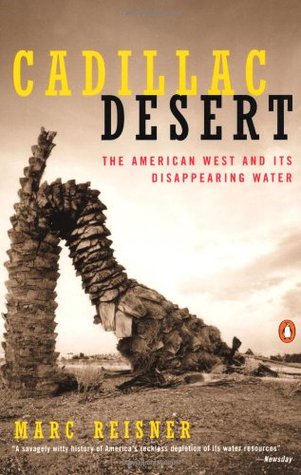
As Marc Reiser demonstrated in "Cadillac Desert," along with many others, some before, many since him, the Colorado River was highly overappropriated among its seven basin states because the 1920s were an outstandingly wet period within a larger wettish period. While Colorado River system water is not the same as the snowmelt from the Sierras that fills (Californians hope) in-state reservoirs, it too is snowmelt-based, with all that implies in our era of global warming, El Niño-related oceanic oscillation changes and more.

Let's not forget that the Los Angeles Aqueduct of "Chinatown" fame was built less than 20 years before the Colorado River Compact, also during a wet period. And, although the 1960s of California State Water Project fame were less wet than the 1920s, they were far wetter than today, or than long-term droughts we know hit the Southwest in the past and are likely to do again in the near future. And, while that megadrought is expected to center on the Four Corners, not California, it will have its "fair share" of effect on the Golden State. And, for students of paleo-American history, this drought is expected, at least in the Southwest, to be worse than the one that shuttered Chaco Canyon and destroyed Anazasi culture. In other words, anthropogenic climate change, while part of the problem, is not all the problem. Rather, it is, in part, intensifying what's more "normal" than European settlers thought, 100 years ago.

So, that leads to Abbey's most famous statement certified statement: "Growth for growth's sake is the theology of the cancer cell."

This NYTimes graphic, from the linked story about
groundwater regulation, shows the amount of sinkage
in many areas; the largest red dots have shown
more than 100 feet of sinking. See story for more.
And thus, the quasi-rhetorical, yet seriously asked, question in this long New York Times piece has but one answer: "no." Relentless growth has limits. There is no perpetual motion machine in general and certainly not with water supplies. Meanwhile, even as Jerry Brown has imposed water cuts (that don't affect agriculture, don't affect oil fracking and don't start until July 1), there's really a bigger scandal in California water issues: groundwater, unlike in most western states (but, unfortunately, very much like in Texas) is currently not regulated at all, and under a weak-tea system the state finally, recently, adopted, will not be semi-effectively regulated until the 2040s.

By that time, the groundwater may be almost gone, with storage capacity, flow, and more of reservoirs irreversibly damaged.

(In turn, this is part of why I said last week that Californians should recall Jerry Brown.)

Now, Reisner did not directly cover these issues. But he did indirectly cover them when he wrote about overpumping of the Ogallala Aquifer.

Having grown up in New Mexico, and been the editor of one newspaper in that state, I personally know this.

Most Western states have a state water engineer, who is god and czar of the state's water supply, with the partial exception of any rivers that come under interstate compacts.

For example, in New Mexico, at least at the time I was editing there, if a person wanted to drill a new water well, they had to run an ad in the newspaper three weeks straight, giving a precise metes-and-bounds description of the well's location AND its planned depth. At the end of said legal notice had to be a date for a public hearing about that well. The regional office of the state engineer conducted that hearing.

From what I understand, even if California does have a state engineer, said office has nothing like that regulatory power.

Meanwhile, fallowing of the fields could damage the fields themselves.

Reiser, whether the water source was irrigation or groundwater, wrote about improper irrigation and the salination problems it caused to land. As California farmers are having to fallow more land, the salinity problems are apparently starting to show up in places in the Central Valley.

Add in that the current drought is worsened by climate change, and many Californians' blithe belief that the state will "escape again," like it escaped Enron gaming its electricity nearly 15 years ago, is kind of appalling. It's also a proof that blue states aren't exempt from the delusion of American exceptionalism.

Abbey addressed that, too:
“There is no shortage of water in the desert but exactly the right amount, a perfect ratio of water to rock, water to sand, insuring that wide free open, generous spacing among plants and animals, homes and towns and cities, which makes the arid West so different from any other part of the nation. There is no lack of water here unless you try to establish a city where no city should be.”
So, Californians? (And, Arizonans, Nevadans, etc.?) It's time for a lot of you to move back to Minneapolis, or Cleveland, or St. Louis — where the water is.

And, speaking of Arizonans and Nevadans? Here's Part 1 and Part 2 of what's going to be a three-part series on drought in the Colorado River basin, from the Arizona Republic.

For those who think desalinization is the answer? In the Colorado River Basin, per that Part 2 link immediately above, maybe think again. In coastal California, even if the price drops a lot, and quickly, which is open to debate, you have the issue of thermal pollution from "wastewater" being dumped into a coldwater ocean current. The only plant currently under construction is only going to meet 7 percent of San Diego's needs, a drop in the bucket for overall California use. If desalinization in Florida is any indication, it will probably not run as well as expected, and be pricier than expected. (Right now, the San Diego project will deliver water at twice the current cost, and the same company that built that troubled Florida desal plant is doing the one in San Diego. It would probably be cheaper to move people back to the Midwest.)

Salvific technologism, as I've called it before, has no guarantees. Re-read those Abbey quotes.

April 01, 2015

#Hypocrisy alert from Jerry Brown on California water

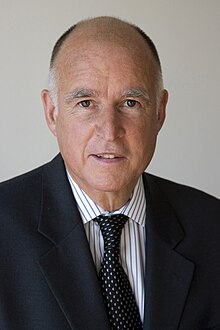
Gov Edmund G. Brown Jr.,
California water whore.
(Wikipedia photo)
Gov. Edmund G. Brown Jr., to rightfully name him, has imposed the first-ever mandatory statewide water restrictions.

So, why is this hypocrtical?

Because he is known to want to build the Edmund G. Brown Jr. Delta Peripheral Canal, among other things. If Wikipedia's description of likely environmental damage:
A peripheral canal would reduce the overall freshwater flow into the Delta and move the freshwater-saltwater interface further inland, causing damage to Delta agriculture and ecosystems.
Put another way? A peripheral canal, with the new water realities, is just reshuffling the deck chairs on the Titanic. And, it ignores that the desert always wins on water issues.

Then there's more.

Try Friends of the River, which notes it would severely draw down reservoirs in northern California. You know, the ones that already have almost no water this year.

As for the name I mention?

No, it's not on record. But surely Junior wants his "legacy" as Cal governor to be a follow-up to Daddy's California State Water Project, which includes the Edmund G. Brown California Aqueduct. He's as thirsty for it as an almond orchard south of Fresno. Given that agricultural users aren't required to make further cuts, as Mother Jones notes, this isn't hyperbole. And, as the Daily Beast notes, including describing how California is the Texas of California on groundwater, and as Cadillac Desert explains in much more detail, that agricultural water is often subsidized by not just urban Californians but the rest of the nation.

Remember that whenever you hear Western farmers and ranchers, or politicians that mouth their views, tout free enterprise and bitch about the federal government. One of the biggest hypocrites in US political history, beyond the Brown family franchise, was Barry Goldwater.

So, Californians? The answer is simple.

Hold on to a metaphorical 10 gallons of water and flush Jerry Brown. Just like Gray Davis. Recall him. But not to be replaced by an Ahhhnold.

Get somebody real. Maybe Barbara Boxer, since she's not running for the Senate again.

Because Jerry Brown is full of it, starting with the claims of 25 percent water use reduction, if agriculture doesn't face anything mandatory at all, and neither does the oil and gas industry.

September 16, 2014

California drought? That's climate change

Both Jeff Masters of Weather Underground and Joe Romm have details in this.

What's called the Ridiculously Resilient Ridge of high pressure, the one that sent wintertime Pacific moisture far, far north of California and continues to affect it now, is influenced by climate change.

Oh, and as for denialists who pooh-pooh computer models? With the aid of computer models, this was predicted a decade ago, Romm notes.

And, it won't get better. Romm, quoting NASA:

… it is important to note that the dipole is projected to intensify, which means more extreme future droughts for California. Historical data show that the dipole has been intensifying since the late 1970s. The intensified dipole can be accurately simulated using a new global climate model, which also simulates the level of greenhouse gases in the atmosphere. Simulations with only natural variability show a weakening dipole, which is opposite to what is currently being observed. Moreover, the occurrence of the dipole one year before an El Nino/La Nina event is becoming more common, which can only be reproduced in model simulations when greenhouse gases are introduced into the system
Romm also quotes Michael Mann noting that the UN's climate change reports have been on the conservative side on issues like this.

Meanwhile, per other modeling, Masters says that research shows that if the "polarity" of this ridge, this dipole, flips, extremely wet years in California — think El Niño winters — could be even more drenched than in the past.

That said, for the next winter, although Masters mentions a likely El Niño, and a likely strong one, ahead, the National Weather Service seems to disagree. Its winter precipitation maps show a modest chance of above normal precipitation in Southern Calfornia, south of Bakersfield, only, and nothing for the north. Those odds go up from modest to moderate from Arizona to West Texas. Still, the NWS maps seem to be saying that if there is an El Niño, it won't be huge.

June 29, 2014

Dear Texans: Don't count your chickens yet on El Niño (updated)


There continues to be more hints that an El Niño system may be in the process of developing in the Pacific. Such systems normally bring more rain to Texas, and definitely more rain to the Southwest.

But, as of now, it's pretty clear that any such El Niño won't come until after the end of summer.

(Update, June 17: John Nielsen-Gammon, the Texas state climatologist, agrees with my header:
In early May, NASA predicted a very strong El Niño, Nielsen-Gammon said. NASA based the prediction on satellite images showing patterns of temperature and ocean height that were similar to those of May 1997, a year of one of the strongest El Niño oscillations of the 20th century.

“But the recent computer model forecasts are not so enthusiastic,” Nielsen-Gammon said. “More likely, we’ll end up with a weak to moderately strong El Niño.”

This means much of Texas could still have a wetter than normal late fall and winter, just not as wet as it might be with a very strong El Niño, he said.
More here on other climatologists agreeing with Nielsen-Gammon; the expected El Niño looks like it's dying out. Back to your regular climate programming.)

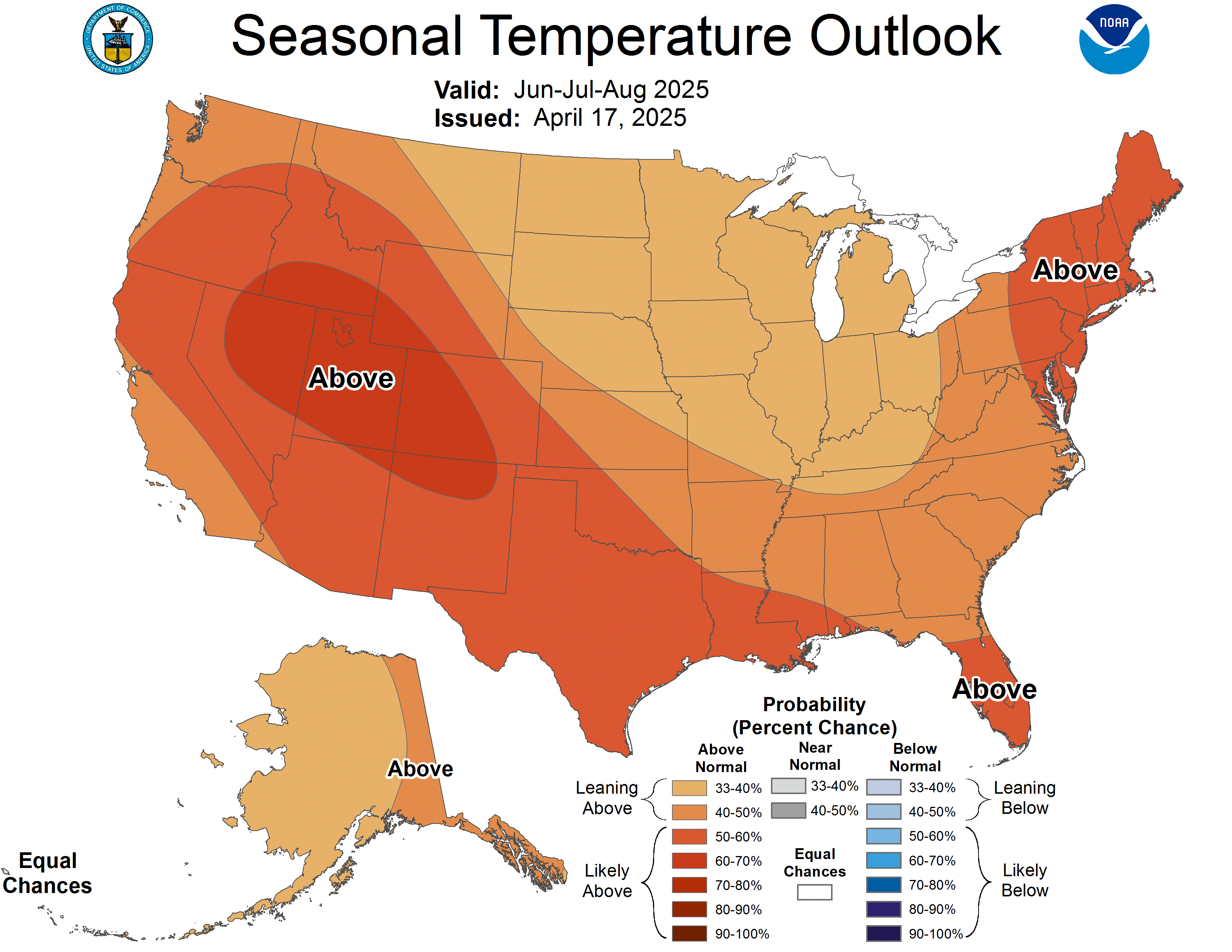
First, note the temperature map for July-September. It ain't gonna be a cool summer, is it?

In fact, that 40 percent chance of above normal temperatures covers the whole state in June, and the eastern two-thirds in October, as well.

So, again, no temperature relief until fall.

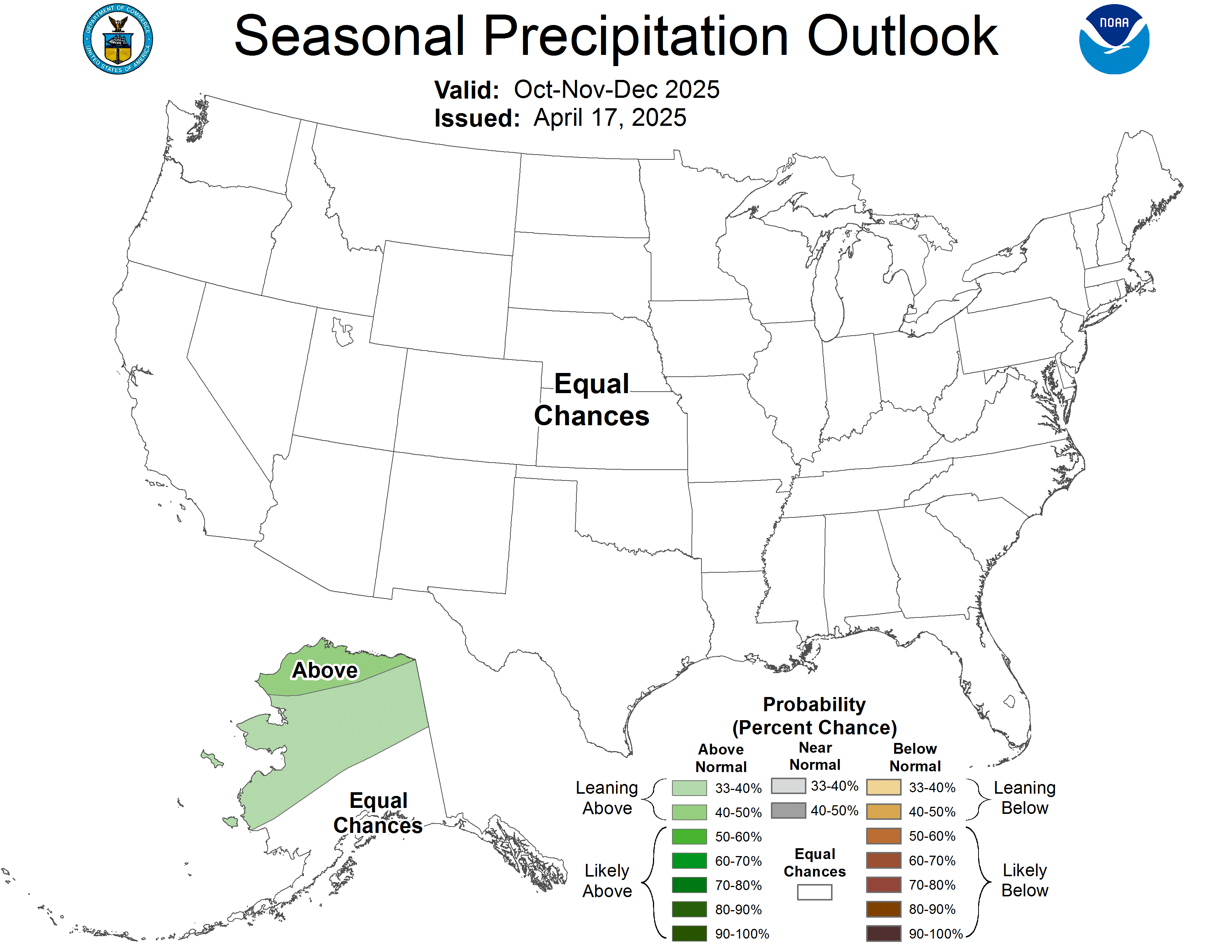
Precipitation?


No significant part of Texas moves into the 40 percent change of above normal precip until November, per the map at left.

And, that's about as good as it gets. Chances of above average rain and below average temperature disappear by early spring.

And, not just Texans should be cautioned.

That precipitation map is also about as good as it gets for California.

Now, that's several months out. Nonetheless, don't expect the next El Niño to be a major game-changer.

That's you, global warming denialists in Texas, I'm talking to above all.

December 21, 2012

Texas to lose its oil perch?

Fracking has expanded production in the Permian Basin, and gone on to open the Eagle Ford play for oil as well as gas. That, combined with the decline of the North Slope in Alaska, moved Texas back into the No. 1 slot among oil states a few years back.

But, the same modern techniques may make that perch short-lived. And, no, it's not North Dakota that's threatening.

Instead, the Golden State may be the new kingpin for black gold.

A shale play near Monterey, Calif., could have double the reserves of Eagle Ford plus North Dakota's Bakken combined.

Of course, as the story notes, Californai has strong environmental  laws. How much that will affect Monterey production, I don't know.

But, with California's population and refineries, you know oil companies are just itching to get at this.

At the same time, this has to be another concern for global warming issues. It certainly means that oil prices won't go so high as to discourage too much SUV use in the US, or the growth of car ownership in China and India.

Adjusting for inflation, if the Monterey play starts development any time soon, I'd say oil will stay below $110/bbl for the rest of the decade.

But, that's a big if. The Center for Biological Diversity has already annouced plans to sue. That area is also the home of wine grapes, strawberries, Gilroy-area garlic, and more. That alone will slow development.

And, it's also the home of earthquakes. Given that fracking already seems pretty well connected to some small earthquakes, fracking in close proximity to the San Andreas Fault sounds scary as hell. It also will be challenging, I'm sure.

Also, even if this bonanza leads us to meeting all our oil needs domestically, that still doesn't insulate the US from world oil issues.

November 12, 2011

Why California's #HSR is dumb

NOTE: This article has been updated to reflect further information international HSR as well as that in California.

I love the idea of high-speed rail, and in the U.S., California is well positioned. Its two big metro areas are spaced far enough apart for HSR to make a lot of sense over conventional rail. Easy extenders can go to Sacramento and San Diego.

But, right now, there's a HUGE problem. Wayyyy too many stations in between the two metro areas. I love the idea of HSR, but, if you can never get a train up to top speed, your specific plan is el stupido, Golden Staters. Modesto, Merced AND Stockton? You can't get the train up above Greyhound speed. Ditto for the Palmdale stop. Going northbound, once HSR gets through Cajon Pass, let it roll all the away to Fresno.

And other locations? Gilroy for HSR? Tulare? You've got to be kidding. There's no population base at either site. I suspect that the routing AND the number of stops are all "political gravy." Well, tough shit. You drive, take a bus, or take a local train from Tulare to Fresno, or whatever, to ride HSR. Palmdale? Not on a direct line between SoCal and Fresno. After Santa Clarita, no stops until Fresno.

Now, not all these stations may be used for every train, tis true. But, the state government's HSR agency needs to be clearer about that, as well as about tentative ticket costs and other things. And trust me, I"ve looked both there and Wikipedia. That said, the state's map says Tulare is "regional," but doesn't explain more what that means. And Gilroy is NOT listed as "regional."

This applies to HSR in other locales. In Texas, a "triangle" of Dallas, Houston and Austin would work well. But, the Dallas-Houston train can't stop at College Station, nor the Dallas-Austin one at Waco. DC-NYC would work, but that train can't stop in Philly. Florida? First, no way to do a Miami-Tampa line without even more damage to the Everglades, is there?

High-speed rail, whether here, the U.S. or Europe, has some specific needs. Stations must be at least 150 miles apart; else, standard rail is just fine. Realistically, 200 miles or so is better. Stations shouldn't be more than 500 miles apart, or else you're less efficiently competing with air travel. And, terminal cities need to have a minimum population density, an issue The Economist addresses well. More on all of this below the fold.

June 16, 2011

#SEIU has a stroke of union genius: look for #GOP candidates

The Service Employees International Union, or SEIU as it is commonly known, has taken organized labor's formal and informal pledges to separate themselves from close connection to the Democratic Party one step further.

SEIU's California branch has now created a Republican-specific PAC to try to get more moderate-conservative GOPers, rather than wingnuts, elected to state offices there.

Given that, under Andy Stern, the SEIU was more "cozy" with big biz than any other major union, this should NOT be dismissed by wingnuts, Faux News and others as merely a publicity stunt. This alone should make that clear:
"Our legislators are harangued by radio talk show hosts like John and Ken and D.C. ideologues like Grover Norquist," said Bob Schoonover, president of SEIU Local 721 in Southern California.

Schoonover, a registered Republican, said lawmakers are afraid to do the right thing.

"We've lost the art of compromise that allows us to make deals in tough times," he said.
Note that second graf: A registered Republican. The story notes that the union claims 87,000 of its 700,000 members are registered Republicans.

Big biz, in general, has little use for tea party types and likes "stability" rather than confrontation in most levels of government. (The U.S. Chamber of Commerce could be called the exception to the rule.)

Some GOPers are already trying just that, though:
Republican strategist Kevin Spillane said the union wouldn't have a significant effect--no matter how much money the union spends.

"This is just sound and fury," he said. "It's political posturing to influence and intimidate some of the current Republican legislators. The reality is that we're not talking a real widespread impact in next year's elections."
I disagree. With Gov. Jerry Brown needing just four GOP votes, as the state legislature now stands, to achieve a long-term solution for California budget woes, this could be very serious.

I don't know enough about the Cal GOP to know where Spillane butters his bread, but, from what little I have Googled, he seems to NOT be a wingnut type. So, he may be puffing smoke out of real fear about this move.

That said, big biz has no problem with trying to push the "stability meter" ever further rightward, so, SEIU might not, given that history, be the best union to do this, at least not alone.

March 29, 2011

Bohemian Grove loses to redwoods

A Bohemian Grove member found out about a 100-year logging plan for redwoods, and first tried to fight it within the rich conservative enclave.

When that went nowhere, he resigned his membership and allied with the Sierra Club to fight the move.

And, surprisingly, won a legal battle.

March 11, 2011

Much of the Sacramento Delta could be underwater

This is a great, short post from High Country News, and very timely in the wake (no pun intended) of the tsunami from Japan.

By the end of this century, much of the Sacramento River Delta could indeed be underwater. So could much of Olympia and Tacoma, Wash.

That map doesn't show the effects of a tsunami; that's just projected global-warming related sea level rise.

March 10, 2011

Don't be so smug on jobs, Rick Perry

New research shows that, especially when compared with Texas, California does NOT have an inherently anti-business mindset, economy or regulatory overburden. Also, to the degree Tejas has had economic growth, it's primarily due to two things: population growth and targeting low-wage jobs for job growth.

Throw out the housing bubble in California, which in fair part has to do with a population at least half as large as Texas' on a smaller patch of land, and in fair part has to do with (earthquakes aside) that land being more scenic and desirable than any in Texas, and we wouldn't even be having this discussion.

February 26, 2011

AP, Texas independence, urban legends, myths, lies

Let me spell out a few mistruths and half-truths that lie behind this Associated Press story on the 175th anniversary of Texas declaring itself independent from Mexico.
What came out of the discussions over a few days 175 years ago this coming week was the Texas Declaration of Independence, a handwritten document proclaiming Texas was freeing itself from its oppressive ruling government in Mexico. The declaration was modeled after the American Declaration of Independence authored 60 years earlier by Thomas Jefferson.

No other U.S. state has such a distinction.
Wrong.

Four U.S. states established themselves as independent republics before joining the United States: Vermont, California and Hawaii as well as Texas.

Otherwise? Vermont also had a declaration of independence. So did California, from Mexico. In both cases, I'm talking about official documents, just like in Texas.

I have e-mailed author Michael Graczyk at what I am guessing is his address, mgraczyk@ap.org. We'll see if I get a response.

February 04, 2011