SocraticGadfly: Dunning (Brian)
Showing posts with label Dunning (Brian). Show all posts

November 12, 2019

Brian Dunning was not only a fraudster, he was an ineffective one

That's one of several findings from this long piece about online advertising.

It's snark-heavy, with a headline of "The new dot-com bubble is here: It's called online advertising."

The bubble, as it turns out, isn't just online advertising. It's a variety of online marketing, including affiliate marketing. The photo at right is a teez of what's coming.

A key early point of Jesse Frederick and Maurits Martijn is that here, in the most dismal of the social sciences (advertising as part of economics), as in other sciences, correlation is not causation.

From there, we dive into some actual research, which the hand-wavers didn't.

Finding one? Paid company brand name keyword links? Bupkis.

We then move beyond that to:
The benchmarks that advertising companies use – intended to measure the number of clicks, sales and downloads that occur after an ad is viewed – are fundamentally misleading. None of these benchmarks distinguish between the selection effect (clicks, purchases and downloads that are happening anyway) and the advertising effect (clicks, purchases and downloads that would not have happened without ads).
Interesting.

Now, that's all true of old-fashioned ads as well.

From there, the authors talk further about "selection effects" (i.e., selection bias) vs "advertising effects." And they apply this to the Hucksterman Empire.
In seven of the 15 Facebook experiments, advertising effects without selection effects were so small as to be statistically indistinguishable from zero.
Well, that's pretty serious.

From here, the authors note that this also shows advertising can't manipulate people as much as digital advertisers claim.

The information above is as true on affiliate marketing as on search, the authors show.

And, given that much of the research on both search and affiliate that the authors cite is about eBay, the specific company that unrepentant pseudoskeptic fraudster Brian Dunning pled guilty to defrauding? Schadenfreude is sometimes a semi-Nietzschean recurring bitch.

And who will tell Sharon Hill?

October 21, 2015

Post-jail, Brian Dunning still hasn't changed a bit

Brian Dunning, kind of a
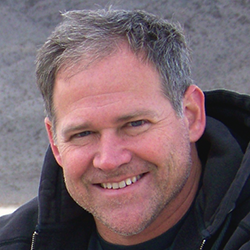
Huck(ster)berry Finn
Dunning, one of the favorites of the Skeptics™ crowd, was convicted of federal felony wire fraud, then sentenced to 14 months in the stir. (Unfortunately, he didn't get the 27 months prosecutors sought.)

He's now out, and Dunning, one of the leading pseudoskeptic libertarians in the crowd, is already showing he's not learned a thing.

He's already boo-hooing about how eBay was, essentially, a bigger, more powerful libertarian than him. The fact that he calls eBay's civil suit "bogus" is part of that. (I'm surprised that he didn't get his wife, mom, and mother-in-law, since they were on his payroll from his ill-gotten booty, to add their testimonials to his piece.

The boo-hooing, as in the past, seems to shade toward the lying. And, from near the start:

(The cookie stuffing) seemed like a cheesy, fly-by-night kind of thing. But my partner pressed hard, and an acquaintance kept telling me how much money he was making.
So, let's unpack all of this.

Yours for just $15, in one of many
Dunning website ripoffs
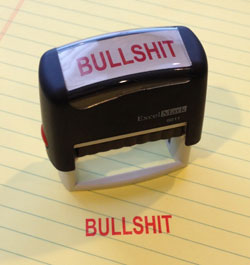
It's "cheesy," so the man known for selling cheesy crapola, as pictured at left, on his website, wouldn't be interested. Got it.

His partner Swengali-ed a skeptic. Got it.

Money is addictive, as well as being SCOTUS-approved as "speech." Got it.

THERE's some bullshit, Brian. Sell it!

Dunning goes on from there to blame middlemen, big bad eBay for aiding and abetting his cookie-stuffing, then changing the game, and more. Very much more. In a new level of both irony and hypocrisy for an alleged skeptic ...

Dunning goes on into full-blown conspiracy theorizing:
Our rep at eBay, whom I'll call "K," sometimes gave suggestions on things to try. ... But (after my arrest) things took a dark turn. ... (W)e wanted to depose K. Turns out K had disappeared with a mysterious, unknown illness. When she resurfaced six months later, eBay had transferred her overseas to their London office.
Sure, Brian, and the melting point of steel proves al Qaeda crashing airliners couldn't have caused 9/11.

He then claims other eBay reps made "provably false statements to the FBI." They'd probably sue you, if you named them, Brian. Why don't you go ahead?

Finally, Dunning claims the conviction rate for federal wire fraud is 97 percent, so he just had to cop a plea. No choice.

The true "bogus" is that he's a quasi-guru and now, after federal jail time, he's going to have struggle to try to rebuild his old financial empire.

The true "bogus" or rather "bullshit," including what at least used to be the overpriced $15 bullshit at his website, as noted at left, is a man making enough by his cookie-skimming (and Internet cookie stuffing is the second bane of the commercialized Net after banner ads) to pay his wife $10K a month (possibly to shelter money), to pay his mom and mom-in-law both $2,500 a month and more.

(But, per Brian, they were "traumatized" by the FBI. Ahh, a libertarian conservative having sympathy with the victim, but not real, poor, minority victims before that, as far as I know. That's OK; even if they were actually victimized some small bit, $10K a month buys good psychotherapy. Maybe Dunning has that for sale on his website, for all I know? Doorknob, I'm in fine snark today.

That and more about his "shells" for his nefariousness (and it ain't alleged nefariousness, Brian, you're a convicted criminal) is at my second-last blog post about him. It's long, but, if you're just seeing Dunning, and his would-be "explanation" from his freshly-scrubbed, Hucksterberry Finn face, and think his freckly-like self could never tell a lie, a half-lie, or close to it, you need to know differently.

It's important to expose the reality of his history, and not let him take control of his narrative right away like this.

That's true because he's not alone. He's a "type." He's the one person of this type who's visible within pseudoskeptical libertarianism, and true skeptics, who think beyond narrow debunking of pseudoscience of the Skeptics™ movement, will know that's part of why the actions of a likes of Dunning, whether he's as bad as Jesse Willms or not, must be pointed out.

As must his mental doubling-down on denialism.

Hence, this response to him.

The reality? Per my last post about him before his incarceration, he tried to shield his nefariousness behind seeking nonprofit status, never had an iota of repentance, and generally saw events through Dunningesque glasses that he probably sells for $399 on his website.

"Welcome back," Brian. I'll take pleasure in punching you in the intellectual "face" if you keep uttering such stupidities.

Per that photo-poster at left, Dunning's not the only "skeptic" to confuse, or else deliberately conflate, skepticism and libertarianism. Far from it.

Among "names," Penn and Teller and Michael Shermer come immediately to mind.

Dunning is useful to me, as a reminder of the fact that the Dunning-Kruger event is about overestimating one's intelligence. I remember that it has the names of a cartoonish horror monster ... and Freddy Kruger!

Thanks, folks, I'll be here all week.

And, Brian, it will give me pleasure to continue to slap you down.

Add in that you, as on your website in general, make your webpages so your text can't be copied and pasted, guaranteed to increase my piss-off factor, and I'll slap you down.

And, slap down supporters of you, including among the Skeptics™ crowd, libertarian quasi-skeptics and libertarian pseudoskeptics. You know who you are, the D.J. Grothes, Shane Bradys and others of that world, besides more prominent names already mentioned.

In case I didn't mention you, or didn't know to mention you, please let me know

==

Update, Dec. 27, in reference to comments below, but not just to the particular person who's making them, in part extrapolating from my replies.

1. I've heard again and again from the commenter, and it may be believed by others, that "Dunning wasn't guilty."
1A. If you're a lawyer and a personal friend, why didn't you defend him yourself?
1B. If you're not, whether you want to admit it or not, I am point-blank telling you that Dunning had the money for a criminal defense better than 99 percent of Americans. He may not be 0.1 percenter, but he was a 1 percenter. Period and end of story. Therefore, if his lawyer worked out a plea deal for him, it was almost certainly because Dunning was guilty and this was the best plea bargain available. And, if that's not good enough, given the cult-like nature of Dunning's followers, why didn't one of you start a Kickstarter for his legal defense fund.

2. Because of that, I am not accepting further comments that don't argue new ground. That's not only about this post, but any about Brian Dunning.

3. To the best of my awareness, and certainly on this post, I have called bullshit on ideas and actions first, individuals second (if at all, besides Dunning himself). I have called a bunch of people "pseudoskeptics." And? Deal with it.

September 22, 2014

Why smart people — and movement skeptics — do dumb things; irrational, anti-rational, non-rational

Over at Insight, Skeptic's new blogging spot, Barbara Drescher has a nice piece on the "smart people do dumb things," reminiscing on joining Mensa, with the lead-in of a fairly well-known story of a college prof falling victim to the fake Russian lover scheme. That said, such issues, or related ones, aren't confined to Mensa.

Let's see if motivated reasoning gets tackled over there. One can be so smart and so skeptical to be sure that secondhand smoke isn't carcinogenic and that global warming isn't real. Or, one can be so smart and so skeptical to be sure that "little tweaks" to websites aren't criminally fraudulent. Or one can be sure that such smart people in positions of skeptical authority are right when they are being sure. If you're active in "movement skepticism," I don't think I need to name names.

Beyond that, the forums at the James Randi Educational Foundation website have had people start threads defending irrational ideas. (I guess that, and the effort involved in moderating them, is why Randi is dumping off the forums.)

More seriously, this is the tip of an iceberg. There's differences, I would say, between non-rational, irrational and antirational actions.

And, I'm going to address a bit more how I see those three as separate from each other.

Non-rational actions are of a few different types.

One is, per Daniel Kahneman, where "fast," reflexive thinking is expected. To riff on our ancestry, if you're on a safari vacation, and the grass rustles, you jump just as much as an australopithecine 2 million years ago, since that rustling grass could signify a lion.

Somewhat similar are non-reflexive, but still emotional decisions. You don't analyze why you like chocolate ice cream more than vanilla or strawberry, you just eat.

Third are leaps of faith and similar actions that are forced decisions. (Not all leaps of faith are forced decisions, of course.) Let's say you have a job offer and have 24 hours to decide whether to take it or not. Interviews have been entirely by phone or email; you've never met the bosses and principals at the other end; you've never seen the work site; you've never met your would-be coworkers. At the same time, you're actively looking to get out of your current employment situation. You may, after you leap, find more information that, had you known it earlier, would have led to a decision not to leap. (The issue of emotional dissonance, an emotional parallel to cognitive dissonance, might come into play on some of these issues.)

Then, there's irrational decisions, like the college professor chasing the fake lover. If we would just stop a minute and do our "slow" thinking, we'd escape many of them. They need no more explanation.

Then, there's anti-rational decisions. A good example is Richard Nixon late in his second term, in foreign policy decisions he made after Watergate started catching up to him. He figured if he acted nuts enough vis-a-vis the Russians, they'd think he actually was nuts. Of course, that could be considered rational, as well as anti-rational.

The whole edifice of North Korea's leadership and its action in foreign affairs might be a more reasonable idea of anti-rational action.

Arguably, the Mutual Assured Destruction stance on nuclear staredowns between the US and the USSR in the 1950s is another.

Interesting, that the first three examples I recognized of deliberately anti-rational action are all international affairs, isn't it? Interesting, and scary.

Update, Sept. 26: Drescher needs to pen an addendum about her own boss.

August 05, 2014

#Pseudoskeptic #BrianDunning gets himself 15 months, boo-hoos

Brian Dunning
Brian Dunning, one of the godfathers of conflating political libertarianism with scientific skepticism, and also con artist extraordinaire (the federal legal term is "guilty of wire fraud") found out yesterday what his near-term future holds.

(Update, Oct. 21, 2015: Dunning is out of the federal clink and unrepentant; he gets his first post-incarceration smackdown from me.)

 Fifteen months in the stir. Three years supervised release after that, a supervised release that will likely include monitoring of his online activities.

I suppose there's fanboys and fangirls of his that still, after not just his plea but now his sentencing, who think he's not a criminal. (One of the biggest of his early defenders, Doubtful News, has yet to post anything about Dunning's sentence. at almost a week and counting, even with Dunning posting a statement himself; see below for more on Dunning's statement.) However, United States Attorney David Callaway is not one of them.

In sentencing arguments, he fought for some significant incarceration time. Given the fact that this was on a plea deal with all other counts dismissed, he got at least half a loaf, I think. The defense wanted a "non-custodial sentence," in other words, a fine, no jail time, and, probably, about the same, maybe less, supervised time as in the post-release supervised time he actually got, based in part on cohort Shawn Hogan only getting five months.  Read below, if you will, before voting on the poll at right.

Callaway actually asked for 27 months. After saying that Hogan may have gotten lucky to get that short of sentence, he noted this about Dunning:
Finally, there are the letters. The government shares the discomfort U.S. Probation Officer Flores expressed at the recurring theme in so many of them, that the FBI "raid" allegedly "traumatized" the defendant's family, as if somehow the Dunning family deserved to be insulated from the adverse consequences caused by law enforcement agents simply doing their jobs, executing a search warrant to investigate the crimes that he, Brian Dunning, knowingly, willfully and fraudulently committed.
In other words, Dunning wasn't repentant. Maybe Hogan was, but we know Dunning wasn't. In fact, Callaway suggests that Hogan was more repentant, more cooperative and both, noting his "substantial and well-earned departure" from sentencing guidelines. Indeed, there's more in this in-depth piece about how eBay was "on" to Dunning and his cohort in crime, Shawn Hogan, which includesHogan "manning up" on responsibility, but Dunning being too much of a wuss or putz to comment.

Why does that not really surprise me, that Dunning either wasn't that repentant, that cooperative, or both? Especially since he knows that all about Hogan!


The suggested sentencing range, pre-hearing, of up to 27-33 months, was based on Dunning's fraud having an actual estimated value of $200,000-$400,000 per stipulation by all involved parties as part of his plea deal. Given that Kessler's Flying Circus, Dunning's front group, raked $5.3 million in eBay commissions in one 18-month period alone, that was a generous concession by the feds as part of the plea deal.

I posted a long blog at about the time he pled guilty, which includes that information and more. You can click the link for the whole thing, but I'll extract a few highlights, or lowlights, here.

That includes that, this spring, Lousy Canuck at Freethought Blogs reported Dunning was trying to use 501(c)3 status, allegedly started in 2012, to shield his ill-gotten gains.

Yours for just $15!
So, sell that swag, Brian!

(At highly inflated prices, like $27.95 for a T-shirt. Sounds like a guru selling to his cultic followers. Or $15 for the aptly titled rubber stamp; more on it below.)

Back to the serious on this part. I don't know how much he was selling on his own on eBay, or if any of his Skeptoid stuff was sold there. But, the principle of a man with a sharp eye for a sharp product, whether through "raking" with groupies on his own stuff or defrauding other affiliates with eBay, still stands.

And, yes, "groupies" is about the right word.

Have fun in the stir, Brian.

And, I hope you serve as a lesson not only to other Internet fraudsters, but people like you who fuse libertarianism and skepticism.

Hell, I hope you serve as a warning to people entranced with libertarianism in general, or even those who are too readily defensive of the neoliberal halfway house.

Your whole attitude reeks of supporting a libertarian Wild West. Lawyers and lawsuits are supposed to replace the rule of actual criminal law but, of course, only the rich can afford lawyers in Plato's Libertarian Republic.

Unfortunately, it will actually serve no such deterrence.

Shane Brady seems proof of that. (No surprise; I've run into his libertarianism before, and would argue that he has one foot down the road of Dunning, Penn & Teller, Shermer and others who in various ways conflate skepticism and libertarianism.)

Brady describes his background (his post just mentions "advertising") as such: I’ve been a programmer for as long as I can remember, and my interest in computers, the Internet, and technology runs deep. Elsewhere, in a comment on a non-public social media thread, he does indicate that he has IT experience relevant to this.

That said, let's jump in.

First, Shane in essence tries to say Dunning is no criminal. He gives a de jure admission that Dunning is one, while at the same time giving a de facto defense of Dunning as ... well as having been set up by some nefarious combo of eBay and the FBI.

Here's his narrative set-up:
The case also includes very little background of the industry and how it worked. There were two companies involved, eBay and Commission Junction. CJ’s job is to handle affiliate programs and, this is key, fraud prevention. You don’t become a top affiliate with the numbers Brian was pulling and not get noticed. Someone would be looking at you within the first week. ...

By far, though, the biggest red flag for me is the way eBay describes the investigation. Somehow an eBay employee was working with the FBI for a year to catch Brian. They even set up a “sting” to catch him in the act. What makes this all so perplexing to me, is that this should have taken all of an afternoon to figure out.  ...

Really, none of this makes all that much sense. Does this exonerate Brian? Nope. I will not say he is innocent. I can only say that what eBay alleges almost certainly didn’t happen, and I say that based on fifteen years working in the advertising industry. My personal opinion is that people in eBay and CJ knew what was happening, were being compensated well because of the program, and then let Brian take the fall later. In that case, I don’t know who committed the fraud against who. I don’t know how much Brian might have known. My guess is that eBay itself would be on the hook for defrauding other affiliate marketers if people within eBay conspired to jack one affiliate’s numbers up. This is complete conjecture on my part, but even so, it is more believable than eBay’s current claims.
If there were a twisted pun at the end, I'd call that a "shaggy dog."

But, there's not, so I'll call it ... a fictional short story? Counterfactual history?

In any case, noooo, it's not at all closer to being more believable.

In any case, while I'm plenty familiar with the FBI's history of entrapment, it also arrests real people for real crimes without any entrapment whatsoever.  Given the fact that Shawn Hogan also pled, and per what I and many other people who are not social justice warriors have seen about the original indictment documents, etc., I have no doubt that the FBI plus eBay had them both dead to rights. And, among the people included in that group, in italics, are multiple tech websites who have written about aspects of this case without seeing anything askew.

So, Shawn, sorry, but we'll file you in the semi-groupie category until I invent a new name. Especially because you seem to think you have secret insights that escaped all those other tech websites. (And, it's not like tech websites in general don't have bits of libertarian leanings.)

I can't call you a full groupie, though:

Brady does admit that Dunning continues to remain a psychologically slippery fish:
With all that, though, it’s time for Brian to come completely clean if he expects to ever have a future in skepticism. No talk about what his lawyers won’t let him say. No more vague statements. He will have to be more brutally honest with his audience and perhaps himself than he has ever been.
We're agreed there. And, without specifying what legal actions are involved, Brady also hints this, to be legal, "goes to character":
The whole eBay thing ended around the same time he started the Skeptoid podcast, and for most of Skeptoid’s existence, he’s been involved in some legal actions.
OTOH, isn't this part of at least certain strands of libertarianism? Objectivism and Straussian economics both even encourage lying for the "higher good" or whatever.  It's also funny that, as part of his post, Brady excoriates "progressives" for suddenly changing their tune over "big bad business," like this:
Another thing that has struck me is how so many progressives, who are normally skeptical of corporations, and who complain about the unfairness of the justice system, suddenly believe the words of a billion dollar corporation to the letter and praise the prosecutor as a beacon of skepticism. 
While noting that ... erm, eBay may have had a reason to lie, or at least shave the truth. Brady ignores that Dunning "became a business" with Skeptoid when the eBay shit started hitting the fan, and that he "became a business" by incorporating as Kessler's Flying Circus as an eBay affiliate.

Greed corrupts, and absolute greed corrupts absolutely.

And, Brady may be an even bigger bullshitter about this than Dunning.

Why don't we call you a groupie for libertarianism, rather than a groupie for Dunning? Or, even more, a groupie for his own self-alleged brilliance? (If Brady is truly seeing something that nobody, nobody else is seeing, and has that much expertise, why isn't he a multimillionaire by now?)

But, let's get back to Dunning. The "slippery fish" himself has posted on his own website. The first one-third sounds like it could have been "as told to Shane Brady." The rest of it sounds like he was lawyered up even more than in his "partial response" shortly after his indictment.

Some quick responses.

1. If his share was only 1/3 of $200-$400K, why did he and his lawyers agree to that stipulated amount in the plea deal? (Answers that FBI is always thugs not allowed.)
2. He never denies that he set up a nonprofit for a "shield," just that that doesn't work. Duh!
3. If he really regretted this "stain on his past," his lack of cooperation with the government, especially as compared to codefendant  Hogan, doesn't show that. In other words, he only regrets it as far as how it makes him look bad, not as far as what he actually did.
4. As for the family that has been "hurt" by the FBI, et al, would that include the Mrs. Brian Dunning getting 10 large a month from the widget rakings?

And, per a new post by Lousy Canuck, Dunning's more of a schmuck in other ways. He apparently added some Javascript to block text copying, and has blocked his website from being crawled for online indexing.

Anyway, I've provided Brady with multiple links off my original post, including a long story by Business Insider. I doubt it will change Brady's mind. And I know it won't get Dunning to be more honest, should he see any of this. But given that I posted that on another person's Facebook page, that's not my goal. My goal is to show people that Brady most likely just isn't right about his claims.

This all goes back to Dunning's original "partial explanation," linked on my long post about his plea deal. Dunning, pre-plea, kept claiming "eBay knew this, eBay encouraged that," etc. When the FBI said, "Got some documents?" well, of course Dunning had none. (And Hogan never made Dunning's claims in the first place.)

In short, as I continue to blog about this? I'm seeing Brady as sticking a toe in the waters of conspiracy thinking. Just a toe, but a toe, nonetheless.  And Shawn, this goes on much more? I'll do a post about exactly that. And, per my long post about Dunning's plea deal, one persistent commenter who never would show links to back up his claims show Brady's not alone.

That said, that's only one of the "unfortunates" associated with this case.

Also unfortunately, the site which first posted the PDF of the sentencing, to my knowledge, is an Atheism Pluser website, making Dunning a continuing voodoo doll in the ongoing war between Gnu Atheism (Plusism's godfather) and "scientific skepticism." I will agree in part, but not in full, with Brady's observations about them. I'll agree to the point he's not forwarding his own objectives.

And, they've got objectives, too.  No doubt about that. In fact, I'm probably going to be doing a post about SJWs infiltrating the world of baseball blogging this afternoon. Yes, really.

Anyway ...

All of this again illustrates why I usually don't use either "atheist" or "skeptic" to describe myself.  I will, around philosophers professional or amateur, to be precise, use "skeptic" in its proper philosophical sense, as a good Humean.

As for "scientific skepticism" or "movement skepticism," that's probably its biggest failing after failure to "police itself" over the Dunnings of the world when they fuse libertarianism and skepticism. It's got a quite narrow focus, overall; much of it isn't even necessarily about developing a broader critical thinking mindset beyond narrow areas like ghosts, bigfoot, UFOs, etc. Because, if it were about that, the libertarian-fusers would either apply the proper mindset and stop mixing in libertarianism, or else they'd get the boot. Beyond that, without any thought about, or wrestling with, skepticism as a philosophy, there's no real way to ground a methodology of what "scientific skepticism" is supposed to be. For example No. 1? Do you folks even know the difference between the Academic and Pyrrhonic schools of ancient Skepticism? The differences are big, and very important, as the likes of David Hume knew, unless you want to keep swimming in the same very small pond.

Which most of you probably do.

One final note for now. Along the lines of Doubtful News, SkepticBlog, where Dunning used to be a regular contributor, has also said bupkis about his fate. That said, Donald Prothero's been the only contributor who's actually contributed for more than 2 months. And, I wonder about the long-term future of that blog, connected with Skeptic magazine. Loxton's two midsummer posts are the only non-Prothero ones in the past five months. And the two of them are the only posters for this entire year.

May 28, 2014

Potentially good news for Brian Dunning

Brian Dunning
Dunning, alleged skeptic and he of federal Internet cookie-stuffing fraud, pled guilty just over a year ago to said charges and awaits sentencing.

Dunning and his fans may have some reason to be hopeful on that count. Dunning's accomplice in crime, Shawn Hogan, was just sentenced and the terms are light.

If he's getting five months, unless there's other circumstances for a judge to consider, I guess Dunning gets four?

For the complete background on Dunning, including his fusion of libertarianism with skepticism, his seeming monetary empire off his alleged skepticism (not to mention the cookie stuffing) and more, see this blog post.

NOTE: Any comments claiming Dunning is not a criminal will be deleted.

May 03, 2014

#Cosmos and the commercialism of #NDGT

I blogged earlier this week about how I stacked up Neil deGrasse Tyson's remake of Cosmos on Fox vs. Neil Shubin's documentary version of Your Inner Fish on PBS, both on production quality and, related to a specific issue, how much each show actually challenged creationists and creationism.

Now, I'm jumping head-on into controversy, per the photo at right of a Cosmos-themed telescope with a ripoff price, along with other similar items offered for outrageous overcharges at Space.com.

I said then that, assuming he's getting a cut, this makes it look like Tyson has entered the world of Brian Dunning marketing. And now, I'm going to head into that in more detail.

For professional or semi-professional "scientific skeptics," or "movement skeptics," or whatever handle we and they use, Shubin isn't one of "us/them" (I'm not an "us" myself) in the same way Tyson is. Such tribalism can lead such folks to hype Tyson. And, to crack open their wallets to pay overcharges for stuff like this. And, yes, overcharges indeed.

I mean, somebody affiliated with the new Cosmos is getting a cut of the sales money, right? That's official trademark and branding on all of this swag.


Yours for just $15!
Some movement skeptics, many of them with a bit of upset, or more, reacted negatively when I first blogged about that Brian Dunning marketing as part of saying that it wasn't a sad day to me. So, some of the Tyson tribalists know how I feel about Dunning.

That would include how I feel about Dunning selling that swag, like what's pictured!

At highly inflated prices, like $27.95 for a T-shirt. Sounds like a guru selling to his cultic followers. Or $15 for the aptly titled rubber stamp; more on it below.

The principle of a man with a sharp eye for a sharp product, whether through "raking" with groupies on his own stuff or defrauding other affiliates with eBay, still stands.

I think that's part of why Tyson went Fox rather than PBS. Oh, a year from now, I may be able, with suitable donation, to get the set of Fish DVDs from PBS. However, it won't be an arm and a leg for overpriced stuff. Crap like a telescope with WiFi only increases my already high level of disdain for Space.com, too. Also, I can get another Celestron 90mm telescope on Amazon for almost $200 bucks less, even after Space.com's discount. I can buy 8x25 binoculars for less than half of Space.com's price even after its fire sale discount. (And, those discounts make me wonder if tribalism has not only failed to translate in ratings as well as Fox hoped, but has been a disappointment in swag, contra Space.com — and Tyson? — hopes.) Note: None of this is even close to an endorsement of Amazon.

Anyway, methinks that such branding opportunities would be better with the hope of additional eyeballs watching on a commercial network than on PBS.

Now, I don't think Tyson is Brian Dunning, as in, he's not stuffing cookies on people's computers in an Internet-era version of wire fraud. But, he's certainly eyeballing the main chance on money, isn't he?

For that matter, since production is by the studio of Ann Druyan, the widow of original Cosmos creator Carl Sagan there may be other people with their eyeballs on cash. And, it's moving elsewhere. A humanists/skeptics convention in Omaha is charging $45/per person general admission for people to hear Tyson in September. For just a cool $1,000, you can get into a VIP dinner with him. No, really.

Grantland touches further on the degree of Druyan's involvement, as well as that of both Tyson and co-executive producer Seth MacFarlane. As for who's making how much, teh Google still doesn't have a direct answer for me.

March 05, 2014

#BrianDunning — guilty; and not a "sad day" (updated)

Brian Dunning
Famous Internet skeptic, or alleged skeptic, or pseudoskeptic, Brian Dunning, is now officially guilty of federal fraud for his part in an Internet cookie-stuffing scheme, per report at this blog site.

(Update, Aug. 5, 2014: And, he's now been sentenced. Go here for details, and my comments on how the sentencing discussions show Dunning hasn't changed a bit so far.)

(Update 2, Oct. 21, 2015: Dunning is out of the federal clink and unrepentant; he gets his first post-incarceration smackdown from me.)

The piece is thorough on Dunning's background.

If you want more information, here's the PDF of the original criminal complaint, and here's my original blog post on this. You can also click the tag at the end of this blog post to pull up everything I've written about Dunning, not just limited to the cookie-stuffing issue.

Otherwise, no "sad day" from where I sit. contra the blog that first reported this. The "sad day" was when Dunning started doing this stuff. File this under Dark Side Of The Internet; he's a spammer, using the word in a non-technical sense, who did something that's not just spamming but fraudulent.

(Update, May 5, 2013: There's more in this in-depth piece about how eBay was "on" to Dunning and his cohort in crime, Shawn Hogan. That includes Hogan "manning up" on responsibility, but Dunning being too much of a wuss or putz to comment.

Per this story, more proof that Hogan, and surely Dunning, knew what they were doing, and that's the much lesser amount Hogan made on other affiliate marketing. From the FBI files:
"He advised that he earns about $10,000 to $15,000 per month for GOOGLE ads, $1.1 to $1.5 million per month on EBAY, and approximately $8,000 to $10,000 per month for WESTERN UNION. HOGAN stated the money from these affiliates programs has made him lazy on his other stuff."
Yeah, making 100x a month more? Big diff.

And, Dunning's probably pissed off at his brother Todd. Todd ratted out Hogan, which made eBay suspicious of him AND Brian, soon enough.)

So, that's reason No. 1 it's no sad day. Related to that is the fact that skepticism, whether of the narrower "scientific" type or the broader philosophical type, is more than just one person.

That said, this isn't the only reason this is no "sad day."

Reason No. 2?

Dunning's also someone who has regularly mixed libertarianism in with his version of skepticism, or rather, "skepticism." Given that his libertarian political leanings are likely connected to why he started cookie stuffing, rather that "sad day," maybe we could call this "object lesson day."

Is that "drivel," as I've already been told on a Facebook post? (The person who started the thread has his status set to "public," therefore I'm not violating privacy.)

No.

I think that, while I can't prove it, it's a reasonable assumption that Dunning's libertarian leanings influenced him to start doing what he did. Bug Girl provides another good example — Dunning cribbing off libertarian/big biz antiscience website Junk Science in order to do a takedown of Rachel Carson.

Seems pretty deliberate to me. If not deliberate, it's hugely lazy not to have researched Junk Science. That said, I'm pretty sure it's the former. And, Bug Girl is, in my opinion, too generously kind to assume he just got mislead. And that, if he did, he didn't do any research on Junk Science's background.

Add to that, that Dunning was also a contributor to the Skeptical Libertarian blog.

That said, in a recent Tweet, actually a re-Tweet Dunning welcomes Penn State climate scientist Michael Mann to the next "The Amazing Meeting." So, Dunning's libertarian leanings are not too overblown, perhaps. Or else, he's just about promoting TAM.

Reason three this is no "sad day"?

In my opinion, Dunning is overrated as a generator of in-depth, independent skeptical thought.

For example, one of his most "favored" blog posts was "five things you don't know about your body."

Top two items? Did you know you don't use just 10 percent of your brain? Did you know that swallowed gum doesn't stay in your body 7 years? Wow!

I mean, it's all honest, skeptical debunking, but none of it is original.

Anyway, I've blogged about Dunning before, most recently about his propensity for setting up straw men, just like he did in his "partial explanation." And, re the Bug Girl link above, even should I be as generous as her about why Dunning did that post of his, he was still quite defensive and slow to correct it.

Dunning's background, and the case itself

Here's Dunning's original "partial explanation." It includes this:
Some bloggers and commenters have claimed that I personally made outrageous amounts of money. This is demonstrably false. Although I did well for the better part of a year, most of the money mentioned in the suit was earned by another affiliate, and our chunk was divided into many different pie slices. I was only one of those slices, despite being the only one criminally charged from our company. I’ve already spent more money in legal fees than I earned from eBay.
Can you Digg it?
You personally may not have made outrageous amounts of money. (Speaking purely hypothetically for the sake of argument.) But, what about various LPs, LLCs, etc., into which you may have incorporated yourself? I mean, Dunning has publicly identified himself around the web as a venture capitalist; don't tell me he doesn't know tricks of the trade on how and where to hide money.

Also, the nature of cookie stuffing, and related Internet deceptions, as I note here, suggest you probably made "at least a few bucks."

Another reason or two this may not have made more money?

1. Ebay detected it quickly enough (and even did a sting of sorts, eventually);
2. It had not reached its full setup by the time it was caught.

And, per my original blog post on this, there's plenty of evidence of "shells":

• Between 2006 and June 2007, Shawn Hogan (Digital Point Solutions) earned approximately $15.5 million in commissions from eBay. Hogan was eBay’s number one affiliate.
Between 2006 and June 2007, Dunning (Kessler’s Flying Circus) earned approximately $5.3 million in commissions from eBay. Dunning was eBay’s number two affiliate.
Hogan and Dunning are accused of generating hidden forced clicks on both their own web sites as well as sites not connected with the defendants in order to increase the number of computers storing the eBay affiliate tracking cookie.
The legal criteria for wire fraud was established not on money (commissions) being transferred over the wires, but because of transmission of the tracking cookie between states and internationally.
Note that again: $5.3 million. In short, his partial explanation would seem full of bull as to how much money he made, or didn't.

Yours for just $15!
So, sell that swag, Brian!

(At highly inflated prices, like $27.95 for a T-shirt. Sounds like a guru selling to his cultic followers. Or $15 for the aptly titled rubber stamp; more on it below.)

Back to the serious on this part. I don't know how much he was selling on his own on eBay, or if any of his Skeptoid stuff was sold there. But, the principle of a man with a sharp eye for a sharp product, whether through "raking" with groupies on his own stuff or defrauding other affiliates with eBay, still stands.

Related to that, from a link at my initial post, commenting about the original legal filing, is a lot of evidence of intentionality. Like this:
Shawn + friends had a system set up that would record each individual computer they had stuffed in order to not attempt to stuff cookies on that same computer again.  This not only makes things look more legit on ebay’s side in the logs, but prevents anyone trying to observe something shady from duplicating it.  Also, they attempted to geotarget the traffic and prevent any computers located in Santa Barbara, CA (headquarters of Commission Junction, who hosted ebay’s affiliate program) and San Jose, CA (ebay’s headquarters).  This was done to hide the cookie stuffing from ebay and CJ employees (obviously).  Interesting stuff indeed!  Aspiring search engine cloakers and cookie stuffers, take notice!
That's pretty strong evidence from where I sit.

Add to the "intentionality"? Dunning calling eBay's affiliate program "stupid." (That same set of PDFs, on the next page after the linked one, spells out how "poor me" Dunning distributed the money he was making to his and his wife's personal checking accounts [which raises questions of sheltering money, if he's in an "individual property" state] and a brokerage, among other things.)

That includes this information, that he was paying his wife $10K a month, plus both his mother and mother-in-law $2,500 a month for living expenses.

But, Dunning says "poor me."

Again, that means today is, if anything, "an happy occasion," per The Holy Grail.

(Update, March 5, 2014: Lousy Canuck at Freethought Blogs reports Dunning is trying to use 501(c)3 status, allegedly started in 2012, to shield his ill-gotten gains. And, while Jason has a Gnu Atheism motive for ax-grinding, and, I've pointed out some of his Social Justice Warrior nonsense on comments on his own blog, nonetheless, especially as Dunning used to bill himself as a venture capitalist and would know how to play such shell games, I find Thibeault to be making a reasonable explanation of Dunning's motive here. That's also not to say that Dunning is surely not the first person to think of such an idea. It IS to say, though, that he probably was giving himself a "genius" pat on the back while doing so. I'm more skeptical of Dunning's mindset than some friends who have little or no ties to either Gnu Atheism or Movement Skepticism.)

What's next?

Per the link at top, he still faces sentencing on his criminal case. That blog at top guesstimates 46-57 months is possible, given federal sentencing guidelines (website calculator here) and if the amount of damage is stipulated at $1 million. Technically, he is eligible for probation, but ... who knows. He may use the same charm he did on his groupies and get just that. More seriously, with minor children at home, he might beat it down to 36 months, maybe even 24.

Meanwhile, a civil fraud suit by eBay has been "parked" while the criminal case proceeded. Dunning will probably be pleading that one soon, on advice of attorney and any halfway decent deal.

Given the amount of commissions Dunning et al raked in, plus apparent evidence of trying to cover their tracks, I'd venture eBay is pushing for a seven-figure payback, all told. (Not all of that may fall on Dunning's shoulders, of course.)

Brian, you better start selling a lot of that Skeptoid bling, and soon.

So, to sum up:

A greedy hypercapitalist venture capitalist and libertarian of some sort who puts himself out as a skeptic in part, apparently, to make a buck, or $1 million, off of it, gets busted by our lenient neolib federal government for committing white-collar fraud and being one of the people who has contributed to making fair chunks of the Net the hypercapitalist sewer it is today.

This person's libertarian mindset might have also led to the Wild West idea of "hey, eBay's a big biz, it won't miss some pocket change."

And, some people, apparently Dunning groupies, want to mourn?

Those are the folks unreasonable beyond the three reasons:

Among those groupies is Doubtful News, which first writes a pseudoskeptical suck-up post about Dunning's woes, then goes chickenshit and closes comments. I've both emailed and Tweeted them, and no response yet. And, I'll bet I don't get any.

In comments, got to "love" this one:
I disagree. Lots of people make mistakes, this does not necessarily equate with an intent to defraud. If we lost respect for people who make mistakes (and owned up to them), we’d have no friends at all.
Mistakes? Bullshit. Hiding his tracks shows intent pretty damned well. Intentionality ain't a "mistake."

That was followed by this:
For those skeptic bashers who get their jollies out of seeing the misfortune of others like Brian and Randi, you suck. I don’t get any joy seeing anyone suffer. Not even someone I detest.
So, people who have pointed out Dunning's libertarianism-skepticism commingling for years are automatically labeled as getting joy out of his suffering? Again, Dunning brought this on himself. Ditto for others who have willfully broken the law, not made "mistakes." So, no, people like you who defend four years' worth of ongoing criminal fraud "suck."

And finally, this:
I don’t think this is at all related to Skeptoid. It had to do with a former employer.
Sure it does relate, if I'm right about the libertarian mindset pervading all of Dunning's operations. And, how do you know Dunning didn't try cookie-stuffing on PayPal accounts, or something, if that's how you were buying his swag? (I'm not techie enough to know if that's possible, but, if it is?) And, the "former employee"? I have no idea where that's coming from.

And, per Dunning as businessman, when phrases like "black hat" are repeatedly used about his co-indictee, Shawn Hogan, and Hogan's company, Digital Point, the old "company you keep" phrase comes into mind.

You might want to read your own "what skepticism is" webpage, Doubtful News folks.

Finally, per this blog post about how the cookie stuffing worked, stealing what should have been due them from other affiliates, why wasn't Dunning also charged with theft of services or similar?

Add to this a great story from Ars Technica, also explaining just what was involved.

Between the two, Dunning sympathizers and groupies who claim this is "no big deal" or "this is how Internet affiliate programs work" are simply wrong.

Meanwhile, per the top of this page, rather than it being "drivel" for asking how much Dunning's libertarianism might have influenced his actions, it's "drivel" for someone like Shane Brady, who made that charge, to now claim such nonsense as the bullshit that Dunning wasn't trying to hide his tracks. (Somehow, I suspect the latest link won't impress Brady, even with Hogan making a confession.)

And, since Brady's Facebook status is set to "public," I'll grab this quote from there:
Tonight I feel like the only #skeptic who knows how cookies and advertising work
Oh, well. Aren't we so almighty, compared to both federal assistant district attorneys and eBay, among others? 

But, no, judging by this post alone, even if he's not a professed skeptic, Bruce Schneier knows plenty about cookies.

So does Wikipedia. Its post is easy to follow and non-techie. I linked to it in my original post about Dunning's indictment. (And, speaking of drivel and Wikipedia, would-be edits of his Wiki page by groupies would fall in the area of "drivel." As well as a tacit admission of the degree of his guilt.)

And, if you want an easy-to-understand, non-techie explanation of just what Dunning did, one that should satisfy even libertarian #skeptic cookies-and-ads genius Shane Brady or the fluffers at Doubtful News, along with the criminality issue, go here.

Sorry, Shane, it's not worth the time for me to Photoshop your Facebook icon with a "martyr" back of hand to forehead.

And, the vacuous Justin Vacula both here and on Facebook, pleads for "all the evidence to come in" before making a judgment, apparently ignorant of the fact that a guilty plea means Dunning himself accepts the evidentiary findings!

It's an interesting day indeed when I find Freethought Blogs a general font of wisdom on the subject. And, for the Dunning fluffers, don't post smoochy blogs if you can't stand the heat.

And, while I might have some schadenfreude for Dunning, I'm sorry about his wife and kids who will likely see their dad go to jail. That said, that's not my fault, either.

That said, we can transfer from "true believers" to ...

January 10, 2014

Brian Dunning, explained

While I wait to see what sort of sentence convicted Internet fraudster Brian Dunning will get (in late April), I have just been reading Atlantic Monthly online about somebody much more brazen than him, even.

I strongly recommend this story about Jesse Willms, including and especially recommending it to Dunning's strongest defenders, if you want to understand the perils for the rest of us that are to be found in affiliate marketing, and why you should question his protestations of innocence.

Let's start here:
The downside to affiliate marketing is its astonishing rate of fraud. Because affiliates put up their own money to pay for ads pushing these products, they have a strong incentive to dupe consumers, so they can recoup their investment. If you’ve ever clicked an ad or a “sponsored link” about, say, a spectacularly effective new weight-loss scheme, which then leads you to a fake news article (or “farticle,” in the industry parlance) filled with sketchy scientific findings and constant entreaties to buy a product “risk free,” then condolences are in order: you’ve likely stumbled into some affiliate’s trap.
And, if Dunning used fake news articles for any of his cookie pushing, the irony and hypocrisy only grow. (Having never bought anything from him, and having only looked at his products on his own site, I don't know if he did or did not do anything like this.)

And, here's why you shouldn't believe theoretically reputable websites' claims to be fighting this.
And despite these companies’ frequent claims that they are actively weeding out affiliate links to potential scams, Web surfers rarely need to look hard to find evidence to the contrary. In 2009, for instance, an MSNBC.com story that called attention to the outbreak of fraudulent advertising featured an MSNBC.com vice president expressing zero tolerance for “fakeosphere” ads—yet as the affiliate-marketing and Internet-fraud expert Pace Lattin pointed out when I spoke with him in late 2012, those very ads continued to proliferate on MSNBC’s site
In some way, this is part of the dark side of the decline of traditional media; most Gnu Media gurus won't tell you that, that in some way, having more restricted editorial and ad space went some way toward guaranteeing a certain quality of advertising. But now, where we don't talk about "news" but we do talk about "content," this is the result.

The story goes on to describe how Willms used different brands of his fake medical products to set up different affiliate marketing streams. Result? This:
Even an hour of perusing Willms’s business tactics was enough to make me want to cut up my credit cards and retreat to a tribal society that barters with root vegetables.
Ugh.

None of this is to say that Dunning told the flat-out lies of Willms. Nor that he was much more than a medium-small fry in affiliate marketing practices compared to Willms, let alone doing the fine print credit card billing shystering, since his deception involved something far different -- skimming other affiliates' sales credits through use of online cookies.

It is to say that he had been hawking stuff on the Net long enough to know just how the shadier parts of affiliate marketing worked, while some subself inside his dura matter acted a tad less reprehensibly and a lot less brazenly than Willms.

That still doesn't excuse his criminality, and it certainly doesn't exclude his contribution toward polluting and degrading the Internet in general, and fostering the Lance Armstrong-type "everybody does it anyway" leitmotiv.

As to Willms? Steve Novella and other anti-medical quackery skeptics could do more good in trying to shut people like him down than Dr. Oz. Dr. Oz is a quack, but he's not a crook. Willms is technically not a crook, sadly only facing civil charges. Unless somebody charges him as an accessory to murder, if one of his products, as more and more supplements are doing, causes major liver damage.

How does all fo this happen, anyway? Because:
Regulatory authorities like the FTC are undermanned; courts seem reluctant to punish offenders; and worse yet, even the sheriffs we believe are imposing order online—Google, Yahoo, Microsoft—often end up providing scammers with a platform for deception.
And neither major political party is interested in changing it. The GOP is antiregulatory; Silicon Valley's libertarians who get the "cover" of Democratic neoliberalism fight it, too.

In more detail:
After reading through Jesse Willms’s online exploits, one perfectly reasonable reaction would be to cling ever tighter to the sites you trust—to vow never to stray from the seemingly safe paths laid out for us by Web gatekeepers like Google, Yahoo, and Microsoft. Since these companies have huge financial stakes in maintaining user faith, the thinking might go, they would surely never endanger that by doing business with potentially shady companies or affiliates. Right?

Well, no: the evidence shows that they, too, often work with unsavory advertisers—sometimes knowingly. In fact, the Harvard Business School professor Ben Edelman’s Web site houses a numbingly long list of cases in which trusted companies have sold ads for services they knew to be suspicious or fraudulent. Take Yahoo-owned Right Media: according to a 2009 analysis by Edelman, at least 35 percent of its inventory at the time consisted of deceptive ads ...

Or consider Google, whose famous motto, “Don’t be evil,” has not prevented it from engaging in suspect practices for the sake of ad sales. (Lest we forget, Google exists primarily to sell advertising; in 2012, 95 percent of its $46 billion in revenue came from selling ads.) According to court documents, Willms paid Google at least $1.7 million to advertise his various sites. And while the tech behemoth has often claimed that it couldn’t possibly monitor all of its advertisers’ practices—and thus shouldn’t be held liable for them—recent events have called this argument into question. In August 2011, for example, Google agreed to a $500 million forfeiture after a government sting revealed the company’s willingness to work with online pharmacies that were illegally selling prescription drugs. The investigation found not only that Google was aware these advertisers were breaking the law, but that its employees helped offenders prepare ads for prescription-free drug sales (reportedly including human growth hormone and the abortion drug RU-486) that would skirt Google’s own regulations.

Google has also been accused of profiting from so-called typo-squatters (who set up sham sites with misspelled URLs like twittter.com) and wittingly selling ads to companies offering counterfeit products. 
Having known personally, and distastefully, a typosquatter who's now in the Texas penal system on statutory rape charges and has been about as much a denialist about both that and his Net activity as Willms, I am disgusted more than ever at Google.

Back to the decline of old media. If one of my newspapers pulled this shit, and got caught at it, I'd personally be in the slammer, I have no doubt.

And (Update, Feb. 5, 2014) this godawful rapping attempt, combined with comments from Dunning worshipers justifying his stealing from "eBay" (no, he stole from other affiliate marketers) with a Kickstarter campaign. 

December 23, 2013

I can see why Gnu Atheists don't like movement skeptics, too

(NOTE: The header to this post should by no means be taken as an assumption that I've moderated much of my general assessment of Gnu Atheists.)

Fortunately, I don't consider myself to be an officially follower of either group.

That said, what started this?

A social media discussion. The person who started it indicated that it was essentially verboten to critique either Brian Dunning or James Randi.

Well, I did, and added Michael Shermer and Penn and Teller in the mix, too. (All links go to blog tags.)

I noted that all of them but Randi tended to fuse libertarianism with skepticism. I also mentioned that I thought Randi knew a lot about his lover, "Carlos," and his true identity, and his identity theft, before it became public knowledge, and said that he had oversold some of his early skeptical claims.

Then, on a social media forum, I got deluged with a demand for evidence. I posted a link to my blog and told all the "movement skeptics" they could look for what I had written about the individually named persons, and evidence for that, by name, right here.

As for relevance?

Dunning's Internet fraud undermines a level of trust, among other things. So, it's of relevance. I've also pointed out the number of overpriced tchotchkes on his website and stated my opinion that only people who had uncritical acceptance of him would think they're not overpriced.

In short, how do you know he's not ripping YOU off with those prices? For that matter, per his criminal conviction, how do you know he didn't rip YOU off on eBay?

(Note: Dunning's sentencing hearing has been delayed until early January. Trust me, I'll post details when I hear about them.)

Finally, I also agree with the Atheism Plus subset of Gnu Atheists that Dunning has had some clearly sexist posts on his website before.

Randi? Assuming he oversold some of his claims as to how much he had deceived Australian skeptics years ago, that speaks to issues of showmanship, which magicians certainly are. That's you, too, Penn and Teller.

Speaking of, in the past, Randi like them has been a climate change denier, just like them.

Penn and Teller also, though eventually pulling back, claimed that secondhand smoke wasn't carcinogenic to any serious degree. So, skeptics can criticize pseudomedicine, then turn around and offer their own pseudoscience?

Shermer? My issues with him start with him having known racialists Vince Sarich and Frank Miele on the masthead of Skeptic magazine for years.

I then mentioned that someeone I did look up to, if you will, was Massimo Pigliucci. At which point, more than one person wondered what philosophy has to do with skepticism.

If you are seriously asking the question, that explains part of the problem with "movement skepticism," and why I'm not a follower, right there.

Afer that, I mentoined that I had been barred from commenting, or banned, from Skepticblog for my degree of pointing out Dunning and Shermer's libertarianism.

I also, to show how I am an independent thinker, mentioned I had been banned from Daily Kos for being too liberal and too Green.

At that point, a couple of commenters treated me like I had surely deserved all of this, on the bans and blocks.

Wow.

And stuff like this why I also invented the blog tag of pseudoskepticism.

And, I haven't even mentioned Center for Inquiry, back in its pre-Gnu Atheist days, and its problems with Al Seckel.

Folks, once you put movement skepticism leaders on a platform and declare them immune, in some way, to some degree, from properly critiquing criticism, you've just forfeited your own skeptical high ground. It's not restricted to these particular skeptical leaders of today, it's the general idea.

That relates to the social media thread in question and me being asked who was a leading idea generator, or whatever. I mentioned Massimo Pigliucci, but don't put him on a pedestal, either.

Instead, the question, and its tone, seemed to imply that skepticism was something to be learned almost by rote, almost by semi-blindly following a school of skepticism, or whatever.

Wrong, wrong, wrong!

Like Nietzsche, I have no need for idols, either secular or sacred. And, yes, I do take a hammer to others' at times.

Second, I've long said that today's "movement skeptics" should study Skepticism the philosophy (there's that word!) and also look at applying skepticism beyond apparent pseudoscience issues. Modern movement, or scientific, skepticism, actually operates in a shallow pond relative to all the broader issues of critical thinking. (That said, I am not taking the Gnu Atheist side on the idea that skepticism implies atheism.)

I mean, the idea that I would first name a professional philosopher to "turn to," on skepticism? Why was that so incredible? For a non-living one, I'd name Hume.

Thrid, yes, one could consider my comments on the social media thread, like the ones on Skepticblog and Kos that got me banned, as a form of trolling. But, that's defining that word quite broadly and quite vaguely. If your idea of trolling is nothing more than contrary, even contrarian, comments, which nonetheless do not engage in personal attacks, or in vulgarity or profanity, than your definition of trolling is in line with your putting people (or yourself) on a pedestal.

No thanks. I'm not playing that game, or playing along.

(And, I'll admit to being willfully contrarian in some of my comments on blog sites. But, really, that's still not trolling. My objections are always still legitimate, and still on issues of some substance.)

That said, calling me a "hater" for making observations about skeptics, the above-named ones, that I am far from alone in making is ridiculous. So, too, is assuming that, just because I didn't post 50 blog post links, or other URLs, that I don't have evidence behind my claims.

And, now unfriending me?

Ahh, now we've descended into treating me like a child.

I mean, to bluntly say, Brian Dunning is not a criminal, when he's pleaded guilty to a federal fraud charge? OK, whatever floats your boat. Just don't pretend to be a critical thinker around me.

Vis-a-vis Gnu Atheists, I've said more than once that atheism is no guarantor of either moral or intellectual superiority. Well, in the modern "movement skepticism," I'm starting to think the same applies. And, both appear to have their leaders, who often draw blind or semi-blind followers.

Ultimately, it's called "tribalism." That's why I find Groucho Marx's dictum about not wanting to belong to any club that wanted him as a member to be so appealing.

September 03, 2013

So #libertarian #skeptics are persecuted?

I mean, it's not as if Michael Shermer, Penn & Teller and Brian Dunning are running around the skepticsphere already, is it? (Well, Dunning will be running around for another month or two, until he gets jail time, in my prediction, for his Internet cookie-stuffing scheme.)

Noooo, noooo. Even though Barry Fagin concedes, or claims, that, by a show of hands at a recent con, libertarians make up about 25 percent of the  Professional Skeptics™ world, they're still being marginalized or worse.

There's plenty of howlers in this piece, and we're going to target several of them:
Libertarians understand economics, externalities, and market failure perfectly well.
Really? Libertarians are more likely than anybody else to believe in the thoroughly discredited legend (it's about humans, therefore it's legend; it's only myth if it's about a divine critter) of a hyper-rational Homo economicus and all the trappings that accompany said legend.

The real nut grafs are in the rest of that graf and the next one, addressing how libertarians who accept global warming should discuss what to do about that:
However, we also understand that all institutions are subject to failure, including government. In fact, we believe as skeptics that the evidence shows that even though politics and governmental approach to problems do not work particularly well, they nonetheless expand far beyond their original intent, making things worse and far more difficult to repair. We wish to break that cycle. 

Thus we worry, I think with good cause, that any approaches to combat global warming will not be restricted to affecting global climate but will be used to advance a political agenda that we oppose. 
First, Mr. Fagin, let's list a number of government programs that work well and that libertarians like you oppose:
1. Social Security (better than private pensions in 2008, eh?)
2. Medicare (which actually works better on cost controls than private insurers)
3. Medicaid
4. Environmental protection (libertarian lawsuits are useless after the trees or endangered species are all dead)
5. Civil rights protections.

(I'm sure you can fill in many, many more, folks. This, and the reasons WHY they work better, are numerous.)

There's more pablum for the libertarian masses that follows:
When it comes to politics, I like to think of libertarians as consistent skeptics. We want to know how everything actually works in practice, not how it is merely supposed to work or assumed to work. This includes government.  
Wrong. Wrong. Wrong. Libertarianism in general starts with the presupposition, the assumption, that government in general doesn't work.

See, this illustrates a core problem with libertarianism, not just as a philosophy of government, but a broader socio-political philosophy: It's reactive, totally reactive, and nothing but reactive.

And, where government issues impinge upon science, especially, the only way libertarians can deal with science's precautionary principle is either by flatly standing it on its head, or citing the rare instances where the precautionary principle was way off course.

As for your last sentence? Speaking of head-standing, I can say this:

As a non-libertarian non- Professional Skeptic™, I worry with very good cause that your libertarian opposition to government action on anthropogenic climate change is being used to advance a political philosophy that people like me oppose.

No wonder Fagin wants to go beyond Shermer, beyond Penn/Teller, and get “positive protection” for libertarianism being part of skepticism? And, yes, as a good student of history, of Civil War and pre-Civil War years, I deliberately use "positive protection" for a reason.

But, like those Southern slaveholders wanting to move to Kansas or Nebraska, Fagin says he and his fellow libertarian skeptics just aren't respected!

He ties this back to his "we're so clear-eyed about government" legend, and the fight against Bigger Government from global warming:
This would be easier for conservative and libertarian skeptics to do, I think, if we felt more welcome in the skeptical community. ...

Were our views proportionally represented in skeptical writings, on skeptical websites, and at skeptical conferences, I suspect the discussion on policy issues would be more civil, more dispassionate, and healthier for the skeptical movement as a whole. 
 Good fucking doorknob. Libertarian skeptic Michael Shermer RUNS one of the two main skeptical mags. But, no, you couldn't write this piece there, or on his blog. You had to carry this elsewhere.

Unrepresented, my ass. Beyond the above, Penn and Teller regularly do much more than just perform their magic tricks at skeptics' conferences. Penn actively evangelizes for libertarianism while both Penn and Teller are official "fellows" of Cato. Yes, per your next paragraph, your perception is quite wrong.

Including the part about lack of tolerance, since somebody on Shermer's blog blocked me from commenting under my original user name and email for too-vigorously pointing out things like this. Later on, my second one was blocked.

If anything, people like you, all the above, and the quasi-libertarian Elizabeth Loftus are overtolerated in the world of Professional Skeptics™.

And, I swear, at least at times, libertarians strike me as being like Jehovah's Witnesses, living to have doors metaphorically, if not literally, slammed in their faces.

Finally, methinks y'all doth overrate yourselves too much. Touting the Drudge Report on the Libertarian Skepticism's Facebook page? Haahhhh. Oh, you meant that seriously. That said, Mr. Fagin, the proprietor of said page says he's never felt persecuted, so I suggest, after buying a reality check, you buy some thicker skin next.

(That said, Mr. Facebook page proprietor, you know nothing of me, so your judgment that I have no training in philosophy is simply your judgment, and wrong, for whatever reason you formed it. And, if it's trollery to point out the errors of the likes of Shermer conflating libertarian belief systems with skepticism, I gladly plead guilty.)

As for the pleas that libertarians and liberals have a lot in common? Mr. Fagin, et al, none of those social issues are what you mentioned in this piece, and drug legalization, gay rights, etc., have nothing to do with the sciency focus of Professional Skeptics™. Ditto for whether or not to militarily intervene in places like Syria.

The issue you focused on, anthropogenic global warming, though, does. I can't quite call you a denier, but I will call you .... a magic man? That's because, solely due to your fear of Big Gummint, while you can't quite deny AGW, you wish it would just magically disappear. Heck, you couldn't even mention the classic "market based solutions" to fight it. You just mentioned it might be a problem, but ... Big Gummint!

And, that's why, even to the degree I share common cause with libertarians on issues like drug legalization, even there, I do so warily, because the issue for you folks in general is always "Big Gummint!" There's no nuance, and every problem is a nail for your hammer.

Meanwhile, "Murray Rothbard" has added me to his/her Google Plus circles. I don't know the gender because the real Rothbard died nearly 20 years ago. Also, unlike the Murray place-holder, he didn't live in Britain.

But, given his importance in libertarian circles, I don't know whether to be flattered or what.

January 23, 2013

#BrianDunning, #pseudoskeptic partner of #MichaelSherner, pseudoskeptic

Michael Shermer
Both Michael Shermer, editor of Skeptic magazine, and Brian Dunning, a regular contributor to its blog, have pseudoskeptical  issues.

First, both regularly conflate libertarian politics and political philosophy with skepticism. Think John Stossel playing a skeptical poseur, especially with Dunning, who strikes me as just one step removed from a snake oil salesperson.

Second, in other cases, it goes beyond that. If it were only that, the conflation, it would be no big deal. But, it IS more than that, and it's harmful to the image of skepticism.

Brian Dunning via his website
Dunning is "great" at setting up straw men. Take this post on the Skeptic blog, where he claims, "I'm Not in the Pay of ('Big Whatever')."

Problem is, his critics, like me, and Max, who regularly slap him around, have not claimed he's in the pay of Big Oil, Big Pharma or whatever. That's a total straw man.

On his own blog, he does the same, with SUVs, for example.

Here's this:
Based in part on these generalizations, many so-called environmentalist groups have been lobbying, often successfully, for laws against SUV's.
No URLs linking to any alleged "laws against SUVs." Just an undefended statement.

Followed by this:
The vast majority of so-called SUV's are mechanically identical to conventional cars.
As proof, he lists a whole number of Japanese car-frame SUVs without a single US-made truck-frame SUV listed.

With deceptiveness like this, it's no wonder he faces both civil and criminal fraud charges for alleged Internet cookie stuffing schemes.

Shermer, meanwhile, has now joined Sam Harris as clearly being in the realms of "scientism" by claiming that the issue of confusing "is" and "ought" as first identified by David Hume is a fallacy.

First, as Massimo Pigliucci puts it in a great takedown, even if Shermer were right to raise some issues, it's not a logical fallacy.

Next, Shermer, who's not even a scientist, joins in the call for science to take over addressing issues such as morals and ethics, claiming philosophy is dead.

Of course, beyond wrongly trying to make science an absolute arbiter of morals (and other issues better addressed by philosophy), Shermer doesn't have much of a moral leg to stand on himself.

He has had two known racialists, Frank Miele and the recently deceased Vince Sarich, on the masthead of Skeptic magazine.

The two co-wrote "Race," a horrible racialist book which believes the different races are subspecies headed toward speciation, ignores the cultural background of IQ tests and much more, as I note in this review. A sampling:
On page 1, the authors misinterpret a Lincoln quote about the difference between races, and infer that, rather than talking about the sociologocial fallouts from a clearly perceived difference in skin colors, Lincoln was talking about deeper differences in physical attributes. ...

Page 9 - Going with their unproven -- and logically fallacious idea-generating -- 50,000 year date for the evolution of modern Homo sapiens, Miele and Sarich then use this to bootstrap their own arguments about the degree of difference between races, claiming this shows how rapidly human evolution can progress. It's clear circular reasoning based on an already assumed point of view.

Pages 9-10 have a laughably racist "genetic" rather than sociological assumption of evidence for various types of athletic prowess. ...


And, the piece de resistance on page 10 -- the "mean sub-Saharan African IQ of 70." All together, now, can we say Bell Curve?
How bad is it, and are/were they? They're both associates of A-grade racialist Philippe Rushton. With Rushton, at least, I am comfortable with removing the second syllable from the word "racialism."

This type of "thinking" and much more is why I 1-starred Shermer's "The Believing Brain." Among other nuttery of Shermer's, he believes in a Ray Kurzweil-type "singularity." (That's why I just "looooove" libertarians who call socialists "utopian." Shoe pinching, Shermer?)

And, why a mag like Scientific American, even though it has gone downhill in general in the last decade, IMO, gives a Shermer blog space ...