SocraticGadfly: Roosevelt (Theodore)
Showing posts with label Roosevelt (Theodore). Show all posts

July 16, 2015

Social Security is healthy, but don't thank FDR

Social Security Works!: Why Social Security Isn't Going Broke and How Expanding It Will Help Us AllSocial Security Works!: Why Social Security Isn't Going Broke and How Expanding It Will Help Us All by Nancy Altman
My rating: 3 of 5 stars

Informative, but with notable historical errors

Per the header, this book is informative about how Social Security works, and why, and about Pete Peterson, the Koch Bros and others launching attacking against it, and President Obama, per Teddy Roosevelt, not having the backbone of a chocolate eclair to defend Social Security.

However, the authors make some BIG missteps on how Social Security got started, big enough that, with all the apple polishing of other reviewers, the book deserves a two-star ding, because you can read other books about how Social Security works and how bazillionaires hate it.

FDR did not magically dream up Social Security, either by himself or with the help of Secretary of Labor Frances Perkins. Nor did he magically decide to push for the adoption of Social Security himself.

Instead, he had to be pushed, and pushed hard, into making it part of his second New Deal in 1935. That's after Francis Townsend pushed his Townsend Plan in California. That's after Upton Sinclair ran for governor of California in 1934 on his Townsend-based EPIC plan, and FDR himself connived with the California Democratic Party to kneecap Sinclair. That's after Huey Long pushed his Share the Wealth ideas.

After FDR finally pushed for Social Security, he had to be pushed by Townsend-organized activists to increase the originally planned benefits, and to start the payout in 1940 instead of 1942.

It also has a present-day error or two. Yes, folks like the Center for American Progress allegedly are fighting to "save" Social Security. However, the authors don't tell you that CAP has repeatedly supported trimming Social Security benefits by changing how its cost-of-living adjustments are calculated to using the chained CPI, a move they deride earlier in the book.

To put it bluntly, allegedly "progressive" Democratic think tanks arguing for the chained CPI is just a mirror of the old GOP argument for eating hamburger instead of steak when meat prices go up. But, if you're already eating hamburger, and not very often, and your OTC medication or prescription prices go up, then that argument for the chained CPI is totally idiotic.

I know the authors know this. Why they insisted on telling falsehoods about the start of Social Security, and elisions about "liberal" think tanks today, I have no idea. But, it hurts their credibility.


View all my reviews

November 10, 2014

The myth of Teddy Roosevelt, part deaux

A few months ago, I blogged about the start of Ken Burns' latest PBS American whoregasm, "The Roosevelts," wondering what he'd get wrong about Teddy. (Answer: A decent amount, but not quite a huge amount. Click the link.)

Now, via a Facebook friend, we have the laughable wonder of TR calling Woodrow Wilson laissez-faire, in a 1912 campaign speech.

Really?

The man who refused to cut the tariff, did't push to get Congress to pass the 16th Amendment on income tax, and, even after the Panic of 1907 and his failure to push for something like the Federal Reserve, calls Wilson laissez-faire? Well, that's a chuckle.

It's true indeed that Wilson, a unreconstructed Southerner who, if he had pushed for Obamacare today, would have found a way even more than today's red states are doing to restrict its benefits to white folks, was saying that only keeping government power was coherent with protecting individual liberties.  That said, per the paragraph above, TR wasn't in much place to critique Wilson, and that's my critique. Beyond that, contra later parts of that TR speech, Wilson strengthened antitrust laws with the Clayton Antitrust Act, created the Federal Trade Commission, and battled to cut child labor, before legislation he pushed Congress to pass was declared unconstitutional.

In the speech, Roosevelt also lies about the accomplishments of Taft, some of which were more progressive — and more legally grounded — than TR's. See my first link.

Teddy Roosevelt would be a hoot for today. We'd have twice as many dams in the West as we actually do, we'd have czars for everything, TR would himself be talking to Kurzweil about putting his engrams in a computer, and he'd be dropping nuclear bombs in ISIS in the name of vigorous Christianist nationalism.

Burns did somewhat get this right. An activist government, for Teddy Roosevelt, boiled down to one thing: An activist Teddy Roosevelt. It's also was "Battling Bob" La Follette disliked TR forming his Bull Moose party and disrupting the growth of broader progressivism.

With a population four times that of his U.S., I thank doorknobs that, for some of his attractiveness, he's not president today. Had he been president when Truman was, he probably would have tried to shoot Congress before it could pass the 22nd Amendment. He almost certainly would have nuked North Korea, and maybe China, too, during the Korean War.

In short, he would be a hypercaffeinated (he bespoke Maxwell House's slogan), jingoistic Just.Another.Politician.™ Were he president today, he'd scare the hell out of me.

And, even a pre-modern TR would have been bad enough.

Had he been able to pull off the 1912 third-term win, and an assassination in Sarajevo in 1914 had happened as in reality?

He would have gotten us into World War I two full years before Wilson, in all likelihood.

He might then have used that as an excuse to run for a fourth term in 1916.

As for presidential rankings? We know why he's on Mount Rushmore. In actuality, for all of his good on environmentalism, and for his trust-busting for partially selfish reasons, he's not one of our top five presidents. He's probably not in the top 10.

That said, other than that the game of ranking presidents requires 10 of them to be in the top 10, we don't really have a 10 best presidents list.

September 17, 2014

Ken Burns blows it: Big errors on #Roosevelts

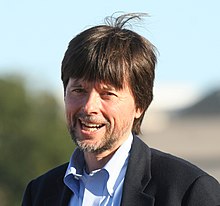
Ken Burns / Wikipedia
In short, Ken Burns has done what I feared he would do. He polished Teddy Roosevelt's apple at the expense of his successor, William Howard Taft, as part of his new documentary on TR, FDR and Eleanor. And, that's the most obvious of multiple pullings of historic punches by Burns.

I fear he'll do more when we get to FDR's presidency. (That said this is Ken Burns; see the bottom.)

Tuesday night's episode claimed, among reasons that TR decided to run again for president in 1912, that Taft backed off on tariff reform legislation and wasn't much of an environmentalist.

The reality?

Taft "backed off" on tariff reform in exchange for getting Congress to pass the 16th Amendment; meanwhile, TR deliberately refused to tackle the tariff while he was president, even though Taft, while his Secretary of War and all around confidante, had asked if he was going to do that. Taft and Interior Secretary Ballinger **legally** protected more land for watersheds within national forests than TR and Chief Forester Pinchot did with more dubious legality. And Burns knows this, because Doris Kearns Goodwin's new book, a history of the Progressive Era, a surprisingly good one for her, includes all this and more, and Goodwin is one of the talking head historians he has on the documentary.

The only semi-concession Burns makes to this is to have Goodwin say that TR would have been disappointed in whomever his successor was. I even wonder if Burns would have thrown in the claim that Taft wasn't a trust-buster if more people didn't know that was false then know what Burns actually claimed about TR was false.

Also, Taft didn't always weigh 330, let alone 350, pounds, as president. He often was under 300 and at times was as low as 250 or so.

And, here's my review of that book by Goodwin:

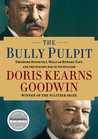
The Bully Pulpit: Theodore Roosevelt, William Howard Taft, and the Golden Age of JournalismThe Bully Pulpit: Theodore Roosevelt, William Howard Taft, and the Golden Age of Journalism by Doris Kearns Goodwin

My rating: 4 of 5 stars


It's not bad overall, for being a Goodwin book. Hey, have to be honest. She's not that great, even with allowance for her being a "popular" and not an academic historian.

I learned more about Taft than TR. The main thing is that I didn't realize that he had explicitly pushed for Congress to pass the 16th Amendment to send to states, along with starting the federal corporate income tax, in exchange for accepting the flawed "lowering" of tariff rates in the Payne-Aldrich tariff bill. Willingness to tackle the tariff, let alone get this much out of it, makes him more progressive (and more courageous) than TR in some ways right there.

Second major thing I learned was more about the details behind Taft's sacking of Gifford Pinchot. Taft partially caused this by not keeping John Garfield as holdover Interior Secretary, being dithering in making this decision and not telling Garfield exactly why.

That said, most of the actual precipitating events, from Pinchot's conflicts with Garfield's replacement, Richard Ballinger, indirectly proved part of Taft's reasoning right and also show that Pinchot largely shot himself in the foot. Pinchot's replacement, plus Ballinger, actually eventually and with better legal footing, "reserved" more forest lands from private development than did TR/Pinchot/Garfield.

In essence, forest reserve issues are one of the clearest issues of TR's arbitrary nature as president. We should be glad he didn't run for a second elected term in 1908, let alone get elected in 1912. When WWI started, he probably would have become more dictatorial in waging war than Woodrow Wilson ever was.

That said, the book lacks focus. That's in part because Goodwin's trying to do too much and spread herself too thin. Having read a bio of Lincoln Steffens and other books about the muckrakers, I know that she tried to cram in too much about them.

View all my reviews

And, I'll take this as my first opportunity to review the series as well.

I'll start by noting that, on weighty matters, TR was well over 200, at just 5-8, by the time he left office, as Gore Vidal notes in a delicious sketch of the Roosevelts. Also, as Goodwin notes, Taft's wife had a stroke after he had been in office just a couple of months, which had a strong effect on him politically; she was arguably, in her brief pre-stroke time, even, the most political First Lady up to that time, with the possible exception of Julia Grant.

Vidal has this to say on the idea that TR's entry into politics was sui generis for someone of his class:
Much had been made of what a startling and original and noble thing it was for a rich young aristo to enter the sordid politics of New York State. Actually, quite a number of young men of the ruling class were going into politics, often inspired by fathers who had felt, like Theodore, Senior, that the republic could not survive so much corruption. In fact, no less a grandee than the young William Waldorf Astor had been elected to the Assembly (1877) while, right in the family, TR's Uncle Rob had served in Congress, as a Democrat. There is no evidence that Theodore went into politics with any other notion than to have an exciting time and to rise to the top. He had no theory of government. He was, simply, loyal to his class--or what he called, approvingly, "our kind." He found the Tammany politicians repellent on physical and social as well as political grounds.

Well, that's pretty obviously undercutting that idea, yes. 

It is funny to hear Vidal call TR a gun-toting sissy, but, to put it a bit differently, was he a warmonger? Yes. That said, Burns does partially cover that. But let's read Vidal on that:
As a politician-writer, Theodore Roosevelt most closely resembles Winston Churchill and Benito Mussolini. Each was as much a journalist as a politician. Each was a sissy turned showoff. 
That in turn leads to the issue of, beyond being a gun-toting sissy, was TR an imperialist? Yes. And, Burns doesn't cover that. Although we didn't annex all of Panama, we did make the Canal Zone our territory. Our 1903 "treaty" with Cuba semi-imperialized that island until Castro, starting with a four-year U.S. occupation that began in 1906. TR continued the war to crush Philippine independence that started under McKinley.

First, per a Facebook friend, is 14 hours too much? Possibly; I'd like to think we could have cut to 12. Ten might be too short, but I think 12 would be good.

Second, while Paul Giamatti may have the accent of TR right, I don't think he has the full vocal dynamics right. His voice should be definitely louder and more dynamic than  Ed Hermann as FDR.

And, speaking of FDR ...

Third, the one reason from here on out I'm watching the show is to see if Burns is honest in showing just how much of the New Deal was limited to white folks, either explicitly or implicitly. Starting with Social Security, which initially excluded two classes of employees — farmers (don't forget all the black sharecroppers) and domestic servants. People who really know much about the Franklin-Eleanor dynamic know that, to the degree the New Deal did help African-Americans, it was largely at her pushing and prodding.

Related to that, and somewhat contrary to H.W. Brands' "A Traitor to His Class," I want to see if Burns portrays the New Deal as being relatively conservative, at least as compared to Upton Sinclair's EPIC and Huey Long's Share the Wealth. (And, sorry, Harry Hopkins, per the EPIC link from Wiki, but what FDR eventually got passed was not quite the same as it, let alone as Share the Wealth.) Here's EPIC:
To implement EPIC, Sinclair called for the creation of three new government agencies: the California Authority for Land (CAL), the California Authority for Production (CAP), and the California Authority for Money (CAM). CAL was to implement the plan for seizure and cultivation of unused farm lands. CAP was to do the same for idle factories. CAM meanwhile was to be used to finance CAL and CAP by issuing scrip to workers and issues bonds for the purchase of lands, factories, and machinery.

And, Huey Long was more radical yet. For that matter, Social Security didn't even, at first, come close to Frances Townsend's idea.

Fourth, FDR was also an imperialist of sorts. Look at all the Pacific island chains we took over as UN mandates, just like Britain and France after World War I with their League of Nations mandates.

FDR, while certainly better for America than Hoover, must thus also be taken with a grain or two of salt. On my third point, he got lucky to die when he did. I seriously doubt if he would have been as hasty to integrate the armed forces as Truman did. Nor (since he didn't during the Depression) would he necessarily been hasty to push for national health care. 

Fifth, and completing the circle, per another Facebook friend, maybe Burns is, in part, a middle-class, vaguely-and-politely liberalish democratic equivalent of Leni Riefenstahl in his documentary production style and thrust. Or worse.

August 04, 2014

Theodore Roosevelt: Who was this "progressive" president?

I'm sure you're familiar with all of this:

1. Busted more trusts than any other president.
2. Conserved more lands for environmental needs, and with strong legal protections, than anybody before him, and more than his immediate successors.
3. Fought to lower the high tariff on imported goods, which was strongly supported by big-business Republicans.
4. Got Congress to pass the 16th amendment and send it to the states, which allowed the federal government to base income tax on individual incomes, not on state populations, which obviously favored the likes of New York.
5. Showed more commitment to racial tolerance than some previous members of his own party by inviting Booker T. Washington to the White House.
6. Addressed the nation's banking problems, after multiple predecessors had been held hostage during financial crises by J.P. Morgan.

That's our man! Teddy, the first progressive president! Only, he did none of those things.

If I had added "by creating the Federal Reserve System" to the end of No. 6, knowledgeable people would have guessed Woodrow Wilson on that, wondered if Wilson did the previous stuff, but then scratched their heads at No. 5.

The reality is that TR wasn't that enlightened on race relations, and William Howard Taft did 1-4.

Yes. On No. 2, not just counting efforts started by Roosevelt, but only on efforts on his own, Taft busted more trusts than TR. That's in part due to Teddy's philosophy, that big wasn't necessarily bad, but what TR said was bad, was bad. Hence the appropriate title of Edmund Morris' volume of biography, "Theodore Rex."

That, in turn, leads directly to No. 2.

Many historically knowledgeable people know that TR broke with Taft due to his firing of Gifford Pinchot as the country's direct of forests. They may not know why.

Pinchot got in a tussle with Taft's Interior secretary. Then, as today, the forests were under USDA (another non-fix of TR), so there was a turf war. The big issue at stake was how, late in his administration, TR and Pinchot set aside land within forest preserves for hydrological protection. Taft and Interior Secretary Richard Ballinger were convinced that the TR-Pinchot methodology wouldn't withstand legal scrutiny. After releasing some lands back to private control, they went through the process again, and wound up protecting even more land in the end than the TR-Pinchot work.

No. 3? TR explicitly said during his tenure that he had no plans on taking on the tariff and advised Taft to do the same. Sadly, Taft got excoriated by TR worshipers for doing exactly that and not getting as much as they wanted.

That's even though, as part of what he did get, he got No. 4, Congress passing the 16th Amendment and sending it to the states, something that "progressive" TR didn't even try.

No. 5? When Southerners protested in horror about the first non-servant black man in the White House since Frederick Douglass during Lincoln's presidency (I'm unaware of Grant inviting any, and know that nobody after him did), he recoiled, especially when they mentioned that his mother was a Southerner. He even started cutting back on hiring blacks for Post Office jobs in the south. And, those that know TR know that the 1906 Brownsville affair was one of the blackest blots on his record.

No. 6? TR had had a run-in with J.P. Morgan over his work to break up Morgan-controlled Northern Securities in 1904. This was when Morgan famously said (not exact to the letter, you can Google it): "Send your man to my man and they can fix things up." And, TR knew about Grover Cleveland having to go to Morgan during the Panic of 1893 and a run on the nation's gold supply and beg for help, including being forced to meet Morgan personally. Yet, TR was short-sighted enough, limited in sight enough, or simply not progressive enough to not do anything to fix the nation's banking apparatus.

Then, along came the Panic of 1907, and TR having to kowtow to Morgan. Wilson's Federal Reserve, at the level of the regional Feds, may have left too much power in bankers' hands, but it was a big improvement beyond what we had.

As the Ken Burns series on the Roosevelts -- TR, FDR, and Eleanor -- comes on this fall, keep all of this in mind.

It's arguable that TR is the nation's most overrated president before GOP hagiography of Ronald Reagan.

May 04, 2014

Teddy Roosevelt - the bully behind 'bully'

I just got done reading The Bully Pulpit, Doris Kearns Goodwin's new mix of dual biography of Theodore Roosevelt and William Howard Taft, mixed with looking at muckraking journalism in what was the cornerstone of investigative reporting, as started by S.S. McClure of McClure's magazine, with Lincoln Steffens, Ida Tarbell and Ray Stannard Baker as its leading lights.

The Bully Pulpit: Theodore Roosevelt, William Howard Taft, and the Golden Age of JournalismThe Bully Pulpit: Theodore Roosevelt, William Howard Taft, and the Golden Age of Journalism by Doris Kearns Goodwin

My rating: 4 of 5 stars


It's not bad overall, for being a Goodwin book. Hey, have to be honest. She's not that great, even with allowance for her being a "popular" and not an academic historian. "Team of Rivals" missed the main points of why Lincoln named all those "rivals" to his cabinet. Anyway, back to this book.

I learned more about Taft than TR in this book. Of course, Roosevelt, arguably  the initiator of the modern presidency, for both better and worse, has been a far, far more covered person.


On Taft?
The main thing is that I didn't realize that he had explicitly pushed for Congress to pass the 16th Amendment to send to states, along with starting the federal corporate income tax, in exchange for accepting the flawed "lowering" of tariff rates in the Payne-Aldrich tariff bill. Willingness to tackle the tariff, let alone get this much out of it, makes him more progressive (and more courageous) than TR in some ways right there.

Second major thing I learned was more about the details behind Taft's sacking of Gifford Pinchot. Taft partially caused this by not keeping John Garfield as holdover Interior Secretary, being dithering in making this decision and not telling Garfield exactly why.

That said, most of the actual precipitating events, from Pinchot's conflicts with Garfield's replacement, Richard Ballinger, indirectly proved part of Taft's reasoning right and also show that Pinchot largely shot himself in the foot. Pinchot's replacement, plus Ballinger, actually eventually and with better legal footing, "reserved" more forest lands from private development than did TR/Pinchot/Garfield.

In essence, forest reserve issues are one of the clearest issues of TR's arbitrary nature as president. We should be glad he didn't run for a second elected term in 1908, let alone get elected in 1912. When WWI started, he probably would have become more dictatorial in waging war than Woodrow Wilson ever was. And I sincerely believe that, and though not any facts involved, Goodwin's book was a trigger for that thought.


I think TR would have done everything he could to have us in the war by 1915. Then, I think he would have tried, with Germa
n-Americans, as his cousin did one war later with Japanese-Americans, doing preventative detention concentration camps. I have no doubt he would have hired a George Creel or worse for pro-war, pro-Allied propaganda.

That said, the book lacks focus. That's in part because Goodwin's trying to do too much and spread herself too thin. Having read a bio of Lincoln Steffens and other books about the muckrakers, I know that she tried to cram in too much about them.


View all my reviews
 

December 31, 2013

Man of the Year? #BarackObama

If Time Mag can do its Man of the Year, and make picks for interesting reasons at time, and some fellow Texan bloggers can nominate their picks for Texan of the Year, why can't I?

And, I did, and it's you know you.

Why?

First, to give credit where credit is due, he's the first Democrat to twice be elected president with a majority, and not a plurality, since ... Andrew Jackson.

But, that's not the real reason he gets this honor here.

What is?

In a word?

Obamacare.

Its sign-up problems this year due to computer glitches at first, but now due to wariness among 20-somethings, will go far to defining its success, or failure, in 2014 and beyond.

Carl Gibson, a 20-something liberal activist, has a good article on why he's opting out of Obamacare. He's probably speaking for a lot of 20-somethings who have looked at the cost, even sniffing the federal exchange website, or the state exchange site if available, and making a rational decision to pass.
Would you pay $5 to save $1? I didn't ace Math in school, but I do at least know that a Lincoln is worth more than a Washington. If you were presented with this deal in a store, to buy a $5 item to get $1 off another, most people don't see that as a deal. Now, multiply those numbers by a thousand, and you may start to understand why the "young invincibles" of America aren't participating in the healthcare exchanges.
That doesn't stop a Kossack Obamiac from overstating Gibson's two visits to the hospital as an adult as "a propensity for accidents." And, Carl? If you're getting lectured by both Kossacks and Ezra Klein (for not being a good citizen) you're probably doing the right thing.

That said, the actions of not just one but many Carl Gibsons will, in turn, define the success of Barack Obama, and not just his second term, but, his presidency as a whole. And, no, not the computer problems, even though they will likely suppress enrollments into 2014. It's young, educated liberals like Gibson who make the rational, non-Kossack decision to opt out that are key.

Obamacare was predicated on getting a reasonable amount of Carl Gibsons to opt in as part of cost containment. Not only is he instead opting out, he's essentially telling his cohorts to do the same and feel good about it.

Hence, since 2013 is the year Obamacare hit the road (except for all the parts Dear Leader delayed a year!) Barack Obama is this blog's Man of the Year.

As for 2014? With the delays, and the under-enrollments? As 2013 Part Deux, it will further define Obama's legacy, and likely not for the best. (Even if the White House continues to be slow in providing hard data about things like enrollments, the degree to which the website's payments to insurers issue is fixed, etc.)

And, in 2014, we're all going to be guinea pigs on whether Obamacare can provide truly affordable coverage. That said, Obamacare says nothing about providing nightmare-free coverage. And, given the way the modern insurance world works, as documented in sad detail here, it likely won't change that a bit. (It's true that the person in question benefits from being able to get insurance via Obamacare; but, that's not the angle I'm focused on.)

So far, through the end of December, Gallup polling says the uninsureds still aren't impressed.

Could Obama have gotten single-payer passed in 2009 or 2010? Possibly, if he had wanted to, and had expended real energy to do so. But, he never wanted to do either one of those, as I see it. The federal exchange website problems testify to the "real energy" issue from where I stand.

In my personal "view from somewhere," to riff on a philosophy phrase, then to riff on Charles Pierce's C-plus Augustus description of George W. Bush, the man's a C-plus LBJ.

As for me, it's relative success or failure will define exactly where he ranks in U.S. presidents overall, and especially those since Teddy Roosevelt basically invented the modern presidency.

Currently, going from bottom up, chronologically, I rank him ahead of Harding, Coolidge, Hoover (while acknowledging Hoover's bad rap), Nixon, Ford, Reagan and both Bushes.

That's 12th out of 19 presidents since the start of the 20th century. Not fantastic. And, yes, I ranked both Taft and Carter ahead of him.

And, yes, I was ranking Shrub's place in history before the end of his second term. Barring some major new breakthrough, I don't see much of a rankings change likely.

==

As for Time's choice? It's more and more clear all the time that Pope Francis' "liberalization" is a mix of playing around the edges and the soft bigotry of low expectations when compared with Benedict XVI.

That said, I've long said that Bush's "soft bigotry" phrase explains well the continued romance many a neoliberal, and even a few liberals, continue to have with C-p lus LBJ. (Hey, Obamiacs? I could have called him C-plus Carter.)

September 16, 2009

The GOP was first on national healthcare

No, seriously, even though there’s a bit of a trick to it.

The first major politician to advocate for a national healthcare system? Theodore Roosevelt.

Of course, when he tried to wrestle back GOP leadership from his disappointing hand-picked successor, William Howard Taft, Taft turned to the GOP old guard bosses to deny him the 1912 nomination.

TR possibly also was the first major-party top-level politician, and certainly the first Republican one, to advocate for a social security system and unemployment insurance.

He also supported a minimum wage law well before it was established at the federal level, and seemed to want one high enough to at least approach modern “living wage” territory. He favored about 80-90 percent of what Britain’s Fabian socialists wanted.

That said, he never could get reconciled to the GOP old guard after his failed 1912 “Bull Moose” progressive run. (And, hated Robert LaFollette for stabbing him in the back during his GOP showdown at the convention.)

One of our two great GOP presidents.

October 29, 2008

Gergen: Obama should invoke TR

In what would be great political judo by invoking a professed political hero of John McCain’s, longtime Washington insider David Gergen says Obama should invoke Teddy Roosevelt’s support of progressive taxation as an antidote to the “redistributionist” mantra of Schmuck Talk Express™.

I’ve always liked intellectual judo jobs. This would be a great one.

October 16, 2008

Neibuhr-TR debate not Obama-McCain

At the British newspaper The Independent, Johann Hari takes a fascinating look at the presidential campaign through Obama’s and McCain’s professed heroes.

First, Hari gets a lick in at McCain’s choice of Teddy Roosevelt:
It is the aggression that he loves in his Teddy, not the reform.

Want proof? Hari quotes McCain:, speaking about Teddy’s charge up San Juan Hill:
‘He surveyed the awful carnage, the torn earth, the trenches filled with enemy dead, and pronounced himself delighted with the day.”

Indeed he did.

Hari then notes that Reinhold Neibuhr, by temperament and more, has some close parallels to Obama.
(A)s you probe Niebuhr's thought, you see that his contradictions and complexities intriguingly mirror Obama’s.

Read the full column for more of this insight.