SocraticGadfly: biography
Showing posts with label biography. Show all posts

March 31, 2026

Reality Winner still appears less than fully in touch with her own reality

This is a moderately tweaked and moderately expanded version of my Goodreads review. It's certainly less expanded than many Goodreads reviews that I deem worthy of expansion either here or over at my philosophy and critical thinking site, but I thought it worthy of at least a bit of both.
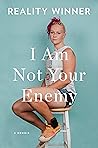
I Am Not Your Enemy: A Memoir

I Am Not Your Enemy: A Memoir by Reality Winner
My rating: 2 of 5 stars

1.75 stars rounded up, and for the MAGAts who most likely are many of the non-review 2-star ratings, it becomes the first 2-star review. (It goes on my "Meh"shelf but not my "Disappointing" because I wasn't expecting much in the first place.) Speaking of?

This review is coming from a non-duopoly leftist who suffers neither from Trump Derangement Syndrome, NOR from Trump Delusional Syndrome, per the one 1-star reviewer, an apparent MAGAt. I venture her comments represent at least four or five of the non-reviewing 2-star raters.

Rather, it’s someone from the left with Trump Reality Syndrome, who knows Russia hacked both the DNC and RNC computers in 2016, but also knows that its efforts to hack state-level and lower election and voter verification websites were a semi-nothingburger.

I also knew early on that the “Golden Showers” was laughable. Trump is literally shame-less, so even if had had a Golden Shower or four with Russian whores — or pre-marriage with a Slovenian soft-core porn model who came to the US on a fake visa — he could not be blackmailed. (I mean, this is a guy whose granddad pimped whores to miners in the Klondike.)

Per what I wrote shortly after her arrest about Winner’s own stupidity as well as The Intercept’s, I wanted to see if nine years of life had smartened Winner up. On the political issue that led to her arrest, and to her overreading a semi-nothingburger document, it appears not to have done so, as least as judging by silence.

(Beyond the Intercept's belated apology, plenty of other people owe her apologies. Like Michael Steele the British ex-MI6 agent who bought "Golden Showers" hook, line and sinker. Or Jon Chait, with his blathering that Trump has been not just a Russian but a USSR actual "asset" since the time of Gorbachev. None of these apologies, nor a pardon from the USofA government, will ever be forthcoming.)

Also, getting through the early part of the book, and either forgetting or not knowing that she had converted to Judaism or other things, wanted to see if she had any comments on Zionism, and its threat to the US. Nope. None in the whole book, despite Bibi Netanyahu being more of a danger to the US than Vladimir Putin. Yes, not all Jews are Zionists. But, still.

I think Winner has realized she can’t save the world. But, beyond not talking about Zionism, she says nothing about what she thinks today about Russiagate, which means she likely still believes it.

Her last (I guess) attorney? Allison Grinter (Gunter)? The attorney full of crap and lies in the PRO Gainesville case? (This is why I’m a skeptical leftist.) It's kind of fun having a bit of personal connection to a book.

I otherwise have one takeaway about her post-arrest story. In talking about her trial, she claims, without using the exact phrase, that she was not Mirandaed at her initial interrogation and arrest by the FBI. Really? Then why wasn't this raised at trial? Somehow, I think her framing is off. For example, you don't have to be Mirandaed if police indicate in some way, even without shouting it out, that you're free to leave. (Or free to tell them to leave if they're on your property and don't present a warrant.) And, from the way she lays out the scenario, it sure looks like that's what happened.

Otherwise, this is a tale of sadness, sadness in some ways that Winner herself doesn’t seem to grasp.

Her life seems to exemplify a sex-neutral version of the second half of the first of the ten Divarim from Exodus.

“The ‘sins’ of parents visit themselves even unto the third and fourth generation of those that hate me.” Throwing out the ideas of god, whether Yahweh, Jesus, Zeus and the House of Atreus or whatever distributing multigenerational punishments for sin, as secular psychology this is quite true. Winner’s parents were both hurt people who entered college looking to work for CPS, to help hurt people. They probably married each other to heal each other. It certainly didn’t work with Winner’s biological dad, and beyond the “Momface,” a nickname never explained in this no-index (dinged!) book, may not have totally worked with her mom.

Winner was hurt too. There’s the bulimia which pops in out of nowhere and is never explained as to how or why it started. (Hold on to that thought.) There’s what she calls “marking” in federal prison, but which is normally known to counselors as “cutting.” Then there’s the whole psyche, at least before getting out of prison, and certainly before her arrest, as a person who simply cannot stand still, and in a number of ways, simply cannot stand being alone.

The “hold on to that”? I quote from my review of the book “Bottoms Up” by Kerry Howley, a person Winner touts several times. (The book is actually a 1-star effort, more disorganized and more shallow even than Winner’s own book. )

Winner appears to have had a highly compartmentalized, and highly fragile, psyche, held together and shielded only by a highly disciplined organizational self. That, obviously, was shattered. And, I don’t know if she was put back together again by Humpty Dumpty’s sources. (For instance? The admission of bulimia that shocked her mother? We're never told when it developed. While we read about a new boyfriend every six months, we never have Winner say why — if she even consciously knows why. Nor do we hear more about her sister's apparent long-standing feeling that Reality was often a jarring intrusion into her own life.)

We’re not told that last bit by Winner, either, who is all smiley-faced about her sister throughout the book.

I think Winner is more hurt than she may realize. Maybe she's more hurt than she wants to realize, for that matter.

Bulimia? Cutting? With lesser “tells” of not being able to be alone and having a new boyfriend every six months? Trusting people to the level of gullibility? (There's one or two other things, but those are the biggest.)

I could be wrong, but to me, this is screaming child sexual abuse.

Reality Winner, I deeply hope I'm wrong. I at least as deeply hope that if I am not wrong, you're able to see this past and get help for it. 

Even if it's not that, I still think there's something we're not hearing. It's Winner's right not to tell that, but it's also our right to say she's used up her 15 minutes of fame at th at point. 

August 27, 2024

Glenn Loury is still a Player

Even more than as I noted in my original Goodreads review, that's the bottom line of his autobiography.

Late Admissions: Confessions of a Black Conservative

Late Admissions: Confessions of a Black Conservative by Glenn C. Loury
My rating: 1 of 5 stars

A Player is trying to play you. Period, bottom line and end of story.

Per a theme of Loury’s off and on throughout the book, I think that’s the best take on this. Yes, that's highly skeptical. It may even be a bit cynical, but it's skeptical far ahead of cynical. To Loury's fanbois and fangirrls who either loved or hated this book, I don't care if you think it's all cynicism, no skepticism.

Let's dive in, starting with stuff that presented itself right away.

First, per Loury’s hints in his intro that he thinks radical honesty will make him more likeable as well as more believable? Tosh. Ditto on implied claims that if he’s more believable on his personal story, then he’ll be more believable on his economic and political stances. Tosh again.

Second, per the front half of the inner dust cover flap, any swing to the left was relatively short and narrowly focused.

Third, no index.

Fourth, Hillsdale College early 1980s may not have been as big as today as far as conservative world imprint, but it wasn’t small. Writing for them? Loury had to know what he was doing. As far as his musings about a John Conyers and police brutality, he implies that Conyers was thinking about this to the exclusion of thinking about black family problems. With both this and Hillsdale, Loury had to know that white conservatives would use this as ammunition for “let’s move beyond affirmative action.” He either DID know this and decided to, early on, be a “Player,” or else he didn’t think about it and became a Sucker.

At this point, I am pretty sure the book won’t go above 3 stars. So, where within that will it land?

Well, next, we hit his cheap, caricatured and dishonest — to shove that word in his face — strawmanning of liberals on the 170s-180s pages. And, by the time I’m at 200, I am pretty sure this is no more than 2 stars. And, I'm thinking this is another part of being a Player.

And then, shortly after page 300, comes Charles Murray and The Bell Curve. Now, I know that Loury is no more a cognitive scientist or an evolutionary biologist than is, say, Andrew Sullivan, to cite another prominent personage who has both loathsome and stupid views on the book and the ideas behind it. And, contra Loury, it doesn’t matter that Herrnstein had died by the time the book came out. He was wrong, too. BOTH authors got money from the racist Pioneer Fund, like Frank Miele. Add in that Murray then moved from racism to sexism. Interestingly (perhaps in part because, reading between the lines in this book, Loury isn't very enlightened on feminism, either), he doesn't even mention this to try to explain it away. Surely, he knows this, too.

Contra Sully, though, Loury is an academic in a not totally distant field, and even less distant as far as some of his lectures and such. He’s surely read some of the material before, during and after The Bell Curve about the sociological influences on IQ even when not motivated by racism, the problems with “g” and more, problems detailed here. In addition, the fact that AEI, the American Enterprise Institute, simply threw aside his concerns, and basically just went on without him after he left, apparently opened no eyes in his soul.

To put it more bluntly than in my original review? Loury's lying to himself, lying to his readers, or lying to both. They're not mutually exclusive.

There’s also the fact that this connects to broader stupidity in Evolutionary Psychology, with some of its biggest stupidity detailed here.

There’s other lies by omission. Like overlooking that already by the late 1960s, Daniel Patrick Moynihan was ignoring LBJ’s dictum that you don’t ask someone to run, but just walk, after removing the chains. Or, talking about equity once or twice, then ignoring the multigenerational transfer effects of racial differences in equity.

As for the radical honesty, one more time? Tying his conclusion to his introduction, it seems like he’s selling the idea of being an intellectual Player. I think his puffed up move from the right to the left was part of being a Player. And, other than mass incarceration, was it really much of a move? Nowhere in the book does Loury dive into the intersection of race and class, other than his personal anecdotes revealing how part of his being a Player in various ways involved forms of intersectional class-shifting. In light of that, I note that he doesn’t mention Isabel Wilkerson or her book Caste.

That said, he’s not 100 percent wrong on everything. Nor is new bosom buddy McWhorter. I don’t have a lot of use for Ta-Nehisi Coates nor for the 1619 Project’s Nikole Hannah-Jones. I have about none for Ibrahim Kendi and even less for Robin DiAngelo as a white race hustler.

Oherwise, as for his alleged move to the “left”? There’s NO Black leftists he mentions. Yes, Black liberals. No Black leftists, like, say, an Adolph Reed.

There’s zero engagement with Critical Race Theory, like Derrick Bell and his "Silent Covenants." Loury mentions some other Bell in the book, but since no index, I can’t remember who. So, on his "pivot to the left," at least on the depth of his pivot, as with the Murray angle, Loury would again seem to be lying.

Again — and assuming the lying is conscious — to whom first? Himself? (Which makes the lying at some point subconscious.) Black conservatives? White conservatives? All of the above? Black and/or White liberals? Is he even trying to lie beyond liberals to leftists?

So, why? Is Loury trafficking in the idea of being a Player due to laws of supply and demand on black conservatives? Was his shift allegedly to the “left” to build up Black cred when he moved back right?

View all my reviews

December 29, 2023

Frank Church NOT 'The Last Honest Man'

The Last Honest Man: The CIA, the FBI, the Mafia, and the Kennedys―and One Senator's Fight to Save Democracy

The Last Honest Man: The CIA, the FBI, the Mafia, and the Kennedys―and One Senator's Fight to Save Democracy by James Risen
My rating: 3 of 5 stars

I really wanted to like this book when I saw it on the library shelf, being old enough to remember Frank Church, definitely old enough to remember the multifaceted 1976 Democratic presidential primary battle, and also having read a lot of Risen's reporting in various outlets.

From the Prologue, I figured this would probably be a good four-star, but not a five-star.

First, I’ve long held, from what I’ve read, that the Pike Committee did more than the Church Committee. So said Mark Ames. Risen disagrees. I've read other material elsehwere to that effect.

That said, he doesn’t even mention the House Government Information Subcommittee of Bella Abzug. In fact, Risen doesn’t mention Abzug, period. James Bamford does mention her extensively in Puzzle Palace, calling it, vis-à-vis BOTH Church and Pike Comms, “like an ammunition-laden cargo plane out of control,” from the spooks point of view. Bamford of course talks about both full commissions.

Second, he, and he’s not alone, talk about the Church Committee “reining in” the intelligence state. Well, that was a low bar to hurdle and was also relatively temporary. And, the battle was halfway lost at the time and Church signed off on the final version of the Church Committee report, establishing the Intelligence Committees in House and Senate. The final version of the report refused to require the CIA to give the Intell folks advance notice of covert operations. It also had other loopholes, and per that link, many staffers excoriated the committee. Oh, the vote was unanimous, so that includes Church. (The Senate Government Operations Committee, or more precisely, the Senate Committee on Government Operations, was the Church Committee. That said, as it had 11 members, I'm not sure where a 12-0 vote comes from, nor am I sure what the name of Charles Percy, who was never on the committee, is doing there.)  In other words, per his own committee staffers, at least metaphorically, he wasn't all that honest of a man.

The claims of Church and others that this would tread on the sacrosanct Constitutional separation of powers and involve one branch of the Trinity interfering with another was and is laughable. Congresses regularly set restrictions on presidential power, as do courts. In fact, just a couple of years prior, the Supreme Court ruled that Nixon's "impoundment" of Congressional appropriations was unconstitutional.

The real issue, as I see it, is that senators didn't really want to reign in the CIA that much, and didn't want to be called bad guys for allegedly putting handcuffs on the CIA. This, in fact, is a charge that Steve Symms raised against Church in his successful 1980 run to unseat him. Even beyond that, I think these, and most senators, wanted "plausible deniability" vis a vis the CIA.

So, with that, we've fallen out of the four-star range on just how much Church really did, as well as, metaphorically, just how honest he was or was not. And, with that, like one other three-star reviewer, I thought the title stood out like a sore thumb and was off-putting, whether Risen chose that, or his editor.

Beyond that, per "The Last Great Senate," there were other senators in 1980 who, overall, were in the same general range of honesty as Church. So, again, why the title?

Related to that? Yeah, Church may have in private been an early opponent of Vietnam, but for some time after voting for the Tonkin Gulf resolution, those concerns stayed private. As for the two who voted against LBJ? Ernest Gruening got lied out of the Senate in 1968 by Mike Gravel and his campaign (and lie Gravel did, about that and many other things) and Wayne Morse was the type of independent minded person beyond Church's idol, William Borah, let alone Church himself.  I mean, the vote split has even 10 "not voting" senators, nine of them Democrats. Church couldn't even do that. And, where was Church after Martin Luther King Jr.'s 1967 Riverside sermon?

And, why the subject? Yes, I know Risen is big in intelligence community reporting. But, per Ames' link, why not a bio of Pike?

With Church (and this would be far more true with Pike), I think Risen got his ass in a crack. There's not that much on which to hang one's hat for a Church bio other than the Church Committee. Well, then, in that case, don't make it a bio. Focus on the Church and Pike committees.

As for the 1976 campaign? I disagree with Risen's implication that Church likely would have won California had Brown not have made his late entry into the race. Mo Udall was the most union-favored remaining candidate at this point, and from the neighboring state of Arizona. Plus, Carter would have campaigned harder in California without Brown there, and without Brown having won Maryland, probably would have been in a position to win the nomination right there, without George Wallace and Scoop Jackson ceding their delegates.

One other error?

Page 243, the Sacheen Littlefeather who stood in for Marlon Brando at the 1972 Oscars is a pretendian, not an American Indian, and has been suspected long before Risen wrote. The NY Times even had a news story .

That said, ignore wingnut 3-star and lower reviews like this MAGAts one. Surprised she gave it 3 stars rather than lower.


View all my reviews

September 14, 2023

William Jennings Bryan — the original Bernie Sanders

A Godly Hero: The Life of William Jennings Bryan

A Godly Hero: The Life of William Jennings Bryan by Michael Kazin
My rating: 3 of 5 stars

I was on about page 120, the run-up to the 1904 Democratic convention, when the light bulb turned on:

William Jennings Bryan was the 120-years-earlier predecessor to Bernie Sanders, on the legend even more than the reality, and related to that, the degree to which many peddled the Kool-aid or drank it for themselves, often long after the reality differed clearly. This includes the two protagonists. (Kazin may not like that comparison; for more on why, see the end of this extended review. See also my new Substack looking more explicitly at the sheepdogging angle.)

That said, this is one of those books that is both provocative and problematic at times. And, as is the norm with such books, I’ll have a greatly extended review on my blog. What I have here is the basics of what I learned new about Bryan as well as a basic-level critique.

Trying to rate it is also problematic. I do think this is well researched (Kazin also notes former recent, as of the 2007 date, biographers), but not necessarily well analyzed.

I don’t think I had read before about Bryan volunteering to serve in the Spanish-American War. Even if he saw no combat, it did look hypocritical next to previous anti-American statements.

That said, Kaplan gets some Spanish Empire wrong. The Philippines as well as Cuba and Puerto Rico were still a part. So was Spanish Morocco and Spanish Sahara. Bioko and Rio Muni, later united as Spanish Guinea, were held in equatorial west Africa.

As for his service, as a volunteer, why didn’t he resign before the 1898 midterms? Bryan obviously doesn’t tell us, but it’s another spanner in the spokes of his bicycle.

And, supporting the treaty? Wow. And, the Senate approved it by just 2 votes to spare. Bryan said, in essence, that we should follow Kipling’s adage and adopt the white man’s burden but shuck it quickly.

Then, after 1900, buying a rural mansion that in today’s terms would run at least $500K? Multiple guest rooms. Dining room that seated 24. Servants. (Peak Bryan was making $2K/week on the Chautauqua circuit and more besides. Bureau of Labor Statistics’ inflation calculator says $2K, in 1913, its earliest year, would be $62K today. Per week. Just for a dozen weeks of summer, $750,000 a year in today’s terms..)

1904? Not endorsing Hearst. Sure, Hearst’s womanizing was already known, but Bryan had shown himself a semi-hypocrite on imperialism already. Hearst probably wouldn’t have blocked Parker, by the 2/3 rule still in effect then, anyway, but maybe? Before people shifted votes after initial first ballot tallies, Parker was just short; Francis Cockrell, Bryan’s endorsee, was third. That said, all the shifts were Hearst defectors.

LaFollette had a newsletter, like Bryan’s The Commoner, but it didn’t explicitly promote him. Battling Bob missed a turn there, but, given his speaking style, what I’ve read about that, and other things, not a surprise.

Kazin believes the legend of Taft as conservative, which is only half true. For example, he doesn’t mention that, rather than “trimming” on the tariff, Taft traded tariff reform for getting the 16th Amendment out of the Senate. Nor does he mention that TR never tried tariff reform and that he didn’t push the 16th Amendment, either. As part of that, he’s also wrong about Gifford Pinchot. Doris Kearns Goodwin’s book on Taft and TR has a more nuanced portrayal. He also could have learned something about Nellie Taft, while there, per a bio of her . (Kazin’s book came out a full year later, and while Kearns wrote later than him, the door had long been open for revisionist Taft studies.)

That said, supporting the 1898 treaty foreshadows Bryan carrying Wilson’s water in Mexico before resigning over the Lusitania. And, carry that water he did.

There are other vignettes here, such as just how conservative TR was, claiming Bryan had “socialistic and communistic tendencies” in 1900. The claim, and the demagoguery, surprise nobody who knows the reality of Brownsville 1906.

Bryan was coopted by acceptance of Secretary of State. Wilson knew that.

Bryan's first big oops was not on Mexico but Federal Reserve. He did get Wilson to accept government oversight, but, with individual banks controlling the regional feds, especially the NY Fed, that was hollow. And, he was told that at the time. The remaining Populists and rising Progressives wanted something like the original, not watered down, Bank of North Dakota on lending requirements for the Fed, board of directors, etc.

Mexico/Caribbean? Bryan shared Wilson's paternalism. And, such it was, even if it shed the worst of GOP dollar diplomacy. It was the same paternalism Bryan showed in the Philippines.

WWI? Wilson hoped Bryan would resign already by end of 1914, reportedly. Kazin doesn’t tell us if Bryan had heard about that.

That said, Kazin misses the mark on Wilson as fake neutral, and being a fake neutral not a real one relatively early after the start of the war. He talks briefly about submarines not doing cruiser warfare as violating international law but says nothing about the same for blockade by extension and food as blockade weapon, even with his admiration for British law in general. Kazin notes later that the Lusitania was carrying munitions as well as passengers, but not that it was armed with guns more than big enough to sink a submarine if it surfaced. He lost a star right there. (He doesn't ask if Wilson knew either one at the time.)

Would siding with Bryan "have prompted a political rebellion"? Questionable. I don't know about Republicans, but most non-Southern Democrats west of the Mississippi in 1915 were still isolationist. He then claims the NY World spoke "for most of the American press" when it called German response to Wilson's diplomatic note "the answer of an outlaw." The World War I coverage in this book doesn't speak well for Kazin's handle on WWI in general, despite him writing a book about pre-US entry peace issues.

I had suspected Kazin would land here when, in his chapter on the 1912 convention, he indicated that Bryan plumping for Wilson instead of Champ Clark was a good thing. Yes, Clark was more parochial than Wilson, but he was opposed to WWI. (As Speaker, he didn't vote on the declaration, but his opposition was known. His son was an isolationist senator in the run-up to WWII.)

In Kazin's "War Against War," long review here he partially redeems himself — but not totally.

Sadly, as Kazin notes a bit in his Bryan bio and may cover more there, antiwar Congresscritters were ill-organized. A bill to block traveling on British ships wasn't introduced until 1916, and then, Thomas Gore et al had no answer to Wilson alleging they were making foreign policy on the fly.

Kazin redeems himself more fully at the end of the chapter: "In retrospect, he was quite right to oppose American entry into the Great War. It was not a conflict that history has justified."

But NOT totally fully. See what I said above about his thoughts on Bryan plumping for Clark as well as Wilson. And, going beyond what he said about “not justified,” it not only wasn’t justified for the world, it wasn’t justified for the US, even if Germany had still decided to smuggle Lenin into Russia.

Back to Wilson on the war. The reality is that, before the Luisitania, Wilson had, essentially, willingly made the US a “non-combatant co-belligerent.”

(I recognize I've gone a fair bit into Wilsonism, but, this is a very serious issue. Both as a matter of ethics, and even more, as a matter of governance and the American future, more than Vietnam, more than the Mexican War, overall, more than Iraq, too, this was the biggest foreign policy error in American history. And, it semi-directly set the stage for Iraq.)

As for history and alt-history, Bryan's unwillingness to either battle Wilson's renomination (with the two-thirds rule in effect, he might have succeeded in blocking it albeit without his own nomination) or run as a TR-type independent reinforced that he had nothing to offer but platitudes. And, John Reed type mocking aside, hadn't this long been true? (Some Progressives pushed to nominate Bryan after TR said no, but ultimately, they had only a Veep nominee.)

Re the 1916 campaign? This is the first time I've seen the claim that Debs passed on the Socialist nomination due to health. If true, he wouldn't have run for a Congressional seat, either, would he have? His later imprisonment did wreck his health, but he still stood for the 1920 nomination from his cell. Of course, he would have been in the cell anyway, but, it seems that he stepped aside in 1916 for other reasons.

On Scopes? Kazin claims his violation of the Tennessee law was UNintentional. Really? Sidebar: He grew up in Bryan's hometown of Salem, Illinois. Per Wiki, Bryan spoke at his HS graduation, and claims that Scopes was laughing. Per Wiki, the truth on the case may be not that it was an unintentional violation but that there was NONE — as in Scopes may not have taught any evolution that day. (If you're going to challenge legend, you should do it right.)

The big issue is how much Bryan was motivated by opposition to evolution by natural selection, ie, Darwinian theory, and how much by social Darwinism, and how much or how little he distinguished the two. Kazin never really addresses that how much/how little issue. And, while a fair chunk of touters of evolution also touted social Darwinism, even in the natural sciences, many did not. The same is likely true, to a lesser degree, of upper-class conservative politics. And, it's certainly true of liberal Christians. This is another less than total coverage by Kazin.

Was Bryan a fundamentalist? In the fullest sense of the book "The Fundamentals," no, but in a narrow sense, yes. In a vaguer sense, just like the members of the conservative wing of Lutheranism in which I grew up? Yes. Bryan might not preach hellfire to or about Catholics in public, but who knows what he thought in private. He was a biblical literalist. So, Kazin's "no" must be taken as a split verdict. The problem is, that Kazin doesn’t note the difficulty with analyzing Bryan as a fundamentalist today apples in a self-referential way. Just as Bryan didn’t have the politics of today’s fundamentalists, the fundamentalists 100 years ago. The lynchpin of “The Fundamentals” was not politics, but German-based higher criticism. Though we don’t have layman Bryan on record about higher criticism, he surely rejected it.

To wrap up, it seems that Kazin has a soft spot for Bryan — and enough of one that, on fundamentalism, and a few other things, he gave him a bit of a pass. (Other critics here have said that he does that with Bryan's racism, too. One or two other critics argue the other way, but even an occasional Southern politician explicitly denounced the Second Klan, for example.) Bryan leading the effort to BLOCK Klan condemnation in the 1924 Democratic platform does get mentioned, as does his undercount of Second Klan membership, but? "Mention" is all it gets. 

Here's another way of presenting it, and why I don't think this charge against Kazin is too harsh.

To look at a direct political contemporary? Eugene Debs evolved on many things, including race. (His original union, the American Railway Union, was segregated at first.) In prison — the WWI-related imprisonment, not his early one — he had his eyes opened about racial sentencing disparity — and talked about it.

Bryan never evolved.

Beyond the review, for today?

Kazin is a DSA Rosey, and per his Wiki bio, I am assuming some sort of sheepdogger against non-duopoly leftists. Given that, it's no wonder he doesn't want to compare Bryan to Debs more.  And, related to that, I forgot that he had a less-than-stellar essay in Myth America. This Slate piece has more. And, that is why I suspect that Kazin wouldn't like the light bulb of this non-duopoly leftist seeing William Jennings Bryan, and his legend vs. reality, closely paralleling that of St. Bernard of Sanders. And, his latest book, of last year, "What it Took to Win," appears to be sheepdogging writ large across party history, per at least one 3-star review. Per others, it seems like, per Dolly Parton, he tried to pack 10 pounds of potatoes in a 5-pound sack.

Beyond the review in general, thoughts that I had stimulated?

One thing I don’t get is why Sanders hasn’t pulled a Bryan and left the Senate and hit the rubber chicken circuit long ago. He, and even more I think, wife Jane, with the multiple houses and other things, like them some money. And, especially if he had done it before now, and very especially if he hadn’t fallen on his sword in 2020 for “his good friend Joe Biden,” Bernie probably could make half as much a speech as ex-presidents do. He would easily rake $500K a year if he wanted to.

Alt-history: Had Debs run again in 1916, he probably would have gotten enough additional votes in California and North Dakota alone to tip those states and the election to Hughes.

On the Great War? With a President Clark, he probably would have protested both British and German violations of international naval law. Britain would have decided the blockade with risk of sub warfare was better. (Germany had relatively few subs in 1915.) In response? Clark might have done like Washington and Adams in the 1790s, or Roosevelt in the 1930s, and issued a neutrality proclamation, then worked to get Congress to do even more, especially before the Lusitania. That would have specified no Americans on British ships. It would have specified no US government guarantees of “credits” by House of Morgan to Britain. With that, the British and French might have crumpled before Germany felt the need to smuggle Lenin. Hard to say.  

Anyway, that gets back to the review. If you really think WWI in general was that bad, and also think the US shouldn't have gotten involved (something that Kazin does NOT expressly say, so I'm not sure of his stance) then you can't let Bryan tilting the 1912 Democratic nomination pass in silence. (Nor can you let his susceptibility to Wilsonian flattery pass in semi-silence.) 

Update: Historians who know better, like Lawrence Goodwyn, would also like a word with Kazin about 1896 and the Populists.

View all my reviews

March 10, 2020

Charles Bowden, warts and all

America's Most Alarming Writer: Essays on the Life and Work of Charles BowdenAmerica's Most Alarming Writer: Essays on the Life and Work of Charles Bowden by Bill Broyles

My rating: 5 of 5 stars


And, he had warts. An alcoholic drinker perhaps worse than Cactus Ed Abbey. As much a womanizer as Cactus Ed, despite his callout of Abbey in "Red Caddy." A fair amount of that book comes off as psychological projection; only on racism does Bowden seem truly clean of what he charges against Abbey. Maybe that's why he didn't have it published until after his death. But I digress. (Borderzine, from Tucson Citizen, has the best obit on Bowden. It does note he had quit smoking, had cut back on the womanizing and had maybe cut back on the drinking. A 2010 piece for Harper's sheds more light on his personality.)

Note: This is a greatly expanded version of the Goodreads review. Beyond the first paragraph, about half of this is additional material going behind the book at hand.  So, we're going to go back to Red Caddy and digress more.

In that book? He’s right that Abbey was, or certainly seemed to be, racist. And, I know, from what I see, that Bowden isn’t on Hispanics or Indians. Dunno about blacks. But, yes, the rest seems like projection. Including that both of them were guilty of at least emotional abuse, if not also physical abuse, against wives and girlfriends. And, in most cases, with both of them, they eventually ended things. (Clarke Abbey? Cactus Ed may have mellowed more and more the longer they stayed together; but, just as he never quit drinking, I doubt he ever fully mellowed. Her life is her own, and she can tell, or not tell, that story some day in the future. I'm done digressing now.)

This collection of essays talks about Bowden the journalist, which is what he saw his books as being — book-length reporting. Fellow authors, editors, agents and others all weigh in on his skills, his insights, his craft.

Bowden indeed told it like it was, from the destruction of desert habitat to the destruction of Mexico by NAFTA, which lies behind his series of books, articles for magazines and more, about Juarez in particular and the borderlands in general.

Arguably the most provocative essay is by Leslie Marmon Silko.

She says that already in Blue Desert, he was writing in a way that would become what she said of Gertrude Stein, Truman Capote and others — the non-fiction novel. She went on from there to his borderlands books, where she indicated that he had a lot of novelizing, and that this is part of why no Juarez drug lords offed him. He made them look so scary that they liked the PR. Same thing on the other side, she says. She made the DEA look so tough in fighting this that they liked the PR, too. She adds that she things she did much of the writing about this in Tucson, Las Cruces and spots in between, not in Juarez. In fact, she thinks that he didn’t actually stay in Juarez that long that often, especially after his first couple of books.

Silko doesn’t claim he made it all up. Nor does she claim that, at the start, he made much of it up. She uses the word “exaggerate,” not “made up,” to introduce this section of thought. And, this is as much as guess of hers as anything. Nonetheless, as she notes that even while claiming to live in Tucson, his actual whereabouts were often a mystery, who knows?

I definitely don't think she's all wet. Clara Jeffrey, after all, notes that editing Bowden sometimes required a lot of whacking, and that Bowden knew it (as with the ee cummings style in his PhD thesis) when submitting.

That said, I think Silko misreads Bowden in another way, in one section of her distinguishing between Bowden the person and CB the literary narrator he created. She said he once, in a book, called environmentalists “prostitutes” but in real life was best buds with Dave Foreman of Earth First. Well, Foreman, like Abbey and probably like Bowden, would identify as “anarcho-libertarian” or something similar first. Bowden probably did think indeed that the likes of Sierra Club leadership were prostitutes. And so, “CB” thinking women should wear high heels and makeup? I’m sure Bowden did too.

This gets back to Abbey more.

They were, other than their different takes on the border (and maybe on birth control) two peas in a bod. Both rejected — and rightly (rightly in the sense of who they were, not necessarily rightly on the idea) — the label of environmentalist. Neither of them was one, whether in a neoliberal Gang Green sense or a more truly radical sense. While both lamented the destruction of desert for its own sake, I think both lamented its losses more as losses for their own escapism, or the desert as an anarcho-existentialist place. (Ditto for Foreman, IMO.( Bowden didn’t get drunk and wreck vehicles trying to drive them in places in the desert they didn’t belong, unlike Abbey; nor did he throw tires off the rim of the Grand Canyon. Beneath his anarchism, and beneath his drinking, there was a deeper thinker and feeler. Bowden, per Silko talking about his relation with Santa Muerte, and other picking up on why he seemed to like the drug war narratives, reminds me a bit of Chris Hedges. More than a decade ago, Hedges said he was worried about getting addicted to war journalism. So, he decided to get out. And did.

Bowden himself talked about “the children,” especially. But, whether he wanted to, or not, and per Silko, whether part of not getting out was staying in by proxy, he never got out.

But, let's go to Bowden the writer.

Some samples in the book, beyond what I know best from Blue Desert, show that at times, he had just the right feel for words.

But, at other times, he feels stilted. Sounds stilted. Almost wooden. I know that's a shock to the cult of Bowden, but I stand by it. (Not as wooden as spoken-word Abbey, but still, wooden.)

One commenter, journalism professor Todd Schack, said that he, as a professor, now assigns his class to listen to Bowden being interviewed before reading Blood Orchid, to get a better feel for the man.

I thought, I’ve never done that. So I googled, and got him being interviewed by Amy Goodman for Democracy Now over Juarez, the drug war, the factories and NAFTA. Beyond the voice was the facial expressions. About every 3 minutes, after making what he had as a serious point, he raised his left eyebrow. It seemed not fully conscious. I took it as a mannerism, and because I believe in multiple levels of subconsciousness, took it as not fully unconscious, but subconsciously deliberate. It seemed about more than making a point. It seemed that Bowden was trying to indicate he was letting Goodman in on a small part of an inside secret. But no more than that. (Sidebar: Another essayist talks about Bowden's "cotton soft" voice. Really?)

This, too, somewhat reinforces Silko's take on Bowden. He's a Hermes, but perhaps more delightful in crueler mischief-making, like a Loki, or at least like a Krishna at his worst.

Laura Paskus offers this short piece at High Country News, saluting the book precisely for having people like Silko in it, as well as for having two of his ex-partners talk about editing him.

To "qualify myself," I own Blue Desert and have re-read it more than once. I've read Desierto. I've read Bowden in magazines from Harper's to High Country News.

A good short take on his thoughts about the border and Mexicans coming north is here.

==

The Charles Bowden ReaderThe Charles Bowden Reader by Charles Bowden
My rating: 4 of 5 stars

This is a great collection of the best of Bowden. As the editorial note says, material comes from several of his books — Killing the Hidden Waters, Blue Desert, Desierto: Memories of the Future, Blood Orchid, Blues for Cannibals, A Shadow in the City, Inferno, Exodus, and Some of the Dead Are Still Breathing — and a number of magazine articles. I've read Blue Desert more than once and read Desierto and his writing for High Country News and elsewhere.

One of the best pieces for me was "Snaketime." His description of a life of daily silent intercourse with a blacktail rattler, along with tagalongs with a rattlesnake biologist friend, invites the reader to a new perspective on an animal that many humans loathe with fear and revulsion. As such, it's probably a symbol for Bowden's writing as a whole — shove fear, loathing and revulsion forward and challenge the reader to think, and feel, anew.

That said, there are errors about animals in the book. Claims that animals besides humans don't engage in war? Perhaps out of date at the time of this particular essay; definitely out of date later. Chimps have intertribal warfare, for example.

Similar on blacktail rattlesnakes. The idea that ethics says we should never consider animals as more than forms or whatever? Bowden could have read Peter Singer before he died, or even someone less radically utilitarian on animal rights and realized his "ethics" claim was at minimum, painting with a broad brush and at maximum a straw man. But, it's set within a larger, beautiful peace about living "snaketime," his summer of something personally kind of like Australian dreamtime.

I get where he was coming from. It's kind of like Mark Twain in "Mysterious Stranger," challenging people for elevating humans above animals for having this "moral sense." But, as Twain was saying human were no better than animals, I think Bowden was taking it too far on the warfare issue; we're not worse, either.

Disagreements with Bowden's thoughts would be fine. I'd still 5-star the book with just that at issue.

But, the editors get it dropped a star. They offer no explanation about what drove their division into five sections. Either give an explanation or don't make any such division. Also, I know it's essays from many original sources. Nonetheless, a mini-index, at least, would have been nice.

That said, on a sidebar? It IS interesting that many of the pieces have Bowden talking about his dad's drinking near the end. Was he trying to tell us something about the "why" of his own well-known drinking history?

And, was long-time girlfriend Mary Martha Miles, the primary editor, trying to tell us something with these precise choices?


View all my reviews

Finally?

The Red Caddy: Into the Unknown with Edward AbbeyThe Red Caddy: Into the Unknown with Edward Abbey by Charles Bowden
My rating: 5 of 5 stars

The best bio of Cactus Ed there is, because Bowden portrays him warts and all (while allowing for Whitmanian multitudes to be part of his contradictions, which I'll partially buy) and also because Bowden rejects "the cult of Abbey" — while indicating at the same time that most of Ed's multitudes would probably do so as well, but yet, some small slice of Ed would love this.

On the warts and all? Contra both "friends" biographies and the more formal one by Cahalan (I've read all plus seen the "friends" movie bio Bowden references), Bowden notes that, without using the word "alcoholic," this is most likely what Ed was. And, albeit indirectly more than directly, he notes that Ed's womanizing continued through most of his marriage to his last wife, Clarke. He also notes it seemed to surprise Ed that he didn't drive her off, almost as if he not only expected this, but some part of him wanted that to happen. Bowden also seems to indicate, again indirectly, that Clarke kind of buys into the cult of Ed, and that she probably does so in part because of marketing Abbey. Sic semper capitalism, and remember this, folks, whenever you hear Clarke Abbey talking about Ed. Surprised that Bowden didn't appear to put 2 + 2 together and note that this is precisely WHY Ed couldn't drive off Clarke.

It's great for specific dismantling of the cult of Ed, including how some of these friends, more, even far more than Clarke, pushed and promoted the cult of Ed. I suspect this is part of why Chuck didn't go to Ed's desert burial. He suspected the "church" would get started, and he'd get sick — or even get into a fight or two at the burial. (Bowden makes clear both that he was invited and that he clearly and explicitly turned down the invite. And, more implicitly, that he avoided being at "Ed's Last Supper," too, even though that invite came from Abbey himself.)

Finally, it's great because, per the editorial review, it IS a "literary" biography. The material in italics in this book read like stream of consciousness snippets from a dystopian futuristic novel involving Ed as a dystopian Nietzschean ubermensch. Ed would have loved to play that role.

Read this book.

On paper, it's about Abbey. Really, it's about Bowden as much as Abbey. And that makes it all the more worth reading.

That said, while I five-starred it, I disagree with part of what I identified as its premise — that many Cactus Ed fans would agree with him in rejecting the Cult of Ed. At least at the time he wrote the book, I think this was far from the case. It's still not totally the case. Note Bowden seemingly getting it wrong about Clarke. And, capitalism and selling slices of the cult may be a driver for fans, not just his wife.


View all my reviews

Beyond all of the above, this 2014 High Country News piece by author, journalist and Bowden friend Scott Carrier is well worth a read.

November 29, 2019

Clarence Thomas, enigma

The Enigma of Clarence ThomasThe Enigma of Clarence Thomas by Corey Robin
My rating: 4 of 5 stars


This is an edited and expanded version of my review of Corey Robin's "The Enigma of Clarence Thomas."

An excellent, succinct book on some of the roots of Clarence Thomas’ thinking. Basically, Robin’s thesis is that much of Thomas’ approach to the constitution is driven by a black nationalism that flowered in his collegiate times and that still burns inside him despite his move rightward since then.

Robin doesn’t just say this out of nowhere. He gets information from collegiate classmates, takes seriously Thomas’ own comments on his formative influences (beyond black nationalism, he has actually read Ayn Rand) and more.

Unfortunately, given Thomas’ penchant for not commenting to people like book authors, or to much of the media BESIDES conservative ideological media — as Robin shows, he comments to them in spades — Robin can’t bounce all of these thoughts off Thomas, though most of them seem largely correct.

The book opens by noting some white liberals have treated Thomas to the same “lazy black” and “ideological puppet of a white justice on the court” motif that Thurgood Marshall faced from white conservatives. Thomas is encouraging readers to take Thomas at his word, through this. (I saw a white liberal former editor of The New Republic, Isaac Chotiner, do just this, claiming on Twitter Thomas didn’t understand the word “deign” when he used it during his confirmation hearings, while I was reading this book.)

I found this very good, probably borderline 4/5 stars, and gave it the bump upward.

I have a few observations, as well as a couple of questions I posted for Robin on social media. I’ll update this review with any response.

Observation: I never thought it was worth my time reading Thomas Sowell and Robin confirmed that. If Sowell really thinks capitalism allowed black slaves to limit the power of slaveowner capitalists, he needs to read the likes of Edward Baptist’s “The Half Has Never Been Told.” Fact is that white masters new from experience just how much torturous punishment to use. Fact is that white slaver ship captains knew from experience what an acceptable loss rate was. Sowell also ignores “Breeder” slaves. He also ignores W.E.B. Dubois’ estimates on how many black slaves were illegally brought into the U.S. after 1807.

That said, Sowell made a left-to-right pilgrimage similar to Thomas’ and Thomas was introduced to his writing for just that reason.

Robin shows that part of black nationalism is an emphasis on black patriarchy. The 60s peace and love movements had problems with women and gender issues in general; the Black Panthers had them in spades.

Robin has two takeaways from this. One is that Thomas basically makes no effort to extend his constitutional jurisprudence on race to issues of gender. Unspoken: To do so would empower black women and undercut an old-time patriarchy.

Second, because of this, Anita Hill was an “overdetermined” challenge for Thomas. Black and female both, an “intersectionality” hit, if one will. That said, Thomas still believes “his truth” about the confirmation hearings and his time working with Hill. And, his anger was real.

That said, I would have liked some additional pages here. Have any black nationalist orgs of today, like The New Black Panthers, or even Nation of Islam, asked Thomas to speak to them? Did Robin think to ask any of these groups for their thoughts on Thomas?

After all, Thomas praised Louis Farrakhan in 1983 — twice, but then repudiated his anti-Semitism in 1991, kind of like Obama and Rev. Wright. (Corey didn't mention this, for whatever reason.)

Robin also shows that, contra traditional modern black (and white) liberalism, blacks should not expect salvation at the ballot box. His hostility to most Voting Rights Acts claims are as great or greater than any white conservative justice. His bottom line, per Robin is that “we’re outnumbered.”

So: Why does Thomas (if he says anything) think the 2nd Amendment will uniquely save black America when, per his "We're outnumbered" thesis, there are a lot more whites with guns just like there's a lot more white voters? I’m sure that, since Thomas is as selective in his constitutional theorizing as any other justice, he has no answers.

Question: Does Thomas really reconcile 13th-15th Amendments with his "original Constitution" or is this more a rhetorical trope? Thomas himself of course wouldn't answer such questions if presented them by Robin, but Robin could have made an educated guess as to whether this is reality or trope.

Related observation: I know Lincoln et al appealed BEYOND the Constitution to the Declaration; sounds like Thomas is trying to have his cake and eat it too. Again, thought, this is something that he probably would have no answer for.

I did think Robin, on a related issue, did probably “force” the idea of dividing Thomas’ thoughts into “White Constitution” and “Black Constitution.”

One last question, which I indirectly asked on Twitter before I started reading.

Everybody who knows Thomas knows that Ginni Thomas is white. People who know more know that he was married before and his first wife was black. Given the black nationalism issue, and that black pride and purity were emphasized by groups like the Panthers, when did Thomas shift in his personal life and why? Was this a calculated move, just as it was to hire a couple of constitutional scholars for “coaching” not too long before his was nominated to the appellate bench?

And, did Robin at least try looking for anything that, given Thomas' race solidarity on relationship issues when younger, led him to abandon that?

Not having received answers after a month, and with more reflection, I dropped this to four stars.

Thomas' second marriage has long been a matter of curiosity to me, and, when I first heard about some of his black nationalist background, even before word of Robin's book, it moved beyond low-level curiosity.

Perhaps there is no public answer to this, and even to his closest friends, Thomas hasn't revealed his heart and mind. It would have been nice to get an official "I tried" from Robin, though.


View all my reviews

January 26, 2015

Saint Stonewall of Jackson — S.G. Gwynne swings and misses on yet another bio

Type your summary here Type rest of the post hereRebel Yell: The Violence, Passion, and Redemption of Stonewall JacksonRebel Yell: The Violence, Passion, and Redemption of Stonewall Jackson by S.C. Gwynne
My rating: 2 of 5 stars

Once again, as with previous book, Gwynne had taken a charismatic figure of American history, and delivered some good insights, but made some major, elemental errors at the same time, along with doing some major punch-pulling on interpretive history.

In "Empire of the Summer Moon," it was giving Comanche chief Quanah a white man's last name that he never had, and knowing better than to do that, being a Texan.

This time, the main factual error, or constellation of errors, in this book is promoting Jackson at the expense of James Longstreet, basically indulging old myths about Old Pete.

He perpetuates the myth that Longstreet was somehow "less than" or that Lee was often disappointed.

He also gets something flat-out wrong when claiming Lee had both promoted to lieutenant general on Oct. 10, 1862.

Longstreet's promotion was a day earlier, and Gwynne either should have known it and was lackadaisical in not actually knowing it, or else he's deliberately perpetuating a falsehood.

Indeed, most modern histories that don't have such bias make clear that Longstreet's earlier promotion was deliberate, by Lee's design.

Also, at 2nd Manassas, confuses D.H. Hill with A.P. Hill in one reference. He later corrects that, but it really shouldn't have been made in the first place. (And, per an ongoing lament of mine about the book industry, it shouldn't have gotten past copy editors, either.)

Gwynne does show that Jackson's cantankerousness toward fellow officers started long before the Civil War. He also notes that he had too much secrecy about battle plans with sub-commanders. However, in his downplaying Longstreet, he also fails to note that not only was Old Pete better at this, but that he had a better, more professional, staff in general.

That said, he also could have critiqued Jackson more than he did for not recognizing that fast pursuit against retreating foes by large "civilian" armies in the Civil War just wasn't as possible as Jackson might have wished. And, while he mentions Jackson's "black flag" ideas at the start of the war, he doesn't critique them as much as he could.

Finally, while noting Jackson's kindliness as a slaveowner, Gwynne doesn't go more into his attitude toward slavery as a whole. (As best we can tell, he "accepted" it as under the control of the same predestinarian Calvinist God that informed his religious beliefs in general.)

And, while noting Jackson's religiosity, and its depth, Gwynne has a surprisingly narrow interaction with it; besides how it impacted his views on slavery, how did it impact his views on rebellion? How did he square it with his "black flag," ie, "no quarter" ideas — already at the start of the war — for invading the North?

In short, since Gwynne is a Texan, why doesn't he look in more depth at the idea that Stonewall Jackson wanted to be some sort of Santa Anna?

I was originally going to 3-star this, but thinking more and more on how Gwynne didn't delve into these and other issues related to Jackson's known religiosity, it goes down another star.


View all my reviews

October 16, 2014

Say Hey, that Willie Mays still hasn't grown up

Willie Mays says 'Hey'
when he finally gets up
Sports writer and columnist Gerald Eskanazi went on to become a sports and general life biography/autobio ghostwriter.

And, shock me!


Athletes aren't all they're fluffed up to be, even long after retirement.


Eskanazi ghosted Carl Yastremski's bio, and also ghosted the original ghostwriter on Willie Mays' bio. 


Shades of one of Tricky Dick Nixon's most famous utterances, he's a "ghostwriter's ghostwriter"!


He gives some dish here at CJR.


First, about Willie:

After mailing the final chapter to his agent, I left for San Diego and the Super Bowl. That’s where I got a call at my hotel from Willie’s agent, suggesting the “mensch” chapter—“to show how he’s grown as a person, how he’s learned to accept a different kind of responsibility now that he’s no longer an athlete.” 
That sounded like a fine idea. For the first time, I was given Willie’s phone number. ... I called Willie, and he was enthusiastic about talking about his post-baseball career. ... But I had been around enough athletes to know how to stroke him and to be empathetic. So he told me how he failed to keep appointments, bemoaning the fact he had lost a $100,000-a-year job as an official greeter at a Las Vegas casino because of lateness; of how he no longer could rely on the club to give him a wake-up call to get somewhere or to make his travel plans. But he sounded to me as if he’d come to grips with those difficulties, and to my surprise he readily agreed tp pick me up around noon on Tuesday at the airport near Carmel, CA.
Well, having read two bios of Mays (neither one of them Esternazi's "deep-ghosted" one), I know the reclusive part is true.

I also find it funny as hell talking about an African-American from the Deep South becoming a "mensch."

That said, had Willie grown up?

Erm, not ’zactly:

I arrived there ready to meet the new, responsible Willie. Ten, 15, 20 minutes after landing I looked around. No Willie. 
Half an hour later, I called him. 
“Willie?” I said. 
“Who’s this? he replied. 
“Jerry. Jerry Eskenazi,” I said. 
“Who?”
I explained I was the guy who was writing his book, and where was he? He got a bit agitated. He complained he had just gotten up, he had things to do, he had this and he had that. I told him there were no cabs around. I didn’t even know where he was staying. He agreed to pick me up.
I'm also not surprised by this.

Yaz just said 'Fuck it.'
Yaz? Things start out great.
Yastrzemski, on the other hand, was eager to talk and to meet. … 
A major theme of the book was his work ethic—how he had gotten up early working the family’s onion farm on Long Island as a kid; how he tried to beef up his smallish frame. When the book came out, we did a book-signing at the flagship Barnes and Noble on Fifth Avenue, and it was the biggest event in the store’s history. We did some radio and TV shows in New York as well. The contract called for him to do eight interviews.
So far, so good. Well, don't count those chickens, Jerry!

Because they don't often hatch:
After our whirlwind tour, I drove him to the LaGuardia shuttle to catch a flight to do Larry King’s radio show in Washington, his eighth interview. After that, I hoped, would be even more of Yaz’s lucrative book signings and appearances in Boston—sure to sell a ton of books. 
“Tell me, Jerry,” said Yaz, who was pocketing more than $100,000 as an up-front advance. “How many books do we have to sell to start getting royalties?”
I told him, about 40,000.
 
“Fuck it,” was his literary reply. “We’ll never sell that many. I don’t think I’ll do any more appearances.”
Also, for readers who think non-fiction books are a huge seller, this should be a reality check. And, for editors, as well as authors or ghosts, who dream of bucking the trend? That's why Barnes and Noble has those stands and buckets of $5 remaindered books.

So, kids, and kids at heart? Don't believe the PR that's called an "as told to" or is in any other way a ghostwritten book, sports or otherwise.


And, that's part of the big issue. 

Besides that, as the book publishing industry cuts corners almost as much as newspapers, ghostwriters will get paid less and less, and in the future, they'll be doing Skype or Google Hangouts to visit with the subjects of their ghosting. 

No more freebie golf trips to Carmel!

August 24, 2014

Korda on Lee: A papier-mache bio of a plaster saint

Clouds of Glory: The Life and Legend of Robert E. LeeClouds of Glory: The Life and Legend of Robert E. Lee by Michael Korda
My rating: 1 of 5 stars

A horrible, ethically challenged book that's also not that new, not that good

Korda's treatment of the Seven Days campaign is the only good think in this book, but not enough to save it from a 1-star rating.

First, despite the volume of endnotes, there's really not a lot of depth, so it's not that new in that way. That's especially true of him never referring by name to a 2007 Lee biography which is much "newer" than his, especially in matters off the battlefield. I find Korda's editors to be flat-out deceitful in their blurbs for this book, and Korda as well for never even mentioning Elizabeth Brown Pryor's 2007 work in the main text.

Related to that, when you're referring to D.S. Freeman once every dozen pages and Fuller and others once every 25, it looks more like you're either cribbing from them, or cribbing from views opposing theirs, than writing anything new.

On the not that good side, here's just a couple of highlights.

1. NO MENTION by Korda that Lee was offered the leadership of the Klan before it was given to Nathan Bedford Forrest after Lee said no. Whether Lee would have accepted without the issue of poor health, who knows. But, it's inexcusable for Korda to not even mention it.

2. On Grant, the man who rapid-marched from Fort Henry to Fort Donelson, then, just over a year later, masterminded the Vicksburg Campaign, didn't have Lee's skill at maneuver, let alone his taste for it, according to Korda???

3. Despite repeatedly talking about Lee's failure to name a chief of staff, the indirectness of his orders, and (contra the work of Longstreet) failure to allow for adequate time for infantry reconnaissance of battle ground, especially in unfamiliar territory like Gettysburg, Korda flat-out refuses to make an overall assessment of Lee's generalship. It's like he's got his plaster saint in mind as military leader and isn't going to listen to reality.

4. As for Lee's relative enlightenment on slavery? Not so fast.

For her 2007 biography, Reading the Man: A Portrait of Robert E. Lee Through His Private Letters, historian Elizabeth Brown Pryor, per this interview, "drew on a cache of previously unknown Lee family papers, discovered in 2002 in two sturdy wooden trunks that Lee's daughter stored in a Virginia bank about a century ago. Pryor presents a multifaceted man, more accessible and at the same time more puzzling than ever.  Lee not only believed in slavery; he was capable of treating his own slaves cruelly."

Pryor notes:

"He also started hiring slaves to other families, sending them away, and breaking up families that had been together on the estate for generations. ... He also petitioned the court to extend their servitude, but the court ruled against him."

So, on the public persona of Lee as a "moderate" on slavery just doesn't ring so true.

In short, this book looks like a cheap knockoff by Korda to capitalize on the Civil War sesquicentennial. I thought he was better than this as an author, and better ethically.


I've read other books by Korda that if not five-star, were decently four-star. But, after this crap, and there's no other word for it in light of Pryor's book, I'll never read anything by him again.

View all my reviews

August 17, 2014

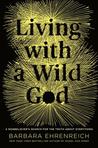
The tragic loneliness of Barbara Ehrenreich

Living with a Wild God: A Nonbeliever's Search for the Truth about EverythingLiving with a Wild God: A Nonbeliever's Search for the Truth about Everything by Barbara Ehrenreich

My rating: 2 of 5 stars


Call this book review "The deep loneliness of Barbara Ehrenreich" or maybe "The Tragedy of Barbara Ehrenreich." Or the title up top.

I wrestled with exactly how to rate this book. Her alleged metaphysical experience as a teen, and her return to it at late-midlife crisis time? That part's a 1-star, and I knew that when I had read an excerpt online. She even admits that, as William James notes, the physical "symptoms" she had of her allegedly mystical experience are not uncommon. Yet, she wants to mystify them, even after noting that her hypoglycemia, sleep deprivation of a moderate sort and stress in the hours and days leading up to her experience could easily have caused her own version of a common experience.

That's especially true in light of her history of depersonalization and disassociation. There's fairly solid evidence that some people are by nature more susceptible to such things. Or -- by childhood.

And here we get to the reason I'll give the book a second star, and start talking about the title.

About 4/5 the way in, she says, (semi-exact quote), "If this were a biography, this is where it would begin."

But, the book IS a biography of sorts, a sad and tragic one. The fact that she doesn't seem to see it that way ties in with the very psychological tragedy that she seems to want to avoid discussing further, even in her 70s.

Here's the basics on her childhood:
1. Two alcoholic parents, with an emotionally manipulative father and an emotionally unavailable mother.
2. A physically abusive mother. (Yes, Barbara, that's what "slapping in the face" is, especially when done with some regularity. I'm sorry that you can't call her what she was.)
3. Frequent moves. (She notes that a stay of 18 months in Lowell, Mass., was longer than usual.)
4. Marital trauma that eventually led to divorce not too long after Barbara's "experience," both remarrying, dad divorcing a second time and mother near that point before her suicide.
5. Some history of mental health problems on her mom's side of the family.

Well, I would call that traumatic in some way, shape or form.

And, depersonalization/dissociation is a kind of common "defense mechanism" in such cases. And, perhaps she had some inherited susceptibility, too.

The "solipsism" she later on discovers in her teenage and college self is another defense mechanism. So, too, in all likelihood, are some of the ritual behaviors of her pre-teen life she describes but fleetingly. So, too, as an adult, is writing about your own life in a semi-detached, semi-third-person style.

And yet, she can be "hard" toward others who have as many, or more, depersonalization experiences than her, even referring mockingly to a self-help website for depersonalization.

Per one other two-star reviewer, it's too bad that counseling wasn't as great then as it is today. But, it is available today. Even with anti-depressants for her depression, she probably could use help facing her childhood still further. Her attempt to cling to her childhood experience as pointing to the existence of a mystical Other also seems, tragically, to be in part a defense mechanism.

I suspect her childhood was worse than she's told us, too.

The mystical attachments aside, the book isn't trash. But, it probably should not have been written. And, I think the disjointedness and sometimes poor style reflect the issues I mention above. Or, as part of professional help and other things, maybe it should have been written three years from now as an actual biography.

It's very hard to believe that the author of Bright-Sided could have written this. Unless, again, this is seen as cri de coeur first, paean to mysticism a distant second.

And thus, here at Goodreads, I did NOT put it on my religious study/theology shelf, and certainly not on my philosophy one. It's on the biography shelf -- and the psychology one.

This all said, I feel empathy for her. There's reasons I can say that she doesn't appear to be fully facing her childhood. There's reasons I can identify many actions and stances within her childhood as seeming to be defense mechanisms. Barbara, you can't change that past. But, I hope you can face it more fully, and in doing so, gain more acceptance of that, and some additional consolation, inner strength, or whatever.


View all my reviews

June 08, 2014

Cesar Chavez, hugely flawed hero

The Crusades of Cesar Chavez: A BiographyThe Crusades of Cesar Chavez: A Biography by Miriam Pawel

My rating: 5 of 5 stars

(Addendum, outside the review, and expansion of it, itself. Noting the one retweet of this, despite Chavez' numerous flaws, I reject the idea that organizing farmworkers was bad, and I also reject the idea that Chavez' later Hispanic political empowerment, even at the expense of farmworker neglect, was all bad. So, to anybody dedicated to following the ideas of Hayek, or beyond, or other doctrinaire conservativism, no soap from me, and I'm putting that right up front.)


Miriam Pawel, author of a previous book on farmworkers, offers us an in-depth, totally honest must-read, based on thousands of hours of audiotapes, notes and more.

Pawel, in the first "critical" biography of Chavez, gives us the good, the bad, and the ugly in the life of the man who gave California's farmworkers their first union, then, due to stubbornness, wrongly-directed singlemindedness and authoritarian leadership, essentially wrecked that same union, to the point that farmworkers today are little better off, in a number of ways, than they were before Chavez founded the United Farm Workers.

Where to start? Here: Pawel quotes Chavez talking about that "singlemindedness." That was part of his genius in getting the United Farm Workers started. So, too, was his recognition that, because agricultural workers were largely uncovered by US labor law, there were few rules to play "outside of." Related to that, he was an outside-the-box thinker in early tactical and strategic moves.

If only we could end his life, or freeze it, in the early 1970s, then the Chavez of myth — a myth largely perpetuated by Hollywood-type liberals, which in turn adds to the degree of truth in generalizations about that subculture — would closely match that of reality. But, we don't end there.

Pawel shows that recognition as a union, especially on larger contracts, meant that the UFW was no longer "outside the system." That became even more true in the mid-70s, after California passed into law the bill creating the Agricultural Labor Relations Board.

It was at this point that, as Pawel shows, Chavez essentially went off the rails. He decided the UFW needed to be a social movement, not a union. He decided his single-mindedness needed to be more authoritarian. And, to bring this all together, he decided to borrow some "control" tools from the notorious 1970s cult, Synanon, even working with its founder. The result? Longtime Chavez supporters were accused of being traitors to the cause, Communists, or whatever, and booted out. Besides Synanon, Chavez also borrowed ideas from Mao and the Cultural Revolution.

All of this was new to me, the stuff related to Synanon, Chavez turning UFW headquarters into something akin to a cult, and his refusal to focus on union development issues because that would force him to delegate authority.

Meanwhile, because he wasn't a good administrator, but was too much of a "controller" to delegate administrative tasks, maintaining and renegotiating contracts fell by the wayside. Expanding the union outside of California did the same, with Chavez even crushing independent organizing efforts. (Austin having a "Cesar Chavez Boulevard" could be considered a bit laughable for this reason.) And, the UFW wound up owing a bunch of back taxes.

At the same time, Chavez began intervening a lot more in California politics, an idea he once rejected. He also began marketing the UFW as a brand, especially to the likes of those Hollywood-type liberals, even as more and more contracts with growers were lost and the union was shrinking.

This isn't to deny that things like pesticide use in the fields weren't important issues. It is to say that things like that were secondary to renewing efforts at organization of union locals, getting new contracts signed with growers, etc. It is also to say that many of them were "pitched" at appealing to those Hollywood-type liberals. And, as Chavez because more and more of a national political star and icon, that, the elbow grease work of maintaining a union, appealed to him even less as the 1970s moved into the 1980s.

However, as a result, he was able to expand the political power of "la raza." And, to do so somewhat outside of California. So, Austin's commemoration of him isn't totally wrong, either.

Given that the farm workers' movement really started in my pre-school days, that the slide of the union and Chavez' move to becoming a cult leader happened before the end of my high school days, growing up in a politically quite conservative household, and that his next move to political icon and final abandonment of original unionization efforts happened before I had started escaping that background, let alone gone beyond more stereotypical versions of liberalism, I never had understood what had happened to the farm workers' movement. And now I know — Cesar Chavez happened to it — the good, the bad, and the ugly.

This just catches the tip of the iceberg of a must-read book. And, should lead a reader asking, was the expansion of political power worth it for the price that Chavez eventually left farmworkers to pay?


View all my reviews

May 04, 2014

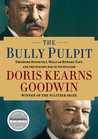
Teddy Roosevelt - the bully behind 'bully'

I just got done reading The Bully Pulpit, Doris Kearns Goodwin's new mix of dual biography of Theodore Roosevelt and William Howard Taft, mixed with looking at muckraking journalism in what was the cornerstone of investigative reporting, as started by S.S. McClure of McClure's magazine, with Lincoln Steffens, Ida Tarbell and Ray Stannard Baker as its leading lights.

The Bully Pulpit: Theodore Roosevelt, William Howard Taft, and the Golden Age of JournalismThe Bully Pulpit: Theodore Roosevelt, William Howard Taft, and the Golden Age of Journalism by Doris Kearns Goodwin

My rating: 4 of 5 stars


It's not bad overall, for being a Goodwin book. Hey, have to be honest. She's not that great, even with allowance for her being a "popular" and not an academic historian. "Team of Rivals" missed the main points of why Lincoln named all those "rivals" to his cabinet. Anyway, back to this book.

I learned more about Taft than TR in this book. Of course, Roosevelt, arguably  the initiator of the modern presidency, for both better and worse, has been a far, far more covered person.


On Taft?
The main thing is that I didn't realize that he had explicitly pushed for Congress to pass the 16th Amendment to send to states, along with starting the federal corporate income tax, in exchange for accepting the flawed "lowering" of tariff rates in the Payne-Aldrich tariff bill. Willingness to tackle the tariff, let alone get this much out of it, makes him more progressive (and more courageous) than TR in some ways right there.

Second major thing I learned was more about the details behind Taft's sacking of Gifford Pinchot. Taft partially caused this by not keeping John Garfield as holdover Interior Secretary, being dithering in making this decision and not telling Garfield exactly why.

That said, most of the actual precipitating events, from Pinchot's conflicts with Garfield's replacement, Richard Ballinger, indirectly proved part of Taft's reasoning right and also show that Pinchot largely shot himself in the foot. Pinchot's replacement, plus Ballinger, actually eventually and with better legal footing, "reserved" more forest lands from private development than did TR/Pinchot/Garfield.

In essence, forest reserve issues are one of the clearest issues of TR's arbitrary nature as president. We should be glad he didn't run for a second elected term in 1908, let alone get elected in 1912. When WWI started, he probably would have become more dictatorial in waging war than Woodrow Wilson ever was. And I sincerely believe that, and though not any facts involved, Goodwin's book was a trigger for that thought.


I think TR would have done everything he could to have us in the war by 1915. Then, I think he would have tried, with Germa
n-Americans, as his cousin did one war later with Japanese-Americans, doing preventative detention concentration camps. I have no doubt he would have hired a George Creel or worse for pro-war, pro-Allied propaganda.

That said, the book lacks focus. That's in part because Goodwin's trying to do too much and spread herself too thin. Having read a bio of Lincoln Steffens and other books about the muckrakers, I know that she tried to cram in too much about them.


View all my reviews