SocraticGadfly: higher education
Showing posts with label higher education. Show all posts

November 14, 2015

Dear #ConcernedStudent1950: Mike Middleton might not be "the answer" for #Mizzou

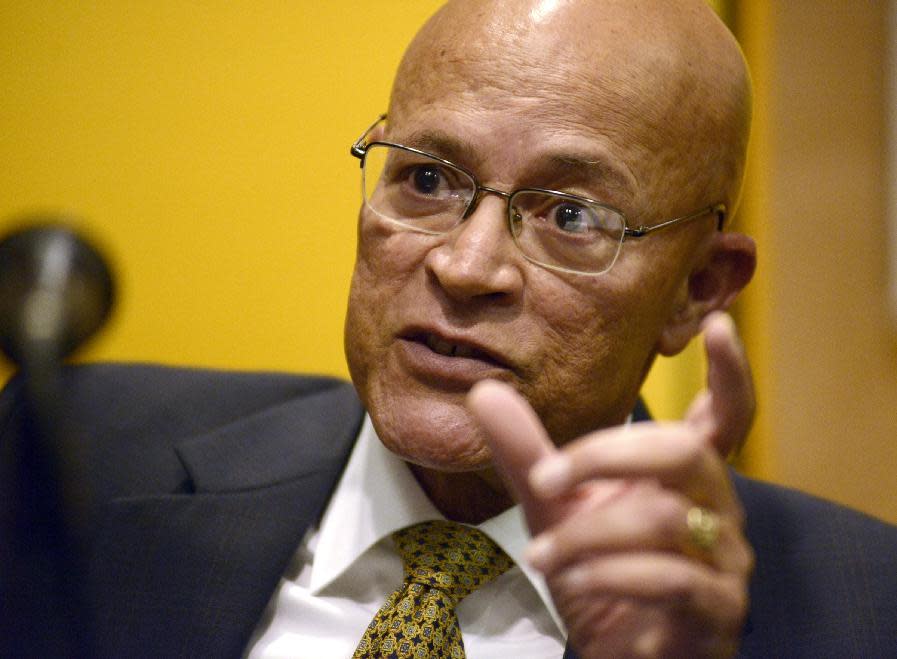
New Missouri university system interim chancellor
Michael Middleton
It was announced last week that Michael Middleton, an assistant chancellor at the Columbia campus, has now been named interim president of the Missouri system; he is also one of the founders of the Legion of Black Collegians.

Activist groups like Concerned Student 1950 may be applauding this move. However, given that Middleton has been assistant chancellor of the Columbia campus for a few years, and probably played some academic politics to get there, he may be part of the problem, not the solution, even if he has a copy of the 1969 LBC demands in his desk.

For why he might be part of the problem, we need to look at this very insightful essay on the corporatization of the modern university by Fredrik deBoer. It was actually written two months ago, but it has perfect timing for now.

DeBoer actually has the "nut grafs" near the end, but it's a magazine essay building to a conclusion, not a newspaper news story.

Near the start of the piece, he notes that the modern university is becoming more and more like the modern K-12 public school district:
It’s not unheard-of for colleges now to employ more senior administrators than professors. There are, of course, essential functions that many university administrators perform, but such an imbalance is absurd — try imagining a high school with more vice principals than teachers. This legion of bureaucrats enables a world of pitiless surveillance; no segment of campus life, no matter how small, does not have some administrator who worries about it. Piece by piece, every corner of the average campus is being slowly made congruent with a single, totalizing vision. 
No, I'd prefer not to see that. The university as quasi-Panopticon is mind-bending.

And, this has actual results.
Current conditions result in neither the muscular and effective student activism favored by the defenders of current campus politics nor the emboldened, challenging professors that critics prefer. Instead, both sides seem to be gradually marginalized in favor of the growing managerial class that dominates so many campuses. 
And, bureaucrats are always the ones who interpret the rules, then write up the paperwork. As noted above, and a bit more in the NYT piece about his hiring, Middleton has spent his share of time on the university bureaucracy. Let's see if he's been co-opted, whether to ignore the neoliberal corporatization, or shunted aside and head-faked to see almost all Mizzou problems in terms of racism or similar social justice lenses.

DeBoer goes on to note that corporatized universities have reasons for that. Like this:
Yes, students get to dictate increasingly elaborate and punitive speech codes that some of them prefer. But what could be more corporate or bureaucratic than the increasingly tight control on language and culture in the workplace? Those efforts both divert attention from the material politics that the administration often strenuously opposes (like divestment campaigns) and contribute to a deepening cultural disrespect for student activism.
Hence my note that Middleton might be on a tight leash on effecting real socioeconomic change — if he even supports making such change. Maybe he’s already been co-opted.

And, without even noting that the corporatized model is part of what’s behind the cutting of tenure-track faculty positions, deBoer goes on to note:
Professors, meanwhile, cling for dear life, trying merely to preserve whatever tenure track they can, prevented by academic culture, a lack of coordination and interdepartmental resentments from rallying together as labor activists. 
Indeed. Corporatization as Balkanization. So, students, per the 1969 LBC demands, rather than demanding that Mizzou meet the pay demands of black professors no matter what the cost, I suggest that you support more tenure-track faculty positions of all ethnicities along with an insurance of equal pay and worth for any minority professors.

Finally, the end result:
That the contemporary campus quiets the voices of both students and teachers — the two indispensable actors in the educational exchange — speaks to the funhouse-mirror quality of today’s academy.
That’s another weapon for conservatives.

Meanwhile, this causes, or can cause, a clusterfuck:
I wish that committed student activists would recognize that the administrators who run their universities, no matter how convenient a recipient of their appeals, are not their friends. I want these bright, passionate students to remember that the best legacy of student activism lies in shaking up administrators, not in making appeals to them. At its worst, this tendency results in something like collusion between activists and administrators.
Besides, “the enemy of my enemy” is often no more than a short-term ally of convenience, not a friend.

Meanwhile, we get to a big related issue, one I’ve blogged about before. Campus drunkenness, with many women refusing to take responsibility for their own drunkenness when it leaves them open to sexual assault, or using said drunkenness, per Ken White of Popehat, as a sword not a shield when they have sex they later regret.

DeBoer comes at this from a different angle.
As a result, our campuses are becoming simultaneously too safe and too dangerous, with every safe academic space balanced by a space of socially desirable danger out of activists’ reach. Our students emerge from classrooms that, we complain, have been sanitized to the point of ridiculousness, and then spend their evenings in Greek houses and dorms that are in a state of perpetual alcoholic fugue. (And let us not be so naïve as to doubt that universities quietly cultivate their reputations as party havens, knowing how essential such a reputation can be to attracting potential students.) 
As noted on my first piece about Mizzou, Click, in her Twitter profile picture, looked like she'd been out for a night on the town, getting hammered with Rebecca Watson.

Somewhat like deBoer, I want to improve campuses, not destroy them. Conservatives — or certain strains of libertarians/liber-conservs, a la many of Popehat’s followers — who lament Melissa Click are only the most temporary of allies if their goal is to make the modern university even more a place of rote and regurgitative learning. I know that religious conservatives want that; critical thinking, and access to the information to do that, threatens all of their religious views.

Hence, my "short term ally" comment. If incidents like Mizzou, Yale, Clarement, Wesleyan, Vanderbilt etc., lead to instances where conservatives as well as SJWs become more vocal for changing the current university, I'll welcome their help in pushing for change while just as much rejecting their ideas about specifics of change.

As said on my first piece, I reject the likes of Jonathan Haidt and his seemingly deliberately flawed reasoning, and Greg Lukianoff's apparent cohabitation on such ideas, just as much as I reject the SJW world. And, per a Twitter exchange, I reject conservatives who claim to have little use for philosophy, or a philosophy professor who has documented such flawed thinking.

August 28, 2013

Thomas Frank details the academia-big biz crackup

Those of us who are good liberals, good left-liberals, or even per the Slackhalla personality test making its way around Facebook, good communists (adjusts necktie and bowler hat, shaves full beard back to Lenin goatee) know that American academia has increasingly become a money-grubbing hog trough, starting from the president/chancellor level on down.

Thomas Frank has all the blood-spattered details of how this has wrongly played out, and is getting worse, in the latest issue of The Baffler.

Beyond the money-grubbing itself, with tuition, books, and increasingly, varieties of tack-on fees that are exceeded in their inflation-busting rate of growth only by medical costs, there's all the other ways in which Big Biz has penetrated the ivied walls.

First, there's a business management style. Professors? We only need enough to improve "the brand." For the rest, there's a growing pile of adjuncts. And, because we the Big U have fired more of the profs, the adjunct pool gets ever bigger, so we can flatten wages!

The "brand"? Ahh, here's where they can get away with it. Let's capitalize Ivied walls. At "select" universities, they overcharge because they know a "credential" in the name of a degree, with their select university's name on it, looks even better in the job market on a resume. That's why Dear Leader's idea of a White House-imprimatured college ratings list, one that would look like the U.S. News top 100 or something, not only would not lower college costs, it would likely raise them even more. Who wouldn't give their left ovary or testicle for a "credential" from such a list?

Of course, that's the next part of the Big Biz crapola. It's the idea that everything about education can, should, and will be quantified to something measurable and testable. It's why boards of regents and the new breed of presidents and chancellors, want to junk humanities departments.

I do disagree with one other thing in the essay, though, and that's Frank's claim that the typical 17-year-old going to college has little-to-no savvy of his or her own. Bull, at least when it comes to, say, the Ivies. Dear Mr. Frank: It's called "legacies." Look under "Bush, George W." There's plenty of ppl who know damned well already at 17 or 18 that it's a game to get the right collegiate name on that credential and nothing else. As for the debt amount at said places, it's not naivete but the Dunning-Kruger effect that leads said students to plunk down that much money.

Yes, it may be our neoliberal educational culture that pushes, steers, entices, or intoxicates many of said high-schoolers toward believing in the value of "the credential," but, per the old cliche: "It takes two to tango." Now, for high school kids who, as Frank says, aren't as savvy, I agree they're being exploited. But, for the young Princetonite gambling that he is indeed smarter, suaver and a better butt-kisser than anybody else? I've got a lot less sympathy for him. That's just like the largely white OWS protestors (actual Zucotti Park OWS) who, with their 25 percent grad degree percentages, were mad Wall Street didn't hire them with their MBAs and JDs, and suddenly discovered they had a socialist bone caught in their throats, which I blogged about at the height of the movement.

Here's the most pertinent information:
92.1% of the sample has some college, a college degree, or a graduate degree.
27.4% have some college (but no degree), 35% have a college degree, 8.2% have some graduate school (but no degree), and close to 21.5% have a graduate school degree. 6.4% in the sample agree somewhat or strongly that they regularly use Facebook and 28.9 percent use Twitter regularly.


The data suggest that 81.3% of respondents considered themselves White, 1.3% Black\African American, 3.2% Asian, .4% Native American Indian, 2.9% Mixed, 7.7% Hispanic, and 3.2% considered themselves some other group.
Whiter and much better educated than average. 

I'll halfway agree there that it's tough to avoid the tango. But, if you really were that liberal, you'd have gone to a different college and pursued a different career path in the first place.

A little bit of that is true for adjunct instructors, too. I mean, especially if you've been doing it for 10 years, and you've still never gotten a full-time position, I'm sorry, but that's going to be your lot for the rest of your natural born life unless you change careers. Now, if you want to keep accepting the misery, frustration AND low pay that goes with it, without looking to follow another path, then that's your problem. Now, if you're trying to get out, but still to a not-too-craptacular alternative, but haven't succeeded yet, I empathize. Remember, I'm in the newspaper biz, for now at least.

Indeed, Frank even addresses this, and the Dunning-Kruger effect, in talking about adjuncts, even if he doesn't also apply it to students, and doesn't cite the paradox by name:
Just about everyone in academia believes that they were the smartest kid in their class, the one with the good grades and the awesome test scores. They believe, by definition, that they are where they are because they deserve it. They’re the best. So tenured faculty find it easy to dismiss the de-professionalization of their field as the whining of second-raters who can’t make the grade. Too many of the adjuncts themselves, meanwhile, find it difficult to blame the system as they apply fruitlessly for another tenure-track position or race across town to their second or third teaching job—maybe they just don’t have what it takes after all. Then again, they will all be together, assuredly, as they sink finally into the briny deep. 
So, both students and faculty need to be like the medievals at the University of Paris and go on strike. (Forming a union, of students, and a better one, of faculty, where it doesn't exist, will be part of that.) However, per the paradox, and the fake meritocracy, and how much strength neoliberalist hypercapitalism has gained in academia, maintaining unity in such a strike will be a hell of an uphill slog. 

Frank, near the end, agrees with me, doing a skillful tease of the is-ought error while rejecting it:
What ought to happen is that everything I’ve described so far should be put in reverse. ...
But repeating this feels a little like repeating that it will be bad if newspapers go out of business en masse. Of course it will. Everyone who can think knows this. But knowing it and saying it add up to very little. ...

What actually will happen to higher ed, when the breaking point comes, will be an extension of what has already happened, what money wants to see happen. Another market-driven disaster will be understood as a disaster of socialism, requiring an ever deeper penetration of the university by market rationality. ...


And so we end with dystopia, with a race to the free-market bottom. 
He then mentions an alternative to the strike:
The only way out is for students themselves to interrupt the cycle. Maybe we should demand the nationalization of a few struggling universities, putting them on the opposite of a market-based footing, just as public ownership reformed the utilities in the last century.
Sorry, nationalization would be worse, if anything, as long as the current political classes are in charge.

Meanwhile, add to the problem: A "citation cartel" within academic publishing.
 

August 03, 2013

#SciAm has a #MOOC-ed up fail

The August Scientific American has what must be its worst special section since the one it ran a few years ago about electric cars. That one was a journalistic ethics failure on multiple counts. First, it was sponsored entirely and only by General Motors. Second (what a shock!) it tried to claim that GM's hybrid car, the Chevy Volt, was a full electric.

I blogged about that, including the "refusing to accept there's a problem" comments of Scientific American's blogging managing editor/SEO guru Bora Zivkovic, here.

The new #fail? A breathless touting of massive open online courses, or MOOCs.

Most of the stuff in there is either written by, or influenced by, Obama/Democratic neoliberals like Arne Duncan (he has a piece himself) or Silicon Valley-type neolibs like Salman Khan of Khan Academy fame and a senior Google executive, Peter Norvig, director of research. The Democrat-Silicon Valley pair-up is exactly the type of stuff that makes a Yevgeny Morozov barf.

I've blogged a bit before about how MOOCs in the US are likely to be a nonstarter, other than to enrich the bottom lines of university chancellors and presidents who will see them as an opportunity to replace yet more professors with adjunct faculty.

But, going for the feel-good angle, much of the section talks about the bloessings MOOCs will bring to India, or even to sub-Saharan African.

Well, lemme see.

First, you have to have adequate electricity to power your online device.

Second, you must have an online device.

Third, to adequately watch video, you must have an online device big enough for adequate video viewing. No smartphone or smaller sized tablet.

Fourth, you have to have the money to pay for all of this.

Until Google, Microsoft, or Apple address all four of these, who's going to be attending MOOCs in Uganda?

But, that's not all.

The biggie is ....

What will the content of these MOOCs be? Will it be purely "utilitarian" education, designed to make the workers work better, and perhaps be better consuming budding hypercapitalists? Or will there be a Ugandan or Indian version of a humanities and liberal arts education?

C'mon, you already know the answer to that one. Because a Peter Norwig ain't writing about how engaging a MOOC can be for his health.

Instead, it's the "personalization" of Net 2.0, about how you can "individualize" everything.

Wrong. State U., with an adjunct overseeing 700 ppl in a MOOC, ain't individualizing anything. And certainly, no Western(ized) company in Uganda is doing anything like that.

You want a "personlized" MOOC? Pull your wallet out a second time.

File this as another in my "dark side of the Internet" dispatches.

===

But this is far from the only problem.

Rather, stuff like this reflects a deeper decline in Scientific American.

Twenty years ago, it was still a semi-technical magazine with in-depth articles about science first, technology second. It was kind of like Science News, but in long-form journalism style.

By 10 years ago, it had lost a fair amount of that.

And today? Pure pop science. And perhaps not even on the same level as Discover.

The special section, as far as the science/technology divide, is 100 percent on the technology side.

But, even that's not the real problem.

Rather, the special section is first and foremost a public policy section. True, it's public policy as reflecting advances in technology and their potential to change this area of public policy. But, it's first and foremost a public policy special section.

Honestly? Between that fact and the exact political positioning?

This belongs in the New Republic.

August 21, 2011

No, Obama, college won't help

From a long, insightful article in the Atlantic about the hollowing out of the middle class comes this observation that the normal BA or even BSBA won't help a person's bottom line so much any more, nor will it offer so much unemployment protection:
But even among the meritocratic elite, the economy’s evolution has produced a startling divergence. Since 1993, more than half of the nation’s income growth has been captured by the top 1 percent of earners, and the gains have grown larger over time: from 2002 to 2007, out of every three dollars of national income growth, the top 1 percent of earners captured two. ...

“It’s useful to make a distinction between college and post-college,” (MIT economist David Autor) told me. “Among people with professional and even doctoral [degrees], in general the job market has been very good for a very long time, including recently. The group of highly educated individuals who have not done so well recently would be people who have a four-year college degree but nothing beyond that. Opportunities have been less good, wage growth has been less good, the recession has been more damaging. They’ve been displaced from mid-managerial or organizational positions where they don’t have extremely specialized, hard-to-find skills.” ...

College graduates may be losing some of their luster for reasons beyond technology and trade. As more Americans have gone to college, Autor notes, the quality of college education has become arguably more inconsistent, and the signaling value of a degree from a nonselective school has perhaps diminished. Whatever the causes, “a college degree is not the kind of protection against job loss or wage loss that it used to be.”
Takeaways, to shorten Autor?
1. A Harvard degree is worth more than ever, rightly or wrongly, due to "branding."
2. Finding the LinkedIn/CareerBuilder "hot field" is important, but ... what he doesn't say, is a matter of luck as much as anything else.

Autor then and also notes, as I've blogged elsewhere, that more and more paralegal work, or first-year post-law-school grunt work, can be done by computer. Other work like that, which he doesn't directly note, can and will be outsourced to India with a growing English-speaking middle class wanting to do more than call center/customer service work.

And, some of the social decline that started happening to "just high school grad" families in decades past is now starting with "just college" families.

And, going beyond Peck, I'll even say that some grad degrees will get "hollowed out."

Take "service" degrees in psychology and social work. People who know anything about MIT and Weizenbaum's famous ELIZA program, and who are as sardonic, or worse, as I am about the future of America at times, has to wonder why a Fortune 500 EAP program doesn't seriously say, "Why are we sending people to human counselors instead of something like this?"

But, there's yet more to ponder, and to refute:

January 18, 2011

The hypercapitalism of higher education

Just how bad is it getting? Well, 19 of 40 top U.S. research institution university presidents serve on at least one corporate board. The use of "adjunct" faculty is increasing.

And, there's plenty more where that came from.

As the Truthout story notes, these changes will also keep diminishing American universities as a fount of cultural leaven.

And, as more businesses expect more employees to engage in more career learning, corporate America will have more leverage on accelerating these trends. Plus, CEO-type university presidents will be all-too-willing to help.

Then, as the university-as-business model expands, what comes next? Further cuts in state aid to state institutions.

October 11, 2010

Goldman Sachs: Why for-profit college is pricey

Yep, that's probably part of the problem. The modern Octopus owns some for-profit colleges, like the Art Institute of Colorado. And it, like other for-profit collge owners, is chintzy on faculty salaries, a slavedriver on faculty workloads and more.

Shocking, no?

Hey, G-Sachs, pay your staff. And, don't foist an overpriced education bubble on us either.

August 16, 2010

$330K a year for college?

Quite possible, at elite institutions, in just 10 years. Put multiple additional nails in the coffin of the American dream and the myth of upward mobility and classlessness.

July 14, 2009

Obama juco plan not that much and wrong answer

That $12 billion? It’s over a full decade.

For the same price, you could give states the money to expand K-12 education to a 200-day school year. And, comparing us to every other technologically advanced nation, THAT is the right answer.

March 10, 2009

Neoliberalism is ruining academia

Running with a standard, academic-eye definition of neoliberalism, Stanley Fish makes a great argument that, especially at state universities,

It’s great until near the end, where Fish pretty much tells the increasing number of contract instructors to “lump it.”

After that, he jumps off the rails and becomes Stanley Fish.

But the first three-quarters is very good. Give it a read.

March 08, 2009

PhD candidates latest casualty of recession – in Texas, too

Don’t expect an automatic postdoc after you get done with a PhD, even in fields where it’s expected. And, after you’re done with either one, definitely don’t expect a tenure-track teaching slot.

That’s especially true in the humanities, where already about half of positions are part-time.

And, staying in school right now? Tight credit makes it tough.

And, don’t expect it to get any better:
“It’s been obvious for some time — witness the unionization movement — that graduate students are caught between the old model of apprentice scholars and the new reality of insecure laborers with uncertain employment prospects,” Andrew Delbanco, the chairman of the American studies program at Columbia University, said. “Among the effects of the financial crisis will clearly be shrinkage both in graduate fellowships and in entry-level academic positions, so the prospects for aspiring Ph.D.’s are getting even bleaker.”

Especially since two of the students who were interviewed are from here in Texas, and all the more ironic, given Gov. Helmethair AND the Lege deregulating higher ed, read the full story.

Having taught college classes in English and the humanities in the past on a contract basis myself, I can vouch for its dog-eat-dog nature.

May 14, 2008

Ted Rall rightly goes contrarian on fed money for higher ed

He says (and he’s largely right) that both public and private colleges are awash in money as is.

The implied thought is that ramping up federal money for college, whether a full blown GI Bill for Iraq vets, lower interest and more availability on federally-guaranteed student loans, or bigger Pell Grants, is that universities will just take the money and run.

With Texas in the lead, but by no means alone, in at least partial deregulation of tuition costs, Rall’s right. Here, UT down in Austin would swallow that money and raise its fees another 5-10 percent.

That’s especially true of Virginia Sen. Jim Webb’s proposed new GI bill, which would pay 100 percent the cost of tuition at the most expensive public university in a vet’s home state. Unless Webb attached mandatory price caps, you can see what would happen next.

The “college CEOs,” as Rall calls university presidents, would do exactly that:
Since 1981, when President Reagan got rid of a financial aid system mostly based on grants (which don't have to be repaid), easy credit on student loans has made it possible for any student to borrow as much as he or she needs — or, to put it another way, however much a college decides to charge. It's simple supply and demand; with no downward pressure on tuition, the warlords of college have an overwhelming temptation to gouge.

And gouge they do.

No one seems to question the wisdom of lending tens of thousands of dollars at above-market compound interest rates to children whose employment history amounts to, at most, a year at Burger King. 17-year-old borrowers have no idea what they’re getting into; parents imagine (usually wrongly) that kids’ college degree will guarantee them high enough wages to pay it all off and then some.

In other words, Newt Gingrich’s GOP revolution came to rest not in Congress, but American academia, despite conservative myths and lies about “leftist universities.”
College CEOs who wanted their companies to survive would be forced to recognize the new market reality. They would streamline their operations and reduce wasteful spending so they could cut tuition and other expenses. As Harvard and other Ivy League schools have already begun to do, they’d dip into the hundreds of billions of dollars currently sitting idly and uselessly in endowment investment accounts. And tuition would drop.

Ideally, that’s what would happen if we cut off, rather than ripped wide open, the student loan spigot.

But, because too many Democratic as well as GOP politicians get way too much money from the amorphous “financial sector,” this ain’t too likely.

And, if you don’t believe me and Ted that college CEOs would and will act this way, we’ll sell you some swampland in the nearest college quad.

August 21, 2007

My thoughts on the nuttery of a liberal political mag ranking Texas A&M as the nation’s No. 1 university

I e-mailed both Kevin Drum, Political Animal’s blogger, and Washington Monthly editor Paul Glasris the following comments about WM’s annual college rankings, apropos Glastris’ explanatory note, the rankings listed here and blogged about here.

I said:
Why is ROTC rank used as a marker for service?

As someone who lives 20 miles down the road from College Station (for only one more month, thank doorknob, before it's back to my old newspaper company in Dallas), I can testify to the cult-like nature of the Aggies' 12th Man.

Besides that issue, and the related issue that ROTC as a marker favors conservative universities (which A&M is in spades) as a marker from a LIBERAL magazine (hello?), I think it's also arguable whether ROTC, versus the Peace Corps, is actually a service organization at all.

Why not, instead, rank universities on numbers of hours of community service required to graduate, or get admitted from high school, or something, to the degree such standards exist?

I saw that the same rankings had Virginia Military Institute No. 5 among liberal arts colleges. To what should be nobody’s surprise, and definitely isn’t mine, it’s No. 1 in ROTC.