SocraticGadfly: Singleton (Dean)
Showing posts with label Singleton (Dean). Show all posts

May 16, 2019

Dean Singleton, hypocrite par excellence
of the dying newspaper industry

The Wall Street Journal recently ran a graphics-heavy piece about how larger and mid-sized regional daily papers continue to bleed both circ and ad money.

In it, Dean Singleton, founder of Media News, eventually acquired by Dead Fucking Media related to a Media News bankruptcy, followed by further bankruptcies of DFN, which is now owned by hedge fund Alden Capital, said:
“What Alden is doing is liquidating,” said Dean Singleton, who founded the company that now forms the crux of MNG Enterprises and pioneered several newspaper cost-cutting measures, but who is no longer associated with the company. “They are taking the cash out as quickly as they can and reinvesting in businesses they think have more promise. It may be a very good business strategy, but it is not a good newspaper strategy.”
Problem is, Dean, you did this and similar yourself.

Anecdote has it that, decades ago, after you bought your hometown Graham (Texas) Leader, and the chamber of commerce head or someone said, "Great, we don't have to worry about cuts to our paper now" or something like that, you allegedly said "Don't count on it."

Non-anecdote has you closing the Fort Worth Press and Houston Post after acquiring them. Ditto for the Dallas Times Herald.

As chair of AP's board of directors in the mid-1990s, you touted the "TV model" for online papers, ignoring the existence of pay cable channels more than 15 years old by then.

As a result of this, you underpriced AP feed to Yahoo and other early news aggregators, setting the stage for everybody getting their wire news online now, and finding it unpaywalled somewhere.

Between the two, the "TV model" and the related underpricing of AP news, many people "learned" that Stewart Brand was right about information wanting to be free. But they ignore the whole paragraph of Brand's full quote:
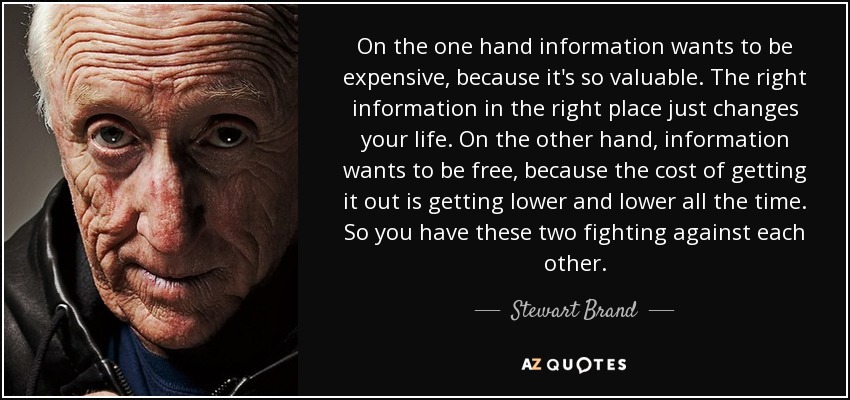

And, cuz Merika and race to the bottom capitalism, the fight was never equal, especially when Deano put one thumb on the scale of free. (Brand himself claims he's blamed for a lot of tech-neoliberalism stuff that is not his fault. The rest of that interview indicates he's lying to himself if he really believes that and lying to the rest of us anyway.)

That was after putting his thumb on the "free" of tax writeoffs and other reasons for closing the papers he did above. (The Fort Worth Press was in its second incarnation, for example, and losing money when Dean bought it, almost certainly for tax purposes first.)

Even in places you kept open, long before Alden, you were a Chainsaw Al Dunlap. Thanks in part to you, the Oakland Tribune will soon be a weekly. The papers of the whole BANG, the Bay Area News Group, were a laughing stock to Bay Area news junkies, then a crying shame.

As far as Dead Fucking Media allegedly killing a great newspaper in Denver? Well, Deano, you and Media News did that a decade ago. It was called the Rocky Mountain News. And it was better than the Post, Deano. Just like the Times Herald was better than the Snooze in Dallas.

Shut up and go away, Dean.

Actually, no ... first tell us how much in the way of tax writeoffs you've gotten from newspaper manipulation and shutting. THEN shut up and go away.

And, Wall Street Journal? Stop uncritically interviewing or quoting him. Ditto for Denver's outpost of the Business Journal chain, where Dean never admits one word that his long-ago stance with the AP has contributed to the plunge at daily newspapers in general.

November 05, 2013

#AP becomes an #advertorial sellout as does #TexasTribune

First, I don't like the term "native advertising," precisely because it's NOT pejorative.

So, in this webspace, we still call it "advertorial."

And, that AP in the header is the one and only AP, the Associated Press.

Since former AP CEO Dean Singleton, et al, botched up how much the AP charged news aggregators back in the 1990s, with dreams of a "TV model" for website advertising revenue, it's now trying to make up lost ground with ...

Advertorial from AP!

First, the why:
In an acknowledgment that licensing content has become a disappointing business, the Associated Press will begin introducing native advertising into its stream of news and features on mobile apps and hosted websites next year.
So, AP admits it screwed up.

Next, the what:
Sponsored content will run the gamut, from text to video to photography, though the AP declined to discuss what exactly content will look like except to say that the ads won’t look like AP content. Instead the sponsored content will sit alongside AP material.
Well, we'll see how different it looks when it comes out.

And, we'll also see how this plays out:
“They’re really new and want to be really careful as their credibility is at stake,” the source said. “When someone like the New York Times or AP gets into native, they have more to lose.”
Given that I've seen ever more grammatical errors in AP stories, like increasing "its" vs. "it's" misuse, the AP's credibility has ALREADY gone downhill in the past decade, editorially. And, on the business side, per what I said above, its credibility went downhill proportionally to that of ... Dean Singleton.

Of course, the AP itself has already "lost more" on the ethics side, like when it decided to prostitute itself to celebrities two years ago.

And more of the what:
The ads will not run on the AP’s roster of syndicated sites. Instead, they will only run on AP’s owned and operated sites. Sources say the ads will be priced as a premium ad product and can range anywhere between $3,000 and $25,000. The ad content would be created by outside freelancers, not AP journalists. The AP will be using Polar, a native ad platform, to deliver native ads across its sites.
Not cheap, but premium indeed.

Speaking of, as newspapers tout premium websites, and some, like the Dallas Morning News, tout their affiliated online marketing and branding shops for other businesses, I'm surprised more metro daily newspapers aren't going into their own advertorial "product" creation.

I'm sorry, they ARE. And, an official New York Times affiliate is doing that too ... at that "more to lose" risk.
The Texas Tribune will begin experimenting with sponsored content in 2014 with a site dedicated to both standard and paid opinion pieces.

TribTalk will be the Austin-based news nonprofit’s answer to both the newspaper op-ed section and and the wave of interest in branded advertising — a place for commentary on Texas politics and an opportunity for the Trib to find a new stream of revenue.
Oh, doorknob.

What will happen?

Rich conservative organizations that have been serious astroturfers in years past will now turn their astroturfing campaigns to this new venue.

So, guess what, Texas Trib?

You just lost a lot of "more."

Here's its "what":
As an exercise in sponsored content, what that means is the Tribune might see submissions from organizations like the Beer Alliance of Texas, AT&T, or Texans for Education Reform. But the goal is to round out the site with unpaid submissions from readers, officials, and others, Ramshaw said, and they’ve already reached out to 200 experts and other thinkers around the state to ask if they would be interested in contributing. 
Oh, those "experts and other thinkers" may be unpaid by you, but ... unpaid by anybody? I doubt it.

I just threw up in my mouth, twice, over this one.

May 01, 2012

I work at the fifth-worst job: more on newspaper revenue streams

Picking this up, after a week-plus of hiatus on the thread, as to why newspaper journalism is, according to a job hunting site, the fifth-worst job in America at this time.

Well, that's because newspapers still haven't figured out the revenue stream issue, and it's probably only going to get worse, according to this Forbes article that brags about how well it's doing.

Here's the two biggest takeways, quantified:
1. 150,000 new Internet banner ads are produced every second.
2. Ad rates of return are now as low as 1/100 of a cent per impression.

Item 1 means that item 2 will only get worse. And reflects a further point in the story, that ad streams/diffusion will only get worse. Let's add that some states are looking at or have allowed public notice classifieds to run in places besides a "newspaper of record" and you get the picture.

And, don't believe that mobile/app ads will be a guaranteed savior. The reason for their relatively higher rates of return are current relative scarcity of numbers adn relative scarcity of mobile space, or perceptions thereof. That will change, especially the first.

Smaller, non-corporate newspapers, really just starting to seriously feel the effects of Web 2.0 and cheaper business websites, will probably start feeling more and more what the big boys have for several years, even as the mobile world soon proves more ephemeral than believed. And, will be diffusing their sales efforts more and more at the wrong time.

That's why I again say "paywalls." That said, it may the case of shutting the barn door too late.

But, let's take a further look at the issue.

1. The solution may differ from paper to paper, whether a blanket paywall, a metered paywall like the Economist, a "freemium" paywall like some others, micropayments, or a mix of all the non-blanket options.
2. Especially at smaller papers, to prevent password sharing, the paper must require passwords to be changed every 90 days or so. No exceptions. No complains about remembering passwords from alleged "grandmothers" who are alleged "subscribers" and may well be neither.
3. No NYT-style fake paywalls, or LA Times type metered paywalls defeated in Firefox by "private browsing."

On the ads side, the best I can suggest is shorter length web and mobile pages, to hold more ads. More creative, embedded placement. No more "show story as single page" links.

This may still be primarily be shutting the barn door too late, but it has to be tried.

That said, good Facebook ... and in general ... friend Leo Lincourt objects to the advertising side of my presentation. He has valid points about the obtrusiveness, which is why all of us run some form of ad-blocking extensions on our browsers. (And, in my case, also run a beefed-up hosts file on my computer.)

I agree. But, as more and more news content shifts from hardcopy to digital (don't believe Audit Bureau of Circulation's latest numbers of newspapers' circ numbers rising; they've got multiple ways to "officially" calculate circulation numbers now, including digital; it's apples to broccoli on the comparisons), ad revenue will continue to decrease.

And, the papers outside NYC that are at $1 a copy for daily, non-Sunday issues are maxed out; they can't go higher on price for years. Heck, prices were 50 cents in most cities less than a decade ago, and no more than a quarter not much more than a decade ago.

So, while trying to figure out how to beat ad blockers and such, I think papers have to do something more on the online ad side. We're so used to getting stuff for free on the Net that, when newspapers go to subscription models, they can't afford to be too pricey.

So, what about audio ads? Or video ones?

Or very brief "priming" audio ads? Or brief "priming" text/graphics ads?

Or newspapers, rather than having things like NYClean hack fake paywalls, find ways to reverse-engineer against ad-block extensions? No, I don't want newspapers turning into "Gator" sites with text/news attached; that said, this makes clear that they've been and still are, abysmally slow to adapt.

And, then, watch the ad wars heat up.

Of course, none of this mentions that you and I can still read AP (plus Reuters and AFP, both with expanding US presences) on Google, Yahoo, etc. Or, the NYT, beyond fake paywalls, on MSNBC. And, having worked at a newspaper owned by MediaNews founder and long-time AP chairman of the board Dean Singleton, i can attest to that "abysmally slow to adapt" portion, or, let's just call it, "shortsighted."

The man ran his own company into Chapter 11 even while letting AP lose control of portions of its revenue stream vis-a-vis those news aggregators.

If the Newseum ever came up with the bright idea of a Wall of Shame, Singleton would be a charter member.

April 16, 2012

I work in the fifth-worst job/career, part 3 - #advertising revenue

Last week, I blogged about the fact that a certain careers website said that journalism was the first worst job/career field right now, noting that, from the inside, that was no surprise.

Well, I'm probably going to do a few follow-up posts, looking at more specific issues.


Today, I throw out more specific ideas about advertising and circulation/paywall issues.

First, although paywalls aren't the answer, they're part of the answer. Period.

Newspapers are reporting more of their ad dollars are coming from the web, but that's because hardcopy ad dollars continue to sink, even as the country partway comes out of the recession. Newspapers need to get honest with themselves and permanently write off half of their hardcopy losses since 2007. And, that may be conservative.

Until newspapers do this, and accept this, they're not going to be able to better address the future, not just at individual newspaper levels, but at corporate levels.

As for the current disparity between traditional web ad rates and mobile-specific ad rates, reportedly as high as 5-1? Within in a decade, that difference will be no greater than 2-1, driven primarily by greater use of mobile devices, greater competition for eyeballs, etc.

Remember how much higher traditional web ad rates were a decade ago? The same things drove them down as will drive down mobile rates. More mobile-specific content, portals, and sites increases openings for ads and competition for eyeballs gets more scattered. Ergo, rates go down.

So, looking ahead to the future, newspapers need to be honest about that, too.

The Net, in its various delivery forms, has just the opposite problem as old newspaper media. You got plenty of room for editorial content, of course, but, because of ephemeral attention in many cases, there's limited "space" for ads. Plus, add in ad-block software, etc., and web rates plummeted.

I have no doubt that for both Android and iOS for Apple, somebody will invent the equivalent of ad-block programs, too. It's going to happen. Somehow. Jailbreaking of specific apps as well as mobile operationg systems will be involved, in all likelihood. But, it will happen.

The even bigger thing is that corporate chains have probably not even fully digested that 25 percent profit margins, along with hardcopy ad riches, are gone for good. I think many of them think that the much lower overhead for the Net will alleviate that. But, if Net dollars are dropping, or flat, still, and mobile dollars, while rising, are still smaller potatoes yet, that's not a "replacement." Plus, per part two of this series, as readers often demand fancier content, the overhead differential probably isn't quite so great as these owners imagine or hope.

So, back to those profit margins. Owners, and investors, need to digest that the day of 20 percent margins, even, for even the biggest dailies, are gone. Even with two more years of economic recovery, they need to get comfortable with 15 percent as "good." And, therefore, to stop laying off ever more editorial staff, cutting content, etc., while rewarding the CEOs who do that.

Think of this as the dot-com boom in reverse. The worst of the dot-com financial bust for papers is over. BUT ... not all of it is over. AND ... not all the lessons have been learned.

On circulation? A dollar is as high as even big metros outside the two coasts (and I really mean coastal California, on one hand, and the Boston-DC axis on the other) can go for several years. Ditto for the $3 mark on Sundays. That's your ceiling.

I'm glad to see a major metro like the Dallas Morning News has therefore finally gotten into the paywall spirit. I don't currently live in Dallas, so I wouldn't pay, and I don't know how much it costs. But, it was needed. That's even as, here in central Texas, the Austin American-Statesman, still free online, bleeds even more.

Of course, the AP, and now, Reuters with a largely expanded American presence, and somewhat AFP, have to be in the mix. Not all three can jointly deal with rates for news aggregators without explicit Congressional antitrust waivers, of course. But, individual papers can only do so much.

Of course, AP's long-term chairman of the board, Dean Singleton, was as stupid about this issue with AP as he ultimately was with the finances of MediaNews, running it into bankruptcy.

And, why didn't a court impose a five-year hiatus on him buying newspapers after getting out of Chapter 11? That could be a blog post by itself.

December 14, 2011

Is #AP prostituting itself?

Possibly, if you look at this story about what sounds like another cockeyed initiative that shows the Net-stupidity of AP's board vis-a-vis anybody under the age of 35:
The Associated Press said Wednesday that it has entered into a partnership with WhoSay Inc., a company that helps celebrities manage interactions with fans through social networks and traditional media outlets.
The AP will give celebrities who are members of WhoSay the option to provide exclusive, personal photos and videos to the AP for licensing to major media companies worldwide. ...

The company puts celebrities in greater control of —and offers the opportunity to profit from— their photographic lives. It also allows them to spread their social media posts easily across sites like Twitter and Facebook. As an example, (Sofia ) Vergara posted a picture of a family lunch in Miami last month. The photo has a copyright symbol, indicating she owns it and can make money from it if, say, a magazine wants to publish it.
At the least, it sounds like it's cheapening itself. Basically, WhoSay looks like an elitist version of Twitter. Which makes it look very much like AP is doing celebrity butt-kissing. Great. AP's entertainment feed will look like TMZ soon.

And, shock me that Dean Singleton, as ongoing chairman of the board (who should have been canned when MediaNews filed Chapter 11) would think this is a wonderful idea. Hell, look at AP's whole board of directors.

Singleton/MediaNews? Chapter 11. Mary Junck/Lee Enterprises? Chapter 11. Donna J. Barrett/CNHI? Should be in Chapter 11, but, being owned by the Alabama state pension system, probably can't be. Craig A. Dubow/Gannett? Should be. Still doing mandatory furloughs, isn't it? Michael Golden/New York Times? The company that has a fake paywall and lies about it. Paul C. Tash/St. Petersburg Times? Lives on its Poynter reputation. Katharine Weymouth/Washington Post? Would be in Chapter 11 if not for Kaplan. Gary Pruitt/McClatchy? Wouldn't surprise me if it winds up there.

As Michael Hirschorn at The Atlantic notes, it's precisely strategies like this that have made the general public undervalue daily newspapers for years if not decades. Add in the AP board originally selling its content to online aggregators for pennies, and the circle is complete.

AP? As an organization? Ideally, it would up its rates to Google, et al. But, with the degree that both Reuters and Agence-France Presse have expanded in the US in the past decade, that's probably not that realistic.

And, member papers should play Reuters off AP to negotiate prices down, if needed. Bigger chains should have kept more of their DC bureaus open and tried to bargain down AP at the same time.

January 18, 2011

Big media consolidation ahead?

Freedom Communications and MediaNews, both partially owned by the same capital management group, Alden Global Capital as part of their emergence from bankruptcy, could merge.

It seems pretty clear this is NOT MediaNews driving the process. Dean-O, Dean Singleton, CEO of pre-bankruptcy MediaNews, is being kicked upstairs:
MediaNews on Tuesday announced a series of management changes under which current chairman and chief executive William Dean Singleton will relinquish his CEO role and become executive chairman of the Denver-based company. In a news release, MediaNews said the moves, which also include the hiring of three new directors, will "position the company to identify, pursue and execute on strategic consolidation opportunities."

That said, they aren't the only merger possibilities on Alden's list.

The recession and its fallout have depressed media properties. With folks like Alden either in control, or threatening to become in control, of more and more media chains, they're surely going to throw their weight around more.

Both Freedom and MediaNews are strong in the south and west. So, too is Hearst, rumored in the past to be linked to other merger possibilities.

March 05, 2010

When I grow up, I want to be a bankrupt media mogul too!

Dean Singleton, the man who built up, then overbuilt, MediaNews, while simultaneously wrecking the Associated Press and undermining its connection to its traditional newspaper members in the Internet Age by letting AP whore after news aggregators, once again shows his moxie, bullshit level, or whatever.

As Media News' parent company (a shell organization, if you will — Dean-o was one of the first media moguls in on that idea) emerges from bankruptcy court, not only does the Deanster get to stay on as CEO of the newly reconstituted Affiliated Media, he does so with a nice $650K base salary, and his MediaNews co-founder apparently getting pushed out the door.

Meanwhile, we have the brown-nosing of billionaire Jon Huntsman Sr., father of the former Utah governor, callling Dean-o "a smart businessman."

Can we change that to "a bamboozling businessman"?

January 23, 2010

Old media + big banks = stupidity squared

Looks like old Dean-o Singleton won't have much ownership anymore in Media News, though Bank of America is going to still let him run the company. (Thereby showing that the stupidity of big banks and that of big Old Media folks is probably about equal in the past five years.)


From the AP:

By MICHAEL LIEDTKE
AP Business Writer

SAN FRANCISCO (AP) — Another newspaper publisher desperate to dump debt has filed for bankruptcy protection in hopes of recovering from an advertising meltdown that has obliterated much of the print media’s revenue.

Friday’s late filing by Affiliated Media Inc., the holding company of MediaNews Group, had been expected. The owner of 54 U.S. daily newspapers said Jan. 15 that it would seek to reorganize its finances in bankruptcy court.

MediaNews, based in Denver, says its newspapers, which include The Denver Post and the San Jose Mercury News, and 8,700 employees won’t be affected during the bankruptcy proceedings. The company also owns four radio stations in Texas and a television station in Alaska.

Privately held Affiliated Media worked with its major lenders and shareholders during the past year to hammer out a plan aimed at shortening the company’s stay in federal bankruptcy court in Delaware. Affiliated hopes to emerge from bankruptcy protection within two months.

The plan calls for Affiliated’s debt to fall to $179 million from $930 million, according documents filed late Friday and early Saturday.

In exchange for this $751 million concession, a group of lenders led by Bank of America will become the company’s majority owners with 89 percent of the common stock, according to a disclosure statement filed Saturday. The remaining 11 percent goes to MediaNews’ management team, which is led by William Dean Singleton, who is also chairman of The Associated Press. The MediaNews executives will receive warrants that eventually could boost their combined stakes to 20 percent.

Heading into the bankruptcy filing, Singleton held a roughly 30 percent stake in Affiliated.

Richard Scudder, who co-founded MediaNews with Singleton in 1985, will relinquish his interests in the company to the lenders. Another major newspaper publisher, Hearst Corp., also will surrender a 30 percent stake it acquired in Affiliated’s newspapers outside the San Francisco Bay area as part of a complex $317 million deal in 2006.

Singleton will continue to run MediaNews, signaling the lenders remain confident in him despite the company’s recent struggles.

The decision probably stems from Singleton’s reputation as a hard-nosed businessman who has never shied away from cutting costs, said Alan Mutter, a former newspaper editor who blogs on the media business.

"Who do we know who can go in and run the hell out of a newspaper and make a buck?" he said. "The only answer is William Dean Singleton."

MediaNews spokesman Seth Faison declined to comment late Friday.

"By aggressively facing the challenges of the newspaper business, we will continue to deliver high-quality journalism and will prepare our newspapers for a promising future," Singleton said in a statement Friday.

Affiliated’s annual revenue has fallen by $270 million, or 20 percent, during the past two fiscal years, according to court documents.

To cushion the financial blow, Singleton has reduced Affiliated’s expenses by $385 million, or 31 percent, since the end of 2006, according to court documents.

Affiliated still lost $582 million as revenue fell 10 percent to $1.06 billion in its last fiscal year ending June 30, the documents show. That came on top of a $406 million loss in the previous fiscal year. The losses stemmed from accounting charges taken to reflect the crumbling value of its newspapers.

Despite Affiliated’s troubles, Singleton says all but one of the company’s newspapers are profitable. He hasn’t identified which one is losing money.

But Singleton couldn’t figure out a way to cope with all the debt that MediaNews took on to expand into new markets. Like other publishers, Singleton borrowed heavily before the Internet and recent recession began to devour the newspaper’s main source of income — advertising.

Affiliated is bracing for more tight times ahead. In a disclosure statement, the company discusses possible savings from farming out some production, newsroom and administrative jobs and imposing permanent wage cuts at some newspapers beginning this year.

The reorganization plan calls for Singleton to receive a $634,000 salary and an annual bonus of up to $500,000 as Affiliated’s chief executive. He will also continue to be paid $360,000 annually under a separate agreement with The Denver Post Corp., according to court documents.

January 16, 2010

MediaNews - The latest old media woes

MediaNews, one of the nation's largest newspaper companies, is also the latest to file Chapter 11. As I e-mailed a friend, Dean Singleton may have done a great job of building up MediaNews, but as chairman of AP, he was pretty clueless about how to monetize online newspapers, and related matters.

Paywalling, for example, is one matter.


Point No. 1, even before Deano became AP's chair? When newspapers said look at the "TV model for online papers, did they forget there was such a thing as cable TV? Let alone premium cable?

Point No. 2, on specific, why didn't AP jack rates for Yahoo, Google, MSN, et al high enough to potentially force them to paywall content, therefore giving member newspapers protection to paywall?

Point No. 3 - As both owner of a major newspaper company and AP chairman, why didn't he recognize that, on this issue, AP and its member newspapers are somewhat at cross interests?

Issue No. 2 is general business management.

Point No. 1? If you're not going to paywall locally generated content as well as AP written news, why do you post it online even before your print newspapers come out? (This is not specific to Singleton, BTW.) If online newspapers aren't "monetized" yet, this is a handout. It's like if Campbell's started selling its soup in plastic bottles as well as cans, and said that because the plastic bottles were made more quickly, it would give them away for free.

Anyway, that's a few thoughts for now.

October 07, 2009

No, newspapers aren’t dead yet, and they probably aren’t that close

Which is why I get frustrated by people both well-meaning and intelligent who want to bury newspapers, especially the hardcopy versions thereof.

First, yes, newspaper readership has been stagnant since what, the early 1960s? But, if you throw out illegal immigration, and even a fair chunk of first-generation legal immigrants, as a percentage of the populace, readership didn’t decline that much until the age of the Internet.

Second, half of the revenue decline of the last 2-3 years is due to the recession, pure and simple. Much of the ad losses will bounce back, except for some car and some real estate dinero.

More proof that a fair part of what does ail newspapers is recession-related? The rumors of an impending CBS bankruptcy, whether true or not — sparked by CBS’s ad sales dropoff.

That said, it is also frustrating when someone talks more specifically about the pending death of *newspapers,* gets Tweeted the CBS link above, and claims that this is irrelevant to the question of newspaper demise or not.

Meanwhile, Eric Schmidt doesn’t know what he’s talking about. First of all, Herr Freeloader (albeit abetted by the clueless chairman of the AP, Dean Singleton), there’s a difference between “news” and “information.” And, except when Google links to AP, Reuters or AFP news stories, you provide information, not news.

(Also, side note to Schmidt: Stop lying about how much China censors the Internet and how much you self-censor Google there. That alone makes the rest of your claims less believable.

And, while you’re at it, tell us if Jeff Jarvis gets paid a retainer by you.)

And, none of this mentions Google becoming the new Microslob, a point I've blogged about before.

Now, back to why newspapers are still going to be around.

Especially in smaller markets, businesses need a vehicle for advertising. Radio usually doesn’t cut it, and TV is too expensive for too many local advertisers.

That leaves a conventional newspaper vs. a shopper.

Shoppers are all ads; the worse aren’t even fully disambiguated by type of product, etc.

Newspapers have style and design, and news, which people want to read about local and regional events, to set off ads.

More proof that newspapers aren’t so bad off? The New York Times has plans to start a Chicago regional issue and maybe others.

Online ads? Thanks to Herr Schmidt, the margin on them is sinking out of sight, and newspapers are finally wising up that advertising-only is NOT a profit angle for online newspapers. Add in the fact that between hosts files, ad blockers, etc., that those in the know can block most online ads, and that there’s also a fine, and usually violently crossed, border between “creative” and “annoying” with online ads, and they don’t work for most advertisers, either.

Now, what are newspapers doing WRONG?

Plenty. Details after the jump.


One, most still don’t have paywalls, though more are talking about them again. And, those that are going beyond talk are often pricing them high, to which I say GOOD! Casual readers can go away. Real ones will pay for online-only, or else will buy a hardcopy subscription with a free online one with that.

Two, it’s possible that, at all but the biggest dailies, a lot of ad salespeople still don’t know how to sell online ads. It’s wholly different. At the minimum, instead of taking a couple of pages of spec sheets, if you want to show something to a customer, you have to take a laptop computer. And, you have to be “Internet intuitive” in some way.

Three, though, is that many newspaper corporations/execs have been incompetent, mainly in running up massive debt. That debt came from buying other overvalued newspapers 7-10 years ago, buying back their own then-overvalued stock, etc. Per the lines of pre-deregulation utilities, they need to accept smaller profit margins, look for “steadiness,” stop trying to buy each other out, and go from there.

That said, even with some of these chains in Chapter 11, let’s note that almost all individual daily papers in the U.S. still have decent, or better, profit margins. And, with the Minneapolis Star-Tribune coming out of Chapter 11 pretty decently on its debt restructuring, if its new management (unfortunately, primarily from LBOs) remembers the points I just stressed, it should do OK in the future.

Four, tying points two and three immediately above together, many of those same CEOs are clueless, still, about how the Net likely never will be monetized for newspapers on an ads-only basis. In hardcopy, for pay newspapers, circulation traditionally paid one-quarter the freight. Why, instead of a TV model, didn’t newspapers take their own financial model to the Net in the start?


Five, is it too late today to install a paywall? No. First, see the AJR column I linked. Second, if Dean Singleton had more brains, he would implement mandatory paywalls for AP content as part of new AP content package contracts.

He would then, instead of haggling with Google about a few dinky ads, would quadruple or quintuple the rates AP charges it, and have an exclusivity sidebar in there which would force Google to treat AFP and Reuters the same to avoid the freeloader problem.

The price would be set so high that, even after negotiated downward, Google couldn’t afford to cover it with ads alone, unless it wanted to do so as a major loss leader. In other words, if Dean-o had brains, he would force Google, Yahoo and MSN to paywall also.

But, while he may have built MediaNews into an empire, I’ve never accused Dean Singleton of having brains while running the AP.

As for online-only newspapers, if they don’t paywall, they have to depend on donations from individuals, non-profit foundations, or both. The latter puts you at the whim of non-profit interests, or potentially so. The former has worked for a couple of blogs that have expanded into reporting, like Talking Points Memo, but only (so far) for narrow, focused political news. Ditto for online papers.

Will people donate for bonus local sports coverage? Hell, no, is my intuitive answer. Ditto for feature stories. Will they donate for something as mundane as community calendar listings?

So, online newspapers, without paywalls, will simply balkanize the situation further.

(Note: This paywall issue and related parts will be posted again, separately.)

August 05, 2009

Dean Singleton looks at paywall model?

At least some non-daily newspapers owned by MediaNews are putting their content behind a subscription wall. You can do that with non-AP content, which, of course, is the basis of non-daily newspapers.

Even with them, it’s a bit behind the curve.

Next, will Dean-o try to figure out a way to do this with the Associated Press?

April 14, 2008

There goes the newspaper neighborhood

A lot of liberal bloggers may be wringing their hands about Rupert Murdoch being elected to the Associated Press board of directors, but as an ink-stained wretch/member of the Fourth Estate myself, I can tell them their concerns, while not necessarily overblown, are too narrow.

Among other new board members? Donna J. Barrett, president and chief executive officer of Community Newspaper Holdings Inc. CHNI is the “Chainsaw Al” of small-town daily newspaper operations. They buy a newspaper, or small group thereof, and immediately attempt to recoup their money ASAP.

Of course, Dean Singleton, already on the board, and his MediaNews, aren’t exactly a gem of newspaper ownership either. After all, it was Deano who asked Barack Obama if he planned to do more to fight Obama bin Laden. It may have been an accident, but I wouldn’t be so sure.

If you want to know more about Deano (disclosure – I worked at one of his papers in the late 1990s), all you need is the quote below from this NYT story:
“Mr. Singleton, 54, a bantam figure with flinty blue eyes, is indeed thought of as something of a magician in the newspaper world — having transformed himself from the son of a ranch hand in a tiny town in Texas to a media baron who now controls a newspaper empire that sprawls from coast to coast,” the Times adds. “He has, in a manner of speaking, sawed many of his competitors in half, only to have them hop off the table and become his partners.”

But, don’t underestimate him, says John McManus from San Jose State’s j-school:
“He aspires to be a mogul in the ranks of Pulitzer and the Hearst of old, and I think he's going to achieve it.”

Trust me, Rupert Murdoch isn’t really an “outlier” here.