SocraticGadfly: Roosevelt (Franklin)
Showing posts with label Roosevelt (Franklin). Show all posts

June 06, 2019

Getting D-Day right, and much after it wrong,
plus a dose of alternative history

War and Peace: FDR's Final Odyssey: D-Day to Yalta, 1943–1945 (FDR at War, #3)War and Peace: FDR's Final Odyssey: D-Day to Yalta, 1943–1945 by Nigel Hamilton
My rating: 3 of 5 stars

Basically, up to Yalta, this was a 4-star book. The chapters about Yalta are about 3.25 stars. The post-Yalta stuff is 2 stars. If that. I may have been generous.

This is an edited version of my Goodreads review.

As we mark the 75th anniversary of D-Day, many people may not know that British Prime Minister Winston Churchill was leery of Operation Overlord. And, even those who know that in general may not realize this went beyond being just leery.

In a generally great first two-thirds of this, the third volume of a trilogy about FDR as Commander in Chief, Nigel Hamilton shows just how much Churchill dug in his heels against the invasion.

Unfortunately, there are spotty problems even in the first two-thirds, which increase exponentially the closer and closer one gets to the end of this volume, sadly marring it.

In a generally chronological look at the book, and the military history behind that, we'll see Hamilton's excellence, then his excellence thrown away on hagiography to the point of outright error.

Hamilton rightly eviscerates Churchill’s attempted blocking of Overlord. He does this in context of Churchill’s senseless pinpricks in the eastern Mediterranean, while noting that more of the same plus Italy to the mythical Ljubljana Gap would have had almost as many casualties. He then puts this in context of Churchill at Gallipoli in WWI and Dieppe in WW11.

He also shows how Churchill rushed Shingle into place with no beach trials, no real preparation (while not acknowledging that with both more prep and more daring, it could have worked).

Also explains how Churchill’s insistence on Anzio helped delay Overlord by a month.

And he — and rightly so — does all this more thoroughly and vigorously than the typical WWII history or even WWII military history.

That said, while not over the top, his Churchill-bashing was a bit strained at times. Dieppe was not intended to be an invasion, and it was seen as being in part a learning experience. After all, no major contested amphibious operation had been attempted up to that time in the history of mechanized warfare. Before that, the British at both the Crimea and before that at New Orleans were not opposed at the time of landings.

Even within its parameters, it was arguably more a failure than a success tactically.

That then said, Hamilton also nowhere mentioned that Churchill pushed for Dieppe in part due to Uncle Joe pushing for a second front already then. Nor does he mention that some lessons were learned from Dieppe in time for Torch.

Beyond THAT, which Hamilton (I presume deliberately) doesn't tell the reader is that in the last few weeks before Dieppe was launched, German counterintelligence in France had rolled up British SOE agents and uncovered all the main points of the Dieppe plan.

But, there was plenty of bad outside of this.

First, he has NO look at FDR’s military options on Hungary after Nazi takeover and no asking why he didn’t. Briefly brings up Hungary again in the second half of the book, but still doesn't address these issues. Many military historians today believe that rail line bombing could have at least slowed the transport of Hungarian Jews to Auschwitz and that it was even feasible, even without Russian help, to take a shot at bombing Auschwitz itself. BIG failure for Hamilton to not discuss this issue.

Even people who give FDR a pass on pre-US entry into the war tightfistedness on Jewish refugees, but who are thoughtful historians, struggle with the Hungarian Jews issue.

But Hamilton doesn’t “struggle” at all.

Second, he repeats that FDR had polio even though this is being more and more questioned, with many forensic medical historians believing Guillain-Barré syndrome felled him instead.

That’s why the pre-Yalta stuff is 4.25 star, no more.

The Yalta chapters themselves aren’t horrendous. I’ve never thought we really “lost” a lot at Yalta. But, FDR could have tried to have been firmer. And, contra the UN, the spheres of influence that Churchill and Stalin had agreed to DID keep Greece non-communist.

The biggest black mark is that Hamilton is already trying to whitewash Stalin here. And it gets worse in the post-Yalta chapters, to which I now head.

First, 480ff claims, or seems to, that Hitler was behind Operation Sunrise. This is not true, nor is the claim that Hitler was behind Himmler’s late attempts to negotiate a separate piece. And, there simple IS NOT an “Operation Wool” that was a grand plan for this, despite his claim on 481. I have NO idea where this came from. I did a Google because I had NEVER heard of such a thing, and I’ve read Hastings, Kershaw and many other modern WWII historians.

But, the ultimate goal of Hamilton’s inaccurate slant here seems to be what it had been at Yalta — throw Churchill further under the bus, wrongly as well as rightly, and then türd-polish Stalin, mostly wrongly.

On 485, appears to blame Truman, of all things, for FDR not meeting with him privately to inform him more on serious issues, starting with the bomb. Hamilton knows FDR held one-on-ones with few people even when he was in good health. And, this totally tries to otherwise whitewash FDR. If his musings about resigning in just months were truly meant, then he should have truly sat down with Truman.

I directly quote:
Why, then, in the circumstances, did he not summon Harry Truman, his chosen vice president, to come and discuss, in private, the challenges the former senator would soon enough have to face. This was something no biographer or historian would ever be able to comprehend ...  
"Yet in the subsequent four weeks before he left the capital he met with Truman only once, for ninety minutes, and that was in the company again of Speaker Rayburn [and others]. ...  
Truman had NOT [emphasis added) complained. Highly intelligent, a quick study and a bon viveur when it came to whiskey and cards, Truman had not thought to request a private meeting.
Other than throwing Truman under the bus, this is a failure as an argument from silence. How do we KNOW Truman never requested a private meeting? There's no footnote here citing a Truman diary entry that says something like "Asked Pres. 3 days ago for private meeting. Still no response."

There was one just plain weird thing, from FDR’s last State of the Union.

Halifax wasn’t one-armed; he was missing his left hand, and the arm higher up was at least somewhat atrophied; also, calling him such out of the blue on 467 came off as irrelevant to the narrative and jarring.

Had other parts of the book not been so well, the last 60 pages were enough I might have two-starred it. The book is simply marred at the end. As though Nigel Hamilton had hit his own medical wall or something.

Or else he hit the print job rush wall, to have the book in print before the 75th anniversary of D-Day. I saw that a few years back, when the Civil War sesquicentennial was winding down. Ditto in spades on Joel Brinkley's Teddy Roosevelt book. It happens. But, while being a possible explainer, it's not an excuse. Not a valid one.

I had read the second volume in the trilogy and Goodreads shot me an alert when this came out. That second volume may have been moderately hagiographic (a commenter to my review said he thought it was highly so), but it didn't have outright errors like this.


View all my reviews

==

If Churchill had somehow persuaded FDR to his strategy, what would have gone differently in WWII?

Well, the ETO would have lasted longer. Hitler probably would not have been defeated until late summer of 1945.

More importantly for the future, Russian troops would have been on the Rhine and Allied trust would have been lower. Stalin would have dared Churchill (if he could have delayed British elections and kept a coalition, if not Atlee) and Truman to try to claim occupation zones in Germany. Neither would have risked WW3, and probably would have settled for a Rhineland area after stiff negotiations. This affects the whole Cold War.

At the same time, Russia doesn't enter Asia until after Truman bombs Hiroshima and Nagasaki. With bitterness in Europe, Truman might scramble troops to occupy all of Korea, which obviously changes the war there. Kim Il Sung probably then becomes a Ho Chi Minh, trying to inflict a Vietnam on America.

With all of that, no D-Day and no true Second Front also means no United Nations, which is far from perfect, but still better indeed than nothing.

That said, moving back from Hamilton's hagiography to the reality-based world, the always insightful and hard-hitting Robert Fisk notes that the UN, and the "international community" in general, has done little to uphold promises made to and about the Middle East at Cairo, Teheran and Yalta.

May 17, 2019

No, Trump is not a fascist; he's a disjunctive president

Rather, per Corey Robin, as most recently articulated here, and originally expressed here, he is a "disjunctive" president, usually the last type of president in each round of what has come to be known as the First through Sixth Party Systems.

The First Party System was our original 1789 start.

The Second Party System began with Andrew Jackson, and Martin Van Buren teaming with him to form the antecedents of the modern Democratic party after original parties disintegrated under Monroe's Era of Good Feelings.

The Third Party System started with Lincoln as first Republican president. Free-soil movements outside the Democratic and Whig parties, as well as some within the party, helped lead to the end of the Whigs and the formation of the new movement.

The Fourth Party System began with McKinley. Republicans worked, as did Democrats, to accommodate at least some ideas of the Populist, then the Progressive, movements.

The Fifth Party System started with FDR. FDR's Democrats had to accommodate surging union rights, then Socialist turned Democrat Upton Sinclair's EPIC and Huey Long's Share the Wealth, which lead FDR to the Second New Deal. Per Robin, myself and many historians and political scientists and contra Wiki's expressed uncertainty, it ended with Jimmy Carter.

We're now in the Sixth Party System. Is it ending, is the question.

And, we need to look at Robin now to consider that.

Robin, and others, postulate four types of presidents, explained at his second link. The first, who will kick off a new system, he calls "reconstructive." The second, he calls an "articulation" president. Think of LBJ working to broaden, deepen and expand the New Deal. The third is a "preemptive" president. These presidents usually come from the minority party in a system, and attempt to pick off elements of the majority party's program while rebaptizing them. Think of Nixon, as Robin says, agreeing to the creation of the EPA, among other things, recognizing that environmentalism was bipartisan, but pandering to whites on things like crime and integration.

The fourth is the "disjunctive" president mentioned up top. Robin notes that previous examples include Carter, Herbert Hoover and Frank Pierce. (I'd add Buchanan here, with the Second Party System ending with back-to-back disjunctive presidents.) They are, or have been in the past, of the presidential majority party, and essentially go down with the ship of a dying program, at least to some degree.

Now, we get to a key point.

Robin notes, as I have outlined above, that other than the fading-away disintegration of the First System, the others up to this point have had their demise hastened by outside pressures. At the same time, he notes that these disjunctive presidents often see the problems and try to reach outside their current structures, to the degree they feel they can.

Now, this didn't happen at all with Pierce-Buchanan. And, arguably, it didn't with Benjamin Harrison. However, Grover Cleveland, second presidency, weirdly acts almost like a Republican in this. It certainly did happen with Hoover, who did try some stimulus, and some parts of which, like the Reconstruction Finance Corporation, carried on under FDR. And Carter, arguably the first fully, or nearly fully, neoliberal Democratic president, deregulated airlines, trucking and other industries.

And, he says that that doesn't really seem to be the case, as he explains in detail at his first link.

Anti-free trade, Trump's one bellwether, has no more support among the ruling class of Democrats than among Republicans. It's the only real way he's reached outside his traditional party.

Is that alone anything like the free-soil movement, Populism or Progressivism? I think not and neither does Robin. Meanwhile, single-payer national health care has yet to reach that critical mass to prod leadership Democrats.

So, are we stuck with a Sixth Party System that won't die, but just becomes more broken? Maybe.

I certainly agree with Robin otherwise. Trump is not a fascist, no more than he's a colluder with Putin. But he does have some other parallels with Carter. Neither won a majority of popular votes in their respective primary drives; related, both had fractured primaries with multiple seemingly viable candidates.

To explain more, and adapted from a response comment by me below.


Robin's idea is that Trump is not a fascist precisely because he fits in an established arc of types of presidencies. A disjunctive-type presidency isn't really compatible with stereotypical fascist actions. I suppose in some sort of theoretical outlier, you could have a fascist president lurking behind seemingly disjunctive activities, or you could have an inept fascist who winds up as a disjunctive president but I see those as really hypothetical.

I don't see Trump as a non-inept fascist, and to some degree, I think inept fascist is a contradiction in terms. (Mussolini made the mistake of taking an unprepared Italy to war; in domestic policy from 1922-1938, he was actually pretty ept, so he doesn't fit the definition of inept fascist.)

So, with all that explainer? Robin is showing how pretty much one can't be a fascist and be a disjunctive president, and then showing how Trump IS a disjunctive president.

Personally, I've rejected the idea Trump was a fascist from the time he took office, and for two reasons.

One is that, like Robin, I don’t think Trump’s a fascist.

The second is that #TheResistance was near the forefront of calling him a fascist, as an epithet if nothing else. It was sometimes tied to the Putin collusion claims, and we’ve seen how wrong it was on that. Even if it/Donut Twitter HAD been partially right, I wasn’t going to play along.

BUT … Corey notes previous great alignments have had outside pressures too and none currently exist.
What we seem to be mooting now is a purely political reconstruction, shorn of the social movements that helped make previous left reconstructions what they were. 
Robin notes that this means the increased polarization of the two mainstream parties is less open to outside movements.

If he’s right, then maybe we’re still in the Sixth Party System, and assuming Trump loses and it’s not to Bernie Sanders, the transition goes on for a while — if we’re even going to be in a transition.

And, if he's right, it's all the more reason to not be tempted by the duopoly.

February 27, 2019

What have third parties been good for?

A number of Berners are already attacking those who have criticized Bernie Sanders for being #NotLeftEnough.

Well, as Bernie is as left s you'll get in a national Democrat, that means criticizing people for thinking outside the current two-party duopoly box.

And, in turn, that means responding with some insight as to just what third parties have been good for.

And, for starters, third parties were key to America ending slavery when it did, rather than decades later.

In 1844, James Birney's Liberty Party is believed to have swung the election to Polk; his number of votes there were well more than the Polk-Clay margin, with Clay being seen as a "squish" on the annexation of Texas.

Eight years later, in 1852, an offshoot of it, the Free Soil Party, may have swung Ohio, Connecticut and Delaware, giving Frank Pierce a bigger electoral college margin victory over Winfield Scott than otherwise.

That, in turn, may have helped hasten the demise of the Whigs, which led to the rise of the Republicans — who themselves, as that indicates, began as a third party.

==

Skip to the Gilded Age.

The Greenback Party, which nominated Peter Cooper in 1876, was the first party to oppose problems associated with America's growing Industrial Age — hard money, debt, anti-rural moves and more. In 1880, its candidate James Weaver got more than 3 percent of the vote in a tight election year. Spoons Ben Butler carried its banner in 1884, an even tighter race.

It eventually became the Greenback Labor Party because, again, both R's and D's were ignoring labor in the Gilded Age. It then led to the People's or Populist Party, which lasted until William Jennings Bryan ran on a dual platform in 1896. That said, many of their issues, other than soft money, were eventually taken up by progressive movements in both halves of the duopoly — perhaps in part because they believed it right, but also because they feared the political consequences of not doing so. Also, though the Populists didn't draw labor support, Eugene Debs' Socialists did.

==

Skip to the Depression.

While Upton Sinclair did run for governor of California as a Dem when pushing his EPIC program, he was a Socialist of long standing. FDR undermined his campaign through secret collaboration with the California GOP.

Nonetheless, Sinclair — and his campaign platform — were so popular that FDR was forced to give America Social Security and other things in the "Second New Deal" of the second half of his first term. No, FDR didn't do those things willingly. Sinclair plus the popularity of the Kingfish, Huey Long, forced his hand. In addition to Social Security, we got the National Labor Relations Board, the WPA, banking reform, and other things from it.

That's because FDR was #NotLeftEnough.

==

And, it's timely for refudiating some of the Berners because on Saturday, Bernie uttered his first Twitter words on Venezuela since Trump started pushing for the coup there:
Will wait for the most ardent Berners to try to squirm out of this one.

And, with that in mind, here's my initial take on Green 2020 presidential candidates.

July 03, 2018

Happy Fourth! Enjoy those freedoms!

Well, not totally. If you're a secularist, don't forget that NONE of the Supreme Court believes that the First Amendment's freedom of religion guarantees you freedom FROM religion. None. Sorry, but it's true.

FDR's first two of his Four Freedoms might not totally apply to you, either.

But, the last two?

Freedom from fear?

Fear takes many forms ... including medical bankruptcy fears because your precious "benefits," if you have them, don't cover enough.

Freedom from want? Contra wingers, actual want exists in America, among young and old, white and non-white alike.

Freedom of time? Not if you're working more hours than ever before, more than most OECD nations, and without guaranteed paid vacation days, enslaved by and also a bit self-enslaving to the late-stage capitalism rat race, especially in an ever-bulging metropolis that has less and less uniqueness.

Freedom of thought? Not hardly, if you succumb to social media bombardment, whether over the materialism of that late-stage capitalism, the hollow ideas and claims of most political thought and other things.

You want freedom?

Be Sartrean or better, Camuean. Albert Camus with my bits of nuance. Be a Neo-Cynic, with my update on Diogenes. In various ways, sub rosa or openly, fight the power that be. Or an updated Janis Joplin, through those philosophers, remembering that "freedom is just another word for nothing left to lose."


MAGA-heads, enjoy being suckers for capitalism. Enjoy shooting off those made in America fireworks that Trump has surely gotten you, along with the made in America "gimme" US flags.

What? They don't exist?

Maybe MAGA is just another word for nothing left to learn.

Sing it, Janis!


And remember she was spoofing the capitalism that has become more late-stage today.

July 16, 2015

Social Security is healthy, but don't thank FDR

Social Security Works!: Why Social Security Isn't Going Broke and How Expanding It Will Help Us AllSocial Security Works!: Why Social Security Isn't Going Broke and How Expanding It Will Help Us All by Nancy Altman
My rating: 3 of 5 stars

Informative, but with notable historical errors

Per the header, this book is informative about how Social Security works, and why, and about Pete Peterson, the Koch Bros and others launching attacking against it, and President Obama, per Teddy Roosevelt, not having the backbone of a chocolate eclair to defend Social Security.

However, the authors make some BIG missteps on how Social Security got started, big enough that, with all the apple polishing of other reviewers, the book deserves a two-star ding, because you can read other books about how Social Security works and how bazillionaires hate it.

FDR did not magically dream up Social Security, either by himself or with the help of Secretary of Labor Frances Perkins. Nor did he magically decide to push for the adoption of Social Security himself.

Instead, he had to be pushed, and pushed hard, into making it part of his second New Deal in 1935. That's after Francis Townsend pushed his Townsend Plan in California. That's after Upton Sinclair ran for governor of California in 1934 on his Townsend-based EPIC plan, and FDR himself connived with the California Democratic Party to kneecap Sinclair. That's after Huey Long pushed his Share the Wealth ideas.

After FDR finally pushed for Social Security, he had to be pushed by Townsend-organized activists to increase the originally planned benefits, and to start the payout in 1940 instead of 1942.

It also has a present-day error or two. Yes, folks like the Center for American Progress allegedly are fighting to "save" Social Security. However, the authors don't tell you that CAP has repeatedly supported trimming Social Security benefits by changing how its cost-of-living adjustments are calculated to using the chained CPI, a move they deride earlier in the book.

To put it bluntly, allegedly "progressive" Democratic think tanks arguing for the chained CPI is just a mirror of the old GOP argument for eating hamburger instead of steak when meat prices go up. But, if you're already eating hamburger, and not very often, and your OTC medication or prescription prices go up, then that argument for the chained CPI is totally idiotic.

I know the authors know this. Why they insisted on telling falsehoods about the start of Social Security, and elisions about "liberal" think tanks today, I have no idea. But, it hurts their credibility.


View all my reviews

September 17, 2014

Ken Burns blows it: Big errors on #Roosevelts

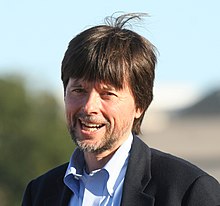
Ken Burns / Wikipedia
In short, Ken Burns has done what I feared he would do. He polished Teddy Roosevelt's apple at the expense of his successor, William Howard Taft, as part of his new documentary on TR, FDR and Eleanor. And, that's the most obvious of multiple pullings of historic punches by Burns.

I fear he'll do more when we get to FDR's presidency. (That said this is Ken Burns; see the bottom.)

Tuesday night's episode claimed, among reasons that TR decided to run again for president in 1912, that Taft backed off on tariff reform legislation and wasn't much of an environmentalist.

The reality?

Taft "backed off" on tariff reform in exchange for getting Congress to pass the 16th Amendment; meanwhile, TR deliberately refused to tackle the tariff while he was president, even though Taft, while his Secretary of War and all around confidante, had asked if he was going to do that. Taft and Interior Secretary Ballinger **legally** protected more land for watersheds within national forests than TR and Chief Forester Pinchot did with more dubious legality. And Burns knows this, because Doris Kearns Goodwin's new book, a history of the Progressive Era, a surprisingly good one for her, includes all this and more, and Goodwin is one of the talking head historians he has on the documentary.

The only semi-concession Burns makes to this is to have Goodwin say that TR would have been disappointed in whomever his successor was. I even wonder if Burns would have thrown in the claim that Taft wasn't a trust-buster if more people didn't know that was false then know what Burns actually claimed about TR was false.

Also, Taft didn't always weigh 330, let alone 350, pounds, as president. He often was under 300 and at times was as low as 250 or so.

And, here's my review of that book by Goodwin:

The Bully Pulpit: Theodore Roosevelt, William Howard Taft, and the Golden Age of JournalismThe Bully Pulpit: Theodore Roosevelt, William Howard Taft, and the Golden Age of Journalism by Doris Kearns Goodwin

My rating: 4 of 5 stars


It's not bad overall, for being a Goodwin book. Hey, have to be honest. She's not that great, even with allowance for her being a "popular" and not an academic historian.

I learned more about Taft than TR. The main thing is that I didn't realize that he had explicitly pushed for Congress to pass the 16th Amendment to send to states, along with starting the federal corporate income tax, in exchange for accepting the flawed "lowering" of tariff rates in the Payne-Aldrich tariff bill. Willingness to tackle the tariff, let alone get this much out of it, makes him more progressive (and more courageous) than TR in some ways right there.

Second major thing I learned was more about the details behind Taft's sacking of Gifford Pinchot. Taft partially caused this by not keeping John Garfield as holdover Interior Secretary, being dithering in making this decision and not telling Garfield exactly why.

That said, most of the actual precipitating events, from Pinchot's conflicts with Garfield's replacement, Richard Ballinger, indirectly proved part of Taft's reasoning right and also show that Pinchot largely shot himself in the foot. Pinchot's replacement, plus Ballinger, actually eventually and with better legal footing, "reserved" more forest lands from private development than did TR/Pinchot/Garfield.

In essence, forest reserve issues are one of the clearest issues of TR's arbitrary nature as president. We should be glad he didn't run for a second elected term in 1908, let alone get elected in 1912. When WWI started, he probably would have become more dictatorial in waging war than Woodrow Wilson ever was.

That said, the book lacks focus. That's in part because Goodwin's trying to do too much and spread herself too thin. Having read a bio of Lincoln Steffens and other books about the muckrakers, I know that she tried to cram in too much about them.

View all my reviews

And, I'll take this as my first opportunity to review the series as well.

I'll start by noting that, on weighty matters, TR was well over 200, at just 5-8, by the time he left office, as Gore Vidal notes in a delicious sketch of the Roosevelts. Also, as Goodwin notes, Taft's wife had a stroke after he had been in office just a couple of months, which had a strong effect on him politically; she was arguably, in her brief pre-stroke time, even, the most political First Lady up to that time, with the possible exception of Julia Grant.

Vidal has this to say on the idea that TR's entry into politics was sui generis for someone of his class:
Much had been made of what a startling and original and noble thing it was for a rich young aristo to enter the sordid politics of New York State. Actually, quite a number of young men of the ruling class were going into politics, often inspired by fathers who had felt, like Theodore, Senior, that the republic could not survive so much corruption. In fact, no less a grandee than the young William Waldorf Astor had been elected to the Assembly (1877) while, right in the family, TR's Uncle Rob had served in Congress, as a Democrat. There is no evidence that Theodore went into politics with any other notion than to have an exciting time and to rise to the top. He had no theory of government. He was, simply, loyal to his class--or what he called, approvingly, "our kind." He found the Tammany politicians repellent on physical and social as well as political grounds.

Well, that's pretty obviously undercutting that idea, yes. 

It is funny to hear Vidal call TR a gun-toting sissy, but, to put it a bit differently, was he a warmonger? Yes. That said, Burns does partially cover that. But let's read Vidal on that:
As a politician-writer, Theodore Roosevelt most closely resembles Winston Churchill and Benito Mussolini. Each was as much a journalist as a politician. Each was a sissy turned showoff. 
That in turn leads to the issue of, beyond being a gun-toting sissy, was TR an imperialist? Yes. And, Burns doesn't cover that. Although we didn't annex all of Panama, we did make the Canal Zone our territory. Our 1903 "treaty" with Cuba semi-imperialized that island until Castro, starting with a four-year U.S. occupation that began in 1906. TR continued the war to crush Philippine independence that started under McKinley.

First, per a Facebook friend, is 14 hours too much? Possibly; I'd like to think we could have cut to 12. Ten might be too short, but I think 12 would be good.

Second, while Paul Giamatti may have the accent of TR right, I don't think he has the full vocal dynamics right. His voice should be definitely louder and more dynamic than  Ed Hermann as FDR.

And, speaking of FDR ...

Third, the one reason from here on out I'm watching the show is to see if Burns is honest in showing just how much of the New Deal was limited to white folks, either explicitly or implicitly. Starting with Social Security, which initially excluded two classes of employees — farmers (don't forget all the black sharecroppers) and domestic servants. People who really know much about the Franklin-Eleanor dynamic know that, to the degree the New Deal did help African-Americans, it was largely at her pushing and prodding.

Related to that, and somewhat contrary to H.W. Brands' "A Traitor to His Class," I want to see if Burns portrays the New Deal as being relatively conservative, at least as compared to Upton Sinclair's EPIC and Huey Long's Share the Wealth. (And, sorry, Harry Hopkins, per the EPIC link from Wiki, but what FDR eventually got passed was not quite the same as it, let alone as Share the Wealth.) Here's EPIC:
To implement EPIC, Sinclair called for the creation of three new government agencies: the California Authority for Land (CAL), the California Authority for Production (CAP), and the California Authority for Money (CAM). CAL was to implement the plan for seizure and cultivation of unused farm lands. CAP was to do the same for idle factories. CAM meanwhile was to be used to finance CAL and CAP by issuing scrip to workers and issues bonds for the purchase of lands, factories, and machinery.

And, Huey Long was more radical yet. For that matter, Social Security didn't even, at first, come close to Frances Townsend's idea.

Fourth, FDR was also an imperialist of sorts. Look at all the Pacific island chains we took over as UN mandates, just like Britain and France after World War I with their League of Nations mandates.

FDR, while certainly better for America than Hoover, must thus also be taken with a grain or two of salt. On my third point, he got lucky to die when he did. I seriously doubt if he would have been as hasty to integrate the armed forces as Truman did. Nor (since he didn't during the Depression) would he necessarily been hasty to push for national health care. 

Fifth, and completing the circle, per another Facebook friend, maybe Burns is, in part, a middle-class, vaguely-and-politely liberalish democratic equivalent of Leni Riefenstahl in his documentary production style and thrust. Or worse.

August 04, 2014

Theodore Roosevelt: Who was this "progressive" president?

I'm sure you're familiar with all of this:

1. Busted more trusts than any other president.
2. Conserved more lands for environmental needs, and with strong legal protections, than anybody before him, and more than his immediate successors.
3. Fought to lower the high tariff on imported goods, which was strongly supported by big-business Republicans.
4. Got Congress to pass the 16th amendment and send it to the states, which allowed the federal government to base income tax on individual incomes, not on state populations, which obviously favored the likes of New York.
5. Showed more commitment to racial tolerance than some previous members of his own party by inviting Booker T. Washington to the White House.
6. Addressed the nation's banking problems, after multiple predecessors had been held hostage during financial crises by J.P. Morgan.

That's our man! Teddy, the first progressive president! Only, he did none of those things.

If I had added "by creating the Federal Reserve System" to the end of No. 6, knowledgeable people would have guessed Woodrow Wilson on that, wondered if Wilson did the previous stuff, but then scratched their heads at No. 5.

The reality is that TR wasn't that enlightened on race relations, and William Howard Taft did 1-4.

Yes. On No. 2, not just counting efforts started by Roosevelt, but only on efforts on his own, Taft busted more trusts than TR. That's in part due to Teddy's philosophy, that big wasn't necessarily bad, but what TR said was bad, was bad. Hence the appropriate title of Edmund Morris' volume of biography, "Theodore Rex."

That, in turn, leads directly to No. 2.

Many historically knowledgeable people know that TR broke with Taft due to his firing of Gifford Pinchot as the country's direct of forests. They may not know why.

Pinchot got in a tussle with Taft's Interior secretary. Then, as today, the forests were under USDA (another non-fix of TR), so there was a turf war. The big issue at stake was how, late in his administration, TR and Pinchot set aside land within forest preserves for hydrological protection. Taft and Interior Secretary Richard Ballinger were convinced that the TR-Pinchot methodology wouldn't withstand legal scrutiny. After releasing some lands back to private control, they went through the process again, and wound up protecting even more land in the end than the TR-Pinchot work.

No. 3? TR explicitly said during his tenure that he had no plans on taking on the tariff and advised Taft to do the same. Sadly, Taft got excoriated by TR worshipers for doing exactly that and not getting as much as they wanted.

That's even though, as part of what he did get, he got No. 4, Congress passing the 16th Amendment and sending it to the states, something that "progressive" TR didn't even try.

No. 5? When Southerners protested in horror about the first non-servant black man in the White House since Frederick Douglass during Lincoln's presidency (I'm unaware of Grant inviting any, and know that nobody after him did), he recoiled, especially when they mentioned that his mother was a Southerner. He even started cutting back on hiring blacks for Post Office jobs in the south. And, those that know TR know that the 1906 Brownsville affair was one of the blackest blots on his record.

No. 6? TR had had a run-in with J.P. Morgan over his work to break up Morgan-controlled Northern Securities in 1904. This was when Morgan famously said (not exact to the letter, you can Google it): "Send your man to my man and they can fix things up." And, TR knew about Grover Cleveland having to go to Morgan during the Panic of 1893 and a run on the nation's gold supply and beg for help, including being forced to meet Morgan personally. Yet, TR was short-sighted enough, limited in sight enough, or simply not progressive enough to not do anything to fix the nation's banking apparatus.

Then, along came the Panic of 1907, and TR having to kowtow to Morgan. Wilson's Federal Reserve, at the level of the regional Feds, may have left too much power in bankers' hands, but it was a big improvement beyond what we had.

As the Ken Burns series on the Roosevelts -- TR, FDR, and Eleanor -- comes on this fall, keep all of this in mind.

It's arguable that TR is the nation's most overrated president before GOP hagiography of Ronald Reagan.

May 25, 2014

Did FDR do all he reasonably could to save the Jews?

FDR and the JewsFDR and the Jews by Richard Breitman

My rating: 5 of 5 stars


An excellent, balanced book that shows that, on trying to save Europe's Jews, FDR was neither calloused and indifferent nor a saint.

The authors divide his presidency into four, roughly but not exactly matching his four terms in office, and look at what he did in each period. They also refute a number of myths, including one medium-sized and one big one.

The first roughly matches his first term. The second runs to about the time of the St. Louis liner in 1939. The third runs to about the time Nazi Germany overran Hungary in spring 1944. And, the fourth from there.

The authors note that the US economy was the first FDR's main concern. Even so, they say that he probably could have done a little bit more in chiding Hitler or more. That said, no country wanted to take in a lot of refugees in general during the Great Depression. That's not to mention anti-Semitism in the US, which was at roughly the level of pre-Vichy France, on average, I think we could say. If I were to give a grade, it would be a C-minus.

On the refugees, post-1924 immigration law had strict country quotas, and an anti-immigrationist Congress, not even counting hardcore segregationists, was in little mood to lift those quotas. This is something to remember later on.

Reassured of re-election, FDR II did challenge the Germans more, and did work, within in the system, to work around those quotas, and to pressure the British to do all they would and could to open up Palestine. FDR was also the only world leader to recall his country's ambassador for consultations after Kristallnacht. A solid B-plus, maybe higher, if I'm giving grades.

The St. Louis liner incident, while leading to FDR III, is more complex than many histories appear. Cuban strongman Bautista did not have absolute control of his country's wheels of power, and Cuba's president and foreign minister rejected the backdoor deal he had cut with Americans with some connection with FDR.

Myth says that all of the passengers went back to Germany and most died in the Holocaust. Reality is that while all went back to Europe, none went to Germany and almost 3/4 survived.

That said, why didn't FDR do more? Because, at this time, he was trying to get Congress to loosen up the Neutrality Act. He was afraid that intervening in the St. Louis would make the desired Neutrality Act changes look too narrowly pro-Jewish.

As the authors note, FDR III was about having the US ready for war, helping Britain be ready for war, and fight the war after September 1939, etc. Jewish issues in Europe were focused through this prism.

At the same time, FDR was already working around the anti-Semites among career staff in the State Department to do something to keep Jewish immigration hopes alive. At the same time, this is when Breckenridge Long, anti-Semitism at State personified, was appointed to one of the top political, non-careerist positions there. The authors don't make clear if this was part of solidifying his in-party stance before officially running for a third term (which he seems to have decided on after Kristallnacht) or what; that's a minor missing point.

After war started, it became harder to do much about Jews still in occupied Nazi territory. But, there was Vichy, before the North African invasion, Spain, and the moral voice of the Vatican. FDR did a moderate job with all.

Grade for FDR III? Flat C?

FDR IV, as noted, was at the tail end of the war. Here we run into the big myth, one that the authors note President George W. Bush perpetuated on a visit to Auschwitz: FDR decided not to bomb Auschwitz, or rail lines from Hungary.

After the Nazis took over Hungary, they did all they could, with Admiral Horthy slowing things for a while in the summer of 1944, to kill its 800,000 or so Jews. Why didn't FDR order bombing of the train lines to Auschwitz or even, even at the cost in Jewish life, Auschwitz itself? (Even some Jews supported this.)

First, FDR himself never heard about this. The idea of doing this got killed in upper levels of the War Department and Army. The authors note that John McCloy's late-life comments otherwise are highly self-serving and unreliable. (After April 1944 or so, the rail lines themselves were very reachable, and Auschwitz itself barely so, by bombers from Italy.)

Possible anti-Semitism of military folks aside, they were already overloaded with targeting requests for their bombers. And both they and FDR felt that winning the war was the surest way to save Jews.

Beyond that, the Nazis quite likely would have found some other way to kill Jews. Pre-Auschwitz, they used guns and mobile CO2 vans in the USSR, after all.

(As for the myth of bombing Auschwitz? Bibi Netanyahu also made that claim, in part to try to justify an attack on Iran. With both him and Bush, the specter of pre-emptive war was in the background.)

The Nazis then thought about negotiating over Hungary's Jews. But the price in US military material plus ideas of a separate peace with the West were far too high to pay, and were otherwise shady.

After that, Hungarians themselves tried some negotiations, but the Nazis ultimately quashed them. As any Jews set free would have to cross German-occupied territory, that was the end of that.

Otherwise, FDR's War Refugee Board, created at this time, did have regular contact with Raoul Wallenberg and helped him with his mission. The authors say that 100,000 Jews may have been saved from Hungary, and 200,000 overall.

Yes, a small amount out of 6 million, or even 800,000. But not negligible. Yes, FDR needed a nudge or two to create this board. But, he did so, he stood by it, and the nudges weren't that hard.

The fourth FDR gets a solid B.

In all of this, FDR continued to run the multiple gantlets (that's the right spelling, folks) of anti-Semitism in general, anti-Semitism and anti-immigrationism in Congress, and the fractiousness of various Jewish organizations, all while pushing against what seemed like the rock of Sisyphus, the anti-Semitism at State. A lot of people don't understand how deep this was. It was the traditional WASPs' anti-Semitism, one that sympathized hard with Britain and tried to get Roosevelt to agree to back a British white paper that would have officially retreated from the Balfour Declaration.

This isn't a whitewash by the authors; it's an honest evaluation of what FDR did, and didn't do, and why, and whether he could have done more.

Over all four terms, within the realities of American politics, the Depression and war, he probably gets a B, no lower than a B-minus.

===

As for FDR's alleged anti-Semitism? This is largely not true, but rather, people who want to guilt-trip FDR for not doing much, much more to save European Jews, and who pick certain comments of his out of context and distort them. Many of them use Peter Bergson, who comes off in this book as having a tiny following within Palestine and being generally untrustworthy, as a "foil" to show just what FDR could have done. Hogwash. Bergson did help push for the War Refugee Board. He did show other American Jews that they could perhaps be more vocal. Otherwise, he was regarded as an irritant by Jews in both the US and Palestine.

For a good refutation of all of these claims, see this excellent piece in The Nation, that came out at about the time of this book. In general, per this review, be wary of any piece by, or favorably touting, Rafael Medoff.

===

As for one-star reviewers of this book, on either Goodreads or Amazon? Well, there's Holocaust deniers everywhere. There's also ultra-Zionists everywhere, per the link to The Nation. You'll find other lowball reviewers, that aren't Holocaust deniers, are ultra-Zionists.


View all my reviews

January 23, 2012

A great new book on The New Deal

The New Deal: A Modern HistoryThe New Deal: A Modern History by Michael Hiltzik

My rating: 5 of 5 stars


This is an excellent review of the New Deal, the motivations and organization of Roosevelt (and his Brain Trusters) and more.

Some of the best analysis is  near the end. Economists like Paul Krugman have had to defend the New Deal, and Keynsianism in general, against charges it actually made the Depression worse, by citing FDR's second term balanced budget focus. Hiltzik goes even further and notes that in Roosevelt's first term, only one year had a near-adequate amount of stimulus, with deflationary measures undercutting stimulus ones in other years. He even has Roosevelt's own words to quote. And ,he doesn't hesitate to tie this back to today.

Hiltzik also has a short but insightful chapter on the Supreme Court packing decision, including noting that, even after Roosevelt started getting "better" votes from the court, he couldn't let go of the "packing" idea.

Hiltzik also, among other things, says we should drop the "100 Days" focus, and more, of New Deal study.

Finally, Hiltzik, among many other things, notes that FDR's fear of "the dole" led him to reject the ideas of Frances Perkins and others, and NOT fund Social Security immediately and out of general revenue. (The immediate payroll tax deductions, but without benefits payments until the 1940s, were one of those deflationary measures mentioned above.)

This is an excellent starter and overview book on the New Deal. Without calling them "parallels," Hitzlik lets the reader see just how some of FDR's actions, and lack of system behind them, and the results of lack of system, apply well to The Great Recession of today and its aftermath, too.


View all my reviews

July 09, 2011

Technology depersonalizes unemployment in U.S.

The New York Times had a decent article about how various factors have made the current unemployment crisis in America not become a sociological fire-starter. They include:

  • Greater dispersal of the unemployed;
  • Greater suburbanization of the unemployed;
  • Lower voting rates of the unemployed, and, related,
  • The unemployed coming from lower-voting demographics, and
  • Unions struggling for survival to the point of not having time/money/energy to focus on organizing the unemployed. (The story ignores 30 years of GOP antipathy to unions since the last great recession and 20 years of Democratic indifference.)

That said, the story buried one factor on page 2.
Today, though, many unemployment offices have closed. Jobless benefits are often handled by phone or online rather than in person. An unemployment call center near (community organizer) Barney Oursler, for instance, now sits behind two sets of locked doors and frosted windows.
I add "U.S." to the header, because the story goes on to note that unions in Europe have successful used the Web as an organizing tool whereas here, it's just to help people hunt for jobs and file for benefits.

Why this is, I don't know. But, most American unions probably need to address this.

Meanwhile, as the story notes, with a warning for President Barack Obama, historian Nelson Lichtenstein notes that after a year or two of him in office, many Depression unemployed started to sour on FDR:
Mr. Lichtenstein, the historian, notes that it took awhile for the poor to mobilize in the Great Depression. Many initially saw President Roosevelt as an ally and only later became disillusioned. As Langston Hughes wrote in a 1934 poem, “The Ballad of Roosevelt”:

The pot was empty,

The cupboard was bare.

I said, Papa,

What’s the matter here?

I’m waitin’ on Roosevelt, son,

Roosevelt, Roosevelt,

Waitin’ on Roosevelt, son.

For the moment, jobless Americans are waiting on President Obama. If unemployment stays as high as many expect, and millions exhaust their benefits, they may just find their voice in 2012.
Let's hope they do, and recognize that neither Obama nor Romney or whomever is going to represent them, be they blue collar, gray collar or white collar.

May 27, 2011

FDR 1936 vs BHO 2012

As President Barack Obama gets ever closer to an official start date for his 2012 presidential campaign and its alleged goal of $1 billion in fundraising, here's some food for thought:


What a difference 75 years makes, eh?

November 01, 2010

Douthat lies about Social Security

In trying to explain why the country's drift toward the left turned around in its tracks because of alleged "overreach" by Obama, he tells this whopper:
The central premise of the White House’s policy-making, the assumption that an economic crisis is a terrible thing to waste (as Rahm Emanuel famously put it), turned out to be a grave tactical mistake. It drew exactly the wrong lesson from earlier liberal eras, when the most enduring expansions of government — Social Security in the 1930s, Medicare in the 1960s — were achieved amid strong economic growth, rather than at the bottom of a recession.
Socia Security was achieved during strong economic growth?

Ahh, the latest slander against FDR and Keynesian economics.

That said, Douthat may be right that many 2008 Obama voters expected him, like FDR, to be an eclectic liberal of sorts.

April 12, 2010

WSJ repeats FDR-Depression lies

You know, the standard lie that he didn't get us out of the Depression.

Fact? In his first term, the unemployment rate was cut almost in half. Then, in his second term, when he listened to Wall Street nattering about balancing the budget, and abandoned "stimulus" ideas (listening, Obama?) unemployment went back up and the economy fell into recession.

As for the claim that postwar tax cuts stimulated the economy? Here's the info that Hillsdale College (BIG conservative red flag) professor Burt Folsom presents:
Income tax rates were cut across the board. FDR's top marginal rate, 94% on all income over $200,000, was cut to 86.45%. The lowest rate was cut to 19% from 23%, and with a change in the amount of income exempt from taxation an estimated 12 million Americans were eliminated from the tax rolls entirely.
Thoughts ...

First, this ISN'T "supply side as practiced today. By percentage of drop, and with income baselines subject to taxation being shifted, this was definitely targeted at the lower end of the scale in a way that would give today's GOP apoplexy.

Second, Folsom ignores things like federal mortgage guarantees, the GI Bill making sure many ex-soldiers were college students and not newly-unemployed, and more.

Contra Mr. Folsom, what really "runs on" is the myth that FDR had nothing to do with ending the Depression.