SocraticGadfly: class warfare
Showing posts with label class warfare. Show all posts

September 09, 2022

Royals envy: Societal class-based penis envy in America

Going by Twitter, a fair number of British people (probably greater in Northern Ireland and Scotland than England) and lots of "Black Twitter" no matter the country, said "good bye and good riddance" yesterday when Elizabeth II died.

America? Not so much. There's probably some US residents that greeted it with a yawn, but, I venture that, of people who had an "emotional opinion" of some strength on the queen's death, the percentage saddened or whatever was higher here in the States than in the UK, and probably much higher than in other outposts of the British Commonwealth.

Some political scientists have said that most Americans' veneration for, nay, semi-worship of, the US flag is a substitute for not having a monarch. 

If true, it's apparently not enough of a substitute, given yesterday's outpouring.

Didn't we secede from a distant ancestor of hers? Yes.

Aren't we supposedly egalitarian? Supposedly, yes; actually, no.

And, maybe THAT is part of the issue.

Study after study has shown that, at least since the time of Shrub Bush's Defense Secretary Donald Rumsfeld castigating "old Europe" for not backing the US on the Iraq War, that "old Europe" has higher economic class mobility than the US. Even with the UK having less class mobility than continental Europe, it's likely still ahead of the US.

So, maybe that's it. Royals envy is part and parcel of a class-based society that the US denies it has. I mean, I don't think "working class" White folk, let alone minorities, have this. It's a middle class and upper middle class and beyond issue.

As for Elizabeth? I've already done two semi-takedown obits in a week. No need for another.

I will note that when I dropped this Tweet:

Into a "Monty Python" group on Hucksterman, the only people who liked it were British. (Hatred was from both Americans and British, even though the Beeb mentions the reality of George V's euthanasia in talking about the "London Bridge is Down" transition plan.

So, I noted that I regretted this Tweet, also posted there:

Didn't get the same vitriol and I was sad. (A full roundup of my Twitter snark is here.)

More seriously, and yeah, we're going to go halfway into obit land, with that.

Elizabeth wasn't "as racist" as Philip. (Or as the late Queen Mother.) But, could she have done more re the former Meghan Markle? Yes. It might be one thing to visit Oceania or sub-Saharan African portions of the Commonwealth as its sovereign or its non-sovereign leader, but the "color line" in the royal family? Not so much. And, let's not even get started on Charles' brother, Andrew, and Jeffrey Epstein. Oops, I guess we just did. Yes, she stripped him of titles just a month or so ago, but, this has been festering for a long time.

Otherwise, if you want "class," there's no need to look across the pond. The Windsors are as declassé as the ... well, as the Trumps.

That said, even though she reigned without ruling, Elizabeth did "nudge" here and there. It will be fun seeing King Charles III dealing with the twat of a new Tory PM Liv Truss and her climate-hating government. With their succession to their respective roles separated by only two days, there's bound to be head-on conflict, and given the degree to which Charles has long seemed to have been champing at the bit, I'm sure he's full ready for this.

Speaking of, per Unherd, if British democracy is so fragile, and crappy, today that you're worried about its post-Elizabethan future, isn't that another argument to junk the crown and take a full plunge? Or, to put it more bluntly, in Monty Python terms: If the death of some watery tart with a sword makes you fear for the future of your democracy, then per Samwise Gamgee, you never had much democracy in the first place, did you?

(UnHerd got even worse in its Saturday email blast. Good fricking doorknob, for a bunch of allegedly outside-the-box thinkers, their British contingent is a bunch of royal hand-wringers.)

Sidebar back to the Monty Python folks ... seriously, it's a Monty Python group, not a BBC newsreaders group. You could spoof the death of any living ex-president, or if a serving president stroked out (assassination different) and I'd be OK with it.

==

Update: It's not just Americans, though. Punker Johnny Rotten reincarnated as a royalist ass-kisser. Part of a great takedown.

May 01, 2019

"Happy" May Day

Happy May Day in a country that refuses to celebrate it, even though the idea of May Day, not a defanged Labor Day, arose in America, as international organized labor celebrated the Haymarket Resistance with International Labor Day on the old May Day.

Happy May Day in a country that has no real, at least strong, national party of labor and hasn't for decades.

Happy May Day in a country where the more "left" of the two national parties has most national leadership opposing single-payer national health care, either directly or by stealth euphemism.

Happy May Day where that party follows the Overton Window and refuses to admit the reality of economic classes existing in the US, and generally being more firmly ensconced than in old Europe.

Happy May Day where the history of that first paragraph gets eliminated from school history textbooks.

May 25, 2017

Doubling down on the wrongness of "class-only" warriors

By "class-only" warriors, I mean the likes of Adolph Reed, who pretty much claims that all issues of race, or nearly all, are ultimately reducible to issues of socioeconomic class. I mean the likes of Reed touter Doug Henwood, who ultimately blocked me on Twitter because of this.

I am building on an old post about Reed, where I take on his claim that New Mexico is one of the whitest states in the nation. It was part of a broader effort of his to largely diss Black Lives Matter.

The meat of that, relevant to this piece, follows.

A few months about, when discussing Black Lives Matter raising police brutality issues across the country, he responded rhetorically, wondering why police brutality was so high in New Mexico when it's one of the whitest states in the country, in his claim.
And, according to the Washington Post data, the states with the highest rates of police homicide per million of population are among the whitest in the country: New Mexico averages 6.71 police killings per million; Alaska 5.3 per million; South Dakota 4.69; Arizona and Wyoming 4.2, and Colorado 3.36. It could be possible that the high rates of police killings in those states are concentrated among their very small black populations—New Mexico 2.5%; Alaska 3.9%; South Dakota 1.9%; Arizona 4.6%, Wyoming 1.7%, and Colorado 4.5%.
No, I don't think that's playing "gotcha." Rather, I think it — and the whole piece — was Reed playing "gotcha" with Black Lives Matter activists. The first four states on the list all have high American Indian populations. New Mexico has a high Hispanic population and Arizona a medium one.

But, that's a sidebar. New Mexico, separating out Hispanics of any race, as the Census calls it, as a separate socio-ethnic group, has long been a majority-minority state. Even without doing that, it's STILL a full one-third non-white. It has about zero in common demographically with Wyoming. I'm using Wikipedia, even if some call it "lazy-ass." (I'm also using my personal knowledge of New Mexico.)

I tie it to this new piece from High Country News about American Indians' problems with police violence, and how a "Native Lives Matter" movement has struggled more than Black Lives Matter to gain traction.

First takeaway? This:
In the West, as in the rest of the nation, Native Americans are the racial group most likely to be killed by law enforcement, at a rate three times higher than whites.
And, no, socioeconomic class didn't lead to Indian marginalization. Indian marginalization led to them being poor. Indian marginalization, not poverty, led to them being considered as having few rights.

That's simple. Or, it should be. 

Here's much of the "why":
Several factors contribute to that statistic, including the lack of mental health services (nearly half of the victims had histories of mental illness) and the often-strained relationship between Native Americans and non-native police. Many tribes are under the jurisdiction of nearby non-tribal authorities, leaving cities and counties struggling to come up with the additional policing resources. According to researchers at Claremont Graduate University, 83 percent of the deadly encounters between Native Americans and law enforcement involved non-tribal police.
That's somewhat similar, in urban areas, to most police actually living in suburbs.

American Indians live largely in rural areas, so their deaths at the hands of police get even less media attention than black deaths. Also, the fact that they make up a smaller portion of the population is a factor.

First, wishing that all racial problems ultimately reduced to class ones might be nice. But, if it's not true, it's not true. And, with blacks, as the mudsill movement shows, it's often not true. The resurgence of modern mudsills as part of Trump's backers shows that. Mudsills existed in the old South before it was heavily capitalized or industrialized. Yes, the "cavaliers" had a class, and looked down at "po whites." But that class, if based on economics at all, was based on land, not capital — unless one counts slaves as capital.

Now, per this interview with Reed, it's possible that identity politics CAN have a neoliberal bent. Yeah, and so can mercantilist trade policy. Neither one HAS TO be such, though. Reed also comes very close to making this into a zero-sum game. People who are concerned about racism — and racism against people of individual racism, not a blanket word game like Reed claims — and class issues as well could argue that Reed himself is playing into other hands.

Beyond that, I'm sure Reed as an academic knows that not only women, but LTBGQ people also face economic discrimination. Oh, I could probably dig up some twisted, quasi-Marxist class-based argument.

Or, I could just realize that society still has plenty of bigots.


I should add, per this Existential Comics issue, that it's "interesting," during the time I followed him on Twitter, that Henwood just about never, if at all, mentioned Frantz Fanon. I'm not sure Reed does a lot, either.

February 21, 2017

No, #segregation and Jim Crow were NOT all about breaking up labor solidarity (updated)

Speaking of solidarity, even more than I despair of some supporters of movements like Black Lives Matter ignoring possible interracial solidarity on socioeconomic issues, I grow tired of others claiming that almost all black problems today are ultimately class-based issues, while minimizing racial ones.

A highly oversimplifying article at the Atlantic by Alana Semuels, as retweeted by Doug Henwood, a primary abettor of the "it's all about class" narrative, have led me to drop a blog-posting dime about this while it's fresh in my mind.

First, there's the header that "Segregation had to be invented." Erm, no, wrong. Period.

Per Wikipedia's article on Jim Crow laws, such laws were already coming on the books by or before the formal end of Reconstruction in 1877. That's before the Populist Party formally existed — a party which itself by 1900, fractured in the South over black-white unity, as the political history of Thomas G. Watson shows. (Why Watson shifted, I don't know. I've never read a biography of him)

It is true that, in the South, the Farmers' Alliance started in Texas in 1876, and spread from there elsewhere in the South. But, per it's name, it remained focused on farm issues. For more of what that means, vis a vis the claims of Semuels, etc., look further down.

(I already knew most of this, but a teh Google for an intelligent but empirically unenlightened person wouldn't have taken that long.)

Indeed, worries about the possibility of Jim Crow led Charles Sumner and Ben Butler to push for the 1875 Civil Rights Act, which specifically addressed equality in accommodations, foreshadowing Southern state government acts that ultimately led to Plessy v Ferguson. But, also foreshadowing Plessy, and its vote on it, in 1883, the Supreme Court ruled the act unconstitutional in part — namely, the parts that were fully upheld in Plessy.

From 1875 to 1896 in broadest terms, or from the 1883 SCOTUS ruling to the 1890 Louisiana legislative act that led to Plessy, was there any great hue and cry among working-class whites about breaking labor solidarity?

Uhm, hear those crickets south of the Mason-Dixon?

The reality is that before 1890, the South, other than a few iron mills and the like, remained highly underindustrialized compared to the North, as well as highly less urbanized. Indeed, Charlotte, the focus of Semuels' article and a book behind it, had a population of just 7,000 in the 1880 Census — and 4,500 in 1870. That's why, in the brief period that Populism was able to get blacks and whites in the South together, its focus was on farm labor.

(Semuels has other problems, speaking of this issue and specific dates. She repeatedly uses "the late 1800s" in saying you could see this or that in Charlotte, without saying whether that's the 1870s, 1880s, or 1890s. And, if sources of hers are doing that, then she erred by not pinning them down.)

In other words, the likes of Semuels, and even worse, the likes of a Doug Henwood, and an Adolph Reed (more on him below) who will surely agree with Doug's liking of the piece, are conflating a mild American equivalent of Russia's Social Revolutionaries with a mild American version of Russia's Marxists.

Totally wrong.

As the South became more urbanized along with becoming more industrialized, post-Plessy segregation expanded, yes. It expanded because, with smaller cities, less need was seen for it before that time.

Beyond THAT, the very Eric Foner quoted by Semuels could have told her about the lack of industrialization in the South in the first 20 years after the Civil War. So could President Grant, as noted in Ronald C. White's new bio. Why? Northerners wouldn't invest down there, for a variety of reason. Railroad investments made more money in the Midwest and West. Other investments were problematic due to race-based violence.

Besides, as Wiki's piece on the Farmers Alliance notes, in the South, it was strictly white-only. And, it was both patronizing and condescending toward Southern blacks in maintaining Jim Crow. Again, 30 seconds on teh Google, or specifically, teh Wiki, is all that's needed to refudiate Semuels, and by extension Henwood, Reed, and others of their ilk, like Jacobin, which has on more than one occasion claimed that racism was not a problem in early organized labor. (And, in comments on one piece, doubled down on said denialism.)

Reed is even worse in attempts to claim "it's all about class."

A few months about, when discussing Black Lives Matter raising police brutality issues across the country, he responded rhetorically, wondering why police brutality was so high in New Mexico when it's one of the whitest states in the country, in his claim.
And, according to the Washington Post data, the states with the highest rates of police homicide per million of population are among the whitest in the country: New Mexico averages 6.71 police killings per million; Alaska 5.3 per million; South Dakota 4.69; Arizona and Wyoming 4.2, and Colorado 3.36. It could be possible that the high rates of police killings in those states are concentrated among their very small black populations—New Mexico 2.5%; Alaska 3.9%; South Dakota 1.9%; Arizona 4.6%, Wyoming 1.7%, and Colorado 4.5%.
No, I don't think that's playing "gotcha." Rather, I think it — and the whole piece — was Reed playing "gotcha" with Black Lives Matter activists. The first four states on the list all have high American Indian populations. New Mexico has a high Hispanic population and Arizona a medium one.

What if BLM is right — and we need to extrapolate from largely white cops' undue violence against blacks in particular to their violence against minorities in general.

But, that's a sidebar. New Mexico, separating out Hispanics of any race, as the Census calls it, as a separate socio-ethnic group, has long been a majority-minority state. Even without doing that, it's STILL a full one-third non-white. It has about zero in common demographically with Wyoming. I'm using Wikipedia, even if some call it "lazy-ass." (I'm also using my personal knowledge of New Mexico.)

And, now, Henwood apparently doesn't want to accept that, complete with screen grab sent to him via Twitter.

Dude? (And I use that term on purpose. And, now, perhaps for Henwood as well as Reed.)

New Mexico has been a majority-minority state for decades. It is one of four such states, and is specifically just 40 percent non-Hispanic white.

Whether Reed is that ignorant, or, just to insult BLM, he was claiming that if you're not black, you're white, in either case, I lost a lot of respect for him right there.

I also suspect that Tom Hanchett, author of “Sorting Out the New South City: Race, Class, and Urban Development in Charlotte, 1875-1975,” is trying to make a case for Charlotte as being a foreshadower of the New South, just as Atlanta apologists have long done. That said, why Semuels is digging up a book nearly 20 years old to try to help her make her points is also interesting.

The last few paragraphs above, from the "Besides ..." on, are what led me to blog about this issue.


The left-liberals with a "class-only" lens seem to me to be guilty, first of all, of starting with a zero-sum approach to particular issues of labor or other socioeconomic troubles. And, because they're approaching it from the labor side, that zero-sum lens is a class-based one.

I have no problem seeing where class may have been an issue in segregation. But I know it wasn't the only one, and highly doubt it was the primary one. Ditto on other issues of black-white labor relations before World War II, at a minimum on a terminus ad quem.


Beyond that, I'll freely admit to being a bit of an agent provocateur, or neo-Cynic challenger of received wisdom. But, no, it's primarily that I see a certain amount of left-liberals operating with a "class-only" lens, or nearly so, on issues like this. And it's both wrong and off-putting.

To riff on an old bon mot directed against Freud? Sometimes racism is just racism.


Period.


===


Updates as they come via Twitter and my own research.

First, was an 1890s New Orleans strike an exception or not on poor race relations within organized labor in the South? I say more exception than rule. Even if blacks and whites struck together, they were kept in separate unions, in this case. Even with "relatively" enlightened miners in the early 1900s, segregated locals were maintained by the United Mine Workers! In other words, it's arguable that selfish white miners recognized they had to play ball with black miners just enough to keep them from being scabs, and nothing else. "Class" in capitalistic societies may ultimately be socioeconomic, but it's never JUST socioeconomic, and even that word has "socio-" in front of "economic."

And, the fact that white workers allegedly received no material benefit over racism is itself working through a quasi-Marxist lens. Many Religious Righters get no material benefit over voting GOP, but due to pro-life issues, continue to do so.

Second, a lot of people with either a class-only or a class-first lens for these issues are getting a little butt-hurt. That's fine, or "fine." It adds to my contrarian nature on something like this. (I notice that commenter "ebarr" created his Blogger or Google Plus account sometime this month, and I'll venture created earlier today just to comment here.)

Related, per one Twitter commenter? I do not claim to be seeing things through a "race-only" lens. Or necessarily through a race-first lens, though, if you want my comment on that, I DO view Jim Crow that way. Let's not forget that the incident that led to Plessy was about public transportation — nothing to do with labor issues. And, I'm sure I'm far from alone about viewing Jim Crow laws, and other elements of segregation, through a race-first lens.

And, re another commenter, I'm not a "liberal," I'm a "left-liberal." The two are different. I, as a rule of thumb, would place left-liberal — per the actual phrase — halfway between liberal and leftist. And, that self-description is nearly a decade old; today, I'm probably halfway between left-liberal and leftist. For a variety of reasons, I don't foresee using the word leftist of myself in the immediate future. That said, per that allegedly piece-of-crap Wikipedia, "libertarian socialist" is a OK, but not great, descriptor. (At the same time, I recognize that many non-communal aspects of socialism are hard to develop without government intervention, so the "libertarian" part needs a grain of salt, too. But, not too much; I'm probably about in the middle of Greens as far as views on such things. Speaking of, eco-socialist might be better yet as a descriptor. I am generally NOT a localist, as I think that, in America, that stance leaves the door open to libertarianism, states-rights movements, and big business co-option, among other things. Otherwise, I consider my political stances, along with other aspects of my self, to be kind of protean.

Re yet another Twitter commenter, I never claimed Reed was wrong in his claims on shooting disparity. Just that he was wrong — way wrong — in his demographic claims about New Mexico. Said person is now muted. I'm not a Communist, and not a real fan of people putting the hammer-and-sickle icons as part of their Facebook aliases, either. (That said, "Marxist" seems to be getting to be almost as vague a word as "liberal."

Third, I'm likely to do a pull-out or knockoff from this piece related to the first two update points. And, I'm certainly likely to do a pull-out on the Reed piece. (Elsewhere, per Naked Capitalism, he has claimed that identity politics are being used to undermine class-based politics. Dude, there are plenty of people who aren't Hillbots or other DNC surrogates, and who, like me, find your "either-or" claim ridiculous. And, you don't have to be a Green to know that. Local Democrats in Ohio are on the record as rejecting any such dichotomy. And, yes, worshipers at the cult of Reed, I think he IS perpetuating a dichotomy. Deal with it.)

Seriously, while I think he has some insights, I 
A. Think he's wrong on this and
B. Think there's a cult of Adolf Reed.

Well, as a good neo-Cynic, I love puncturing cults' balloons.

==

Update 2: This led me to write a blog post about Twitter protectionism by myself or others, kind of like a miniature version of concern trolling. Well, sometime between writing the Reed piece and it, Henwood blocked me. Good-bye. Just to make it formal, even though he wasn't following me, I blocked him back.

I should add, per this Existential Comics issue, that it's "interesting," during the time I followed him on Twitter, that Henwood just about never, if at all, mentioned Franz Fanon. I'm not sure Reed does a lot, either.

==

Update 3: This is a good point, speaking of misinterpretations of American history, to remind people that the Electoral College is NOT "all about slavery," as I blogged a month ago.

June 30, 2014

There is a class war, and Dems won't win by not talking about it

This blog post starts withe the review of a book, one that notes that we probably need to move from race-based to class-based, affirmative-action type programs.

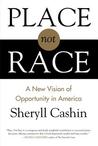
Place, Not Race: A New Vision of Opportunity in AmericaPlace, Not Race: A New Vision of Opportunity in America by Sheryll Cashin

My rating: 4 of 5 stars


Sheryll Cashin writes a solid book on something I, and certain other liberal-minded people, have been saying for some time.

It's time to move affirmative-action programs beyond race and on to socioeconomic class instead.

She cites two main reasons:
1. A shifting, usually eroding, legal landscape for race-based affirmative action in the federal court system.
2. White "resentment," which is not always racist per se, over seeing black benefits from affirmative action.

Cashin focuses her eyes on collegiate admissions as being a good place to level the playing field.

I agree, but think she's too optimistic, not just optimistic. This will cost most colleges some serious money. With status holding flat or cutting their support to public colleges and universities, and higher education in both the public and private sector, in general, doubling down on neoliberal-driving academia as Big Business ideas, I think Cashin's a bit naive about the reality of this all happening.

And, that still leaves de facto residential segregation by class, even more than race, and its effects on K-12 schooling, all standing in place.

That said, Cashin does note the degree of class division here in the US, greater than in Europe.

View all my reviews

That said, beyond the seemingly naive overoptimism, Cashin needs to look at today's political parties.

The great majority of state-level and national-level Democrats flinch whenever Republicans accuse them of practicing class warfare. That's even with President Obama talking about increasing the minimum wage to $10.10 an hour.

Worse yet, most Democrats won't even talk about how there is class warfare — and how the rich have started it.

Would a policy like this play out in Texas? I'm not sure. A lot of statewide candidates get out-of-state money, and it's unclear about how well many rich Democratic donors would take to this issue. A few rich independent liberals, like George Soros, do talk about class differences, but he's the exception. So, donations might dry up. And, on the collegiate issue, Cashin is right. Black "legacies" at places like Ivy League schools would be threatened even more than now, just like white "legacies." It would be an uphill sled getting this passed.

Money aside, would such a move at least tempt a few rural and suburban whites, ones not too, too invested in black resentment, to at least consider the D lever? Would it improve the chances of getting Hispanics, especially in the Valley, out to vote?

Maybe. It couldn't make things on the ground any worse, could it?

Meanwhile, the Green Party has yet to realize that work like this requires ... party organization, among other things. Look at the Libertarians — organized enough to have a candidate for every state senate race this year.

And, claiming that its urbanites vs. rural areas on things like water and eminent domain, the Libertarians almost sound like they're talking about class war more than Democrats are.

Maybe they are, but, of course, their answers are all wet. More on that later this week.

So, we have too many Democrats still ready to sing Kumbaya, Greens a useful angle as a protest vote against that and little more, and Libertarians sometimes having the right ideas, but always the wrong answers on economic issues.

September 05, 2011

Better political discourse: More than empathy is needed

What's left of the mainstream media illustrates again the Peter Principle on today's politics, with this naive and insipid column by Gregory Rodriguez of the L.A. Times.

His "takeaway"? This:
The solution to the corrosive spirit of U.S. politics is not more politics. With 8 in 10 Americans saying the lack of civility is a serious problem, we should consider that the answer isn't in the system but in ourselves.

First, Mr. Rodriguez, I'll bet a majority of the 8 in 10 blame "the other side." Certainly, I'll bet a majority of conservatives do, even though they're primarily to blame for the lack of civility, primarily through attacking the "other," whether that "other" be gay, Muslim, atheist, global warming scientists or somebody else.

Second, the rich like it that way. As a friend of mine notes, most of the social safety net was passed, in part, because the rich, during the Depression, began to fear mob action or the rise of so-called demagogues like Huey Brown.

Today? With the astroturfing of the tea party movement, the rich now sic the middle class downward on the working and nonworking poor alike and have their dirty work down for them.


As the book "Payback" (5-starred by me) notes, it's part of human psychology to want to pass on stress and aggression by taking it out on those lower in the ranks. So, the middle class, as it stresses more, looks to the poor as targets. The GOP side of the rich encourage this for the reason my friend notes. The Democratic side of the rich diffuses it by being libertarian on social issues, and maybe wanting to raise taxes on themselves, but still avoiding more fundamental structural issues.

Most of the little class have little to no desire to be empathetic to those below them. It's almost like an addiction of sorts; it becomes good to kick the poor, if only verbally. (As well as gays, atheists, Muslims and other "others.")

It will take a massive reworking of social psychology, not just civics or empathy, to even begin to change this. It will require Warren Buffett to be more friendly to organized labor, not just to want to pay more taxes. It will require rich of both parties to want to change the economic structure of America. It will require them on the GOP side, and their flunkie economists, to stop preaching at the poor and to admit the greed, and power-lust, that lies behind their own acquisitiveness.

Finally, Rodriguez himself approaches this issue from a duopoly insider's perspective, per his column:
Four weeks ago, I attended a daylong meeting at the Bill & Melinda Gates Foundation hosted by former Clinton White House domestic policy advisor Eric Liu. A small group, including former Justice Sandra Day O'Connor and Bill Gates Sr., discussed how to "revive and reinvent civics" in the U.S. 
And you never did even an approximation of "man on the street" interviewing? Nuff said. A simplistic solution offered as a Band-Aid for a gaping wound.