SocraticGadfly: Watergate
Showing posts with label Watergate. Show all posts

August 09, 2024

Watergate at 50: Nixon resigns, August 9, 1974

I'm old enough to remember his speech from the day before. And, as discussed in the run-up to the first 1960 presidential debate and how Jack Kennedy outfoxed him on the use of TV makeup, how Nixon looked so pasty, pale, and clammy while reading that speech, and sweaty as well.

Well, we've gotten a number of books about Watergate in recent years, but I'm going to start with an oldie that I read just last month. These will be excerpted Goodreads reviews:

To Set the Record Straight: The Break-In, the Tapes, the Conspirators, the PardonTo Set the Record Straight: The Break-In, the Tapes, the Conspirators, the Pardon by John J. Sirica
My rating: 4 of 5 stars

Solid 4-star as a personal angle and first-draft-of-history take on Watergate by the man who was, more than anybody other than Nixon himself, at the center of the storm.

It has normal first-draft limitations. We know so much more about the backstory today.

And, the real reason no fifth star? Page 212:
But it seemed fairly clear that the Constitution prescribed that Congress, through the impeachment process, should have the primary jurisdiction over a president who committed criminal acts.

NO. And I don't care if you're John Sirica. It neither says nor implies that. And, this is also the bad thinking behind the Nixon-era opinion from the Office of Legal Counsel within the Department of Justice that sitting presidents can't be indicted, an opinion only, advisory only, that Robert Mueller stupidly bought into.

Rather, with the Constitution making clear that the penalty for conviction upon impeachment is limited to loss of office, I see it as implying that impeachment is an adjunct to criminal charges for an officeholder who won't remove themselves. (Congress can expel its own members; it must impeach judges and executive officials.)

And, that said, while Ron Jaworski getting the grand jury to name Nixon an unindicted co-conspirator was good? IMO, better would have been indicting Nixon under seal.

===

The best of the more recent books? This:

Watergate: A New History

Watergate: A New History by Garrett M. Graff
My rating: 5 of 5 stars

A great book on overall organization, first (with one exception noted at bottom). And a great book overall, also with one exception.

The chapters are relatively short, about 10 pages each, each on one individual small subtopic. They’re grouped within larger sections. The narrative moves along smoothly, something a mix between journalism and history.

Second, this book earns its rating on one chapter alone. And, that’s “why did Watergate happen?”

In the chapter Third Rate Burglars, in less than 10 pages, Graff lays out each of the five reasonable main alternative interpretations to the traditional one, that it simply what Ron Ziegler called it: a third-rate burglary, bungled, by people with overactive imaginations. No. 1 is is the first of “hidden dirt” theories. This first of those three theories is that the burglars were looking for financial improprieties, possibly funding for the DNC convention. A subplot version of this is that they were trying to see what financial dirt Dems had on the GOP. Theory No. 2 is that sex was the hidden dirt. This says they were looking at dirt allegedly related to a DC call ring. This one, also, like No. 1, had “both ways” possibilities, starting with John Dean’s future wife, the then Maureen Biner, allegedly connected alleged escort Heidi Rikan. It was broached in the book “Silent Coup,” which Graff noted spawned lawsuits by both Dean and Liddy. Theory No. 3? Says the CREEP was trying to see if the DNC had its own ITT problem, or the possibility that Dems, like Republicans, were getting illegal campaign financing. It too has a “both ways,” and on this version of the theory, CREEP was trying to find out how much the DNC knew about Nixon getting money from the Greek military junta. Theory No. 4 is the most conspiratorial, and borders full conspiracy theory. It’s based on McCord and Hunt being (ex)-CIA, and says that, possibly at the instigation of Richard Helms himself. Helms and Nixon had “issues” with each other since the Bay of Pigs. Graff notes that Hunt was one of the biggest liars of the break-in itself and the early cover-up, and that McCord can’t be fully accounted for during all of the night of the burglary. Theory No. 5 is … interesting. It’s that the DNC and/or DC police already had some inkling of something going down and sprung a trap. I find it even more in the land of conspiracy thinking than No. 4, and also even less plausible. No. 4, in turn, is not mutually exclusive with one or another of 1-3, and especially not with No. 3, as the CIA would have information of its own on the Greek colonels.

In the end, though, I think the “official” explanation is still the best.

(deleted for space)

Other things new to me? Outside of Watergate itself, it was that John Mitchell was the lead contact with Anna Chennault in the 1968 campaign. And, that it wasn’t Spiro Agnew contacting her contacts from New Mexico in the last week before Election Day; rather, something got garbled, and it was John Mitchell contacting her from New Hampshire.

Not new, but further confirmed? John Dean has struck me as a duplicitous weasel LONG after he came clean. His book several years ago on the new Nixon tapes release confirmed that for me. This book only adds to that impression. (Hold on to that.)

The one tidbit on not so good organization? Sometimes, things are “dropped out.”....

Now, the one error of interpretation, which ties in a sense to Ted Kennedy’s take on ITT. It’s arguable that Anna Chennault’s operation was the start of Watergate. That said, this was NOT treason. It was a material, non-paper violation of the Logan Act. No doubt about that. But Graff errs in calling it treason.

===

I've read one modern bio of Nixon. And, Ev Thomas was decent.

 Being Nixon: A Man DividedBeing Nixon: A Man Divided by Evan Thomas
My rating: 4 of 5 stars

A sympathetic, but not hagiographic bio, and a good one.

Thomas gets a few early-Nixon things right that most people don't know are the case.
1. Helen Gahagan Douglas' Democratic primary opponent first came out with the "pink lady" and comparing her record to Vito Marcantonio, Socialist Congresscritter from New York City. Murray Chotiner just has the idea of printing their records side-by-side and on pink paper.
2. Adlai Stevenson had a slush fund bigger than Nixon's in 1952, and it was used for a lot more ethically edgy purposes. For that matter, Ike, though not already an elected politician and thus technically not having a "slush fund," was getting a fair degree of personal aid from campaign funding. (Thomas doesn't mention that one.)
3. On the 1960 campaign, he doesn't go into detail (would be hard to prove) whether either candidate cheated. That said, in Illinois, the state GOP was known for its own shenanigans downstate. But, it's clear that he thinks studied neutrality is best.
4. He gets all parts of the 1968 backdoor from Nixon to Thieu correct, as well as noting that, post-election, Hoover incorrectly claimed LBJ had bugged Nixon's plane.

Watergate? I agree with him that Nixon didn't order the original burglary. That said, if John Mitchell had some idea about it ... Nixon couldn't have been surprised by it. After all, he had mentioned breaking into Ellsburg's psych himself.

Thomas is also right that Nixon sometimes WAS unfairly treated by the media, as well as the Georgetown-area "smart set."

And, I had not read before that a Special Forces unit ordered to go from South Vietnam into Cambodia to do "clean-up" after Nixon's first bombing of Cambodia mutinied. Interesting.

===

And, you can stop holding on. Here's that weasel himself, John Dean:


The Nixon Defense: What He Knew and When He Knew ItThe Nixon Defense: What He Knew and When He Knew It by John W. Dean
My rating: 2 of 5 stars

One doesn't need to crib a Roger Stone interview, as one person on Amazon did, to find problems with this book.

Indeed, per the nonpartisan Nixon Tapes website, one can read about Dean blaming his previous book's editor, the well-known Alice Mayhew, for allegedly inserting material into his previous book, a claim she has called an "L-I-E."

As with previous Dean writings on Watergate, there are two main questions:
1. How much is he whitewashing Richard Nixon?
2. How much is he whitewashing John Dean?

On the first, we can see that at play in the opening pages of the prologue. Dean contrasts Nixon and McGovern's approaches to Vietnam, and makes it look like McGovern wanted to cruelly, callously abandon South Vietnam. But Dean never mentions Nixon's late-1968 violation of the Logan Act with his contact via Anna Chennault with South Vietnamese leaders, encouraging them to reject the Johnson peace plan.

Nor does he note, in his brief discussions of Nixon's orders to burgle the Brookings Institute in 1971, that what Nixon sought was NOT (or not just) a copy OF THE Pentagon Papers, but copies of Lyndon B. Johnson's intercepts of Nixon campaign contacts with Chennault, which he (wrongly) suspected were held there.

Beyond that, while Nixon may not have technically ordered the June 17, 1972 burglary of the Watergate, with the burglaries of Daniel Ellsburg's psychiatrist, the discussed burglary of Brookings (even though not carried out) and other things, it's clear that Nixon's general marching order to the Committee to Re-Elect the President indicated no stone should be unturned in doing this. Given that the idea, under Project GEMSTONE, was first discussed in January 1972 and that both Dean and Jeb Magruder were parties to such discussions, at a minimum, the fact that neither of them alerted Nixon to this, or if they did, he didn't squelch it, show that Nixon himself, contra Dean's claims, must be considered as at least an indirect father of the action.

....

At the same time, of course, he's sought to polish his own apple vs. other key players in the Nixon Administration in general and Watergate in particular.

By ending the narrative at July 16, 1973, and putting what happened after that in just a few pages of appendix, Dean's able to do that. The flip side of him turning state's evidence is that, before Nixon could show that he would be disloyal to him (or others), Dean acted first, rather than taking the fall, a la Haldeman and Ehrlichman.

In turn, that shows that this book is still missing psychological elements, starting with those of Dean himself. How does he feel about being the first larger player to jump the sinking ship of the man he still tries to connect to the Goldwater version of Republicanism?

And, to the degree Dean is still trying to cover for himself or his old boss, or both, the death of Colson 2 years ago [as of the time of the book's publication] made it another bit easier.

Finally, Dean's one appendix, on the 18-1/2 minute tape gap, serves nothing. After narrowing down the list of likely erasers of the tape, Dean refuses to look at any one of them as more likely than the others. He even claims it's not that important; real, professional historians would certainly disagree. He also gets coy on exactly what was likely erased, after giving some general parameters.

This isn't quite a one-star book. It does fill in some edges and corners. And it sheds more new light on the character of Dean, even though that surely wasn't his intention.

I'll take a look at the new Brinkley book on the tapes to see if it shines any important new historic light, but it appears even more wooden than this book.

===

Speaking of conspiratorial? There's good old Jefferson Morley:

Scorpions' Dance: The President, the Spymaster, and Watergate

Scorpions' Dance: The President, the Spymaster, and Watergate by Jefferson Morley
My rating: 2 of 5 stars

Decent at best, plus a BIG asterisk ...

The "decent at best"?

There's really not a lot new here for people who know a lot about Watergate, especially if you read or have read Graff's book. In fact, Morley's overall thesis, that the CIA was quasi-involved, but not directing anything, is covered by Graff.

The big asterisk? Even though he claimed he's no longer one a few years ago, Morley is still a JFK conspiracy theorist. (I blogged about his non-denial denial.)

It starts on page 51 with a full chapter there in this chronological book, covering Nov. 22 and the immediate aftermath. Then there's most of a chapter in the middle of the book, re Nixon telling Ehrlichman to drop "Bay of Pigs" on Helms. Then part of a chapter near the end. Then the epilogue.

In the first spot, Morley clearly states he believes four shots (minimum) were fired at JFK. The first, that missed and hit the curb beyond the limo (at least he's following eyewitness testimony and evidence). A second that hit Connelly. A third that hit Jack in the body. Then, later, a fourth shot that hit Jack in the head.

In the third spot, he talks about various "framings" of interpreting the assassination. He won't come out straight and say the CIA did it, but that sure appears to be his angle. (deleted)

There's enough decent stuff around the edges, and the conspiracy theory isn't front and center, to rescue this from a 1-star, but that's about it, and it's obviously using Watergate, per psychological counseling, as the "presenting issue" to wedge in JFK. It still got my BS label, too.

===

 One Man Against the World: The Tragedy of Richard NixonOne Man Against the World: The Tragedy of Richard Nixon by Tim Weiner
My rating: 3 of 5 stars

Decent to good overall, but no more than that. Probably a 3.5 star, but since the Goodreads average is over 4, I rounded down.

It does have a good updated basic overview of the Nixon White House, updated after the release of new tapes of his and grand jury testimony.

But, it's only basic. Surely, it could have been better than this. Others note "quick and dirty."

I really didn't learn anything new about Watergate. I did learn bits new about Vietnam, or more explicitly, the illegal attacks into Laos and Cambodia. And, some things from any basic account of the Nixon years, like the Allende assassination, aren't here.

Also, Weiner came off as an unrepentant Cold Warrior in his introduction. That was likely going to lose it a star right there.

He also has historical errors here and there. The biggest, off the top of my head, is claiming executive privilege started with Ike or Truman. Nope. Try George Washington. The House wanted papers from Jay Treaty negotiations and he refused because only the Senate is involved in treaties. Any good bio of Jefferson will tell you that, re Aaron Burr and other things, he strongly invoked executive privilege.

View all my reviews

January 19, 2015

Why did Ford pardon Nixon?

I reject ideas of any conspiracy between Jerry Ford and Dick Nixon in the last few days before Nixon's resignation, that Ford would someday pardon him as part of the step-down.

That said, I don't buy Ford's narrative about "national healing," and while accepting Jerry terHorst's line that "national healing" was bullshit when Ford wouldn't pardon Vietnam draft avoiders at the same time, I think that there's still a backstory that ter Hoorst may not have thought about.

It related to a new biography of Nino Scalia, who headed the Ford Administration Office of Legal Counsel. Specifically, it relates to his attempt to hide Nixon's presidential papers from outside purview.

Suppose there is no pardon, and Nixon goes on trial. And, some presidential papers — or White House tapes — somehow come out at trial. Or even without electromagnetic or paper trails available, it still comes out at trial.

What if we find out that Ford, pre-vice presidential nomination, had discussions with Nixon plotting House GOP strategy to spin Watergate? What if, as part of that, we find out that Ford knew more, pre-vice presidency, about Watergate than he told the public — or than he told Congress in his confirmation hearings?

And, what if this comes out before the 1976 general election?

So, without any "deal" with Nixon, Jerry Ford may still have had some "good" reasons to pardon Nixon.

We may never know. I half-read, half-skimmed — and generally disliked — John Dean's new book on the "complete" Nixon tapes. But, again, they don't cover every waking moment of Nixon's presidential life. And, Dean's book ends with July 16, 1973, other than a "summary" chapter beyond that. That's three months before Spiro Agnew resigned.

September 08, 2014

#Watergate: Jerry Ford proved his political ineptitude 40 years ago today

Lydon Johnson had a number of cracks about Gerald Ford, including that he had played football without a helmet too much.

Well, I am reminded of that today, as this is the 40th anniversary of Ford pardoning his predecessor, Richard Nixon, for crimes he may have committed in relation to Watergate. I'm old enough to remember the actual announcement, and the controversy, as well as both my parents somewhat believing, if not necessarily totally, that Nixon had done was no worse than anything of LBJ (possibly halfway true, on a state-level scale, with Landslide Lyndon of 1948 fame) or Jack Kennedy (probably not so true; both parties committed vote fraud in 1960). That said, neither JFK nor LBJ pulled an Anna Chennault out of their hats, and given that some aspects of Watergate are connected to what Tricky Dick thought LBJ knew, and had on the record, about his Logan Act violations in late October 1968, illegalities that would extend the Vietnam War by several years and kill an extra 20,000 US troops, no, mom and dad, Nixon was far worse.

That said, especially as an adult, with hindsight, I can't figure out why Jerry Ford couldn't at least wait two months until after the midterm elections were past. Even if (unlikely) Nixon was formally indicted before then, no legal proceedings would have started.

The GOP still would have taken a midterms bath, but maybe held 1 or 2 more Senate seats, and 5-7 House seats, than in reality.

And, how could he not think that the general public, and not just Democratic Party PR, would raise questions of Ford entering into a tradeoff with Nixon. Given that we know that resignation crossed Nixon's mind, if but briefly, before the resignation of Spiro Agnew as Veep — with Ford then of course replacing him — the question certainly wasn't illegitimate. In fact, in writing histories of Ford, of Nixon, and of Watergate today, it's still not illegitimate.

That said, this was one of a trifecta of gaffes that sank Ford's 1976 re-election chances.

The swiftness of the pardon kept alive rumors of such a bargain, which in turn helped fuel Jimmy Carter's "clean" campaign. Given the relatively closeness of the race, this magnified Carter's strengths and diminished his weaknesses in the Democratic primaries as well as the general election.

Then, there was Ford's famous "drop dead" to New York City in 1976. Combined with booting Rocky as his Veep, that guaranteed he'd lose New York State.

Add to that the claim that "there is no Soviet domination of Eastern Europe," in the second presidential debate, and East European "ethnics" in the Rust Belt loosened their allegiance. Ford added to that by stubbornly refusing to admit for several days that he had made a misstatement, offering up the traditional de jure US stance on Eastern European affairs instead of the de facto stance about reality on the ground.

Ford wound up losing Ohio and Pennsylvania as well as New York. Ohio was decided by one-third of one percentage point, and Pennsylvania by less than three percentage points. Ohio plus four other electoral votes (assuming the "faithless elector" from Washington State who voted for Reagan would have gone for Ford) would have given Ford the election. Given that Ford lost Wisconsin, which also has a lot of Eastern European "ethnics," by about 1.75 percentage points, there's the election right there.

Fortieth anniversaries of historic events usually have a few people alive from the original.

The Watergate 40th anniversary events take more life today, as only two principals remain alive.

John Dean, as I noted in my review of his new book, seems as much a liar as 40 years ago, and Gordon Liddy is, if anything, even more mentally unhinged today than then.

John Dean lies and polishes apples on the cover-up of the cover-up on #Watergate

For years, John Dean has tried to make himself the indispensable man on Watergate, almost the unofficial court historian, if you will.

And, with more and more tapes being released from the Nixon White House trove, especially now that the Nixon Library, like other presidential libraries, is under the National Archives and Records Administration, now seemed to be a good time, presumably, to roll this ball further down the court with "The Nixon Defense."

But, beginning with his decision to use his own transcriptions of some tapes, rather than those of NARA, we begin to wonder if John Dean isn't just continuing to be the same person who has infuriated other Nixon insiders, led the editor of a previous book of his to call one claim of his about that book a "L-I-E," namely that she (the respected Alice Mayhew) insisted he insert questionable or downright false information in that book.

And, the answer seems to be "Yes, that's the same John Dean who's writing this book." So, it gets just two stars.

The Nixon Defense: What He Knew and When He Knew ItThe Nixon Defense: What He Knew and When He Knew It by John W. Dean

My rating: 2 of 5 stars


One doesn't need to crib a Roger Stone interview, as one person on Amazon does, to find problems with this book.

Indeed, per the nonpartisan Nixon Tapes website linked above, one can read about Dean blaming his previous book's editor, the well-known Alice Mayhew, for allegedly inserting material into his previous book, a claim she has called an "L-I-E."  (There's more at that link about Dean's questionable authorial integrity.)

As with previous Dean writings on Watergate, there are two main questions:
1. How much is he whitewashing Richard Nixon?
2. How much is he whitewashing John Dean?

On the first, we can see that at play in the opening pages of the prologue. Dean contrasts Nixon and McGovern's approaches to Vietnam, and makes it look like McGovern wanted to cruelly, callously abandon South Vietnam. But Dean never mentions Nixon's late-1968 violation of the Logan Act (and possibly treasonous activity) with his contact via Anna Chennault with South Vietnamese leaders, encouraging them to reject the Johnson peace plan.

Nor does he note, in his brief discussions of Nixon's orders to burgle the Brookings Institute in 1971, that what Nixon sought was NOT (or not just) a copy OF THE Pentagon Papers, but copies of Lyndon B. Johnson's intercepts of Nixon campaign contacts with Chennault, which he (wrongly) suspected were held there.

(Fortunately, Ken Hughes' new book, for which I will keep my eyes peeled at the library, covers exactly this topic, in detail.)

Beyond  that, while Nixon may not have technically ordered the June 17, 1972 burglary of the Watergate, with the burglaries of Daniel Ellsburg's psychiatrist, the discussed burglary of Brookings (even though not carried out) and other things, it's clear that Nixon's general marching order to the Committee to Re-Elect the President indicated no stone should be unturned in doing this. Given that the idea, under Project GEMSTONE, was first discussed in January 1972 and that both Dean and Jeb Magruder were parties to such discussions, at a minimum, the fact that neither of them alerted Nixon to this, or if they did, he didn't squelch it, show that Nixon himself, contra Dean's claims, must be considered as at least an indirect father of  the action.

Dean, who is still a definite conservative, despite books rejecting certain aspects of modern GOP conservativism (he went to military school with Barry Goldwater Jr., is still good friends with him, and still calls himself a Goldwaterite) has long sought to polish Nixon's apple as best he could on Watergate in particular and his administration in general.

At the same time, of course, he's sought to polish his own apple vs. other key players in the Nixon Administration in general and Watergate in particular.

By ending the narrative at July 16, 1973, and putting what happened after that in just a few pages of appendix, Dean's able to do that. The flip side of him turning state's evidence is that, before Nixon could show that he would be disloyal to him (or others), Dean acted first, rather than taking the fall, a la Haldeman and Ehrlichman.

In turn, that shows that this book is still missing psychological elements, starting with those of Dean himself. How does he feel about being the first larger player to jump the sinking ship of the man he still tries to connect to the Goldwater version of Republicanism? How does he feel about Nixon making him into the first public fall guy for Watergate? Was he thinking about jumping ship, and fully, before that? How conflicted does he still feel about all of this?

Unfortunately, Dean appears to have no desire to delve into any of this.

There are other factual errors in this book, too. For one thing, Dean gets the state secrets privilege wrong:
This common-law privilege empowers the president to refuse to turn over evidence he alone deems a state secret, and the president's decision cannot be reviewed by the courts.
That's 110 percent wrong, and if Dean, as White House counsel, was giving advice like that to Nixon, he's worse than Haldeman and Ehrlichman.

Reality? The court can, if it chooses, review the documents that are allegedly privileged in camera, then rule on the validity, or lack thereof, of the claim.

Dean cites the Reynolds case as controlling, but it specifically says that, whether the court actually reviews the documents or not, the decision as to whether the claim is valid or not is a judicial one, not an executive one. And, while it's rare, courts do occasionally reject the claim.)

(Thus, Dean also shows himself a hypocrite in lambasting the Bush Administration's use of the state secrets privilege claim.)

And, to the degree Dean is still trying to cover for himself or his old boss, or both, the death of Colson 2 years ago made it another bit easier.

Finally, Dean's one appendix, on the 18-1/2 minute tape gap, serves nothing. After narrowing down the list of likely erasers of the tape, Dean refuses to look at any one of them as more likely  than the others. He even claims it's not that important; real, professional historians would certainly disagree. He also gets coy on exactly what was likely erased, after giving some general parameters.

This isn't quite a one-star book. It does fill in some edges and corners. And it sheds more new light on the character of Dean, even though that surely wasn't his intention.

I'll take a look at the new Brinkley book on the tapes to see if it shines any important new historic light, but it appears even more wooden than this book. And, Douglas Brinkley is a slipshod writer and historian in general, in some ways even more so than his mentor, Stephen Ambrose. I'll keep more of an eye out for Hughes' book, which could certainly be a bombshell.


View all my reviews

August 08, 2014

#Watergate after 40 years — the #Vietnam angle on why it happened

I'm old enough, as neither a Boomber nor a Gen Xer, but an honest-to-goodness Tweener, or '70s kid, to remember well August 9, 1974 and the resignation of Richard M. Nixon over Watergate. Well enough to remember how he looked drained and pasty-faced all while sweating hard.

Well, as an adult, having read history books, I know that a mix of his pores and sweat glands, and a body chemistry that didn't deal well with alcohol in any quantity, led to the look — along with the obvious stress, of course.

But, what led to the moment?

Late October, 1968, arguably.

I just came across this great essay from 2012 which says that Watergate all started near the finish line of the election that year, and Nixon's arguably treasonous, or at least Logan Act violating, dalliance with Anna Chennault to get South Vietnam to hold off on any peace talks agreement until after the election.

Nixon was given, through channels, an indistinct yet clear warning by Lyndon B. Johnson that he knew just what was happening.

So, having lost to Jack Kennedy in 1960, and hinting at dirty tricks there, and expecting Teddy, even post-Chappaquiddick, in 1972, he was worried about more snooping. Or past dirt coming back to life. (Oh, on 1960 cheating? Quite possible in Texas of Landslide Lyndon fame even as it was moving Republican, but only at the local level; Texas reverted Democratic until 1972 after having voted for Ike both times. In Illinois, famous for Nixon's hints, the commonly accepted story is he dropped his demand for a Cook County recount when Democrats countered that all of Illinois would have to face the same. And he needed both, not to win, but just to block Kennedy-Johnson from winning, with Harry Byrd in the race, too.)

So, already in 1971, besides the Pentagon Papers burglary, Nixon's group hit the Brookings Institute, on the belief that proof of LBJ's 1968 spying on his contacts with Chennault were there. But, as Robert Parry explains at the link above, Walt Rostow had that information, and after LBJ died, to do his best to hide it, he gave the documents to the LBJ library.

Unfortunately, as Robert Parry also notes at his linked essay, folks like Woodward and Bernstein still refuse to look seriously at late October and early November 1968, and the arguable treason of Richard M. Nixon.

Watergate was bad.

Deliberately getting soldiers killed to win election was far, far worse.

June 26, 2014

Liberals: Soft-pedal the Howard Baker eulogies, OK?

Yes, Howard Baker was good in running the Senate as its majority leader. But, now that he's dead, liberals who are offering up hagiography over one, or both, of two political incidents aren't making themselves fully aware of the history.

Yes, Howard Baker, during Watergate, said: "What did the president know and when did he know it?"

That same Howard Baker, once he started finding out just what the president did know, strangely didn't want to learn a lot more. Indeed, as the Wa Post notes, the question was a rhetorical one, trying to give Nixon space. He did agree, as vice chair of the Senate Watergate Committee, to take Nixon to court over his tapes, but that was political window dressing. And, he was one of the last Senate holdouts in saying that he would vote guilty if the House impeached Richard Nixon.

But, didn't he clean up the Reagan White House after Iran-Contra?

Well, actually, he probably engaged in the spirit, at least, of obstruction of justice. Knowing that he had an aging Reagan, he played the sympathy card repeatedly. He also played on older House and Senate Democrats' fears of looking too political. He also did everything he could to hide looks at Reagan's diary, and other things. And, after that was over, he showed he otherwise wasn't White House chief of staff material.

Yes, he was OK on the environment. So were other GOP senators of his day and age. Yes, he might be considered a moderate today, but that's only because the GOP keeps driving further and further into the right-hand ditch. He wasn't considered other than a moderate conservative, if that, during his Senate days. He just happened to not be a wingnut, and not be an obstructionist. It's called the "Overton Window." If not for Watergate, it would be possible, if one wanted to, to give the "New Nixon" of presidential days the same encomia.

And, as a dithering moderate conservative, rather than a hard-liner, he cost himself a spot on the Supreme Court. Instead of William Rehnquist. So, liberals, there's yet another reason not to eulogize him.

Oh, and once again, in today's Internet age, it's not "too soon."

April 21, 2012

#ChuckColson dead; grannies safer; prisoners still exploited

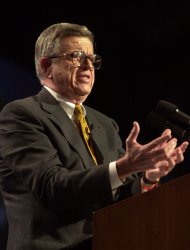
In case you've not heard, Charles Colson (Wiki bio), one of the last remaining major players in the Watergate scandal, is dead at age 80.

The grannies part of the header, for those unfamiliar with Watergate days, refers to Colson's work for Richard Nixon on behalf of the Committee to Re-Elect the President (yes, actual acronym of CREEP) when he said he'd walk over his own grandmother to get Tricky Dick re-elected.

The prisoners comment is a riff on his Prison Fellowship, which, the story says, Colson created "to minister to prisoners, ex-prisoners and their families. It runs work-release programs, marriage seminars and classes to help prisoners after they get out." It was his new lease on life, riffing on his pre-conviction conversion for a new career.

And, let's start there with a reality dose on Colson's alleged post-Watergate saintliness.

Per the Yahoo story up top, Pentagon Papers leaker Daniel Ellsberg said that Colson never really apologized for threatening to rough him up, just for his role in the burglary of Ellsberg's office. And, that wasn't the only roughing up Colson allegedly threatened to do, or had done, in service of CREEP.

But, he's got more to answer to as long-term head of Prison Fellowship.

First, here in Texas, he served as a "front" for then-Gov. George W. Bush to make overstated, even directly untruthful claims about the power of faith-based groups, not only in prison rehabilitation, but outside the walls. (Unfortunately, our current president, Dear Leader, Barack Obama, has actually expanded Bush's faith-based ministries presidential program. I'm surprised tea partiers haven't said that's part of his secret Muslim plan of U.S. control.)

Second, he got plugged in to The Family, the semi-secret inside-DC Christian prayer/activist group.

Third, he supported, in a letter he and other evangelical leaders sent to Bush, a just-war rationale for invading Iraq.

But, let's get back to those prisoners. First, on the faith-based programs issue, besides not always looking at their success rate, Colson ignored issues of constitutionality, even though one federal court had already, by the time he fronted for Bush, ruled that forced attendance at Alcoholics Anonymous meetings was a First Amendment violation (thereby also, in essence, finding that AA was religious).

And, that's despite a 1987 quote, per his Time obit, that says differently:
Colson argues that each institution has a distinct, God-given role. Churches should emphasize spirituality and avoid the corrupting enticements of political power. Similarly, he opposes government- organized school prayers, insisting that “propagating moral vision” should be the job of the church, not the state.
Hmmm... seems to have ignored that, in reality.

But, let's not stop there.

If Colson REALLY cared about prisoners, then why did he never pair the power of his organization with Project Innocence? Riffing on that, why did he never try to persuade political and religious conservatives to face up to the issue of wrongful incarcerations?

For that matter, why didn't he address the socioeconomic reasons behind spiking incarceration rates? That would be the ever-rising incarceration rates that started rising a lot more rapidly about the time he got out of prison, as shown in the graphic, and about the time the income gap in America started widening again, in part due to the political conservativism he believed in. (And, no, it's not all due to population increases; by now, all baby boomers, AND, the kids of older baby boomers, have all "aged out"  of prime criminality ages.)

Why didn't he ever speak about the capitalistic, slavery-like part of the drive behind this, the push for ever more prison privatization, led by the privatizing companies like Wackenhut and Corrections Corporation of America? If he wanted to help those who were incarcerated live new lives after they got out, why didn't he address ongoing cuts in rehabilitation programs, especially at the private prisons? Ditto on his not addressing guard abuse, again, generally worse at private prisons.

And, that said, how much could a man who graduated an Ivy League school, who might be called an Eastern elitist by today's tea partiers (or by Spiro Agnew back then), who served seven months in a white-collar prison, really understand what he was dealing with?

For that matter, did Prison Fellowship cherry-pick the inmates with which it worked? I don't know, but it's possible; if anybody has any information about that, leave a comment.

No, Chuck Colson may have helped prisoners, but it was within a conservative agenda. The agenda was still running the show.

So, yes, before the hagiography machine runs too quickly, let's step back to reality.

September 30, 2009

China being removed from Nixon?

Or, at least, reshuffled. Controversy over statues of China's Communist leaders Mao Tse-tung and Chou En-lai inside the Nixon Library is all part of its transition from private control to coming under the operation of the National Archives, like other presidential libraries.

What the story says about its private owners "spinning" Tricky Dick's legacy is totally true. I was there less than a month after Mark Felt outed himself as Deep Throat, and the library had not a word about it.

August 28, 2009

While we remember Ted Kennedy – Watergate!

No, Richard Nixon didn’t commit vehicular manslaughter. But, besides spying on Ted Kennedy illegally, as well as millions of other Americans, he nearly started World War III while drunk, prevented only by the presence and intervention of Henry Kissinger.

In this case, Nixon even offered Secret Service protection after George Wallace was shot not just to protect him but to spy on him.

I don’t want to commemorate Teddy to the point of hagiography. But, I don’t want to see him torn down purely for the sake of being torn down for political reasons.
-END-

July 16, 2009

Neil Armstrong on Apollo 11 anniversary

The always-reticent first man on the moon has a few brief comments here on the 40th anniversary of Apollo 11; liftoff from Earth was 40 years ago today.

Although I don’t consider myself fully a part of the baby boom, this was the first of three big, big events in early childhood that are still remembered today.

This was the first, when I was 5 years old.

Next, just after my ninth birthday, was the announcement of the Paris peace accords to “end,” or Vietnamize, the Vietnam War. (My oldest brother was a high school sophomore, so that’s part of why this was important.)

Then came Aug. 9, 1974 — President Nixon’s resignation.

Apollo 11 stood, theoretically, was a counterpoint to Vietnam, race riots and assassinations. But, it couldn’t hide that Nixon got us basically nothing better than we could have had four or five years earlier on Vietnam. Nor did his basking in the glow of Apollo success put his paranoiac mind at political rest.

And, as people like Buzz Aldrin push — very prematurely in terms of technology and safety issues — for a manned voyage to Mars, the triumph of Apollo 11 couldn’t erase questions of whether all that spending was worth it.

It wasn’t just a question about whether any technological advantage offset the costs.

It was whether, given Vietnam and other issues, whether alleged psychological advantage of victory over the USSR wasn’t a hollow shell, or the dregs of bitterness.