SocraticGadfly: greenhouse gases
Showing posts with label greenhouse gases. Show all posts

July 31, 2023

Peter Kalmus, the man speaking to the Greens, and what he really should be talking about

First of all, I have to "love" how the Green Party says its annual convention is going to be virtual this year because the world is still recovering from COVID. Worldometers says that's a lie, whether for the world as a whole or the US. And, if you really believe that shit, have fun as People's CDC and fellow travelers squaring off with the general antivaxxer types in the party, or the "libertarian Green" oxymorons.

Update, Aug. 7: There was a minor surge, end of July and start of August, yes, but the US never (AFAIK, having just gotten back from vacation, broke 100 deaths a day, and certainly not for more than 2 days straight. That is STILL *just* 36,500 a year, no worse than an average "just the flu" six-month season less than a full year.

Admit it's for budget reasons.

Or better, as Greens, say it's for climate reasons, to reduce fossil fuel emissions from jets and cars to travel. But, make sure to push Zoom attendees to be buying renewable electricity. (And, try to figure out why you didn't try Zoom or something similar, in at least odd-numbered years, pre-COVID, on that account.)

Peter Kalmus? Intense on the subject, per Pro Publica. Contra his hope not to be one, he's a doomer. And, why was he raising backyard chickens? Buy free-range commercial chickens, or semi-commercial larger lot backyarders from somebody else. And, eat less of them. He should know the carbon math about meat, even poultry.

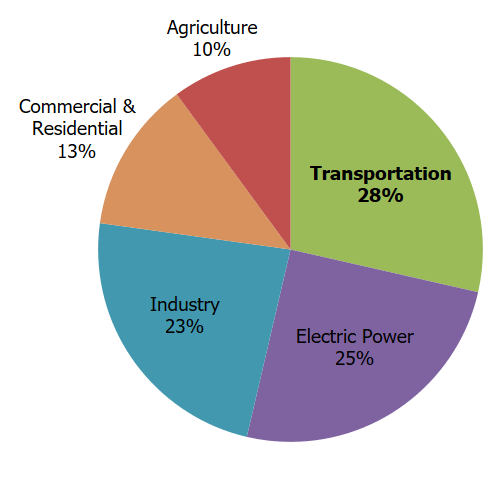
Speaking of, per EPA, 7 percent of the 28 percent of the transportation sector's GHG emissions come from commercial aircraft. Kalmus could trim various portions of the pie chart, or get others to do so by, in the transportation sector, pushing for:

  • Tighter fuel standards for SUVs;
  • For both cars and trucks/SUVs, getting rid of the flex fuel loophole;
  • Getting rid of E15 gas;
  • Improving mass transit by not only getting funds for hybrid drive buses, but putting MORE but SMALLER buses on the street to run more frequent routes, thereby making mass transit more attractive.

Focus on that, and you'd probably get rid of half as much GHG as from getting rid of air travel entirely. Blindly attacking air travel, as Kalmus also does, along with the author, in a Counterpunch piece (commercial, not executive business and other private jets) has long struck me as a form of virtue signaling, mixed with medieval monastic hair shirts or flagellations.

Also, contra David Yearsley at that link? Johann Jakob Froberger and others 200 years ago left carbon footprints as part of their actual footprints. Horses don't fart or belch as much as cows, but they do. And, 200 years ago, not all their manure was recycled in gardens and fields; there's plenty a story about a late 19th century New York or London's problems with horse shit.

Back to the second main idea, though, on other ways to cut GHGs as good or better than addressing air travel.

On power? New federal legislation that says Fannie / Freddie will not buy up mortgages in states that don't promote rooftop solar on new homes. Game-changer right there.

For US aid for the developing world, with new advances in DC power allowing for longer distribution? Helping places like sub-Saharan African countries build more local DC power plants to distribute wind and solar. HUGE. (Update: Per this Wired piece, Just Energy Transition Partnerships are helping in some degree, but there's little in the way of hard numbers, especially on how much fiscal help is behind these things, and how much of that is loans vs grants and similar.)

Update, Aug. 19: Last night on Twitter, per "gay barista Paul" and others responding, Kalmus said he was "surprised" Biden hadn't declared a climate emergency. Unless that tweet was 110 percent rhetorical, it says a lot more about Kalmus than about Climatemonger Joe.

February 16, 2023

Wayne Christian: Against flaring except when he's for it

Earlier this year, and in cases like Winter Storm Uri, Wayne-o (not so much a?) Christian, chairman of the Tex-ass Awl Bidness, I mean the Texas Railroad Commission, has repeatedly said his agency is "on top of" oil well flaring, or words to that effect.

But, when the feds ask him to actually be on top of it? Different story, per an RRC presser:

The Railroad Commission of Texas joined the Texas Commission on Environmental Quality in filing comments this week on the Environment Protection Agency’s (EPA) proposed supplemental rule to regulate methane and greenhouse gas emissions in the oil and gas industry.
In the comments, the state expresses concerns that the proposed rule exceeds EPA’s statutory authority under the Clean Air Act and will significantly limit domestic energy supply. At a time of energy fluctuations due to international conflict, the United States cannot afford to clamp down on its most important oil and gas producing state.

There you go, folks.

The rulemaking covers pipeline leaks and other things on the gas side, too. All of which Wayne-o et al also claim to be on top of.

Except when they're asked to be really on top of it.

July 19, 2022

Notes on the ongoing Tex-ass heat and drought

Several items on the heat wave.

First, it's going to be here another full month, in all likelihood, as is the drought. So, ERCOT may still suck, but you need to still conserve.

Matter of fact, per a great new book, if you actually are a Texas environmentalist, if you're going to talk the talk, you SHOULD be conserving rather than adding to climate change by using more AC. If not, you're a neoliberal capitalist hypocrite. So, how low is the AC set at state headquarters of national Gang Green environmental groups like Sierra Club? Is it 72F? Or 74? Or 76? How well insulated is the office?

Third, even though Tex-ass and its Lege haven't passed a "feed-in tariff" law for rooftop solar (where your local power company pays you for excess juice; most actual Western states have one), solar in the state has doubled in just a year and is helping out. (long read) Sadly, per that long read? ERCOT's gone Wayne Christian and blamed wind power, even though its production was within norms for this time of year.

Fourth? If you're a Californicator who's a recent move here? Deal with it and don't add to the problem.

Fifth? For now at least, thank doorknob, the crypto bros are heeding ERCOT's conservation calls

Sixth? If you're a homeowner and watching your power bills soar? Blame Rethuglicans in the Texas Legislature. A few years ago, along with banning local governments' ability to battle plastic bags and other environmental issues, the Lege barred local governments from setting building standards. In other words, your town or county if you bought a McMansion in an unincorporated area, CANNOT require D.R. Horton et al to have minimum insulation, double-paned or triple-paned windows or anything else.

July 05, 2022

Was the Supreme Court's West Virginia vs EPA a disaster?

Many environmental organizations engaged in wailing and gnashing of teeth last week Thursday, followed by fundraising appeals, of course.

Since Grist isn't the likes of Sierra Club, it didn't do the fundraising appeals, and it didn't do nearly as much, at least, on wailing and gnashing, lamenting the decision but saying it's not the end of the world.

First, Shannon Osaka notes that it doesn't take away EPA's ability to regulate greenhouse gases. Related, she notes it was narrowly framed. And others agree:

“In some ways I’m actually relieved,” said Cara Horowitz, a professor of environmental law at the University of California, Los Angeles, in a statement circulated after the ruling. “With this court we were bracing for almost anything, so this could have been worse.”

That's that.

She goes on to note that what was at dispute was one small section of the Clean Air Act, based on President Barack Obama's Clean Power Program to force electric utilities to move from one generation source to another. The EPA said that Section 111d of the Clean Air Act allowed the agency to mandate "the best system of emissions reduction." The 6-3 majority at the Supreme Court (and shouldn't we just memorize that "6-3"?) disagreed.

Grist, linking to Vox, notes that the six, under guidance of one-eyed umpire John Roberts, invoked a "major questions" dogma issue, with the six saying Congress didn't specifically address this, therefore the EPA couldn't act. It didn't gut Section 111 for now. (Hold on to that.)

There's several backstories.

One is that, per Vox, "market forces" (why neoliberal climate change ideas are weak tea) has already met Obama's Clean Power Plan goals. Therefore, when an appeals court overrode a Trump Administration weakening of CPP with the Affordable Clean Energy idea, the Biden EPA, probably afraid of a ruling like this, claimed there was no need for SCOTUS to hear West Virginia. And, per Vox, now that West Viriginia as a state, did not face a demonstrable actual "injury," there was the question of whether it even had standing.

Second is that, while this may not be a whale now, the Roberts Supreme Court has a history of making "camel's nose" rulings that just open the tent flap door a little bit, to mix metaphors, then shove the rest of the body in a few years later. So, down the road? Could be a problem.

Third? Gets back to the narrowness of the actual ruling. To quote Osaka's story:

(T)he court did not overturn Section 111, meaning that the EPA will still be able to require existing power plants to use the best available technologies to cut emissions — perhaps even through carbon capture and storage. The EPA can also still regulate carbon dioxide emissions from cars and trucks, as well as methane emissions from oil and gas infrastructure.

But?

But, Biden's not going to toughen EPA fuel standards more than Dear Leader did. Nor is he going to remove the Ford Edge-sized loophole for "flex fuel" vehicles. So, #BlueAnon / #TeamBlue wailing over this is handwaving.

That said? As Grist notes elsewhere, "the market" is also speaking on energy jobs.

==


April 22, 2015

#EarthDay at 45

Earth Day Flag by John McConnell / Wikipedia
It's hard to believe, indeed, that Earth Day is 45 years old.

And, the limited knowledge we had then about just what all needed protecting. The Cuyahoga River catching fire seemed like big stuff. It was big enough, but it wasn't that big.

We didn't know about the ozone holes at both poles, threatening to let more and more of Earth be hit with ever-higher amounts of cancer-causing ultraviolet radiation.

Nor did we know that one of the replacements for the chlorofluorocarbons causing the ozone hole, hydrofluorcarbons, would turn out to be global warming gases — and potent ones. And, we're just now learning that carbon dioxide driving global warming may intensify ozone depletion.

Of course, we didn't know about anything about the reality of global warming in 1970. We didn't realize that, short of carbon scrubbing equipment that isn't likely realistic for decades, if at all, we need to stop using fossil fuels as much as possible and as quickly as possible. (And, even the alarmists are probably overselling what that will do; a 2C temperature hike is almost certainly already cooked into our climate.)

We know that, now. We also know that renewable energy is become more and more cost-competitive all the time. But, we still don't know if it's as readily storable as we might wish, and just what the carbon impact of massive storage systems might be themselves.

In short, we've learned a lot about just how little we know about Planet Earth. Not just in what most people think about environmentalism, but basic ecology issues, like the discovery of a new species of grass frog.

And, per the Wikipedia link, we know that "green" is a powerful word, especially when corporations combine "green" with "green." We're learning that, while it's not bad for corporations to have a true environmental consciousness, that many corporations will greenwash themselves all they can. (See friend Perry for a roundup of Earth Day op-ed cartoons on this and other subjects.)

So, look at a nonprofit site like EarthDay.org to commemorate Earth Day correctly and non-capitalistically. Note that, despite Gaylord Nelson latching on to it, and pushing it, the first Earth Day had no politicians connected to it, either. Click the link in the Earth Day Flag caption for John McConnell for more information on that front.

NOT NEEDED

As noted above, we don't need politicians claiming undue credit for the environmental movement. But, we can salute them, even if, like Richard Nixon, the Clean Air and Clean Water acts were not only his personal conviction, but were part of trying to "steal" white suburbanites from the Democrats.

Nor do we need badly written blog posts trying to "privilege" something like "Presbyterian environmentalism."

Mark Stoll's claim that because John Muir and Ed Abbey were raised Presbyterian, thus that influenced them as adults, is bad enough. As an adult, Abbey was a secularist of some sort and Muir would best be labeled as a Spinozan pantheist, I think. (Even Stoll, while writing precisely, notes that the adult Muir was NOT anywhere near a conventional Presbyterian.) Transcendentalists like Emerson and Thoreau were in the same general ballpark as Muir, of course. Some of other things are worse. And, not knowing, or else ignoring, that Abbey rejected the word "environmentalist" to describe himself? Sounds like an author working with a shoehorn.

Based on all this, if/when I see the author's book, if I read it, it will be with a very critical eye. Did "people of faith" have an influence on environmentalism because of their faith? Yes. But, I just listed four people above who weren't conventional Christians. I'll give you a fifth: Stewart Udall, Interior Secretary for Kennedy and Johnson.

And, I'll give you a sixth. William Howard Taft, whom myth still presents as somehow anti-environmentalist as compared to Teddy Roosevelt, was no such thing. And religiously? He was our nation's sole, to date, Unitarian president — again, not a conventional Christian.

So, while Mark Stoll is right about "people of faith" and environmentalism (and I have no problems recognizing that), his idea of specific denominational influences seems forced and overblown.

Nor do we need the likes of John Horgan continuing his bromance with the neoliberal, tech-driven Environmentalism 2.0 of Michael Shellenberger, Ted Nordhaus and the rest of Breakthrough Institute.

We've seen what Net 2.0 is already doing to the political world — dragging neoliberals into ever-more libertarian-leaning technology-based ideas to attempt to solve poverty, unemployment, etc. It's a variation on what Evgeny Morozov calls "solutionism," and we don't need to get environmentalism running down that road.

There, I'll end an Earth Day blog post with noting the interesting twist of having Evgeny Morozov mentioned in it.

November 15, 2014

Your post- #election2014 week in #environmentalism, #fracking, #Keystone

A roundup of several posts of mine on trending environmental topics.

First, the city of Denton, Texas, north of Dallas, did pass a fracking ban. And faces multiple lawsuits. I look at that, and my estimate of Denton's chance of prevailing. I actually think it's not bad.

Second, the Keystone XL oil sands pipeline from Canada, which President Barack Obama has kicked down the road for months now, can't be kicked down the road any longer with a GOP Senate. I take a look at his options and his likely course of action, and whether it's necessarily the end of the environmentalism world.

Third, many environmentalists, greeting a China-US greenhouse gas emissions accord with huzzahs and handsprings, probably think this indicates Obama will take a hard line on Keystone. Given that my skeptical eye calls the climate deal "toothless," with analysis of why I think that's the case that neither the mainstream media nor Obamiac environmentalist swooners provide, I think it's news for Keystone, but not necessarily as good as others think.

That said, unlike Alberta's tar sands, "tight" oil from shale formations, produced by fracking, seems to have a short, bubbly lifespan. I look at the latest news on that, and budgetary and other implications for the state of Texas.

January 22, 2014

Chinese and US oil thirst, economics, and global warming

Trust me, these threads all tie together.

How?

Yesterday, the International Energy Agency reported that American oil demand grew at a higher rate in 2013 than Chinese oil demand.

It seems to be in part an American economic speed-up, primarily in the production of petrochemicals. It was the first time since 1999 that a US rate increase outstripped China. And, China's growth rate was the weakest in six years.

So, is the Chinese bubble starting to deflate? What's up there? Economists have speculated about that possibility for a full year or more, but, interestingly, I didn't see it mentioned in any news reports about the IEA story.

And, apparently some sort of slowdown is happening. A Chinese factory index has contracted for the first time in six months (which means there was a contraction in the middle of last year).

The US? This is due to increased production, not more car driving. The production is primarily in refined gasoline and diesel, more and more of it being exported, followed by petrochemicals.

It will be interesting to see how "energy security" hawks fight it out with oil producers wanting to now have the green light to export unrefined crude, even though the IEA says any surge in US production will be short lived.

Probably because, especially with naturla gas, and somewhat with oil, fracking tends to increase rate of production even more than it tends to increase overall production.

So, the world's new love affair with fracking, based on gas production increases and jobs alike, as detailed here, could have long-term climate implications.

On the natural gas side, it's guaranteed to further crowd out renewable energy as well as coal. (Even in the US, a fair chunk of the increase in renewable energy has been from hydroelectric, not solar or wind.)

And, thus, at the point when natural gas prices go back up, unless fracking delivers major, major amounts of gas, coal will become tempting again, and renewables won't have had that much more development. In short, fracking might deliver little more than 20 years of running in place on greenhouse gases.

Plus, even in the US, it's not clear if casing on wells is sealed tight enough, if valves and pipelines are built well enough, to keep gas leakage below a rate where natural gas for electricity actually becomes worse than coal-fired power plants. Since China's already demonstrated its capacity for shoddy energy, it's growing interest in fracking to replace coal should thus be little reason for huzzahs and handsprings.

That's not even to mention a fracking-based gas boom fueling a new explosion of demand for cheap plastic products.


October 18, 2013

Abbott sued Obama, went home, and lost 2 out of 3

Texas Attorney General Greg Abbott, who has said he perceives his job as attorney general thusly:
During his tenure as Texas attorney general, Greg Abbott has developed a bit of a routine: "I go into the office," he told a GOP audience in San Angelo in Februrary, "I sue Barack Obama, and then I go home." It's a line he uses in virtually every speech he gives and it has the benefit of being basically true.
Doesn't like to talk about all the times he LOSES those suits.

Why? Because it happens a lot.

As in, it's happened again.

The Supreme Court has rejected hearing two of three lawsuits Texas, and other states, had filed against the Environmental Protection Agency over greenhouse gas emissions regulation:
The U.S. Supreme Court has agreed to hear Texas' challenge of federal regulations on greenhouse gas emissions from stationary sources like power plants and factories, the court announced Tuesday. But it declined to hear the state's appeals of two other decisions, effectively upholding rules that limit such emissions from vehicles and maintaining the Environmental Protection Agency's assertion that greenhouse gases endanger public health and welfare.
Team Abbott and polluting deep pockets are trying to spin this as a "win." Even though it's clearly not:

David Spence, a professor of law and business at the University of Texas at Austin, said it wasn't likely that the Supreme Court would forbid the EPA from regulating greenhouse gas emissions from stationary sources altogether. But the justices could say it must do so based on different standards, threatening the years of work that have gone into proposing the current rules for limiting emissions from power plants and other facilities.
"The worst that could happen is they make EPA go back and do things again," Spence said.

That said, this isn't new from our state's money-waster in chief (and Ted Cruz spawner).

Abbott lost some of this at appellete level back in July. This is his suit over the EPA taking over TCEQ's pollution permitting because the state simply refused to do any real regulating. This was lost at the D.C. Court of Appeals, and there's no chance SCOTUS will even want to hear it, let alone reverse. And yet, Texas' Head.Legal.Moron is talking about appealing.

Here's comment showing that Abbott isn't alone, or even close to it, in today's Texas GOP.:
Bryan Shaw, chairman of the Texas Commission on Environmental Quality, who has fiercely opposed the EPA’s rules, said it was ”remarkable” that the courts have repeatedly denied the state’s appeals. 

In response to the latest Circuit Court decision, Shaw issued a statement that claimed that ”the EPA has effectively re-written the Clean Air Act to impose its new standards, imposed severely restrictive timelines on the states to implement its new requirements, and then twisted the act to immediately impose its agenda on Texas.” 
No, what's "remarkable" is that you're dumb enough to believe this was winnable. And, the only re-writing has been done by your agency. What's more remarkable is that you and Suer-in-Chief aren't just dumb, you're childishly stubborn enough to hold y our breath and refuse to get this.

Once the appellate court slapped you down, you refused to take "no" for an answer. This is the same attitude that Cruz took to Washington.

And, this is an opening for Wendy Davis. Lets her come off as a fiscal conservative, someone who won't waste state money.

So, when will she start talking about it? I mean, we have to be talking about several million dollars.

Update, June 24, 2014: He's now lost to the EPA on greenhouse gas regulations, too.

August 02, 2013

Skeptical about GMOs, yet accepting of climate change?

A new column in The Guardian, by Alice Bell, asks if that's possible. I say yes, even as another blog of many, from a GMO defender who says all Green types are anti-science on this issue, gets out the bashing club.

I "love" how everybody who has concerns about the politics and economics of GMOs in some way can be called anti-GMO. I also love that, just because some scientific studies that did have axes to grind have been refuted, it's assumed that there's no more legitimate scientific questions to be asked.

In other words, not every scientific question everybody asks about GMOs is an anti-GMO question. And, people like me also don’t like getting stereotyped over this issue. Call me an anti-GMOer-as-currently-marketed, if you insist on a label.

Some of us do, also, have legitimate science-related questions without believing in "Frankenfoods." I think questions about "degree of separation" of the source of the gene and the target food is a legitimate matter. I think the question of whether food allergies can "transfer" is legitimate, as some research indicates this is possible. And, given that "one gene = one protein" is dead, questions about "gene context" and also about epigenetics are legitimate. These may turn out to not be of huge concern, but some of them may still be of mild, or moderate, concern.

And, let's not trot out the claim the other way around that "we've been manipulating plants for millennia." Because, before GMOs, those manipulations were only within that genus, or often, within a species. But, such changes weren't done at higher biological levels than that of genus.


This all said, I know that nothing I say toutting a reasonable and principled skepticism on this issue can convince some pro-GMOers who want to pose as noble defenders of science and think the case is settled. Well, from what we know and have tested, the case is settled.

But, that cuts both ways.

As I've said before, Monsanto was warned by scientists that RoundupReady genetic engineering would promote Roundup resistance among weeds. And, what happened? It did!

So, Monsanto is doing new genetic engineering for resistance to other herbicides. And here's where the politics and economics come into the picture. New GMOs means new patents, even as the patent expiration clock ticks on old ones.

And, please, folks, don't accuse me of being conspiracy minded.

DuPont willingly got behind the Montreal Protocol to phase out CFCs in part because it had patents expiring and stood to make big bucks on new compounds. And, sadly, we find that some of those compounds are worrisome greenhouse gases.

January 07, 2013

Natural gas — the bridge fuel to more global warming?

A good new article from High Country News notes two basic facts:

1. To truly be a "bridge fuel" that is less creative of climate change than coal as an electric power plant fuel, total leakage from natural gas production must be under 3 percent or so, due to methane's own greenhouse gas effect.

2. In Utah's natural gas fields, currently under intense development, that leakage is reportedly as high as 9 percent.

Go read the full story for more about leakage rates, measurement issues and more. That includes a link to a study that says the leakage is worse from fracked gas wells. Here's the level of the problem:
Compared to coal, the footprint of shale gas is at least 20% greater and perhaps more than twice as great on the 20-year horizon and is comparable when compared over 100 years.
Not close to a "bridge fuel" in that case.

March 05, 2010

Arctic methane could start venting

With potentially serious global warming consequences. Science magazine is rightly worried:
A section of the Arctic Ocean seafloor that holds vast stores of frozen methane is showing signs of instability and widespread venting of the powerful greenhouse gas, according to the findings of an international research team led by University of Alaska Fairbanks scientists Natalia Shakhova and Igor Semiletov.

The research results, published in the March 5 edition of the journal Science, show that the permafrost under the East Siberian Arctic Shelf, long thought to be an impermeable barrier sealing in methane, is perforated and is leaking large amounts of methane into the atmosphere. Release of even a fraction of the methane stored in the shelf could trigger abrupt climate warming.

Let's see how the denialists spin this one.

June 20, 2009

Cow belches get climate bill ‘pass’

Rural Democrats have blocked the regulation of cow belches of methane, which may contribute as much as one-quarter of U.S.-produced greenhouse gases, from the Waxman-Markey climate bill.

OK, that does it.

Throw this piece of crap in the Dumpster rather than pass it, followed by shoving it down our throats as something revolutionary. If rural forestry wants to be credited for a carbon sink, then ranchers definitely have to pay up.

Don’t like it? Raise cows with less grain and more grass to reduce their methane belches. Or switch to hogs or chicken, both of which require less feed per pound of added weight and so are at least somewhat more environmentally friendly. And, stop signing on the dotted line of Big Ag, who is really behind this.