SocraticGadfly: Big Ag
Showing posts with label Big Ag. Show all posts

October 31, 2025

There are no magic silver bullets on agriculture and climate change

Unfortunately, of two recent reads, one gets that right, but then gets one issue wrong and others partially wrong, while the other, allegedly informed by the "protagonist" in the first book, isn't informed enough.

I'm going to mash together versions of both Goodreads reviews with additional comment, the second being shortened.
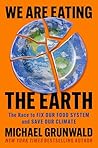
We Are Eating the Earth: The Race to Fix Our Food System and Save Our Climate

We Are Eating the Earth: The Race to Fix Our Food System and Save Our Climate by Michael Grunwald
My rating: 4 of 5 stars

Low-till and no-till will save us, right? Wrong.

A raft of new plants, like Kernza, a perennial-plant riff on wheat, will save us, right? Mostly wrong.

Veggie burgers will save us, right? Wrong as currently entailed, though with some missing information.

Lab meat will save us, right? Wrong totally, but also with some missing information.

GMOs could save us, right? He doesn’t get explicit, but seems to have “yes with caveats” as his answer. I offer a bigger yes with more caveats.

And, he has one good point at the end — we should bring back individual shaming, as well as stop looking for magical silver bullets. You bought the SUV. YOU bought the 1/3 pound hamburger.

Grunwald uses Timothy Searchinger as, well, the nonfiction equivalent of a protagonist for much of this book, though he also has other skeptics of the silver bullets above as well. (This is the muse cited by "Sea of Grass," below, for helping straighten them out on biofuels, though apparently they didn't read closely enough.) Overall, the book is somewhere between good and very good. I hit on 3.75 stars rounded up, because most of the 3-starrers wrongly in my opinion thought it too long, and it needed to be this detailed.

He does a generally good job, but not perfect, especially later in the book.

No spoiler alerts on what he gets right, above. So, we'll tackle what's less than fully correct.

Grunwald ignores that Impossible Burger actually has as much saturated fat, and more sodium, than conventional food. Fake cheese, at least mainline commercial varieties, do have less saturated fat than the real deal, but do have more sodium, as I have discussed in some depth. It's also pretty highly processed.

Also, Grunwald got "golden rice" wrong. Wrong. Its problem was not the "mean greenies" opposing it as much as, even after it cleared that hurdle, for basically another decade, it had lower yields than conventional rice.

Heralded on the cover of Time magazine in 2000 as a genetically modified (GMO) crop with the potential to save millions of lives in the Third World, Golden Rice is still years away from field introduction and even then, may fall short of lofty health benefits still cited regularly by GMO advocates, suggests a new study from Washington University in St. Louis.  
Golden Rice is still not ready for the market, but we find little support for the common claim that environmental activists are responsible for stalling its introduction. GMO opponents have not been the problem,” said lead author Glenn Stone, professor of anthropology and environmental studies in Arts & Sciences.
I told you more than a decade, did I not? Stone goes on to explicitly refute the idea that "mean greenies" inhibited golden rice's adoption. And, he has supported GMO crops in general.

On this issue, Grunwald comes close to believing, by non-condemnation, in GMOs as a silver bullet. 

On lab meat? He doesn’t delve enough into the energy inputs it will need to scale up, let alone the need for computer chipmaking type clean room sterility. Grunwald should have, if he didn’t want to voice it himself, gotten a true skeptic for more comment on this. Indeed, he should have looked at the energy inputs for scaling up Impossible Burger type foods.

The book is otherwise pretty good and almost very good until around 250. Frank Mitloehner claims there’s no more “stooping labor” with today’s Big Ag animal farms. Really? There is. It’s called “illegal immigrants.” (I don’t know if the new round of people from the Levant and Africa get pushed into the same in Europe or not.) But, no, there's still plenty of “stoop labor” in US agriculture. And, while that's not the focus of the book, we need to do more than one-shot ethics in the world of modern ag.

As for Ethiopians with stunted growth because of lack of animal protein? It may in part being stunted due to lack of protein period during Ethiopia’s famines.

The highly touted ranch in Brazil's Cerrado? Grunwald rightly notes that Brazil's tropical latitude means this can't be done well in the US. That said, he also has it looking as good as it does in part by comparing it to rundown neighboring ranches. I'm sure a 1920s or 1930s US ranch would come off just about as badly.

Animal cruelty? Grunwald mentions modern poultry occasionally breaking legs. Doesn’t mention cows with what are likely painful udders. Or young bullocks-to-be castrated into steers. He does mention California’s “free roaming” pigs laws and says Searchinger is OK with them, if they don’t cut hog production too much. Well, that’s nice. Or "nice." Am I somewhat of a hypocrite? Yes, I still eat real cheese. That said, it's all minimum of Cabot or Tillamook. Hopefully they don't use quite as bloated of cows along with not using bovine growth hormones in specific.

Grunwald touches a bit on the water issue, but not as much as he could. The Ogallala Aquifer that waters all the High Plains farms that provide feed for all the High Plains feedlots, or the Big Ag High Plains beef rancher that has his own feedlot? Never mentioned, and when I checked the index when I was up to about page 280, and noticed that, that became the tipping point to drop from 5 stars to 4. This book could have used a good dosage of “Cadillac Desert.” Yes, GMOs let alone CRISPR may increase dryland yields even more (see "Sea of Grass") but they'll still be less than Ogallala-watered corn, milo and beans. So, the issue of water is indeed indirectly, even semi-directly, related to the issue of climate change and agriculture.

Finally, I can’t totally buy a key sub-thesis. I think not only is transitioning beef eating to chicken good, but lessening beef eating beyond that, and chicken eating as well is even better. It's another way of reducing Big Ag, animal division's stress on the land. (Grunwald didn’t mention recent outbreaks of avian flu, as a reason to cut chicken raising and worry about chicken, and egg, costs.) He also comes off as too sanguine about how much, and how cleanly, factory fish farming can scale up. I’m not saying we need to have the entire world go vegetarian, let alone vegan. But, the whole Western world could eat less of all meats, and all dairy products. If you do that, people might have less of a hankering for meat substitutes, which have the health issues noted above, and even with veggie burgers, not to mention lab meat, the energy input issues and more. 

I confess to being somewhat of a hypocrite on these issues. But, I have eaten vegetarian for stretches of three months or more at a time. And vegetarian, not just beef-omitting like Grunwald. Per the individual shaming that he mentions, we can all do better.

That said, vegetarianism will leave you B12 deficient without eating fortified foods and veganism even more so. Plants do not have B12, and mushrooms and other fungi have very little. See here. Now, yes, this is the naturalistic fallacy, but our ancestors, since or before the last common ancestor with bonobos and chimpanzees, ate insect and grub meat, at a minimum, in all likelihood. Besides, it's fun to hoist people like this with the naturalism petard.

But, we can all do better. If, on average, Americans ate no more than 1.5 ounces of ALL types of meat per day, the planet would be much better off.

View all my reviews


Sea of Grass: The Conquest, Ruin, and Redemption of Nature on the American PrairieSea of Grass: The Conquest, Ruin, and Redemption of Nature on the American Prairie by Dave Hage
My rating: 3 of 5 stars

This book is somewhere between 2.75 to 4.25 stars, depending on how much knowledge one brings to the issue already, per a guide I use more and more in my own reading of nonfiction books.

For me, there were two main things I learned.

One was the use of tile drains in the boggy Midwest. Via Marc Reisner's "Cadillac Desert," I have long been familiar with them in irrigated areas of the desert Southwest, to reduce salinity in the soil water level beneath roots and carry off the salts in the West's alkaline water. The broad principles are the same.

The second was the development of new corn and soybean seed types for the northern high plains. This is problematic, per Grunwald above noting land is not free. The reason this is being done is for more corn and beans for biofuels, a climate-wrecker.

That said, the authors appear to pull some punches, and to miss some things.

One pulled punch? Bison in Yellowstone National Park almost certainly do NOT transmit brucellosis to cattle. That said, elk on the adjacent National Elk Range, fed hay in winter as if they were cattle, almost certainly DO, but ranchers and hunters in Montana and Wyoming don't like to talk about that.

Second and related, and also tied to a 2-star reviewer here? The degree of animus from ranchers toward bison, though mentioned, seemed downplayed.

Third, the degree to which it's not an either or of conventional big ag or people in West Virginia or New Delhi starving is underplayed.

Fourth, the degree to which Big Ag lobbyists control discussion on any possible changes to farm legislation, from expanding the conservation reserve program through expanding the types of crops eligible for insurance to sliding scales on insurance coverage. The authors here, especially, come off as "Minnesota nice."

There's lesser pulled punches here and there in the book.

One, partially but not totally beyond this book? Just how "hollowed out" much of the plains is, not only from larger farm and ranch size, but consolidation in the agribusiness world, especially in things like meatpacking.

So, if you don't know what a local soil conservation district is, you might learn a fair amount. If you do? Not so much.

Speaking of, the authors don't discuss the thousands of SCD check dams across the country, backing up large ponds or small lakes, many of them constructed during the Depression and at the end of their estimated or expected life spans.

I thought about giving this a starless review but ended at 3 stars.

View all my reviews

February 01, 2019

That's Impossible, White Castle:
Why cattle ranching is in big trouble
And in more trouble with an Impossible Whopper

Veggie beef plus lab meat combo could be a home run


Consolidation of beef slaughterhouses into four or five major players, led by Brazil's JBS — as a corruption investigation in Brazil continues — has put pressure on the beef industry, to be sure. But, lower per-head prices at feedlots (JBS also a major player, through subsidiaries) and packinghouses is probably not the biggest issue.

Not quite Camelot to eat Impossible Burger at White Castle.
Younger Americans' declining taste for beef is probably bigger. (And not necessarily just younger Americans.)

More and more Americans are going vegetarian or even full vegan for ethical reasons. Others are cutting back on meat in general and red meat in particular for other ethical reasons — like climate change, for me. Hormones, antibiotics, and the confined prisons of modern CAFO animals all add to the ethical issues.

Plus, beef generally runs ahead of pork on price at the checkout, even if that doesn't trickle down to ranchers. And either chicken or turkey will often undercut both.

But, the big tell?

White Castle selling veggie burgers.

But why?

First, that goes against the image of White Castle's gut-bomb sliders. Having lived for years near a metro St. Louis Castle, I can tell you my personal record is 19.

Second, the price. Dunno about you, but if I'm in a Castle, I'm looking for cheap shit, not $1.99. (To be fair, it is twice the "meat" of a slider, at twice the price. THAT then said, a regular gut bomb for 99 cents or more is also overpriced when I can hit the dollar menu at McDonald's, Burger King, etc. and get nominally better stuff.)

Anyway, it's being done. Impossible has upgraded to Burger 2.0. Read more about the partnership here.

(Update, April 8: 2019 — The Impossible Slider is now being joined by the Impossible Whopper.)

And, that's the big point, and we haven't even gotten to the possibility that test-tube meat will be publicly sold in just a year or two. (Latest predictions by folks like Mosa and Memphis Meats say they'll be ready by 2021 on price and scalability of production.) A majority of Americans still say they won't eat it, but that majority has dropped from 80 percent to 66 percent over the past five years. Add in the worries about climate change, and non-vegetarians wanting to be ethical, and the worries about E coli, etc.? If the price and scalability are there, it will happen — even if texture issues make burgers and sausages, not steaks and chops, the primary focus.

That said, the question of whether or not large-scale clean meat production actually will be more climate friendly than steak or chops on the hoof is still more of an open question than many realize. One study says it could be worse.

But, think if you could mix lab meat and your veggie burger 50-50 for burgers and sausage (or even as high at 70-30 in favor of the veggie product) with good taste and texture, and with the veggie portion, definitely be more climate friendly. You might just have a winner. There already may be a winner; mushroom is already being used as a structure for bacon flavor; just add real test-tube bacon instead.

The lab shit hitting the fan is especially true with beef; per this piece, that higher cost I mentioned, plus the ethics that on cow farts and ag intensity, beef is at least 50 percent worse than pork and at least twice as bad, or more, than poultry, means it's in the crosshairs first. The beef industry, despite the growth of JBS, is also less vertically integrated than pork and far less than poultry, as Drovers Magazine notes, which is surely part of why Tyson and Cargill are among lab meat investors. The bullets are more likely to be fired in Europe first, though. Memphis Meats is behind Mosa on production. Just, an up-and-comer, is surely also behind. And, USDA, with a lack of regulations on the book (plus issues of whether it or FDA takes the lead) is also a potential hindrance. The EU already has initial rules on the books.

So, per a story I saw in an ag magazine last year about a North Dakota farmer saying he loves his ranch but hates delivering calves in a North Dakota January? Or, ranchers having to face vultures killing live calves? Or, for High Plains ranchers, the price of feedlot corn getting iffy due to the Ogallala Aquifer getting more depleted, with dryland sorghum — sugarcane aphids and all — being considered as an alternative?

I estimate you've got about six years left on that love-hate relationship with modern ranching.

(Update, Feb. 27: That prediction is underscored by Israel's high-tech sector also entering the lab meat world. People who know, know that Israel's got almost as robust a high-tech ag sector as the Netherlands. And, the Orthodox rabbinate has already said it doesn't need kosher slaughter and you can even eat a cheeseburger and not be treif, as long as the cheese's production itself crosses muster.)

And, not just you.

Drovers notes that speciality beef with a high price, like Kobe, will face a whole new world — perhaps for the better — if test-tube meat is a success. And, "inputs" will still be needed somewhere. Livestock feed dealers and the like may not be too affected.

Meanwhile, the battle is heating up; especially on lab meat, the nomenclature issue has strange bedfellows.

Folks like the National Cattleman's Beef Association wanting it called "artificial"? Well, so is your own ranching. Ain't nothing "natural" about inseminating a heifer with a glass rod.

November 23, 2018

Fighting back against Big Ag on
climate change and clean meat

The cattle-ranching segment of Big Ag is putting out more and more stories, including on places like The Conversation, about how they can actually be part of healthy ecosystems.

One statement is that, if cattle didn't graze grasslands unfit for farming, who or what would?

Bison and pronghorns, for starters off the top of my head. Bison, at least, are likely parts of healthier prairie ecosystems than cattle. Badgers, rabbits and hares, with a bit more thought.

Elk, which used to populate the Great Plains second only to bison. Mule deer.

Especially if all of them were parts of a grazing rotation, it would be much healthier for grasslands, especially mixed-height and shortgrass prairie, than would be cows. Plus, such animals aren't fattened on corn at the end of their lives, meaning more for people to eat.

Bison could be large-scale ranched, if we wanted to commercialize some of that. But, per Ted Turner's dream, much of the land could be made a buffalo commons.

Ditto in intermountain valleys and such. Let either desert or mountain bighorns do some repopulation.

For anything other than ranched bison, hunters who want new opportunities would now have them. (Ideally, they'd be competing with some reintroduced wolves.)

Beyond that, of course, the Big Ag flackers, whether at universities with major ag programs within the land-grant system, ranchers' groups, or elsewhere, don't note that only a small portion of the beef of today is grass-fed. Most of it starts its life on grass, of course, but then gets sent to a feedlot to eat corn, and maybe some soybeans. Not grass at all. (Note: Some commercial bison meat is also finished on corn; look for grass-fed labels on it, too, and avoid what isn't so labeled.)

November 09, 2017

What is it like to be a chicken ... owned by Tyson?

The header before the ellipsis points, for those not getting it, is riffing on Nagel's famous essay "What is it Like to Be a Bat?"

The riff, and even more the portion after the ellipsis, is based on living in an area of the United States where chicken farming is a major employer and even more, is chicken processing, namely, by Tyson.

Seeing a flatbed semi loaded with chicken coops, all carrying a fluffy white bird headed to his or her demise, and the highway-speed wind effects ruffling feathers (yes, literally) more than enough to expose naked chicken flesh prompted me to start writing.

First, re Nagel. Yes, bats fly by echolocation. But, it doesn't work over long areas, so, "blind as a (hypersonic) bat" is more true than not, perhaps. Per Dan Dennett, the idea that this makes their "whatness" harder to discuss or picture than other animals of similar intelligence probably isn't true. That's even if we accept at least a "soft" version of qualia. (And, it's also Dennett finding an acorn in the forest.)

That said, and Tyson ownership aside, it's surely likely that it's easier to picture what it's like to be a bat than to be a chicken. Wild chickens probably aren't as smart as bats, and domestic ones are dumb — though perhaps not as dumb as domestic turkeys.

Chickens are less social than bats, or humans, too. And ... animal rights issues aside for now, surely have a lesser emotional palette.

Plus, given that the expression of both intellect and emotions occurs in reaction to environmental stimuli, that domestic chicken living on a 40,000-bird Tyson farm, most all of his or her life spent in a cage about the size of a kitchen trash can.

That is, per existentialism, "existing" and not "living."

It's even worse.

Humans who have been close to chicken farms know what the ammonia-like smell of chickenshit is like. Most humans probably assume that birds in general, with beaks not noses, may not have much of a sense of smell.

Well, new research shows that's wrong for birds in general and chickens in particular.

I don't care how many vent fans there are in a modern breeding house (without which, in hot Southern summers, the birds would die in 15 minutes). That shit has to smell shitty to a chicken, I would think.

 It's like being incarcerated. No, scratch that.

It IS being incarcerated. And, while a chicken isn't a human, it's closer, evolutionarily and culturally both, to a human than it is to, stay, a sea star. So, to some degree, it might be easier for humans — at least those who have spent time in jail — to understand what it's like to be a Tyson chicken than a bat.

Don't tell me that a Tyson chicken doesn't have its fair share, or far more than its fair share, of anxiety and other mental health issues. Don't tell me that, at some base level of instinct, it's not yearning for freedom.

At the same time, don't overread and over-project. That chicken has never experienced freedom, and doesn't fully know what it's like. For that matter, neither does a free-range chicken know freedom. It's free — and still highly protected until slaughter — on a carefully selected range.

On the other hand, contra the Michael Pollans of the world, artisanal Smithfield hog hams and true (not fake PR) free-range chickens aren't the answer, unless we all (1 percent as well as 99 percent, Michael) simply eat a LOT less meat.

We need to do that anyway, for other reasons, of course.

And, if we want anything above just grams of meat per day, and we want to reduce agricultural stress on our planet, we need to start rooting for Dutch scientists to make test-tube meat a success — a commercial and ecological success — as soon as possible.

The answer until then is ameliorating animal conditions on factory farms, even more for hogs and cows, likely more intelligent than chickens.

September 07, 2015

Big #Organic vs. Big #GMO — facts vs myths and #antivaxxer and #SJW parallels

A story by Eric Lipton, about how Monsanto et al (mainly Monsanto) "buys off" academics in support of ... what he seems to imply is its "GMO agenda."

(Addendum and note: Meanwhile, I can only, by his willful silence, conclude that Lipton is an anti-GMOer. On Sunday, he retweeted multiple Tweets mentioning me, both before and after I had tweeted him asking for his stance on GMO safety. He had yet to respond. Between that, and the fact that he tagged along on email trolling/leaking by Gary Ruskin and US Right to Know, a group that promotes junk science on artificial sweeteners (the weasel word "may" covers a lot of things in "consumerism") and, on its website, seems to ignore how corporatized Big Organic is, and elsewhere, shows it will use the same tactics as climate change denialists did against Michael Mann et al, Lipton leaves himself open to other questions, which he is also refusing to answer. [This follows on NYT pieces by other reporters about Hillary Clinton and Amazon whose impartiality has also been questioned.] In light of this, I have contacted NYT Public Editor Margaret Sullivan; to the degree Lipton's piece started with email hacking and leaks by a junk science outfit, and one that may not critique the even worse lobbying of the organic industry, he leaves himself open to questioning.)

First, it's easy to demonize Monsanto, especially when you fail to report its market capitalization is smaller than that of Starbucks. About one-third smaller.

Second, given that his own newspaper reported three years ago about how the modern organic farming business is Big Business, largely owned by companies such as Kraft, General Foods, Coke and Pepsi, with market caps far bigger than Monsanto, the demonization doesn't ring true on the business side. Per the link just above, by market cap, Coke is more than 3x the size of Monsanto.

(That link also notes that, in general, without disaggregating GMO sales, Monsanto isn't even as much a behemoth within the seeds business as some would claim.)

Surely, as part of their lobbying, Coke, Pepsi, et al, probably "bought off" academics to get stuff like carrageenan and DHA added to the organic approved list, as Stephanie Strom reported in that 2012 piece. They've clearly, as part of this, as Strom notes, "bought off" the National Organic Standards Board. Lipton does briefly talk about big organic farming, but never raises the issue of possible parallels.

(I suppose US Right to Know thinks family farmers and families discussing how to discuss their farms' use of GMO crops means they're on the take too. See page 8 of this PDF.)

Lipton's failure to note either of these is why, despite some retweeters, it is NOT "excellent reporting." It's good, maybe very good, but no more.

More talking points below the fold.


February 13, 2014

Farming, farm bills, farm bureaus, climate change and Big Ag

I don't know if the Texas Farm Bureau here in the Pointy Abandoned Object state is being joined by its sister states in this one, but a Corpus Christi Caller-Times editorial cartoon, syndicated from a Pittsburgh Post-Gazette columnist, has the FB here up in arms:


My thought? If you don't like this, then don't endorse the likes of Eric Opiela for ag commissioner, when he calls it "welfare" on the food stamp side but doesn't talk about corporate welfare.

Or, put a membership cutoff in place. Farms and ranches above X thousand dollars of net profit don't qualify. Newspaper orgs in most states differentiate between the larger seven-day dailies and smaller ones, for example.

The fact of the matter is that crop insurance is tilted toward a few crops and isn't much different than direct payments. And, the new farm bill is no better than the old one on getting farmers to do more on how they farm and what they farm, and ranch, to address climate change. And, the Texas Farm Bureau may be denialists (as may be a few others), but a lot of individual farmers already accept the reality there.

By the way, Rob Rogers has some other good stuff here. (It's free to see, again leading to questions of the self-inflicted wounds of newspapers, but that's another story.)

May 21, 2011

Responsibility for individuals but not Big Biz

Valerie Parker is generally a reasonable moderate conservative. When I disagree with her, which is not as often as other conservative columnists, usually my disagreement is somewhat nuanced.

Not this time.

In calling for personal responsibility in diet and weight control (versus "nanny statism") that call is only made to individual consumers, individual eaters of food. Big Ag and Big Food, for making portion sizes too big, using too much salt, sugar and not-so-good fats in food in the first place? Nooo ... to regulate them would be "nanny statism."

September 19, 2010

The FDA officially sells out to Big Food

How can a GMO salmon which not only has growth hormone from a different species of salmon but also a gene from a different genus of fish entirely not be "materially" different from other salmon?
The AquAdvantage salmon has been given a gene from the ocean pout, an eel-like fish, and a growth hormone from a Chinook salmon.

When it's the FDA, in thrall to corporate giants from Big Pharma, through Big Tobacco, to Big Ag and Big Food, making the call, on what's "materially" different or not.

Doesn't Big Biz believe in the "marketplace"? Well, include the "marketplace of ideas." Label stuff as GMO, at least if it includes genes from another species, and certainly if from another genus, or higher up the taxonomical ladder.

And, then, try to market it.

May 14, 2010

Another Big Ag/GMO fail

Another danger of GMO crops, this time engineered for resistance to a specific bug. Farmers undersprayed or stopped spraying insecticides because of that, and other bugs got worse.

May 05, 2010

Monsanto reaps profits from bad Roundup

Big Ag, which wants to offer us herbicide-resistant crops, or genetically-modified organisms without adequate testing, is ultimately interested in the big bottom line and little else.

No surprise that overuse of Roundup herbicide, a BIG Monsanto money-maker, in combo with its own Roundup-resistant soybeans (which, unlike the weeds, don't stay around to develop resistance) has badly backfired.
“What we’re talking about here is Darwinian evolution in fast-forward,” Mike Owen, a weed scientist at Iowa State University, said.
The result? Low- and no-till farming are going by the wayside again. That means more soil erosion.

Farmers are reverting to other herbicides, which may in turn be even more toxic than Roundup.

If Monsanto really cared about the environment rather than profits, it would have taught farmers low-spray techniques to go along with low-till plowing.

Meanwhile, Monsanto is now genetically engineering crops to be resistant to Roundup AND other herbicides.

Until weeds become multiple-resistant, too? Anyone see where this is headed? Monsanto wants you, the farmer, to overspray so it can engineer a new crop.

October 26, 2009

H1N1 ‘national emergency’? I think not

So, it’s killed 5,000 people globally. How many people have died from complications of Type II diabetes during that time? Do we declare it a “national emergency”?

No, because politicians want campaign cash from Monsanto and ADM.

October 21, 2009

GMO crops reduce environmental impact? Further impoverish Africa?

Boy, a Royal Society report on the future of agriculture, and the chair, Cambridge University’s David Baulcombe, come close to doublespeak, in claiming GMO crops will reduce farming’s environmental impact.

Actually, in a number of ways, GMO crops could increase environmental problems:
1. Accelerated bug resistance to pesticides;
2. Accelerated mutation of plant infections;
3. Intensification of effect of bugs or infections.
That’s not all, either. By continuing to lessen the diversity of crops, and increasing the possibility of 1, 2 or 3 happening, too much GMO crop usage could increase the vulnerability of modern farms and farmers. Also, who in places like sub-Saharan African can afford GMO seed?

The Royal Society’s ideas would likely drive a lot of peasant farmers off the land and thereby increase urban poverty, possibly destabilizing more governments in the process.

Beyond that, the program the Royal Society calls for doesn’t sound totally realistic:
The world must develop over the next 16 years through genetic modification and conventional breeding varieties of crops resistant to disease, drought, salinity, heat and toxic heavy metals, the report said.

Right now, crops are genetically modified for just a couple of characteristics. Doing all of the above on a 20-year time frame sounds highly ambitious.

Plus, getting back to a point above, if Monsanto or whomever could design GMO crops to meet all of those issues within 20 years, you know what the asking price would be, compared to today’s GMO prices, let alone those for non-GMO seed.

In short, the Royal Society appears to have tackled this issue solely from a Western technology and capitalism point of view.

October 05, 2009

Why you really shouldn’t eat hamburger

The New York Times has an in-depth story (that an online-only paper probably wouldn’t produce) about how E coli gets spread around and around. Imagine hamburger coming from three U.S. states plus Uruguay, all humped into one batch, and possibly none of it tested, and you start to get the idea.

If that is not enough, throw in the "fatty biproducts," bread crumb fillers, unnamed spice fillers, and it's a wonder that we haven't yet seen more mad cow disease, as well as E coli, in our hamburger.

September 29, 2009

Science is not always the answer to food needs

You could also file this under “milking cows for far more than they’re worth.”

New techniques allow semen differentiation to greatly increase the heifer-bullock ratio in cow conceptions. This was especially focused on the dairy biz.

After all, in beef cattle, you can always snip a bull into a steer. But, jokes aside, you still can’t milk him.

Just one problem. This alleged technological godsend has come along just as prices for milk have cratered. And, there’s already too many milk cows on the market.

September 10, 2009

Big Ag ‘vs’ Big Insurance and healthcare

Michael Pollan has some good thoughts on how lowering healthcare costs will ultimately involve changing America’s eating habits, and therefore changing how Washington subsidizes Big Ag.

Here’s the nut graf:
We’re spending $147 billion to treat obesity, $116 billion to treat diabetes, and hundreds of billions more to treat cardiovascular disease and the many types of cancer that have been linked to the so-called Western diet. One recent study estimated that 30 percent of the increase in health care spending over the past 20 years could be attributed to the soaring rate of obesity, a condition that now accounts for nearly a tenth of all spending on health care.

If we can cut one-third of that cost through dietary changes and farm subsidy cuts and/or changes, we’ve paid for the nominal costs of national healthcare right there.

But that’s only a starter:
To put it more bluntly, the government is putting itself in the uncomfortable position of subsidizing both the costs of treating Type 2 diabetes and the consumption of high-fructose corn syrup. … Why the disconnect? Probably because reforming the food system is politically even more difficult than reforming the health care system. … Cheap food is going to be popular as long as the social and environmental costs of that food are charged to the future. There’s lots of money to be made selling fast food and then treating the diseases that fast food causes. … As things stand, the health care industry finds it more profitable to treat chronic diseases than to prevent them.

What about insurers? Well, they don’t get off lightly, either:
As for the insurers, you would think preventing chronic diseases would be good business, but, at least under the current rules, it’s much better business simply to keep patients at risk for chronic disease out of your pool of customers, whether through lifetime caps on coverage or rules against pre-existing conditions or by figuring out ways to toss patients overboard when they become ill.

That’s all just from the first webpage of Pollan’s column. Read the full thing. Pollan is hopeful this will change, but I think he underestimates the power of the Senate Agriculture Committee and ADM.
-END-

August 26, 2009

Illegal aliens, hard work – think milk

Why? Especially in Western states, illegal aliens can be found in dairy farms, especially the Big Ag ones, and not just truck farming or other horticultural agriculture.

In fact, in the West, more than half of the employees at today's dairies are illegals. And, arguably, they are even more exploited there than at places like California strawberry or lettuce farms.

Fortunately, I don't buy mass-market cheeses for other reasons; this is one more.

More on this situation here, on the bare numbers, here, on the attempt by Big Ag dairymen to get their workers legalized (NO, unless better agricultural work safety rules are adopted – and enforced) and here, on dairy farming price pressures. The second article, in a segue to the third, asks what the price point will be for dairymen to turn more toward technology, rather than labor, for more of their work needs.

August 22, 2009

Atrazine – a little dab WON’T do you, at all

Turns out, the common herbicide atrazine may be dangerous, as in carcinogenic dangerous, at MUCH lower doses than the EPA claims, even as many cities don’t monitor their municipal water systems frequently or closely enough to pick up atrazine spikes.

Besides cancer, atrazine may be a hormonal mimic, as hermaphroditic frogs are suggesting.

June 20, 2009

Cow belches get climate bill ‘pass’

Rural Democrats have blocked the regulation of cow belches of methane, which may contribute as much as one-quarter of U.S.-produced greenhouse gases, from the Waxman-Markey climate bill.

OK, that does it.

Throw this piece of crap in the Dumpster rather than pass it, followed by shoving it down our throats as something revolutionary. If rural forestry wants to be credited for a carbon sink, then ranchers definitely have to pay up.

Don’t like it? Raise cows with less grain and more grass to reduce their methane belches. Or switch to hogs or chicken, both of which require less feed per pound of added weight and so are at least somewhat more environmentally friendly. And, stop signing on the dotted line of Big Ag, who is really behind this.

May 21, 2009

Markey-Waxman climate bill clears first hurdle – of many

On a 33-25 vote, basically party-line, it was voted out of the House Energy and Committee Committee. But, it’s got plenty of hurdles still, mainly bad.

First, House Ag members supposedly (and after the EPA showed ethanol wasn’t at all carbon-friendly) want to cut ethanol more slack. Yeccch. Big Ag joins Big Coal and Big Oil at the hog trough.

Second, the Senate still lurks.

Third, a good hurdle, but one that could be a derailer. Some members of House Ways and Means want a carbon tax instead of cap-and-trade. Especially since most the initial permits are being given away, not sold, and probably nothing was learned from the EU, this is a great “hurdle.” But… (see Big Coal/Oil above) this could indeed be a sticking point.

And, even before posting this, the first Gang Green-type enviro group had already hit my e-mail inbox. Surprisingly, League of Conservation Voters did NOT ask for money to “continue the fight.”

Frankly, as with healthcare, we’ll probably get something where the good is the enemy of the better. And, with pseudo-rhetorical flourishes, Just.Another.Politician.™ will sign it into law.

May 16, 2009

At your grocer: Killer pot pies

No, really. Your pot pie, TV dinner or frozen pizza may be LOADED with E coli, coliform or other nasties. And, guess what? Big Ag, in conjunction with major grocers, wants you to take care of your own food safety if you eat this stuff.

Seriously. Banquet wants you to use an oven thermometer on its pot pies rather than it have to do the work of figuring out which of 25 or so ingredients (including spices that can carry salmonella) is the culprit if you get sick.

And, yes, I said “spices that can carry salmonella.” Nearly 10 percent of them. Read the full story.