SocraticGadfly

December 27, 2013

Mu to free will vs determinism, part 2

I've had a bit of running discussion with philosopher Massimo Pigliucci about this issue for some time, with much of my original thoughts on this issue to be found in this blog post. He asked me to give it my best shot, as to why I reject free will in the sense of being associated with a unitary self, and also why I say mu to the whole dualistic issue of free will versus determinism, going beyond my original thoughts, with which he indicates he has some degree of sympathy.

What follows is what I said on a recent post at his excellent blog, Rationally Speaking, and further developed and edited. 

My best shot? Probably nowhere near perfect, but...

First, I'm a country newspaper editor, Jim, not a professional philosopher! (Cue old Star Trek music.)

OK, that said, let's build on the thoughts in that original piece and go from there.


A couple of baseline notes, first.

1. Traditional free will does have metaphysical overtones, so I reject it in part on those grounds.
2. Ditto for determinism. (Stoicism's Logos is just as metaphysical as John Calvin's double-predestinarian God.)


I am also a non-dualist in general. That's true not just about dualism of ontological categories, like body-soul dualism. Using dualism more generally, as a term for polarities, I generally reject them, too. I am not a big black-and-white person. In philosophy, this is especially true. I look for nuance. I question theories and ideas that seem to lack it, and more.

That, in turn, relates to my "mu."

For those of you unfamiliar with the term, it comes from Zen Buddhism. There's no precise translation in English, but a good, direct one is that using the word "unasks" a question or idea stated immediately in front of it. In other words, saying "mu" to "free will vs. determinism" rejects the dualism, that these are the only two ways of looking at decision-making in human consciousness. Related to that, to the degree that these are ever useful terms, it rejects the polarity behind them, that is the idea that a particular action is either 100 percent determined or 100 percent of free will.

And, since Zen is pretty non-dualistic, I use the particular word "mu" to deliberately underscore that I'm rejecting a way of thinking as much, if not more, than traditional uses of two concepts.

The reason I say "mu" gets back to the ideas of subselves, multiple drafts of consciousness, and even Hume's "fleeting impressions." In short, I take Dennett one step further, in the same direction Daniel Wegner does. (And I'm sure you're familiar with his writings on free will.)

Update: Wegner's "The Illusion of Conscious Will" is reviewed by me here.

In other words, to use Dennett's language, if there is no "Cartesian meaner" in a "Cartesian theater," there's no "Cartesian free willer" there either. There's no unitary conscious self with a free will at the center of the controls.

Now, might our subselves, or whatever of the "multiple drafts" is in the driver's seat at any particular moment, be engaged in something that might be called quasi-free will, is another question. I think something like that does happen. But, it's as ephemeral as that particular subself, "draft," or whatever, is in the driver's seat.

So, in that sense, I'm not totally against all of the ideas that are lumped under the rubric "free will."

Reason No. 2 that I oppose the idea of "free will" linked to a single unitary conscious self is somewhat related. I do believe there's a fair amount of value to the Libet experiments and related, even if sometimes, some people have overstated them.


Here, I disagree with John Horgan, who in a new Scientific American column about free will and New Year's resolutions, says:

Libet’s clock experiment is a poor probe of free will, because the subject has made the decision in advance to push the button; he merely chooses when to push. I would be surprised if the EEG sensors or implanted electrodes did not find neural anticipation of that choice.
See, I don't understand Libet that way. I've always understood it, and his work to separate subjective feelings of, and belief in, personal volution, from a (theoretically) objective idea of something called "free will," as refuting the existence of any such objective idea.

And, per a reader, this take on Benjamin Libet's famous experiments is in general line with what I'm saying.

And hence, with Pigliucci, when he uses volition, I get the feeling that it is for something still akin to traditional versions of free will, and something he believes actually exists, not Libet's idea of a subjective belief.

That said, that veto power?

We may still have a "veto" over such actions, but even then, that veto may vary from subself to subself as to what a particular subself would veto or not, degree of veto power it has, etc. Beyond that, that veto itself may be at such a deep layer we wouldn't associate it with a quasi-formed subself, let alone a fully formed self. In short, Libet has some good ideas, but they need further developing.

In short, so far, part of what I am saying is that what's actually happening in the human mind is far too complex to reduce to "free will," too. It's another instance where the human brain's predilection for facile labeling of things draws us astray.


I think Libet's discussion of antedating and backdating, subconsciously, our understanding of temporal order of events, relates to that. His ideas here are certainly compatible with Dennett's multiple drafts theory of consciousness, for example, but Dennett chooses not to go down that direction, just as he chose not to go down Wegner's direction in rejecting a Cartesian free willer.

In short, ideas of consciousness in general, and volition in particular are far too complex, and our understanding today far too limited, to cram into a particular philosophical system.

(Sidebar: This is why I also talked about neo-Humean ethics. I'm in general an anti-system builder, and a neo-Humean ethics would be a variation on situational ethics based in some way on studying how different particular subselves constructed primarily for different predominant social relations, such as work life, family life, life with friends, etc., have different ethical values, and how said different ethical values are constructed.)

3. Without saying this is part of my answer for how the subselves that produce the appearance of a self act, there's also the question of how all this evolved. Is what appears to be free will an adaptation, or is it, shades of Dennett vs. Gould ... a spandrel? Or, at least, is our belief that we have a unitary self, with unitary free will, a spandrel? I side somewhat with Gould on this issue of spandrels in general, as it has some ties with issues of ev psych, and over-the-top claims in ev psych, etc.

====

Here's the biggie, now. I say "Mu" to the dualism that's part and parcel of the "free will VERSUS (emphasis needed) determinism" issue. Just because conscious, unitary-self free will doesn't exist, there's no need to believe any sort of determinism, whether Coyne's physical determinism, or somebody else's psychological determinism, exists.

A good way to further explicate this is per the post you just put up about the year in books, and namely, Susan Blackmore's new book. I'm sure that, were she to write in detail on this issue, she would have at least a few broadly similar ideas, above all, rejecting the whole **dualism/duality** present in traditional framing of this as a "free will vs. determinism" issue.

I feel the same. That's at the core of my "mu," and per Hofstadter first tipping me off on the word years ago, why I deliberately use that word in this situation. With your word "volition," or whatever, I think we have to see this whole issue of apparent intentionality in human actions in a non-dualistic way.

That said, per all of the above, I do see some degree of psychological determinism, on an action-by-action basis, somewhat related to more crude statements of this issue, based on MRIs, in legal defense in certain criminal cases.

That is, can something like, say, childhood sexual or physical abuse psychologically determine some of our actions?

I'd say yes, **to a degree.** Here, I'm rejecting not dualism, narrowly speaking, but something analogous, polarities.

In other words, Action X may be 23 percent psychologically determined and 77 percent volitional, or whatever word you prefer. Action B may be 42 percent psychologically determined and 58 percent volitional. Action C may be 8 percent psychologically determined, and 92 percent volitional.

If you don't like the word "determined," let's borrow a word from genetics and developmental psychology, and talk about "tendencies." That way, it sounds less like a classical version of psychological determinism. Just like we have a 90 degree heritable tendency to be tall, a 50 percent one to intelligence, etc., but this still has an element of environmental expression related to it, ditto on having Z degree of psychological tendency in Action X.

As for physical determinism, of the type that drives Coyne? It's not worth even bothering with. Among other things, how anybody in the modern quantum world can believe in a classical version of physical determinism is beyond me. (That said, I don't even come close to accepting Penrose's idea of consciousness arising through quantum effects in the brain!)


===

There's one more major reason I say "mu" to the whole issue.

Cognitive science, neuroscience, etc., are perhaps in the Early Bronze Age. Maybe the Neolithic. But, our knowledge curve here, if even from a low base, hints at exponential growth.

Within a decade or two, we will realize how little we have known about the mind, and to the degree that we have gained new knowledge, we will realize how anachronistic "free will" is, as well as seeing even more that "determinism" is not just anachronistic, it's out of the picture. 

I mean, ever since Hume's famous quote from "A Treatise on Human Nature," quoted above in the poster quote: 
For my part, when I enter most intimately into what I call myself, I always stumble on some particular perception or other, of heat or cold, light or shade, love or hatred, pain or pleasure. I never can catch myself at any time without a perception, and never can observe any thing but the perception…. If any one, upon serious and unprejudic'd reflection thinks he has a different notion of himself, I must confess I can reason no longer with him. All I can allow him is, that he may be in the right as well as I, and that we are essentially different in this particular. He may, perhaps, perceive something simple and continu'd, which he calls himself; tho' I am certain there is no such principle in me.
The two ideas have been at least somewhat anachronous philosophically, long before Dan Dennett dressed up ideas originally from Gilbert Ryle (who, in turn, ultimately traced back to Hume).

At times, to be honest, I become a bit frustrated with professional philosophers who are forgetting that ideas related to "subselves," "multiple drafts," or similar, are more than 250 years old. The fact that free will, determinism, and the paired polarity of insisting that the guiding of human actions is one or the other is shown to be anachronistic in the history of Western philosophy by the man who was, arguably, the world's first professional psychologist. 

And, per searching my own blog, there's another, similar reason to the above. In fact, here, I analogized between current postulations of free will and the old "god of the gaps" idea.

====

Massimo, and others, hope this provides food for further thought.

Again, I want to stress once again that the "mu" is about rejecting the duality of free will vs. determinism, and that, rejecting ideas of free will associated with a unitary conscious self doesn't mean that determinism is therefore the only answer left to choose.


====

Meanwhile, as of early 2015, it's become time for a third installment on this issue.

Andrew Sullivan: fellator of #Yglesias and #MSM #BratPack punditry

Andrew Sullivan well deserves the Photoshopping I did at left, with the absurdity of some of his end-of-year awards.

The worst of them? Per the header, his Yglesias Awards, named after roving, self-branding Brat Pack inside-the-Beltway opiner Matt Yglesias.

Matty Y, along with Ezra Klein and other early 30-somethings, or however old they are, are right up there in my world, and I presume the likes of wordsmith Charles Pierce's, along with Tiger Beat on the Potomac.

But, no, not for Sully. 

Here's why he calls these awards what he does.
The Yglesias Award is for writers, politicians, columnists or pundits who actually criticize their own side, make enemies among political allies, and generally risk something for the sake of saying what they believe.

And, when and where has that ever happened?

Matt, Ezra Klein, et al, are as reliable as a grandfather clock in striking the hourly virtues of inside-the-Beltway thinking on serious issues.

Now, Matty Y's bio on Wikipedia claims the award is tongue-in-cheek.

I actually doubt that. It seems seriously awarded in the name of a not-at-all liberal neolibera (Yglesias says he voted for Romney) who represents a whole genre of people trying to seriously prove they're not liberal. And, Sully's (Michael) Moore Award and  Dick Morris Award are both straight up. Plus, I checked a nominee on the Yglesias Award, and the quote was true, and the sentiment was properly captured.

That said, let's look at one of those other awards before I go too far.

Per the Morris description:
The Dick Morris Award (originally the Von Hoffman Award, until readers pushed for a name-change last year) is given for stunningly wrong political, social and cultural predictions.
Nobody who devoted a full issue of The New Republic, when he was editor, to touting the virtues of the original Bell Curve, has any business handing out Dick Morris Awards, either. Except maybe to himself.

But, as I said when I Tweeted Sully a copy of his Poseur Alert of the Year Award nominees, he's missing one obvious candidate there, too.

Sidebar:

That all said, I've posted an edit to Yglesias' bio. We'll see if it sticks.

And, this is why I still don't trust Wikipedia to have correct information on living people, especially if they're at all connected to U.S. politics.

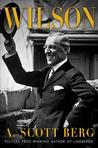
"Wilson" review: Wrong from the start — too much hagiography, not enough analysis

WilsonWilson by A. Scott Berg

My rating: 1 of 5 stars


At the end of this book, Scott Berg describes what propelled him to undertake this biography. He says he had read a number of biographies, and none of them captured Wilson's essence.

Well, now we can add one more to that list.

Berg has written, but not quite crafted, a tome that is clearly hagiographic, and in being such, also clearly lacks analysis and depth, despite some 750 pages of body text.

I found myself by the end of the first chapter questioning Berg's claims about the depth of Wilson's support for women's suffrage, and simply shaking my head at Berg's conceit that Wilson alleged wrestled all his life with issues of race.

And, it is on that subject, throughout the book, that Berg's hagiography is most apparent. While mentioning that Wilson grew up in the South, and that his father was briefly a Confederate Army chaplain, he nowhere explicitly talks about his father owning slaves.

He does mention that his Presidential cabinet was almost all Southerners, most of them unreconstructed, but doesn't mention how unreconstructed they were.

He tries to downplay Wilson's official segregation of Washington. And fails.

On women's suffrage, the proper analytical dots aren't connected. He doesn't ask if Wilson's refusal to support woman's suffrage on the federal level isn't due to his worry that this would make his failure to support black suffrage on the federal level — black suffrage already in the 15th Amendment — all the more hypocritical.

There's plenty of evidence Wilson was a racist by enlightened standards of his day, let alone ours. No, Scott Berg, not nearly every white person made "darkie" jokes, thought blacks were lazy, etc. And never did Wilson seriously "wrestle" with issues of race.

But, the lack of analysis doesn't stop there.

Wilson believed, overtly, he had been directly called to his office by god in a way no other president afterward did until George W. Bush. Berg, despite giving each chapter of his book a Biblical title like "Sinai" or "Gethsamane" (titles eyebrow-raising in and of themselves) never asks how this affected Wilson's domestic record. And, even when connecting it to World War I and Versailles and the League of Nations, he still doesn't go into a lot of detail.

Given that Wilson's religious background was not like Bush's, but was a traditional Calvinism theoretically including double predestination, unlike Bush's psycho-therapeutic evangelical Protestantism, I certainly would, and do, wonder: After the Senate defeat of the League, rather than pour out ire at Sen. Henry Cabot Lodge, etc., did Wilson just once, for a moment, wonder if this meant he had been negatively predestined on this issue? Berg never asks.

More to the point, and also related to Wilson's belief he had been messianically chosen — why was Wilson such a "hater"? And, it's more than in modern social media buzzspeak. Once he started hating somebody, he kept on hating them. He cut his successor as Princeton president and Col. House, among others, permanently out of his loop after he started hating them. Berg doesn't take a look at the "why" of this at all.

And, the hagiography, combined with errors of omission, also doesn't stop there.

Berg almost totally glosses over Wilson's massive amount of interventionism in Central America. Oh, sure, several pages are devoted to Mexico. But the Caribbean? A couple of mentions, no more than a paragraph's worth.

He nowhere wrestles with the reality of Wilson's quote: "I am going to teach the South American republics to elect good men."

His discussion of the formation of the Federal Reserve is superficial. As part of that superficiality, Berg doesn't ask whether the Federal Reserve, as a solution to U.S. banking needs, really was that progressive. (The 2008 meltdown and the actions, or non-actions, of the New York Federal Reserve tell us "no.")

But, the hagiography is just warming up!

On page 328, he claims that Wilson's 1913 record of accomplishments, including the Federal Reserve, Clayton Anti-Trust Act, creation of the Federal Trade Commission, a new tariff and other things, was the greatest legislative outburst since the foundation of the Republic!

Wrong!

I'll take Lincoln's 1862 over that — Homestead Act, Morrill Act for land-grant colleges, transcontinental railroad legislation, first and second Confiscation Acts that were slowly setting the country on the road to emancipation in the Civil War, and the preliminary Emancipation Proclamation itself.

Wouldn't you?

But, we haven't gotten to the outright errors of fact yet! There's several related to World War 1.

First, no, Japan was NOT "forced" to declare war because of its treaty with Great Britain. Rather, said treaty gave Japan the legal cover to declare war and not be an aggressor. How Berg got this wrong is totally beyond me, and frankly, I don't even want to try to figure it out.

Second, on page 395, the torpedoing of the Sussex, as a ship traveling between two belligerents and not a belligerent and a neutral, had nothing to do with the United States needing to consider entering the war.

Which now leads us from errors of fact back to hagiography.

Berg talks about his hero worship of Walter Bagehot (along with William Gladstone), and his wanting to graft British parliamentary government onto the American tripartate system.

He never asks how this might have made Wilson un-neutral not just in heart, but how his heart expressed itself, from the start of the war. (Author Walter Karp details how it did.) For example, why did Wilson never protest Britain's blockade by extension, just as illegal under international law as the German submarine zones?

The Bagehot issue leads us back to analysis of Wilson as public policy intellectual. Why, if these ideas are so brilliant, have none of them been adopted? Even LBJ, for all his effort to be like a prime minister in some ways, didn't go that far.

Was it in part, in the early years after Wilson's presidency, the fact that he was seen as such a hater? Had that alone made these ideas that toxic?

We're not done with the errors of fact yet, though!

Why, if Wilson wanted "no part" of invading Russia, was the U.S. in Russia as long as all the other Western countries? Actually, Wilson overrode the Department of War to approve the Archangel campaign. That said, Berg also gets issues of Polish involvement, Versailles and post-Versailles (it was a Polish nationalist fight) and Japanese involvement wrong, too. Add to that something not strictly a factual error, like calling the Czech Legion "freedom fighters," and you can see how bad this section of the book is.

As for his coverage of Versailles? Margaret MacMillan's "Paris 1919" is far better.

The only interesting thing to the good is Berg covering Wilson's health and his apparently suffering several mini-strokes during Versailles and after, up to his major stroke in Pueblo. But, given that Wikipedia notes Wilson's first stroke may have been in 1895, I'm sure any good bio of Wilson does similar.

I had planned on two-starring this book when I started writing my review from my notes. But I can't. It's that bad, and needs a serious one-star review.


View all my reviews

December 26, 2013

Can Aaron Rodgers deliver for the Pack against the Bears?

By now, just about every hardcore NFL fan's heard that the Green Bay Packers think injured starting quarterback Aaron Rodgers' broken collarbone is healed enough for him to start against the Chicago Bears on Sunday, with the NFL Central Division title on the line.

And, why not?

The Bears have a crappy defense. A rusty Rodgers will still almost certainly be better than fill-in Matt Flynn for the Pack.

And, it might not stop there.

If the Pack want Rodgers to help in the postseason, they need to get him to knock off some of that rust in advance.

And, speaking of ...

In the Pack's luckiest break, the Cheeseheads could get the New Orleans Saints at home in the wild-card round. The Saints have been pussycats on the road this year. Give Rodgers the game against the Bears to start shaping up, hope Clay Matthews' thumb is good enough to go, and they could just take down Drew Brees and company.

After that, who knows? Add in that the Pack is currently seventh in the league in rushing, paced by Eddie Lacy, and the team could go a ways.

But stranger postseasons have happened.

I present Eli Manning. Twice. And Joe Flacco just a year ago. And Trent Dilfer from the wayback machine.

It will take a few lucky breaks, but, yeah, Rodgers could take them all the way to Met Life Stadium in February.

Technology hating, Heritage and #CFL and #incandescent lights

Traditional 60- and 40-watt incandescent light bulbs can no longer be sold in the U.S. after Jan. 1, though stores can sell what they have in stock until they run out.

And, this bit of government regulation, helping do a small bit of fighting global warming and saving consumers money, has wingnuts going bat-shit crazy, of course.

So, what else to do but respond to the lies and distortions behind the crazy-making?

I just had to do some quick blogging about a new level of technology ignorance, and even more, willful twisting of public policy, by the Heritage Foundation.

Here's what I replied to Nicholas Loris' inanity on this issue, and more.

Ohh, per your link to your previous column?

CFLs now work fine with dimmers. (But, I guess linking to a column nearly seven years old, without checking on how technological or other changes might have affected things, is par for the course.)

Here's the details on that:
Most screw-base CFLs do not work with dimmers designed for use with incandescent lamps. These CFLs will have a label on the lamp and/or the packaging stating "not for use with dimmers. However, certain special screw-base CFLs are designed to work with standard incandescent lamp dimmers. These CFLs will be labeled "dimmable" or similar language on the lamp and/or the packaging. However, due to small differences between different brands of dimmers, not all dimmable CFLs work with all types of incandescent dimmers. Some dimmable CFLs, however, will work with all major brands of incandescent lamp dimmers.
And, if they're still somewhat problematic?
You can change dimmer switches to CFL-designed ones, without doing entirely new wiring. Of course, given the anti-tech ranting of Loris, it's no surprise he doesn't mention that, either.

The idea of them working poorly in cold is overblown. And, since the average American runs heat on high and AC on low anyway, it's even more overblown. And, again, it's probably out-of-date information, too.

Beyond this, on these two issues, the future is LEDs, not CFLs, in all likelihood, anyway.

On the matter of choice and budget constraints for people on tight budgets, when was Heritage ever concerned about poor people? Oh, I forgot. NEVER!

(This one always makes me laugh, whenever a conservative individual or think tank trots out the "thinking about the poor" argument. I guess it's red meat for the followers, who think they:
A. Have to keep up appearances and
B. Are actually fooling somebody when they do this.)

Besides, at an estimated electricity savings of $6 per year per bulb, actually CFIs save families money. (And Loris has that story linked, showing how narrowly the wingnuts can cherry-pick.)

Ditto on his claims about CFLs destroying jobs. When did conservative (or neoliberal) free traders ever worry about a few hundred jobs being sent over to China? What a laugh.

And, of course, CFLs aren't the only alternative to traditional incandescents.

Finally, per your energy efficiency? Actually, wrong again. The EIA graphic he links to shows the rate of energy efficiency increasing after 1970, which is when government regulations started coming into play.

Of course, CFLs are really all part of the Agenda 21 plot to steal our precious bodily fluids and our golf courses, Mandrake.

#RGIII buys wrong game for teammates

Fox Sports reports that Redskins quarterback Robert Griffin III bought XBox One games for his offensive linemen.

Given how much he's been dumped on his tuchis this year, shouldn't he have bought Madden 2014 instead, so they could see what NFL blocking and blocking schemes look like?

Fox's story kindly provides pictures of some of the worst of his hits, which all seem to have nary a Skins' O-lineman in them! A big, humongous tub of Stickum

That said, RGIII probably should buy a Madden 2014 for himself while he's at it. Many an NFL writer has noted that his inability to throw the football away as he need to do has contributed to these bone-jarring hits.

No word on what he got Mike Shanahan for Christmas, other than putting him on his "get fired" wish list.

Speaking of ....

Maybe Danny Boy Snyder can give the ax to Shanny, and, despite Jethro Jones giving all of his guarantees to Jason Garrett, he can do the same.

And then, the two teams can swap coaches!

Better yet, or worse yet, if possible, but certain to provide hilarity, maybe the two owners can swap teams for a year.

But, that's a whole separate piece right there! And, one that I may write in the future.