SocraticGadfly

September 19, 2014

An old skeptics site gets a shot in the arm

I blogged at the start of the month about the James Randi Educational Foundation's announcement that it had terminated D.J. Grothe and closed its Los Angeles office, and then followed up with wondering if JREF, like the Center for Inquiry a few years ago, might not be suffering from founder's syndrome.

As part of that, I wondered if Michael Shermer/Skeptics Society might take over JREF, while at the same time, noting that its SkepticBlog seemed almost on its last legs.

Well, that has officially changed.

Jim Lippard
Skepticblog is being replaced with something new. Jim Lippard has one of the first posts. Questions of "why," that run through my thoughts, are answered well right here, in his tracing the roots of modern movement skepticism back to the Committee for the Scientific Investigation of Claims of the Paranormal, or CSICOP:
But what were CSICOP’s original goals, and has the organization successfully met them? What are the goals of the other skeptical organizations that have been formed in the U.S. and around the world since (and in a few cases, before) CSICOP, and are they being achieved? Just what is the value and purpose of “organized skepticism” as a movement, as a set of institutions, as a network of people participating in conferences, writing articles and books, recording podcasts and videos, and interacting online? What does it accomplish, what is the broader social context in which it resides, and what is its relation to the institutions, practices, and subject matter of science? Does it do anything that isn’t already done by science, science journalists, science communicators, historians and philosophers of science, social studies of science, science museums, science educators, and just ordinary amateur science-interested people? What can skeptics learn from these other areas? What does it mean to self-identify as a “skeptic”? Where has skepticism gone wrong, and what can we learn from its failures? Are there alternatives to “organized skepticism” that might better achieve all or some of its goals?
Click the link; you'll learn what Jim plans to cover and more. 

And, for more background, click this link, also included in Jim's piece. Daniel Loxton goes into a bit more depth, already in 2007, on some of these issues.

Loxton, who was one of the last two at Skepticblog, along with Donald Prothero, has the formal announcement for "Insight," along with the complete roster of contributors.

I'm glad to see Michael McRae there, among others. It further internationalizes the place. Blake Smith, please don't totally squelch your bad puns sense of humor in your contributions. I like Tim Farley there, too.

And, all of you, please feel free to follow Lippard's model in your opening contributions.

I'm not totally enthused by a couple of contributors. Offering a semi-blank slate, I won't go into details of the issue involved, or the degree of difference and vocalization thereof, but, I'll be keeping my own skeptical eye out if certain issues of psychology are discussed, and I'm not the only skeptical type -- including a skeptical organization -- who doesn't see these issues there way. Enough said on that now.

And, I'm not at all familiar with Eve Siebert, but hope to learn more about her particular focus. Linguistics-related issues could be fun.

Anyway, more on the whole roster here. I will add that, beyond adding Mike, I hope they add either another "international" person, preferably one of color, an American "person of color," or both. Also, if Barbara Drescher is here, is she still going to be doing anything with Randi, or not? Especially since Randi's own column is reportedly not in the latest issue of his foundation's magazine, that plot thickens, too.

September 18, 2014

The Ron Washington mystery self deepens

The recently resigned manager of the Texas Rangers, Ron Washington, held a news conference today, in which he theoretically addressed why he resigned.


Only thing is, if a rumor of sexual assault is correct, or even close to correct, all he did was dig the hole deeper. And, hence the header of "self deepens."

First, if this were just a case of cheating on his wife, why did he have an attorney there?
Washington entered the ballroom with his wife and attorney Jason Lewis of the Dallas-based Greenberg Traurig LLP.

Greenberg Traurig isn't a penny-ante law firm, either, or even close to it. Not with nearly 50 years of history, 36 worldwide offices including eight outside North America, providing lobbying services in the US, and being publicly traded, per Wikipedia, which also kindly reminds me that this was were Jack Abramoff of vulturedom resided until GT canned him. So, Abramoff's ethics aside, GT is a power hitter.

Second, as for people who say this is all trash-mongering, well, Washington didn't have to hold a presser in the first place, and certainly not one where he tried to sling papier-mâché to cover up cracks in a story line that he didn't have to share anyway.

Third,  Rangers GM Jon Daniels kept Washington on the job after news of his positive drug test in 2009. He and the team did NOT offer a leave of absence in this year’s case, though. Also, nobody from the Rangers was at the presser today.

And, if he does want back in the game, I'm with Tim Cowlishaw — any cloud that still lingers means he gets back in as a coach, not a manager, at least to start.

And, as far as managers? Surely the Rangers could do better than hiring Mr. Super-Utility, Michael Young, next year. I'm sure either Mike Maddux or Steve Buechele would be a better choice. Daniels has also said that interim manager Tim Bogar will get full consideration to be the permanent replacement.

September 17, 2014

#England vs. #Scotland — a 9-point overview and more

Tomorrow, the vast majority of eligible voters in Scotland head to the polls to vote on whether to become independent from the rest of the United Kingdom or not.

So, what's all at stake? Besides North Sea oil and gas reserves?

Pride. Resentments. Related psychological issues The Tories, the Conservative Party. Actual, and perceived, economic issues with London.

And, North Sea oil and gas reserves.

Those are the biggies. Any lesser issues connect with one or another of the big ones.

First, the funny version, from John Oliver, who is great with this.


That said, the serious version.

First, the economics.

I don't know how much Scotland feels "stiffed" by England. The per capita GDP? Scotland at $44,378 vs England at $50,566. Actually, if income differentials are a cause for secession, Wales, at $30,546, has more right to want to leave the UK. (That said, per the Beeb, how North Sea oil and gas revenue is divided could affect the Scotland/England difference.)

At the same time, while England may not be as liberal as, say, Sweden, it's more liberal than the US. I presume that that includes being more liberal overall in progressive taxation. That income differential may hurt.

Ditto on language. Welsh is spoken by about 20 percent of Wales, and 15 percent read and write it with proficiency. In Scotland? Only 1 percent speak Scottish Gaelic; yes, 20 percent speak Scots, but, it's been affected enough by standard British English that one could halfway argue Scots is an English dialect and not a separate language.

That addresses non-economic pride and resentment issues to some degree. Scotland may not be so united if resentment against London (primarily against Conservatives, but somewhat against Labour) is discounted.

Natural resources distribution, per what I said above? A chart on Oliver's video tells the truth. By 2040, North Sea oil production will be about one-quarter of what it is today. Indeed, in less than a decade, production is likely to be less than a quarter of the 1999 peak.

More economics. Per this good 9-point overview from the Washington Post, I don't see how an independent Scotland can continue to keep the pound as its currency; certainly not as its official currency:
An independent Scotland would keep the British pound as its currency, the SNP says. No, they would not, the British government replies. 
It's a clear divide between the "yes" and "no" camps. For what it's worth, Salmond has argued that it doesn't really matter what London thinks. "No one can stop us from using" it, he told Sky News this week. 
He's not wrong, but there may be complications. The independence movement has suggested that it would seek a currency union with the United Kingdom, but the powers in London would have to agree to that. Should they refuse, Scotland could unofficially use the pound anyway, in the manner that Ecuador uses the U.S. dollar. 
Both options present risks. A recent article in the Economist explained how a "sterling zone" created by a currency union might end up looking like the euro zone, "with Scotland in the part of Greece." The New York Times' Paul Krugman wrote last week: "If Scottish voters really believe that it’s safe to become a country without a currency, they have been badly misled." 
Scotland could, of course, create its own currency, though the independence campaign hasn't suggested that yet. There's also another complication: If Scotland is required to join the European Union as a new state, it may be compelled to join the euro zone. Scotland doesn't want that, for obvious reasons.

I've seen people favoring independence bash Krugman. Well, any idiot knows he's right about the eurozone. Sorry, folks.

And, the yes folks are showing naivete or hubris on other issues related to this First Minister Alex Salmond et al claim that Scotland could join the European Union via renegotiation of treaties. The EU, per a CNN overview, has already said no. 

In that case, it appears Scottish adoption of the euro would be part of the price of membership. 

The Wall Street Journal further discusses pros and cons of five different monetary options.

That said, if there's a yes vote, for oil and gas reasons alone (even if they are already in decline), this would be a blow indeed to the remnant UK.

So, why? I think the Telegraph has it right. Starting with the Thatcherite mistreatment, while the economy is an issue, it's ultimately psychological.  That said, the Telegraph's also right that, setting aside Thatcherite-related resentment, the West continues to generally move, for now, toward a post-industrial world. What can Scotland offer to that world besides oil?

As for the outside world?

If North Sea oil and gas weren't involved, the international business world probably wouldn't pay half as much attention.

Per John Oliver, if not for Mel Gibson in "Braveheart," and a love-hate relationship with haggis and bagpipes, the average American probably wouldn't pay one-quarter as much attention. Just wait and see the yawns and ignorance that greet any Catalan independence movement.

So, if you do like bagpipes, crank up "Scotland the Brave."


And, if you're really interested, it may take 3-5 years after a yes vote to find out if, or if not, "Scotland the Brave" was also "Scotland the Dumb."

To Americanize this, it would be like if Austin wanted to secede from the rest of Texas.

Ken Burns blows it: Big errors on #Roosevelts

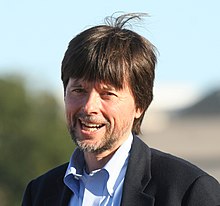
Ken Burns / Wikipedia
In short, Ken Burns has done what I feared he would do. He polished Teddy Roosevelt's apple at the expense of his successor, William Howard Taft, as part of his new documentary on TR, FDR and Eleanor. And, that's the most obvious of multiple pullings of historic punches by Burns.

I fear he'll do more when we get to FDR's presidency. (That said this is Ken Burns; see the bottom.)

Tuesday night's episode claimed, among reasons that TR decided to run again for president in 1912, that Taft backed off on tariff reform legislation and wasn't much of an environmentalist.

The reality?

Taft "backed off" on tariff reform in exchange for getting Congress to pass the 16th Amendment; meanwhile, TR deliberately refused to tackle the tariff while he was president, even though Taft, while his Secretary of War and all around confidante, had asked if he was going to do that. Taft and Interior Secretary Ballinger **legally** protected more land for watersheds within national forests than TR and Chief Forester Pinchot did with more dubious legality. And Burns knows this, because Doris Kearns Goodwin's new book, a history of the Progressive Era, a surprisingly good one for her, includes all this and more, and Goodwin is one of the talking head historians he has on the documentary.

The only semi-concession Burns makes to this is to have Goodwin say that TR would have been disappointed in whomever his successor was. I even wonder if Burns would have thrown in the claim that Taft wasn't a trust-buster if more people didn't know that was false then know what Burns actually claimed about TR was false.

Also, Taft didn't always weigh 330, let alone 350, pounds, as president. He often was under 300 and at times was as low as 250 or so.

And, here's my review of that book by Goodwin:

The Bully Pulpit: Theodore Roosevelt, William Howard Taft, and the Golden Age of JournalismThe Bully Pulpit: Theodore Roosevelt, William Howard Taft, and the Golden Age of Journalism by Doris Kearns Goodwin

My rating: 4 of 5 stars


It's not bad overall, for being a Goodwin book. Hey, have to be honest. She's not that great, even with allowance for her being a "popular" and not an academic historian.

I learned more about Taft than TR. The main thing is that I didn't realize that he had explicitly pushed for Congress to pass the 16th Amendment to send to states, along with starting the federal corporate income tax, in exchange for accepting the flawed "lowering" of tariff rates in the Payne-Aldrich tariff bill. Willingness to tackle the tariff, let alone get this much out of it, makes him more progressive (and more courageous) than TR in some ways right there.

Second major thing I learned was more about the details behind Taft's sacking of Gifford Pinchot. Taft partially caused this by not keeping John Garfield as holdover Interior Secretary, being dithering in making this decision and not telling Garfield exactly why.

That said, most of the actual precipitating events, from Pinchot's conflicts with Garfield's replacement, Richard Ballinger, indirectly proved part of Taft's reasoning right and also show that Pinchot largely shot himself in the foot. Pinchot's replacement, plus Ballinger, actually eventually and with better legal footing, "reserved" more forest lands from private development than did TR/Pinchot/Garfield.

In essence, forest reserve issues are one of the clearest issues of TR's arbitrary nature as president. We should be glad he didn't run for a second elected term in 1908, let alone get elected in 1912. When WWI started, he probably would have become more dictatorial in waging war than Woodrow Wilson ever was.

That said, the book lacks focus. That's in part because Goodwin's trying to do too much and spread herself too thin. Having read a bio of Lincoln Steffens and other books about the muckrakers, I know that she tried to cram in too much about them.

View all my reviews

And, I'll take this as my first opportunity to review the series as well.

I'll start by noting that, on weighty matters, TR was well over 200, at just 5-8, by the time he left office, as Gore Vidal notes in a delicious sketch of the Roosevelts. Also, as Goodwin notes, Taft's wife had a stroke after he had been in office just a couple of months, which had a strong effect on him politically; she was arguably, in her brief pre-stroke time, even, the most political First Lady up to that time, with the possible exception of Julia Grant.

Vidal has this to say on the idea that TR's entry into politics was sui generis for someone of his class:
Much had been made of what a startling and original and noble thing it was for a rich young aristo to enter the sordid politics of New York State. Actually, quite a number of young men of the ruling class were going into politics, often inspired by fathers who had felt, like Theodore, Senior, that the republic could not survive so much corruption. In fact, no less a grandee than the young William Waldorf Astor had been elected to the Assembly (1877) while, right in the family, TR's Uncle Rob had served in Congress, as a Democrat. There is no evidence that Theodore went into politics with any other notion than to have an exciting time and to rise to the top. He had no theory of government. He was, simply, loyal to his class--or what he called, approvingly, "our kind." He found the Tammany politicians repellent on physical and social as well as political grounds.

Well, that's pretty obviously undercutting that idea, yes. 

It is funny to hear Vidal call TR a gun-toting sissy, but, to put it a bit differently, was he a warmonger? Yes. That said, Burns does partially cover that. But let's read Vidal on that:
As a politician-writer, Theodore Roosevelt most closely resembles Winston Churchill and Benito Mussolini. Each was as much a journalist as a politician. Each was a sissy turned showoff. 
That in turn leads to the issue of, beyond being a gun-toting sissy, was TR an imperialist? Yes. And, Burns doesn't cover that. Although we didn't annex all of Panama, we did make the Canal Zone our territory. Our 1903 "treaty" with Cuba semi-imperialized that island until Castro, starting with a four-year U.S. occupation that began in 1906. TR continued the war to crush Philippine independence that started under McKinley.

First, per a Facebook friend, is 14 hours too much? Possibly; I'd like to think we could have cut to 12. Ten might be too short, but I think 12 would be good.

Second, while Paul Giamatti may have the accent of TR right, I don't think he has the full vocal dynamics right. His voice should be definitely louder and more dynamic than  Ed Hermann as FDR.

And, speaking of FDR ...

Third, the one reason from here on out I'm watching the show is to see if Burns is honest in showing just how much of the New Deal was limited to white folks, either explicitly or implicitly. Starting with Social Security, which initially excluded two classes of employees — farmers (don't forget all the black sharecroppers) and domestic servants. People who really know much about the Franklin-Eleanor dynamic know that, to the degree the New Deal did help African-Americans, it was largely at her pushing and prodding.

Related to that, and somewhat contrary to H.W. Brands' "A Traitor to His Class," I want to see if Burns portrays the New Deal as being relatively conservative, at least as compared to Upton Sinclair's EPIC and Huey Long's Share the Wealth. (And, sorry, Harry Hopkins, per the EPIC link from Wiki, but what FDR eventually got passed was not quite the same as it, let alone as Share the Wealth.) Here's EPIC:
To implement EPIC, Sinclair called for the creation of three new government agencies: the California Authority for Land (CAL), the California Authority for Production (CAP), and the California Authority for Money (CAM). CAL was to implement the plan for seizure and cultivation of unused farm lands. CAP was to do the same for idle factories. CAM meanwhile was to be used to finance CAL and CAP by issuing scrip to workers and issues bonds for the purchase of lands, factories, and machinery.

And, Huey Long was more radical yet. For that matter, Social Security didn't even, at first, come close to Frances Townsend's idea.

Fourth, FDR was also an imperialist of sorts. Look at all the Pacific island chains we took over as UN mandates, just like Britain and France after World War I with their League of Nations mandates.

FDR, while certainly better for America than Hoover, must thus also be taken with a grain or two of salt. On my third point, he got lucky to die when he did. I seriously doubt if he would have been as hasty to integrate the armed forces as Truman did. Nor (since he didn't during the Depression) would he necessarily been hasty to push for national health care. 

Fifth, and completing the circle, per another Facebook friend, maybe Burns is, in part, a middle-class, vaguely-and-politely liberalish democratic equivalent of Leni Riefenstahl in his documentary production style and thrust. Or worse.

Time for a big #Cardinals payday for Lance Lynn?

Lance Lynn
Over at Sports on Earth, Jenifer Langosch has a good profile of the current success of the Cardinals righty, Lance Lynn.

Lynn tends to get overlooked in the Cardinal rotation, especially behind ace Adam Wainwright. Langosch notes that's too bad, because of this:
Lynn has no use for a facade, which is why, when recently asked about having more wins (48) since 2012 than any other NL starter not named Clayton Kershaw or Wainwright, Lynn quipped: "For a guy who averages 15 wins a year over a career, I'm one heck of a four or five." A fourth or fifth starter? "That's what you have been telling me I've been my whole career," he finished.

Realistically, he's a solid, ongoing No. 3.

Unlike Shelby Miller, and certainly, Carlos Martinez, he's consistent. Unlike Michael Wacha, certainly Jaime Garcia, or a bit like Miller, he's been injury-free.

No, he doesn't have No. 1 starter stats. For a team as pitching-deep as the Cards, he doesn't really have No. 2 stats, though he could at least be a No. 2 for many teams.

That said, this coming year is his first arbitration year. Langosch brings that up:
He'll head into arbitration this winter as one of only three pitchers in franchise history -- joining Dizzy Dean (1932-36) and Harry Brecheen (1944-48) -- to win 15 or more games in three straight seasons, starting as a rookie or sophomore. He's been a bargain to this point, too, collecting less than $2 million since debuting in 2011. Market value for his contributions from then until now (according to a Fangraphs.com metric that converts a player's WAR to a dollar scale based on what that player would make in free agency) is nearly $50 million.
And, to be honest, the Cat's first two years were, of course, during World War II.

So, what will the Cardinals do? Add to it this:
"He's strong. He's tough physically. He's tough mentally," manager Mike Matheny says. "He's one of those guys that as he gets deeper in the game, he seems to get better. And he's still young. That's a nice combination."
Well, he's not going to be cheap.

My personal suggestion is that John Mozeliak offer him, speaking of $50 million, a contract of four years and $50 million. That would buy out all three arbitration years plus his first year of free agency, while still leaving Lynn young enough for a full free agency contract after that.

September 16, 2014

A national monument in Waco? And why does Bill Flores play games with it?

Columbian Mammoth at Waco Mammoth Site. Photo by
Larry D. Moore at Wikipedia page.
Waco, Texas, red-stateish, but not quite as red-state as you think (a majority of county commissioners in McLennan County, as well as the Waco City Council, asked Rick Perry to do the Medicaid expansion part of Obamacare; the county as a whole went 64-34 Romney in 2012), is now turning to the federal executive department for other help.

Waco civic leaders, having repeatedly asked Congress for action and gotten nowhere, are asking President Obama to use his Antiquities Act powers and make the Waco Mammoth Site a National Park Service system National Monument.

First, the previous history:
Congress in 2001 ordered the National Park Service to study the site’s suitability for the national park system. In 2007, the agency reported that the site met all criteria for inclusion. 
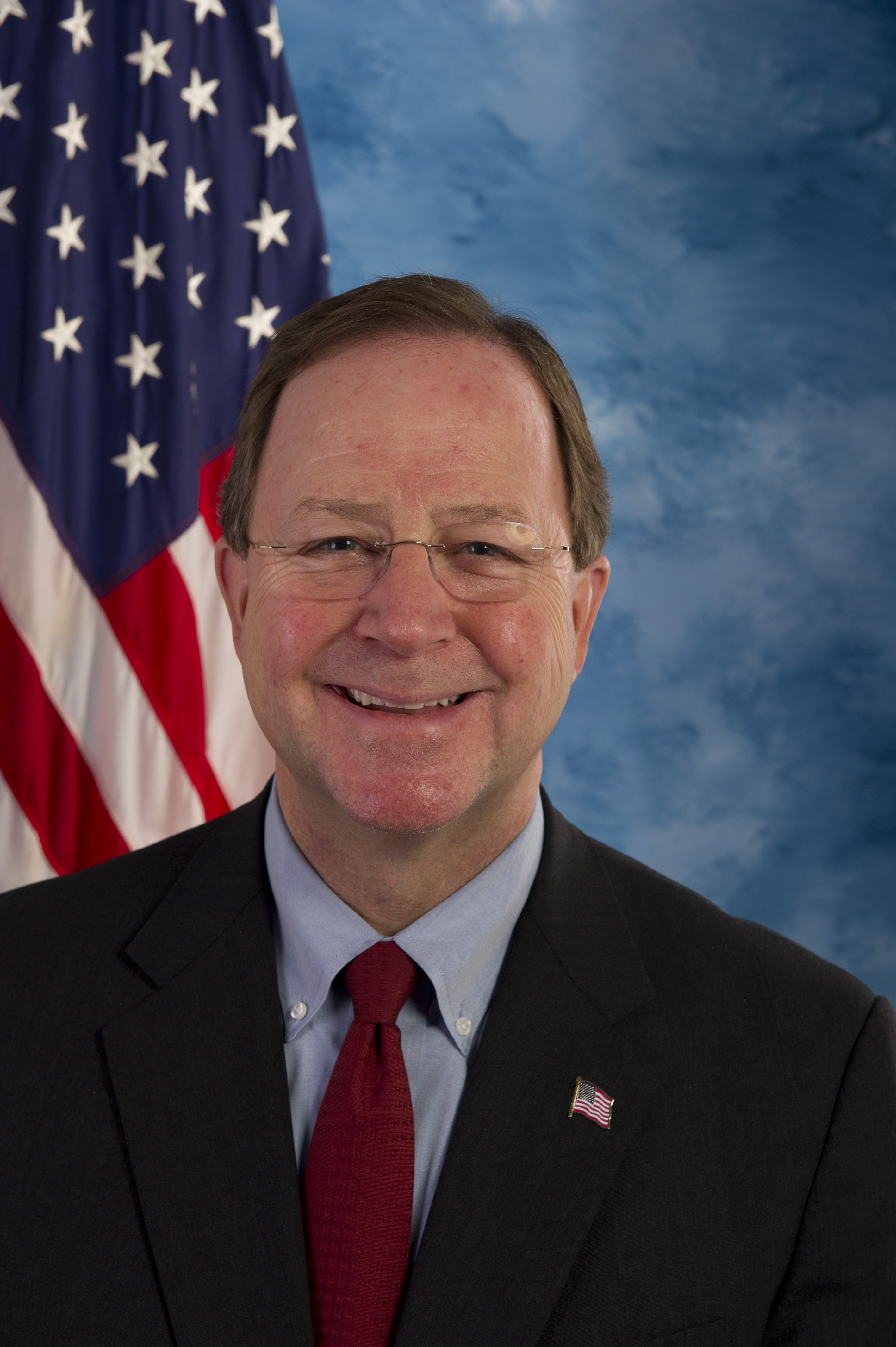
A bill sponsored by then-U.S. Rep. Chet Edwards, D-Waco, to add the site to the national park system passed the U.S. House in late 2010 but died in the Senate. A bill by Edwards’ successor, Rep. Bill Flores, R-Bryan, passed the House in 2012 but never came up for a vote in the Senate. 
Flores’ bill stipulated that the mammoth site would be added to the system but without federal funding. The National Parks Conservation Association at the time decried the bill, saying it set a bad precedent and would prevent the National Park Service from exercising its necessary oversight.

Bill Flores
Gee, shock me that Flores would stipulate that.

That said, knowing how much of a tea partier Flores is, this doesn't surprise me. (Unfortunately, his only opposition is a Libertarian on a shoestring budget and a Democrat who doesn't even have a website.)

Meanwhile, Flores doubled down on the dishonest:

In an interview Monday, Flores said his legislation wouldn’t have prohibited the National Park Service from exercising routine oversight or promoting the site.
“I think that’s a straw horse,” he said. “The folks in the Senate want parks to be totally federally funded so the federal government has complete control.”
 I don't think that's a straw man at all. The National Park Service, as part of its federal dollars, creates websites, creates brochures, and does other marketing and informational work. "Without federal funding" would include "without (THAT) federal funding." 

Gloria Young, treasurer of the Waco Mammoth Foundation, calls him out on it, too:
“Major funding at this time is not required, and that’s the point we’ve tried to make to Washington,” she said. “What killed us is that they put in a phrase that no funding ever could take place. How can we agree to no funding ever? We don’t know what’s in the future. If we make a phone call to the National Park Service to ask a question, or if they should check to make sure it’s maintained as it should, that’s an expenditure.” 
Exactly.

Beyond that, Rep. Flores, there's this thing called the Interwebz. It has your bill online. Including this:
(d) Prohibition of Use of Federal Funds.--No Federal funds may be  used to pay the costs of--     
(1) carrying out a cooperative agreement under subsection (b)(1);     
(2) acquiring land for inclusion in the Monument under subsection (b)(2);    
(3) developing a visitor center for the Monument;     
(4) operating or maintaining the Monument;     
(5) constructing exhibits for the Monument; or     
(6) developing the general management plan under subsection (c).
I presume that Subpoint (10) would rule out even an NPS system website or the trifold brochures. If you had wanted any of that excepted from the prohibition of federal funds, you could have said so.

It was, after all, your bill.

And, it had other faults, like barring the creation of a buffer zone, barring the use of federal money for land acquisition and other things. At just 100 acres, it's possible that more mammoths, or remains of other life from the same era, might be preserved outside its current boundaries.

And, that all means tourism, and tourism $$$. That's something the allegedly capitalistic tea partiers always overlook in their anti-environmental type hate. People spend money on tourism. And, rough estimates are that each dollar of tourism spending has a $1.50 multiplier. That's not trickle-down, but trickle-through, economics.)

However, many of the red-state portion of Waco and McLennan County will continue to vote for Flores even as he continues to work against their best interests. The "good people" of West will vote for Greg Abbott, similarly, even as he supports not letting people in their situation readily find out how safe, or unsafe, fertilizer plants in their back yards are. Or worse, since the ilk of these West-haters are the likes of people who cut Abbott big campaign checks.