Unfortunately, of two recent reads, one gets that right, but then gets one issue wrong and others partially wrong, while the other, allegedly informed by the "protagonist" in the first book, isn't informed enough.
I'm going to mash together versions of both Goodreads reviews with additional comment, the second being shortened.
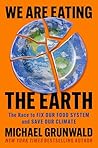
We Are Eating the Earth: The Race to Fix Our Food System and Save Our Climate by Michael Grunwald
My rating: 4 of 5 stars
Low-till and no-till will save us, right? Wrong.
A raft of new plants, like Kernza, a perennial-plant riff on wheat, will save us, right? Mostly wrong.
Veggie burgers will save us, right? Wrong as currently entailed, though with some missing information.
Lab meat will save us, right? Wrong totally, but also with some missing information.
GMOs could save us, right? He doesn’t get explicit, but seems to have “yes with caveats” as his answer. I offer a bigger yes with more caveats.
And, he has one good point at the end — we should bring back individual shaming, as well as stop looking for magical silver bullets. You bought the SUV. YOU bought the 1/3 pound hamburger.
Grunwald uses Timothy Searchinger as, well, the nonfiction equivalent of a protagonist for much of this book, though he also has other skeptics of the silver bullets above as well. (This is the muse cited by "Sea of Grass," below, for helping straighten them out on biofuels, though apparently they didn't read closely enough.) Overall, the book is somewhere between good and very good. I hit on 3.75 stars rounded up, because most of the 3-starrers wrongly in my opinion thought it too long, and it needed to be this detailed.
He does a generally good job, but not perfect, especially later in the book.
No spoiler alerts on what he gets right, above. So, we'll tackle what's less than fully correct.
Grunwald ignores that Impossible Burger actually has as much saturated fat, and more sodium, than conventional food. Fake cheese, at least mainline commercial varieties, do have less saturated fat than the real deal, but do have more sodium, as I have discussed in some depth. It's also pretty highly processed.
Also, Grunwald got "golden rice" wrong. Wrong. Its problem was not the "mean greenies" opposing it as much as, even after it cleared that hurdle, for basically another decade, it had lower yields than conventional rice.
Heralded on the cover of Time magazine in 2000 as a genetically modified (GMO) crop with the potential to save millions of lives in the Third World, Golden Rice is still years away from field introduction and even then, may fall short of lofty health benefits still cited regularly by GMO advocates, suggests a new study from Washington University in St. Louis.
Golden Rice is still not ready for the market, but we find little support for the common claim that environmental activists are responsible for stalling its introduction. GMO opponents have not been the problem,” said lead author Glenn Stone, professor of anthropology and environmental studies in Arts & Sciences.I told you more than a decade, did I not? Stone goes on to explicitly refute the idea that "mean greenies" inhibited golden rice's adoption. And, he has supported GMO crops in general.
On this issue, Grunwald comes close to believing, by non-condemnation, in GMOs as a silver bullet.
On lab meat? He doesn’t delve enough into the energy inputs it will need to scale up, let alone the need for computer chipmaking type clean room sterility. Grunwald should have, if he didn’t want to voice it himself, gotten a true skeptic for more comment on this. Indeed, he should have looked at the energy inputs for scaling up Impossible Burger type foods.
The book is otherwise pretty good and almost very good until around 250. Frank Mitloehner claims there’s no more “stooping labor” with today’s Big Ag animal farms. Really? There is. It’s called “illegal immigrants.” (I don’t know if the new round of people from the Levant and Africa get pushed into the same in Europe or not.) But, no, there's still plenty of “stoop labor” in US agriculture. And, while that's not the focus of the book, we need to do more than one-shot ethics in the world of modern ag.
As for Ethiopians with stunted growth because of lack of animal protein? It may in part being stunted due to lack of protein period during Ethiopia’s famines.
The highly touted ranch in Brazil's Cerrado? Grunwald rightly notes that Brazil's tropical latitude means this can't be done well in the US. That said, he also has it looking as good as it does in part by comparing it to rundown neighboring ranches. I'm sure a 1920s or 1930s US ranch would come off just about as badly.
Animal cruelty? Grunwald mentions modern poultry occasionally breaking legs. Doesn’t mention cows with what are likely painful udders. Or young bullocks-to-be castrated into steers. He does mention California’s “free roaming” pigs laws and says Searchinger is OK with them, if they don’t cut hog production too much. Well, that’s nice. Or "nice." Am I somewhat of a hypocrite? Yes, I still eat real cheese. That said, it's all minimum of Cabot or Tillamook. Hopefully they don't use quite as bloated of cows along with not using bovine growth hormones in specific.
Grunwald touches a bit on the water issue, but not as much as he could. The Ogallala Aquifer that waters all the High Plains farms that provide feed for all the High Plains feedlots, or the Big Ag High Plains beef rancher that has his own feedlot? Never mentioned, and when I checked the index when I was up to about page 280, and noticed that, that became the tipping point to drop from 5 stars to 4. This book could have used a good dosage of “Cadillac Desert.” Yes, GMOs let alone CRISPR may increase dryland yields even more (see "Sea of Grass") but they'll still be less than Ogallala-watered corn, milo and beans. So, the issue of water is indeed indirectly, even semi-directly, related to the issue of climate change and agriculture.
Finally, I can’t totally buy a key sub-thesis. I think not only is transitioning beef eating to chicken good, but lessening beef eating beyond that, and chicken eating as well is even better. It's another way of reducing Big Ag, animal division's stress on the land. (Grunwald didn’t mention recent outbreaks of avian flu, as a reason to cut chicken raising and worry about chicken, and egg, costs.) He also comes off as too sanguine about how much, and how cleanly, factory fish farming can scale up. I’m not saying we need to have the entire world go vegetarian, let alone vegan. But, the whole Western world could eat less of all meats, and all dairy products. If you do that, people might have less of a hankering for meat substitutes, which have the health issues noted above, and even with veggie burgers, not to mention lab meat, the energy input issues and more.
I confess to being somewhat of a hypocrite on these issues. But, I have eaten vegetarian for stretches of three months or more at a time. And vegetarian, not just beef-omitting like Grunwald. Per the individual shaming that he mentions, we can all do better.
That said, vegetarianism will leave you B12 deficient without eating fortified foods and veganism even more so. Plants do not have B12, and mushrooms and other fungi have very little. See here. Now, yes, this is the naturalistic fallacy, but our ancestors, since or before the last common ancestor with bonobos and chimpanzees, ate insect and grub meat, at a minimum, in all likelihood. Besides, it's fun to hoist people like this with the naturalism petard.
But, we can all do better. If, on average, Americans ate no more than 1.5 ounces of ALL types of meat per day, the planet would be much better off.
View all my reviews
 Sea of Grass: The Conquest, Ruin, and Redemption of Nature on the American Prairie by Dave Hage
My rating: 3 of 5 stars
This book is somewhere between 2.75 to 4.25 stars, depending on how much knowledge one brings to the issue already, per a guide I use more and more in my own reading of nonfiction books.
For me, there were two main things I learned.
One was the use of tile drains in the boggy Midwest. Via Marc Reisner's "Cadillac Desert," I have long been familiar with them in irrigated areas of the desert Southwest, to reduce salinity in the soil water level beneath roots and carry off the salts in the West's alkaline water. The broad principles are the same.
The second was the development of new corn and soybean seed types for the northern high plains. This is problematic, per Grunwald above noting land is not free. The reason this is being done is for more corn and beans for biofuels, a climate-wrecker.
That said, the authors appear to pull some punches, and to miss some things.
One pulled punch? Bison in Yellowstone National Park almost certainly do NOT transmit brucellosis to cattle. That said, elk on the adjacent National Elk Range, fed hay in winter as if they were cattle, almost certainly DO, but ranchers and hunters in Montana and Wyoming don't like to talk about that.
Second and related, and also tied to a 2-star reviewer here? The degree of animus from ranchers toward bison, though mentioned, seemed downplayed.
Third, the degree to which it's not an either or of conventional big ag or people in West Virginia or New Delhi starving is underplayed.
Fourth, the degree to which Big Ag lobbyists control discussion on any possible changes to farm legislation, from expanding the conservation reserve program through expanding the types of crops eligible for insurance to sliding scales on insurance coverage. The authors here, especially, come off as "Minnesota nice."
There's lesser pulled punches here and there in the book.
One, partially but not totally beyond this book? Just how "hollowed out" much of the plains is, not only from larger farm and ranch size, but consolidation in the agribusiness world, especially in things like meatpacking.
So, if you don't know what a local soil conservation district is, you might learn a fair amount. If you do? Not so much.
Speaking of, the authors don't discuss the thousands of SCD check dams across the country, backing up large ponds or small lakes, many of them constructed during the Depression and at the end of their estimated or expected life spans.
I thought about giving this a starless review but ended at 3 stars.
View all my reviews


No comments:
Post a Comment