SocraticGadfly

September 09, 2014

One Texas doctor who doesn't know causal correlation — do Big Media check on this?

Dr. Howard Marcus, lying with statistics.
(Somebody alert Mark Twain.)
Note even if it were a tapeworm and bit him in the stomach. (He's an internist, hence the riff on the old joke.)

From a news release:
The Texas Medical Board licensed a record 3,994 new physicians  for the fiscal year that ended last month. 
The board licensed 400 more doctors this year than last, said Austin internist Howard Marcus, M.D, chairman of Texas Alliance For Patient Access. 
“The number of new physicians applying for a Texas license also reached an all-time high,” said Dr. Marcus, “tallying 12% more than last year’s previous record high,” he said. 
The state’s fiscal year begins in September and ends in August. Nearly every month was a record setter. September, the first month of the fiscal year, was the only month that did not produce a record number of new applications for that given month, said Marcus. 
Texas has averaged licensing 3,254 new physicians each year since the passage of lawsuit reforms 11 years ago.

“The state medical board is now licensing twice as many doctors per year than in the medical crisis years before lawsuit reforms were enacted,” said Marcus.

Tort "reform" had nothing to do with that, at least nothing that's provable. (It also didn't reduce doctors' insurance rates that much.)

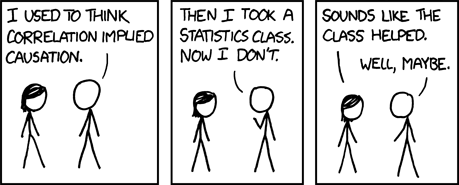
Statistical correlation does not imply causal correlation. Between that, loose p-values on medical research and other things, this is why I sometimes hesitate to call doctors "scientists." Marcus needs to read XKCD if he cares, which he doesn't, as I note below.

What probably did cause the increase?

Uhh, Texas population growth?

Texas' population was 22.1 million in 2003. It's now about 26.7 million. Or 20 percent more than 11 years ago.

Of course, since Marcus has been writing columns for Texans for Lawsuit Reform since 2006, and the Texas Alliance for Patient Access is an Astroturf group, he's not exactly a disinterested person when it comes to implying causal correlation exists where it probably doesn't. (He's also been touting this new physician growth every year, meaning this con game is nothing new, and doing similar on things like out-of-state physician recruitment.)

Tiny houses, big prices - and probably a bad idea in general in several ways

The tiny house movement, or as I have started calling it, precisely to bring out the technology angle, the microhome movement, has been getting more and more momentum lately. It's probably even "trending."

That said, maybe there's reality that people aren't looking at.

A pricey London microhouse. / Photo via MSN.
I know that not every microhome is going to cost $450K, like this one in London — which, at just 188 square feet, is also small for the microhome movement. Per a friend, "location, location, location" is part of that price.

Nonetheless, I have no doubt they cost more per square foot than traditional homes. Because there's a large surface area to volume ratio, these places have to have a lot of insulation — and something more costly than traditional fiberglass, I'll venture. There probably has to be a lot more precision of fitting than in a conventional house. Appliances have to be higher tech to perform well at their smaller size.

In turn, that all also means that these houses may not be quite so environmentally friendly as a good old-fashioned apartment. And certainly more expensive.

Also, as more and more of my friends, along with me, pass various "milestone" birthdays — do we really want to live with two floors of housing? I don't. And, that's the only way the microhomes, especially the smaller ones, work. Also, as we get older, with more restless sleep, do we want to live in a loft that, in the tiniest microhomes, may be little more than a pallet? At nearly 2 meters tall, I don't.

So, beyond "big prices" there may be big hidden costs.

Another? Look at the way this one is designed. What if you forget to turn off a burner on that electric stove? Your sleeping area is right above it, and not that high.

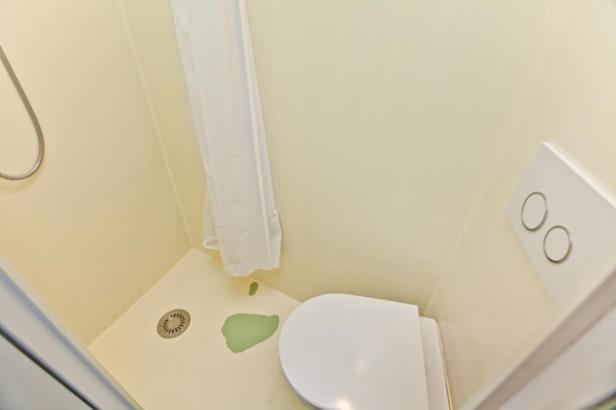
The shower/toilet of a microhouse. Photo via MSN.
Or, per this second photo? Do you want a toilet inside your shower? Also, if you're of limited mobility, is this even feasible for you?

I could stand an apartment with 100 square feet less than what I have now, if not 125 square feet. But, I'd still like 500 square feet without the concerns I just raised.

As for the privacy issue of a house? Well, instead of full-blown apartments, duplexes and quadruplexes address a fair amount of this.

And, are more environmentally friendly.

I want to look at this in a bit more depth, though.

That's in part because I would say there are microhomes and then there are micro-microhomes.

I'd put this baby in the second class. I'm going to throw out a rule of thumb that anything under 350 square feet, which would be a small studio apartment in much of the country, but an average to above average one in a New York or San Francisco, is a micro-microhome.

And, I'll call 350-550 square feet a microhome. (That leaves 550-750 square feet as, let's say, a minihome. I could definitely do that, other environmental issues aside, but, let's not get distracted.)

Because of the high degree of technology and special materials needed, I'm going to venture that a micro-microhome costs 4x as much per square foot, all other things being equal, as a conventional home. In other words, I suspect a small home in London, at the top edge of minihome size, probably also costs $450K.

And, I'll venture that a microhome costs, on average, about 2x as much per square foot as a conventional home. In other words, a microhome of about 375-400 square feet might price out about the same as this micro-microhome.

(That said, as I get more information to confirm or disconfirm all of this, I'll update.)

That said, I have found some stuff with a quick teh Google.

First, appliances cost at least the same (if not more to fit microhome sizes), so that adds to per-square-foot costs there.

That said, Forbes has some detailed information, and it's not just "location, location, location":
These home may be environmentally friendly–they force owners to reduce their possessions and, often, to use less power–but they’re not exactly cheap. Tiny houses typically cost between $200 to $400 per square foot. On a square foot basis, that’s far pricier than the average American home–and tiny homes don’t include land.
 Take the Tumbleweed Tiny House Company, considered the Cadillac of the tiny house world. Tumbleweed prices its 161-square-foot “Elm” model at $66,000, or about $410-per-square-foot. Canoe Bay makes an even costlier model: its 400-square-foot “Escape” ranges from $79,000 to $124,900 (about $200 to $310 per square foot) depending on features. Even midrange tiny homes cost between $20,000 and $40,000–as in the 204-square-foot bungalow by Wind River Custom Homes for $40,000. One builder, Greg Parham of Rocky Mountain Tiny Houses, proudly priced his 136-square-foot “Boulder” at $27,350. As Parham declares on his web site, the total cost is well below the final price tag of competing models.
And Forbes confirms what I had been thinking in one way: The cost of shrink-to-fit itself adds to costs:
Builders say the high per-square-foot price tag for tiny homes is due to packing a bunch of expensive, shrunk-down features–water heater, refrigerator, stove, toilet, air conditioner–in a teeny space. “If we added another 100 square feet our costs would go down,” points out Steve Weissman, president of Tumbleweed Tiny House Company. “We still have to have a bathroom, a kitchen, and all of the mechanicals.”

Beyond that, one still has the other “overheads” of conventional houses, too: Insurance, property taxes, maintenance and upkeep, etc. And again, because of the special details of microhomes, once things do break or wear out, some of the maintenance costs are probably higher than with a conventional home.

More here confirming these costs.

So, unless one lives in a London or NYC, where land is at a premium AND one owns one's own pocket park of land space, why would one buy a microhome, let alone a micro-microhome?

I'll venture a mix of a variety of ideas.

One is the desire to be "green." As noted above, this is surely a bad idea. If one wants to be green, rent an apartment.

I've already mentioned that an apartment would be much "greener," or that a duplex or quadruplex, especially the latter, would be at least somewhat greener and yet have more privacy than an apartment.

Or, there's another option. If one finds like-minded people, joining a commune can be even greener than renting an apartment.

Second is probably a desire not to be tied down, since many of these places may not be attached to a permanent foundation. This may or may not be a bad idea environmentally, but it surely is one financially. (You've now got to consider the cost of a wheeled "base," or a trailer, and if you own the trailer, or certainly if the microhome is on a wheeled base, there's new maintenance costs.) A better option would be a small motor home the same size, then ditching one's car in favor of a moped, scooter or similar. Or, if one really doesn't want to be tied down, a better answer psychologically or ethically would probably be to learn how to build a log cabin and live off the grid.

Microhome with Prius effect. Certainly, cost savings are gone
with the pool. So, too, are environmental benefits.
Photo via this post at Tiny House Talk.
Third is probably some people seeing this as the housing equivalent of a Prius, that is, a status symbol of environmental commitment. Again, actual environmental commitment suggests this isn't the best answer. (Neither is a Prius, if bought in exchange for selling a 2-year-old Camry.)

Related to that? I think something such as a 188-square-foot box (which by no means is the smallest one out there), is an architechtural design show piece/toy as much as it is anything. I doubt that a lot of places that size or smaller are inhabited full-time when built, and I really doubt a lot of them are inhabited full-time five years after building.

Fourth is the issue of DIY vs. professionally built, and this also ties in to true vs hidden costs. A lot of people may see inexpensive costs listed for microhomes. However, those are for do it yourself builders, whether working from scratch, or in some cases, a kit of some sort. Again, given the special design and engineering issues of a microhome, I'd say one should be careful going down this road.

That includes remembering that a DIY house of any size costs a lot of your time. That includes paying in yet more time by "Dumpster diving" if you're trying to build out of scrap materials. Per wheeling around a microhome, that same link also warns that, in the author's opinion, a lot of people scrimp on trailer costs and get ones that aren't load-rating to haul something as heavy as their house. he also notes that cheap microhomes that are eye candy for many people don't have central heat or air. That saves on duct work space, but, unless one lives in a four-season temperate climate, room heat or AC is going to cost more, especially per my caveat above about insulation.

Speaking of, a lot of the micro-microhouses don't look that well insulated, either.

Anyway, that's my take. The microhome movement looks tempting, but if one wants to really be an environmentalist, it's probably not such a good idea. It also seems driven by the American love of housing, which squares with the "home as castle" idea of privacy (even as many Americans are OK with surrendering more and more of their online informational privacy to the National Security Agency, Big Business, or both.)

September 08, 2014

November #WorldSeries? #MLB dawdles on schedule as well as games

Major League Baseball has come under increasing fire for the increasing length of its games.

Maybe there's a mindset at work?

MLB's 2015 schedule would run to Nov. 5 if the World Series would go to a seventh game.

That would be one day later than the finale of the 2001 World Series, which capped a season delayed near the end of the year by the 9/11 attacks, and which had plenty of its heroics from Randy Johnson, Luis Gonzales in his battle with Mariano RiveraCurt Schilling, and, oh, that semi-divine shortstop guy with the Yankees. Jeter, I think? (Actually, with a slash of .179/.259/.438, The Cap'n was not only less than divine, he was arguably the goat, despite Joe Buck trotting out the "Mr. November" line. Speaking of, I'd be OK if Buck joined Tim McCarver in baseball broadcasting retirement.)

As David Schoenfield notes, this increases the risk of snow problems if one or two of the cities playing is a northern one and domeless.
Consider this: The 1955 World Series, when the Brooklyn Dodgers finally beat the New York Yankees, began on Sept. 28. Game 7 at Yankee Stadium took place on Oct. 4 with temperatures in the high 60s. It was a Fall Classic. Not a Winter Classic.

Exactly. 

New commissioner Rob Manfred has to hope that the Minnesota Twins suck as much next year as this. The Cleveland Indians, Pittsburgh Pirates, Boston Red Sox, Detroit Tigers, and Colorado Rockies probably aren't high on his World Series wish list either.

Probably the worst possible matchup would be Minnesota-Colorado, a mix of the highest possibility of outright cold and the highest possibility of unpredictable mountain snow. Detroit or Cleveland vs. Pittsburgh, with a good shot of sleet or freezing rain in early November, wouldn't be fun, either. And, unlike Minnesota-Colorado, either one of those AL teams against the Pirates is not out of the realm of probability.

I'm old enough to remember the first World Series arguably affected by night baseball with bad weather: the 1979 showdown between the Pirates and the Baltimore Orioles.

It was a fielding slopfest. Six errors in the opening game. Seventeen errors for the series, with each of the seven games having at least one error. Fortunately, those fielding problems didn't totally open the scoring gates, as there were "just" five unearned runs.

#Watergate: Jerry Ford proved his political ineptitude 40 years ago today

Lydon Johnson had a number of cracks about Gerald Ford, including that he had played football without a helmet too much.

Well, I am reminded of that today, as this is the 40th anniversary of Ford pardoning his predecessor, Richard Nixon, for crimes he may have committed in relation to Watergate. I'm old enough to remember the actual announcement, and the controversy, as well as both my parents somewhat believing, if not necessarily totally, that Nixon had done was no worse than anything of LBJ (possibly halfway true, on a state-level scale, with Landslide Lyndon of 1948 fame) or Jack Kennedy (probably not so true; both parties committed vote fraud in 1960). That said, neither JFK nor LBJ pulled an Anna Chennault out of their hats, and given that some aspects of Watergate are connected to what Tricky Dick thought LBJ knew, and had on the record, about his Logan Act violations in late October 1968, illegalities that would extend the Vietnam War by several years and kill an extra 20,000 US troops, no, mom and dad, Nixon was far worse.

That said, especially as an adult, with hindsight, I can't figure out why Jerry Ford couldn't at least wait two months until after the midterm elections were past. Even if (unlikely) Nixon was formally indicted before then, no legal proceedings would have started.

The GOP still would have taken a midterms bath, but maybe held 1 or 2 more Senate seats, and 5-7 House seats, than in reality.

And, how could he not think that the general public, and not just Democratic Party PR, would raise questions of Ford entering into a tradeoff with Nixon. Given that we know that resignation crossed Nixon's mind, if but briefly, before the resignation of Spiro Agnew as Veep — with Ford then of course replacing him — the question certainly wasn't illegitimate. In fact, in writing histories of Ford, of Nixon, and of Watergate today, it's still not illegitimate.

That said, this was one of a trifecta of gaffes that sank Ford's 1976 re-election chances.

The swiftness of the pardon kept alive rumors of such a bargain, which in turn helped fuel Jimmy Carter's "clean" campaign. Given the relatively closeness of the race, this magnified Carter's strengths and diminished his weaknesses in the Democratic primaries as well as the general election.

Then, there was Ford's famous "drop dead" to New York City in 1976. Combined with booting Rocky as his Veep, that guaranteed he'd lose New York State.

Add to that the claim that "there is no Soviet domination of Eastern Europe," in the second presidential debate, and East European "ethnics" in the Rust Belt loosened their allegiance. Ford added to that by stubbornly refusing to admit for several days that he had made a misstatement, offering up the traditional de jure US stance on Eastern European affairs instead of the de facto stance about reality on the ground.

Ford wound up losing Ohio and Pennsylvania as well as New York. Ohio was decided by one-third of one percentage point, and Pennsylvania by less than three percentage points. Ohio plus four other electoral votes (assuming the "faithless elector" from Washington State who voted for Reagan would have gone for Ford) would have given Ford the election. Given that Ford lost Wisconsin, which also has a lot of Eastern European "ethnics," by about 1.75 percentage points, there's the election right there.

Fortieth anniversaries of historic events usually have a few people alive from the original.

The Watergate 40th anniversary events take more life today, as only two principals remain alive.

John Dean, as I noted in my review of his new book, seems as much a liar as 40 years ago, and Gordon Liddy is, if anything, even more mentally unhinged today than then.

John Dean lies and polishes apples on the cover-up of the cover-up on #Watergate

For years, John Dean has tried to make himself the indispensable man on Watergate, almost the unofficial court historian, if you will.

And, with more and more tapes being released from the Nixon White House trove, especially now that the Nixon Library, like other presidential libraries, is under the National Archives and Records Administration, now seemed to be a good time, presumably, to roll this ball further down the court with "The Nixon Defense."

But, beginning with his decision to use his own transcriptions of some tapes, rather than those of NARA, we begin to wonder if John Dean isn't just continuing to be the same person who has infuriated other Nixon insiders, led the editor of a previous book of his to call one claim of his about that book a "L-I-E," namely that she (the respected Alice Mayhew) insisted he insert questionable or downright false information in that book.

And, the answer seems to be "Yes, that's the same John Dean who's writing this book." So, it gets just two stars.

The Nixon Defense: What He Knew and When He Knew ItThe Nixon Defense: What He Knew and When He Knew It by John W. Dean

My rating: 2 of 5 stars


One doesn't need to crib a Roger Stone interview, as one person on Amazon does, to find problems with this book.

Indeed, per the nonpartisan Nixon Tapes website linked above, one can read about Dean blaming his previous book's editor, the well-known Alice Mayhew, for allegedly inserting material into his previous book, a claim she has called an "L-I-E."  (There's more at that link about Dean's questionable authorial integrity.)

As with previous Dean writings on Watergate, there are two main questions:
1. How much is he whitewashing Richard Nixon?
2. How much is he whitewashing John Dean?

On the first, we can see that at play in the opening pages of the prologue. Dean contrasts Nixon and McGovern's approaches to Vietnam, and makes it look like McGovern wanted to cruelly, callously abandon South Vietnam. But Dean never mentions Nixon's late-1968 violation of the Logan Act (and possibly treasonous activity) with his contact via Anna Chennault with South Vietnamese leaders, encouraging them to reject the Johnson peace plan.

Nor does he note, in his brief discussions of Nixon's orders to burgle the Brookings Institute in 1971, that what Nixon sought was NOT (or not just) a copy OF THE Pentagon Papers, but copies of Lyndon B. Johnson's intercepts of Nixon campaign contacts with Chennault, which he (wrongly) suspected were held there.

(Fortunately, Ken Hughes' new book, for which I will keep my eyes peeled at the library, covers exactly this topic, in detail.)

Beyond  that, while Nixon may not have technically ordered the June 17, 1972 burglary of the Watergate, with the burglaries of Daniel Ellsburg's psychiatrist, the discussed burglary of Brookings (even though not carried out) and other things, it's clear that Nixon's general marching order to the Committee to Re-Elect the President indicated no stone should be unturned in doing this. Given that the idea, under Project GEMSTONE, was first discussed in January 1972 and that both Dean and Jeb Magruder were parties to such discussions, at a minimum, the fact that neither of them alerted Nixon to this, or if they did, he didn't squelch it, show that Nixon himself, contra Dean's claims, must be considered as at least an indirect father of  the action.

Dean, who is still a definite conservative, despite books rejecting certain aspects of modern GOP conservativism (he went to military school with Barry Goldwater Jr., is still good friends with him, and still calls himself a Goldwaterite) has long sought to polish Nixon's apple as best he could on Watergate in particular and his administration in general.

At the same time, of course, he's sought to polish his own apple vs. other key players in the Nixon Administration in general and Watergate in particular.

By ending the narrative at July 16, 1973, and putting what happened after that in just a few pages of appendix, Dean's able to do that. The flip side of him turning state's evidence is that, before Nixon could show that he would be disloyal to him (or others), Dean acted first, rather than taking the fall, a la Haldeman and Ehrlichman.

In turn, that shows that this book is still missing psychological elements, starting with those of Dean himself. How does he feel about being the first larger player to jump the sinking ship of the man he still tries to connect to the Goldwater version of Republicanism? How does he feel about Nixon making him into the first public fall guy for Watergate? Was he thinking about jumping ship, and fully, before that? How conflicted does he still feel about all of this?

Unfortunately, Dean appears to have no desire to delve into any of this.

There are other factual errors in this book, too. For one thing, Dean gets the state secrets privilege wrong:
This common-law privilege empowers the president to refuse to turn over evidence he alone deems a state secret, and the president's decision cannot be reviewed by the courts.
That's 110 percent wrong, and if Dean, as White House counsel, was giving advice like that to Nixon, he's worse than Haldeman and Ehrlichman.

Reality? The court can, if it chooses, review the documents that are allegedly privileged in camera, then rule on the validity, or lack thereof, of the claim.

Dean cites the Reynolds case as controlling, but it specifically says that, whether the court actually reviews the documents or not, the decision as to whether the claim is valid or not is a judicial one, not an executive one. And, while it's rare, courts do occasionally reject the claim.)

(Thus, Dean also shows himself a hypocrite in lambasting the Bush Administration's use of the state secrets privilege claim.)

And, to the degree Dean is still trying to cover for himself or his old boss, or both, the death of Colson 2 years ago made it another bit easier.

Finally, Dean's one appendix, on the 18-1/2 minute tape gap, serves nothing. After narrowing down the list of likely erasers of the tape, Dean refuses to look at any one of them as more likely  than the others. He even claims it's not that important; real, professional historians would certainly disagree. He also gets coy on exactly what was likely erased, after giving some general parameters.

This isn't quite a one-star book. It does fill in some edges and corners. And it sheds more new light on the character of Dean, even though that surely wasn't his intention.

I'll take a look at the new Brinkley book on the tapes to see if it shines any important new historic light, but it appears even more wooden than this book. And, Douglas Brinkley is a slipshod writer and historian in general, in some ways even more so than his mentor, Stephen Ambrose. I'll keep more of an eye out for Hughes' book, which could certainly be a bombshell.


View all my reviews

September 07, 2014

Thomas Piketty: Allergic to the word "union"

I had read others' reviews of Piketty's "Capital in the Twenty-First Century," and so I knew in advance that he had ignored the possible work of unions in trying to reverse the increase in income inequality in the last 40 years. Indeed, based on those other reviews, especially one by Thomas Frank, I had previously blogged about this issue.

And, now, having gotten a copy of the book from the nearest larger-sized library, I can see that in person.

Basically, it's because he ignores the past role of unions in reducing income inequality.

Piketty could have mentioned the word "union" as early in the book as page 9.

At the bottom of that page, he says:
In the last third of the nineteenth century, wages finally began to increase: the improvement in the purchasing power of workers spread everywhere.
And continuing in that same paragraph, on page 10:
Like his predecessors, Marx totally neglected the possibility of durable technological processes and steadily increasing productivity, which is a force that can to some extent serve as a counterweight to the process of accumulation and concentration of private capital.
Gee, wouldn't that be a good place to discuss the role of unions?

Nooooooo.

Instead, we're told that technocracy plus good old macroeconomics of productivity explains all.

But, we're not told WHY the owners of the means of production, to go back to the original "Capital," would share that increasing productivity's monetary benefits.

Gee, wouldn't that be a good place to discuss the role of unions?

Nooooooo.

It gets worse. I jumped ahead, after the Introduction in which that all appeared, and the word "union" did not, to Chapter 9, in Part Two, which is about "The Structure of Inequality."

Its title? "Inequality of Labor Income."

Gee, wouldn't that be a good place to discuss the role of unions?

Nooooooo.

I saw the word "union" mentioned once in the entire chapter.

So, I skipped ahead to Part Four: "Regulating Capital in the Twenty-First Century."

Chapter 13 is "A Social State for the 21st Century."

Gee, wouldn't that be a good place to discuss the role of unions? Wouldn't it be a good place to discuss the possibility of established unions trying to revitalize themselves by looking to do more organizing work in white- and gray-collar occupations?

Nooooooo.

In fact, the U-word is again not mentioned in this chapter.

It's worse at the very end, in the index.

The word "union" has no entry.

Wow.

Beyond that, Piketty also ignores the third leg of the traditional "land, labor, capital" stool.

In the introduction, he briefly talks about how David Ricardo looked at the price of land, as a parallel to Thomas Malthus' overpopulation, as something that might produce a scarcity with economic effects. He notes that Ricardo was talking about farmland, and Piketty says the idea could apply to urban real estate today.

And then stops there.

When there's so much relevance of that to today.

Can the Green Revolution of the 1970s be sustained, or brought to a new level? Even for those of us who don't fear GMOs, but at the same time, like Norman Borlaug said the Green Revolution was just a one-generation fix, and reject the ideas that GMOs are the "cavalry riding over the hilll," or as I call it, an example of "salvific technologism," there's worries here.

And, things like Peak Oil or other diminishing mineral reserves could also be discussed in depth under the "land" leg of the stool.

But Piketty doesn't.

So, this is essentially a left-neoliberal technocrat writing a very incomplete book about how to fix the economy of the 21st century. And, one who's doing a cheap ripoff of Marx, and in his own way, arguably no more scientific than Marx.

So, true liberal friends, beyond my original blog post, I've now read enough of this book that you don't have to.

Plus, he's not that good of an economist in some of his theorizing. Indeed, that link explains exactly why he doesn't mention unions hardly at all:

Let me return to Piketty’s theoretical paradigm (the “neo-classical” paradigm). According to this theoretical paradigm all persistent unemployment must be explained as the result of wages being “too high”, i.e. as the product of trade union action. It is not accidental that Robert Solow whose “neo-classical” growth model Piketty invokes is a votary of “labour market flexibility”, which means in effect smashing trade unions through “free hire and fire”. Smashing trade unions on the plea that this would raise employment is currently on the agenda of corporate capital everywhere in the world including India. It is a pity that Piketty, despite his concern with wealth inequality, adopts a theory that provides sustenance to this corporate agenda.
Bingo.